The Changes We Choose

“Yesterday I was clever, so I wanted to change the world. Today I am wise, so I am changing myself.” – Rumi

The other day I watched from the back door as almost 8-year-old Miss O walked up to my mom as she was gardening in my back yard in the late afternoon glow, and announced, “We have some news. We are growing our family.”

I could have done a spit-take on the micro-expression that crossed my mom’s face. I’m 99% certain she knows that I’m not going to have any more children, but there might have been a fleeting second that my mom wasn’t sure. And then Miss O saved her by explaining we are getting a puppy in three weeks.

Which in many ways is nuts. I love order and getting things done. I’m pretty clear that a puppy isn’t going to tip the balance in that direction. But here’s my counter argument – doesn’t change usually feel like it’s nuts? Of course, I’m speaking of the changes we choose. I think often the changes we don’t choose feel to me like grief.

But there’s another thing I’m noticing as we prepare to “grow our family.” Now that we’ve decided, it’s already started mixing up the patterns we have at home.

I’ve told Miss O and Mr. D that I can’t be one person taking care of three creatures. Miss O has picked up on that and calls it five creatures because she’s including the cat and me. Whatever the number, it’s caused her to step up her game – get her own breakfast, learn how to do the dishes, and follow me around asking, “what can I do to help?”

It’s forcing me to accept the help and start expecting more of my children. For me to see all that they are capable of, and break the patterns started in toddlerhood where I just did things because it’s faster (and usually not as messy).

My requirement for a puppy was that Mr. D had to be potty trained – and he mastered that months ago. But there’s still a little porta-potty sitting in the corner of the family room that has to go away when the puppy comes. Not to mention, that the beloved stuffy Bun Bun will be at great risk if Mr D continues to carry him around, and sometimes leave behind randomly, so there’s another opportunity to step up to more thoughtful patterns.

Yes, we are growing our family. But as I watch in anticipation of this change, I see that we are also “growing-up” our family. Maybe that’s what every change we choose offers us the opportunity to do.

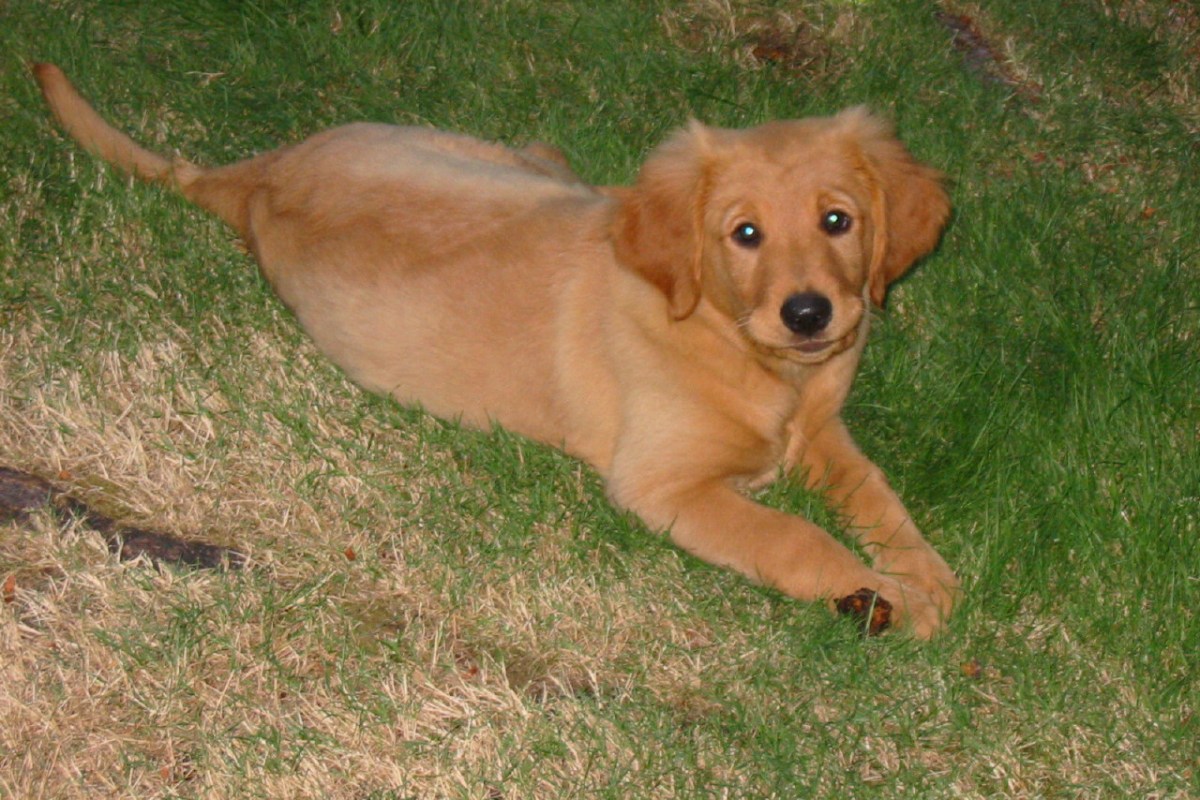
(featured photo is my last dog, Biscuit, as a puppy)

Life: Risky Business

“Pushing through your fear. If there’s something you want, it usually worth the risk. I’ve found that on the side of fear is rebirth.” – Paula Whaley

One of the guides that I climbed mountains with, Phil, taught the skill of weighing objective risks versus subjective risks. Objective risks in the mountains include avalanche danger, weather forecast, rock fall areas, and navigating around crevasses. It is because of objective risk that we’d often leave for the summit in the middle of the night, when things like big blocks of rocks and ice are still frozen to the mountain. That way we reduced the risk of climbing in the heat of midday when the sun warms things up and they pop off to crush you.

As an aside, I found climbing at night to be one of the most beautiful things to do. While it was exceedingly painful to leave a warm sleeping bag, the intimacy of my steps enveloped only in the circle of my headlamp was a way to be both big and small. In a huge arena but only focused on a small area. Groups ahead look like a caravan crossing through the desert because the landscape could be anything. And, crossing things like ladders laid horizontally over crevasses is way more doable when you can’t see the gaping hole below.

A friend ready to cross a crevasse on Mt. Rainier (image mine)

But subjective risk, as I understood it from Phil, is what we internally sense and measure. How do I feel? Does this seem doable today? Subjective risk is more personal, trickier to plan for, and different for everyone.

But this is a post about life, not climbing

I’d argue that in my life now, I have very little objective risk. Perhaps the most hazardous thing I do is forget to wear eye protection when I’m using the weed whacker.

But the subjective risks I’ve found in middle age to be plentiful. Daring to be vulnerable, trying to learn something new, opening to new friendships, asking to be seen, and offering grace instead of judgment – all those things lay bare my heart in a way that can be terrifying and precarious.

I think meditating and writing both are huge subjective risks to my perceived well-being. Hazarding a look inside at the goopy mix of who I am, taking on attempts to change myself, the conditions for my children, and generational patterns of my family. Geez, that’s harder stuff than I ever faced in the mountains.

And yet, I find when I try these things that are subjectively risky, they get me somewhere. Not always, and I haven’t kept track but I think it’s safe to say not usually, where I intend to go but with a receptiveness that moves me forward.

It’s a round-trip sport

As my guide friend, Phil, says, “Climbing is a round-trip sport.” It’s both the up and the down. And the risks are often greater on the down when I’m exhausted from the climb. And now have to cross the crevasse on a ladder in the daylight when I can see the gaping hole beneath me. It’s the same in life for me, taking the risk to extend myself in vulnerability and openness is hardest when I’m tired and depleted but it’s often necessary to lead me home.

I don’t think you have to have climbed to imagine how life can be a slog, both uphill and downhill. But whatever the slope looks like, thinking about it this way has helped me to take the steps to evaluate and take on subjective risks in order to get to my best and highest place.

There is no way to get to the summit, whatever our personal summit may be, without exposing ourselves to risk. But the view from the top and the learning from the trip change us forever.

View from Mt. Adams (image mine)

What do you think about risk? Any tips for how you face risk?

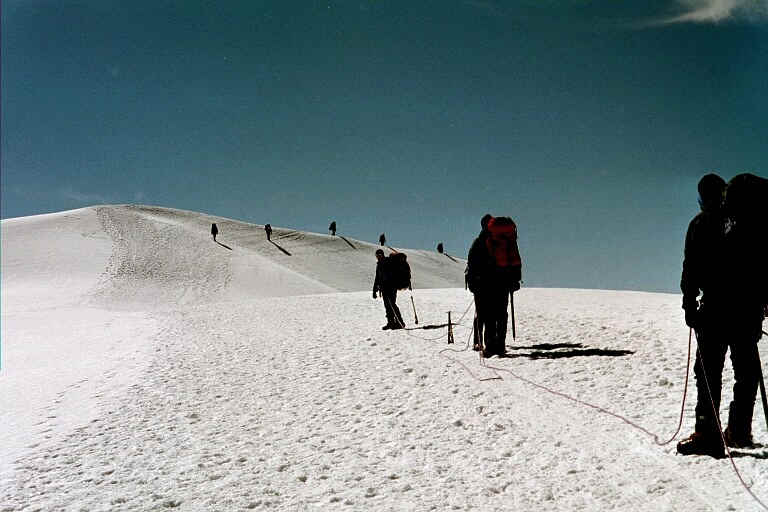
(featured photo is mine from Ixtacchuatl a 17,160ft mountain in Mexico)

Use Your Words

“Raise your words, not voice. It is rain that grows flowers, not thunder.” – Rumi

Last Friday my almost four-year-old Mr. D responded to me when I told him that the next day we were going to Olympia for a hike, “Mine Bumblebees and me hate that place.” [Bumblebees is the name of his pre-school classroom so he was going for the group effect, I guess.] I had to laugh. Olympia is about 60 miles south of Seattle and Mr. D has never been there. What’s more – he loves hiking!

I also understand from the lead teacher at his school that the usually affable Mr. D has been recently trying out the phrase, “If you don’t let me, my mom will be mad at you.” Another gem since expressing anger is something I’m woefully bad at.

But I can relate the desire to attach to the most powerful presence I can find and try to borrow some influence. I remember seeing a sign in my neighborhood when I was going through my divorce that said something like, “We don’t want you to park here…” And I felt a mournful tug that I wasn’t no longer a part of a “we” I could hide behind.

Here’s how I unpack it for me. When I feel vulnerable, I’d like to borrow the biggest shield I can find instead of baring my naked underbelly for all to see. I think there’s more than just a little instinctual resistance to leaning in to the things that make me feel exposed. I have a well-guarded list of my weaknesses, fears, and the things I love so much that I regularly worry about losing them.

I come from a long line of smart women whose agency and power were in large part conferred upon them by the men in their life. In that system, their judgment was the sharpest tool they could wield. And I don’t mean judgment as in discernment but instead judgment of others.

But I want to live in curiosity instead of judgment, so I’ve worked hard to break that pattern. That has meant reaching deep inside me to stoke my own fire. I’ve noticed that when I borrow power from someone else, I forget to believe in my own.

I don’t have the worldly power to affect change, command resources, or make people listen but I’ve found that the most important person that needs to believe in my voice is me. When I don’t believe that I, by myself, have anything to say, it suddenly becomes true. I stop in my tracks trying to work for change in my own life.

And when I remember that I do have power to decide and make things happen in my own life, often a curious thing happens – I find helpers. Not people who I need to borrow influence from but others who are swimming the same direction and we can draft off each other.

So I come back to the thing I often say to my kids when they are upset. “Use YOUR words.” It works as advice on many levels for all ages.

(featured photo from Pexels)

Giving Lift

“If you want to lift yourself up, lift up someone else.” – Booker T. Washington

Yesterday afternoon my kids and I had two hours left of a six hour road trip when we came across a man walking down the interstate with his son, who looked to be about two or three years old. The man was carrying a gas can in one hand and holding his son’s hand in the other.

The mood in my car at the time we happened upon these time was best described as stable. Six hours is a long time for me, not to mention Miss O and Mr D, at almost 8 and 4-years-old respectively. We were tired after a great weekend of playing at the lake cabin of my best friend’s family, a little sad to be on our way home, but also heartened by the fun of being together and with our incredibly fun, generous, and delightful friends.

So I polled my kids as to whether we should stop and help the man and little boy. They asked great questions – were we going to give them a ride? how much longer would it take? – and I told them we’d just take the gas can, fill it up, and return it to them. It would probably add 20 minutes to our trip but save them two or three hours of dangerous walking. The decision was unanimous that we should help them.

By the time we found a gas station, looped back far enough to find their car and then figured out how to turn around to be going in our original direction, it was a good 20 minutes. In that time, the mood in my car had lifted exponentially. Mr. D had grand plans that he was going to hop out and deliver the gasoline himself, and Miss O was mapping out her strategy to find out all that she could about them. When I delivered the news that there was no way I was letting them out of the car on the highway, they were disappointed, but so buoyant by the fun helping adventure that even a little disappointment couldn’t dent the mood.

And why did I do it? It was clear how I could help and seemed low risk. And I had benefitted greatly from the weekend with the fun and relaxing time with our amazing and thoughtful friends. But probably mostly, because the weekend away had given me a glimpse of the long view of life. (For more on that final point, The Long View is my post on the Heart of the Matter blog today).

I only exchanged about a dozen words with the man and his boy during our quest for more gasoline, but the whole thing carried us safely and happily home for the remaining two hours. It reminded me of the quote from Booker T. Washington at the top of this post – there truly is great lift that comes from helping others.

(featured photo from Pexels)

At the Pace of Love

“To lose balance, sometimes, for love, is part of living a balanced life.” – Elizabeth Gilbert

The last two weeks have been really busy. Traveling, birthdays, my 7-year-old is out of school – wonderfully fun things that have made it so I have to schedule time to breathe. It’s all good – I’m just setting up my excuse for what’s to come next.

Because when I get busy like this, I don’t want to take the time to teach or do things collaboratively. I just want to get things done and the extra time and patience it takes to direct small hands with inquisitive minds attached? I feel like I don’t have it.

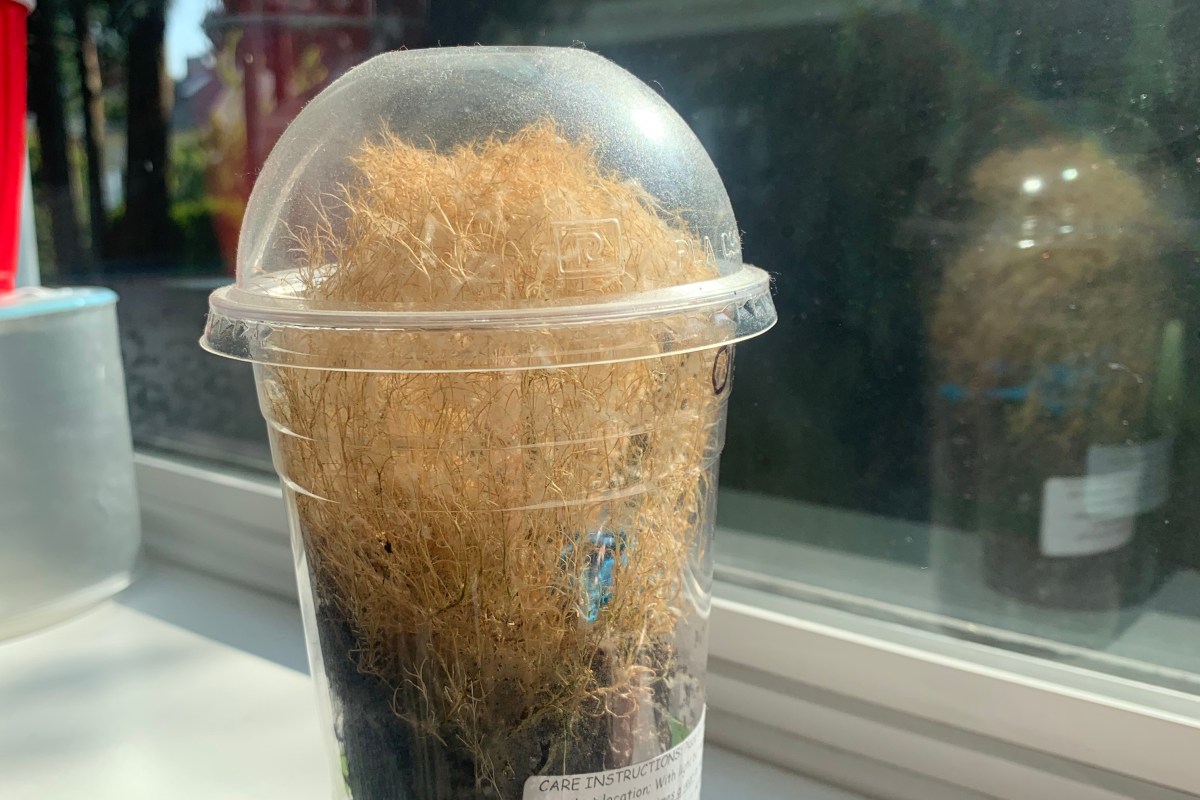
For example, Miss O brought a little terrarium project home from school about six months ago. It only needs water once or twice a year but I noticed that the grass in it is all brown. Seemed like a good cue for adding water.

I know that it would be a bad thing to just do it. It’s not my project and we all need to learn sooner or later the steps to keep something alive. Right?

So I mentioned it to Miss O. She took one look and then started wondering about the calendar. She had it in mind that it wouldn’t need care until her classmate, Jonas G’s birthday and then she was off and running down that track of wondering when his birthday is and what to get him.

All that chatter and no watering. <groan> I just want to water the damn thing.

It reminds me that I often want to just do things for other people, grown-ups and kids alike. That way I can do it my way, in my time, and get it done. But that’s not the way that life works, is it?

This is when a particular phrase from my dad comes to mind. “We just need to love people where they are at, wherever that is.” It works for me because it slows me down to the pace of loving which is A LOT slower than my pace of doing.

What good is getting stuff done if we miss the opportunities to learn and love in the meantime? In weeks like this one, I’m tempted to answer that there’s a lot of good in getting stuff done…but then I grumble that I know that’s not the right attitude. After all, I’m teaching something to my kids whether I just water the terrarium myself or support them doing it. Maybe when I model what we need to do, I can also groove new habits for myself about slowing down to the pace of love.

Love at First Write

“Write what you need to read.” – adage

I’ve been mulling over online relationships, specifically the WordPress blogging buddy ones, lately. Mostly because last week when I was in NY, I got to hang out with two blog friends, Libby Saylor aka The Goddess Attainable, and Jack Canfora, from The Writing on the Padded Wall blog.

So now I’ve met three bloggers that I regularly read, including a wonderful hike with the amazing Deb from the Closer to the Edge blog. And a fourth, Betsy Kerekes from the Motherhood and Martial Arts blog is coming to visit this week.

In all these cases, I love to read the writing of these wonderful people – and when I’ve met them, they’ve been exactly who I’d expected they’d be, with the added bonus of being able to feel their energy and presence.

If you add to that Vicki Atkinson from the Victoria Ponders blog and my partner in the Heart of the Matter blog, with whom it feels like we are like-minded sisters even though we’ve only met by Zoom or Teams video calls, and all the lovely people we’ve gotten to meet doing podcasts – it feels like I’ve been lucky enough to meet a lot of bloggers.

And in all the cases, they are as delightful to interact with in real-time as they are to read. This makes me realize that when we write from our authentic, deep and vulnerable places, it speeds our ability to get to know each other. In fact, I regularly have more vulnerable conversations in the blogging community than in real life because I’m writing and reading about topics that are really meaningful to me or the author.

So yesterday, when I was reading Vicki’s blog, Finding Our People, it brought the topic full circle for me. I’m grateful to be part of this wonderful and supportive community of people that I cherish. It’s an honor to read everyone’s deep, fun, and beautiful writing. It’s a pleasure to meet people in person. And it’s a leg up on wonderfully meaningful and authentic friendships when we get to do both!

I’ve written a companion piece to this one on the HoTM blog about being open to new people: Love at First Sight. Check it out!

(featured photo from Pexels)

The Usefulness of Play

“We are what we repeatedly do. Excellence, therefore, is not an act but a habit.” – Aristotle

In 2006 I went to a book reading and slide show by legendary alpine climber Ed Viesturs. He’d just published his book about summiting the world’s 14 peaks over 8,000 meters (26,26 feet) without supplemental oxygen, No Shortcuts to the Top and my friends and I had a front row seat for his show.

We were there early watching as he got his slide show ready. Ed came off the stage that was about 2 ½ feet above the level of the auditorium floor to fix the angle of the projector and then walked around to climb the stairs back onto the stage. As he did this when it would have been so easy for him to jump up, I joked, “No shortcuts to the top” and we howled in laughter.

There’s a famous story about Ed getting to the central summit (8,008m or 26,273 feet) of Shishapangma in Tibet and looking across the 100 meters of knife-edge climbing to get to the true summit that was a few meters higher in elevation (8,027m or 26,335 feet). He was by himself and decided it was too dangerous so he went home without summitting. Then he returned 8 years later to do it all again, this time shimmying across the knife ridge to get there.

So Ed has earned the reputation of being the boyscout of the climbing world and perhaps it’s no surprise he’d live out the motto of no shortcuts to the top. But I’ve revisited that scene in my head again and again when pondering the consistency of life on and off the mountain or more generally speaking, consistency between who we are at play versus “real” life.

I was recently moved to think differently about play by an interview I heard with Nikki Giovanni, the poet laureate of Virginia Tech. She said that her “grandmother didn’t waste anything. There was nothing that came into her kitchen that she didn’t find a use for.” Then she continued, “I feel the same way about experiences and words. Nothing is wasted.”

Looking back on the things that I’ve chosen as my hobbies, I see that they have not just been pastimes but instead the proving grounds to work through ideas and attributes that I would come to and continue to need.

When I took up amateur mountain climbing in my late 20’s, I thought it was a way to see the world from a different viewpoint. Now I see it was a way to build my endurance to push through in those moments when I’m physically exhausted, something I’ve needed a lot in these early years of parenting.

Rock climbing at the indoor climbing gym was a way to get a workout and build upper body strength. There is almost always a move, the crux move, on a route that requires flexibility and faith to push through, bending your body in a way that allows you to reach past the obstacle or overhang without seeing the next hold. Now I see it as a physical way to practice the ability to move through the many challenging changes and tough transitions in life.

Recently I got a mosaic art kit for my daughter so that she could create designs by gluing small pieces of colored glass near each other. It was so fun that I’ve started doing it myself. It has very little to do with what I create and a great deal to do with seeing how all the small things in life come together to create the arc of life.  

Here’s what I’ve come to believe: that play helps simulate the tough moments of life when you have to make decisions, have faith and maybe even carry on in conditions when you are tired, hungry and feeling defeated. The choices we make in those situations carry through to the paths we follow in life. We build confidence and get to know ourselves one step at a time on the proving ground and then know how to live.

Aristotle said, “We are what we repeatedly do. Excellence, therefore, is not an act but a habit.” We are what we practice, in play and in real life. Perhaps that’s how Ed Viesturs managed the fourteen 8,000 meter peaks without supplemental oxygen. By practicing who he was, on and off the stage.

Our Gratefuls

“Wear gratitude like a cloak and it will feed every corner of your life.” – Rumi

At bedtime after we’ve read books and told stories, I’ve been asking the kids what they are grateful for and how they helped that day. The latter is a question I got from Vicki early on in our blog buddy relationship. If I remember correctly, it was a question that her mom asked her sister Lisa on a regular basis.

The other night Mr. D answered that he was grateful for being grateful. It could be a three-year-old’s version of passing on the question, but he seemed to mean it.

While I sometimes envy the simplicity and directness of the animal life around, I wonder if there’s any other creature that feels gratitude. This started me down the rabbit hole of doing research on the Internet and as I encountered AI along the way, delved into Scientific American, and hopped over to the Greater Good Lab at UC Berkeley. My summary:

  1. There are a lot of cute animal article and videos on the Internet that can eat all your free time.
  2. No one knows if animals feel gratitude.
  3. Gratitude is a complex emotion that has components of reminiscence and reflection.

In her book, Atlas of the Heart, Brené Brown quotes Robert Emmons, professor of psychology at University of California, Davis and one of the world’s leading gratitude experts:

I think gratitude allows us to participate more in life. We notice the positives more, and that magnifies the pleasure you get from life. Instead of adapting to goodness, we celebrate goodness. We spend so much time watching things – movies, computer screens, sports – but with gratitude we become greater participants in our lives as opposed to spectators.

Roberts Emmons

Now who doesn’t want to become a greater participant in life? I’m grateful for my kid’s answers the other night. Mr. D. who’s grateful for being grateful and Miss O who added, “I’m grateful for family and that we are a unit, even though we sometimes fight.” Right – ditto what they said!

For a snapshot of a small moment of gratitude, I’ve written about one that I particularly enjoyed on the Heart of the Matter blog, A Brief Moment in Time.

Family Dynamics

“Gotta move different when you want different.” – unknown

Last Monday I got frustrated with Miss O when we were getting ready for school. Or should I say, not getting ready for school. I prompted her five times to get her shoes on, she got mad at me for repeating myself. I told her that I wouldn’t have to repeat myself if she would put her shoes on…nothing new. I’m sure a conversation that happens between kids and parents in households all over the world since the beginning of time. Or at least since shoes became a thing.

So we were both irritated when I dropped her off to school. And then Mr. D was silent as we drove on. By the time we walked in the front door of his pre-school, it was clear that he was upset. We sat in the chairs outside his classroom for a while, and then had a tearful drop-off which is unusual for Mr. D.

This has happened enough times for me to discern the pattern – Mr. D is so attuned to the emotions of the household that any disturbances in our mostly good natured vibe affect him, even when the upset doesn’t involve him.   

Wow, families are complex. Now I don’t have to just be responsible for my own emotions but also the impact that I’m having on the group and vice versa?

I think about what it was like in my family growing up. My sister was usually upset about something, my brother was tired of hearing her complain and just disconnected, and I felt that I needed to be no problem since my parents were having to deal with my sister. It’s a pattern we maintain, by and large, to this day.

My mathematical nature likes patterns – they are so useful to predict what will happen next. But sometimes patterns just hold us in a mindless call and response. Until one person breaks out by saying, “I’m so tired of this banter that keeps us from saying anything real,” the other person(s) in the pattern may not realize there is something habitual that has been holding everyone in place.

Thinking back to my little family, I think this applies too. When I get tired of the same conversation about the same shoes, I’m always surprised how effective it is to change the dynamic by changing the order. Shoes before breakfast helps break the stalemate. What’s harder is changing the natural tendency that Mr. D has to carry the tension. Maybe that’s a case of where making it visible helps to dispel it. Hopefully that works because we aren’t going to stop wearing shoes.

I’ve written a companion piece on the Heart of the Matter blog about some advice I got from a friend long ago to never back a kid into a corner and instead always offer them a way out: Building Bridges to Each Other. Please check it out if you have a moment.

(featured photo is a pair of Converse high tops that Miss O got as hand-me-downs)

Bemoaning Our Fate

“You’re allowed to scream. You’re allowed to cry. But do not give up.” – unknown

This is a repost of writing I posted on 1/12/22. Heads up – you may have already read this.


Year ago I was writing a technical book with two business partners. It was a beast – 737 pages of dense and technical content. We divided up the chapters that each of us was going to write. I agreed to do more than the others because I’d written a technical book before. But it was still a pretty equitable split until one of my partners said he couldn’t do it. He said something to me like, “It’s so easy for you to do. You should take my chapters.” I was shocked. It wasn’t easy for me at all — I’d been sitting at my desk 12 hours a day, 6 days a week to get my portion done by the publisher’s deadline. I’d simply been too busy to sit around talking about how hard it was!

Which has always made me wonder, is there any benefit to bitching about life or bemoaning our fate?

This question makes me think of the tennis player John McEnroe. Given his reputation as someone who would contest a line call, did he get better calls from judges who wanted to make sure they were solid when they called a ball he hit out?

Even if there was an advantage to his tantrums, the fact remained that he had to be a person who could throw them.

It’s actually being a referee (aka a parent) that has taught me that there are two components to whether or not expressing our hardships in life makes a difference: authentic expression and boundaries.

The other day my 2-year-old son wanted to play with water in the sink. It was almost time to go somewhere and I didn’t want him soaked so I told him “no.” He said for the very first time, “I fustated!” I told him how incredibly proud I was of him for recognizing that he was frustrated. “Good for you for knowing that! But you still can’t play in the sink.”

Which leads me to my conclusion about whether or not life is easier if we expound on the pains of life to others. We have to express our life conditions authentically and that expression will improve our own ability to cope. There is always a need to speak to our honest experiences and when we do that, others understand us in a deeper way that supersedes whether or not it changes the outcome.

And the second part is that we all need to set and hold our personal boundaries of what we can or cannot do. Expressing ourselves probably won’t change how other people defer to us one way or the other. But it will change the one thing that matters – how we feel about the work we do.

As I parent, I know I change a little based on how my kids might react. I’m likely to soft pedal something that I know is going to start a fit, especially if I know my kids are tired. But even though I’ll change the delivery, I don’t change my decisions based on how it’ll be received because I have to hold the boundaries. In the case of my toddler playing in the water, I didn’t have the time or patience to change his clothes one more time before we left the house. I appreciated his ability to express to me that he was frustrated. The answer was still “no.”

John McEnroe wrote a book (co-authored with James Kaplan) published in 2002. The title, You Cannot Be Serious, was derived from his most often used phrase during the fantastic fits he used to throw when he disagreed with a line call. YOU CANNOT BE SERIOUS!!

In the book, he’s pretty reflective of his emotions and maturity between age 18 when he started winning on the tour and age 43 when he wrote the book. He recounts a time he went off during a match the summer when he was 18, “I ended up winning the match, but I was incredibly embarrassed – as I should have been. I was totally spent, and showing the strain.”

Then near the end of the book, John McEnroe talked about his life as a father of eight kids and provided a telling reflection about maturity:

“I loved being a father. It was also the hardest work, by far, that I’d ever done. When your children range in age from the teens down to the teeny, it feels as though you’re in charge or a laboratory conducting multiple experiments, all of them dangerous and combustible, but just possibly life-saving. Every day seemed to bring situations that would try the patience of a saint – let alone John McEnroe. Of course there were times I lost it (there still are), but when you’re responsible to other people, and especially very young people, you quickly learn that you have to find ways to control yourself. However much you may feel the need to let off steam, the needs of people who depend on you for everything come first.”

You Cannot Be Serious – John McEnroe

In other words, we have the right to express our feelings about our experience. That expression will change as we mature and become more responsible to others. And if we lose it in as public of a forum as John McEnroe, we may have to write a book to apologize.

And then as we mature, we hold the boundaries of what we can or cannot do. Because at the end of the day, the only human who will likely think in great depth about our life is ourselves. And the only person who knows what we can handle is ourselves. As Vicki from Victoria Ponders writes so beautifully – it’s My Life, My Happiness.

When I took on the chapters that my business partner was not able to write, I did tell him that writing was hard for me too. (And I know there are many writers, especially technical writers who read this blog and can attest to the difficulty). But I didn’t belabor the point. It isn’t my personality. Writing more chapters was within my boundaries of what I could do. In the end, I was proud of the book we wrote, non-equitable distribution of work and all.

I have a new post today on the Wise & Shine blog: How to Recover From a Bad Post

(Featured photo from Pexels)