One Hundred and Still Going Strong

Opportunity is missed by most people because it is dressed in overalls and looks like work.” – Thomas Edison

In the senior living community where my mom lives, there are several people over 100 years of age. My kids love hearing stories about them and meeting them in the hallway. After all, if you reach 100, you’ve probably learned a thing or two, right?

Let’s hope so because Vicki Atkinson and I are celebrating our 100th episode of the Sharing the Heart of the Matter podcast. I’m just so incredibly grateful that Vicki, my podcast partner and dear friend, was and continues to be willing to do a storytelling and author podcast with me. Despite the fact that we’ve never met, this has been such a rich collaboration in which I’ve learned SO MUCH from the ever insightful, engaging, and sunny, Dr. Vicki!

We’ve also learned a bit about podcasting over these two years. So we sit down to mark the moment and answer four questions:

  • What were our favorite stories?
  • Do we have a biggest a-ha moment?
  • What have we learned as hosts?
  • Goals for the Sharing the Heart of the Matter podcast in 2025?

Vicki shares that she actually went back and listened to the very first episode. She says that instead of the cringe-worthy moment she expected, it was worth listening to our goals of being authentic and vulnerable.

We also spend some time laughing about the technical difficulties we’ve encountered along the way. In spite of those, we’ve forged through and added features like captions and transcripts to make the podcast more accessible.

In this celebratory moment, we honor all the incredible and inspiring guests we’ve had on and applaud our wonderful listeners and subscribers. We couldn’t be more grateful for all of you who’ve accompanied us on this journey.

I’m confident you’ll love the scenic and beautiful places we explore as we share the power of storytelling and pause to celebrate before we move on to the next 100 episodes!

We know you’ll love it!

Search (and subscribe!) for Sharing the Heart of the Matter on Apple, Amazon, Spotify or Pocket Casts OR Listen to it from your computer on Anchor: Episode 100: Celebrate with Us!

HoTM Episode 100 transcript

AND subscribe to our YouTube channel to see a video clip of each story: @SharingtheHeartoftheMatter.

Links for this Episode:

GRATITUDE for the Guests that have joined us on these 100 episodes – sometimes even more than once!

From the hosts:

Vicki’s book about resilience and love: Surviving Sue; Blog: https://victoriaponders.com/

My book about my beloved father: Finding My Father’s Faith;

(featured photo from Pexels)
I’m Glad You’re Here

When you love someone the best thing you can offer is your presence. How can you love if you are not there?” – Thich Nhat Hanh

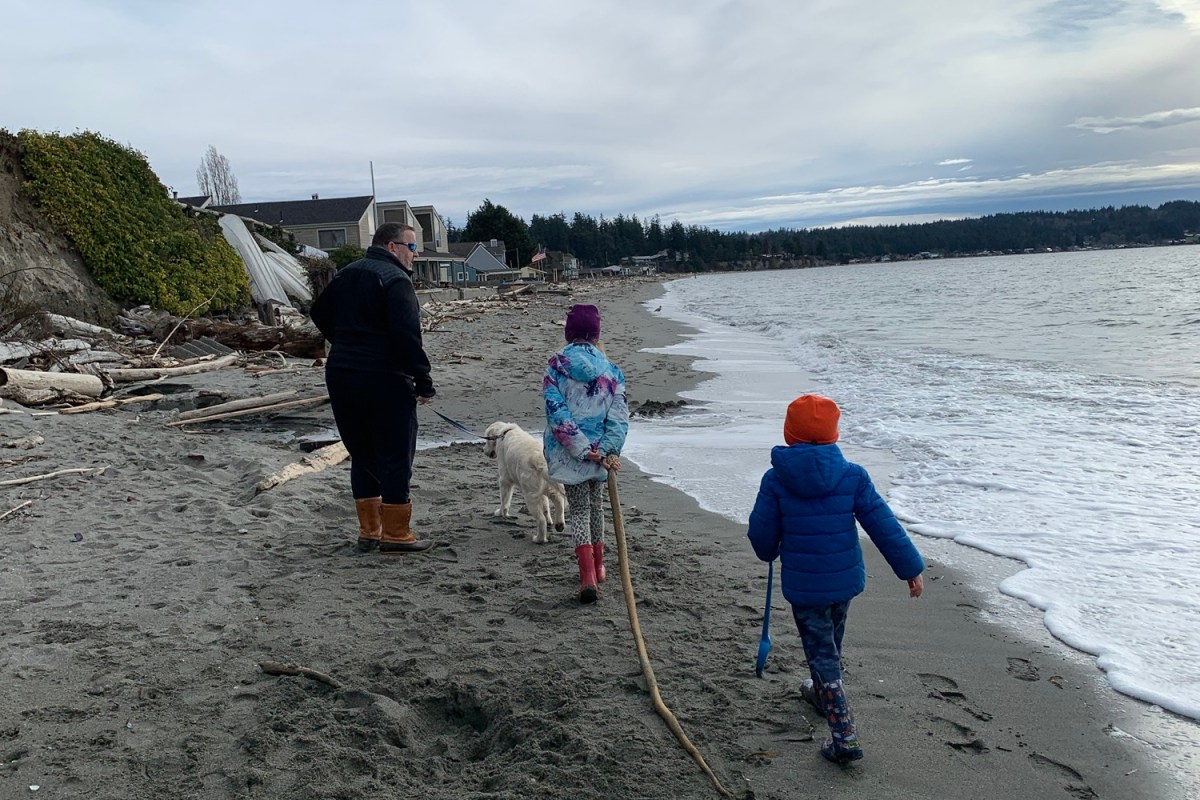
We were sitting in the family room of the small AirBnB cabin we’d rented for President’s Day weekend when I heard my four-year-old son, Mr. D quietly say to my friend, Eric, who had joined us. “I’m glad you’re here.”

It’s a sentiment that I’ve heard both of my children say on different occasions, locations, and to different friends. I’m glad you’re here. I’m glad we’re here.

It’s completely unprompted by me and I’ve never noticed them saying it at the moment of arrival. Usually it’s uttered calmly in genuine camaraderie for an adult that has shown up – physically and emotionally.

I find it to be one of the most remarkable compliments a kid can give. After all, at ages eight and four, they aren’t in charge of where we go or who comes along. But when they find the presence of another person to be comforting/fun/engaging/stimulating, they say so. Genuinely.

Upon reflection, it’s another thing my kids are teaching me. To know when I’m happy to be somewhere and in good company, and to express it.

So, dear blogging friends, I’m glad you are here. Thank you for reading.

ON A RELATED NOTE: Vicki Atkinson and I were lucky enough to talk with Edgerton award winning playwright, musician and author, Jack Canfora on the Sharing the Heart of the Matter podcast episode released today. Part of the conversation is about how our writing is one way we show up. It’s a delightfully fun and interesting episode, please listen! Episode 55: Master Class in Creativity with Jack Canfora Part I. Also, there’s a bonus video clip in that linked post.

Pick Three Affirmations

With all the stress and change at the beginning of the school year, I’ve been writing notes for Miss O in her lunch every day. Mr. D can’t yet read but his teachers asked for notes to read to kids when they miss their families.

The notes I find myself writing aren’t exquisite masterpieces that have any poetic resonance. They are simply affirmations in the stye of The Help by Kathryn Stockett

To the degree that I’ve figured out what works best, it is things that are specific, not too aspirational, and that resonate with what they might already believe about themselves. Writing them for my children is not very hard.

But if I was to turn the lens around the other way and have to pick three things to say to myself? Well, it’s a hard practice. So I’ve written some down for you all. Pick three things that you could really believe about yourself. Just so you know, I’ve written these with you all in mind:

You are clever.

You are kind.

You bring out the best in others.

You have come so far and are so generous to share your lessons with others.

You are a bright light.

You make others laugh.

You make others cry, in the best way ever.

You are such a good encourager.

You make the world a better place.

You are resourceful.

You are resilient.

You are creative.

You are so faithful.

You are a good listener.

You are wise.

You are patient.

You are a great storyteller.

You can figure anything out.

You have integrity.

You are empathetic.

You carry your load well.

You are strong.

You are brave.

You make me laugh.

You are a person I am delighted to know.

Really — pick three. Write them down and look at them when you eat lunch. I have it on good authority that they make the day better.

The podcast I did with Dr. Vicki Atkinson about how to Savor September goes nicely with lunch as well: Episode 35: September … Savor with Vicki and Wynne

The Window Part 2

When we were children, we used to think that when we were grownup we would no longer be vulnerable. But to grow up is to accept vulnerability. To be alive is to be vulnerable.” – Madeleine L’Engle

Do you remember this scene in Winnie the Pooh?

“Piglet sidled up to Pooh from behind. ‘Pooh!’ he whispered.

‘Yes, Piglet?’

‘Nothing’ said Piglet taking Pooh’s paw, ‘I just wanted to be sure of you.'”

Winnie the Poor by A.A. Milne

Of the many sweet things about that exchange, one that I notice is how proximity is so reassuring. The “sure of you” quality of a hug or a hand.

When I wrote the piece about The Window six months ago, our neighbors and my daughter’s first best friend had just moved away. The window had shut and the only thing that I knew for certain was that the reassurance that comes from proximity was no longer going to be there.

Getting to the other side of that grief only comes with time. Now I’ve written The Window Part 2 on the Heart of the Matter blog. It’s part reflection on loss – and part reflection on what comes next…

Patience To Stay Open

Fear wants us to act too soon. But patience, hard as it is, helps us outlast our preconceptions. This is how tired soldiers, all out of ammo, can discover through their inescapable waiting that they have no reason to hurt each other. In is the same with tired lovers and with hurtful and tiresome friends. Given enough time, most of our enemies cease to be enemies, because waiting allows us to see ourselves in them.” – Mark Nepo

I have a friendship that is in trouble. When I ask my friend questions about herself, she doesn’t answer but instead redirects the question. This is change in our 10+ year friendship. I’m not sure the cause but I’ve supported my friend and her husband through some difficult issues so my suspicion is that it’s more important to her to have a seemingly friendly relationship where I remain “on her side” rather than an authentic one where she has to tell me what’s bothering her or what I’ve done.

Just writing about this makes me a little light-headed. Because it touches on the divide between barely living and living barely. That is to say, I spent too many years barely living when I pretended that life was great and I buried all suffering deep down. Then I discovered that living barely, trying to keep the thinnest possible covering between my heart and the world actually lets more things in and more importantly, more things out.

But just because I want to try to live without pretense doesn’t mean my friend can right now. And what I understand from my tentative attempts to open a space between us to speak is that she isn’t ready to talk.

So I’m trying not to break things in my impatience. To declare the friendship over because I can’t stand the uncertainty or to insert a defensiveness because I don’t understand. Or to assume or imagine anything.

My dad told me of a group of olive farmers he met who owned a prime piece of land in a contested part of the world. Even though they had a deed of property they were regularly hassled by local soldiers. They developed a motto, “We refuse to become enemies.

That phrase has stuck with me of a reminder that no matter what the other side is doing, we can keep open the channel of our hearts. The motto tells me that we can be in conflict without stirring up that fear within.

When something reminds me of my friend, I’ve found that instead of ruminating on the problem with all the dark alleyways of anxiety I can say a quick loving-kindness chant: “May I be happy, may you be happy; May I be at peace, may you be at peace; May I be loved, may you be loved.” It helps keep me from closing down.

What do you do when things aren’t going well with a friend?

(featured photo from Pexels)

The Ripple Effect

I’ve learned that people will forget what you said, people will forget what you did, but people will never forget how you made them feel.” – Maya Angelou

My dad once made a comment that when he focused on a topic for a sermon, there was a noticeable effect on his life. If he was preaching about parenthood, he’d be a better parent for that week. Likewise about being a better husband, friend or citizen as he focused on those topics.

As I was writing my post for Pointless Overthinking this week, The Art of Apology, I found the same ripple effect in my life. Reading through Dr. Harriet Lerner’s book Why Won’t You Apologize gave me so many great talking points for how to sincerely apologize and it also reminded me of the practice of accepting apologies, especially from kids.

Two points that really resonated with me. The first was not to brush off an apology with a “it’s no problem” when someone, especially a child, has worked up the courage to offer one.

And the second was not to use an apology as a springboard to a lecture. Responding to an apology with something like “Well, I’m glad to hear you apologize for hitting your brother because we don’t do that in this family” is the best way to make kids regret ever offering one.

When we apologize, we help heal the wound however slight for someone else. When we accept an apology, we affirm the courage of someone else to voice their mistakes.

As Dr. Lerner says “We take turns at being the offender and the offended until our very last breath. It’s reassuring to know that we have the possibility to set things, right, or at least know that we have brought our best selves to the task at hand, however the other person responds.”

The other day my 6-year-old daughter was making sticker art for people in her life. One mermaid that she made lost an itty-bitty piece of her tail and my daughter said, “I’m going to give this one to Nana. Because even though I lost the sticker, she’s a great forgiver.”

Isn’t that a great way to be known?

Open and Even

Be a fountain, not a drain.” – Rex Hurdler

My 6-year-old daughter recently came home from an extended play date and I had no idea who she was. I mean she looked like my daughter but one minute she was super confident and magnanimously sharing the candy sitting on the table with her little brother. But the next minute she was lying on the floor yelling that she couldn’t get ready for bed by herself, even though she’s been doing it for at least two years.

My take away from this episode is that the line between our big space where anything and everything seems possible and our small space where problems loom large is really thin. And the line seems to teeter on proper care and feeding.

If something feels off — as if one of us is in one of those tight parking spaces where we can’t open the doors, we are cursing those parked next to us and it feels like we have to use a can opener just to get out, I’ve learned to check the basics. Is anyone tired, cold, hungry or wet? And yes, I’m talking about my kids but I’m also talking about myself. Have I meditated, exercised and eaten well? If I have, then 90% of the time I’m operating from my big space.

Ten years ago when I started meditating, I had no idea that sitting in silence for ten to twenty minutes a day could change the experience for all the other minutes in a day. But for me it’s like a daily washing of the windows so that I let more light in and my perspective is brighter. It is a parking space I feel so lucky to have gotten, looks out to the most beautiful vista and I want to whoop with delight.

I assume with my daughter that she was exhausted by having the navigate the ground of relationship in an unstructured play with someone her own age. Grown-ups are pretty easy for her because for the most part in play, they generally will give her whatever they want because no one wants to be the jerk who won’t share a doll with a 6-year-old. But it’s a completely different ball game with other kids. And negotiation is exhausting.

It’s precisely because navigating relationships can be exhausting that I come back again and again to self-care. Because I want to be operating from my big space in case I meet someone temporarily parked in their small space.

(featured photo from Pexels)

Dispelling Shame

What you cannot turn to good, you must make as little bad as you can.” – Thomas More

We bumped up against shame a couple times this past weekend. As always, it left a mark.

The first time was when a group of young kids, including my 6-year-old daughter and her friend were looking into a stream that’s on the way to the salmon spawning grounds. They weren’t doing anything wrong and I believe the grown-up that was with them was making sure they weren’t going to but an activist yelled at them in case they were thinking of stepping into the water.

The second was when my daughter dropped an old iPhone that I’d given her to play with. It’s so outdated that it doesn’t have any value to a grown-up and can’t connect to the Internet but it does turn on and take pictures. She’s old enough now to understand the cachet of a phone and was so excited that she even put on jeans so that she’d have a pocket to carry it in.

But when she discovered that after dropping it a few times the screen had cracked, she followed suit and cracked. Her melt down was in part because she accurately assessed that I wouldn’t replace it. But more than that, she was ashamed that people would know she was a person who couldn’t take care of a phone.

Shame reminds me of an incident when I was 18-years-old. I was with a group of guys in a bar in Idaho. We were too young to buy drinks so we were just standing around when someone who we’d helped tow his boat earlier in the day offered to buy us a pitcher of beer. I was the closest and because I didn’t drink, I said, “no thank you” even though I meant “not for me.” The guys I was with could have killed me. But no one said anything.

This incident still marks me more than 30-years-later because I’ve never talked about it. I felt like a goodie-two-shoes even though I didn’t care – I just misspoke. Even typing it makes me feel that burn all over again. It’s because it’s so trivial and yet I still remember that I know how powerful shame can be.

After the incident at the stream this weekend, my daughter and her friend bumped into each other and they got into a kerfuffle about space. As an observer, it was clear it had nothing to do with who bumped whom and everything to do with discharging the shame of being yelled at by a stranger when they very much like to follow the rules.

The night the phone cracked I sat with my daughter at bedtime and we talked about shame. About how silence and secrecy are the things that shame feeds on and if we want to stop the shame spiral, we have to talk about it lest we give it the power to make us feel unworthy.

As we talked, I realized that I was confused as a parent about which message to emphasize because I think taking care of the things we own is important. But making the distinction between it was bad to drop the phone and being a bad person because she couldn’t take care of the phone was more important to me. Because shame leaves a mark. But how deeply etched the mark is depends on how quickly we can pull out of the shame spiral.  

As a postscript, when my mom came over last night, my daughter pulled out the phone she had hidden when she was ashamed and talked about what was on the phone, how it got cracked and what we need to do to take care of our stuff. It was like getting immediate feedback on a test and we passed. Phew!

Day of the Dead

At some point, you have to realize that some people can stay in your heart but not in your life.” – Sandi Lynn

I’ve been thinking a lot about my dear dad lately. Not surprising since today is the Day of the Dead and next week is the 7th anniversary of when he got on his bike one sunny afternoon, collided with a car and died suddenly.

In his eulogy, my brother said about my dad, “He met you where you were without leaving where he was.” Which rang so true that I’m still in awe of it. As a pastor, my dad stood with so many others in times of crisis and grief – tragedies, accidents, divorces, mistakes. He had this way of being non-judgmentally empathetic without leaving his beliefs or values behind.

When I asked him about it, he said, “Let’s face it, everyone is on their own journey and we don’t get to see everyone at the top of their game.  Some are just getting started.  We only get a glimpse of them at one point in time, some maybe longer, and our job is to love them so they move forward, closer to the Lord and closer to those God has placed in their lives.”

And then my dad added a bit about what an honor his job had been, “One of the unique things about ministry is that you are able to be with people in some of the most precious, important, holy moments of their life . . . birth, death, baptism, marriage, funeral, crisis. A pastor steps in to the middle of someone’s life at those unique times and that is pretty rare.”

There’s something magical that has happened in the years since his death. Our conversation has continued. Maybe because we talked so much about his life before he died or maybe just because we loved each other so much, but there are moments when I feel him “just beyond the veil” as he put it.

And the more it happens, the more I think about what he’d advise, the more he becomes entwined and embodied in me. Our relationship has not ended at all, it’s just become even more true that he meets me where I’m at without leaving where he’s at.

Trust Me

Forget injuries, never forget kindnesses.” – Confucius

My toddler has learned to say, “Help me” when he needs assistance. He pronounces it with a soft “h” so it comes out “elp me” but it still is very effective at signaling when he wants help opening or moving something.

What’s fascinating to me is that even at 2 ¼ years of age, he is already learning some selectiveness of who he wants help from. He’s happy to let his older sister help him open pouches (those packets of apple sauce he can squeeze out and drink down) and fruit snacks because she doesn’t like those and never takes a cut off the top. But he does not want her to help him open candy or toys because she often takes a sample first.

Watching these two, it’s like they are illustrating the concepts of trust from the recently aired Brené Brown Dare to Lead podcast with author and leadership coach, Charles Feltman entitled Trust: Building, Maintaining and Restoring It.

Charles Feltman’s definition of trust is: “choosing to risk making something you value vulnerable to another person’s actions.” Wow – I had to listen to that one twice.

And when we choose to trust another person or company, we not only expect that they’ll take care of what we value but do it how and when we want. This makes me think not only of many examples from my career but also of the precious few clothes that I take to the dry cleaners and entrust them to take care of them, clean them and get them back to me on time.

Charles Feltman colors the definition in with several additional factors: sincerity (meaning what you say), reliability (meeting the commitments you make), competence (having the ability to do the job), care (having the other person’s best interests in mind).

The podcast had so many great examples at how we build and also destroy trust at work. Often overcommitting so that we can’t actually meet the deadline or pretending we have competence that we don’t are some of the ways we erode trust. Those descriptions brought back my first year of work after graduating college. I had been hired to build out the computer network for the local electric utility using Union labor from their Communications department. I overcommitted all the time and pretended I knew what I was doing again and again before I learned my lessons to check with the team before making promises.

But eventually my reliability and competence caught up with my care and sincerity and I was able to build and in some cases rebuild, trust. And then I moved on to manage people and experience the other side of the relationship.

All of this gives me great hope for my daughter who wants to be a big help to her brother but can get distracted by what she wants. My kids are learning to trust and to be trustworthy one interaction at a time. They don’t always get it right but they seem to learn a little bit every time they negotiate it as do the rest of us!