Do You Believe in Magic? Do You Write About it?

If we could see the world through the eyes of a child, we would see the magic in everything.” – Nancy Wait

I had to have the conversation with my eight-year-old daughter the other day. You know the one I mean? About Santa?

We were driving in the car and I broached the subject as “Do you want to talk about what your friend said the other day about Santa?”

Two days before I’d overheard her friend tell her that Santa wasn’t real. Then the friend took on the tooth fairy too when my daughter had asked, “Do you know your tooth fairy’s name?”

Her friend, a master of short, declarative sentences, replied with a snort, “Yeah, Mom and Dad.”

All of this led to my tentative query in the car. Quite honestly, I was feeling pretty shaky about it. It felt like blurting out something that we can never “unknow” even if we wish to. So, I’d come up with a spin that I got from a dubious parenting manual (and by that, I mean the Internet). I was going to talk about how we can all be part of the magic of the holiday season.

I find it difficult bordering on tortuous to write about and talk about magic. I think of some of my favorite South American authors like Gabriel Garcia Marquez and Juan Luis Borges, and their easy touch with things that can’t be explained.

Then I wonder if some American pragmatism blocks my flow when it comes to breaking away from the observable. Or perhaps it’s my engineering brain. But either way when I start trying to put words to experiences that can’t be rationally explained, I get very wordy. It’s like I need to insist that I really am anchored to reality and a lot of words are my lifeline.

So, when my daughter said she did want to talk about Santa, I started to roll out a lengthy explanation.

Well, you know that everyone has different beliefs and whether or not you believe in Santa, there’s a magic around Christmas time that comes from the spirit of generosity.”

She nodded and said, “Yes, no one really knows what Santa looks like, so we all see it differently.”

I pressed on, not realizing that she was still pretty attached to the Santa thing.

Before I could launch into more, she interjected, “Why don’t people want to believe in magic?”

Hmm, in my preparation for the talk, I hadn’t prepared a good answer to that one, so I asked about if she’d heard what her friend said about the tooth fairy.

Yes,” she said, “he said his Mom and Dad were the tooth fairy.” As I started to respond, my daughter continued, explaining something the tooth fairy had just done…”but my mom wouldn’t give [my brother] a two-dollar bill for nothing.”

I stopped. I was magically saved from having a conversation that I wasn’t ready for anyway.

2024 Note: Miss O is now 9-years-old but still believes…

(featured photo from Pexels)

The Case for Non-Competition

A head full of fears has no space for dreams.” – unknown

I can’t get Miss O to put down the guitar. I know that’s a funny thought – why would I want to?

Here’s the situation. My nine-year-old daughter, Miss O, has a gift for music. She has nearly perfect pitch so that if she hears something, she can play it. And she’s learned piano from my mom, ukelele from YouTube videos, started clarinet in the school band, and also sings in a choir.

She’s practiced these things, and my mom has been a fantastic teacher, but mostly she has enough natural ability that she makes it look easy.

All good – until Mr. D wanted to learn to play the guitar. We have a little one that we picked up at a garage sale that was missing three strings. I ordered some replacement strings and voila, Mr. D had an instrument that he could carry around and try.

He’s not really wanting to formally learn anything quite yet. He’s five years old. But he likes putting the strap around his neck and strumming. I found a chord on YouTube and went to show it to him – he didn’t want to do it. But Miss O was standing right there and said, “Can I do it?

Of course, she picked it up easily. So I asked her not to play the guitar. To give her younger brother some space so he can have a thing that is his own. She nodded her agreement – and then by 30 minutes later had circled back to try to play it.

So I gave her a longer explanation about why that can be discouraging to her brother. She gave it a rest for about a half a day.

When I found her with it at the end of the next day, I started again tiredly. She yelled, “So I can never pick it up and strum it?” And because nuance didn’t seem to be working, I said emphatically, “Yes!” and she angrily stomped off.

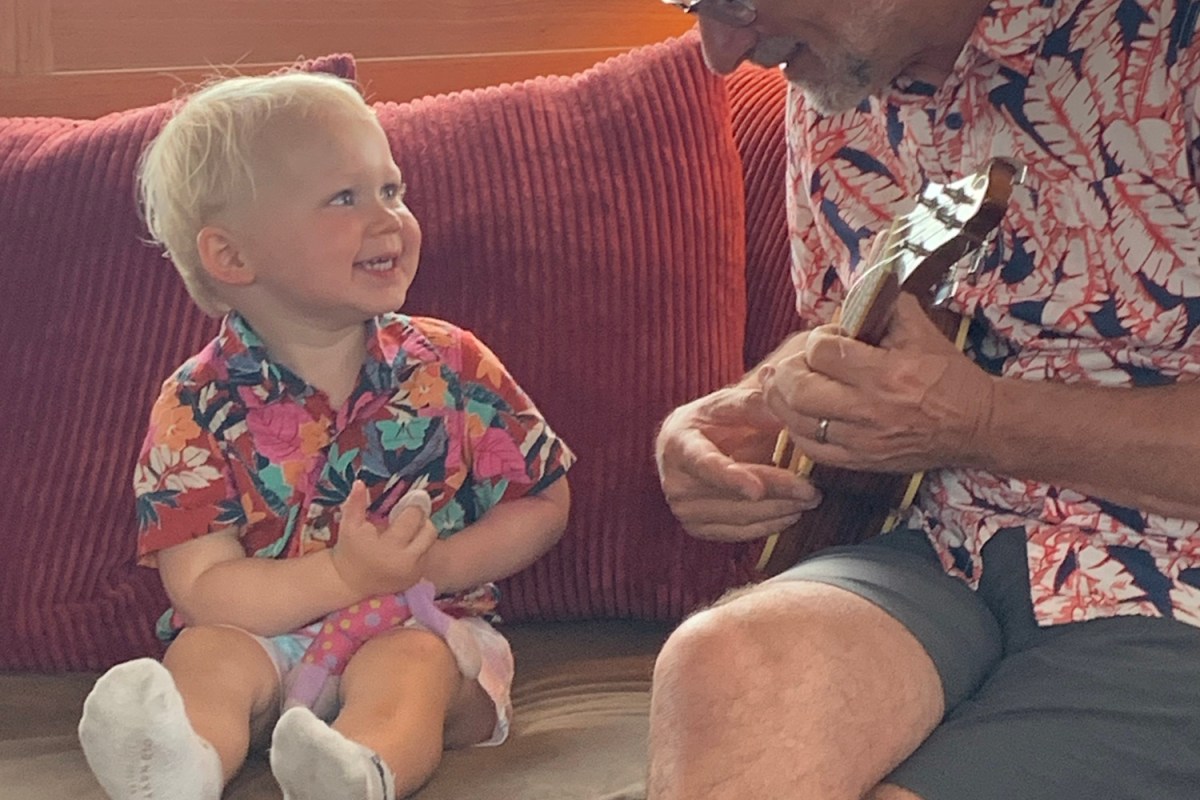
At bedtime, I told the kids the story about when Mr. D was 2-years-old and had the cutest little Hawaiian shirt. I dressed him in it every time we went to a party and everyone oohed and aahed, “What a cute baby!”

So Miss O said to me, “I hate it when he wears that shirt. He gets so much attention.” I explained that what I did to help wasn’t to get her the same shirt – or buy them both a new outfit that matched each other. I helped her find a new dress and shoes so she could feel good about what she was wearing – on the inside –even if she didn’t get all the compliments the baby did.

I summed it up that sometimes we just need to give each other space. That competing or comparing, especially over time, can often undercut someone’s confidence.

I must have flubbed the ending. Because at the end of the story, Mr. D wanted that shirt and Miss O said, “I knew I wasn’t going to like that story.

I left the bedroom with two grumpy kids still pouting. I was frustrated because I couldn’t fix it. It struck me that we were all too close on this one – perhaps telling the story when we were all together wasn’t the right timing. Or that we just needed some time. Or that bedtime wasn’t a good time to tackle this. All of the above, I suspect.

And that is why my guitar gently weeps. From under the couch where I hid it.

Being Difficult

There will never be an “us” if I play small.” – Sharon Preiss

Last Monday when Miss O, Mr. D, and I were getting ready for bike camp, nine-year-old Miss O was dragging her feet. She had a ton of “problems” that were blocking her: she couldn’t find shoes, Cooper the dog was in her way, her helmet was missing one unicorn ear, she didn’t remember the route we usually use to go down to the lake, yadda, yadda, yadda.

I turned to her and said, “You are being difficult.”

She replied, “I am.” And then added, “I wish I could tell you when you are being difficult too.”

To which I replied, “Please do. But I’d especially love to know when I’m being difficult when others are trying to be helpful and supportive or if it’s when you all are dragging your feet.”

I’ve been troubled by this conversation ever since. In fact, I’m finding it hard to write about. Here’s my best guess at why.

I think I’m starting to experience the generational BS that women in my family pass down. And it’s so ingrained and insidious, I’m not even doing it intentionally.

You are being difficult.” It’s like code for saying that I expect her to fall in line and be agreeable. To be flexible and accommodating like a young woman.

To be fair, she was being difficult. It’s just that the word hits a note of a gender stereotype that I’ve tried to avoid my whole life. I had no intention of passing it on. Then it slipped out of my mouth.

I’m naturally pretty agreeable. But inheriting the expectations of how a woman should behave has kept me from speaking up when I needed to – both in pursuing my own interests and also when something is wrong. And it kept me playing small. Trying not to stand up or stand out has kept me quiet about what I know or am capable of doing. It’s made me intentionally dim my light so I’m not too much.

It’s taken me decades in leadership positions to figure out that I can be genial AND forthright. And when needed, it’s acceptable to be hard-headedly, certainly, yet kindly, difficult.

So, I’m officially okay with Miss O being difficult. While I prefer she not do it when we are heading out the door, it’s fine if she does that too. Because sometimes that is when we learn to flip the script.

(featured photo from Pexels)

A Piece of Advice

“I always pass on good advice. It is the only thing to do with it. It is never of any use to oneself.” – Oscar Wilde

This was originally published on 5/18/2022. Heads up – you may have already read this.


Enjoy this time, it goes so fast” is the single most repeated piece of parenting advice that I’ve heard since having kids. Since I chose to become a single mom at an older age than my friends, having my kids at age 46 and 50, I hear it both from my peers and the older generations which makes it bear even more weight for me.

My kids are now 2-years-old and 6-years-old – there are a lot of parenting years I have not yet covered. But in the phase of parenting I’m now in, there are very many life skills my kids haven’t mastered both in terms of basic care and feeding and also regulating the emotional ups and downs of life. It’s a very physical job that takes a lot of patience. But while I’m needed often for kissing boo-boos, the beauty of this phase is that my kids’ problems are small and my kiss can fix almost anything that happens to them.

Breaking the advice down and applying it to where I’m at: “Enjoy this time.”

Enjoy this time which means enjoy this phase that’s a lot of work and is full of ups and downs. Enjoy this time which means celebrating it even when my shoulders are heavy with the responsibility and worry for this family. Enjoy this time which means treasuring every drop of this intimate closeness even when it’s full of sticky, raw emotion both positive and negative. Enjoy this time which means cherishing the weeks when it’s completely impossible to complete my personal tasks and create a stable experience for my kids when they are sick, the world is sick, or even when I’m sick.

And then “it goes so fast.”

It goes so fast implies that if I look away for a second, it will change to something else. It goes so fast means that time is ticking even when it’s not fun. It goes so fast tells me that if I’m dreaming of a moment in which I can have a routine that isn’t so urgently tied to others’ needs, I will miss something unfolding in the life of today.

And back together, “Enjoy this time, it goes so fast.”

Enjoy this time, it goes so fast tells me to savor what I have. Enjoy this time, it goes so fast implies a richness to the mess of a life I have now. Enjoy this time, it goes so fast means that this is the heart of life experience beating right now.

Now that I break it down “enjoy this time, it goes so fast” doesn’t seem specific at all to parenting. Perhaps we all need this reminder to touch this moment we are in.

(featured photo is mine of me and my kids, at age 2 and 6)

The Choices We Make: My Mom the Spy

Nothing has a stronger influence on their children than the unlived lives of their parents.” – Carl Jung

The post was originally published on 5/10/2023. Heads up – you may have already read this.


There’s a family joke that my mom is a CIA agent. Even now at 83-years- old, when we mention it, she just smiles and shrugs her shoulders, or says there is no point in denying it because we wouldn’t believe her.

As with most jokes, there is a kernel of truth in it. My very smart and capable mom graduated from college in the early 60’s with a degree in Far Eastern Studies and fluency in Russian. The CIA was actively recruiting from college campuses at the time and offered her a job. Her story is that she turned down the job because she met and married my father instead.

But over all the years since, she’s maintained her fluency in Russian, she went back to school when I was in college to get another degree in Russian language and literature, and she’s traveled there – when it was the Soviet Union in the 1970’s and later when it was Russia, many times. Would there be a more perfect cover for an agent than being a pastor’s wife?

It took me becoming a parent myself to understand how ridiculous this story, as fun as it is, really is. Not only because I finally understood that she didn’t have the time while raising three kids, of which I’m the youngest, but also because there is no way her heartstrings could have been in both places.

She made her choice. Instead of translating documents, she took on the work of translating the patter of baby talk into something intelligible. And then developing the sources into people who could talk the language properly.

She gave up a life of intrigue and instead instilled intriguing thoughts and ideas into her children’s lives.

Instead of secret meetings at night, she was called to hold our hair when we threw up and calm our fears when the bad dreams came.

She traded briefings about the state of affairs for parent-teacher conferences and traveling to sports events. And instead of establishing confidence in sources and colleagues, she choose to do the work of instilling confidence from the ground up in three young people.

Instead of fighting the bureaucracy at a government agency, she taught her kids that we had agency and were capable of fighting our own battles for what we believed in.

Instead of patiently nurturing a career that would challenge her brilliant mind and sense of adventure, she choose to nurture her patience with three young people who challenged her peace and equanimity.

Instead of running agents with their own backstories and motivations, she choose to help build a solid and stable backstory for us, fully present to launch our own motivations.

Instead of changing the world balance as a spy, she was the world for us.

My mom has never framed it as a sacrifice, but now that I see how much it takes to lose oneself to take care of others, I know that it was. I understand now that she had to make all these choices, from what might have been interesting and rewarding to her mind to hopefully what was interesting and rewarding to her heart.

She made her choices in life so that I could make the choices in mine.

Thank you, Mom.  

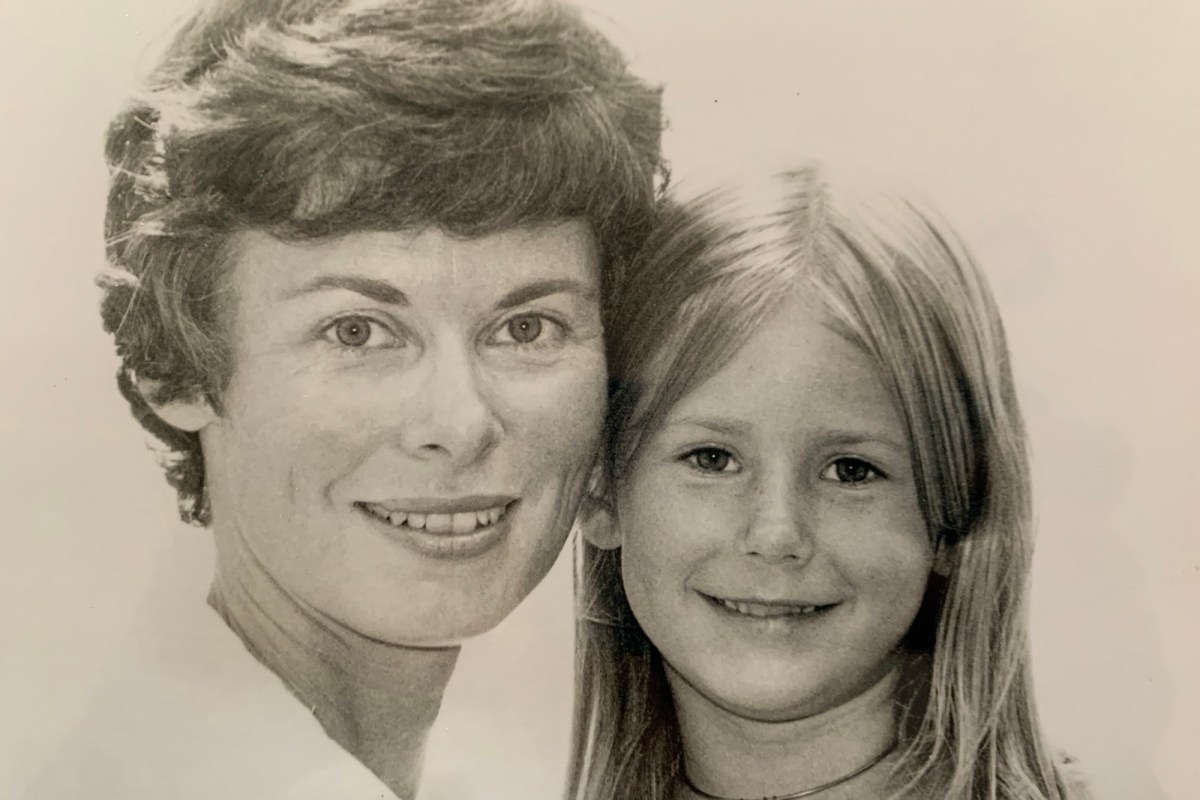
(featured photo is mind: Mom and me in 1974)

Related post: Looking In Through The Sliding Glass Door.

Five Ways to Be a Happier Parent

Children are great imitators, so give them something great to imitate.” – unknown

A friend who is pregnant asked if I had any tips. There are so many parenting philosophies and opinions out there. I can’t imagine I have anything to add. Besides, each kid and each parent is so unique.

But I do know what has made me a happier parent.

  1. Finding a way to ground the central nervous system. I remember walking into a room where my kids had spent a happy day hanging out with my brother and his wife. Miss O was about five-years-old and Mr. D was about one-years-old. As soon as they saw me, they started crying and clamoring for my attention.
    It wasn’t that they were unhappy. It’s just that they had spent the longest time away from me so far. I was the lightning rod for the relief they felt after all the bravery and novelty they had experienced.
    Having a way to calm myself – meditation, breathing exercises, time spent in nature – has lessened the overwhelm I feel when my kids need that extra boost.
  2. Understanding that life is a science experiment. One morning when Miss O was about three-years-old, I was trying to get us ready to leave the house to meet my friend, Katie. I found Miss O at the art table where she’d made a huge mess cutting into a squishy into her scissors. I was incredulous, “Why would you do that?”
    When I saw Katie, whose kids are grown, she laughed and said, “Life is a science experiment.” Understanding that has made such a difference to my parenting attitude. We all try things to see what happens next. Sometimes the kids will do this and it messes with my sense of order. But it isn’t personal, just a part of learning.
  3. Following their lead. On a recent Saturday morning, Mr. D and I were out front as he drove a remote control car down the sidewalk. When we were in front of our favorite neighbors’ house, Mr. D said, “Let’s ask them to play.” I demurred, thinking we might bother them, but Mr. D said, “Follow my lead.” I did and my neighbors, a couple in their 70’s were delighted to see us and have a turn to drive the remote control car.
    Dr. Alison Gopnik, a research psychologist at UC Berkley says kids’ neural pathways look like the streets of Old Paris, many, windy paths where you don’t go very fast. They are wired to look for what can teach them the most. On the other hand, our adult brains have neural paths that look like boulevards. Not very many but you can go faster. We are wired for getting things done.
    When we follow kids’ leads, they get us out of our ruts and help us be creative.
  4. Being creative to connect. The early years of parenting can be so isolating. Spending time with other parents who are also overwhelmed, and conversations that are constantly interrupted by attention to little ones often isn’t satisfying. Working, blogging, pursuing one interest that puts you in the path of adults you can connect with has made such a difference.
  5. Accepting that a great and happy parent is perfectly imperfect. I remember walking my dog past a house where a kid was crying when I was pregnant with my first child and thinking, “I’ll never let my kids cry it out.” Hah!
    Giving up the idea that I would be a perfect parent – always calm, with a clean and orderly house, and full of ideas that would keep my kids entertained and screen free – is the best thing I’ve done for myself and them.
    Instead I have come to see that a perfect parent knows if they lose it and yell, they can also show kids how to own it and apologize. And laugh at themselves, and be okay with being flexible with any no screen, all organic, and any other high-minded ideals to do their best for that moment.  

Anything you would add to the list?

(featured photo from Pexels)

I pulled this list from other parenting story posts I’ve told:

Lost and Found People

The good road and the road of difficulties, you have made me cross; and where they cross, the place is holy.” – Black Elk, Oglala Lakota Medicine Man

The other day I was sitting at the kitchen table with Miss O. One of the 20-somethings in our lives had just shared with us that she was pregnant and Miss O was so excited.

She asked, “Mommy, how did you tell Nana [my mom] that you were pregnant with me?

I replied, “Well, it wasn’t that much of a surprise with IVF because she knew I went in to have an embryo implanted. Then 10 days later they did a blood test to determine whether I was pregnant. So I think I called her or I texted her.

Then she surprisingly asked, “And she was happy?”

Trying to figure out the phrasing, I raised an eyebrow and replied. “She was thrilled.”

And then Miss O revealed why she’d asked like that, “Even though Bumpa [my dad] had just died?

Oohhh, she was putting together the news with the story that she already knew which is that my dad died just as I was getting pregnant with her.

And then, my not quite 9-year-old daughter, replied, “We are the lost and found people.

Whoa.

I’ve often thought of those months when I was writing a book about my dad, his remarkable life, our connection, and the reward for being open with him when Miss O was in utero. It felt like a dance between birth and death. I was saying good-bye to having him present in life as I waited for Miss O to come. Such a sacred dance.

But Miss O’s comment about lost and found people made me think that maybe we all are. It seems like many new chapters are ushered in after we’ve given something up: a job, a partner, a story we believe about ourself.

And then, when we’ve given it up, we can proceed. Seems like the trick is not to get mired in the lost, so that we keep working towards the found.

We are the lost and found people. I couldn’t be more grateful to my beautiful daughter for pointing that out.

(featured photo is my dad and me when I was 2-years-old)

My book about my journey to find what fueled my dad’s indelible spark and twinkle can be found on Amazon: Finding My Father’s Faith.

The Most Important Work

Children are not a distraction from more important work. They are the most important work.” – C. S. Lewis

Sometimes I think Hallmark has it backwards. Take Mother’s Day for example. My kids didn’t do anything to choose me. I, on the other hand, took a very intentional path to become a mom.

From the realization that I wanted to have kids later in life because I cried whenever I saw Princess Kate pregnant with her oldest child nine years ago, to deciding to do it without a partner (for now), then through IVF three times (I had one miscarriage), I made very deliberate choices to parenthood. I couldn’t be more grateful that I’m a mom.

Here’s the top three reasons why:

I’m so much healthier

You didn’t know me before I had kids. I didn’t write in the period of life when I was numbing my feelings with wine every night. Meditation changed that pattern so that I had a different way to irrigate my irritations.

But having kids has given me so much more practice. That’s a funny sentence. I didn’t mean that they give me many more irritations to irrigate but on some days that’s true too.

Mostly I meant that these beautiful and honest beings have shown me what emotional honesty is. By helping them name their emotions, I’ve learned how to name and feel mine too.

Every day is an adventure

I’m a creature of habit. Without kids, I’d have likely continued my pattern – hike every Saturday, do a big trip every two years. Like my trips to Everest Base Camp, climbing the Via Ferrata routes in the Dolomites, or biking from Vermont to Canada to New York – great trips that totaled about two weeks out of every 104.

But with kids – every day is an adventure of curiosity and learning. We rescue bunnies, dig in the dirt, ride bikes, or sell lemonade. I’m learning to be flexible and adventurous on a daily basis instead of a bi-annual one.

Big messy love

Parenting is the messiest form of love I’ve known. Not just sticky hands and faces but so much laundry, picking up detritus, territorial incursions because of changing boundaries, and spilled over spats between siblings.

But it seems to me, that the messiness that makes it stick like Velcro instead of slide off like a glossy surface. It’s proof that nobody is perfect any we love each other anyway. The repetitiveness reminds me how many chances we have to get it right. Over and over we make a mess. And over and over we get to come together and make it right.

The news has all sorts of stories about what isn’t working in this world. But then a day like Mother’s Day comes around and I look at all the people who are trying their best to love wholeheartedly – with young kids, and old kids, and/or other people’s kids. For me it’s a celebration that love wins.

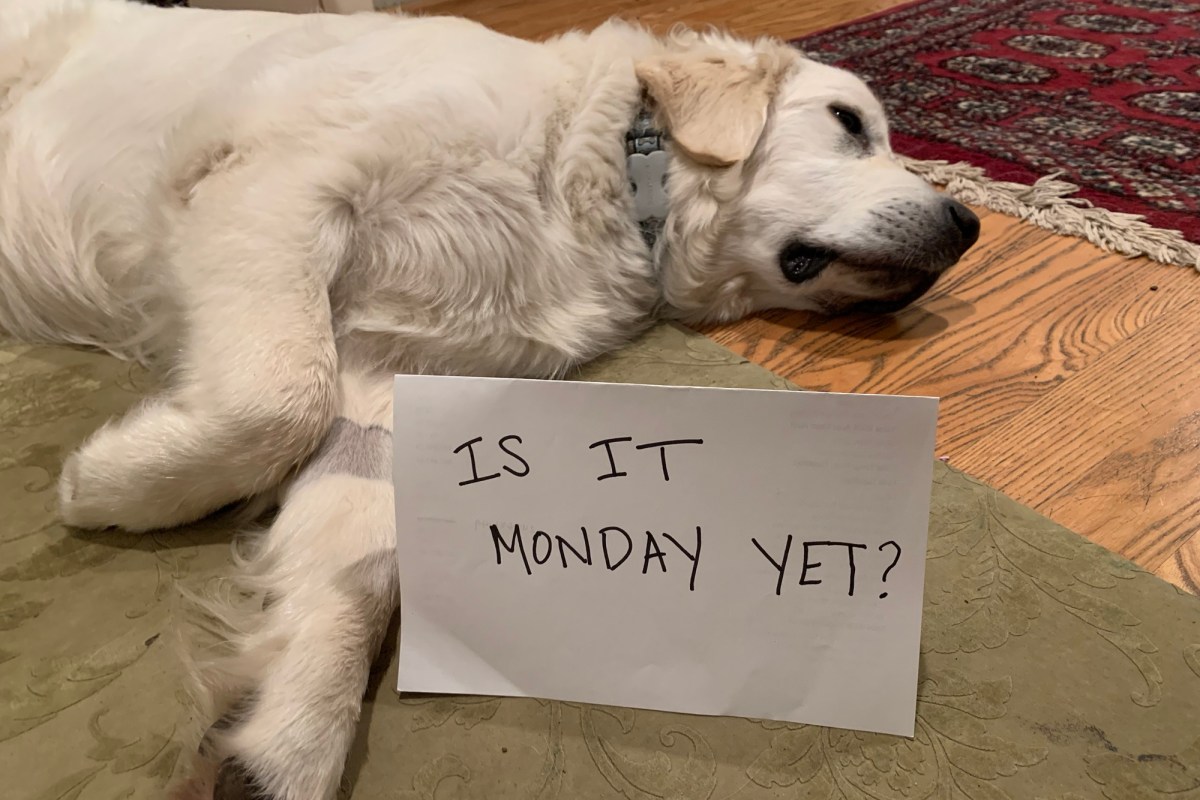
Thank Goodness It’s Monday

If we want stability in our family, society, nation, and the world, we need to create stability in individual human beings.” – Sadhguru

This weekend I:

  • Walked a half marathon (27k steps over 2 ½ days)
  • Celebrated the achievements of this youngest generation of scientists and explorers (took my kids to a 5 year old birthday party and set up marble tracks, cheered for kids figuring out how to slide fast and slow, )
  • Practiced medicine (2 boo-boos, and tummy ache)
  • Work to help prevent disease and disorganization (did 5 loads of laundry, supervised young hands wiping down counters and sinks, changed the sheets, mowed the lawn, organized a utility closet, and did at least 1000 dishes)
  • Exercised hearts and minds (played 2 games of family soccer, reenacted light saber scenes, played Chinese checkers, read a half a dozen books aloud, and told a dozen stories, played at least a dozen rounds of keep away with Cooper the dog)
  • Fed the hungry (prepared seven meals, a bazillion snacks, five meals for the dog, three meals for the cat)
  • Coached positive techniques for conflict resolution and expressing healthy boundaries (settled at least a half dozen power struggles and fits of big emotion)

No, I’m not aiming to do a victory lap here (for one thing I’m too tired 🙂 ). But my weekend reminds me that:

  1. We don’t give caretakers nearly enough credit for the amount of energy and skill it takes to keep other beings alive.
  2. I’m a much better parent because I work. The dozen things I need to get done at work on Monday seem like child’s play… compared to a weekend of playing with children.
  3.  Kids and pets reflect the care they get…and so do caregivers. None of it is possible unless caregivers fill up their tank.

Happy Monday, everyone!

Extending One’s Self For Love

“I define love thus: The will to extend one’s self for the purpose of nurturing one’s own or another’s spiritual growth.” – Dr. M. Scott Peck

I was telling my dear friend, Katie, the story of traveling home from New Orleans with my kids a few weeks ago. Miss O and I checked out bags. Then Miss O pointed out to Mr. D the really cool way our bags were traveling down the conveyer belt.

Mr. D wanted to check his bag then too. “No, “ I insisted. “That costs $30.” Which is a stupid argument to make to a four-year-old. So we sat down on the floor or the airport to have a family meeting. When nothing I was saying was working, I finally said, “Mr. D, I’ll give you $5 to NOT put your bag on the conveyer belt.”

Deal!

And then he gave me the $5 back about two minutes later.

Katie responded that I was a nice parent. Which made me think. I’m not sure if I approach it this way because I was raised in the era of “behave well – we don’t care what you feel” so I’m doing the opposite. Or out of necessity because most of the time I’m outnumbered. In this case, I simply didn’t have the strength or number of hands necessary to carry my backpack and a screaming kid through the airport.

But I’d also say that parenting has changed me. Now I’m really interested in helping little people through their emotions. In my negotiations, the answer never changes – my kids still have to go to school, not check their bags, and respect bedtimes. But I’m happy to work through how they feel about it.

Like when after three years of having no problems at pre-school drop-off, Mr. D started balking at the door. There have been lots of personnel changes and that seems to be the root of the reluctance.

I tried just leaving. I tried making deals. I tried going to Starbucks to talk about it. I tried using little plastic people to act out why.

And then I landed on riding bikes to school. Miraculously, it worked. It made it so that he didn’t have any problem going to school and his entire day was better. Then I started playing with the how. Driving eight-year-old Miss O to school so she didn’t have to ride every day. Then running alongside Mr. D as he rode his training wheel bike.

I’ve adjusted the length and we’ve tried scootering instead of biking. Even a .4 mile scoot works.

Sure, I’m showing up at work sweaty and late from running alongside and then back to the car again. I needed more exercise anyway. And it works. It changes his whole day because we’ve figured out how to move the energy that was blocking him.

Dr. Peck’s definition of love at the top of this post resonates with me. There are so many ways that people extend themselves in love. Working through feelings happens to be mine for this phase of life, born out of necessity and time. It’s had extended benefits in the patience I have for other areas as well – work, friendship, and pet ownership.

Here’s to everyone doing the hard work of love in whatever way works for them.