Cookie Cutter Faith

There are two ways to live your life. One is as though nothing is a miracle. The other is as if everything is a miracle.” – Albert Einstein

This was originally published on 7/6/2022. Heads up that you may have already read this.


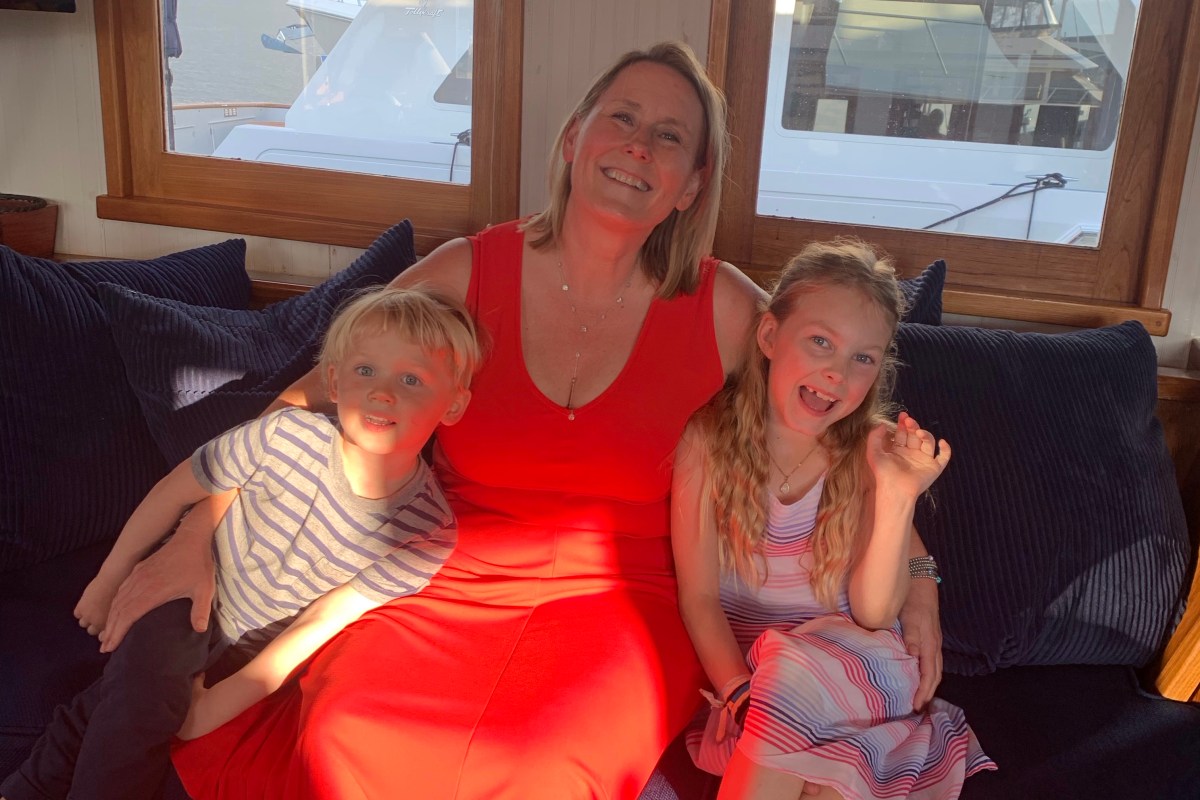
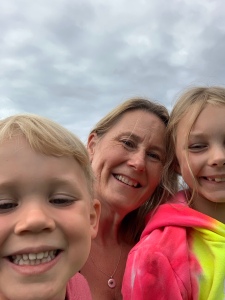
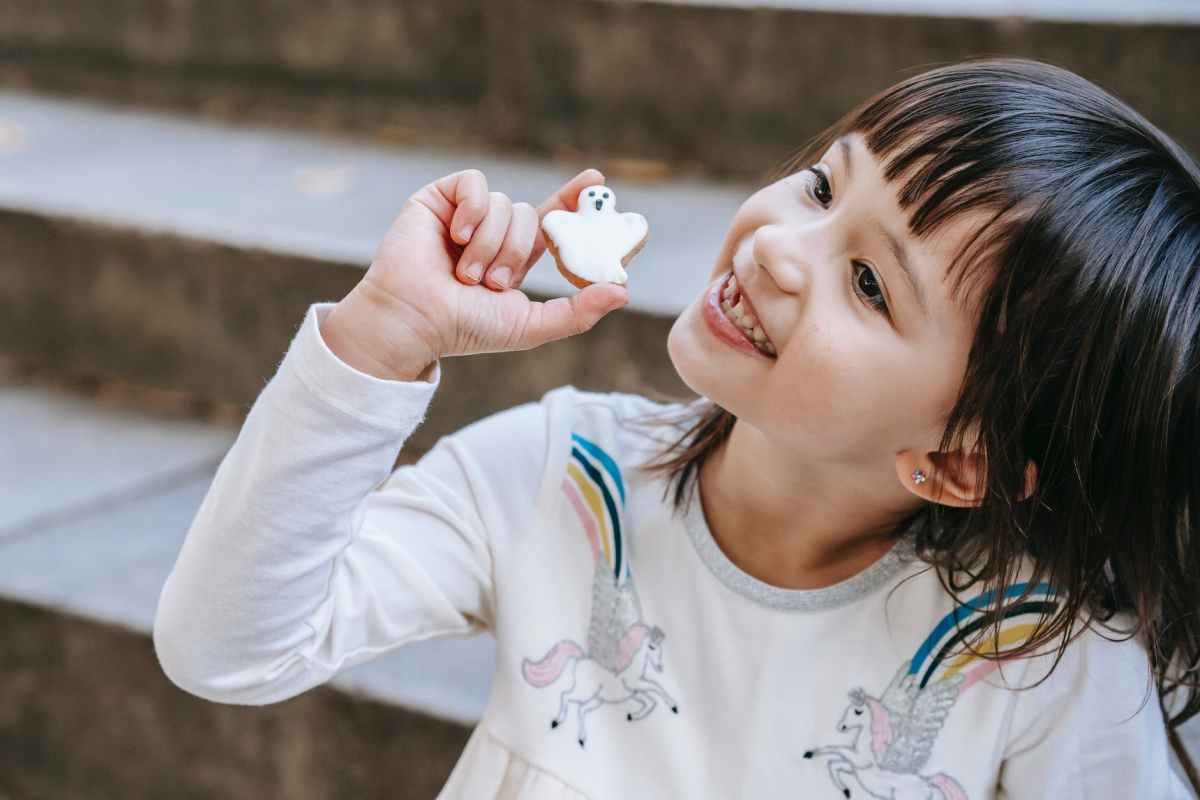
My kids and I went to a wedding out-of-town this past weekend. At the wedding, they gave out fortune cookies. My 6-year-old daughter opened hers and read “You will find a treasure soon.

The next morning we were driving around looking for an alternative to the planned hike because it was raining. I turned in at a sign that said, “Horseback riding.” It was a holiday weekend and we didn’t have reservations so I didn’t think we’d be able to ride but maybe we could see some horses, my daughter’s favorite animal even though she’d never actually touched one. Yet.

But they booked us for a ride. As my daughter sat atop a big quarter horse named Comanche, I could hear her tell the guide. “I got a fortune cookie and it said that I would find a treasure. It was right – THIS IS MY TREASURE.”

I chuckled but as the weekend went on she repeated the story a few more times adding at the end, “I need another fortune cookie.” I grew a little uneasy. Surely I needed to inject a little reality to this fortune cookie madness.

Wait a minute – one of my favorite quotes is from Albert Einstein’s “There are two ways to live your life. One is as though nothing is a miracle. The other is as if everything is a miracle.” And I’m clearly on Team Miracle. So why was I feeling the need to put the kibosh on her finding some magic in fortune cookies?

Because I’m a parent and I want her to believe in something more substantial that involves some responsibility and transcendence. Because I don’t want her to be disappointed.

It made me think of all the years that I didn’t discuss my faith with my beloved dad because I feared my spiritual beliefs weren’t religious enough. When I finally found the chutzpah to do it, we had deep and meaningful conversations about life, family and love. And it turned out that life and his 40 years as a pastor had instilled in him a bigger idea than the Presbyterian party line. In the end, he called himself a big tent guy. “In a way I have become less cocky or confident because I thought I had things all figured out early on, but now I know I have general things figured out, but the fact is that we differ in this huge tent of the family of faith on different things.

And then he went on to paint a picture of how my yoga/meditation/spiritual practice related to his beliefs in a unifying way:

“I’ve thought this often about you and your world with all the disciplines that are so wonderfully therapeutic. It seems to me that Christ is equally as present and could be equally named and known to you. The disciplines in a sense are more along the horizontal level than perhaps the vertical level (reaching up to God) and Christ honors anything that makes us more what God wants us to be.

I am thrilled with what is happening in you in this journey and one of the great benefits is that it brings us closer.  When kids follow in a trail similar to their parents, it creates one more way they can be close and can relate with each other … and in this case relate deeply and lastingly.”

Dick Leon

Thinking back to what I learned from talking with my dad, I think of all the time I didn’t talk about faith because of fear that it wouldn’t measure up. In the end, I realized that no two people see faith in exactly the same way, no matter how unified their theology is. Instead, there’s room in the tent for all of us.

I have faith that my daughter will grow up to experience God in her own nuanced way and I don’t need to fear it will be Fortune Cookie religion. So why not find some magic in it? After all, my fortune was “Your hard work will pay off soon.

What about you? Do you talk about faith in your family? Do fortune cookies count as miracles?


As a related post to this one, I’ve published a post on the Wise & Shine Blog: Do You Believe In Magic? Do You Write About It?

(featured photo from Pexels)

The Fruits of Our Labor

Each life creates endless ripples.” – Frank Herbert

This summer I was idly chatting with the mom of one of Miss O’s school friends at a pool party. Our conversation switched to careers and she mentioned that she is a nurse at the fertility clinic that I used to become pregnant via IVF (in-vitro fertilization). What’s more, she works on the team of Dr. Dudley, my fertility specialist.

When I revealed that, her eyes grew wide. She looked at me for a long moment, she looked at eight-year-old Miss O, she looked at four-year-old Mr. D, she looked back at 54-year-old me, and her eyes were full. She’d never met a baby of one of her patients. Even though I wasn’t directly her patient, it was like seeing the fruit of her labor.

There are times that I forget that I had kids in a non-traditional way. I have no problem talking about it, as I recently did on the Sharing the Heart of the Matter podcast with the amazing Vicki Atkison. But often it’s just that life right NOW is so busy, I forget about way back then.

Everything is timed to a T in the IVF process. This drug here, that test there, the implantation of the embryo, then a blood draw on day 10 to see if you’re pregnant. If you are, the due date is an exact calculation from the calendar. The fertility clinic, at least in my case, sees you until you are at ten weeks along. Then you transfer to an obstetrician and may never see them again.

One of my dad’s favorite parts of being a pastor was that he felt it was such an honor to be a part of the many sacred moments of people’s life – birth, baptism, marriage, death. To see the whole story.

But my acquaintance, the nurse, usually only gets to see that one part of the story. I remember sending a birth announcement to the fertility clinic when I had my babies. I gather from her wet and twinkling eyes that’s not the same as seeing these kids do a cannonball at a pool party.

There are a lot of times we never see the impact of our life – the way we touch other people with a smile, a question, or a reply. So, I love the stories of the full circle moments when we do get to see the fruits of our labor, even if “those fruits” just got you wet at a pool party. All the better to hide the tears.

For a related story about the IVF process, please see my Heart of the Matter post, The Courage To Try.

(featured photo from Pexels)

All The Secrets

Take chances, make mistakes. That’s how you grow. Pain nourishes your courage. You have to fail in order to practice being brave.” – Mary Tyler Moore

The other day my kids and I were out walking in the neighborhood and ran into two brothers, 11-years-old and 9-years-old, from the English family that has moved in up the street. The older brother did a card trick for Miss O. I wasn’t paying attention to all of it, but there was audience involvement, and even some spelling and counting going on.

When the older brother finished and revealed the chosen card – the right one – the younger brother exclaimed quite proudly in his delightful British accent, “It works nearly every time.”

Which made me laugh. The way he said it so charmingly uncovered that a lot of practice has gone into this particular trick.

And it reminded me that often family members know our secrets and weak points. Hopefully, especially when they are working well, within the context of great love and acceptance.

Speaking of family, I spoke with Vicki on this week’s Sharing the Heart of the Matter podcast about how I started my family as a single person. We talk about invitro fertilization, the fears I needed to overcome, the lessons I apply from my dad, and the seven quotes that have helped me change my script from fear to love. Please listen and subscribe on Amazon Music, Apple, Spotify or Pocketcasts to Sharing the Heart of the Matter podcast or find it here on WordPress: Episode 40: The Power of Choice with Wynne Leon

(quote comes from the MSW Blog: Being Brave)

The Art of Apology

And now that you don’t have to be perfect, you can be good.” – John Steinbeck

This piece was originally posted on 3/9/2022. Heads up – you may have already read this.


The other night my two-year-old son wanted me to get a step stool out of the closet. As I was lifting it out of the storage space, he reached for it and his littlest pinky finger got pinched in the hinge that connects the sides of the ladder as it opens.

Yikes! I put the step ladder down, scooped him up and said, “I’m so sorry.”

I wanted to say, “But you need to wait til I get it all the way out.” And “That’s why these things are grown-up things.” And probably 15 other things in order to make myself feel better because I very much didn’t like being responsible for an action that pinched his finger.

But I didn’t, because I remember listening to a podcast with psychologist Harriet Lerner on Brené Brown’s Unlocking Us series that was like a master class on apologies. It was 2 years ago and so well done that I still remember some talking points. One being “When ‘but’ is tagged on to an apology, it undoes the sincerity.” If there is a genuine counter point or excuse to the apology, it needs to happen as a separate conversation.

So I looked up some more details from Dr. Lerner’s book, Why Won’t You Apologize: Healing Big Betrayals and Every Day Hurts. She notes there are cultural differences when it comes to apologies. There are also gender differences – males are more likely to be non-apologizers, women are more likely to be over-apologizers. But for anyone trying to craft a sincere apology, here are some pointers she provides of things not to do:

  • Saying I’m sorry you feel that way: These are apologies that don’t address what happened but instead try to target the emotions of the other party.
  • The “IF” apology: I’m sorry IF you thought is a weaselly effort to not own what happened.
  • The mystifying apology: What is it that the apologizer just said? Apologies that usually are too wordy and talk around the issue, leave the other party feeling confused.
  • The apology as instant expectation of forgiveness: I apologize now you must forgive me is a quid pro quo that undermines the apology as a genuine offering and not just a means to an end.
  • Not listening: If we don’t hear the injured party out, they will not feel heard and any apology will fall short of the entire wound.

So what is a good apology? A simple statement expressing remorse for the action we are apologizing for, owning what we did, not taking more that our share of blame (because that comes across as insincere) and not trying to speak to how the other person feels.

Just thumbing this book reminded me of some old wounds that I was surprised to find hadn’t fully healed over because I can still think of the poor apologies I’ve received. The down-played sorry – “I’m sorry that I called you a ‘brat’ when I was feeling crappy” when that wasn’t the word used at all. The blame-shifting excuse: “I was feeling sick, what was I to do?” when someone no-showed/no-called to the birthday party I threw for her. And the non-apology because the person who caused the injury paraded around all his own hurts as a way to claim he couldn’t be responsible for his actions.

And it also brought to mind incidents where I owed an apology and fell short. The little hitches where I still feel a little guilty or ashamed because my actions were thoughtless, careless, or uninformed and I never had the guts to address it properly.

All these memories make the case of how important a good apology is. As Dr. Lerner says, “I believe that tendering an apology, one that is authentic and genuinely felt, helps the other person to feel validated, soothed and cared for and can restore a sense of well-being and integrity to the one who sincerely feels she or he did something wrong. Without the possibility of apology and repair, the inherently flawed experience of being human would feel impossibly tragic.”

This makes me think of one of the best apologies I’ve ever heard. When my friend Jill was feeling tender because something her partner did, he said, “Please tell me what I did so I can never do it again.”

Fortunately having two young kids gives me plenty of opportunity to apologize. Thankfully it’s usually for skinned knees and stubbed toes for which I have no responsibility but am still sorry they happen. Then I get to participate in the healing. As my son said for the pinched finger incident, “Mama, kiss it?” And then we get to continue growing and learning, all the while in relationship to each other.


Saying “I’m sorry” reminds me of the power of keeping it simple. I’ve posted about The Power of Short Sentences on the Wise & Shine blog today.

(featured photo from Pexels)

Forced Flexibility

Blessed are the flexible, for they shall not be bent out of shape.” – unknown

I had to get rid of a settee from my bedroom. It was a holdover from my marriage, beautiful but useless. It sat in the corner holding books. But my kids have been arguing at night when we read together about who gets to sit where so I put the settee on the curb with a free sign. It was gone within hours and then I was free to build out a reading space on the floor.

That’s not the only change going on around here. I’ve been shuffling up my morning routine and have landed on feeding and walking the dog before I meditate. It isn’t really how I envisioned my feet hitting the floor. But it works well enough to create the calm I need for my sacred morning time.

I’ve been thinking about these as examples of how I’m being flexible for the beings in my home. But I suspect that I’m the biggest beneficiary of this practice. Left to my own devices, I would do the same routine every day in perpetuity.

But that sameness doesn’t loosen me up so I stiffen over time. It reminds me of the aphorism, “what doesn’t bend, breaks.” I’d like to think I’d bob and weave if I wasn’t being “flexible for the kids” but I’m not so sure.

It’s all part of their plan to keep me young. It’s like yoga for my soul – these exercises that keep my innards loose enough to go with the flow. I get a lot of practice being a tree that will sway with the wind instead of a stick dropped in the mud.

I write this to encourage myself to be flexible. Because I don’t like it much at all. I’m stubborn and dogged by nature and that has taken me far in pushing through to mountain summits and every other metaphorical summit. Yet I see the goodness practicing this acceptance and letting go of what is. It frees me up to create and be the next thing.

(featured photo from Pexels)

The Quantity versus Quality of Time

The bad news is time flies. The good news is you’re the pilot.” – Michael Althsuler

This post was previously posted on 7/20/2022. Heads up – you may have already read this.


Last week I was driving in my car with my almost 7-year-old daughter at 8:29am when she said “Darn, I’m always a minute late for my favorite time.” She likes palindromic times – in this case 8:28.

It made me think about what I’ve been working on lately. Life feels hectic – summertime means different routines for each week, forms to fill out for camps, people to coordinate carpools with, a lot of additional details in addition to working my full-time job, taking care of kids and trying to maintain a social life.

In the midst of this, my goal is not to be in a hurry even while living a busy life.

That is to say, to try to be intentional and savor the things I’m doing. For example, I had on my to-do list an item to fix the fence where it had come apart at a post. That activity in and of itself doesn’t really have a high enjoyment value. But the other day when I stepped out to assess the task, I felt the summer sun on my back and saw the green of all the grass and trees around. The flowers of the garden are really flourishing and it’s an incredibly vibrant scene right now.

The task might not be much to talk about – but the scenario is gorgeous. When I hurry, I miss all of that. So I’m trying to take an extra breath or two, how long can that take – 11 seconds if I’m optimizing the length according to the Unified Theory of Breathing? Just a couple breaths add a dimension that makes me think of the quote from Auguste Rodin, “Nothing is a waste of time if you use the opportunity wisely.

There are two different Greek words that speak to this divide: chronos and kairos. Chronos is clock time so when my daughter is saying that she’s a minute late for her favorite time, it’s chronos we’re talking about. Kairos is translated as the “right time” as in now is the right time to step in, speak up or enjoy what I’m doing. I might have to be somewhere at a particular time, as in chronos, but kairos calls me to be mindful of the trip.  

I usually manage to arrive on time, chronos speaking, but I frequently mess up the quality of the time, kairos, in order to do so. In fact, I did that just yesterday when I was hurrying the kids to the car so we’d be on time for our carpool. My almost 3-year-old son wanted to hold the door for his sister and in my desire for efficiency, I didn’t listen to him and missed the right time to enjoy the spark of what he was doing. A small moment that is neither here nor there in the big picture, unless all the small moments are rushed like that.

What I’ve learned is when I manage not to be in a hurry even while life is busy, it prevents me from feeling like I’m a minute late for my favorite time.

How do you approach the quantity versus quality of time? Any tricks to slow yourself down when you are hurrying?


If you aren’t short of chronos, I’ve also posted a related post on the Wise & Shine blog: Speed Reading

(featured photo from Pexels)

Smells Like Vacation

Only a child sees things with perfect clarity, because it hasn’t developed all those filters which prevent us from seeing things that we don’t expect to see.” – unknown

I love words. Use them all the time. But every once in a while, something happens to remind me that perhaps I’m using too many.

The other day my kids and I were driving an hour to get to the Washington State Fair. It wasn’t a vacation, or bay-cation as Mr. D says, but it was a special day. And my kids are great in the car – they generally get along and are happy to be there.

So, there we were, sunnily driving down the road. Mr. D, who Vicki (from the Victoria Ponders blog and my partner on the HoTM blog and podcast) refers to as a poet, pipes up from the back seat,

I can smell bay-cation. It smells like orange mixed with rainbow.

What do your vacations smell like?

If you are going on a road trip or just want some great listening around the house, check out the Sharing the Heart of the Matter podcast with author and blogger Pete Springer on our latest episode: Episode 36: They Call Me Mom with Pete Springer

Do You Listen to Your Pain?

These pains you feel are messengers. Listen to them.” – Rumi

I originally published this on 9/21/2022. Heads up – you may have already read this.


A couple of weeks ago, I took both my kids to the doctor’s office. When it came time for the flu shots, the tech asked me to pick which child should go first. I picked my 3-year-old son. He reacted with an “ouch” and then was on to the next thing.

My 7-year-old daughter went next and probably because her brother didn’t cry out, she didn’t scream or cry when she got the shot but spent the next 20 minutes telling us how much it hurt. Then she saw her grandmother and started in on the spiel all over again.

My kids have completely unique reactions to pain. That’s even with taking into account gender and birth order differences that may exist despite my best efforts to treat them the same. It makes me think – we all express our pain differently.

This brings to mind some observations I read from animal behaviorist Temple Grandin about how animals mask their pain. In her book, Animals in Translation she talks about how sheep are the ultimate stoics – she’s witnessed a sheep that’s undergone an excruciating bone procedure return to the herd and blend totally in. Because of course for prey, that’s the point to make sure you aren’t distinguishable to predators based on weakness.

And another example she told was the story of a bull being castrated, who when left alone was writhing on the ground in utter agony. And yet when a researcher walked up, he jumped up and pretended nothing was wrong.

We all mask our pain, physical and psychological, whether its nature or nurture. As Plato said, “Be kind, for everyone you meet is fighting a hard battle.” It just might not be observable.

And perhaps pain is most dangerous when we mask it so much that we forget to listen to it. I have a spot behind my left shoulder blade that is incredibly knotted and tense from too much time spent in front a computer. I’ve had it for so long that for the most part I just tune it out which seems like an effective strategy until it hurts so badly that I have to get a massage. At which point my massage therapist, who has been my massage therapist for 25 years and is ultra-patient, asks “Are you ever stretching?” Duh – if I tended to it, perhaps it wouldn’t be so bad!

And I won’t even get started on my examples of psychological discomfort because we’d be here all day. I’m just saying, pain is instructive. It tells us what not to do and it also shows us where we need to heal. When we listen to our pain, we can create a relationship with it and maybe even start a dialogue – something different than just ignoring it.

“Our bodies often give us messages we fail to pay attention to. Ironically, we are all so aware of pain, can hardly ignore it, but we rarely hear what it has to say. It is true that we may need to withstand great pain, great heartache, great disappointment and loss in order to unfold into the rest of our lives. But our pain may also be showing us exactly where we need to change.”

The Book of Awakening by Mark Nepo

That day in the doctor’s office, I picked the order of the shots for my kids knowing that my son would have the smaller reaction. I didn’t want him to learn from his sister all the demonstrativeness. More than that, I didn’t want to endure the pain of having two kids crying.

But I think now I was wrong – I would much rather bear witness to their short-term outburst than to long-term suppressed agony. It’s one of the hardest things that I have to do to lead by example, to unmask my own pain and make it both visible and instructive. But I’m hoping that by working on it, it helps both of my kids know that exhibiting pain will gain one comfort, at least from your mom.


I’ve written a related post on Wise & Shine: Loving and Learning

(featured photo from Pexels)

Patiently Yours

Maybe happiness is this: not feeling like you should be elsewhere, doing something else, being someone else.” – Eric Weiner

We were snuggled into my bed for bedtime stories the other night, under the covers to fend off the late summer night chill, when I started a story about an attempt to fish when I was a kid by saying that I’m not a very patient person.

I’d only gotten that one line out when Miss O stopped me and said, “You are a super patient person with us, Mom!”

Oh boy, I had a parental drop-the-mic moment. I thanked her for saying that and walked away from bedtime stories with a little glow of my own.

I want to interject here to tell you of the many moments that I’m not patient, just as a reflex of polite conversation. It’s true that I’m still not very patient about waiting for life to unfold; it drives me crazy to wait for the pot to boil, the light to change, and the paint to dry. But brushing it off would be disingenuous because I’ve also done a great deal of work to become more patient with people.

So, Miss O’s words sparked some reflection about how I’ve come so far for it to be noticeable by my kids. Because let’s admit, kids are a tough audience where patience is concerned because they require a lot and have very little.

All of our major wisdom traditions speak to how to love others. For me, it’s a mix of those traditions and the way they’ve helped me to accept myself as a basis.

In the language of my father, I’ve embraced my role as a sinner and the grace of God. From a Buddhist perspective, mediation has helped me to find peace and loving-kindness. Listening to podcasts with psychologists has given me the perspective of self-compassion. And becoming a writer has helped me tell my story again and again until I’ve come to love it, and be infinitely curious and more compassionate about the stories of others.

In short, I’ve been able to slow my roll with others because I’ve learned to be patient and compassionate with myself.

I’m keeping this post about patience short. Just saying. Anyway, I’ve got to go watch a pot boil.

So if you want more and aren’t too impatient, I’ve written more about letting things unfold in others in my Heart of the Matter post: When Will They Learn?

(featured photo from Pexels)

Pick Three Affirmations

With all the stress and change at the beginning of the school year, I’ve been writing notes for Miss O in her lunch every day. Mr. D can’t yet read but his teachers asked for notes to read to kids when they miss their families.

The notes I find myself writing aren’t exquisite masterpieces that have any poetic resonance. They are simply affirmations in the stye of The Help by Kathryn Stockett

To the degree that I’ve figured out what works best, it is things that are specific, not too aspirational, and that resonate with what they might already believe about themselves. Writing them for my children is not very hard.

But if I was to turn the lens around the other way and have to pick three things to say to myself? Well, it’s a hard practice. So I’ve written some down for you all. Pick three things that you could really believe about yourself. Just so you know, I’ve written these with you all in mind:

You are clever.

You are kind.

You bring out the best in others.

You have come so far and are so generous to share your lessons with others.

You are a bright light.

You make others laugh.

You make others cry, in the best way ever.

You are such a good encourager.

You make the world a better place.

You are resourceful.

You are resilient.

You are creative.

You are so faithful.

You are a good listener.

You are wise.

You are patient.

You are a great storyteller.

You can figure anything out.

You have integrity.

You are empathetic.

You carry your load well.

You are strong.

You are brave.

You make me laugh.

You are a person I am delighted to know.

Really — pick three. Write them down and look at them when you eat lunch. I have it on good authority that they make the day better.

The podcast I did with Dr. Vicki Atkinson about how to Savor September goes nicely with lunch as well: Episode 35: September … Savor with Vicki and Wynne