Sunday Funnies: Oct 30

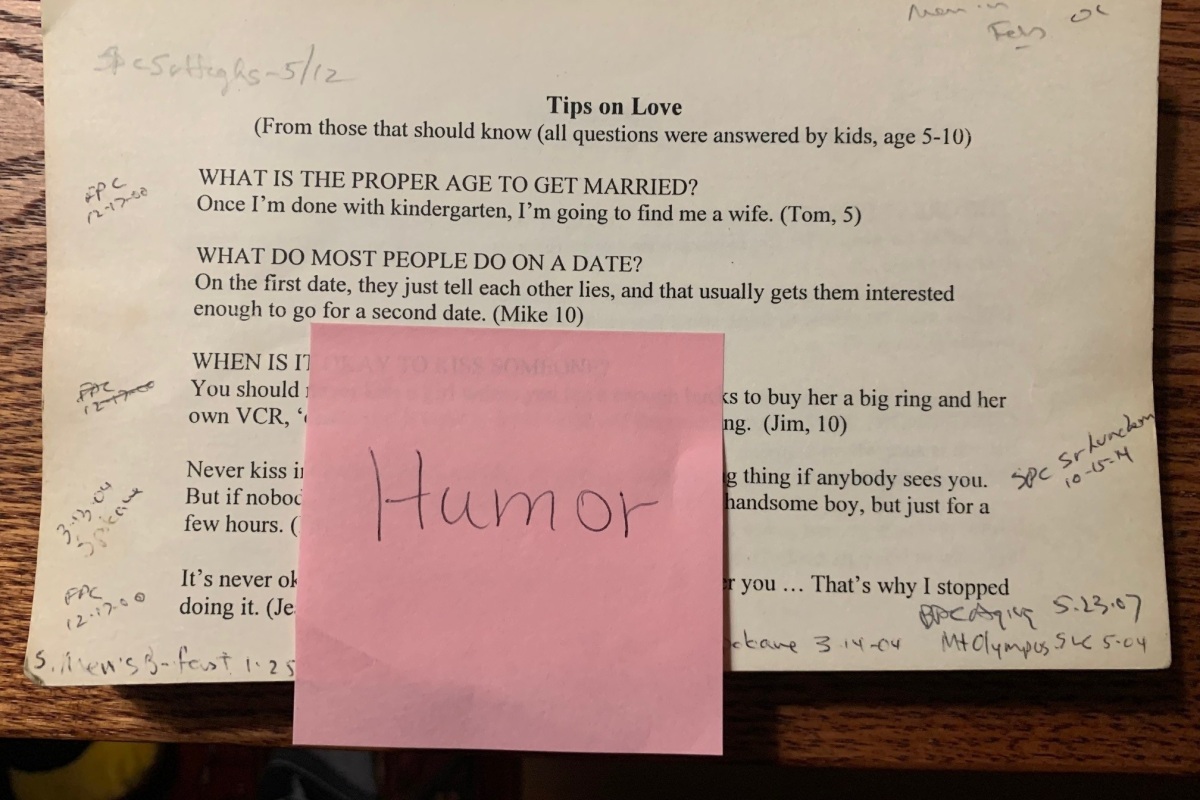
Another installment from my dad’s humor cards.

The backstory: My dad was a Presbyterian pastor for 40 years. He kept a well curated stack of humor cards – little stories or observations that he typed onto 5×7 cards. Then he wrote in the margins when he used that particular item. His humor was often an easy way to settle in to something deeper – by laughing and thinking about the buried truth in these little nuggets, it paved the way to an open heart.

When we cleaned out his desk after he died 7 years ago, I was lucky enough to stumble on this stack. I pull it out regularly to have a little laugh with my dear Dad. Now when I post one of them, I write my note next to his and it feels like a continuation.

A Neat Story

His name was Fleming, and he was a poor Scottish farmer. One day, while trying to eke out a living for his family, he heard a cry for help coming from a nearby bog. He dropped his tools and ran to the bog. There, mired to his waist in black muck, was a terrified boy, screaming and struggling to free himself.

Farmer Fleming saved the lad from what could have been a slow and terrifying death. The next day a fancy carriage pulled up to the Scotsman’s sparse surroundings. An elegantly dressed nobleman stepped out and introduced himself as the father of the boy Farmer Fleming had saved.

“I want to repay you,” said the nobleman. “You saved my son’s life.”

“No, I can’t accept payment for what I did,” the Scottish farmer replied, waiving off the offer.

At that moment, the farmer’s own son came to the door of the family hovel.

“Is that your son?” the nobleman asked.

“Yes,” the farmer replied proudly

“I’ll make you a deal. Let me take him and give him a good education. If the lad is anything like his father, he’ll grow to a man you can be proud of.”

And that he did. In time, Farmer Fleming’s son graduated from St. Mary’s Hospital Medical School in London and went on to become known throughout the world as the noted Sir Alexander Fleming, the discoverer of Penicillin.

Years afterward, the nobleman’s son was stricken with pneumonia. What saved him? Penicillin. That name of the nobleman? Lord Randolph Churchill. His son’s name? Sir Winston Churchill.

Someone once said what goes around comes around. When you help someone else you are bringing joy into your life also….

Authentic Pride

Doing stuff is hard, shout-out to anyone doing anything.” – unknown

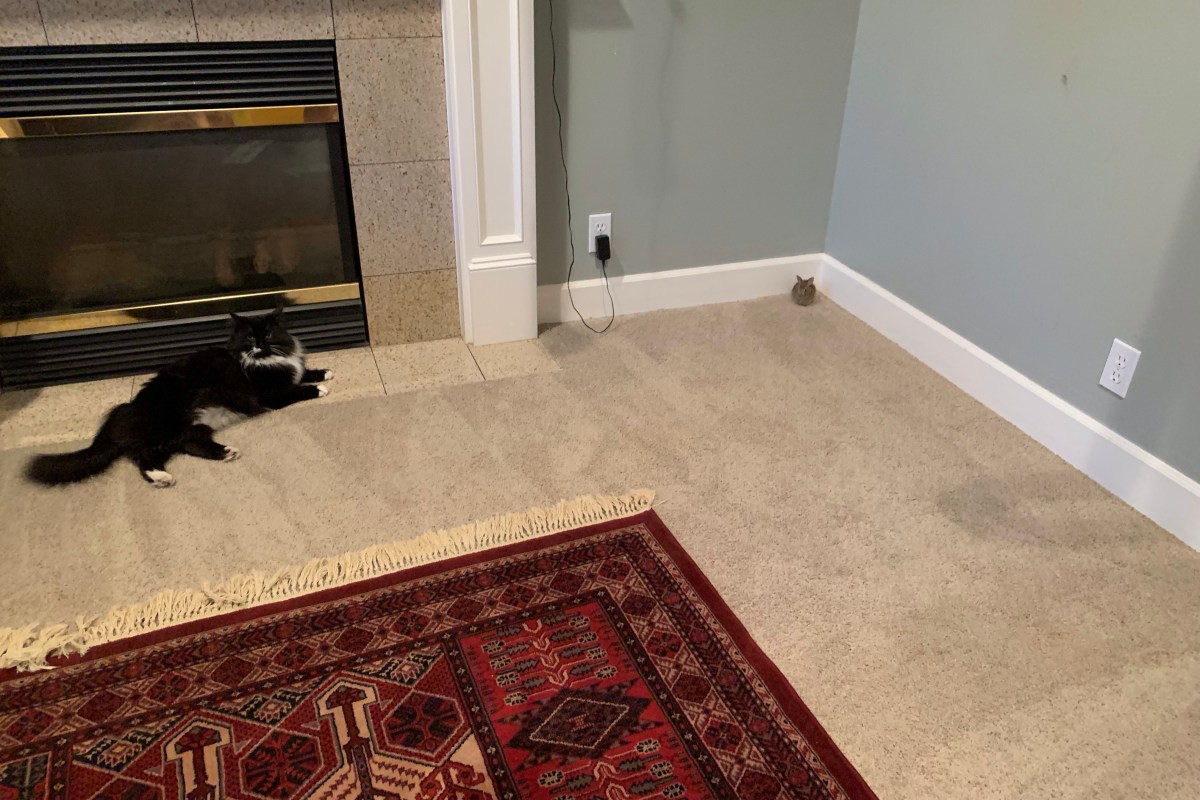
Last night as I was taking out the food scraps to the compost bin, I saw a bunny nestled by a tree. I got down low in the evening light to try to get a closer look. It was the same color as the bunny I saved when my cat brought a baby bunny in the house a couple of months ago. I started to feel some kinship and pride with this little creature – maybe this was the bunny I rescued from the jaws of my cat.

And as soon as I did that, I felt the reflex to believe pride was a bad thing. You know, one of the seven deadly sins and all that. Perhaps I shouldn’t personalize this bunny at all because its survival was 99% not about me.

Here’s the thing that I’m thinking as I type this. Is there a middle ground? Because on the morning the cat brought a baby bunny in, I managed to get the cat put away downstairs and shooed the bunny safely away. ALL without waking my kids and I got a video so I could show them.

No, I’m not responsible for the survival of the bunny in the big picture. But I did step in for a moment when the bunny’s life teetered between chaos and freedom. I got my butt off the meditation cushion for long enough to feel the pulse of life and opted for action. Which is a great of why I bother to meditate – to pay attention to the sacred moments as I described in my post Sacred Time.

If we can’t feel the reward for moments when we do act well because pride is a sin, do we undercut our own feedback cycle? And I’m not talking about a conscious decision not to celebrate the win – I’m talking about generations upon generations of family tradition to endeavor to be humble, maybe even falsely humble.

So I checked Brené Brown’s definition of pride from Atlas of the Heart. “Pride is a feeling of pleasure or celebration related to our accomplishments.” She added that pride related to an accomplishment has a positive connotation and is differentiated from hubris. Sometimes we refer to this authentic pride.  

I officially write this post feeling proud. I saved a bunny and maybe I even saw that bunny again last night. I think celebrating our good moments is worth mentioning. Don’t you?

It Starts Small

In some ways, repeated acts of kindness are preferable to solitary, extraordinary and heroic acts of sacrifice.” – Malcolm Gladwell

It was almost exactly three years ago when I invited a family of strangers to come stay with me for an extended period of time. Here’s how it happened. A young woman attending the university near me was hit by a car while she was jogging. It threw her 30 feet onto a walking path and shattered much of the upper left side of her body – shoulder and neck, resulted in a brain injury and the need to fuse her spine to the base of her skull.

The young woman’s mother, Dawn, lived in Minneapolis and immediately flew out to be with her daughter. I’d never met Dawn but she was a friend of a friend and I’d heard she was sleeping first in the hospital room and then on the floor of her daughter’s room during the recovery so I invited her to use my guest bedroom anytime she needed a good night’s sleep.

Dawn came and then the injured young woman’s living situation got complicated, the young woman came to stay as well. Then the young woman’s boyfriend came for a few weeks when he had a break from school. And on some nights her brother who also lived in the area came to stay too.

They’d joke with me, “Who invites a family of people that they don’t know to come stay with them when they have a 4-month-old baby?” And I’d joke back – “To be fair, my son was only 2-months-old when I invited you.

I recently heard a segment on kindness and sacrifice with Malcolm Gladwell on a Ten Percent Happier podcast that gave me a interesting perspective on why it was do-able to invite this family to live with me and maybe even why I did.

When Malcom Gladwell was in high school, his parents along with about eight others, sponsored three Vietnamese refugees to come live in Southern Ontario. Malcolm remembers this as a magical kind of experience so he went back to talk to those families about it and gather the stories. Here was his take:

“I was struck by how untraumatic the stories were. That nobody gave up their lives to bring in these people. Nobody took on an extra job to support them. No one. It was this kind of lots of people do small acts that added up to something big thing.”

Malcolm Gladwell on Ten Percent Happier

And that matched my experience. First of all, what I did was simple and small – it was just one single woman inviting another single woman to stay when she could. I didn’t invite a family of four strangers to stay with me for ten weeks – I worked up to that.

The second part was that it didn’t require any sacrifice for me. That is to say, Dawn and her kids were self-sufficient and supportive. My guest bedroom and the little nook on the top floor were not being used. More than that, Dawn would hold my baby on her lap every morning while she checked for email and I made breakfast and the whole family provided entertainment for Miss O who at four-years-old was undergoing a major transition of accepting a new brother into the house.

Then Gladwell noted that there was a hereditary component to what his parents had done. Both his mother and father had welcomed in strangers in their respective homes when they were kids and then when his mother went from Jamaica to school in England, she was welcomed in people’s houses. As Gladwell summarized:

“It was thing kind of practice that was being passed down from generation to generation. Not some kind of heroic thing but just what you do as a human being is you welcome strangers into your home. I see that kind of hereditary practice as being a powerful part of how kindness persists in the world. That you see it being modeled and it becomes part of your repertoire of behavior.”

Malcolm Gladwell on Ten Percent Happier

This resonated with me as well because when I was a senior in high school and my dad took a job as a pastor across the state, my best friend’s family invited me to live with them for the year and so I was the recipient of a similar act of kindness.

Gladwell also reflected on the necessity of kindness having to be do-able to be sustainable and spreadable. If we think we have to do huge things to be kind, it’s less likely to happen. Deb from the Closer to the Edge blog has often remarked that its little things that can make such a difference. And that’s how Malcolm Gladwell summarized it as well:

“In some ways, repeated acts of kindness are preferable to solitary, extraordinary and heroic acts of sacrifice.”

Dawn and her family are now an extended part of my family. Incredible people who touched our lives deeply. I got to experience that gift because it started small, it didn’t require sacrifice and was part of my history to welcome and be welcomed into other people’s homes. Apparently that is part of the formula for how kindness catches fire and spreads!

What’s your experience with acts of kindness?

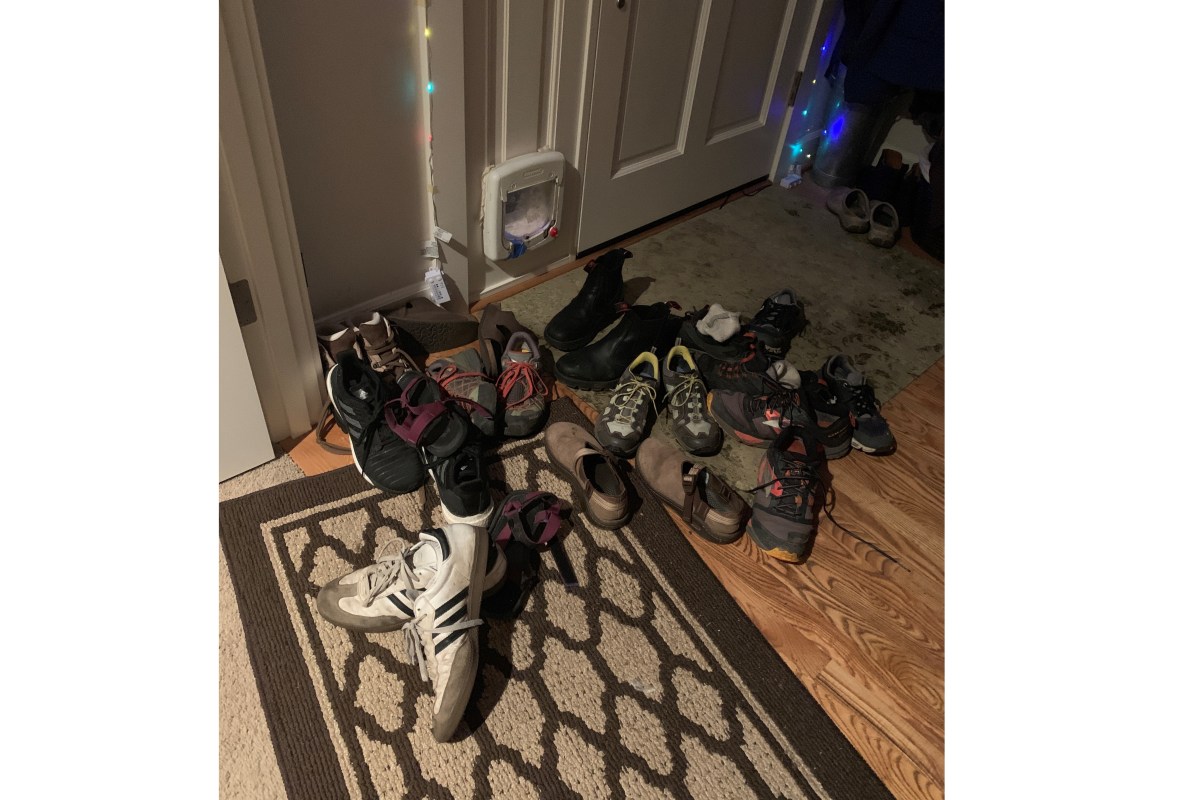
(featured photo is the pile of shoes that would accumulate at my door when I had these guests and it came to symbolize when my house and my heart was full)

How Not To Be Mean

Kindness in words creates confidence. Kindness in thinking creates profoundness. Kindness in giving creates love.” – Lao Tzu

The other night my seven-year-old was being short-tempered with her younger brother and snippy with me. I asked her not to take out her mood on others and she replied “I don’t know what to do with the meanness!”

Wow, that stopped me in my tracks! It left me trying to tease apart all the ways we can quell our inner meanness and became the topic of my Pointless Overthinking blog today, What to Do With Our Inner Meanness.

A Kind Word

Kindness in words creates confidence. Kindness in thinking creates profoundness. Kindness in giving creates love.” – Lao Tzu

I received a lovely email from someone this week that was incredibly kind and complimentary. It ended with the sentence, “So, I just thought that was the sort of thing a person ought to hear about themselves.

Encouragement, defined by Oxford Languages, is “the action of giving someone, support, confidence and hope.” The word origin is from the French from en (make, put in) + corage (heart, daring) from which I draw that encourage could be “make daring” or “put in heart.”

Using either definition, I am always deeply grateful for the people who have and continue to cheer me along. It is a gift that takes just a sentence or two but has a ripple effect that lasts so much longer than a conversation.

I find encouragement to be one of the secret sauces for life – whether it’s in the giving or receiving, everything tastes better. And when properly nourished, it’s so much easier to share the love. In trying to express my gratitude for my friend’s kind words this week, I hope I’ve taken a little bit of heart and passed it on. May we all tell someone just the thing they ought to hear about themselves.

Have you given or received encouragement this week? What does it look like for you?

(featured photo from Pexels)

Coming Together

When I despair, I remember that all through history the way of truth and love have always won. There have been tyrants and murderers, and for a time, they can seem invincible, but in the end, they always fall. Think of it–always.” – Gandhi

This weekend my kids and I went to a wedding. As we were going through the receiving line, the bride squatted down so that she could be closer to my 2-year-old son’s level. And when she squatted, he squatted.

As I laughed, I thought about how we mirror the people around us. Neuroscientist David Eagleman, says that who were are is shaped by the five people that we spend the most time with.

But lately the grown-up people I’m spending time with seem to mostly be feeling a general sense of despair about the US and the world. I feel like I’ve hit my saturation point of not being able to take in more bad news.

Then I stumbled on this paragraph from poet Mark Nepo, “I realize that, when things fall apart, they make a lot of noise. When things come together, they do so quietly and slowly. And so, we often miss them. Our culture is obsessed with how things fall apart. The news reports only the noise of things breaking down. The weather is even called Storm Watch. Yet things are constantly coming together, though we have forgotten how to hear them.

That is when I turn to the WordPress community because unlike the news, I find people writing stories of things coming together all the time. Here are 5 posts that recently gave me joy and delight.

A touching story of kindness from Stuart Perkins of the Storyshucker blog: A Nugget of Kindness | Storyshucker

A researcher joke from the Candid Cerebrations blog: I stole this… – Candid Cerebrations

A beautiful walk through a garden with Rebecca from the Fake Flamenco blog: 5 Local July Flowers ‹ Fake Flamenco

A photographic trip to Venice from Natalie on The Hot Goddess blog – Silent Saturday Solo Sojourn – The Hot Goddess

Camping and Canada Fireworks from the view of a child from Ab and the My Life with T blog – Ignite the Night and Let It Shine – My Life With T

And those are just a few of all the wonderful and creative posts that make me laugh and inspire me.

Thank goodness for all you amazing bloggers that are writing posts about how life comes together. This is what I want to mirror and reflect.

What’s inspiring you this week?

Proving the Positive

One moment can change a day. One day can change a life and one life can change the world.” – Buddha

The other day I took my kids to an outdoor shopping center. They’d been excited for three days because I said we could go there to visit the one store that makes honest to goodness cotton candy. Not the stuff you can buy prepackaged on shelves in the grocery store but a machine that spins a cone of it. I don’t like cotton candy but my daughter wanted to try it so I agreed she could if we got the real stuff.

On the way to the cotton candy machine, my kids were playing in a fountain and my daughter put her face down to lick the water. “Arghh” I said, “Don’t drink the water. It isn’t treated and probably has dirt, bird poop and maybe worse. It could make you sick.” She stopped but two minutes later she made the same motion and I had to stop her again. “Listen” I said “I know as a kid you are programmed to test the limits, but this is one where you need to believe me. Even if you don’t drink it, your little brother is going to see you, imitate you and he might actually drink it. So you are just going to have to trust me and not drink it.

I could see the wheels of her 6-year-old brain working. She was thinking something like
I’ve never tried it so I’ve never gotten sick. How can I know what Mom is saying is right?

There’s no way to prove a negative. If we don’t do something and it the consequence is avoided, how do we know what didn’t happen to us?  I heard an interview once with Matthew Weiner, the creator of the TV series Mad Men, and he said the show’s driving philosophy was actions have consequences. But what about inaction?

What if we don’t do the work to deal with our internal BS so we can see others more clearly?

What if we don’t write the letter to a sick friend?

What if we don’t go out of our way to compliment or help someone?

What if we don’t put the grocery cart back in the return slot at the store?

What if we just aimed for a grade C life? Not great, not bad, just average. Would anything happen to us?

Perhaps the consequence for inaction is nothing. Nothing exciting happens, nothing revelatory occurs, no random goodness pops up, nobody remembers us. Nothing. We aren’t a hero – just a zero.

On the other hand, we’ve done acts of kindness and felt the afterglow, we’ve made the effort to reach out to friends and experienced the relationships that carry us through tough times, and we’ve done the work to clean our internal windows because we see how more light gets in. In addition to these rewards, we’ve heard the thinkers throughout human history telling us to do our work:

Good actions give strength to ourselves and inspire good actions in others.” – Plato

Go into the world and do well. But more importantly, go into the world and do well.” – Minor Myers, Jr.

When we do the best we can, we never know what miracle is wrought in our life, or the life of another.” – Helen Keller

We all have our different ways of doing our best and our personal limits. But part of the we likely do it is because our mom, dad or someone else with authority told us and we believed them. Like with my daughter, there’s no way to prove the negative – what would happen if we did nothing, so we take the advice and continue to try. Thank goodness for that.

Learning From Experience

“Turn your wounds into wisdom.” – Oprah Winfrey

Ten years ago (I know because I found the picture), I was walking my dog on a busy neighborhood street and he found a stuffed animal. A cute little tiger with a soft white belly and my dog proudly picked it up and carried it all the way home until he could stow it away on one of his dog blankets.

While I didn’t think much of it at the time, I now realize with great horror that it likely was some child’s precious stuffy that got tossed out of a car in a moment of great emotion. I’ll never actually know if the family went to look for it but by allowing my dog to carry it home, we certainly made it unfindable.

Before bed, my 6-year-old daughter and I take turns reading. She practices her reading skills and then I read a few pages of something longer we are working on. We just finished J.K. Rowling’s The Christmas Pig in which a child loses his most precious friend, a stuffy that his step-sister throws out the window in a moment of rage. The child then takes a precarious Christmas Eve trip to the Land of the Lost to try to retrieve it. In J.K. Rowling’s incredibly imaginative tale, there are several places the things we lose go – Mislaid (think eyeglasses), Disposable (e.g. batteries), Bother-Its-Gone (that poem you penned on the back of a napkin), The Wastes of the Unlamented (the tchotchke you never wanted to buy in the first place), The City of the Missed (where we meet someone’s Principles) and The Island of the Beloved (where Santa lives).

In the story, she includes not only things that we lose like a diamond earring but also the intangibles – the bad habits, the tendency to bully, our pretenses, ambition, power and hope. It is so incredibly insightful that it is one of those books that was a pleasure for me to read as much as my daughter to listen to.

Which brings me back to the stuffy I let my dog take home. Often it’s only through experience that we can relate to someone else’s pain. This is the case now that I realize that stuffy was likely a well-loved object of a kid’s affection. Fortunately, my kids have not (yet) thrown a stuffy out the car window, but I have spent many fretful moments in a full sweat looking for the item that we just HAVE TO HAVE before going to sleep.

Suffering, as much as we might not like it, helps us to know each other.

At the Core

Whether you think you can, or you think you can’t — you’re right.” – Henry Ford

Last weekend we drove about 15 minutes down to Shilshole Bay on Puget Sound to see a dock where sea lions like to congregate. It was packed with sea lions – usually a dozen on the dock and I counted a least a dozen more swimming in the water.

Every once in a while, a sea lion would launch itself out of the water in an attempt to land on the dock. The new weight would make the dock roll one way or the other causing all the sea lions to bark. But there was one sea lion in the center who was doing most of the work to keep the dock level. It would lift its head high and shift its weight this way or that to stabilize the dock again.

It made me think of how impactful what is at the center is. As I was pondering what was at my core, Life, in that beautiful way that sometimes happens, delivered the answers to the question I’d just uncovered. In this case it was through the latest the Unlocking Us podcast about living into our values. In it, Brené Brown had an exercise to determine our core values.

Her research shows that when in a tight spot, most people call on their one or two go-to values. So on her site, there is a pdf of about 120 values. Her recommended approach was to circle the ones that called to you and then distill them to the two values that encompass what is central for you. It may change over time but this exercise was to identify what is key for right now.

Doing the exercise, I came up with faith and usefulness. Faith, which for me encapsulates confidence, courage, adventure, integrity, spirituality, openness, love, optimism and gratitude. Usefulness I thought did a good job of rolling up my other values of reliability, learning, kindness, growth, family, and independence,.

Over the years I’ve done a lot of work to strengthen my physical core. It has enabled me to carry heavy loads up mountains and I feel it most now when I hoist my toddler onto my shoulders. But thinking about my core values, faith and usefulness, I realize that they are what I go to again and again to power me when I have to dig deep. Like with the sea lions, when I am living into my values, they are the center that brings me back to level when the world is rocking.

Growing and Blooming

What we love, others will love and we will show them how.” – Wordsworth

When I was 22-years-old and moving into my first post-college rental, my dad helped me find some used furniture. Some people he knew where moving into a retirement community so we looked at the items they were getting rid of and bought a kitchen table, two chairs and a Christmas cactus. I donated the table and chairs when I bought my first house a few years later but the Christmas cactus has been with me now for 30 years.

It was my first proof that I could keep something other than myself alive. Now I look at that cactus and see it as a reminder of my most important lessons.

It blooms beautifully once a year and then sheds all those flowers as it prepares for its next feat. It’s best to shed the past so you can work towards the next thing.

The cactus does not appear to be doing anything for 50 weeks but then bursts with color for 2 weeks. Most of our work happens on the inside.

Every now and then it’s drooped in the soil it is in and needs to be repotted as its roots grow deeper. We need some new perspective/work/material from time to time in order to stay vivid.

Sometimes it blooms closer to Thanksgiving rather than Christmas. As you get older, you learn to care less about expectations and more about flourishing in the way that works for you.

The growth on the side nearest the light blooms first but eventually, the darker side blooms too. If you water all of yourself, both your bright side and the shadow side will bear fruit.

 Although it’s a cactus, it has no prickly parts. It’s possible to live a long and beautiful life without thorns to protect you.

This weekend I came across my son picking up the dropped flowers with some tweezers and putting them on the stand. It made me think of my most important work. Trying to create a calm, loving space in which others treat things with kindness.