Showing Up

Please remember, it is what you are that heals, not what you know.” – Carl Jung

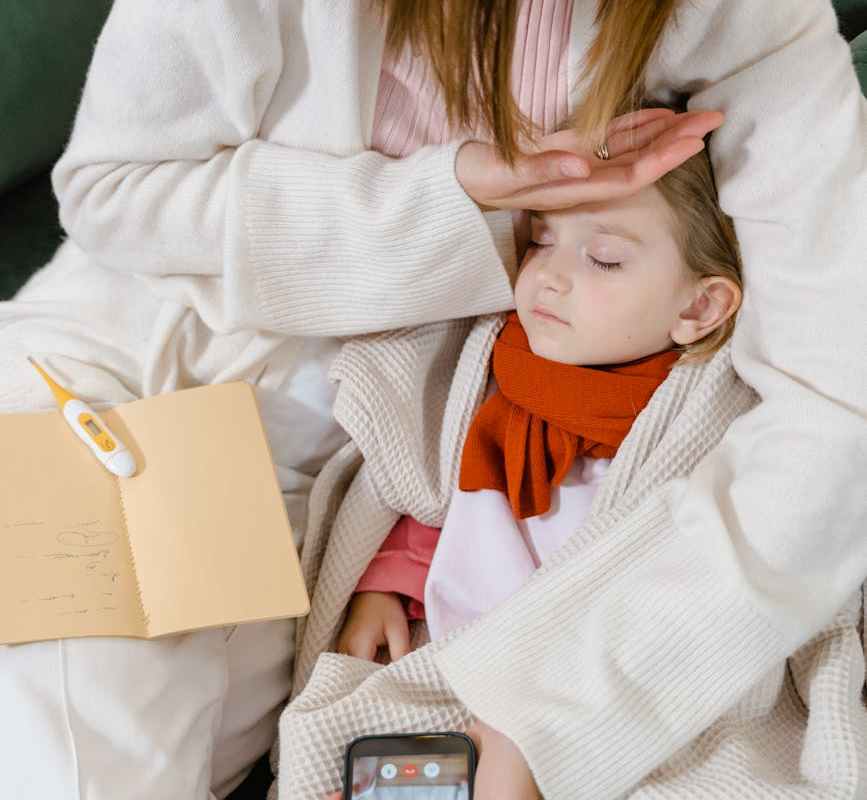
My ten-year-old daughter, Miss O, had a stomach bug this weekend. It hit hard on Friday night and then followed that typical 24 hour course where she felt miserable and threw up a half dozen times and then was mostly done.

When six-year-old Mr D realized that his sister wasn’t feeling well, he set out to make her his famous medium water. You know – not too hot and not too cold. In a lovely confluence where the one thing he knows how to make and the only thing she could keep down met, it was a beautiful gesture.

There was little else that Mr. D and I could do for her. She spent most of her day crying out in agony. Witnessing suffering like that makes me feel crummy. For me, helplessness usually turns into irritability. Fortunately, I was reminded of three things that I’ve heard/read lately:

From poet Mark Nepo, “… someone I love comes along in pain and I start dumping my pockets, looking for the one thing I know that will help them. But time and time again, the only thing they want is for me to open my heart like a sponge to them. They only want to be heard and held.” I swear my pockets are hanging out for how often I dig to try to find something to help only to learn this again and again.

When I talked with Sharon Eubank on the How to Share podcast she related some great lessons from her decades trying to help others as Global Director of Humanitarian Services for the LDS church. The one that really stuck with me was “My solution to your problem will always be wrong.” In this case, the foods that Miss O wanted to eat when she started to feel better wouldn’t have been my picks – but they worked for her.

And then in my most recent podcast conversation with author Amy Weinland Daughters she spoke of not knowing what to do for her friend, Dana, whose teenage son had cancer and then died. Amy started writing letters as a way to show up. She didn’t think it would make a difference but when Dana’s daughters asked Dana when she thought Amy would stop, Dana replied with something like, “I hope never.” We think what we are doing for someone who is suffering or grieving isn’t enough. But it does make a difference.

So I made an effort to pause my productivity efforts that made me feel like I was doing something by washing sheets and sanitizing bathrooms to just show up and stay present when Miss O cried out in pain and discomfort. I rubbed her back or her feet, told stories, and ordered more medium water from Mr. D. It really is what you are that heals. It’s all part of the magic of being there for someone.

(featured photo from Pexels)

You can find me on LinkedIn: https://www.linkedin.com/in/wynneleon/ and Instagram @wynneleon

I host the How to Share podcast, a podcast celebrates the art of teaching, learning, giving, and growing.

I also co-host the Sharing the Heart of the Matter podcast, an author, creator and storytelling podcast with the amazing Vicki Atkinson.
The Gift of Hard Things

Experience is the hardest kind of teacher; it gives you the test first and the lesson afterward.” – Oscar Wilde

Summer is winding down in the Northern Hemisphere. I can feel all the tell-tale signs, the nights that are chilly before we go to bed, and have that cool calm when I get up at 5:30am. The relenting brightness of the sun starts to give away to the softer light of fall. And, we are getting ready for the start back to school.

Last week, my eight-year-old daughter was giving me the breakdown of the third grade teachers that she might get for this next year in school. One yells a lot, one is neutral, and one is nice. As she was talking about who she hopes to get for this year to come, I felt an upwelling of tension surge through my spine. Putting my finger to it, I’d say it’s because of that protective desire for her to get the nice teacher.

But that’s at odds with what I know about life. My lived experience tells me that everything doesn’t always work out the way we want, that sometimes we have to wade through the year(s) of muck to get to the side of clarity, and that sometimes we get the crusty teacher.

For all the resilience I’ve learned about life, I find that my children challenge my worldview. That is to say, my desire to give them a life that was better than my own sets up a tension with the reality of how life unfolds. There is about zero chance that I can root for my daughter to get the mean teacher even though she may learn a lot more about uncovering the gem in the rough if she does.

It reminds me of a letter my dad, who was a Presbyterian pastor, gave me when I was going through my divorce about 12 years ago. It was tucked in the page of a book he was giving me: Know Doubt by John Ortberg. The letter said in part.

I have seen so many people in my ministry going through times of deep change in their lives and it seems that those are also times of deep thought and reflection that have been creative and good for them. You are in the middle of a lot of change these days. There must be some serious disappointment that your marriage has not worked out as you had dreamed and intended. Your life has been the story of one big success after another and you don’t have many things in your life that don’t work out well and so this time must be unsettling. So just maybe this time of change is also a time when you are questioning and thinking about big stuff like faith and doubt and your life-view. If so, I really think this little book might be a good read for you.

Dick Leon

He acknowledges the unsettling nature of life – but that unsettling times of life also lead to creativity and good. Did my dad wish for me to have hard times? Absolutely not. But did he think that goodness was going to come out of it? Definitely.

I wonder if my tension about not wanting my kids, or any of my loved ones, to go through hard times comes across. Maybe as anxiety? It’s way harder to watch others face uncertainty than to go through it myself.

In another sign that summer is coming to an end, my daughter just celebrated her birthday. At the end of the day, she pulled me in tight and whispered in my ear that she didn’t want the day and her birthday to end.  I thought “Ah yes, my dear, but finding the magic in all the other days of the year when we aren’t front and center creates the sweet spot of life.” The lessons are harder to find on the days we get everything we want.

I find I can reduce my anxiety about the hard days my kids will have by remembering, as my dad did, that creativity and deep understanding comes on those days, not on birthdays.

Check out my Heart of the Matter post today for a lesson I’m learning about taking a new job in my 50’s: Going with My Gut

(featured photo from Pexels)

Showing Up When It Matters

Look at the bright spots. Look at the things that energize you.” – China Brooks

“Your son did a great job and you were amazing too” the dentist said to me as we were heading out the door. I know she meant it sincerely but it’s hard to accept a compliment for something that you never wanted to be good at. As was the case here as I had just held my 2-year-old son through getting a root canal.

It had all started with Mr. D’s dental checkup on Tuesday when they noticed a cavity. Two hours after the appointment his temperature spiked at daycare and they sent him home. I called the dentist, described the bump she saw on his gum and she dismissed it as unlikely he had an infection.

Until we showed up Friday to get it filled and she took one look and declared it was abscessed and he had to have a root canal. The tooth is important for the spacing of the next tooth to come in so they have to try to save it.

I’d spent the last two and a half days nursing him back to health after the temperature spike and so this was an unwelcome surprise on top of a dumpster fire of a week of only being able to work at night after the kids were in bed.

The only routine that made it through the week intact for me was my self-care routine in the morning – yoga, meditation and writing.

As I sat in that hot room, stinky with the smell of teeth and hissing with the noise of the drill I wondered if the reading, writing, and meditating made any difference. Then I paged through the thoughts that arose:

Therapist and author Deb Dana declares having a well-regulated central nervous system a gift to those around you. Whether or not we intellectualize why, the “neurosception” of our body as it senses another nervous system often reacts to what it finds. Our brain then gets a sense of whether or not we feel safe simply cued by the nervous system.

I thought of the comment that apeacefultree made in this post asking Can we be selfish and selfless at the same time?  “Healthy selfishness can include self-care and putting our own oxygen masks on.”

Then I landed on the research of Daniel Kahneman, psychologist, behavorial economist and author of Thinking, Fast and Slow who found the way that we remember both painful and pleasureful experiences as defined by the peak moment and the end moment. It helped prompt me to try to make the end moments of this procedure as good as possible in order to help Mr. D’s memories of it less painful.

Cycling through those thoughts, I came to the conclusion that the time reading, writing and meditating made a big difference. Because this was life – this was showing up when it mattered. Of course it’s also in the dance parties and the snuggling up to read at night but you can’t have one without the other. Or at least not the depth of one without the depth of the other.

It was because I’d taken the time to meditate and get myself in order before this appointment that I got through. The credit goes to Mr. D for being an easy-to-calm kid but I can at least say that I didn’t make it worse as I’m sure I would have if I’d gotten in a few more billable hours but had come in hot.

It’s so hard to stay present for someone else’s suffering. But it also is an honor to be able to do that for the people we love.  And I think why we call people like Mother Theresa saints for witnessing the suffering of people they don’t even know.

At the heart of this is that I wouldn’t have chosen to be anywhere else. The experience taught me that I need to keep doing my self-care if I’m to have any chance to help Mr. D work through this a traumatic experience. Especially because we have to go back for the second part of the root canal in 8 days.

(featured photo is of Mr. D playing at the dentist before the procedure)

Pain and Suffering

The greatest miracle is to be alive. We can put an end to our suffering just by realizing that our suffering is not worth suffering for!” – Thich Nhat Hanh

This weekend my son wanted to be like his sister and asked me “Can I have a pony?” Which is his shorthand for a ponytail, but before I’d even touched his hair to make a teeny-tiny ponytail, he said, “I’m going to say ‘Ow’”!

That little snippet of interaction so clearly illustrated the idea of pain versus suffering. I was fascinated by this idea when I first read about it in Temple Grandin’s book Animals in Translation. In the book, she discusses her work as an animal scientist from her unique perspective as an autistic person. Her fascinating work brings together so many different perspectives.

Dr. Grandin talks about all the tests and observations they’ve done to study whether animals experience pain. Because animals, especially prey animals, mask pain so that they don’t stand out in the flock, in the case of sheep, it’s sometimes hard to observe whether they are in pain.

But then she moves on to talk about suffering. Looking at humans who have chronic pain, she cites studies that show that chronic pain patients have a great deal of pre-frontal lobe activity which suggests something other than pain which is a lower-down brain function. In cases where a patient with intense pain had a leucotomy, which disconnected the frontal lobes and the rest of the brain, the patient still had pain but didn’t care about it.

Pain and suffering are two different things. Whereas I can address pain with a bandaid, ice or other treatment, taking on suffering for me is a spiritual practice. It is best treated by bringing light and breath to it and then having faith that it will not only move on through but also usually inform some enlightenment. As the great Buddhist teacher Thich Nhat Hanh says in the quote for this post, “The greatest miracle is to be alive. We can put an end to our suffering just by realizing that our suffering is not worth suffering for!

The most prominent of this for me was my divorce a dozen years ago. After my marriage fell apart, it was so easy to stay stuck in the storyline of my husband’s infidelities that I mucked around for a couple of years without owning my part of the story and acknowledging that I wanted out. Until I found meditation and faith as a tool to empty those pockets of stale dead air, I suffered from lack of perspective and inability to listen to the larger chorus of the Universe inviting me out of the pain and onward.

When I started to make the pony for my son, he said, “Ow” and decided he didn’t really want it. I guess he know it wasn’t worth suffering for.  

(featured photo from Pexels)

Learning From Experience

“Turn your wounds into wisdom.” – Oprah Winfrey

Ten years ago (I know because I found the picture), I was walking my dog on a busy neighborhood street and he found a stuffed animal. A cute little tiger with a soft white belly and my dog proudly picked it up and carried it all the way home until he could stow it away on one of his dog blankets.

While I didn’t think much of it at the time, I now realize with great horror that it likely was some child’s precious stuffy that got tossed out of a car in a moment of great emotion. I’ll never actually know if the family went to look for it but by allowing my dog to carry it home, we certainly made it unfindable.

Before bed, my 6-year-old daughter and I take turns reading. She practices her reading skills and then I read a few pages of something longer we are working on. We just finished J.K. Rowling’s The Christmas Pig in which a child loses his most precious friend, a stuffy that his step-sister throws out the window in a moment of rage. The child then takes a precarious Christmas Eve trip to the Land of the Lost to try to retrieve it. In J.K. Rowling’s incredibly imaginative tale, there are several places the things we lose go – Mislaid (think eyeglasses), Disposable (e.g. batteries), Bother-Its-Gone (that poem you penned on the back of a napkin), The Wastes of the Unlamented (the tchotchke you never wanted to buy in the first place), The City of the Missed (where we meet someone’s Principles) and The Island of the Beloved (where Santa lives).

In the story, she includes not only things that we lose like a diamond earring but also the intangibles – the bad habits, the tendency to bully, our pretenses, ambition, power and hope. It is so incredibly insightful that it is one of those books that was a pleasure for me to read as much as my daughter to listen to.

Which brings me back to the stuffy I let my dog take home. Often it’s only through experience that we can relate to someone else’s pain. This is the case now that I realize that stuffy was likely a well-loved object of a kid’s affection. Fortunately, my kids have not (yet) thrown a stuffy out the car window, but I have spent many fretful moments in a full sweat looking for the item that we just HAVE TO HAVE before going to sleep.

Suffering, as much as we might not like it, helps us to know each other.

Receiving Pain

Only love, with no thought of return, can soften the point of suffering.” – Mark Nepo

When I trimmed my 2-year-old son’s hair recently, he’s started saying “Ow” with each snip. I checked to make sure I wasn’t pulling his hair or in any way touching his head with the tip of the scissors and continued. And he kept saying, “Ow.” It was possible he was the first person I’ve ever heard of to have feeling in his hair but his body language and smile told me it was more likely he was saying something that got a reaction.

But it brought to mind for me all the different ways I’ve received other people’s pain. I’ve dismissed it as not as bad as they are reporting. I’ve wondered when they will get over it. I have compared it (both inwardly and outwardly) as not as bad as something I’ve experienced. And I can report that none of these methods are helpful. The only way that I’ve found to bear witness to pain and to help alleviate suffering is to believe that every word they say is true and to listen as they process their story.

This makes me think of a winter climb I once did on Mt. Whitney with a good friend about 3 months after her boyfriend died of cancer. He’d been cremated and she was climbing with him in a little urn attached to her pack. She kept on mentioning Rick to the other people in the group we were climbing with, none of whom knew us from before the trip. And because she was talking about Rick as if he was with us (and I suppose he was if you counted the urn), they would get a pretty confused look on their faces and eventually take me aside to ask me who Rick was. But it was a group of really nice people who let her talk and talk and talk about him. We were slogging in thigh deep snow up the side of the mountain and had days to listen.  It was like an extreme walking meditation.

After a while, I thought we’d heard enough about Rick. I fortunately never said anything. Because it wasn’t until my dad died that I understood that the telling of the story of his sudden death in a bike accident and talking about what an amazing person he was were both such healing ways to help process the surprise of finding him gone.

So I’ve adopted some of my dad’s wisdom. As a retired pastor, he often was asked by friends, mentees and former parishioners to go to coffee for advice or to air the pain of living. And if you asked him how it went, he’d smile kindly and say, “Mostly I listened.”

My kids give me lots of opportunities to practice to listen to their pains and I do my best to calmly bear witness, not lecture about safety (at that moment at least) and just slather them with love. As I cut my son’s hair and he giggled and said “ow,” I started narrating that he was the bravest person on earth to get his hair cut. In that way, we made it through together!

The Other Side

Resolve to be tender with the young, compassionate with the aged, sympathetic with the striving, and tolerant with the weak and wrong. Sometime in your life, you will have been all of these.” – Buddha

Last weekend I took my kids to a swimming beach in a very wealthy suburb of Seattle. It was beautiful – the grounds perfectly maintained, a recently built dock of all the latest materials so no one would get a splinter, a cabin as beautiful as you would hope for a restful lakeshore vacation for the lifeguards to use when they were off rotation and a play structure with no graffiti. It felt like an idyllic break from the signs of homelessness, addiction and lawlessness that are so evident in Seattle these days.

Within 10 minutes of peeling off our top layers and getting into the water I heard a father chastise his son, who looked about 10-years-old, “You are just a dumb kid.” And because I’ve read so much about how shame doesn’t work, especially in parenting, I felt shocked because I can’t recall hearing someone shame their kids in the six years I’ve been a parent. I’m in no way claiming that it doesn’t happen in the big city but just that I haven’t heard it.

We moved on to the play structure which was almost deserted except for two other kids. My daughter breathlessly ran over to where I was standing told me that a little boy who was about a year older than my toddler was punching my son in the stomach. The child’s mom was about 50 feet away, completely uninterested, so I walked over and the child had taken a lap around the structure and was now pushing my son. As I carried my son away from the child, I thought again how odd that was both to have kids touching each other these days and to have parents totally tuned out. These little incidents reminded me of the adage that money doesn’t solve everything.

My dear dad spent fifteen years as a senior pastor in a Presbyterian church in a very wealthy community before he retired. I remember the gist of many sermons he delivered to the very generous and lovely congregation was that quite often the problem with money is that it makes us think we don’t need faith. Whew, that at least is one problem that I don’t have. 😊

As I drove back to my middle-class neighborhood, I was thinking about our universal humanity. That I with my kids, the homeless heroin addict on the street and the wealthy patrons at the park on the other side of the lake all have hearts that ache for love, lungs that long for clean air, and backs that get tired when they carry too much. Maybe we only differ in how far we think we are from suffering. It made me remember again that there is no way to drive away from suffering but instead I just have to meet it, in me and in others, with as much faith and empathy as I can muster.

Irrigating the Irritation

Be kind, for everyone you meet is fighting a hard battle.” – Plato

Yesterday my friend John was trying to get a hold of my friend Eric and I was caught in the middle. Eric wasn’t answering so John called me and left a voice mail. Eric’s phone had died and he was temporarily using another number so I texted him on his other phone that John was looking for him. Eric didn’t have John’s number stored in his temporary phone so Eric called me for it. I texted it to Eric and then John called me.

It seemed to go on and on. They called and texted me while I was working, picking up my son from school, out for ice cream, getting the kids ready for the bed. I was irritated. Then I found out John was calling because our friend Joanie was having to put her beloved 15-year-old golden retriever to sleep. My irritation evaporated instantly.

Compassion is such a powerful tool. For years I’ve said that doing meditation in the morning was irrigating my irritations. I hadn’t identified specifically that it was expanding my compassion for my self and others until I was reminded of this “Just Like Me” meditation from by Buddhist monk, Pema Chödrön:

”There’s a practice I like called ‘Just like me.’ You go to a public place and sit there and look around. Traffic jams are very good for this. You zero in on one person and say to yourself things such as Just like me, this person doesn’t want to feel uncomfortable. Just like me, this person loses it sometimes. Just like me, this person doesn’t want to be disliked. Just like me, this person wants to have friends and intimacy.’

“We can’t presume to know exactly what someone else is feeling and thinking, but still we do know a lot about each other. We know that people want to be cared about and don’t want to be hated. We know that most of us are hard on ourselves, that we often get emotionally triggered, but that we want to be of help in some way. We know that, at the most basic level, every living being desires happiness and doesn’t want to suffer.”

Welcoming the Unwelcome by Pema Chödrön

When we do suffer, it is eased by the compassion of others. I remember talking with Joanie after my golden retriever died and because she knew the depth of the heartache, it was of great comfort to me. I am sending that compassion back to her now so the spirit of love, warmth and understanding continues to ripple out. My daughter wants to make a card for Joanie. She suggested a message of “You are the best even though you only have two dogs and one died.” I love the idea but we might fiddle with the wording…