Ropes are Relational

A friend may well be reckoned the masterpiece of nature.” – Ralph Waldo Emerson

I awoke Friday morning to the sound of a drip in my bathroom. Amazing how a drop of water in another room landing on a bath mat that’s designed to absorb water can penetrate the unconscious. It felt like I came abruptly awake and then sat straight up listening. It reminds me of something I heard from acoustic ecologist Gordon Hempton that our ears never sleep, even when our brain does.

The vent on the fan was the source of the leak. So this weekend I got out one of my climbing ropes so that I could do some repair work on the roof. Afterwords, as I was coiling the rope, I was struck by how ropes are like friendship. It takes me a long time to coil a 60 meter rope so perhaps I was just delirious but I don’t think it’s too much of a stretch.

Ropes help us cross dangerous terrain: In the mountains when conditions are icy, steep, or pitted with crevasses, being roped to a team helps ensure safety if someone falls. We know from research, like the longitudinal study that Dr. Robert Wallinger talks about in his TED talk, that friendship has a similar effect. Good relationships keep us happy and healthy.

It’s easier to unkink a rope when it’s not frozen: Ropes, like friendships, get knotted and kinked sometimes. Ropes, like friendships, are easier to unkink when they aren’t frozen. When guides come back into camp after a summit or training exercise, they take care of the ropes right away. Even when the conditions are rough and people are tired and sore, it’s worth the effort to straighten and coil it before it freezes. In my experience, this is true for friendships as well.

Ropes are heavy: Carrying a climbing rope adds around 10 pounds to your pack, more if the rope is wet. When my friends and I climbed together, we’d divvy up the group gear to spread the load. But often when a climber isn’t feeling well, a team member will carry the rope for them. In my experience of good friendships, the same thing happens with carrying the weight of the relationship. Often, it isn’t a completely equitable split of time and effort that makes a friendship work but the willingness of both parties to switch off carrying the load when things get rough or busy.

Here’s the other thing that I love about ropes – they require me to find someone to hold the other end. I tend towards the stubbornly independent so this slows me down enough to get help. As I coiled the rope back up, I also appreciated how reassuring it was to have my mom and sister-in-law there when I roped up to repair the seal around the fan vent. I never slipped or needed the rope to catch me but I knew it was there and it made me feel safer. Just like my friendships.

(featured photo is mine of a rope coiling at the climbing gym)

You can find me on LinkedIn: https://www.linkedin.com/in/wynneleon/ and Instagram @wynneleon

I host the How to Share podcast, a podcast celebrates the art of teaching, learning, giving, and growing.

I also co-host the Sharing the Heart of the Matter podcast, an author, creator and storytelling podcast with the amazing Vicki Atkinson.

How to Share Resilience

Tell me facts, and I’ll learn. Tell me truth, and I’ll believe you. But tell me a story and it will live in my heart forever.” – Native American Proverb

I’m always amazed at how much hearing someone’s story impacts me. For instance, I published a post on Monday about how I had to evacuate files from my laptop when it started having a power problem.

It wasn’t until I produced this latest episode of the How to Share podcast with author Ana Hebra Flaster that I realized the connection. In her book Property of the Revolution: From a Cuban Barrio to a New Hampshire Mill Town, Ana tells the story how her family left Cuba in 1967 when she was six-years-old. They had to declare themselves enemies of the revolution so that once their exit papers arrived, they were escorted out of the house, it was sealed, and she and her family had 48-hours to say goodbye to family and friends.

In another great example of how powerful a story well-told is, the imagery of having to leave everything behind was still with me a week later when I had my laptop problem. Rightly so because Ana and I had a fantastic conversation about her memoir in this episode, How to Share Resilience with Ana Hebra Flaster. It’s an incredible memoir of the immigrant story with so much heart and courage.

Ana tells us the story of leaving how her family left Cuba with nothing of value as demanded by the Castro government. But they couldn’t contain the spirit and grit of those that left. Ana tells the story of how her mom stood up for an employee working for her and how that reflected the ethos of the Havana barrio from where she came.

We discuss Ana’s aunt’s determination to take her teaching degree with her to America even though it was forbidden by the Cuban government and her family disagreed. Ana explains why this was important enough to disregard the rules.

We talk about Ana’s childhood tolerance of “Cubanosity” as she coined the term and the struggle to both be rooted in her heritage but also be free of it as she came of age.

Ana tells us what writing a memoir has sparked in other immigrants and families she’s talked with after publication. How the thread of one experience touches so many. Ana reminds us to find our viejos (old people) and ask them questions.

Ana introduced me to the phrase, ponte guapa – make yourself brave. She exhibits that courage in writing a book that not only captures her family’s story but also speaks to all of us digging deep to know where we came from and how we fit in.

This is a great book and a fantastic conversation. I know you’ll love it!

Takeaways

  • Ana’s memoir captures the immigrant experience with heart and courage.
  • The importance of family and community in overcoming adversity.
  • Writing can spark reflection and connection among immigrants.
  • The phrase ‘Ponte Guapa’ encourages bravery in facing life’s challenges.
  • Stories of powerful women in Ana’s family exemplify resilience.
  • Trauma can lead to deeper understanding and appreciation of one’s roots.
  • Engaging with one’s heritage can foster healing and connection.
  • The act of storytelling is vital for preserving history and identity.

Here’s a great clip of Ana talking about her book and the incredible stories of bravery from her family:

Here are some ways you can watch the full episode:

Please listen, watch, provide feedback and subscribe.
How to Share Our Luck with Gil Gillenwater How To Share

In this enlightening conversation, Gil Gillenwater is with host Wynne Leon and shares his experiences and insights from over 35 years of philanthropic work along the US-Mexico border. He discusses his book, 'Hope on the Border,' which highlights the transformative power of education and community service. Gil emphasizes the importance of enlightened self-interest over traditional charity, advocating for a model that empowers individuals and fosters dignity. He explores the duality of poverty, the need for sustainable opportunities, and the joy found in serving others, ultimately presenting a vision for a more connected and compassionate world.TakeawaysEducation is the key to breaking the cycle of poverty.Enlightened self-interest can lead to personal and communal growth.Charity should not be viewed as a sacrifice but as a mutual benefit.Volunteering provides a sense of purpose and fulfillment.Welfare can disempower individuals and communities.Community service fosters connections and shared humanity.The disparity in wealth is a significant issue that needs addressing.Experiencing poverty firsthand can change perspectives.Creating opportunities in one's home country can reduce migration.The joy of service is a pathway to personal happiness.Links for this episode:How to Share homeHope on the Border at AmazonGil's organization: Rancho FelizGil Gillenwater on FacebookWynne’s book about her beloved father: Finding My Father’s Faith; Blog: https://wynneleon.com/; Substack: https://wynneleon930758.substack.com/
  1. How to Share Our Luck with Gil Gillenwater
  2. How to Share 1970's Chicago with Doug. E. Jones
  3. How to Share Feedback with Dr. Vicki Atkinson
  4. How to Share the Next Generation with Mari Sarkisian Wyatt
  5. How to Share Impactfully with Social Media Friends with Amy Weinland Daughters

Links for this episode:

How to Share Resilience with Ana Hebra Flaster transcript

Ana’s website: https://anacubana.com/

Property of the Revolution on Barnes & Noble and Amazon

(featured photo from Pexels)

The Long Joke

“Your attitude is either the lock or the key to the door of success.” – Dennis Waitley

The lead up to this joke happened 13 months ago. I know because I blogged about it on Sharing the Heart of the Matter. Here’s the setup:

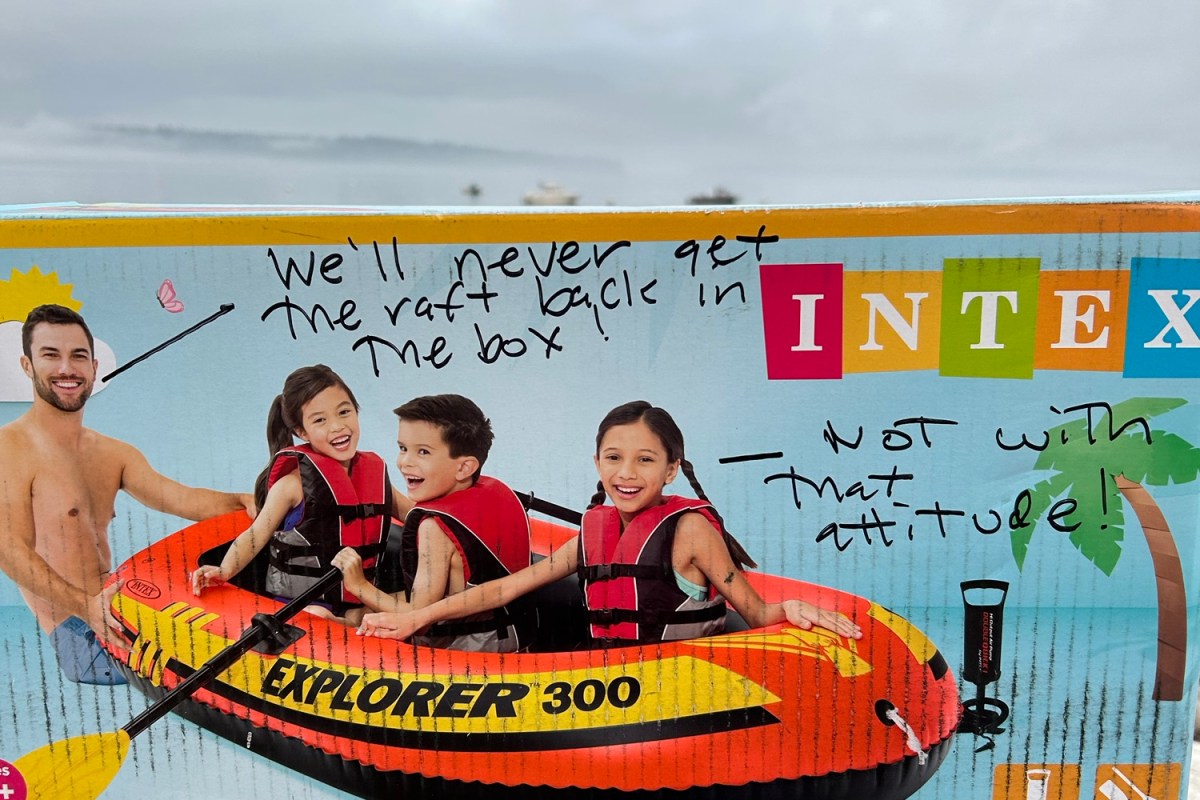
“This past weekend we were packing up to leave the vacation place we stayed at for two weeks. My nine-year-old daughter, Miss O, was helping my friend, Eric, put the rubber raft away. He’d purchased the raft for this trip so he had the original box.

After deflating it, they rolled it up and then Eric said to Miss O, “It’s never going to fit back in that box.

And Miss O retorted, “Not with that attitude. Let’s be like Mommy and at least give it a try.”

And when I asked if it fit, she replied, “It would have but when he thought I wasn’t looking, he went and put the pump into the box first.”

She recounted this story to me at bedtime the night before we left. Eric must have heard her voice (and my laughter) float down from the bedroom. When I came down after closing the door he laughingly said, “For the record, it was never going to fit back into the box.”

We mostly forgot about the raft until a couple of weeks ago when my kids and I went looking for sports equipment at Goodwill. My kids have never met a sport they didn’t like, or so it seems. My compromise with them is to buy used sports equipment. And we’ve found some great stuff there.

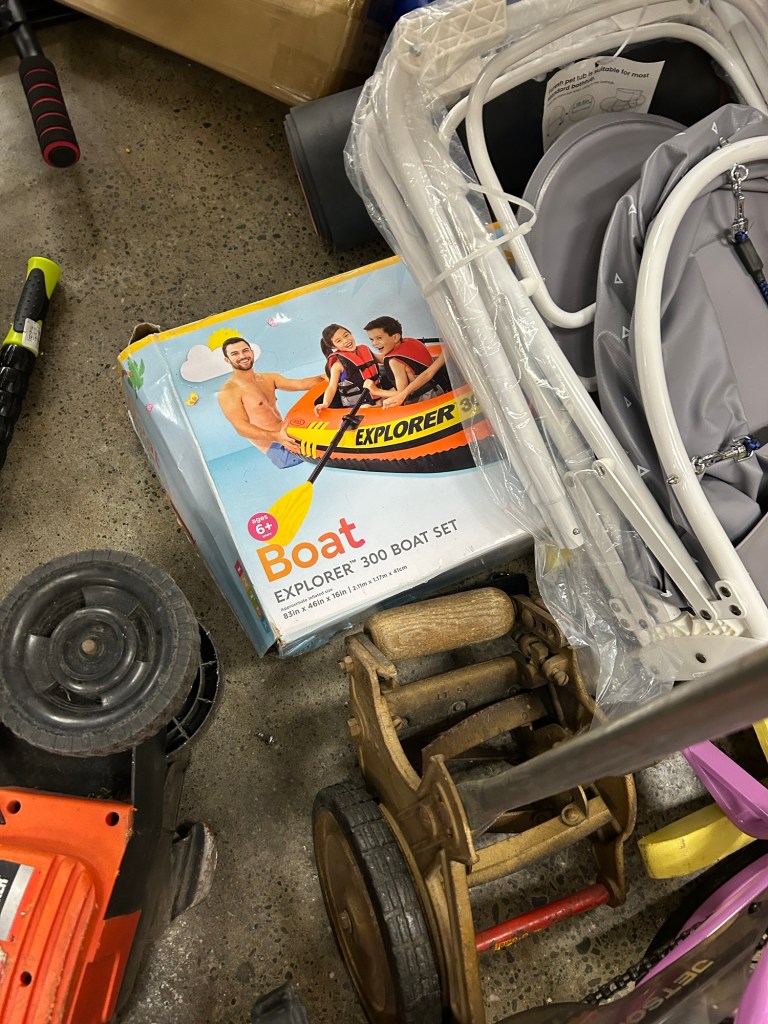
Like on this last visit, when tucked under a washtub for pets and an old lawn mower we found the exact same raft that Eric had. Miss O was so excited and said, “text a picture of it to Eric.

.

Eric’s response, “They must have had a great attitude.”

I’m still laughing. Wishing you all a great week and a fantastic attitude. 🙂

(featured photo is Eric’s markup on the original box)

You can find me on LinkedIn: https://www.linkedin.com/in/wynneleon/ and Instagram @wynneleon

I host the How to Share podcast, a podcast about collaboration – sharing leads to success.

I also co-host the Sharing the Heart of the Matter podcast, an author, creator and storytelling podcast with the amazing Vicki Atkinson.

How to Share Creativity

Creative people are curious, flexible, persistent, and independent with a tremendous spirit of adventure and a love of play.” – Henri Matisse

I’ve often joked that I have a math brain. But have I mentioned how much of a math geek I am? When I was in college, I loved math so much that I looked through all the engineering majors to see which one required the most math classes. That’s how I ended up with an electrical engineering degree.

Nothing in the more than 30 years after I graduated from college has convinced me that I’m a natural creative. Not the three books I’ve published (because two of which are technical so that doesn’t count, right?), more than 2,000 blog posts I’ve written, or anything else.

Until now.

Because Pia Mailhot Leichter’s book, Welcome to the Creative Club, is a myth-busting, research-based, fantastically inspiring book that will change your perspective and power. The clip below gives a small taste of that.

Vicki Atkinson and I were recently blessed enough to be able to talk with the amazing creative director, entrepreneur, and author Pia Mailhot Leichter on the How to Share podcast.

Pia’s book is an incredible invitation into our own creative power. She beautifully weaves agency and awe together in a way that helps bring us alive again. Pia delivers a reminder to move out of autopilot and a perspective to help with adversity, and everything else!

She tells us the story of how coming undone was a trip back to knowing herself and remembering that she’s the creative director of her life. We talk about creating evidence of our resilience.

Pia’s view of creativity will leave you feeling empowered. Which is part of her mission helping others live and lead from creativity.

Takeaways

  • We often need to lose ourselves to find our true selves.
  • Creativity is a response to life’s challenges.
  • Creativity is not just for artists; it’s for everyone.
  • Embracing uncertainty can lead to greater joy and creativity.
  • Vulnerability fosters connection and understanding.
  • Storytelling is a way to honor our journeys and experiences.
  • Collaboration enhances the creative process and outcomes.
  • We are all natural born creators, regardless of our paths.
  • Reclaiming our creativity is essential for a fulfilling life.

This is a great conversation full of energy and inspiration. Buckle up for a beautiful ride. We know you’ll love it!

Here are some ways you can listen and watch this powerful episode:

Please listen, watch, provide feedback and subscribe.

How to Share Our Luck with Gil Gillenwater How To Share

In this enlightening conversation, Gil Gillenwater is with host Wynne Leon and shares his experiences and insights from over 35 years of philanthropic work along the US-Mexico border. He discusses his book, 'Hope on the Border,' which highlights the transformative power of education and community service. Gil emphasizes the importance of enlightened self-interest over traditional charity, advocating for a model that empowers individuals and fosters dignity. He explores the duality of poverty, the need for sustainable opportunities, and the joy found in serving others, ultimately presenting a vision for a more connected and compassionate world.TakeawaysEducation is the key to breaking the cycle of poverty.Enlightened self-interest can lead to personal and communal growth.Charity should not be viewed as a sacrifice but as a mutual benefit.Volunteering provides a sense of purpose and fulfillment.Welfare can disempower individuals and communities.Community service fosters connections and shared humanity.The disparity in wealth is a significant issue that needs addressing.Experiencing poverty firsthand can change perspectives.Creating opportunities in one's home country can reduce migration.The joy of service is a pathway to personal happiness.Links for this episode:How to Share homeHope on the Border at AmazonGil's organization: Rancho FelizGil Gillenwater on FacebookWynne’s book about her beloved father: Finding My Father’s Faith; Blog: https://wynneleon.com/; Substack: https://wynneleon930758.substack.com/
  1. How to Share Our Luck with Gil Gillenwater
  2. How to Share 1970's Chicago with Doug. E. Jones
  3. How to Share Feedback with Dr. Vicki Atkinson
  4. How to Share the Next Generation with Mari Sarkisian Wyatt
  5. How to Share Impactfully with Social Media Friends with Amy Weinland Daughters

Transcript for How to Share Creativity with Pia Mailhot Leichter

Links for this episode:

Welcome to the Creative Club on Amazon, Audible and Barnes and Noble

Famished a spoken word album on Spotify

Pia’s site: kollektiv studio

From the Hosts:

Vicki’s book about resilience and love: Surviving Sue; Blog: https://victoriaponders.com/

Wynne’s book about her beloved father: Finding My Father’s Faith; Blog: https://wynneleon.com/

(featured photo from Pexels)

When You Fall On Your Face

Our greatest glory is not in never falling, but in rising every time we fall.” – Confucius

This isn’t a story about me falling on my face (although I have plenty of those stories) but a recent incident when my 6-year-old son, Mr. D, fell on his. Although I’m sure I echo the sentiments of many parents when I say I’d happily take my kids’ falls for them if I could.

It happened when we were playing Little League summer ball. Ten-year-old Miss O was able to play on the team too and it was an informal sandlot team that would divide into two teams and scrimmage with whoever showed up.

There was one difference between summer ball and the first season of baseball that Mr. D played – they played outs. If someone got the ball and forced an out or tagged an out, the player would go back to the dugout.

But in this hodgepodge of rules, the teams still batted everyone in their lineup each turn at bat. The last person at bat was the “homerun hitter” meaning they and anyone else who was on base would run home.

On the last inning of a scrimmage one night in July, Mr. D was the homerun hitter. He hit the ball squarely. But by the time he’d gotten to third base and was rounding to home, the other team had gotten the ball. All the players on the other team were chasing him down the third base line. It was only about five of them but it still felt like a terrifying and mad pursuit. That’s when he fell on his face.

He was furious! His sister tried to give him a hand up and he slapped it away. So she was furious because he’d refused her help. I tried to help too but he was inconsolable. Since he was the last hitter of the last inning of the game we managed to get to the car and leave but not before everyone was well aware of our upset.

On the way home, we talked about how sports makes us want to try and how it hurts when we don’t make the play. But the tradeoff is not trying at all. Actually, Miss O and I talked about that, Mr. D said very little.

At bedtime, Mr. D went to get his journal and wrote the very first thing he’s ever written in it. He asked me, “Mom, how do you spell ‘Slide like this?’

The next morning he told me he wouldn’t be able to go to camp because he was still thinking about the baseball thing. I responded that he’d probably think about the baseball thing all day and it would be more tolerable at camp when he was busy than at home when he was not. He finally agreed to go to camp.

When we picked up the boys we were carpooling to camp with, he said to them, “I have to tell you a baseball story. It’s not good.” I was astounded. He’s not nearly as verbose as his sister.

It was only when he told the story to them that I understood that he didn’t fall on his face – he was trying to slide. But he’d never tried it before and didn’t know that you can’t slide from halfway down the base line. Or maybe you can – but it takes a lot more practice.

So, he fell on his face. He wrote about it. He told others about it. And once he did, seemed to be over it.

Here’s my takeaway. Sometimes we try new things and it doesn’t go well. It hurts like hell but you recover more quickly when you share.

(featured photo from Pexels)

You can find me on LinkedIn: https://www.linkedin.com/in/wynneleon/ and Instagram @wynneleon

I host the How to Share podcast, a podcast about collaboration – in our families, friendships, at work and in the world.

I also co-host the Sharing the Heart of the Matter podcast, an author, creator and storytelling podcast with the amazing Vicki Atkinson.

How to Share Reporting

Good people bring out the good in people.” – unknown

A few years ago I took my kids to a gathering where they met a lot of grown-ups. They did a few minutes of chit chat with them all and then we went off to play.

After a few minutes, my son, Mr. D, who was three years old said to me, “Where’s the New Guy?”

It took some back and forth but I figured out he was talking about one of the many grown-ups he’d met, Steve Rubenstein. As a long-time reporter for the San Francisco Chronicle and a substitute kindergarten teacher, Steve had captured Mr. D’s interest. No surprise, Steve is full of great stories and delight for all ages.

Steve heartily embraced the new moniker. My daughter, Miss O, who was seven at the time, memorialized it by making a New Guy friendship bracelet for him.

I recently had the privilege of podcasting with Steve Rubenstein and I’m sure you’ll agree – Steve has an incredible knack for sharing stories.

In this episode of the How To Share podcast, we talk about the art of storytelling that resonates with all ages. Steve shares insights from his 50-year journalism career, including his unique experiences interviewing notable figures and the therapeutic journey of writing. Learn why 13 miles per hour is the perfect speed to encounter life and how to leave a lasting impact through the stories we tell.

Takeaways:

The Art of Storytelling: Steve emphasizes the importance of knowing what to leave out in storytelling, highlighting that most of writing is about omission rather than inclusion.

Interviewing Insights: Steve shares his approach to interviewing, focusing on asking questions that resonate with both the interviewer and the audience, and getting subjects off their prepared remarks.

Therapeutic Writing: Writing can be therapeutic, as Steve experienced when he wrote about personal moments, like dropping his son off at college, which helped him process emotions.

Life at 13 MPH: Steve’s cross-country bike trip taught him that 13 miles per hour is the perfect speed to encounter life, allowing for meaningful interactions and observations.

Human Connection: Despite the contentious times, Steve’s journey across America revealed that the country is full of wonderful people, emphasizing the power of human connection beyond politics.

This is a great episode filled with how to share stories. Steve’s storytelling will leave you charmed and ready to tell your own. I know you’ll love it.

Here’s a short clip to give you a taste of the great conversation with the witty and wise Steve Rubenstein:

Here are some ways you can listen and watch to the full episode:

Please listen, watch, provide feedback and subscribe.

How to Share Our Luck with Gil Gillenwater How To Share

In this enlightening conversation, Gil Gillenwater is with host Wynne Leon and shares his experiences and insights from over 35 years of philanthropic work along the US-Mexico border. He discusses his book, 'Hope on the Border,' which highlights the transformative power of education and community service. Gil emphasizes the importance of enlightened self-interest over traditional charity, advocating for a model that empowers individuals and fosters dignity. He explores the duality of poverty, the need for sustainable opportunities, and the joy found in serving others, ultimately presenting a vision for a more connected and compassionate world.TakeawaysEducation is the key to breaking the cycle of poverty.Enlightened self-interest can lead to personal and communal growth.Charity should not be viewed as a sacrifice but as a mutual benefit.Volunteering provides a sense of purpose and fulfillment.Welfare can disempower individuals and communities.Community service fosters connections and shared humanity.The disparity in wealth is a significant issue that needs addressing.Experiencing poverty firsthand can change perspectives.Creating opportunities in one's home country can reduce migration.The joy of service is a pathway to personal happiness.Links for this episode:How to Share homeHope on the Border at AmazonGil's organization: Rancho FelizGil Gillenwater on FacebookWynne’s book about her beloved father: Finding My Father’s Faith; Blog: https://wynneleon.com/; Substack: https://wynneleon930758.substack.com/
  1. How to Share Our Luck with Gil Gillenwater
  2. How to Share 1970's Chicago with Doug. E. Jones
  3. How to Share Feedback with Dr. Vicki Atkinson
  4. How to Share the Next Generation with Mari Sarkisian Wyatt
  5. How to Share Impactfully with Social Media Friends with Amy Weinland Daughters

Links for this post:

As student gains bearings, father loses his by Steve Rubenstein (ping pong story mentioned in the podcast)

Steve Rubenstein, San Francisco Chronicle

(featured photo is Miss O with Steve and the New Guy bracelet)

How to Share Inspiration

The one thing that you have that nobody else has is you. Your voice, your mind, your story, your vision. So, write and draw and build and play and dance and live only as you can.” – Neil Gaiman

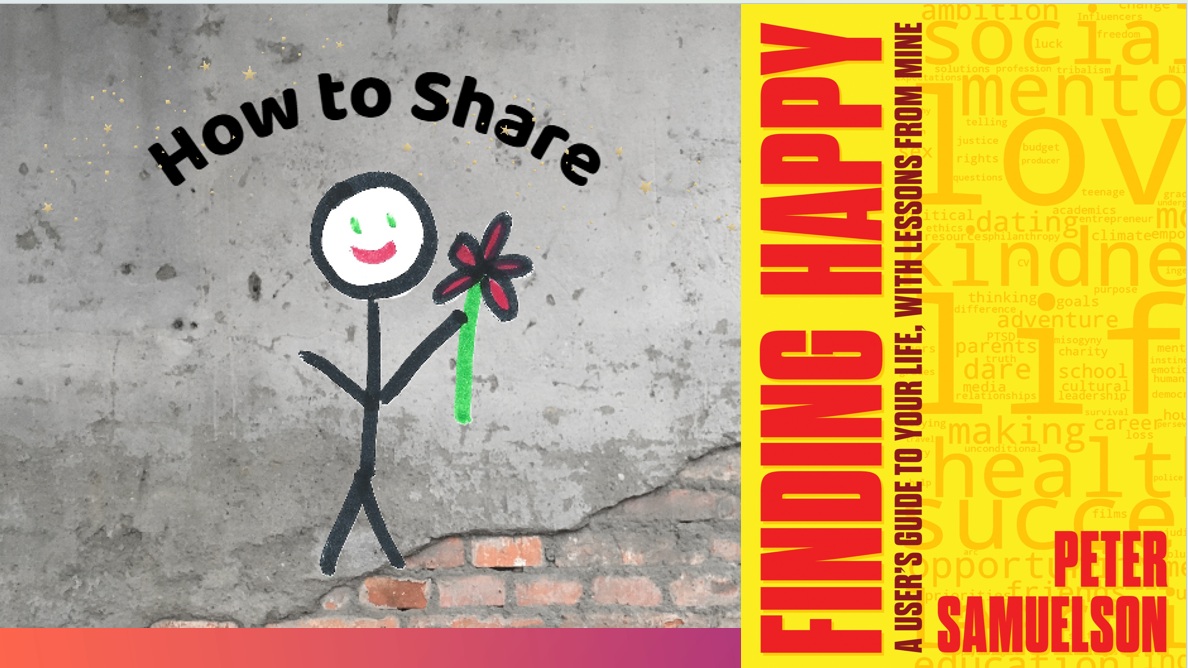
The other day I was at a salon getting my hair done and I couldn’t stop reading bits of filmmaker and philanthropist Peter Samuelson’s book Finding Happy aloud to my hairdresser.

Here’s a snippet of when he made the first pitch for First Star, his organization for educating foster kids in grades 9-12 on college campuses.

I asked for a meeting with the chancellor of UCLA, Gene Block. Back then he was in charge at UCLA. I believe he still thinks I went to UCLA first because I thought it was a top-notch university, which is true. Ranked the number one public university in the United States by US News and World Report, and number eight in the whole world. But actually, I went there first because I lived down the road. I thought, “I’ll start with UCLA…. They’re probably all going to say no, so I might as well start with the closest one.”

Peter Samuelson in Finding Happy

But they did say yes. Now First Star has 10 academies in the US and 3 in the UK.

How did Peter do it? Not just for his philanthropic efforts but also to get films like Arlington Road, Wilde and Revenge of the Nerds made? And how can we borrow from his playbook to get others to join us in efforts to improve the world? I was lucky enough to have Peter Samuelson come on the How To Share podcast to talk about how to share inspiration.

In this episode, filmmaker and philanthropist Peter Samuelson discusses his new book, Finding Happy, exploring themes of inspiration, storytelling, and the importance of empathy in connecting with others. He explains why storytelling is so vital in capturing other’s hearts when pitching an idea. He shares personal anecdotes about his journey, the power of collaboration, and the significance of love and mentorship in fostering resilience among young adults, especially in the aftermath of COVID-19. The conversation emphasizes the Jewish concept of Tikkun Olam, or healing the world, and the idea of showing up to make a difference.

Takeaways

  • Selflessness can be selfish, as it often leads to personal fulfillment.
  • Success in life is rooted in storytelling and persuasion.
  • To pitch an idea you have to catch the audience’s hearts to create a window in which they can be moved.
  • Generating empathy through storytelling is essential for connection.
  • Humor can create openness and foster relationships.
  • Every young adult needs someone who loves them unconditionally.
  • People change when they feel cherished and valued.
  • Finding love often requires collaboration and shared goals.
  • Mentorship plays a crucial role in personal development and support.
  • Tikkun Olam emphasizes our responsibility to heal the world.

This is a great episode in which Peter does a fantastic job of catching our hearts to show us how to share inspiration. I know you’ll love it!

Here’s a short clip to give you a taste of the great conversation with the delightful Peter Samuelson.

Here are some ways you can listen and watch to the full episode:

Please listen, watch, provide feedback and subscribe.

How to Share Our Luck with Gil Gillenwater How To Share

In this enlightening conversation, Gil Gillenwater is with host Wynne Leon and shares his experiences and insights from over 35 years of philanthropic work along the US-Mexico border. He discusses his book, 'Hope on the Border,' which highlights the transformative power of education and community service. Gil emphasizes the importance of enlightened self-interest over traditional charity, advocating for a model that empowers individuals and fosters dignity. He explores the duality of poverty, the need for sustainable opportunities, and the joy found in serving others, ultimately presenting a vision for a more connected and compassionate world.TakeawaysEducation is the key to breaking the cycle of poverty.Enlightened self-interest can lead to personal and communal growth.Charity should not be viewed as a sacrifice but as a mutual benefit.Volunteering provides a sense of purpose and fulfillment.Welfare can disempower individuals and communities.Community service fosters connections and shared humanity.The disparity in wealth is a significant issue that needs addressing.Experiencing poverty firsthand can change perspectives.Creating opportunities in one's home country can reduce migration.The joy of service is a pathway to personal happiness.Links for this episode:How to Share homeHope on the Border at AmazonGil's organization: Rancho FelizGil Gillenwater on FacebookWynne’s book about her beloved father: Finding My Father’s Faith; Blog: https://wynneleon.com/; Substack: https://wynneleon930758.substack.com/
  1. How to Share Our Luck with Gil Gillenwater
  2. How to Share 1970's Chicago with Doug. E. Jones
  3. How to Share Feedback with Dr. Vicki Atkinson
  4. How to Share the Next Generation with Mari Sarkisian Wyatt
  5. How to Share Impactfully with Social Media Friends with Amy Weinland Daughters

Links for this episode:

More about Finding Happy and Peter Samuelson

Order Finding Happy on Amazon (also available at Barnes & Noble, Target and other booksellers)

First Star

Starlight Children’s Foundation

The Sports Story

I trained 4 years to run 9 seconds and people give up when they don’t see results in 2 months.” – Usain Bolt

I was six years old and living in the Philippines when Muhammad Ali and Joe Frazier came there to fight the Thrilla in Manila. There was so much excitement in the days leading up to the event that it felt like the city was crackling. It was such a big deal that they even let my first grade class watch it on tv at school.

Whether it’s because of the hoopla of that fight or because I just love a good story, I’m up for watching just about any sporting event when I know the players’ stories. Todd Fulginiti and Brian Hannon wrote some great stories about the Eagles which helped me be all in for the Birds in this last Super Bowl.

The fun continues in Episode 111 of the Sharing the Heart of the Matter podcast because Vicki Atkinson and I were lucky enough to talk about baseball player stories with author and publisher, Rick Kaempfer.

This is the second game in our baseball double-header as we talk with the hilarious and engaging Rick about his labor of love, EveryCubEver. He swears this seventh edition of the book is the last time he’s going to update it until the Chicago Cubs win the World Series.

There are 2600 Cubs in this book – 2296 players and the rest are managers and back office. Rick provides the storytelling in each entry so it’s a great read for history buffs as well as baseball fans. He tells who became a dentist and who ended up in jail, who was on the beaches of Normandy, and who went on to become a governor.  

As an example of the engaging storytelling, he tells us why manager Frank Chance traded for pitcher Jack Harper just to ruin his career.

He gives us the background on the 200 photographs that are included in this edition of the book and where he found them.

Rick tells us the touching story of how he got invited to go to the Baseball Hall of Fame induction ceremony this year. Such a fantastic way to round out a year that includes publishing this seventh edition of EveryCubEver.

Join us as we explore the scenic and beautiful places we go when we tell baseball stories. You won’t want to miss this great conversation with the amazing and entertaining, Rick Kaempfer!

We know you’ll love it!

Please subscribe to our author, creator, and storytelling podcast! Search for Sharing the Heart of the Matter on Apple, Amazon, Spotify or Pocket Casts OR Listen to it from your computer on Anchor: Episode 111: EveryCubEver with Rick Kaempfer

Episode 111 transcript

And please subscribe to our YouTube channel to see great author and storyteller videos from our podcast: @SharingtheHeartoftheMatter. We have so many great authors in the line-up!

Links for this episode:

EveryCubEver

Chili Dog MVP

Other episodes with Rick Kaempfer: The Loop Files

From the hosts:

Vicki’s book about resilience and love: Surviving Sue; Blog: https://victoriaponders.com/

My book about my beloved father: Finding My Father’s Faith

(featured photo from Pexels)
Connecting the Dots

You can’t connect the dots looking forward; you can only connect them looking backwards. So you have to trust that the dots will somehow connect in your future. You have to trust in something – your gut, destiny, life, karma, whatever. This approach has never let me down, and it has made all the difference in my life.” – Steve Jobs

Like the quote for this post, I couldn’t see how all the dots on this story connected until the end. But I know how it started — when I showed up at the school playground Monday afternoon with an envelope full of money.

I’d signed nine-year-old Miss O for Glee Club. Because she’d joined the after school club late, the teacher gave me a pro-rated fee for the activity. She hadn’t included a payment link. So in the spirit of not wanting to make any more work for her, I put $160 in an envelope, sealed it and wrote only the teacher’s name on the front. My plan was to hand it to her when I picked Miss O up after class.

But I had to pick up five-year-old Mr. D at the regular end of the school day. I was talking with other parents when he came over to tell me that two kids weren’t letting a little kid go on the playground. Another parent and I went to investigate. Two boys had a smaller one pinned. As we tried to convince them to let him go, one hit the kid a couple of times and the other kid kicked the smaller kid when he was on the ground. Then they walked away.

We helped the smaller kid get a shoe back on and then as he got up, he started to follow the other boys. I said something to him about letting things cool down but he either didn’t hear, understand, or agree.

I walked back to the other parents. Something caught my eye across the playground. The kids again had the little boy on the ground and were kicking him. Some instinctive thing kicked in and I started running the 100 yards towards where they were yelling, “Stop! Cut it out.”

Let’s be clear – I’m an endurance person, not a running person. If my yelling didn’t scare them, I bet my awkward sprint probably did. One kid let go, the little one got up, and the second kid started chasing him with me running after them both.

Fortunately, the director of the after school program was alerted by my yelling and came over to handle the situation. No doubt that not only he was more qualified but he also had a relationship with the kids. I walked away knowing the situation was in good hands.

But when I got home, I couldn’t find the envelope with the cash. I felt sick about it. However, I rationalized that my adrenaline fueled run across the playground was worth it.

I knew this wasn’t the Glee Club teacher’s problem so I figured out how to Venmo her the money. When I returned to pick up Miss O at the end of the after school class, the teacher said to me, “I got the money.

Confused, I asked, “The Venmo?” She shook her head and said, “The envelope with the cash.”

A student had found the envelope on the playground and tracked the teacher down to give it to her.

I don’t know how you connect the dots in this story. But for me, it was a God moment. I felt a shiver as I saw in hindsight the hand of something bigger than me drawing the thru line from start to finish.

(featured photo from pexels)

You can find me on Instagram @wynneleon and LinkedIn: https://www.linkedin.com/in/wynneleon/

I co-host a storytelling podcast featuring authors and artists with the amazing Vicki Atkinson. To tune in, search for Sharing the Heart of the Matter on Spotify, Apple, Amazon Music or Pocketcasts (and subscribe) or click here. Or the YouTube channel features videos of our interviews. Please subscribe!

My other projects include work as a CEO (Chief Encouragement Officer), speaking about creativity and AI through the Chicago Writer’s Association, and my book about my journey to find what fueled my dad’s indelible spark and twinkle can be found on Amazon: Finding My Father’s Faith.