How to Share a Sandwich

When we do the best that we can, we never know what miracle is wrought in our life, or the life of another.” – Helen Keller

Karen Olson shares a statistic in her book Meant for More: Following Your Heart and Finding Your Purpose that one in thirty children in the United States experience homelessness annually.

That means that when I volunteered last week at my kids’ elementary school last week to walk the approximately 400 students at school down to have their photo taken for Picture Day, statistically speaking, 13 of them could have experienced homelessness in the last year. It’s overwhelming to even try to comprehend that.

So I love the conversation that Vicki Atkinson and I had with Karen Olson because she has done so much to help homeless families. Karen is the founder and CEO emeritus of Family Promise, an organization committed to ending family homelessness.

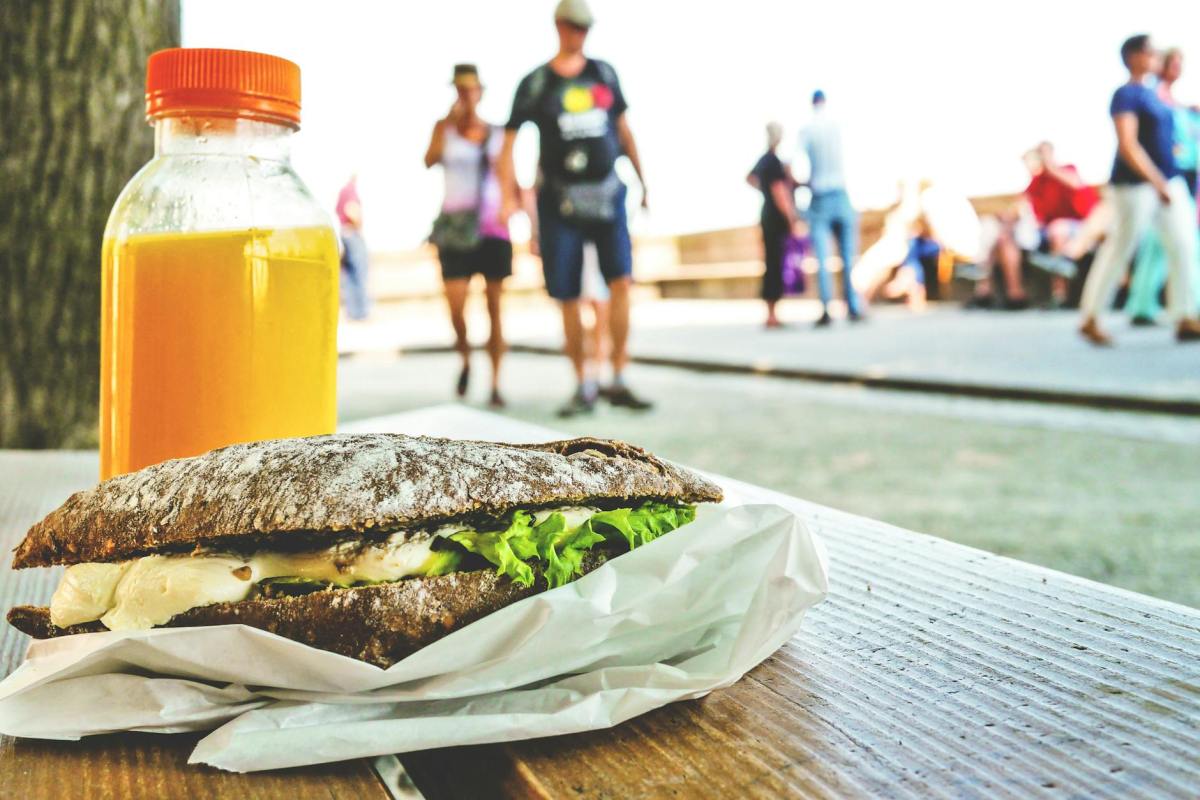
Karen shares the story of her encounter with Millie, a woman experiencing homelessness, and how that her decision to not only share a sandwich but also her time as she listened to Millie’s story changed her life forever (see clip below).

She tells us how her sons who were 10 and 12 at the time got involved. And she shares how the “no’s” she received help shape her mission into something even better – an organization that has involved a million volunteers and a nation-wide presence.

In her book, Meant for More, Karen tells not only her story but also some stories of the people Family Promise has helped – from those who experienced homelessness to the volunteers.

In this episode we talk about some of the reasons we hesitate to help people experiencing homelessness. Karen’s guidance is so helpful to help direct our efforts in ways that make a difference.

This is a great episode with a woman who was wired to help others. We know you’ll love it.

Takeaways from this episode:

  • Karen Olson founded Family Promise to help homeless families.
  • The organization mobilizes community resources to provide shelter and support.
  • 80% of families in the program find housing within nine weeks.
  • Personal acts of kindness can lead to significant change.
  • Engaging with the homeless can break down barriers and stereotypes.
  • Community service fulfills the needs of both the giver and receiver.
  • Advocacy is essential for systemic change in homelessness.
  • Many homeless families are hidden from public view.
  • Compassion and kindness can inspire others to act.
  • The journey of helping others can lead to personal healing.

Here’s Karen telling the story about the sandwich that started it all.

Here are some ways you can watch this heartwarming and inspiring episode:

How to Share a Sandwich transcript

How to Share Our Luck with Gil Gillenwater How To Share

In this enlightening conversation, Gil Gillenwater is with host Wynne Leon and shares his experiences and insights from over 35 years of philanthropic work along the US-Mexico border. He discusses his book, 'Hope on the Border,' which highlights the transformative power of education and community service. Gil emphasizes the importance of enlightened self-interest over traditional charity, advocating for a model that empowers individuals and fosters dignity. He explores the duality of poverty, the need for sustainable opportunities, and the joy found in serving others, ultimately presenting a vision for a more connected and compassionate world.TakeawaysEducation is the key to breaking the cycle of poverty.Enlightened self-interest can lead to personal and communal growth.Charity should not be viewed as a sacrifice but as a mutual benefit.Volunteering provides a sense of purpose and fulfillment.Welfare can disempower individuals and communities.Community service fosters connections and shared humanity.The disparity in wealth is a significant issue that needs addressing.Experiencing poverty firsthand can change perspectives.Creating opportunities in one's home country can reduce migration.The joy of service is a pathway to personal happiness.Links for this episode:How to Share homeHope on the Border at AmazonGil's organization: Rancho FelizGil Gillenwater on FacebookWynne’s book about her beloved father: Finding My Father’s Faith; Blog: https://wynneleon.com/; Substack: https://wynneleon930758.substack.com/
  1. How to Share Our Luck with Gil Gillenwater
  2. How to Share 1970's Chicago with Doug. E. Jones
  3. How to Share Feedback with Dr. Vicki Atkinson
  4. How to Share the Next Generation with Mari Sarkisian Wyatt
  5. How to Share Impactfully with Social Media Friends with Amy Weinland Daughters

Links for this episode:

Karen’s book: Meant for More: Following Your Heart and Finding Purpose on Barnes & Noble , Bookshop.org and Amazon

Karen Olson, Author

Family Promise Organization

From the hosts:

Vicki’s book about resilience and love: ⁠Surviving Sue⁠; Blog: ⁠https://victoriaponders.com/⁠

My book about my beloved father: ⁠Finding My Father’s Faith⁠;

(featured photo from Pexels)

How to Make a Difference

Not all of us can do great things. But we can do small things with great love.” – Mother Teresa

I try pay extra close attention when I hear the same message from many sources. It’s like a wake-up call that is too powerful to ignore.

Here’s a message that I keep hearing: Getting involved with an issue or cause you are passionate about will change your life as well as do good for the world. To make a difference, start small, stay local, and be consistent. I’ve heard that in conversations with filmmaker Peter Samuelson, activist Sam Daley-Harris and now in this latest episode of the How to Share podcast with Sharon Eubank.

Sharon is the Global Director of Humanitarian Services for the church of Jesus Christ of Latter-day Saints. We are talking about her book Doing Small Things With Great Love. It is such a helpful and hopeful book that provides a blueprint for effective service.

Sharon shares a few of the 92 stories in her amazing book that she provides as illustrations of the 12 principles for effective and lasting service. Based in her years of experience working in communities near and far, Sharon has distilled some thoughtful truths that inspire us to action.

We talk about how we sometimes don’t feel we can make a difference as individuals and why sometimes it seems easier to contribute to project far away than the ones in our own cities and towns. Sharon gives some great examples of why local solutions for local problems are more effective.

We talk about how service and volunteering can make such a difference in our own lives. Sharon not only provides a blueprint for effective and lasting service, she also provides some suggestions to get us started doing small things with great love. I highly recommend this book!

This is an incredible episode that gets to the very heart and soul of collaboration – how we can be useful to one another. I know you’ll love it.

Takeaways

  • Sharon emphasizes the importance of local solutions for local problems.
  • Volunteering can be a transformative experience for both the giver and receiver.
  • Mentorship plays a crucial role in personal and professional development.
  • Small acts of service can lead to significant community impact.
  • Overcoming barriers to service often starts with individual passion and energy.
  • Building bridges of understanding is essential in a polarized world.
  • Effective service requires understanding the needs of those being helped.
  • Storytelling enriches the experience of service and community engagement.
  • Creating opportunities for connection can foster a sense of belonging.
  • The cycle of replenishment is vital for sustaining service efforts.

Here’s a delightful taste of Sharon describing the magic of volunteering:

Here are some ways you can listen and watch this inspiring episode:

Please listen, watch, provide feedback and subscribe.

How to Share Our Luck with Gil Gillenwater How To Share

In this enlightening conversation, Gil Gillenwater is with host Wynne Leon and shares his experiences and insights from over 35 years of philanthropic work along the US-Mexico border. He discusses his book, 'Hope on the Border,' which highlights the transformative power of education and community service. Gil emphasizes the importance of enlightened self-interest over traditional charity, advocating for a model that empowers individuals and fosters dignity. He explores the duality of poverty, the need for sustainable opportunities, and the joy found in serving others, ultimately presenting a vision for a more connected and compassionate world.TakeawaysEducation is the key to breaking the cycle of poverty.Enlightened self-interest can lead to personal and communal growth.Charity should not be viewed as a sacrifice but as a mutual benefit.Volunteering provides a sense of purpose and fulfillment.Welfare can disempower individuals and communities.Community service fosters connections and shared humanity.The disparity in wealth is a significant issue that needs addressing.Experiencing poverty firsthand can change perspectives.Creating opportunities in one's home country can reduce migration.The joy of service is a pathway to personal happiness.Links for this episode:How to Share homeHope on the Border at AmazonGil's organization: Rancho FelizGil Gillenwater on FacebookWynne’s book about her beloved father: Finding My Father’s Faith; Blog: https://wynneleon.com/; Substack: https://wynneleon930758.substack.com/
  1. How to Share Our Luck with Gil Gillenwater
  2. How to Share 1970's Chicago with Doug. E. Jones
  3. How to Share Feedback with Dr. Vicki Atkinson
  4. How to Share the Next Generation with Mari Sarkisian Wyatt
  5. How to Share Impactfully with Social Media Friends with Amy Weinland Daughters

Links for this episode:

Doing Small Things With Great Love by Sharon Eubank at Barnes & Noble, Amazon and Audible

Sharon Eubank on LinkedIn

How to Make a Difference with Sharon Eubank transcript

(featured photo from Pexels)

How to Share Inspiration

The one thing that you have that nobody else has is you. Your voice, your mind, your story, your vision. So, write and draw and build and play and dance and live only as you can.” – Neil Gaiman

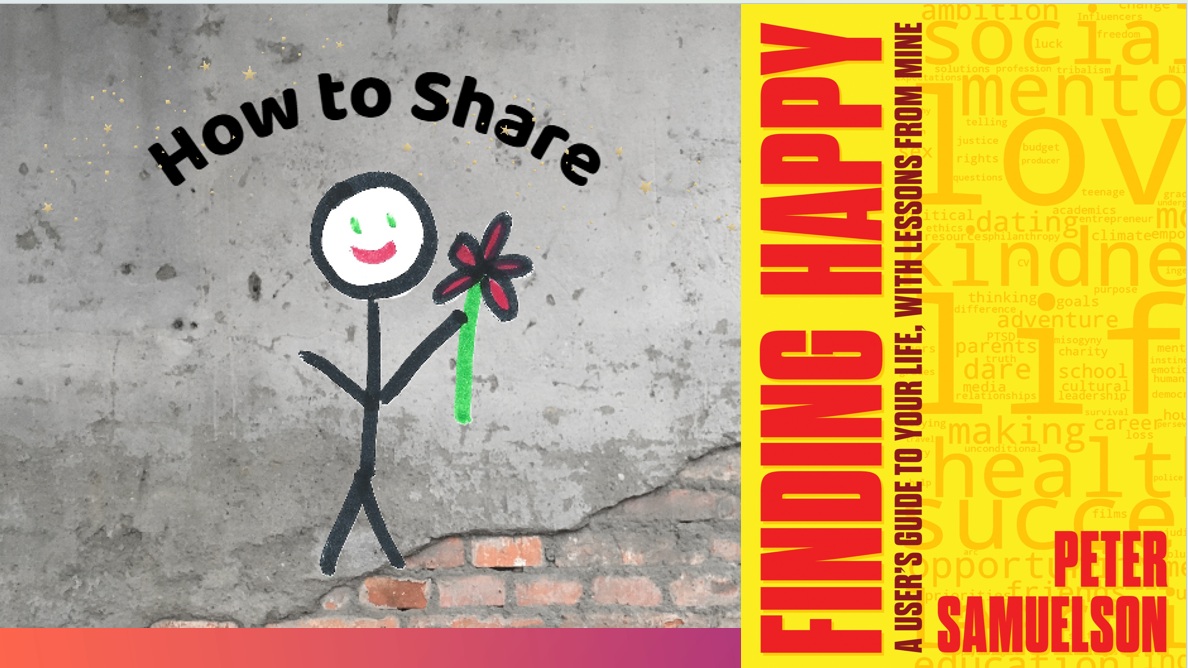
The other day I was at a salon getting my hair done and I couldn’t stop reading bits of filmmaker and philanthropist Peter Samuelson’s book Finding Happy aloud to my hairdresser.

Here’s a snippet of when he made the first pitch for First Star, his organization for educating foster kids in grades 9-12 on college campuses.

I asked for a meeting with the chancellor of UCLA, Gene Block. Back then he was in charge at UCLA. I believe he still thinks I went to UCLA first because I thought it was a top-notch university, which is true. Ranked the number one public university in the United States by US News and World Report, and number eight in the whole world. But actually, I went there first because I lived down the road. I thought, “I’ll start with UCLA…. They’re probably all going to say no, so I might as well start with the closest one.”

Peter Samuelson in Finding Happy

But they did say yes. Now First Star has 10 academies in the US and 3 in the UK.

How did Peter do it? Not just for his philanthropic efforts but also to get films like Arlington Road, Wilde and Revenge of the Nerds made? And how can we borrow from his playbook to get others to join us in efforts to improve the world? I was lucky enough to have Peter Samuelson come on the How To Share podcast to talk about how to share inspiration.

In this episode, filmmaker and philanthropist Peter Samuelson discusses his new book, Finding Happy, exploring themes of inspiration, storytelling, and the importance of empathy in connecting with others. He explains why storytelling is so vital in capturing other’s hearts when pitching an idea. He shares personal anecdotes about his journey, the power of collaboration, and the significance of love and mentorship in fostering resilience among young adults, especially in the aftermath of COVID-19. The conversation emphasizes the Jewish concept of Tikkun Olam, or healing the world, and the idea of showing up to make a difference.

Takeaways

  • Selflessness can be selfish, as it often leads to personal fulfillment.
  • Success in life is rooted in storytelling and persuasion.
  • To pitch an idea you have to catch the audience’s hearts to create a window in which they can be moved.
  • Generating empathy through storytelling is essential for connection.
  • Humor can create openness and foster relationships.
  • Every young adult needs someone who loves them unconditionally.
  • People change when they feel cherished and valued.
  • Finding love often requires collaboration and shared goals.
  • Mentorship plays a crucial role in personal development and support.
  • Tikkun Olam emphasizes our responsibility to heal the world.

This is a great episode in which Peter does a fantastic job of catching our hearts to show us how to share inspiration. I know you’ll love it!

Here’s a short clip to give you a taste of the great conversation with the delightful Peter Samuelson.

Here are some ways you can listen and watch to the full episode:

Please listen, watch, provide feedback and subscribe.

How to Share Our Luck with Gil Gillenwater How To Share

In this enlightening conversation, Gil Gillenwater is with host Wynne Leon and shares his experiences and insights from over 35 years of philanthropic work along the US-Mexico border. He discusses his book, 'Hope on the Border,' which highlights the transformative power of education and community service. Gil emphasizes the importance of enlightened self-interest over traditional charity, advocating for a model that empowers individuals and fosters dignity. He explores the duality of poverty, the need for sustainable opportunities, and the joy found in serving others, ultimately presenting a vision for a more connected and compassionate world.TakeawaysEducation is the key to breaking the cycle of poverty.Enlightened self-interest can lead to personal and communal growth.Charity should not be viewed as a sacrifice but as a mutual benefit.Volunteering provides a sense of purpose and fulfillment.Welfare can disempower individuals and communities.Community service fosters connections and shared humanity.The disparity in wealth is a significant issue that needs addressing.Experiencing poverty firsthand can change perspectives.Creating opportunities in one's home country can reduce migration.The joy of service is a pathway to personal happiness.Links for this episode:How to Share homeHope on the Border at AmazonGil's organization: Rancho FelizGil Gillenwater on FacebookWynne’s book about her beloved father: Finding My Father’s Faith; Blog: https://wynneleon.com/; Substack: https://wynneleon930758.substack.com/
  1. How to Share Our Luck with Gil Gillenwater
  2. How to Share 1970's Chicago with Doug. E. Jones
  3. How to Share Feedback with Dr. Vicki Atkinson
  4. How to Share the Next Generation with Mari Sarkisian Wyatt
  5. How to Share Impactfully with Social Media Friends with Amy Weinland Daughters

Links for this episode:

More about Finding Happy and Peter Samuelson

Order Finding Happy on Amazon (also available at Barnes & Noble, Target and other booksellers)

First Star

Starlight Children’s Foundation

For the Love of Pete

What we love, others will love and we will show them how.” – Wordsworth

No, I don’t mean that title as a mild oath. I mean it literally. We love talking with Pete Springer. He is such a connector in this WordPress community. And for every conversation we have with Pete, I walk away feeling uplifted, entertained, and inspired.

This holds for the latest podcast that Vicki Atkinson and I did with Pete: Episode 99: The Gift That Keeps Giving with Pete Springer. In this episode, the inspiration comes in remembrance of his great mentor and friend, Nancy Wheeler.

Nancy showed how to give the gift of herself, to quote from Ralph Waldo Emerson. In her years as a teacher, principal, mentor and community member, she lived a life full of service and joy.

Pete tells us the stories that are so uplifting and exemplary. Of how Nancy empowered others, created relationships, took people under her wing, and knew how to bring out talent.

In each example, we get a glimpse of how to live with a big and open heart. Pete paints the picture of how one person can do so much!

I’m confident you’ll love the scenic and beautiful places we explore as we share the power of storytelling about how to give the gift of ourselves.

We know you’ll love it!

Search (and subscribe!) for Sharing the Heart of the Matter on Apple, Amazon, Spotify or Pocket Casts OR Listen to it from your computer on Anchor: Episode 99: The Gift that Keeps on Giving with Pete Springer

Episode 99 Transcript

AND subscribe to our YouTube channel to see a video clip of each story: @SharingtheHeartoftheMatter.

Links for this Episode:

Pete Springer – Passionate Teacher and Future Children’s Author

My Heroine – Pete Springer

They Call Me Mom – Pete’s beautiful book

From the hosts:

Vicki’s book about resilience and love: Surviving Sue; Blog: https://victoriaponders.com/

My book about my beloved father: Finding My Father’s Faith;

(featured photo from Pexels)
Using It All Up

When I stand before God at the end of my life, I would hope that I would not have a single bit of talent left and could say, I used everything you gave me.” – Erma Bombeck

My dad had a motto, especially in his retirement years. “I just want to be useful.” And as a retired pastor, that translated to serving on boards, guest preaching, teaching classes, and family stuff like helping me with my house and yard on Saturdays.

And he was very useful. But his usefulness required a lot of flexibility on my mom’s part.

A month or so ago, my 85-year-old mom asked, “Did you see Eleanor Coppola’s obituary in the paper?”

I hadn’t, so we found it and she read me this part, “ ‘There is part of me that has been waiting for Francis to leave me, or die, so that I can get my life the way I want it,’ Eleanor wrote. ‘I wonder if I have the guts to get it the way I want with him in it.’ “

I have a theory – that a lot of women don’t use up all their talent as the quote for this post by Erma Bombeck so beautifully says. That isn’t to say that it doesn’t apply to men, too.

But when it comes to women, it seems that after a lifetime of being flexible for others (relationships, kids, pets), women don’t often get ASKED in the same way that men do. So then it becomes a doubly-hard question about creating life the way as envisioned because it involves crafting the persona, network, and possibly upsetting the status quo at home.

In the case of Eleanor Coppola, it turns out that she died at age 87 before Francis. But she directed her first feature film at age 80. I hope that means she was able to get life the way she wanted it with him in it. In fact, one more quote from her obituary makes me think he was nudging her along:

“ ‘One morning at the breakfast table my husband said, “Well, you should direct it.” I was totally startled,’ Eleanor told The AP. ‘But I said, “Well, I never wrote a script before, and I’ve never directed, why not?” I was kind of saying “why not” to everything.

As we tune in the deep whisper urging us to be useful and share all our talents with the world, I think we should remember to ask, “Why not?

(featured photo from Pexels)

Useful at Any Age

A lifetime is so precious, and so brief, and can be used so beautifully.” – Pema Chödrön

A while back, Miss O asked me if teenagers wanted to be little kids. When I said I didn’t believe so, she explained the question – if she, at age seven, wants to be a teenager, and her aunt in her 50’s wants to be younger, then what age do teenagers want to be?

I recently learned from Jennifer Senior, a staff writer at The Atlantic, that it is fairly common, especially in people over 40-years-old, to think of themselves as an age different than their years. This concept has the name “subjective age.” In her piece, The Puzzling Gap Between How Old You Are and How Old You Think You Are, she explains that, “Adults over 40 perceive themselves to be, on average, about 20 percent younger than their actual age.” People under 25 tend to think of themselves as older.

The article is delightfully filled with data, anecdotes, and links to research, as one would expect from The Atlantic and Jennifer Senior. A few things stood out to me:

David C. Rubin, a psychology and neuroscience professor at Duke, has found “the adults have an outsize number of memories from the ages of about 15 to 25. They call this phenomenon ‘the reminiscence bump.’ (This is generally used to explain why we’re so responsive to the music of our adolescence)”

Also, the gap of perceived age is greater in Western cultures than in Asia or Africa, or places where elders are more respected.

And one of Jennifer Senior’s conclusions about this mental trick really stuck with me, “If you mentally view yourself as younger—if you believe you have a few pivots left—you still see yourself as useful; if you believe that aging itself is valuable, an added good, then you also see yourself as useful.

The three ways of seeing our subjective age: wanting to be older like Miss O does, seeing ourselves as younger than our actual years, or liking the age we’re at because we’re seen as respected and valuable, share the common ground of wanting to have agency and feel generative. It reminds me of my dad whose motto of service to others was “I just want to be useful.

May we all feel useful, at whatever age we believe ourselves to be.

For a related post, about the perspective gained when I met someone that reminded me of who I was 15 years ago, check out my Heart of the Matter post: Better Off Without

(featured photo from Pexels)

The Formula

One filled with joy preaches without preaching.” – Mother Teresa

When I would golf with my dad and a stranger was added to our group, I always found it interesting to see how people would react when they found out that he was a pastor, or retired pastor. Of course, not everyone asked but more often than not it would come up. I remember being out golfing with my dad once and my dad’s ball ricocheted off a tree and very luckily landed really near the green. The guy golfing with us said something like, “Wow, the Big Guy really is looking out for you.”

My dad just laughed. I think it’s fair to say that he didn’t think God spent any time worrying about his golf game. And he was so good humored that sometimes it was hard to figure out how he approached life because he made it look so easy and delightful.

I’ve spent a lot of time thinking about all the in-depth conversations we had, especially in those years right before he died suddenly in a bike accident at age 79. What I’ve concluded is that there were three things that came together so that he appeared to glide through his golf game … and life.

First was his attitude. Wherever my dad was, he looked around for what he could do to help. So when golfing, wherever the ball landed he’d think it was great because that’s where he could be useful. And it wasn’t just his ball – when I would hit in the woods, as I frequently did, he’d be the first person tromping in there to help me find mine, laughing and good-naturedly joking all the way.

Second was his faith. My dad was sure he could hit from anywhere because his faith had taught him his work was in partnership with God. If he had to hit out from a bed of pine needles stuck between three trees, he would try. He didn’t expect that God would make it easy but he did think that God would make it meaningful.

Third, was his personality. He was such an enthusiastic, caring person that you just wanted to be around him. He never entered a room with an authentic compliment for those he greeted. And his eyes were almost permanently crinkled from the delightful twinkle in his eyes. He’d make you believe that you could also do anything, especially with him by your side. And he believed he could do anything because he had God by his side.

He remarked to me several times that people had said to him that he’d led a blessed life. He knew his life had plenty of trouble. Thinking back to my early years when we lived as a family for almost 6 years in the Philippines after Ferdinand Marcos had declared Martial Law, I’d concur that my dad faced plenty of obstacles. But in the end, he agreed he’d lived a blessed life – not free of ups and downs but full of meaning and love.

That’s the formula that I’ve come up with from my dad – love where you are at, believe you are not alone and care for others along the way. I don’t know if the guy we golfed with gleaned any of that but I know even now, seven years after his death, my dad continues to inspire me to do the same.