Backing Up My Assumptions

You can search throughout the entire universe for someone who is more deserving of your love and affection than you are yourself, and that person is not to be found anywhere. You yourself, as much as anybody in the entire universe, deserve your love and affection.” – Buddha

Last week I experienced the digital version of having to evacuate the house. My beloved laptop stopped being able to connect to AC power. It’s been touchy for a couple of years so I’d been putting the plug in a certain way and then jiggling it until the red light came on. And then it stopped being able to charge at all.

So I had to grab everything I needed in the span of the power remaining on the battery.

In theory, this should be no problem. I back everything up to the Cloud. In practice, I like to put things in places that aren’t backed up and think I’ll organize them later.

I closed my laptop (to save battery, of course) and thought about it. The first list of things I came up with were the things I needed in the short term. It felt like this was the equivalent of getting my family out of the house in the case of an emergency. Pretty obvious what to grab and the high-level “go bag” I’d prepared helped make me efficient.

But then the next list of things were the precious things in case I couldn’t get my laptop back. These were the digital version of grabbing the baby books and my dad’s lucky baseball mitt before running out the front door.

At this point I was pretty sure I could live with what I had and just needed to spend the time to rebuild my old laptop for what I needed to get done. This is the step where I learned the most because I started making mistakes. I flubbed a post, called someone by the wrong name, and didn’t have time to double-check details.

I ran smack-dab into my assumption that even in the case of disruption, I should be able to get operate like it’s business as usual. Sure, I can rebuild a laptop, stop by the repair shop and still get Miss O to the orthodontist, make all our classes and activities, and just do meetings in the car. <eye roll> Dang, my face still hurts from hitting that metaphorical wall.

The good news is that I got the laptop to the shop with enough battery power remaining that they could get the encryption key they needed in order to fix it. I’ll be back to full power in a couple of weeks. But more lastingly, I learned that in order to give other people grace, I need to learn to give myself some too.

(featured photo from Pexels)

You can find me on LinkedIn: https://www.linkedin.com/in/wynneleon/ and Instagram @wynneleon

I host the How to Share podcast, a podcast celebrates the art of teaching, learning, giving, and growing.

I also co-host the Sharing the Heart of the Matter podcast, an author, creator and storytelling podcast with the amazing Vicki Atkinson.

How To Share Your Best Self

When we do the best that we can, we never know what miracle is wrought in our life, or the life of another.” – Helen Keller

My 86-year-old mother recently bought an Apple watch along with the latest generation phone. She doesn’t like upgrading her technology but problems with her old phone made it necessary.

My mom is very smart but her strengths are in music and languages. As with so many of the people that I train in my job as a technology consultant, she’d rather focus her energy on what she likes doing and not have to bother with the rest. However, she is extremely independent.

She doesn’t often ask for help from me because it seems her conscientiousness about getting things done outweighs her frustration with technology. At least that’s my guess because I’m fascinated by how our mental makeup determines how we operate.

So I love this episode of the How To Share podcast with psychologist, talent agent, educator and author Dr. Albert Bramante because he speaks with Vicki Atkinson and me about some of the factors that contribute to how we approach life. He’s written a book called Rise Above the Script to help actors and performers break free of self-limiting patterns.

 His book reads like a toolkit for self-evaluation: taking a look at self-esteem, self-efficacy, and the big five personality traits (agreeableness, conscientiousness, extraversion, neuroticism, and openness).

Albert points out the many ways we self-sabotage. As he says in the podcast clip below, once we see our patterns, it’s much easier to address them.

Albert says his book (and this episode) is for “anyone feeling the friction between their ambition and their achievement.” It is a fascinating dive into the ways we can bring our best selves to our work and to the world. We know you’ll love it.

Takeaways:

  • Collaboration is key in personal and professional growth.
  • Self-evaluation is essential for breaking self-limiting patterns.
  • Lifelong learning is crucial for personal development and confidence.
  • Self-care practices significantly impact mental health and overall well-being.
  • Understanding one’s relationship with money can improve financial stability.
  • Acknowledging achievements helps combat self-doubt and insecurity.
  • The importance of developing business acumen in creative fields.
  • Taking responsibility for one’s actions is the first step to overcoming challenges.

Here’s a clip of Albert describing the power of self-awareness:

Here are some ways you can listen and watch this fantastic episode:

Please listen, watch, provide feedback and subscribe.

How to Share Our Luck with Gil Gillenwater How To Share

In this enlightening conversation, Gil Gillenwater is with host Wynne Leon and shares his experiences and insights from over 35 years of philanthropic work along the US-Mexico border. He discusses his book, 'Hope on the Border,' which highlights the transformative power of education and community service. Gil emphasizes the importance of enlightened self-interest over traditional charity, advocating for a model that empowers individuals and fosters dignity. He explores the duality of poverty, the need for sustainable opportunities, and the joy found in serving others, ultimately presenting a vision for a more connected and compassionate world.TakeawaysEducation is the key to breaking the cycle of poverty.Enlightened self-interest can lead to personal and communal growth.Charity should not be viewed as a sacrifice but as a mutual benefit.Volunteering provides a sense of purpose and fulfillment.Welfare can disempower individuals and communities.Community service fosters connections and shared humanity.The disparity in wealth is a significant issue that needs addressing.Experiencing poverty firsthand can change perspectives.Creating opportunities in one's home country can reduce migration.The joy of service is a pathway to personal happiness.Links for this episode:How to Share homeHope on the Border at AmazonGil's organization: Rancho FelizGil Gillenwater on FacebookWynne’s book about her beloved father: Finding My Father’s Faith; Blog: https://wynneleon.com/; Substack: https://wynneleon930758.substack.com/
  1. How to Share Our Luck with Gil Gillenwater
  2. How to Share 1970's Chicago with Doug. E. Jones
  3. How to Share Feedback with Dr. Vicki Atkinson
  4. How to Share the Next Generation with Mari Sarkisian Wyatt
  5. How to Share Impactfully with Social Media Friends with Amy Weinland Daughters

Links for this episode:

⁠Albert Bramante⁠ website

⁠Rise Above the Script: Confronting Self-Doubt and Mastering Self Sabotage for Performing Artists ⁠on Amazon

How to Share Your Best Self transcript

From the hosts:

Vicki’s book about resilience and love: ⁠Surviving Sue⁠; Blog: ⁠https://victoriaponders.com/⁠

My book about my beloved father: ⁠Finding My Father’s Faith⁠

Stop Hurrying and Worrying

I didn’t see one tree hurrying or worrying.” – Melody Beattie

I came to a full stop when I read the quote for this post. It was in a meditation book I’ve been reading in the mornings. Journey to the Heart: Daily Reflections by Melody Beattie. She was talking about visiting the redwoods in Northern California. Trees that have stood for hundreds of years growing steadily and weathering whatever came. “I didn’t see one tree hurrying or worrying.”

First, the beauty of one person being able to write something so powerful that it touches another. Isn’t that incredible we can do that?

Second, because I’ve felt unmoored in the last few weeks. The end of the school year came with so many opportunities to volunteer, amazing teachers to recognize, and fun to plan. Then we traveled to San Francisco for a family party. Upon our return, I landed in a week where the kids had vast amounts of free time and I struggled to get much done.

Too much fun, really. But I still felt like a boat without its keel in, being blown about by this and that without much ability to set my own direction.

And all that fun brought me to the third thing. I once heard an interview with Dr. Scott Peck  – I think it was with Oprah. He said something like, “People ask how I get so much done. I reply that I’m able to because I spend two hours a day doing nothing. I used to call it my thinking time but then people felt free to interrupt. So I changed to call it my praying time and it made all the difference.

Nature knows that we don’t need to hurry, scurry, and worry. Thanks to that one line written by a wise observer, I remember now too.

Have you read or written one line that has brought you to a full stop lately?

(featured photo from Pexels)

You can find me on LinkedIn: https://www.linkedin.com/in/wynneleon/ and Instagram @wynneleon

I host the How to Share podcast, a podcast about working better together – in our families, friendships, at work and in the world.

I also co-host the Sharing the Heart of the Matter podcast, an author, creator and storytelling podcast with the amazing Vicki Atkinson.

Awe in Nature

Awe is the feeling of being in the presence of something vast that transcends your current understanding of the world..” – Dacher Keltner

We were at our favorite beach this weekend and it had the intended restorative effect after being sick for a couple of weeks. I had no idea of the timing when I booked the AirBnB months ago, of course. Don’t you just love it when life works out?

When I was beachcombing with my kids, five-year-old Mr. D ran up to me to ask, “Can I keep this stick?”

I said, “But we already have collected a couple today.”

And he answered, “Yes, but this one is so interesting. It’s covered in stuff.

I laughed and agreed it was unique.

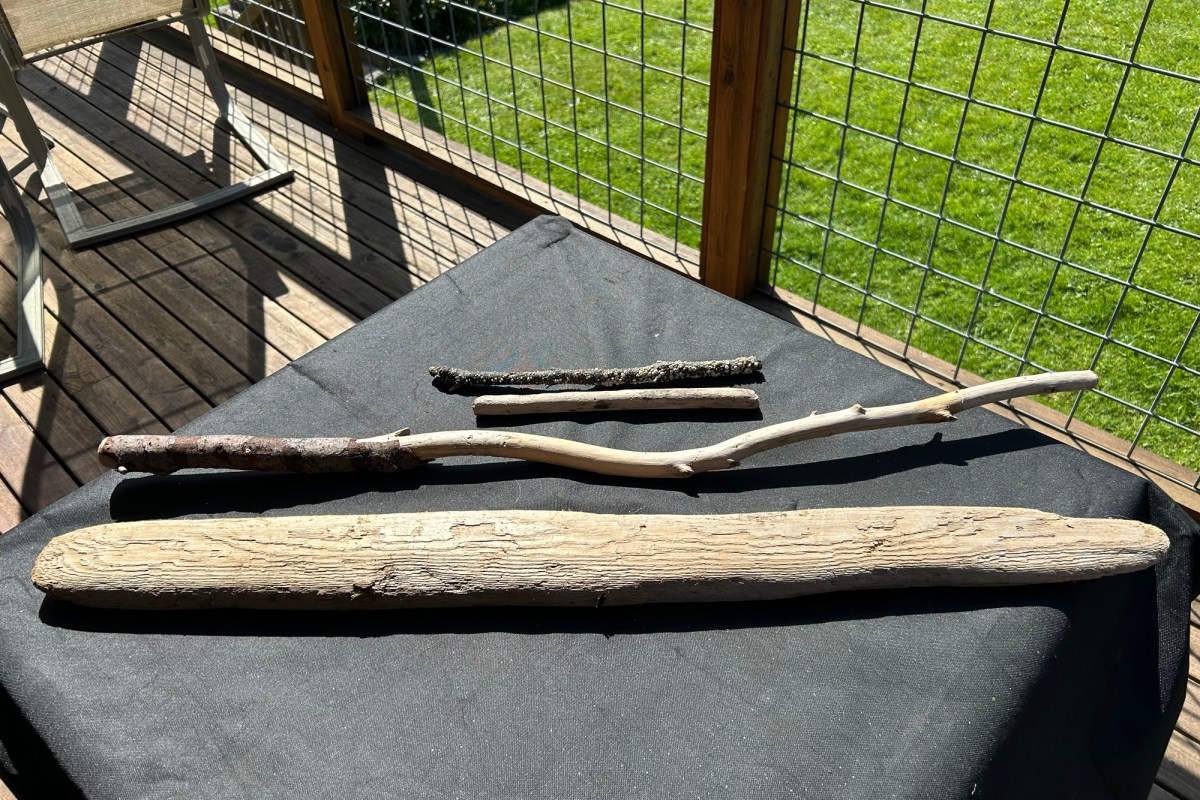
The back of our car has a section for interesting sticks, shells, and rocks because there’s something to love about each. One stick is one half covered with bark and the other half bare. Another is flat. And by contrast, Mr. D also really likes the one that’s perfectly round.

Miss O does the same thing. It used to be with rocks until she filled her pockets up so much that her shorts would sag. Now its tiny sea shells.

But I go along with it because I’m a sap for connecting to nature in all its beautiful variations.

In his book, Awe: The New Science of Everyday Wonder and How It Can Transform Your Life, UC Berkley professor of psychology Dacher Keltner writes about the goodness that comes from the awe we can experience in nature:

“In fact, it’s hard to imagine a single thing you can do that is better for your body and mind than finding awe outdoors. Doing so leads to the reduced likelihood of cardiovascular disease, respiratory disease, diabetes, depression, anxiety, and cancer.”
– Dacher Keltner in Awe: The New Science of Everyday Wonder and How it Can Transform Your Life

When put that way, I guess we’ll stick (pun intended) with the restorative time on the beach collecting little bits of nature that help remind us of the awe all around. It works for me!

(featured photo is mine of our latest collection of sticks)

You can find me on LinkedIn: https://www.linkedin.com/in/wynneleon/ and Instagram @wynneleon

I co-host a author, creator and storytelling podcast with the amazing Vicki Atkinson. To tune in, search for Sharing the Heart of the Matter on Spotify, Apple, Amazon Music or Pocketcasts (and subscribe) or click here. Or the YouTube channel features videos of our interviews. Please subscribe!

My other projects include work as a CEO (Chief Encouragement Officer), speaking about collaboration and AI through the Chicago Writer’s Association, and my book about my journey to find what fueled my dad’s indelible spark and twinkle can be found on Amazon: Finding My Father’s Faith.

Take One Day Away

Every person needs to take one day away.  A day in which one consciously separates the past from the future.  Jobs, family, employers, and friends can exist one day without any one of us, and if our egos permit us to confess, they could exist eternally in our absence.  Each person deserves a day away in which no problems are confronted, no solutions searched for.  Each of us needs to withdraw from the cares which will not withdraw from us.” – Maya Angelou

I’m typing this post on a Sunday morning while sitting on the floor of a hotel room as my kids sleep. This weekend, we didn’t have any events scheduled, the weather was unpredictable, and March doesn’t have any holidays so we made up a get away of our own. On Saturday afternoon we checked into a hotel for one night. It has a pool and is less than 1 mile from our house.

It sounds silly as I type this but I swear the psychological benefits are real. We walked away from all the regular stuff – homework, practice, pet care, cooking, and cleaning – to change it up for 21 hours. This small shift has reminded me that all that we carry isn’t as immoveable as it sometimes seems.

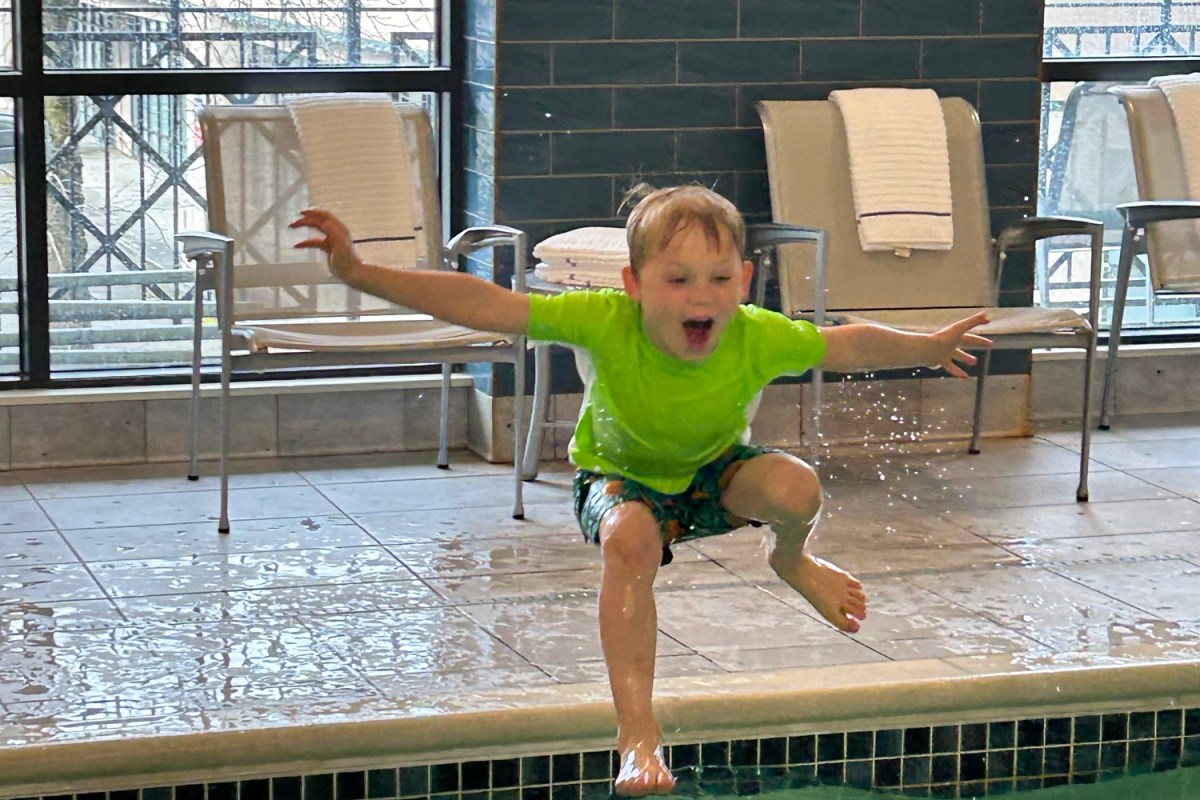
The kids have explored every feature of our 300 sq feet hotel room and spent quality time watching the freeway because the room is fun but not all that scenic. We’ve splashed and swam in the pool, and are about to head down to a FREE all-we-can-eat breakfast buffet.

I know it’s not really free but it still feels freeing. I wonder how many restorative breaks are waiting for us on the other side of silly?

(featured photo is mine)

You can find me on Instagram @wynneleon and LinkedIn: https://www.linkedin.com/in/wynneleon/

I co-host a storytelling podcast featuring authors and artists with the amazing Vicki Atkinson. To tune in, search for Sharing the Heart of the Matter on Spotify, Apple, Amazon Music or Pocketcasts (and subscribe) or click here. Or the YouTube channel features videos of our interviews. Please subscribe!

My other projects include work as a CEO (Chief Encouragement Officer), speaking about collaboration and AI through the Chicago Writer’s Association, and my book about my journey to find what fueled my dad’s indelible spark and twinkle can be found on Amazon: Finding My Father’s Faith.

The Quantity versus Quality of Time

The bad news is time flies. The good news is you’re the pilot.” – Michael Althsuler

This post was previously posted on 7/20/2022. Heads up – you may have already read this.


Last week I was driving in my car with my almost 7-year-old daughter at 8:29am when she said “Darn, I’m always a minute late for my favorite time.” She likes palindromic times – in this case 8:28.

It made me think about what I’ve been working on lately. Life feels hectic – summertime means different routines for each week, forms to fill out for camps, people to coordinate carpools with, a lot of additional details in addition to working my full-time job, taking care of kids and trying to maintain a social life.

In the midst of this, my goal is not to be in a hurry even while living a busy life.

That is to say, to try to be intentional and savor the things I’m doing. For example, I had on my to-do list an item to fix the fence where it had come apart at a post. That activity in and of itself doesn’t really have a high enjoyment value. But the other day when I stepped out to assess the task, I felt the summer sun on my back and saw the green of all the grass and trees around. The flowers of the garden are really flourishing and it’s an incredibly vibrant scene right now.

The task might not be much to talk about – but the scenario is gorgeous. When I hurry, I miss all of that. So I’m trying to take an extra breath or two, how long can that take – 11 seconds if I’m optimizing the length according to the Unified Theory of Breathing? Just a couple breaths add a dimension that makes me think of the quote from Auguste Rodin, “Nothing is a waste of time if you use the opportunity wisely.

There are two different Greek words that speak to this divide: chronos and kairos. Chronos is clock time so when my daughter is saying that she’s a minute late for her favorite time, it’s chronos we’re talking about. Kairos is translated as the “right time” as in now is the right time to step in, speak up or enjoy what I’m doing. I might have to be somewhere at a particular time, as in chronos, but kairos calls me to be mindful of the trip.  

I usually manage to arrive on time, chronos speaking, but I frequently mess up the quality of the time, kairos, in order to do so. In fact, I did that just yesterday when I was hurrying the kids to the car so we’d be on time for our carpool. My almost 3-year-old son wanted to hold the door for his sister and in my desire for efficiency, I didn’t listen to him and missed the right time to enjoy the spark of what he was doing. A small moment that is neither here nor there in the big picture, unless all the small moments are rushed like that.

What I’ve learned is when I manage not to be in a hurry even while life is busy, it prevents me from feeling like I’m a minute late for my favorite time.

How do you approach the quantity versus quality of time? Any tricks to slow yourself down when you are hurrying?


If you aren’t short of chronos, I’ve also posted a related post on the Wise & Shine blog: Speed Reading

(featured photo from Pexels)

Choose You

If you want happiness for an hour, take a nap. If you want happiness for a day, go fishing. If you want happiness for a year, inherit a fortune. If you want happiness for a lifetime, help someone else.” – Chinese Proverb

I had a friend the other day tell me to “choose me” sometimes. The funny thing about it was that I wasn’t groaning about my life or anything else when she came up with that. In fact, I was wishing her safe and fun travels on her trip to Africa. So her comment was out of the blue and off topic which made me notice it more.

When I was about 17 or 18-years-old, my mom once made a pointed remark to me that I shouldn’t be such a caretaker. It’s taken me 30+ years to understand that the comment might have been more about her resentments in life, not mine. Also, I’ve come to see that there are people we should take care of, like children and pets, and people that we shouldn’t, like grown-ups who haven’t done their work.

But nonetheless, my mom was right about one thing, and that is I’m a pretty good caretaker. I can pretty readily set aside what I need in the moment and push through to make sure others are fed and cared for. But my friend’s comment has made me cognizant of some ways that I can “choose me”:

Steeping tea. I’ve written so much about my morning sacred time – the hour or so I take to do yoga, meditate, and write in the morning before my kids wake up. But I’ve found such reward when I take micro-moments throughout the day. Like instead of cleaning the kitchen, choosing to take a moment to focus on the scene out the window when I’m steeping my tea. Of course, my kitchen is a mess…but I’m a lot calmer to deal with it.

Morning walk. I’ve added a short walk with Cooper the puppy to my morning routine. I thought it was because it helped release some of his energy so we can settle into the day. But I’ve found, that especially when I stop my endless iteration of the to-do, to “be here now”, to look at the sky and take in the feeling of the morning, it helps to settle my energy as well.

Back rubs. At night, my kids and I snuggle into a nook we’ve built on my bedroom floor to read books. Often I rub their backs while we’re reading. It’s something I do reflexively but when I can choose to feel the smooth skin and precious life force under my hands it gives me a beautiful shiver.

Naps. I take 15 minutes to lie down every afternoon. There are times I don’t fall asleep but often I do. I find that short time to reboot the system instead of slogging through makes such a difference in my experience of the day.

I don’t know what my friend envisioned when she told me to “choose me.” Funny how that comment has made me think of the little things we can do to put on our oxygen masks throughout the day.

What things do you do to “choose you?”

One suggestion for something to do when you are choosing you – listen to Todd Fulginiti’s new album “Jazz on King, Volume 1” on Spotify, Amazon Music or Apple. Vicki and I talk with him about it on our pocast: Episode 38 Jazz on King with Todd Fulginiti

Showing Up When It Matters

Look at the bright spots. Look at the things that energize you.” – China Brooks

“Your son did a great job and you were amazing too” the dentist said to me as we were heading out the door. I know she meant it sincerely but it’s hard to accept a compliment for something that you never wanted to be good at. As was the case here as I had just held my 2-year-old son through getting a root canal.

It had all started with Mr. D’s dental checkup on Tuesday when they noticed a cavity. Two hours after the appointment his temperature spiked at daycare and they sent him home. I called the dentist, described the bump she saw on his gum and she dismissed it as unlikely he had an infection.

Until we showed up Friday to get it filled and she took one look and declared it was abscessed and he had to have a root canal. The tooth is important for the spacing of the next tooth to come in so they have to try to save it.

I’d spent the last two and a half days nursing him back to health after the temperature spike and so this was an unwelcome surprise on top of a dumpster fire of a week of only being able to work at night after the kids were in bed.

The only routine that made it through the week intact for me was my self-care routine in the morning – yoga, meditation and writing.

As I sat in that hot room, stinky with the smell of teeth and hissing with the noise of the drill I wondered if the reading, writing, and meditating made any difference. Then I paged through the thoughts that arose:

Therapist and author Deb Dana declares having a well-regulated central nervous system a gift to those around you. Whether or not we intellectualize why, the “neurosception” of our body as it senses another nervous system often reacts to what it finds. Our brain then gets a sense of whether or not we feel safe simply cued by the nervous system.

I thought of the comment that apeacefultree made in this post asking Can we be selfish and selfless at the same time?  “Healthy selfishness can include self-care and putting our own oxygen masks on.”

Then I landed on the research of Daniel Kahneman, psychologist, behavorial economist and author of Thinking, Fast and Slow who found the way that we remember both painful and pleasureful experiences as defined by the peak moment and the end moment. It helped prompt me to try to make the end moments of this procedure as good as possible in order to help Mr. D’s memories of it less painful.

Cycling through those thoughts, I came to the conclusion that the time reading, writing and meditating made a big difference. Because this was life – this was showing up when it mattered. Of course it’s also in the dance parties and the snuggling up to read at night but you can’t have one without the other. Or at least not the depth of one without the depth of the other.

It was because I’d taken the time to meditate and get myself in order before this appointment that I got through. The credit goes to Mr. D for being an easy-to-calm kid but I can at least say that I didn’t make it worse as I’m sure I would have if I’d gotten in a few more billable hours but had come in hot.

It’s so hard to stay present for someone else’s suffering. But it also is an honor to be able to do that for the people we love.  And I think why we call people like Mother Theresa saints for witnessing the suffering of people they don’t even know.

At the heart of this is that I wouldn’t have chosen to be anywhere else. The experience taught me that I need to keep doing my self-care if I’m to have any chance to help Mr. D work through this a traumatic experience. Especially because we have to go back for the second part of the root canal in 8 days.

(featured photo is of Mr. D playing at the dentist before the procedure)

Feet

May your feet take you where your heart wants to go.” – unknown

When my mom went to the marketing seminar five years ago for a senior residence community she was considering moving to, I went along with her. In the presentation, they talked about how important care of the feet is for the elderly. Specifically the presenter mentioned an anecdote from Atul Gawande’s book Being Mortal that what geriatricians often look at when they see a patient, regardless of the symptoms presented, are the feet. Because when the elderly don’t take care of the feet – if they are overly callused, have ingrown toenails, or have sores, it exposes them to falls. And falls for older people are hard to recover from and can cost them their independence.

I was chastened by the discussion because even though I was only in my late 40’s at the time and not in any particular danger of falling, I was taking terrible care of my feet. Case in point, the massage therapist I’d seen on and off for years had commented that I needed to shave down the corn on my left pinky toe and I’d replied, “Why? It’ll just grow back.”

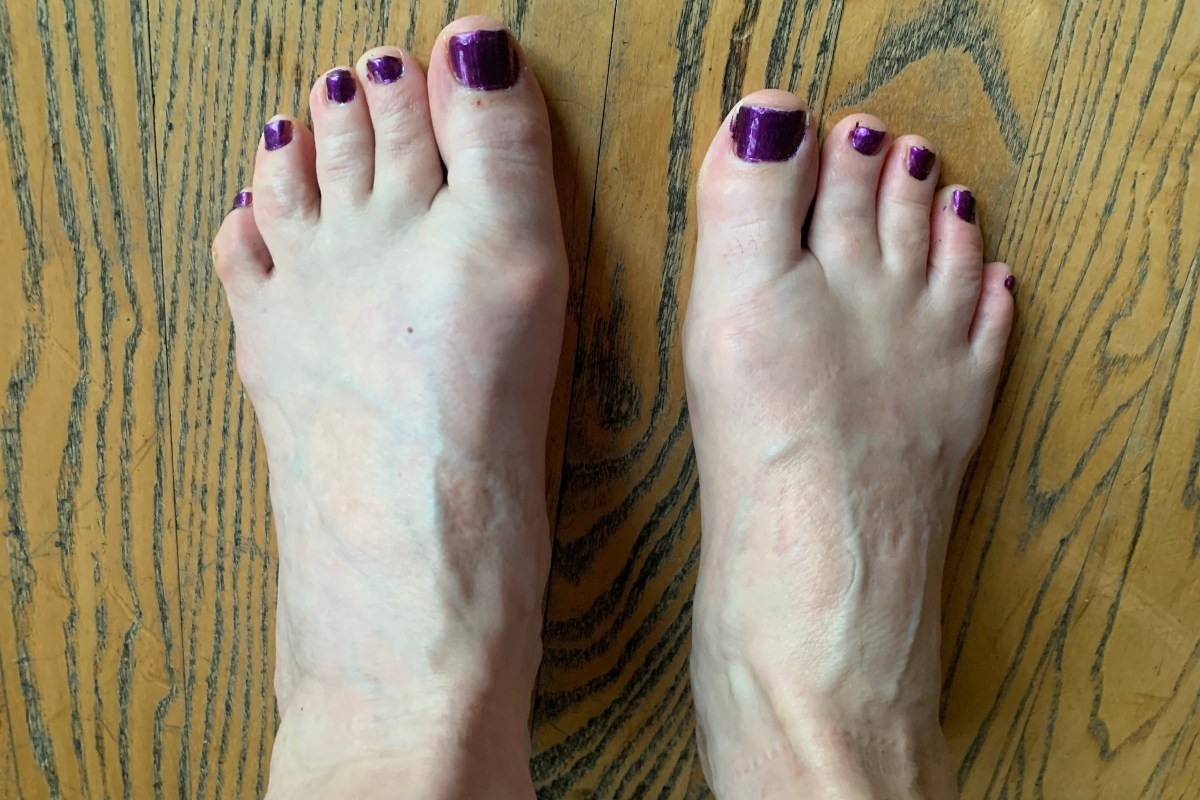
And indeed it will but clearly I was missing the big picture – that feet need to be cared for, just like the rest of the body, repeatedly. In fact, my feet are a disaster. They have calluses from jamming them in rock climbing shoes and bone spurs sticking out of the top of my big toes, maybe from my hiking or climbing boots that restrict range of motion, and plantar fasciitis from all the dogwalking, hiking and climbing. And given that I like to be on my feet and walking, one would think that I would have learned earlier to care of these precious platforms on which everything else balances.

I read a delightful meditation on the foot by Frederick Buechner in Listening to Your Life: “I say that if you want to know who you are, if you are more than academically interested in that particular mystery, you could do a lot worse than look to your feet for an answer. …when you wake up in the morning, called by God to be a self again, if you want to know who you are, watch your feet. Because where your feet take you, that is who you are.”

And adding to that, I’d add that if you want to check in on how you are taking care of your body, we could check with our feet for evidence for how well we are doing. Because as the geriatrician in Atul Gawande’s book notes, they feel further away and harder to care for as we age.

What are your feet doing today?

(feet pictured are my own)

Self-care

Sleep is the best meditation.” – Buddha

I had a moment this week when I felt unappreciated. In my exhaustion from the endless loads of laundry, the sudden need for spot cleaning and the excessive attentiveness that comes with potty training, I was running at 100% and no one seemed to notice. The way I remember it, my 6-year-old daughter asked me to get her something right after I sat down and my internal dialogue whined, “Can’t she see how hard I’ve been working?”

And then I had the inclination to be elusive, enigmatic and mysterious so that those around me would seek me out. Funny because I have never embodied mystery in my 52 years but somehow it seems viable as a strategy when I’m feeling tender. As if somehow retreating will make me feel more seen.

It’s a silly idea but thankfully I finally have come to have some sympathy for myself at this age. That I can recognize that as I sign that I need some self-care instead of calling it stupid or just powering through it is progress in my friendship with myself.

But the inclination to hide when I am exhausted and feeling unseen reminds me of something I heard in a podcast with Dr. Laurie Santos. She teaches the “Psychology of the Good Life” course at Yale which she described as:

“Evidence based strategies students can use to feel better. The problem is that it’s hard because our minds lie to us – like negative emotion, run away [from it]. Our minds lie to us about the kinds of things we are going to enjoy. When I’ve had an exhausting day, I just want to plop down and watch Netflix and never get off the couch. My mind doesn’t say, ‘Hey why don’t you go for a hard workout or why don’t you call a friend you haven’t talked to in a long time?’ The point is that we have intuitions about the kinds of things we need to do to promote our mental health and the kinds of things we need to do to live a happy life but often times those intuitions are wrong. They [the intuitions] are like – change your circumstances, get a lot of money, succeed, succeed, succeed at all costs. In practice those intuitions are leading us astray. We are putting in the work to become happier. But we are doing it wrong.”

And what are some of the right things that Dr. Santos has found that she has to remind the students in the course? To eat well and sleep.

And eating well and sleeping is what I’ve found cures my inner whine at least 98% of the time. I’m grateful that I can be friends with my mind. Even though I’ve learned not to listen to what it suggests, it often is telling me to take care of something and I appreciate that.