Strong Back, Soft Front

“Do small things with great love.” – Mother Teresa

Last night we returned from a small outdoor party right at my son’s bedtime. I went to take off his shoes and socks and start to get him ready for bed and he was lying on the couch, head on the pillows, looking very much like a little grown man taking a load off after a long day. When I told him it was time to get his jammies on and stooped to pick him up he said, “No tank ooo.” At 23 months “no thank you” is his most powerful phrase and although I’d never claim that he fully understands the politeness of it, it’s still quite effective.

It makes me think of a phrase I first heard used by Brene Brown, “strong back, soft front” but I believe was originated by Roshi Joan Halifax, a Buddhist teacher. Strong back, as I think it relates to parenting, is all the things I try to hold the line on to raise healthy, happy and kind children. Bedtimes, self-care, routines, boundaries with each other, politeness. They are all the things that I feel like I repeat over and over again until I hope they pick them up for themselves.

And while I’m doing that, my soft front is so often moved by the sweet little things they do, their cries when life gets too much, and the moments of pride when they show they are learning something I’ve said. It’s my soft heart that gets opened over and over again by the bravery, dignity and earnestness of little people.

The thing I’ve noticed about parenting with a strong back, soft front is that dichotomy keeps me upright in those moments when I’m out of my depth. Either I’m too tired or too confounded by a situation that is challenging me, I can hold both ideas to create a balance that will see me through. I can be overwhelmed by my love and empathy AND still have the wherewithal to get my kids to bed.

Which is what I did last night. I stopped and talked with my toddler for a minute about the day, I listened to his “no tank ooo’s” and then I scooped him up to go upstairs and read.

NOTE: For anyone interested in a great description of strong back, soft front, I found this post by Bev Janisch that includes content from Brene Brown and a guided meditation.

God Bless You

“Happiness is when what you think, what you say, and what you do are in harmony.” – Mahatma Gandhi

I don’t know what is in the air but it’s making me sneeze. But yesterday I had to drive my toddler to the very first birthday party he’s ever been invited to on a farm an hour from our house, I didn’t take any allergy medicine just in case it would make me sleepy. We had a great time at the party but whatever it is got worse so by the time we got home, I was sneezing non-stop. Achoo, achoo, achoo. My kids think it’s funny and maybe it was fine for the first 100 but by the 101st, I was tired of it. Finally, I took an allergy pill.

I tend not to tell my kids when I’m not feeling well. I guess I think they can’t do anything about it, it’s not their problem… <snort> until it is because I’ve got a fraction of my patience and am swimming in the shallow end of my grace pool. But last night, I did tell them as I went to lay on the couch for a minute, the Benadryl made me drowsy.

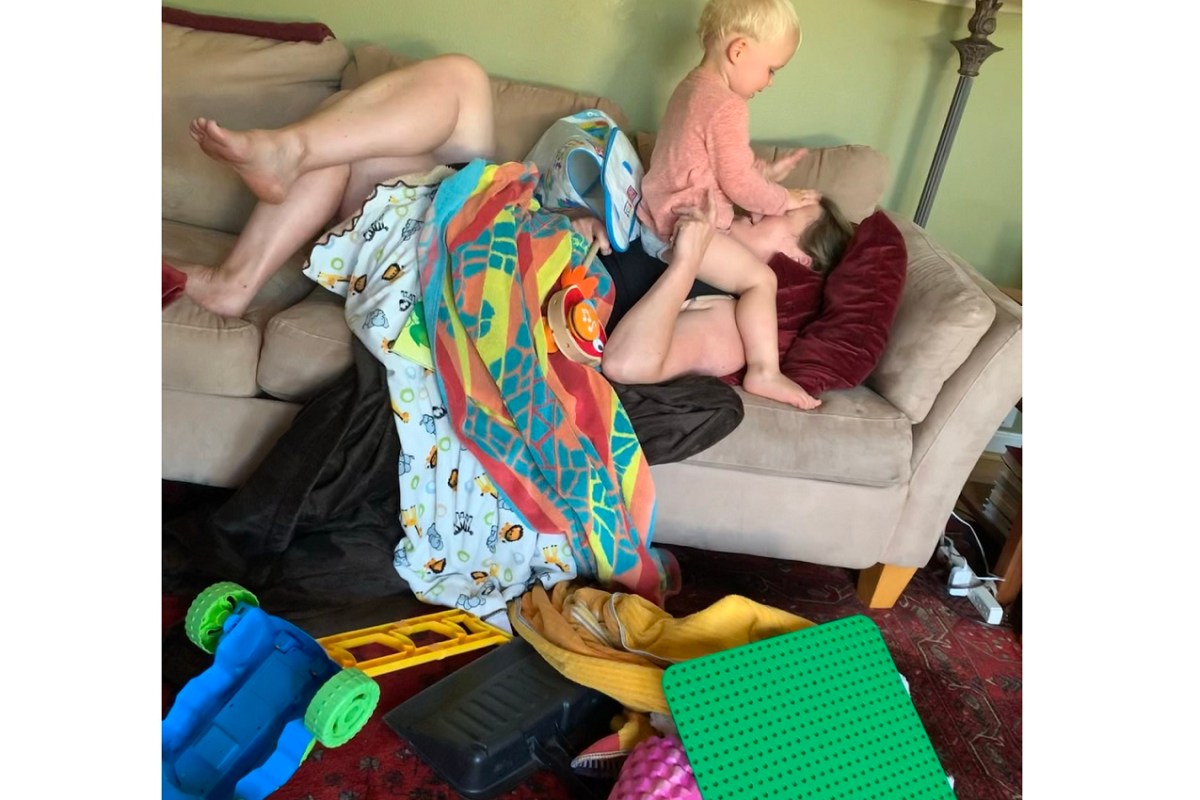
Their reaction was fascinating. They tried to help. My 5-year-old daughter took off my shoes and covered me with a blanket. My toddler son followed his sister’s cue and piled on whatever he could find on the floor, which these days is a lot of stuff, and then sat on me. Not particularly helpful but very amusing. And he tried to say, “God Bless You” which came out sounding a little like a sneeze itself.

Yet another little lesson for me not to keep my inner world and my outer world so separate. Somehow in the communicating of how I’m really doing, life continues but just a little more authentically, humorously and with a little less effort. Not to mention it’s hard to keep anything to yourself when you are violently sneezing… achoo!😊

A Thin Place

“Nothing among human things has such power to keep our gaze fixed even more intensely upon God than friendship.” – Simone Weil

We baked cookies for our neighbor and her husband yesterday. They have been taking 24/7 care of her elderly mom for a week now since she suddenly became sick and unable to care for herself. My daughter made a card for them and we put the card with the cookies and some puzzles and set off to deliver them. My neighbor’s mom only lives around the corner. My daughter wanted to carry the basket and when she handed them over, our neighbor cried. Then I cried.

It was a holy moment, the kind of moment that Bishop Michael Curry of the Episcopal church calls a thin place where God is just that much closer. The unexpressed weariness and worry in our neighbor met the softness of a kind gesture and out leaked some tears from the River of Life.

I’m completely flummoxed by how to teach faith to my kids. I look back to the Sunday School and all the church activities from my youth and while they were fun, I just didn’t get it and neither did my siblings.  It was only life in it’s raw, humbling way that made me search for the wider current that unites us all. Now I can tell you Christian stories, practice Buddhist-inspired meditation, find God out in nature and read anything deep in order to keep life vital.

So I’ve tried Sunday School for my daughter as a base hoping that it starts the seed that will grow into whatever works for her. But yesterday, witnessing two grown-ups cry over a plate of cookies while the spark of the Divine crackled in the air taught more than 100 Sundays. Even my toddler just stood there smiling watching something he didn’t understand. It reminded me that the unplanned lessons sometimes are the best.

Drawing Boundaries

“The problem with the world is that we draw our family circle too small.” – Mother Teresa

Coming back together after a year apart feels like I’m out of practice on some things. Like how to greet people. Is it a hug or fist bump or a nod? But as awkward as those things feel to me as an adult, I’m watching my five-and-a-half year old try to manage them after missing out on about 20% of her life experience in socialization and it feels really big. Like how to navigate the friend who wants to eat her lunch.

My daughter doesn’t eat very fast. Her friend scarfs down her own lunch and then starts in on my daughter’s. My daughter wants to share and has no foresight that she is going to need that fuel or be hungry. Drawing boundaries. It feels like this is one thing that we haven’t had to do during the year of coronavirus.

Drawing boundaries has always evoked for me the idea of two countries dividing territory. But looking it up, I see that there are many different parallels. In mathematics, the drawing of boundaries applies to clearly defining when a theory is supposed to hold. In therapy, it’s the rules that govern the patient/therapist relationship. Abstracting these, drawing boundaries allow us to create predictability in relationships by defining what’s mine and what’s yours.

But I-ing and my-ing is also known in Buddhism to be one of the root causes of spiritual disease. When we start protecting territory, we stop being able to see the Unity that ties us all together. We limit our ability to see ourselves in everyone. We elevate the ego and its importance in relationship to everything else.

Of course I know this intuitively as a parent. When my babies arrived, there was little boundary between those tiny little people and me. The love I was overwhelmed with carried me through feeding, waking, changing diapers, washing clothes with spit up on them with little thought of whether they were cutting in to “my” time or whether “I” had everything I needed. It was all “we.” Now as they get older and take “my” stuff and putting it places that I cannot find, there are some distinct boundaries. But in every moment of tenderness and perspective, I am right back to that beautiful place where they are my heart walking outside my body.

Believing that there are some healthy ways to draw boundaries, I decided to step in to the lunch situation. I figure that we have all have more of a chance of seeing that we are more alike than different when our tanks are full. But I’m hoping that she goes on to solve world hunger so that’s true for everyone.

The Choice Between Right and Easy

“Our lives begin to end the day we become silent about the things that matter.” – Martin Luther King Jr.

In the fourth book of the series, Harry Potter and the Goblet of Fire, the dark wizard Lord Voldemort has returned and the headmaster of Hogwarts Academy of Witchcraft and Wizardry, Albus Dumbledore says, “Soon we will all face the choice between what is right and what is easy.”

I don’t know much about fighting dark wizards but making the choice between what is right and what is easy seems like something that describes the job of parenting. Maybe I’m predisposed to think that because I’m reading Harry Potter out loud to my child but nonetheless here are some of the many choices I think we as parents face:

We have to decide whether or not to teach our children manners or let them discover them at the hands of their maybe less tactful peers.

We have to decide whether to inculcate a sense of respect for nature and resources of the earth or risk ruining the earth for themselves or our grandchildren.

We have to choose between instilling a deep sense of kindness and compassion for others or suffer knowing that we might have added to the aggression of this world.

We have to choose between raising children that have a healthy sense of boundaries and self-worth that they inherited from watching us or let them figure it out on their own perhaps after doing great damage to themselves.

We have to choose between letting our kids spend their days immersed in screen time or engaging with them to foster real experiences and adventures in this world.

And none of these choices is easy because it means we have to walk that walk when we are distracted, tired and want to live our own lives reasonably well. But I find it interesting that the distinction is not between right and wrong but between right and easy because it’s effort not evil that defines the choice.

Speaking for myself, I don’t do perfectly on any of the parenting choices but more often than not I make the hard choice as I know most parents do and have done throughout all the ages. There is some science to support why as I learned when I listened to an interview Nicholas Christakis, the Yale sociologist who studies how we have evolved as a species. His view as laid out in his book Blueprint is that our evolution has come with some uniquely wonderful social features – to love, to teach others, to cooperate. He holds that humans are wired for good which is so inspiring to hear.

Because we aren’t alone in our choices. We have the magic and faith that comes from our relationship with the Divine and we have our connection to each other. In Harry Potter, Dumbledore’s pronouncement about choosing between what is right and what is easy is part of a moving speech about how unity and friendship carries us through the hard choices and hard times. Our connection to everything that is bigger than us powers us through the moments when we have nothing left in the tank. Over and over again we discover we can do hard things – and we do!

The Power of Curiosity

“If you see the soul in every living being, you see truly.” – The Bhagavad Gita

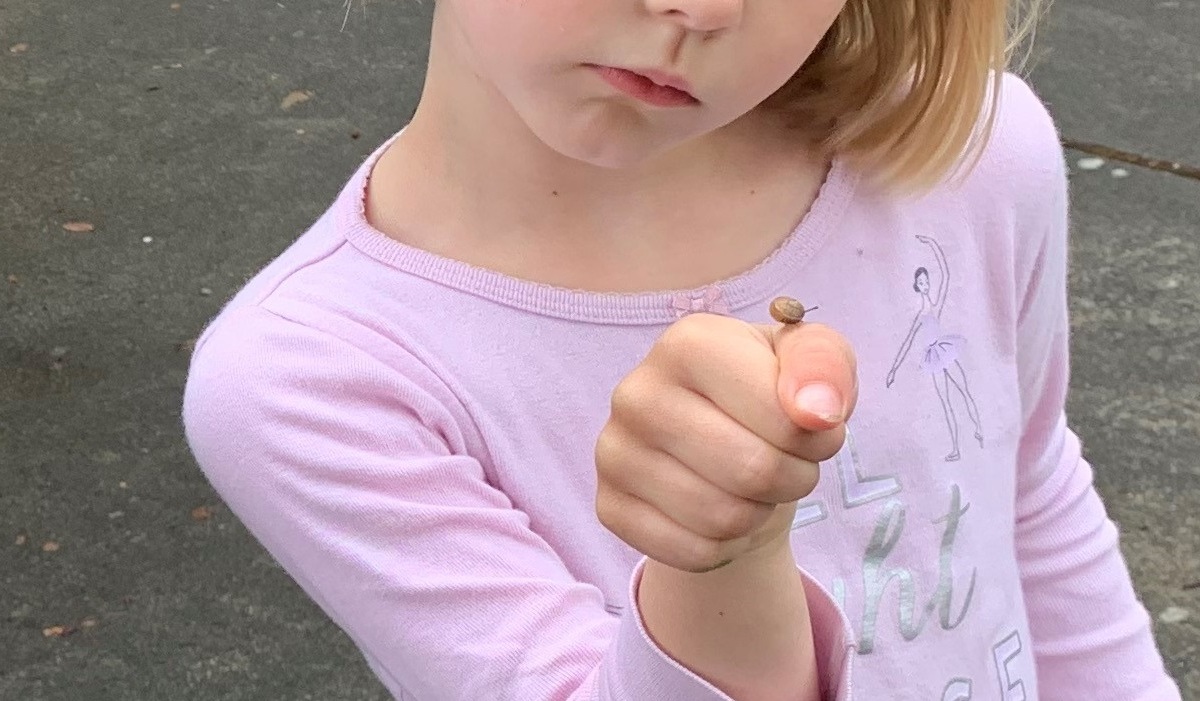
My five-year-old daughter kills snails. Let me pause here and say that it’s not a serial-killer-in-training kind of thing where she tortures and then decapitates them or something like that. It’s very well-intentioned interference in their life where she builds these very elaborate snail houses with pools and vegetation and then stocks them with snails. But then she’ll put them directly in the sun or forget to refill the water and oops, another snail is dead. One of my friends gave her a Bug Hotel terrarium and she put so many unfortunate snails in there that I started to call it the Bates Motel.

I have a friend who does a similar thing with humans (the help thing, not the killing thing). She doles out well-intentioned help to people that she believes need an upgrade in their circumstances. Unfortunately it sometimes backfires when people feel like they are projects and don’t absorb the help they are given.

I recently listened to this Dare to Lead podcast with Brene Brown and Michael Bungay Stanier that talked about the pitfalls of giving advice – the person with a problem may not accurately know what the problem is, any solution that you offer might not solve the root issue and even if you have the perfect solution, it can undercut their ownership of solving the problem themselves. Michael Stanier’s advice was to stay curious a little bit longer.

This seems to be a common theme in the content I’m listening to and reading these days – the power of curiosity. Asking open-ended questions like “how can I help?” and “what makes you think that?” and “say more” changes the nature of the conversation. Curiosity brings the power of mindfulness to an interaction and is a gateway for openness, an antidote to judgment. If we believe that we don’t have enough time to have these conversations, think about how much time it takes to solve problems again and again because we didn’t get it right the first time.

I’m finding curiosity a great tool for parenting because kids have so much of it. I could continue to slip out at night and free the snails or I can flat out tell her not to capture them but both of those solutions undermine her ability to see the soul in everything. Because of course this is not just about my daughter and snails, it’s about our agency in this world and learning not to destroy it. I’m hopeful as we research about whether snails grow out of their shells, what leaves they like best and how long they usually live that we can connect more deeply with compassion for others and retire the Bates Motel.

Mistaken identity

“Before fixing what you’re looking at, check what you’re looking through.” – Mark Nepo

The other day I participated in a conversation with my five-year-old daughter and her seven-year-old best friend and neighbor. She reported that her friend kept interrupting her. Then she asked the friend a question and when the friend started to answer, she said, “See?”

Ah, we see what we expect to see. A chronic condition of being human but I had no idea it started so young! But more than that, I think the two were bickering not because one was interrupting the other but because they were hungry and bored. Another chronic condition of human nature – mistaking one feeling for another. This one is rife with the young!! It seems that they can’t reliably name what being hungry, bored or tired is and everyone around gets an earful until we solve the root problem.

But I’m not sure I do much better. Last year after one of the last times I was able to go to meditation class in person before the pandemic, I went grocery shopping afterwards. I bought so much food without any regard for price or practicality and it wasn’t until I was walking out that I realized that I felt euphoric. A great feeling. Not so great for budgeting!

For me this is the work of mindfulness. Observing the ripples in the water caused by emotions so that I am aware that they are stirring me up and hopefully every so often get a glimpse of my depths when the water is clear. And it is the work of patience and parenting to help others name what is ailing them and hold them until they can become clear. I’m getting a lot of practice these days.

So I asked my daughter what interrupting means. Turns out her definition was something close to feeling irritated whenever you are in conversation. I paused to be sure I didn’t interrupt, offered them a snack and a job to rake up the hedge trimmings and solved both the named and unnamed sources of irritation!

This Sacred Journey

“We are not human beings having a spiritual experience, we are spiritual beings having a human experience.” – Pierre Teilhard de Chardin

I was struck by this line in Listening to Your Life, a meditation book by Frederick Buechner. He was describing his ordination as a minister:


“As I knelt there in the chancel with the hands of the assembled ministers and elders heavy on my skull, I had no doubts, if I ever had before, that it was a risky as well as a holy trade that I had chosen.”

It reminded me of the many things we take on in our lives – being a parent, caring for family as they age, becoming a friend/partner, adopting a pet, planting a garden. Wouldn’t it be great if we had a ceremony to help us be intentional and remind us of the holiness for all the caretaking roles we take on in life?

Airing the Wounds Out

“Courage is what it takes to stand up and speak; courage is also what it takes to sit down and listen.” – Winston Churchill

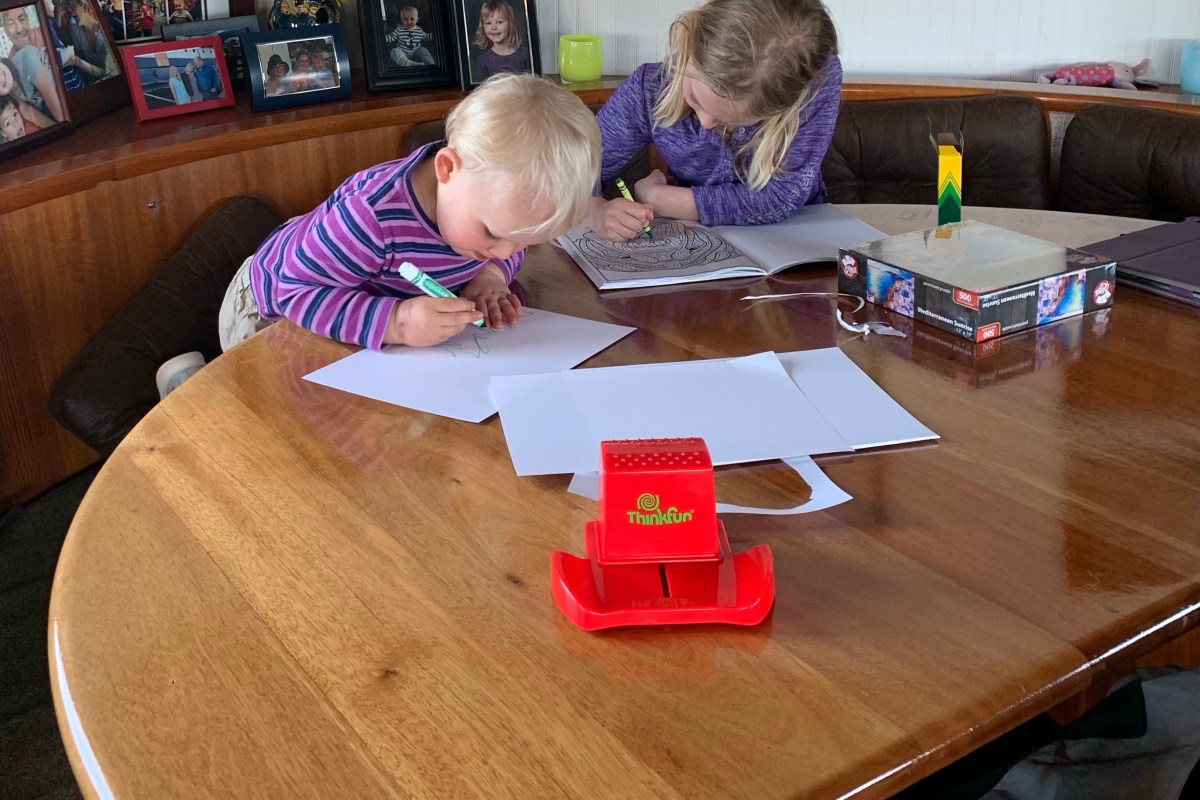
My kids and I spent the weekend with my brother and sister-in-law. Sitting around their semi-circular teak dining room table with a padded bench seat, I was reminded about a conversation we had there about a year ago.

“My mom said I should go find another mom,” My daughter said to my brother and sister-in-law. It was all I could do to not explain but because they are wise, they teased out the story from her. She was having a fit that seemed to be part of what came with being four because I wouldn’t let her do something. It had been going on for a while (it seemed like a fifteen minutes although it was probably five) and she said, “I’m going to find a new mommy, a nice one.” and I said, “Go!”

In the months after it happened she kept bringing it up and part of me died in shame whenever she did. She’d mentioned it a few times to just me and I’d apologized profusely. “I said something that I shouldn’t have because I was angry and frustrated, Sweetie” I said over and over again but then it came up again with two of her most trusted other adults. I sat there listening and they talked through it.

Listening quietly to that unfold was one of the hardest things I’ve ever had to do. But love did two things as I watched. It held me silent, knowing that unpacking the hurt for my daughter was far more important than defending myself. And I also felt held by the love of my brother and sister-in-law. I could trust that they know me well enough to know my strengths and weaknesses and all the care I put in between.

In the year since that conversation, my daughter has never brought up that comment again. My silence allowed my daughter to talk about her hurt without it being compounded by feeling ashamed to talk about it. In addition to eating great meals of delicious food, there are so many things we’ve done at that table in my brother’s living room – colored pictures, worked on crosswords, celebrated birthdays, had long conversations about life, reviewed the fun of the day. But now I add to that list – relaxed into our imperfections and healed mistakes.

Projections

“Turn your wounds into wisdom.” -Oprah Winfrey

My five-year-old daughter was sitting at the kitchen table doing her remote Kindergarten class the other day. To do the work, she needed the packet the school had sent home plus scissors and glue. I found the packet for her and then she couldn’t find her scissors and glue because she hadn’t put them back where they belong. She said to me, “You are making me have the worst day.”

Psychology Today defines the term projection as the “process of displacing one’s feeling onto a different person, animal or object.” We project our feelings onto someone or something else as a defense mechanism. Instead of owning our own BS, we can turn the issue into something else in an effort to protect our own egos.

I think of the time I found out about my husband’s infidelities. One of his friends, who was also my business partner, invited me out to lunch which was odd since we had never had a meal without my husband there too. When I arrived the sense of foreboding was amplified enormously because the friend had chosen a table in a closed section and also ordered me a beer. It was almost a relief when he started telling me of the infidelities because the build-up was so intense. But then I had to go home and tell my husband that I knew. He wasn’t home so I called my brother and four of my closest friends and then went out to dinner with my two best girlfriends. I finally saw my husband and asked, “Have you ever been unfaithful to me?” He answered “no” but seeing that I knew something, he then asked, “Who told you?” Then the next question he asked was, “Who else knows?”

The next months were a master class in projection. That is the perfect word for it. There is a source that is running the show but whenever you try to look for it, you are redirected to the pictures showing on the big screen. Any time the infidelities came up, he expressed his rage that his friend betrayed him (and yes, I saw the irony). Any time he got uncomfortable, he blamed me for revealing his secret. It made it so that we never could talk about the real problems. The message communicated was not that he was sorry, but just that he was sorry that I found out. By flipping the conversation to who I told, it made me the person who had been hurtful.

In a truly honest discourse, we would have been able to discuss not only the root issues but also my shortcomings as well. But if he was going to deflect, there was no way I was going to step forward either. I’m so grateful that marriage ended so I never wonder whether it could have been saved – but I do wonder if we could have cleaned and bandaged the wounds a lot faster had we not lingered in the defensive woods for so long. As it was, it took me many more years of my own work, reading, listening to others, and primarily having to sit with myself in meditation for me to finally own my part in the destruction. Projection might work as a defense but it does not work to heal and grow.

So I find it fascinating when I see the little examples of where my daughter projects. She moves past it and back to her happy place so quickly that it’s just a flash but when it’s calm, I try to guide her back to where it’s safe so we can remove our defenses and own our feelings and mistakes. It’s the only way we can take down the screen and really see what kind of day it is.