At the Pace of Love

To lose balance, sometimes, for love, is part of living a balanced life.” – Elizabeth Gilbert

The last two weeks have been really busy. Traveling, birthdays, my 7-year-old is out of school – wonderfully fun things that have made it so I have to schedule time to breathe. It’s all good – I’m just setting up my excuse for what’s to come next.

Because when I get busy like this, I don’t want to take the time to teach or do things collaboratively. I just want to get things done and the extra time and patience it takes to direct small hands with inquisitive minds attached? I feel like I don’t have it.

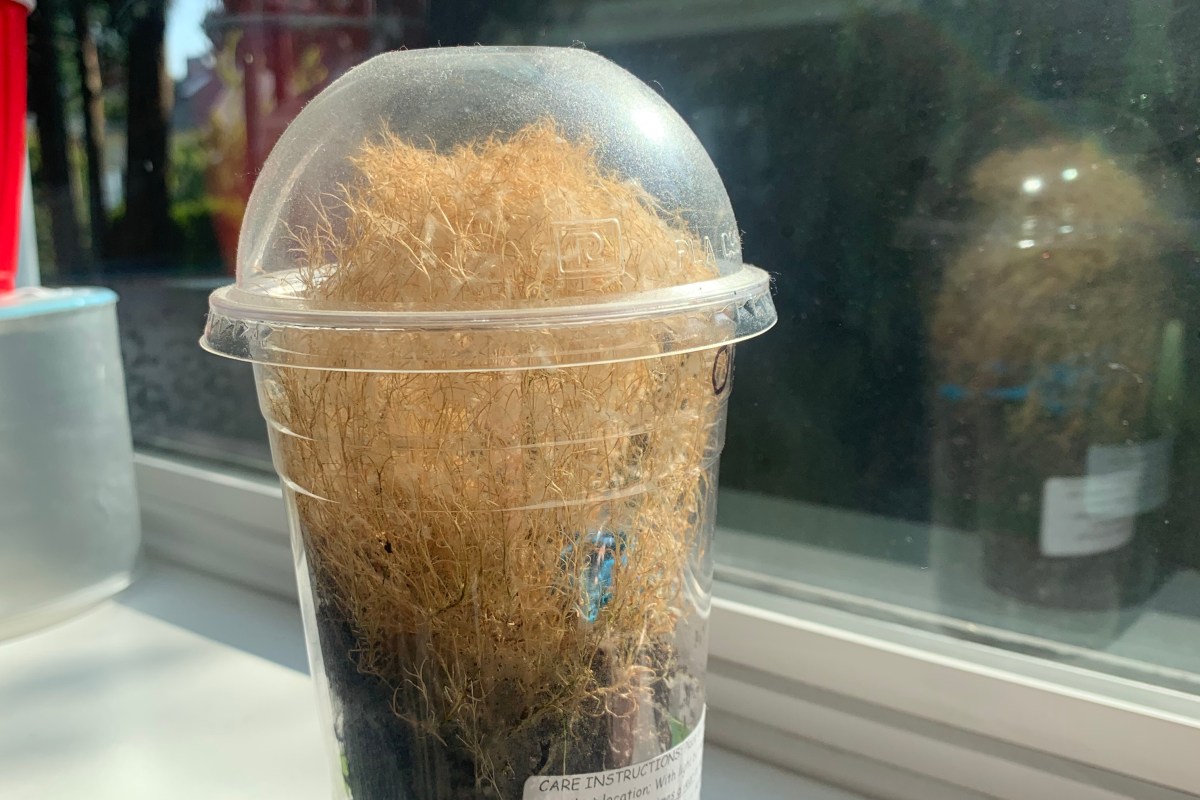
For example, Miss O brought a little terrarium project home from school about six months ago. It only needs water once or twice a year but I noticed that the grass in it is all brown. Seemed like a good cue for adding water.

I know that it would be a bad thing to just do it. It’s not my project and we all need to learn sooner or later the steps to keep something alive. Right?

So I mentioned it to Miss O. She took one look and then started wondering about the calendar. She had it in mind that it wouldn’t need care until her classmate, Jonas G’s birthday and then she was off and running down that track of wondering when his birthday is and what to get him.

All that chatter and no watering. <groan> I just want to water the damn thing.

It reminds me that I often want to just do things for other people, grown-ups and kids alike. That way I can do it my way, in my time, and get it done. But that’s not the way that life works, is it?

This is when a particular phrase from my dad comes to mind. “We just need to love people where they are at, wherever that is.” It works for me because it slows me down to the pace of loving which is A LOT slower than my pace of doing.

What good is getting stuff done if we miss the opportunities to learn and love in the meantime? In weeks like this one, I’m tempted to answer that there’s a lot of good in getting stuff done…but then I grumble that I know that’s not the right attitude. After all, I’m teaching something to my kids whether I just water the terrarium myself or support them doing it. Maybe when I model what we need to do, I can also groove new habits for myself about slowing down to the pace of love.

Love at First Write

Write what you need to read.” – adage

I’ve been mulling over online relationships, specifically the WordPress blogging buddy ones, lately. Mostly because last week when I was in NY, I got to hang out with two blog friends, Libby Saylor aka The Goddess Attainable, and Jack Canfora, from The Writing on the Padded Wall blog.

So now I’ve met three bloggers that I regularly read, including a wonderful hike with the amazing Deb from the Closer to the Edge blog. And a fourth, Betsy Kerekes from the Motherhood and Martial Arts blog is coming to visit this week.

In all these cases, I love to read the writing of these wonderful people – and when I’ve met them, they’ve been exactly who I’d expected they’d be, with the added bonus of being able to feel their energy and presence.

If you add to that Vicki Atkinson from the Victoria Ponders blog and my partner in the Heart of the Matter blog, with whom it feels like we are like-minded sisters even though we’ve only met by Zoom or Teams video calls, and all the lovely people we’ve gotten to meet doing podcasts – it feels like I’ve been lucky enough to meet a lot of bloggers.

And in all the cases, they are as delightful to interact with in real-time as they are to read. This makes me realize that when we write from our authentic, deep and vulnerable places, it speeds our ability to get to know each other. In fact, I regularly have more vulnerable conversations in the blogging community than in real life because I’m writing and reading about topics that are really meaningful to me or the author.

So yesterday, when I was reading Vicki’s blog, Finding Our People, it brought the topic full circle for me. I’m grateful to be part of this wonderful and supportive community of people that I cherish. It’s an honor to read everyone’s deep, fun, and beautiful writing. It’s a pleasure to meet people in person. And it’s a leg up on wonderfully meaningful and authentic friendships when we get to do both!

I’ve written a companion piece to this one on the HoTM blog about being open to new people: Love at First Sight. Check it out!

(featured photo from Pexels)

Healthspan

Aging is an extraordinary process where you become the person you should have always been.” – David Bowie

Listening to a recent Ten Percent Happier podcast, The Science of Longevity, with Dan Harris and his guest, Dr. Peter Attia introduced me to a new word: healthspan. Dr. Attia specializes in longevity and he was talking about his recently published book Outlive: The Science and the Art of Longevity

“There is this other component that if really I think push people will acknowledge is more important to them and that is healthspan. Which is harder to understand and define because it’s not binary but it’s an indication of quality of life. The medical definition of healthspan is the period of time from which you are free of disability and disease. I think some definition of healthspan needs to touch on physical robustness, cognitive robustness, and emotional resilience and health.”

Dr. Peter Attia, Ten Percent Happier Podcast

As I celebrate another birthday, this seems like a topic worth digging into. After all, when I grow up, I want to be just like our blogger friend, Julia Preston, who published a fantastic book at age 83, Voices: Who’s In Charge of the Committee in My Head?, and who regularly sprinkles this blogging community with delight, joy, and encouragement.

So how do we do it? Dr. Attia had five main areas: exercise, nutrition, sleep, pharmaceutical tools, and emotional health.

Exercise is the tool that turns out that it impacts lifespan (and healthspan) the most. The more exercise the better – he describes it as “the most potent longevity drug in our arsenal.” I found his breakdown on what we need to be very interesting – of the time we spend exercising, he gave the rough rule of thumb as half aerobic and half strength training. And of the aerobic half, 80% low intensity, 20% high intensity. For the strength half – 80% strength and 20% stability.

His comment on what we should do was more nebulous. It turns out that measuring our VO2 max is the best predictor of longevity, which matches what I remember when writing The Unified Theory of Breathing drawing from James Nestor’s book Breath. So the exercise we choose should ultimately improve our VO2 max because it is the best “predictor of length of life.”

Strength they measure by grip strength. Dr. Attia threw out this comparison: “If you compared the top 10% of grip strength to the bottom 10% – there is a 70% reduction in both incidence and mortality from dementia.” He followed that up with that it isn’t that they believe a strong grip protects the brain, but it works as an indicator.

The other bucket that really interested me was emotional health. Dr. Attia made the point that this one is different because it’s not age dependent but it affects the quality of life throughout. If we don’t have emotional health, we can make life more difficult for ourselves and those around us. Which makes me think of one of my favorite Oscar Wilde quotes, “Some cause happiness wherever they go; others whenever they go.

For me, my emotional health toolkit contains faith, meditation, writing, and love. When I start the day with meditation, faith, and writing, I have a better chance of facing the challenges of the day with openness and less worry. These tools help me put down the stuff I don’t need to carry and keep so that I can face the day, and my loved ones, with open arms.

Growing up with two parents who made emotional health look easy, I didn’t develop my toolkit until life tossed me around a bit. I thought enthusiasm and optimism could cover everything over. Maybe we all have maladaptive ways of doing things we have to relearn but don’t have the opportunity until life gives us something to practice. It makes me think of all the tools I carried when climbing to help in the case of falling into a crevasse or needing to rescue someone else. Thank goodness I never had to use them – because all I knew was the theory of what I should do, not the adrenaline packed reality of facing the tough situations.

But now that I’ve had plenty of opportunities to find out just how important emotional health is in the quality of life, I’ve found that doing my work, just like exercise, truly makes such a difference. There might not be the statistics to compare what happens when we do or do not do our work as it relates to emotional health, but I know for me, it is the key to enjoying each day that I’m lucky enough to walk on this green earth. And for each of these days I have in my life span, I’m so grateful. So thank you all for being part of my tool kit!

Speaking of someone who has done her work, I was lucky enough to have a wonderful podcast conversation with Vicki Atkinson about her book, Surviving Sue. As we talked through the themes in the book, she told me about doing the work to turn her well-deserved anger at her mother into compassion and positive regard. Episode 22: Themes in Surviving Sue with Vicki Atkinson

It’s a great episode, please give it a listen and subscribe! Search for Sharing the Heart of the Matter on Apple Podcasts, Amazon Music, Spotify, or PocketCasts or click on the link above.

Holding Out for a Hero

Go into the world and do well. But more importantly, go into the world and do good.” – Minor Myers, Jr.

The other day my 6-year-old daughter asked me “What is a hero?” As I stumbled through the words to describe someone who is admirable and inspires us to be better, I wondered if the idea of having heroes resonates as much in our world. Sometimes it feels like we know too much about our public figures these days to pick someone from that realm.

It also made me think of my personal hero, my dad.

It took me years to realize that he was my hero. It wasn’t until I’d traveled enough through life to have failures as well as successes that I started looking closer at my dad who was then in his 70’s. I wanted to try to identify what made him so unstoppably enthusiastic and delightful.

On first glance, it was easy to attribute his goodness to his career as a Presbyterian pastor for 40 years. Certainly that made him a person who worked hard to do good, but there was another equation that underscored who he was. Here’s what I’ve boiled it down to in three points, the number he always used for sermons:

He was dedicated to being useful. For him that meant rolling up his sleeves and pitching in where help was needed. If he came to my house for dinner, he would jump in to do the dishes before the dinner was even served. Sometimes I had to tell him to stand down if I wasn’t actually done with a pot. He’d laugh and look for something else. And that applied to plumbing, tiling, gardening, service projects, whatever he could find.

But he had the gift of making it a two way street because he’d ask for help. When he and my mom were building a cabin in the San Juan islands, he recruit people for “work parties” to clear the land or raise the foundation. Or if you were a member of his church, he’d recruit you for committees and service. And this back and forth made it feel not like his help was charity but that it was community because he wouldn’t hesitate to ask when he needed help.

He loved people. For him that usually meant listening. Although he was a preacher and a very good one, he thought that was a very small part of his job. He loved people for who they were and that included their imperfections too. If I ever asked him about people who he found frustrating, he’d shrug his shoulders and say something like “You never know all that’s going on with someone. We’re all weird and once you accept that, you can just love them anyway.”

He didn’t often give advice but when he did, there was no penalty for not listening. As the pastor who was performing my wedding to my now ex-husband, he sat us down for marriage counseling as he did with everyone he married. He very eloquently described what was wrong with us (my words, not his) because our personal and professional lives were too intertwined. We did nothing to correct this and he did a beautiful job of marrying us anyway.

He was obedient. That was his word for listening to the small voice of God within him. This was the part that most interested and confounded me. He was such a delightful person with many talents and a great attitude so what part did faith play in his life? It took me a long time to come up with an answer I could understand. And that was, he listened to where God led him, he abided by what he thought a Godly life was AND he lived life in partnership with God. He knew when things were above his pay grade and then he turned them over to God. That gave him an enormous amount of comfort and confidence.

My dad died suddenly in a bike accident at age 79. One of his friends eulogized him perfectly as “a battery on feet just looking for someone to jump start.” Fortunately in the years before he died, I’d started developing my own faith and the small voice of God within me led me to ask him questions about his life and record them. It was all part of my hero worship and a such a gift to be able to delve into this man from whom I’d inherited much of his way of looking at the world.

This is what was running through my mind as I answered my daughter about heroes and why we need them. They show us a little bit of the way so we can go further and faster. We stand on the shoulders of those that go before us. Recognizing heroes who resonate most with each of us is one great step forward in knowing what to study. They are part of our stories and give us connection and warmth to the inspiration we glean.

My memoir about my father is available on Amazon: Finding My Father’s Faith

Cultivating Abundance and Perspective

Wear gratitude like a cloak and it will feed every corner of your life.” – Rumi

When I wrote the post the other day about The Games We Play, Jane Fritz (of the delightful, informative, and inspiring Robby Robin’s Journey blog) posed the question of why kids act that way. We bandied about some ideas like competition, and while I don’t know the answer, it made me observe my kids a little more closely to find some clues.

My completely unscientific survey of my little family, and I’m including myself in these results, reminded me of a couple things – that we don’t come hard-wired with a sense of abundance and that it takes some work to see a bigger picture.

The method that works again and again for me on both these points is to be grateful. And I say again and again because somehow I forget and have to find my way back to my gratitude practice. This makes me think of a quip that Brené Brown made on the subject – that having yoga clothes in her closet didn’t qualify to make her a yogi and neither does knowing the concept of gratitude make her grateful – it has to be practiced.

So, needing to cultivate the feeling of abundance and perspective, here’s my gratitude list today:

Let’s start with the basics – that I’m awake, alive, and typing this.
For the science and people that remind me that it’s also good to write things out longhand sometimes.

I’m grateful that spring has come to our neck of the woods to warm my bones.

That I got to sit in the warm evening last night and watch my kids in their uninhibited nakedness run around the back yard and squirt each other with (warm) water guns.
That they didn’t squirt me.
That when they need a break, they run into my arms, wet, out of breath, and loving life.

For the smell of BBQs coming out for the first time in Spring and wafting into my yard.

That I was able to do yoga this morning and since I was alone, groan and moan through all the tight places in my body.
That doing yoga reminded me of how grateful I am for my body that I often forget to thank for all that it does well.

For my neighbor that has planted an incredible garden of tulips and daffodils so that I slow down and enjoy it every time we go past.

For the neighbor that surprised me with a loving touch on my back at Costco and asked me to grab something from the top shelf. And for the warmth lingered long after the conversation ended.

For the warmth that exists between people.

For friends, near and far, that share their stories and lives with me.
That I get to talk with them about the things I haven’t even begun to process and then receive their wisdom.
That I’ve gotten old enough to be able to receive wisdom.

For the quiet feel of my house early in the morning.
For the way the glow of the candles I light each morning as I meditate makes me feel lit from within.
That I’m able to find peace at least once or twice a day.

For words like momentous and singular that wake me up to my experience.

That words come pretty easily for me.

For the tenor and vibration of male voices, the light touch of female voices, and the joy in young voices.
For my five senses that vie for attention and also allow me to shut my eyes and open my ears for a different experience.

For old friends that remind me of my journey through this life.
For new friends that come with that opportunity of discovery.
For the way we are all connected.

For the joy on my daughter’s face when she learned to whistle this week.

That I can ask Alexa to play Leonard Cohen’s Hallelujah anytime I want.

For Jack Canfora’s gratitude list: Dear Lord, Not Another Post on This Blog About Gratitude and  WritingfromtheheartwithBrian’s 100 Things I Love that inspire me.

For the opportunities that I have to keep growing.

For the technology that allowed me and Vicki to have a podcast conversation with blogger, Brenda Harrison, from three different timezones and locations and then post it so that others can be delighted and inspired by her energy and enthusiasm. (Episode 15 of the Sharing the Heart the Matter podcast – listen and subscribe!)

That this blogging journey has allowed me to meet and converse with so many interesting people from all over.

For the hour I’ve spent writing this list and that the power of gratitude will touch me every time I go back to edit it and extend with each comment.

(featured photo from Pexels)

Just Beyond the Veil

Death is just a door that only love can come and go through.” T.L. Moffitt

Last week when I was walking in to Costco, the man in front of me turned and for an instant I was sure it was my dad. Next to me, Miss O was startled by the unexpected break in my fast stride and turned to look at me. I put my hand on my heart and said, “that man looks just like Bumpa.” Wide-eyed, she nodded – she’s only seen pictures but she recognized him too.

Then later last week, I was doing a technical training at the church that my dad used to be senior pastor of and was surprised by someone in the audience who asked me to say a few words about him. It wasn’t my prepared topic but since my dad is one of my favorite subjects, it was fairly easy to ramble on about him as a few errant tears rolled down my cheek.

All of this to say, my dad feels very near in recent days. He would talk about this phenomenon as someone being “just beyond the veil.” The way I’ve come to see it, I don’t exactly where he is but somehow he comes near, and then I feel the brush of his touch.

I know I’m not alone in this as I’ve heard so many great stories that give me that spine tingle of mystical knowing. Someone who picks up their voice mail and there’s an old message from a departed loved one. Or someone thinking of their loved one who has passed, and they cross paths with their loved one’s favorite animal in a completely unexpected place. Or a gift that arrives just after praying to our dearly departeds for help.

Why do I think my dad is near right now? He didn’t often tell me what to do when he was alive so I doubt he’s doing it now. I think he’s sending his love — a love that’s even more meaningful to me because we did the work to make our relationship closer in the years before his death. So that even though he died unexpectedly, he still left me with words that mean so much to me. That is what my post on W&S is this morning: Writing Last Lines That Count

(Featured photo is from my book about my dear dad, Finding My Father’s Faith.)

Healing the Micro Wounds

The wound is the place where the light enters you.” – Rumi

When my best friend, Katie, came over to hang out with us yesterday morning she asked three-year-old Mr. D how he slept on the night of the time change. He answered, “I slept in Mama’s bed. It was big and hot.

I was aiming for familial warmth but it seems I’ve overshot the target. Ha, ha!

There’s a picture of me as a three-year-old sleeping with my blanket on the wood floor outside my parent’s bedroom in the Philippines. The way I heard the story is that my parents didn’t want me coming in so they locked the door. My mom said my dad was firm about no kids in their bed so he could get his sleep.

I’ve always considered that a cute little story in what I think of as a happy childhood until I had kids and then I wondered how that went down. Did I just encounter a locked door and then lie down quietly? Or was there some kicking and screaming before accepting the fate? Something tells me it wasn’t the first option.

So even though I’m not aware of as any sort of trauma, I have to consider that some things we do as adults are healing the little wounds we got as children. Maybe we all do that a little – even when it’s not conscious.

How I’ve come to choose to let my kids sleep in my bed is the subject of my Heart of the Matter post today: Beds, Boundaries and Beyond. Check it out!

(featured photo from Pexels)

Cheers and Blessings

My friends are the beings through whom God loves me.” – Saint Martin

My friend, Bill, came to visit me a couple of weeks ago. I hadn’t seen him in 10 years and in those years, he got married and has moved to three different countries. I still live in the same house, but over that time, I’ve had two children.”

Needless to say, we had a lot of catching up to do. At first, as Bill was settling his bags in the guest room and talking with my kids, it felt surreal – like paint from one palette had spilled on another. Then when Bill and I went to dinner, it felt like we were working hard to find stories that conveyed the essence and meaning of the lives we live.

I experienced it as practice of the deepest kind of listening. I had to draw from far-back memories of living abroad when I was a kid, and again for a short time in college. And he had to relate experiences he’s had with other parents to try to know the life I’m living. But we both showed up to do that practice and it didn’t seem forced or contrived.

I don’t understand the mechanics of my deep connection to this friend. I wrote about him about a year ago in It’s Love Calling because we usually only speak to each other once every five years or so. Bill and I connected instantly when we met 25 years ago but have not spent a lot of time together in any of the intervening years. The what, how, where, and why of it are completely inexplicable and changeable – only the who stays consistent.

And in between our calls and visits, so much life has happened that it takes conscious effort to pick out the thread of what’s important to say. Yet this weird connection remains vibrant and meaningful.

My conclusion when I talked with Bill last year and wrote was that our connection exists to remind each other that we are lovable without having to perform for it. That there is a Oneness that we can both touch from our disparate lives when we are quiet and still. Somehow this friendship exists as evidence of and a waypoint to it for each other.

I’d add one thing to that conclusion – it’s a gift to have someone so connected yet disconnected come immerse themselves in my life for almost 24 hours. It shows me that every once in a while we receive the gift of being seen from the outside. Someone who knows us and can see our growth – but they have to stay on the outside in order to bestow the gift. I feel the love of God through my friendships, as the quote for this post describes – and every once in a while God makes a special one to deliver perspective as well.

Bill left this note, “Thanks for everything, Wynne. What a pleasure to spend time in your love filled life. Your family is absolutely amazing. Cheers and Blessings.”

Well, I’d probably describe my family as four parts love, one part chaos – and what a gift that he was willing to jump into our chaos to feel and see our love.

As I write this, I still have so many questions about abundant love, connection, and what humans can evoke in each other. But it feels like I have a better sense and shape of the mystery and have extended the notes that I want to cultivate because I’ve written this. It’s expressive writing at its best and if you are interested in the topic, it’s what Vicki Atkinson, Brian Hannon and I discuss on Episode 8 of the Sharing the Heart of the Matter podcast: Episode 8: Expressive Writing to listen on Anchor. This podcast is also available on Apple, Amazon, Spotify and Pocket Casts by searching for Sharing the Heart of the Matter and new episodes drop every Friday morning.

Please subscribe! Next week’s podcast is Mitch Teemley talking about having the audacity to believe that others want to read, watch or listen to his stories. It’s really good!

The Road to Gratitude is Paved With Things Going Wrong

Let gratitude be the pillow upon which you kneel to say your nightly prayer. And let faith be the bridge you build to overcome evil and welcome good.” – Maya Angelou

A couple of weeks ago Mr. D was silent on the way home from school on a Thursday. It was a special, I’m 3-years-old and I have no words for it but I’m about to be sick kind of quiet. And sure enough, within a couple of hours, he had a temperature of 101 and was coughing.

As I kept him home from school on Friday, I was so grateful that he’d have the weekend to heal. Then charting out the typical course of illness for my little family, I was grateful that Miss O would probably make it until her mid-winter break before she caught the cold. And then I was grateful that it wasn’t Covid.

In other words, I was filled with all sorts of gratitude in the midst of something going wrong. As I was juggling my work schedule to take care of a sick child, I felt the full force of what I had to be thankful for.

“Without exception, every person I interviewed who described living a joyful life or who described themselves as joyful, actively practiced gratitude and attributed their joyfulness to their gratitude practice.”

Brené Brown in the Gifts of Imperfection

Brené’s quote ties together gratitude and joy. But for me, I think there’s another relationship at play – that is with optimism. When I’m feeling hopeful and optimistic, I don’t spend much time on gratitude because I assume everything is going to work out. It’s only when they aren’t going swimmingly that I reconnect with gratitude and begin the upward spiral.

I’ve described myself as a congenital optimist. But I have a daily rhythm where I slide from hope to hopelessness. By the end of the day, I’m exhausted, my inner critic is in full force, and I find myself feeling more often than not, that my efforts in any or every area or all for naught.

Listening to my inner voice at 8pm the other night when my kids went to bed, I noticed this different tone. I was critical at myself for not putting away their cups of special sparkling apple juice when my kids went to brush their teeth so that when my son drank a sip of it after he brushed his teeth, all I could imagine were little sugar cavity bugs eating his enamel all night. And, in my head, I was angry at my kids for leaving a squishy toy on the floor that I veered away from only to hit my knee on the cabinet.

It’s easy to blame my bad nightly attitude and tiredness on my kids. But before I had kids, it was the same time of day that I’d start drinking wine so perhaps I just naturally accumulate dust during the day that makes me less sparkly.

But it’s during those hours when I’m less sparkly that I’m most grateful. That helps me to sleep and re-attach to my optimism.  It’s a cycle from optimism to darkness, then to gratitude which fills me with joy. I’ve noticed it is a full-circle that feeds itself as it progresses. It keeps me in touch with what’s important – which is most obvious when I’m in the down part of the loop.

In part I noticed this cycle because of a podcast I did with Libby Saylor (aka The Goddess Attainable) about her post Really Listen to the Way We Talk To Ourselves. In this delightful and illuminating conversation, we talk about self-compassion, dating and the mirror of love, and healing wounds from our families of origin. It was Libby that got me really listening to myself and focused on a lovely goal – to listen to myself (in any part of the cycle) with love.

I’d love for you to listen to our podcast.  Join us by following this link: Episode 6: Really Listen to the Way We Talk To Ourselves to listen on Anchor. You can also find it on Apple, Amazon, Spotify and Pocket Casts by searching for Sharing the Heart of the Matter.  Please subscribe!

Celebrating Connection with Others

When the power of love overcomes the love of power, the world will know peace.” – Jimi Hendrix

It feels like Valentine’s Day is the holiday that it’s safe to hate. It’s not tied to any major religion so it doesn’t feel like it would be offensive to not like it, it’s overly commercialized and has sappy ads, and eating establishments have taken advantage of the hype to sometimes make it exclusive and expensive.

I would definitely fall in-line with those who poo-poo Valentine’s Day. I have a couple of friends whose birthday is Valentine’s Day and it made it so complicated when they were dating someone new. Do you or do you not go out to celebrate without being inundated by the assumptions and hype?

But helping my kids getting ready for it, especially my 2nd grader, has given me a new appreciation for it. At this age, it’s the only holiday for which they prepare cards for their classmates. For elementary school kids, the imagery is simple so they can easily make heartfelt cards for teachers and adults in their lives. In fact, because it’s such an uncomplicated celebration it makes it pretty accessible.

I understand that it gets more fraught as we grow up. When I was 14-years-old, I burnt the cookies I made for the first guy I “went” with and still delivered them anyway. He, on the other hand, had chocolate and roses for me, which made me feel both great and terrible.

So it seems like Valentine’s Day gets more complicated as we grow up. It becomes wrapped up with what romance is and isn’t, tied up with love languages, and whatever else makes it feel forced and unauthentic. As adults we can add our expectations, and our wonderings about how to navigate the wine and roses appropriately. We over-complicate it with our baggage and memories of how we underperformed (or at least I do).

But working with Miss O as she carefully picked a card from the pile that was what she thought each person in her class would like the best, I reconnected to Valentine’s Day as a simple holiday that celebrates our connection to each other. And well, I love that.

As the quote for this post from Jimi Hendrix says, maybe if we spent a little more time celebrating love, we could collectively move the needle on our divisiveness. I mean that generally speaking, not to add another burden on the expectations of Valentine’s Day.

Happy Valentine’s Day, all!