Joy Is…Focusing on the Right Things

You are a living magnet. What you attract in your life is harmony with your dominant thoughts.” – Brian Tracy

My dad used to say that if he was working on a sermon about parenting, he was a better parent that week. Same went for forgiveness, faith, bearing witness, friendship, marriage, and on and on. I’m sure it surprises no one that what we focus on has a powerful effect in our lives.

But dang, it can be so hard to stay attuned to the good news. Which is one of the reasons that I found writer, poet, artist, and blogger, Dave Williams’ recent project Joy is ______ so compelling. Over the last five weeks, he opened his blog up to anyone who wanted to fill in the blank and give a description.

Vicki and I were delighted to participate in that project and then extend that note by being able to podcast with Dave about it on Episode 105: Joy Is…with Dave Williams.

Dave tells us how he was inspired by the spirit of his Aunt Diane. Celebrating her infectious personality after she passed away last summer was one of the motivations behind this project.

Another was the idea to strengthen the delight muscle. A suggestion in The Book of Delights by Ross Gay prompted Dave to want to cultivate the same upward spiral.

And Dave was also inspired by Teri Polen’s Bad Moon Rising blogging project that brings the WordPress community together.

In the end, Dave found and shared so much joy in this community project. He’s compiled a Joy Is _____ table of contents that we know will inspire you.

We’re confident you’ll love the scenic and beautiful places we explore as we talk about what joy is and how to celebrate that as a community!

We know you’ll love it!

Search (and subscribe!) for Sharing the Heart of the Matter on Apple, Amazon, Spotify or Pocket Casts OR Listen to it from your computer on Anchor: Episode 105: Joy Is…with Dave Williams

Episode 105 transcript

AND subscribe to our YouTube channel to see a video clip of each story: @SharingtheHeartoftheMatter.

Links for this Episode:

Dave’s Blog: https://davewilliamswriter.wordpress.com/

Dave’s “Joy is…” Index of posts: https://davewilliamswriter.wordpress.com/2025/02/27/index-of-posts-in-the-joy-project/

The Book of Delights by Ross Gay on Amazon

From the hosts:

Vicki’s book about resilience and love: Surviving Sue; Blog: https://victoriaponders.com/

My book about my beloved father: Finding My Father’s Faith;

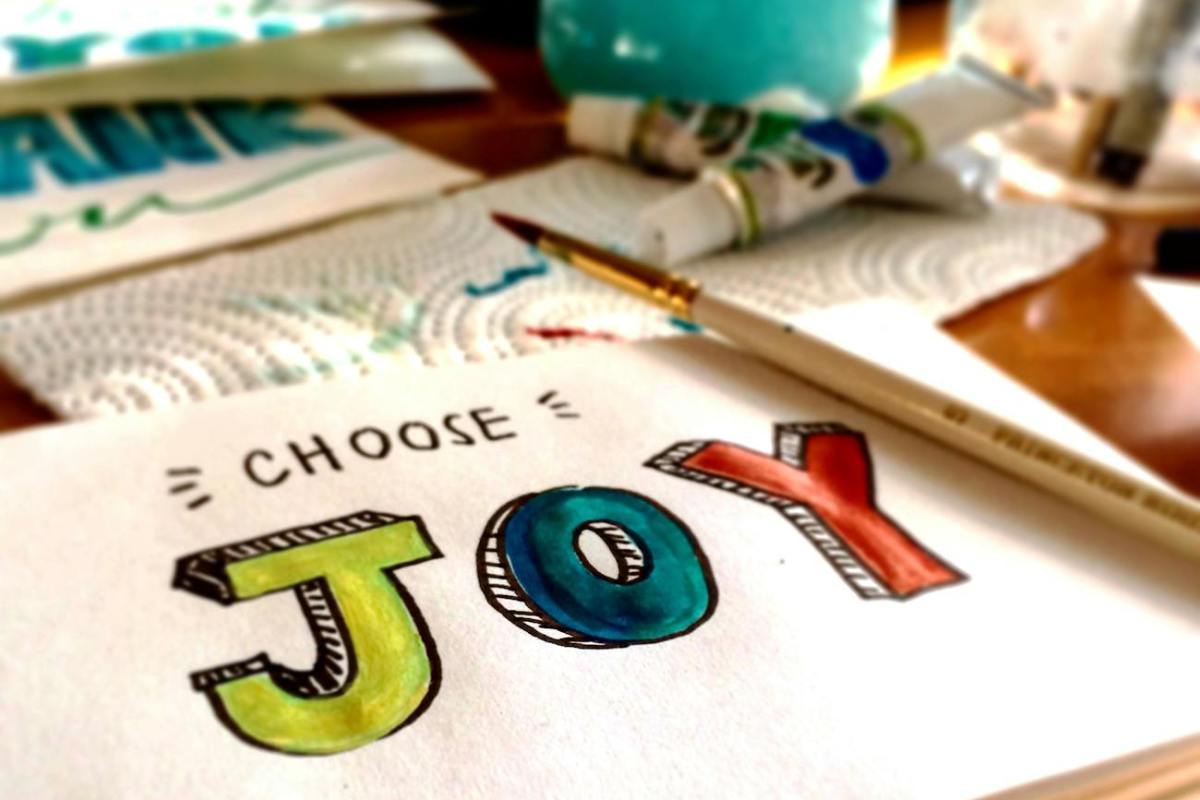
(featured photo from Pexels)

Wish Granted

Against the assault of laughter, nothing can stand.” – Mark Twain

There’s a funny thing about setting intentions, isn’t there? It’s like wishing for a butterfly to land on your finger so you put yourself outside and sit still enough for it to happen. But the next part is the crucial step. Will a butterfly land? Maybe it’ll be a ladybug? Or, yikes, it’s a mosquito. And then the magic comes in whether we are open to any of the above being an answer to the wish.

I had a list of five simple things that I wished for on Christmas day. At least one belly laugh that, in the best case, makes it so you can’t breathe for a split second was one of them.

On Christmas morning, my family came over to open presents with the kids. My mom, brother, sister-in-law, and two friends that are family by choice were sitting in the living room with the kids when I went into the hallway to get a bag for the debris. I heard my 84-year-old mom say, “I’m a non-violent person but I thought this gift looked fun.”

With my curiosity piqued, I popped back in to see four-year-old Mr. D opening the present in question. It was a hat, something like a shower cap, with Velcro on it, and three soft balls. The idea is for one person to wear the hat while other people throw balls at their head.

The laughter and jokes came fast and furious.

Oh great, Nana,” my friend, Eric said, “teach the little ones to throw balls at people’s heads.

Imagine the team of game designers for this product,” my brother said. “The glee they must have had realizing they had a wide-open market for toys that we throw at people’s heads.”

At this point we were all laughing, but especially my mom who was laughing so hard she had tears running down her cheeks.

Oh look,” my sister-in-law observed, “they mark each area of the head with points. You get 100 if you get one front and center and only 50 if you tag the side.

My family isn’t immune to the angst that comes with holidays. We don’t all see things the same. And when my dad died suddenly, it created more division. My sister, who is a litigator, sued my brother for a million dollars. They settled but my sister remains largely estranged.

That’s just some of the family wounds we carry and the holes we feel at the holidays. But for that moment, we were right where we belonged. We were howling by the time we finished with unwrapping (and dissecting) this first gift.

Wish fulfilled.

[No children or adults were harmed in the making of this post.]

(featured photo from Pexels)

Are Buddhists Bad Texters?

Joy is not in things; it is in us.” – Richard Wagner

I have a couple of friends that identify as serious Buddhists. Neither is the Dalai Lama but I’d stereotype them as people that have made mindfulness a way of life which is a level (or more) up from my I’m committed to sitting down and meditating every morning level.

They are both terrible texters. That is to say I will text them and they will respond without my prompting them for a response. But probably not for days. And no, it isn’t something specific to this friend group because neither knows the other.

Not responding for days seems to me like a violation of the texting technology. It’s made so that you don’t have to pick up the phone at any specific moment but that conversational-ish communication is available to you when you are ready. Right?

My other explanation about their behavior was that they could be unfamiliar or uncomfortable with the technology. Nope, not true – they both will initiate text threads.

But I was listening to the Ten Percent Happier podcast the other day with Matthew Hepburn, a Buddhist Teacher and it prompted another thought.

Matthew Hepburn’s summary about mindfulness was a practice so that we can use our attention intentionally. That is to say that if life is made up of what we pay attention to, mindfulness helps make the sum total of what we pay attention to better and under our control.

When we meditate or sit quietly in any practice and notice where our mind goes – and I’ll speak for myself personally here – it’s most often to my to-do list or where my loved ones are. My attention when I call it back is somewhere between the laundry and my next meal. Nothing wrong with that except that I don’t imagine that is where I’d like the sum total of my life to be. I’d rather it be in the love and friendships I had with others and my usefulness on this planet Earth.

I don’t have a big enough sample to know if Buddhists are bad texters. But my theory reminds me that I can’t pay attention to everything. And that means putting down my phone, turning off the sound on my laptop so I can’t hear the <ding> of a new email. Or better yet, going for a walk outside with a friend.

The idea that we can intentionally set our attention is so appealing to me. It rings true that I can determine the life I want to live just by aiming my focus. Even if that means I won’t be a very good texter.

Effective Redirection

It never hurts to see the good in someone. They often act better because of it.” – Nelson Mandela

The other day I quietly came into my still dark room and to put my toothbrush away before waking my daughter for school. She had migrated into my bed in the middle of the night as she often does so I brushed my teeth in a different bathroom so as not to wake her prematurely.

After setting my toothbrush down, I went to kiss her on the cheek. As soon as I did, she barked out “You are ignoring me and you’re late!” And I was taken aback that the quiet had turned to this and started to retort, “Now wait a minute, you are in my room and I’m just trying to get to my bathroom…”

It made me think of a dog-training article I read the other day. One of the tips was that when telling a dog not to do something, it’s too vague for the dog because in essence we are saying “don’t chew my shoe” but then then dog has to both process that and also think of what it should be doing. The article, and I can’t think of where I read it or why I read since I don’t presently have a dog, suggested instead to tell the dog what to do. That in essence solves both problems – getting the dog to stop chewing the shoe and redirecting it to a new behavior – in one command.

This seems to be the work of relationships as well. I don’t think it’s just me that often responds that I don’t like what someone has said or done without ever saying what I’d prefer to happen. In fact, I often just hope the other person can intuit that! Because thinking and naming what I want comes from a different place than a retort, an intentional place that takes some work to access. It’s a subtle shift from defense to bridge-making.

When my sister-in-law nannied for me she was great at saying to my kids, “A better way to say that is…” and it worked great at helping them know how to express their feelings but in a way that is more likely to be heard. My sister-in-law both was telling my kids what not to do and redirecting the behavior but in one efficient suggestion.

My 6-year-old daughter is so verbally adept so it’s really easy to forget that communication is still incredibly new to her. It may not be obvious how to express irritation and ask for what she needs. And more than that, it requires her to practice accessing her intentional space as well.

Even though I’m an old dog (or middle-aged one), I’m trainable too. So I stopped my retort and started again. “Hey darling girl, a better way to say it might be, ‘Morning, Mom. I’m frustrated you are taking so long because I’m dying to have your attention.’ ”

(photo by Pexels)

Practicing Gratitude

The more grateful I am, the more beauty I see.” – Mary Davis

Yesterday I my daughter and her friend wanted to ride their bikes to school. So I loaded up my toddler on the back of my bike, threw my mask and wallet in a small backpack and shepherded them through the route we’d planned. After we dropped them off, I rode my toddler the rest of the way to his daycare.

After coming back home and finishing the essential work items I needed to get done, I drove to the store to do the weekend grocery shopping. I loaded my basket with all sorts of yummy fall weekend ingredients – for pumpkin bread, homemade chicken soup along with crisp, juicy apples and crunchy green grapes. I opted for the self-checkout line, scanned the bottle of wine I’d selected as my first item and then hunted in my purse for my wallet to show the attendant.

I didn’t have my wallet. It was still in the bike riding backpack.

As I drove the 7 minutes home to get it while my groceries waited patiently with the attendant, I was grateful that I had enough time to do the extra trip back and forth in a quiet car that felt like a driving meditation.

As I drove the 7 minutes back to the store, I was grateful that the wine was the first thing I’d scanned.

And when I arrived back at the store, I was grateful that the basket of items that I’d carefully selected was still waiting for me.

It’s true what they say, practicing gratitude makes it easier to find, even when you’ve forgotten the other things you need.

Five Pieces of Writing that Inspired Me: #5 Showing Up

“He is able who thinks he is able.” – Buddha

Sometimes the problems of the world seem overwhelming so that I feel anything that I could do wouldn’t matter in the slightest. Then I think of this story that Frederick Buechner told as part of a sermon he delivered and I remember that we just have to show up.

The Best She Could

In any case, it was this same George Shinn who in 1880, five years before being asked to start your church here in Chestnut Hill, was summoned once at midnight to the bedside of an old woman who lived by herself without much in the way of either money or friends and was dying. She managed to convey that she wanted some other woman to come stay with her for such time as she might have left, so George Shinn and the old woman’s doctor struck out in the darkness to try to dig up one for her. It sounds like a parable the way it is told, and I am inclined to believe that if someone were ever to tell the story of your lives and mine, they also would sound more like parables than we ordinarily suppose. They knocked at doors and threw pebbles at second story windows. One woman said she couldn’t come because she had children. Another said she simply wouldn’t know what to do, what to be, in a crisis like that. Another was suspicious of two men prowling around at that hour of night and wouldn’t even talk to them. But finally, as the memoir of Dr. Shinn puts it in the prose of another age, “The rapped at the humble door of an Irish woman, the mother of a brood of children. She put her head out of the window, ‘Who’s there?’ she said ‘and what can you want at this time of night?’ They tell her the situation. Her warm, Irish heart cannot resist. ‘Will you come’ ‘Sure and I’ll come, and I’ll do the best I can.’ “And she did come,” the accounts ends, “She did the best she could.”

Listening to Your Life – Frederick Buechner

Coming Unstuck

“Self-pity in its early stages is as snug as a feather mattress. Only when it hardens does it become uncomfortable.” – Maya Angelou

On Thursday morning my son cried all the way to daycare. He is such an affable little person that I was stunned that none of the usual tricks could distract him.  I pieced together from his two word sentences, Tay hoome (stay home) and EA come (his nanny come) he wanted to stay home and have the nanny come. When we reached his daycare and I was getting him out of the car, I started to stay, “When you cry like that, we…” and my daughter chimed in to finish the sentence, “suffer.”

I can’t say exactly what he’s thinking or how he’s grasped this but in the two weeks since his sister finished Kindergarten, he’s figured out that she’s staying home and the nanny is coming. I imagine he has some toddler sense of the unfairness that he still has to go to school three days a week. It’s unfair. Life is unfair. I think one of the easiest feelings to get stuck in. I think of this passage from The Book of Awakening by Mark Nepo:

I know now that, over the years, my own cries that life is unfair have come from the inescapable pain of living, and these cries, while understandable, have always diverted me from feeling my way through the pain of my breakage into the re-formation of my life. Somehow, crying “Unfair” has always kept me stuck in what hurts.

The Book of Awakening by Mark Nepo

At the time I first read it, I was stuck in unfairness. I was trying to undo the damage of the hurt done to me by an unfaithful ex-husband while everyone else seemed to be thriving. I read that passage and knew, really knew that the only thing keeping me in that place was me. That somehow I had taken the unfortunate chain of events that led up the implosion of life as I’d known it and made those my story, instead of the rest of me. There may have been a time that self-pity was fitting but then, as the Maya Angelou quote says, it had hardened around me and I was stuck.

I hadn’t intended to finish my sentence to my son with “suffer.” I was going to say, “When you cry like that, we don’t know what to do to make it better.” But suffer is pretty apt as well. When we get stuck in the unfairness of things, we suffer. No one around knows what to do to make it better. But all it takes to stop is to set the intention to find the beauty of where you are and do it again and again until one day you find you don’t need to. My son must have done some version of that because his teachers said he had a great day at school.

Rethinking the Rote

“Everyone wants to get enlightened but nobody wants to change.” – Andrew Cohen

This morning I woke up in my bed for the first time in four days. As the temperatures rose during recent heat wave that enveloped the Pacific NW, I kept lowering our sleeping locales because we don’t have AC. First to the first floor and then as the we kept breaking the record high temperatures and the house barely even cooled at night, down into the basement where my son slept in a storage room and my daughter and I in the garage.

Each move meant small adjustments to the every day routine. Like not being able to empty the recycling or not turning on the tv because it would disturb where my daughter was sleeping. Not restocking the fridge in the evening or doing the dishes because it would disturb where my son was sleeping. Instead I sat out in the garden reading a book. So as we returned to our proper beds last night, I realized how much I do by rote. Small things that I do by habit like grabbing reusable shopping bags on the way to the car became visible when I had to rethink how I do them because the car was parked in the driveway and I used a different door.

Exposing the myriad of things that I do without thinking made me think about how deep my groove is and whether it is providing me efficiency or making me inflexible. It was harder to feel like I was getting things done over these days that were different, probably because I was having to make more decisions. But it was also a chance to make the unconscious conscious and make sure it serves me.

It feels good to be doing things as usual this morning. But I’m also taking away some intentional changes. I don’t need to turn on the tv or do the recycling every night and should instead spend more time sitting out in my garden. Disruption is an amazing teacher.

Waiting

Everything will be alright in the end, and if it is not alright, it is not the end.” – Best Exotic Marigold Hotel

Monday is my son’s favorite day because it’s garbage day. In our neighborhood, that means three different trucks: garbage, yard waste and recycling. And even better, they go up the street to service the cans on the north side and then they come back to get the cans on the south side which makes for six possible garbage truck sightings so Monday’s come with a great sense of expectation.  They make me think about waiting.

My paternal grandfather, Doug, died of ALS (Lou Gehrig’s disease) in 1973 so I didn’t know him. But my grandmother lived for almost 30 years after he died. When she told the story of his passing she said that when he was diagnosed three years before his death the doctor took her aside and told her every milestone of disease progression that would occur. My grandmother was a very positive and loving person so it was always a surprise that she called this doctor the cruelest man ever because she had the knowledge for what would happen next and was always watching and waiting for it.

It reminds me of when I pregnant with my second child and my obstetrician told me, “Your first child will become a nightmare for six weeks. It happens to all kids but they will come out of it.” I really liked my obstetrician and trusted her. But I wished she hadn’t told me that because I couldn’t imagine it happening to my sweet little girl and the anticipation of it possibly happening was a little too suspenseful. But my obstetrician was right – those first weeks were hard and then I was glad to know that it would only last for six weeks and she was right about that too.

But those are two examples of difficulty and sadness to come. But they make me wonder, do we ever want to know the future? Let’s say I knew that in six months that the right man was going to come into my life would it change my behavior? Would I spend more intentional time with my kids and my friends now because I’ll have less time once the mystery man appears? Would I be looking at every guy and wondering if he was going to turn out to be the one?

My thinking often strays into the future. I think that’s probably a necessary part of planning, to imagine what life is going to be like when school is out in two weeks and then arrange for the summer schedule accordingly. But when I spend too much time in the future, I find it impacting my sense of “now” because it overlays a sense of anticipation or dread onto today. I am slowly learning to differentiate between intention and waiting. I can intend to stretch my muscles every day so that I can become a more flexible person and that is quite different than waiting until I’m flexible before I sign up for a class.

When I was going through my divorce, my meditation teacher once quoted the line from the Best Exotic Marigold Hotel, “Everything will be alright in the end, and if it is not alright, it is not the end.” It turned out to be the best mantra for getting me through. It had a sense of the future without promising anything specific. And that turned out to be all that I needed to know. Then I could set my intention to do the best and trust that somehow, it’ll be alright.  Anything more than that and I start waiting on pins and needles.

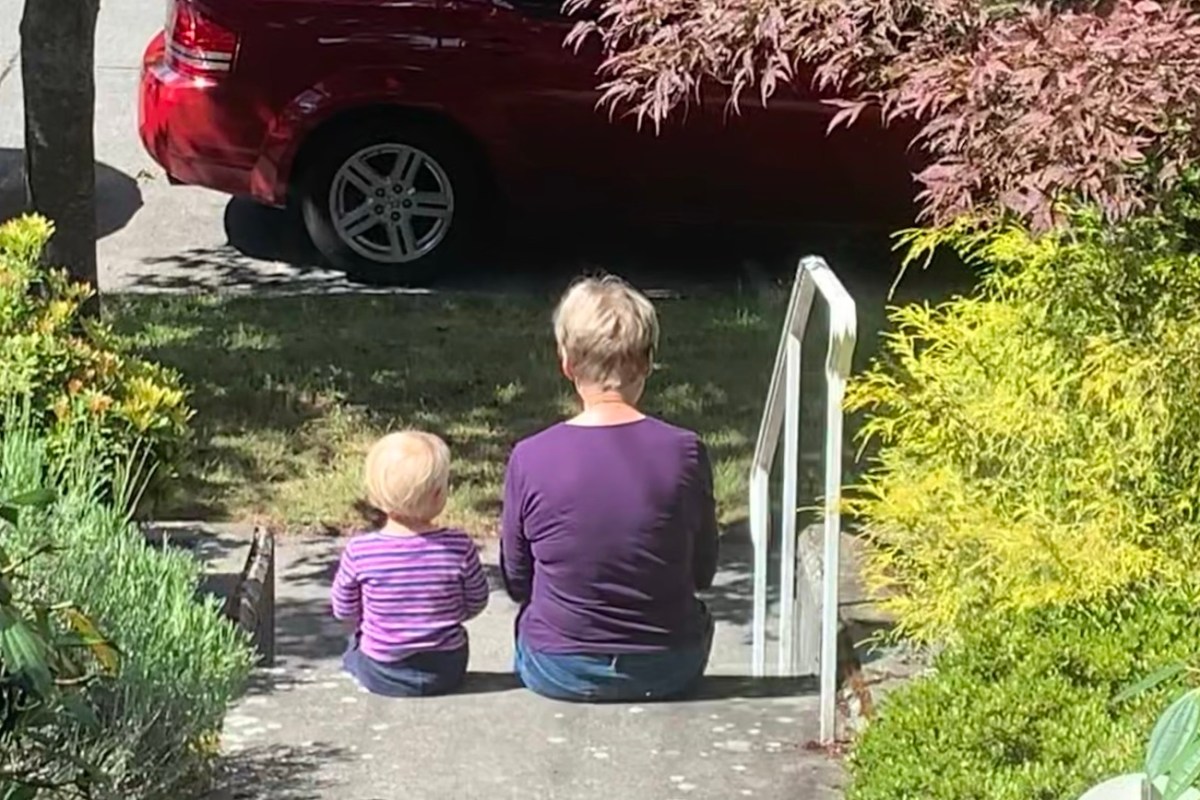
Yesterday, I l happened to look out my office window to see my mom and my son sitting perfectly still and poised waiting for the garbage truck. Watching them, I realized how much faith is involved in waiting patiently. We only sit still when we trust that what we are looking for is going to come our way. For me that is how it should be – let God know the future and all I have to do is simply trust that it’ll be alright in the end.  

Mistaken identity

“Before fixing what you’re looking at, check what you’re looking through.” – Mark Nepo

The other day I participated in a conversation with my five-year-old daughter and her seven-year-old best friend and neighbor. She reported that her friend kept interrupting her. Then she asked the friend a question and when the friend started to answer, she said, “See?”

Ah, we see what we expect to see. A chronic condition of being human but I had no idea it started so young! But more than that, I think the two were bickering not because one was interrupting the other but because they were hungry and bored. Another chronic condition of human nature – mistaking one feeling for another. This one is rife with the young!! It seems that they can’t reliably name what being hungry, bored or tired is and everyone around gets an earful until we solve the root problem.

But I’m not sure I do much better. Last year after one of the last times I was able to go to meditation class in person before the pandemic, I went grocery shopping afterwards. I bought so much food without any regard for price or practicality and it wasn’t until I was walking out that I realized that I felt euphoric. A great feeling. Not so great for budgeting!

For me this is the work of mindfulness. Observing the ripples in the water caused by emotions so that I am aware that they are stirring me up and hopefully every so often get a glimpse of my depths when the water is clear. And it is the work of patience and parenting to help others name what is ailing them and hold them until they can become clear. I’m getting a lot of practice these days.

So I asked my daughter what interrupting means. Turns out her definition was something close to feeling irritated whenever you are in conversation. I paused to be sure I didn’t interrupt, offered them a snack and a job to rake up the hedge trimmings and solved both the named and unnamed sources of irritation!