Wind Beneath My Wings

There are two types of tired. One that requires rest and one that requires peace.” – unknown

On this past Friday morning it was clear that Mr. D had caught a bug. But his 3-year-old brain hadn’t quite registered that he wasn’t feeling well yet and had big plans to go outside without a coat on to collect rocks and leaves to paint.

Fortunately I had just listened to a great Ten Percent Happier podcast that featured Lisa Feldman Barrett, a professor of psychology at Northeastern University with appointments to Massachusetts General Hospital and Harvard Medical School. She was explaining that the primary function of our brain, evolutionarily speaking, is allostasis, “to predict and anticipate the needs of the body and attempt to meet those needs before they arise.” So the brain is trying to determine the salt, glucose and oxygen needs of the body and predictively distribute those resources as appropriate.

Dr. Barrett used the metaphor of body budgeting to expand on this concept. There are activities that expensive: learning new things, experiencing persistent uncertainty, exercising, and stress. And there are some things that are savings deposits: drinking water, sleeping, eating healthy foods. If I understand this metaphor correctly, the brain is trying to balance the budget and needs the deposits to outweigh the spending.

She also added that it’s not only our body that spends the budget but other people influence the system. Others can be a tax that deplete the account or they can be a sale –  they can make things cost less for those around them.

Isn’t that a great idea? And I imagine if you are like me, people spring to mind that tax you as do the ones that make life easier. Now I’m hearing Wind Beneath My Wings by Bette Middler. 

That whole image has me inspired not to be a tax, but instead a sale – to make expensive things, biologically speaking, cost less for others. We can support them as they learn, go along when they exercise and pour a glass of water when they need it most. And while we’re at it – we can do it for ourselves, as well.

Which brings me back to Mr. D wanting to go outside. I got him bundled him and we compromised that he’d ride in the stroller. We hadn’t been out for more than 15 minutes when he started really feeling tired and crummy. For the rest of the afternoon, he alternated napping and snuggling on my lap so I had plenty of time to contemplate how children know and accept letting other people help balance their systems.

Yet another thing I’m learning from my kids.

(featured photo from Pexels)
Singing To the Other Side

The patterns we perceive are determined by the stories we want to believe.” – John Verndon

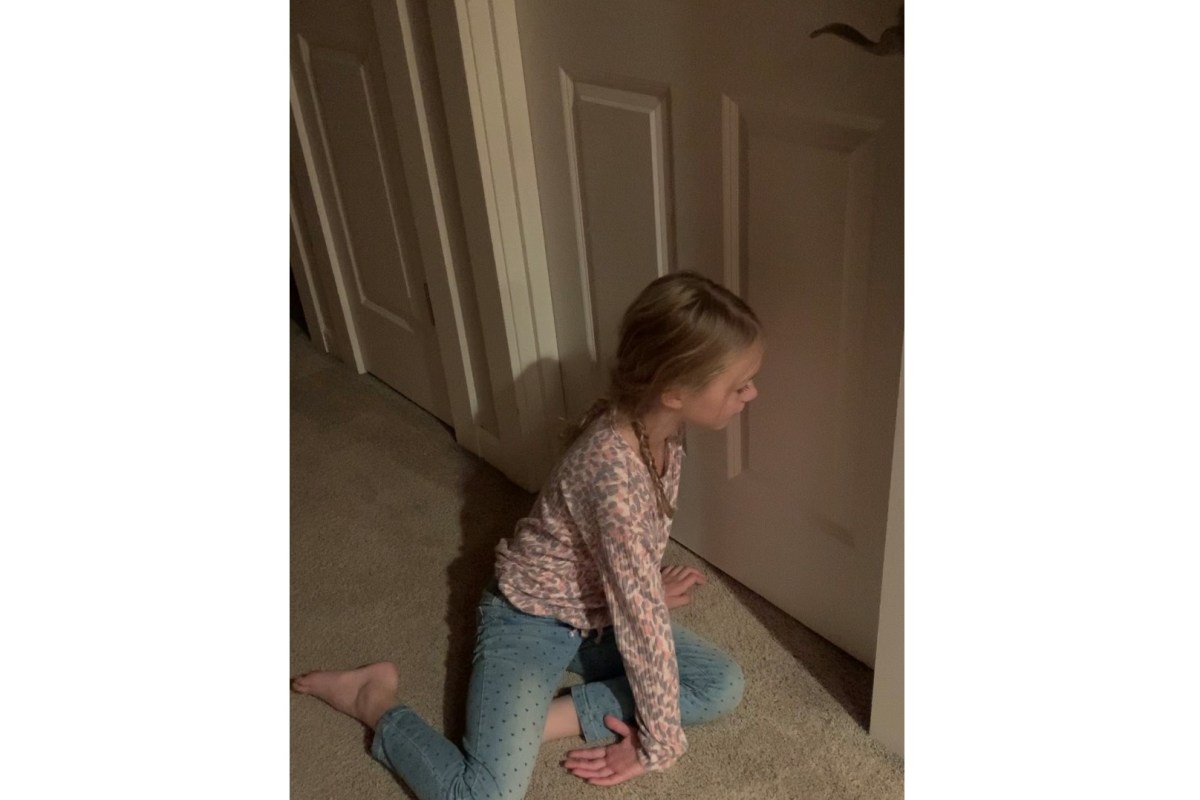
Last Friday before school, Mr. D didn’t want to come out of his room. He said there were monsters in the hallway. In a hurry to get the kids fed and ready for school, my plan was just to let him sit on his side of the door until he was ready to come out. But Miss O sat down outside his door and started singing “Do you want to build a snowman?” from the movie Frozen.

I have been reading The Persuaders after hearing a great podcast with Anand Giridharadas on Unlocking Us with Brené Brown and it helped me to see her efforts in a new light. She was meeting Mr. D where he was at, applying the song to the situation at hand.

It seems fitting on this day before mid-term elections to talk about this book in which Giridharadas, a former correspondent for the NY Times, talks about what he sees as the biggest danger to democracy – dismissing each other. When we stop believing that we can have fruitful discussions, we stop talking to each other.

Instead he interviews community organizers who are on the ground working for change and tells their stories of what works. One of the main points being meeting people where they are at – not expecting that we’ll all talk from the same language, perspective and assumptions. From there we can have conversations that move us all along.

Here’s where I admit that I haven’t finished the book. But it makes sense to me that when we are more united because we talk to each other, it’s harder for people to stoke the divide in our politics, whether it be politicians or trolls. Giridharadas spends time detailing what the Russians did with their troll farms in 2016 and I thought it was fascinating that a large part of what they did with their far-left and far-right trolls was to foment disgust about the other side. Much of what they tweeted about wasn’t facts – more like gossip that was like “Can you believe what the other side thinks?”

What I love about what Miss O’s effort is that she didn’t just leave Mr. D sitting on the other side of the door. She didn’t walk away and just leave him alone to do it his way, but instead through a little song that is sweetly sad, made him laugh and want to join in. It took her 44 seconds to get him to come out – I know, because I took a video.

Meeting people where they were at was a special talent of my dad’s as well. On this eighth anniversary of his death, I find it warming to write about how that skill is playing out across generations and if we make an attempt, can make a difference in our communities too.

Do You Want To Build a Snowman?

Do you want to build a snowman?
Come on let’s go and play
I never see you anymore
Come out the door
It’s like you’ve gone away!
We used to be best buddies
And now we’re not
I wish you would tell me why.
Do you want to build a snowman?
It doesn’t have to be a snowman

The Price of Learning

Living is the art of getting used to what we didn’t expect.” – Eleanor C. Wood

The other day my friend Katie asked Miss O what she’s been learning in second grade. Miss O said that she’s been learning a lot about coins. Not only the value of each one but adding them up – they are doing a lot of math using coins.

This reminded me of the experiment I tried with Miss O based on a beautiful post written by Chaya Sheela. In the post, When my children were rewarded with the Westminster family, she recounted how her kids learned to save and the bank awarded them with new ceramic pig figurines. Chaya is an experienced and talented teacher as well as beautiful writer so she inspired me to try something new with my kids.

Drawing from her wonderful story, I thought I’d try to create a similar lesson for Miss O about making buying decisions when we went clothes shopping. At the store I told her she had $100 for buying the clothes and shoes she needed. Anything that she didn’t spend of that money was hers to keep and save. My estimate was that she’d spend about $45 on a good pair of sneakers and $45 on clothes and have about $10 left over.

We went through the clothing and it worked. After we calculated the prices out, instead of buying six items, two of which were very similar to things she already had, Miss O decided to buy only four. It reduced the total to about $30 instead of $45.

But then we looked and looked for a pair of sneakers that would fit her narrow foot. And with all the choices, we never found a pair that was just right. I loved that she was being responsible about finding a pair of shoes that would really work and last for the year.

But it meant when we went through checkout and she paid for everything, she pocketed $70. I reminded her many times that she’d have to use that money to buy sneakers when we found a good pair that fit.

Eventually we went to multiple stores, found the right pair and she used the money to pay for them. But she’s been telling people that she pays for her own shoes even since. 😊

So I’d say she’s doing fine in the money and math department. If that’s all they teach in second grade she’s going to do fine and I’m grateful that it’s the school teaching, not me.

However, Mr. D swallowed a penny yesterday so it seems like we are all learning about coins, one way or another.

It Starts Small

In some ways, repeated acts of kindness are preferable to solitary, extraordinary and heroic acts of sacrifice.” – Malcolm Gladwell

It was almost exactly three years ago when I invited a family of strangers to come stay with me for an extended period of time. Here’s how it happened. A young woman attending the university near me was hit by a car while she was jogging. It threw her 30 feet onto a walking path and shattered much of the upper left side of her body – shoulder and neck, resulted in a brain injury and the need to fuse her spine to the base of her skull.

The young woman’s mother, Dawn, lived in Minneapolis and immediately flew out to be with her daughter. I’d never met Dawn but she was a friend of a friend and I’d heard she was sleeping first in the hospital room and then on the floor of her daughter’s room during the recovery so I invited her to use my guest bedroom anytime she needed a good night’s sleep.

Dawn came and then the injured young woman’s living situation got complicated, the young woman came to stay as well. Then the young woman’s boyfriend came for a few weeks when he had a break from school. And on some nights her brother who also lived in the area came to stay too.

They’d joke with me, “Who invites a family of people that they don’t know to come stay with them when they have a 4-month-old baby?” And I’d joke back – “To be fair, my son was only 2-months-old when I invited you.

I recently heard a segment on kindness and sacrifice with Malcolm Gladwell on a Ten Percent Happier podcast that gave me a interesting perspective on why it was do-able to invite this family to live with me and maybe even why I did.

When Malcom Gladwell was in high school, his parents along with about eight others, sponsored three Vietnamese refugees to come live in Southern Ontario. Malcolm remembers this as a magical kind of experience so he went back to talk to those families about it and gather the stories. Here was his take:

“I was struck by how untraumatic the stories were. That nobody gave up their lives to bring in these people. Nobody took on an extra job to support them. No one. It was this kind of lots of people do small acts that added up to something big thing.”

Malcolm Gladwell on Ten Percent Happier

And that matched my experience. First of all, what I did was simple and small – it was just one single woman inviting another single woman to stay when she could. I didn’t invite a family of four strangers to stay with me for ten weeks – I worked up to that.

The second part was that it didn’t require any sacrifice for me. That is to say, Dawn and her kids were self-sufficient and supportive. My guest bedroom and the little nook on the top floor were not being used. More than that, Dawn would hold my baby on her lap every morning while she checked for email and I made breakfast and the whole family provided entertainment for Miss O who at four-years-old was undergoing a major transition of accepting a new brother into the house.

Then Gladwell noted that there was a hereditary component to what his parents had done. Both his mother and father had welcomed in strangers in their respective homes when they were kids and then when his mother went from Jamaica to school in England, she was welcomed in people’s houses. As Gladwell summarized:

“It was thing kind of practice that was being passed down from generation to generation. Not some kind of heroic thing but just what you do as a human being is you welcome strangers into your home. I see that kind of hereditary practice as being a powerful part of how kindness persists in the world. That you see it being modeled and it becomes part of your repertoire of behavior.”

Malcolm Gladwell on Ten Percent Happier

This resonated with me as well because when I was a senior in high school and my dad took a job as a pastor across the state, my best friend’s family invited me to live with them for the year and so I was the recipient of a similar act of kindness.

Gladwell also reflected on the necessity of kindness having to be do-able to be sustainable and spreadable. If we think we have to do huge things to be kind, it’s less likely to happen. Deb from the Closer to the Edge blog has often remarked that its little things that can make such a difference. And that’s how Malcolm Gladwell summarized it as well:

“In some ways, repeated acts of kindness are preferable to solitary, extraordinary and heroic acts of sacrifice.”

Dawn and her family are now an extended part of my family. Incredible people who touched our lives deeply. I got to experience that gift because it started small, it didn’t require sacrifice and was part of my history to welcome and be welcomed into other people’s homes. Apparently that is part of the formula for how kindness catches fire and spreads!

What’s your experience with acts of kindness?

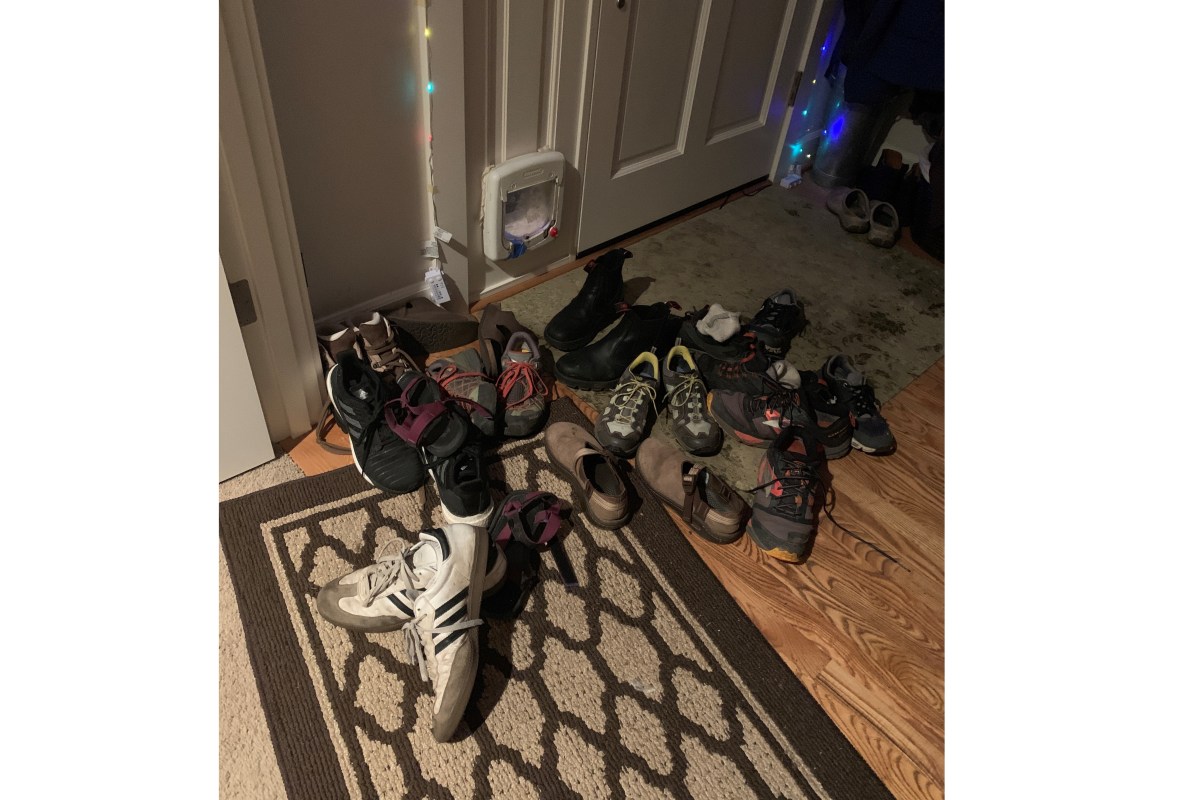
(featured photo is the pile of shoes that would accumulate at my door when I had these guests and it came to symbolize when my house and my heart was full)

The Whisper of My Failures

Never let your failures go to your heart or your successes go to your head.” – unknown

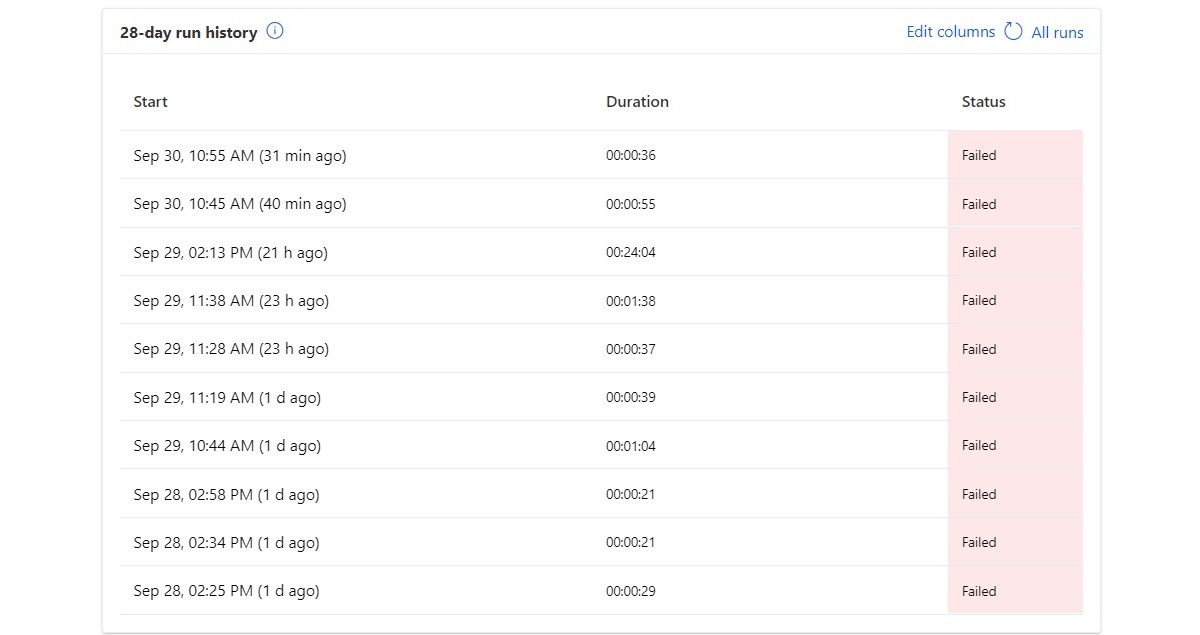
Last Friday, as I sat at my desk trying to will my way through a client problem where my solution wasn’t working (see featured photo), I felt a heaviness settle over me. It was more than a week work of trying to solve a troublesome technical problem, it was the pounding of my sore heart worried about others and the physical discomfort in my body from a UTI and the feeling like everything was stacking up.

I was in a funk. A funk as I typically do them, is usually not observable on the surface but is roiling around just below, making steadiness harder to come by.

As an inveterate “try-er,” I often work right at the edge of my abilities, both personal and professional and say “yes” to whatever comes. While that works for me a lot of the time, I also have to get used to failure and psyching myself up to try again. Sometimes, as was the case last week, multiple failures stack up at the same time and then I feel the gut punch.

My go-to mantra has always been to work harder and try again. I come from a long line of people who jump right up after falling off the horse, ready to get back on. Wallowing about falling off the horse, reviewing the best way to ride the horse or talking about which horse to ride are not allowed – we just jump right back on.

But the older I get, the more I realize that pushing through isn’t always either smart or effective. If I don’t acknowledge the failure or maybe even better said, listen to the learning, before moving on, then I wake at 3am and then watch the highlight reel of my recent failures stream through my head.

Then I have to make peace. I repeat a mantra I learned from a very smart pastor, “My God is bigger than my worries” until my heart settles and I can breathe again. And when calm, I have to find the source of which failure I haven’t yet come to terms with. I lie on my back and focus on the seven Chakras, the Sanskrit word for “disc” or “wheel” which line up with energy centers in our bodies. Starting with the red chakra of my tailbone, I try to identify if I feel safe, then I move to the orange chakra of my pelvis to scan for creativity. Next yellow – solar plexus – power, green – heart – love, blue – throat – communication, indigo – third eye – awareness, purple – top of the head – spirituality.

Somewhere in that scan, I find where exactly I am most troubled and then I can sit with that lesson for enough moments to truly hold it. Even when I don’t yet understand what I’m supposed to learn, I can appreciate that I know where I’m growing.

The pain of failure is not always comfortable. But it’s always instructive and if I don’t want to have to learn the lesson twice, I find I need to sit with it. It’s often kinder than I thought, a signal trying to break through my stubborn insistence to keep moving, trying and problem solving so that it can whisper it’s message, “Listen down deep to where you’ve been opened and find how you can see things differently through the crack. That’s all you have to do and then leave the rest to Me.”

After I spent a few hours with my failures in the middle of Saturday night, I’m happy to report, I solved the client’s problem. More than that, my body is all better too and I lifted the heaviness of heart that came with not spending the time to look.

What do you do when you wake up at 3am?

More Than a Cup of Coffee

When we do the best that we can, we never know what miracle is wrought in our life, or the life of another.” – Helen Keller

Yesterday morning I had a house guest. I could hear that she was ready to come downstairs so before I went upstairs to wake the kids, I made her a cup of coffee and left it on the counter with a note.

When I returned with the kids, she said, “I can’t believe you had time to make me a cup of coffee.

She turned to Mr. D and said, “Your mom is a miracle worker.” I smiled because it really was not a big deal. But no one need worry that I’ll get all puffed up because Mr. D replied,

My mom is a mommy.

It reminded me that as we go through our day, what we do is largely interpreted by the roles we play: parent, friend, sibling, daughter/son, grandparent, neighbor, project manager, boss, boy/girl scout, whatever. Those around us expect us to perform our duties as per our roles. And when we do, it seems then we don’t stand out for all the many things we do.

But that doesn’t make our best efforts any less miraculous. Especially when we are getting it done under tough or stressful circumstances, we are touching others as we do our “jobs.” The stretch that it takes to be a little more intentional, a little more careful or put in a little more effort to do it right will change us and the people around, even if it’s not immediately visible.

We can’t control how or whether other people will see us. But as the Helen Keller quote says, when we do our best, we never know how it’ll touch others. Hopefully for the better.

And if nobody notices, perhaps they have not yet had their cup of coffee. 😊

Has anyone noticed what you have done recently? Or do you have a story about noticing someone else’s best efforts?

The Whole Mountain

The invariable mark of wisdom is to see the miraculous in the common.” – Ralph Waldo Emerson

Yesterday, I was driving near an elementary school when I saw two school busses. My heart felt a deep pang of missing my children. Which is funny because my kids don’t even take the school bus. But I was driving in New Jersey, not in Seattle and since this is my first trip on an airplane by myself in 7 years, I guess that my heart isn’t being picky about what triggers it.

I once heard some very sage advice about what to do when we’ve grown weary around the people we love most – back up so you can see the whole mountain. And it spoke to me because often when I’ve climbed mountains, I’ve found them to be a lot of sweaty, hard work. And yet every time I see one, especially Mt. Rainier my “home” mountain, I am struck speechless, even for just a second, by my awe.

Back up and see the whole mountain to me speaks of finding the edge where our familiarity begins. And also of being able to trace the contours of the well-worn path where we often go with our dear ones. It calls me to picture in my mind the beautiful wholeness of my loved ones faces and the expressions that I most love to see on them. And when I’ve backed up far enough, I feel the pang of my ache for my beloveds deep in my body and know where they reside in me.

I’ve had three nights away from my young children. No one has spit half-eaten food in my hand or used my clothing as a napkin (and boy, wouldn’t that be weird if that had happened on business trip?). I haven’t been called in to witness grand accomplishments of using the bathroom and I’ve been able to sleep, eat and work out without interruption.

It all sounds great except I’ve had to do all that without my heart which remains at home with my beautiful children. Like climbing a mountain, my life is a lot of sweaty, hard work. But wow, I’m so glad I backed up enough to be able to see how much I love it, them and this beautiful inspiration called life!

How do you restore your love when (or if) it ever feels a little worn thin?

(featured photo is sunset from the airplane)

When Not to Write Back

Wine had to be grapes first. Diamonds had to be rocks first. Butterflies had to be caterpillars first. Rainbows had to be storms first.” – Matshona Dhilwayo

On Monday night, my hometown football team, the Seahawks won their first season game against the Denver Broncos. It was remarkable because our former star quarterback, Russell Wilson, just traded to the Broncos and because expectations are pretty low for the Seahawks this season. Our new quarterback, Geno Smith, was the backup quarterback for three years waiting on the bench while Russell Wilson got all the limelight.

I didn’t watch the whole game but after I got the kids into bed, I turned on the tv to see the final moments and caught a glimpse of something wonderful. At the end of the game when the Seahawks pulled off a 17-16 victory, Geno Smith said to the interviewer in an ecstatic moment “They wrote me off, I ain’t write back though.

I don’t think you need to be a Seahawks fan or even a football fan to enjoy that sentiment. The pure belief to persevere when others don’t see your potential. I mean, he’s a pro quarterback in the NFL so clearly he’s a remarkable athlete but in the circles that he runs in, it’s easy to imagine that he wasn’t feeling a lot of respect.

How do we maintain our belief in ourselves when it doesn’t feel like the world is in accord? It seems like we are talking about the very source of our purpose and calling. And we are talking about deep knowing whether we are walking on the right path and sticking there in the tough moments because we have the guts to keep going. It speaks to finding our why, as Simon Sinek says and I wrote about in a post by the same name.

Perhaps the world will never value the contribution that we make in the way we envision it should happen. But time and time again I’ve found that if I stay in accord with that small quiet God-whisper and keep trying, SOMETHING will come of it.

Or as Geno Smith says, listen to our hearts so that we know when NOT to write back.

What’s your metaphor or mantra when you are sticking with something hard?

(Mark, I’m sorry that your beloved Broncos had to lose in order to inspire the content of this post. 🙂 )

(featured photo from Pexels)

Sacred Time

Although the world is very full of suffering, it is also full of the overcoming of it.” – Helen Keller

Early the other morning, my cat came in with something in her mouth. It was so small, I couldn’t see what it was. When she put it down, I tried to pick it up and it fluttered against my hand and I saw a flash of green when it did so I discovered it was a bird. This was only about a week after the cat had brought a baby bunny in and both were during my sacred time, the 90 minutes I have to do yoga, meditate and write before the kids wake up.

I was irritated because I thought she was done with the phase of life of hunting little creatures.

I was distracted because wanted to go back to reading and writing about the precious things of life.

I was annoyed that instead of finding inner peace, I was scrambling around on my hands and knees doing the quiet angry whisper at the cat.

Despite all this, I managed to get the small lump of feathers between a greeting card and a paper towel and I took it outside. I thought it was dead and my plan was to just release it into the bushes off the side of my deck.

As I let go, the small lump of feathers fell for about a foot, then righted itself mid-drop and flew away. It revealed itself as a little hummingbird as it rose higher and higher.

Stunned, I just stood there for a long moment feeling the magic of that flight course through me. It was as if I had the after-image of that free fall into flight burned into my being. I had goosebumps all over.

It was life showing me that no matter what cat has got us in its claws, there’s always a chance that it will let up and we’ll fly away.

And to see it fly was poetry in motion that even as battered as we feel, we can always rise again.

Most importantly, I saw that this was my sacred time. This was the beautiful beat of life coming to me to be witnessed, held and let go.

Quote comes from a Real Life of an MSW post: Overcoming.

(featured photo from Pexels)