What to Do With Our Inner Meanness

The worst loneliness is to not be comfortable with yourself.” – Mark Twain

This is something I published on 9/7/22. Heads up – you may have already read this.


The other night my seven-year-old was being short-tempered with her younger brother and snippy with me. I asked her not to take out her mood on others and she replied “I don’t know what to do with the meanness!

Huh. Isn’t that a great question? I was raised in a household that believed “If you can’t say anything nice, don’t say anything at all.” Which I think has it about half right – not saying mean things is an admirable goal. But since just stuffing it down is likely not to work long-term, what do you do with the meanness?

Tend the Body

On the night in question, my daughter was both tired and stressed. In fact, I think I can pretty accurately say that if one of my kids is grumpy, there’s about a 90% chance it’s because they are tired, hungry, cold or sick.

And that goes for me too. If I’ve depleted my energy reserves with a hard work out or am tired because I haven’t slept well, I’m much more likely to think, if not say, unkind things.

As my colleague on this blog, Jack Canfora said in his brilliant post on Things I Think I’ve Learned So Far, “There will be things you do and say in an offhand way that will stay with others their entire lives, for better or worse.” So how do we tip the scales so that those things are more often for the better?

Mind the Mind

Dr. Dan Siegel, neuropsychiatrist and author, talks about the structure of our brains. In his terms, fear and anger reside in our downstairs brain, the brain stem and limbic region, whereas thinking, planning and imagining reside in the upstairs brain, the cerebral cortex and its various parts. The more we exercise integration of these two parts by making sound choices, delving into self-understanding, practicing empathy, posing hypothetical moral questions, the better we can apply higher-level control over our instinctive reactions. From The Whole-Brained Child, those are the recommendations of what we can do to help kids integrate the upstairs and downstairs brains but they work equally as well to mold adult brains too.

As Daniel Kahneman notes in his book Thinking Fast and Slow, “People who are cognitively busy are also more likely to make selfish choices, use sexist language, and make superficial judgments in social situations.” Cognitively busy being shorthand for when we tax our brains with concentration, complex computations and choices.  So we need to find a way to give our busy minds a break.

Feed the Soul

For me, giving my mind a break comes from meditation. I call sitting down on my meditation cushion “Irrigating the Irritation” because it so often helps soften where I’m stuck. It delivers me from the petty complaints by introducing a bigger sense of perspective.

This matches the experience reported by brain scientist Dr. Jill Bolte Taylor when she had a stroke that quieted the mental chatter of her mind and opened her up to a sense of deep inner peace and loving compassion. Studies of Tibetan meditators and Franciscan nuns have shown a similar shift of neurological activity for those engaged in prayer and meditation.

From a recent study published by the Oregon State University, they found that meditation can help replenish mental energy in a way similar to sleep. In fact, according to the lead author of the study, Charles Murniek, “As little as 70 minutes a week, or 10 minutes a day, of mindfulness practice may have the same benefits as an extra 44 minutes of sleep a night.

Of course meditation is hard practice for kids. There are techniques like box breathing and just counting to ten that help in the throes of big emotions but I haven’t gotten my kids to sit for more than five minutes at a time on a meditation cushion. However, I’ve also noticed that just sitting and coloring also brings about some mental rest, both for kids and for me when I do it alongside them.

What to Do with the Meanness

I tell my kids that my job is to keep them healthy, safe and kind. I know the kind part is a stretch because kindness is a choice they’ll have to make. Also because I have my hands full just trying to practice kindness myself. But at the very least, I can help find ways they can manage their meanness and in doing so, help myself to do the same.


I’ve also posted today on the Wise & Shine blog about first sentences that draw us in: Great First Lines. Check it out!

(featured photo from Pexels)
The Changes We Choose

Yesterday I was clever, so I wanted to change the world. Today I am wise, so I am changing myself.” – Rumi

The other day I watched from the back door as almost 8-year-old Miss O walked up to my mom as she was gardening in my back yard in the late afternoon glow, and announced, “We have some news. We are growing our family.”

I could have done a spit-take on the micro-expression that crossed my mom’s face. I’m 99% certain she knows that I’m not going to have any more children, but there might have been a fleeting second that my mom wasn’t sure. And then Miss O saved her by explaining we are getting a puppy in three weeks.

Which in many ways is nuts. I love order and getting things done. I’m pretty clear that a puppy isn’t going to tip the balance in that direction. But here’s my counter argument – doesn’t change usually feel like it’s nuts? Of course, I’m speaking of the changes we choose. I think often the changes we don’t choose feel to me like grief.

But there’s another thing I’m noticing as we prepare to “grow our family.” Now that we’ve decided, it’s already started mixing up the patterns we have at home.

I’ve told Miss O and Mr. D that I can’t be one person taking care of three creatures. Miss O has picked up on that and calls it five creatures because she’s including the cat and me. Whatever the number, it’s caused her to step up her game – get her own breakfast, learn how to do the dishes, and follow me around asking, “what can I do to help?”

It’s forcing me to accept the help and start expecting more of my children. For me to see all that they are capable of, and break the patterns started in toddlerhood where I just did things because it’s faster (and usually not as messy).

My requirement for a puppy was that Mr. D had to be potty trained – and he mastered that months ago. But there’s still a little porta-potty sitting in the corner of the family room that has to go away when the puppy comes. Not to mention, that the beloved stuffy Bun Bun will be at great risk if Mr D continues to carry him around, and sometimes leave behind randomly, so there’s another opportunity to step up to more thoughtful patterns.

Yes, we are growing our family. But as I watch in anticipation of this change, I see that we are also “growing-up” our family. Maybe that’s what every change we choose offers us the opportunity to do.

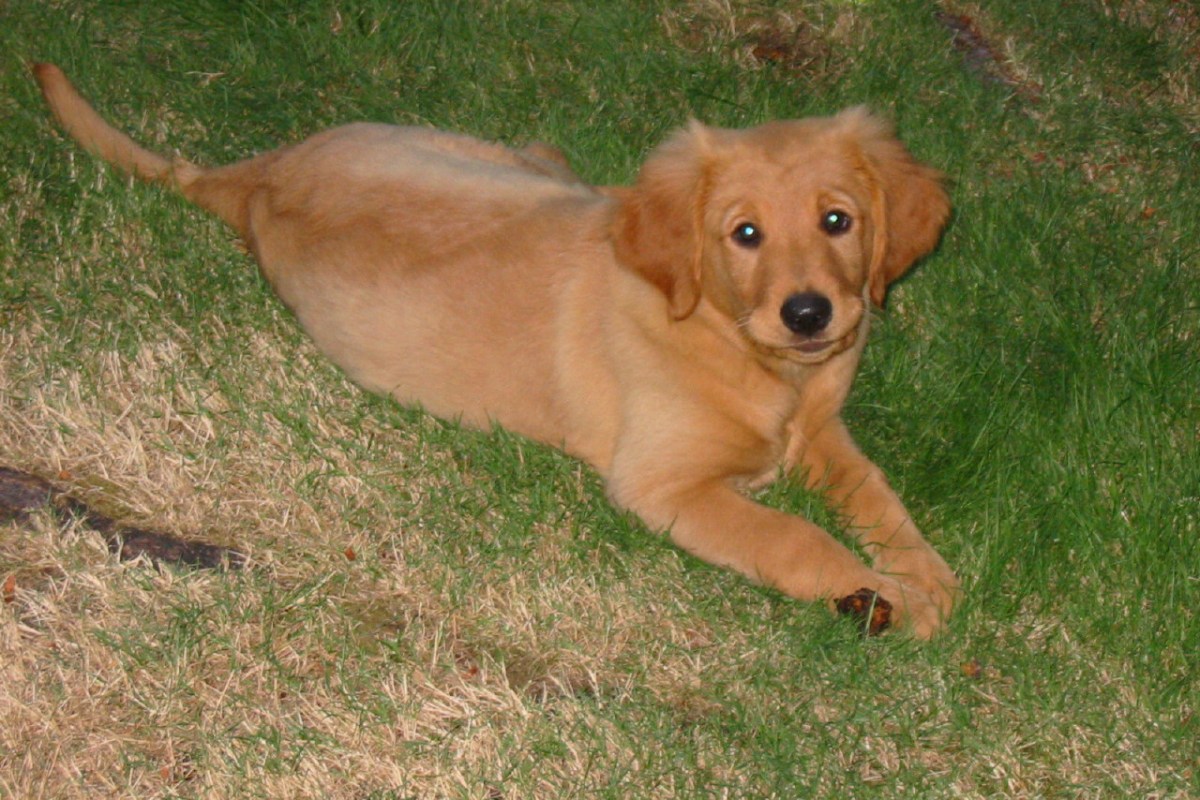
(featured photo is my last dog, Biscuit, as a puppy)

Giving Lift

If you want to lift yourself up, lift up someone else.” – Booker T. Washington

Yesterday afternoon my kids and I had two hours left of a six hour road trip when we came across a man walking down the interstate with his son, who looked to be about two or three years old. The man was carrying a gas can in one hand and holding his son’s hand in the other.

The mood in my car at the time we happened upon these time was best described as stable. Six hours is a long time for me, not to mention Miss O and Mr D, at almost 8 and 4-years-old respectively. We were tired after a great weekend of playing at the lake cabin of my best friend’s family, a little sad to be on our way home, but also heartened by the fun of being together and with our incredibly fun, generous, and delightful friends.

So I polled my kids as to whether we should stop and help the man and little boy. They asked great questions – were we going to give them a ride? how much longer would it take? – and I told them we’d just take the gas can, fill it up, and return it to them. It would probably add 20 minutes to our trip but save them two or three hours of dangerous walking. The decision was unanimous that we should help them.

By the time we found a gas station, looped back far enough to find their car and then figured out how to turn around to be going in our original direction, it was a good 20 minutes. In that time, the mood in my car had lifted exponentially. Mr. D had grand plans that he was going to hop out and deliver the gasoline himself, and Miss O was mapping out her strategy to find out all that she could about them. When I delivered the news that there was no way I was letting them out of the car on the highway, they were disappointed, but so buoyant by the fun helping adventure that even a little disappointment couldn’t dent the mood.

And why did I do it? It was clear how I could help and seemed low risk. And I had benefitted greatly from the weekend with the fun and relaxing time with our amazing and thoughtful friends. But probably mostly, because the weekend away had given me a glimpse of the long view of life. (For more on that final point, The Long View is my post on the Heart of the Matter blog today).

I only exchanged about a dozen words with the man and his boy during our quest for more gasoline, but the whole thing carried us safely and happily home for the remaining two hours. It reminded me of the quote from Booker T. Washington at the top of this post – there truly is great lift that comes from helping others.

(featured photo from Pexels)

Holding Out for a Hero

Go into the world and do well. But more importantly, go into the world and do good.” – Minor Myers, Jr.

The other day my 6-year-old daughter asked me “What is a hero?” As I stumbled through the words to describe someone who is admirable and inspires us to be better, I wondered if the idea of having heroes resonates as much in our world. Sometimes it feels like we know too much about our public figures these days to pick someone from that realm.

It also made me think of my personal hero, my dad.

It took me years to realize that he was my hero. It wasn’t until I’d traveled enough through life to have failures as well as successes that I started looking closer at my dad who was then in his 70’s. I wanted to try to identify what made him so unstoppably enthusiastic and delightful.

On first glance, it was easy to attribute his goodness to his career as a Presbyterian pastor for 40 years. Certainly that made him a person who worked hard to do good, but there was another equation that underscored who he was. Here’s what I’ve boiled it down to in three points, the number he always used for sermons:

He was dedicated to being useful. For him that meant rolling up his sleeves and pitching in where help was needed. If he came to my house for dinner, he would jump in to do the dishes before the dinner was even served. Sometimes I had to tell him to stand down if I wasn’t actually done with a pot. He’d laugh and look for something else. And that applied to plumbing, tiling, gardening, service projects, whatever he could find.

But he had the gift of making it a two way street because he’d ask for help. When he and my mom were building a cabin in the San Juan islands, he recruit people for “work parties” to clear the land or raise the foundation. Or if you were a member of his church, he’d recruit you for committees and service. And this back and forth made it feel not like his help was charity but that it was community because he wouldn’t hesitate to ask when he needed help.

He loved people. For him that usually meant listening. Although he was a preacher and a very good one, he thought that was a very small part of his job. He loved people for who they were and that included their imperfections too. If I ever asked him about people who he found frustrating, he’d shrug his shoulders and say something like “You never know all that’s going on with someone. We’re all weird and once you accept that, you can just love them anyway.”

He didn’t often give advice but when he did, there was no penalty for not listening. As the pastor who was performing my wedding to my now ex-husband, he sat us down for marriage counseling as he did with everyone he married. He very eloquently described what was wrong with us (my words, not his) because our personal and professional lives were too intertwined. We did nothing to correct this and he did a beautiful job of marrying us anyway.

He was obedient. That was his word for listening to the small voice of God within him. This was the part that most interested and confounded me. He was such a delightful person with many talents and a great attitude so what part did faith play in his life? It took me a long time to come up with an answer I could understand. And that was, he listened to where God led him, he abided by what he thought a Godly life was AND he lived life in partnership with God. He knew when things were above his pay grade and then he turned them over to God. That gave him an enormous amount of comfort and confidence.

My dad died suddenly in a bike accident at age 79. One of his friends eulogized him perfectly as “a battery on feet just looking for someone to jump start.” Fortunately in the years before he died, I’d started developing my own faith and the small voice of God within me led me to ask him questions about his life and record them. It was all part of my hero worship and a such a gift to be able to delve into this man from whom I’d inherited much of his way of looking at the world.

This is what was running through my mind as I answered my daughter about heroes and why we need them. They show us a little bit of the way so we can go further and faster. We stand on the shoulders of those that go before us. Recognizing heroes who resonate most with each of us is one great step forward in knowing what to study. They are part of our stories and give us connection and warmth to the inspiration we glean.

My memoir about my father is available on Amazon: Finding My Father’s Faith

Writing For a Different Result

Gotta move different when you want different.” – unknown

I wrote a Wise & Shine post this morning about writing outside of our comfort genres: Writing Outside of the Box

That post and this one were, largely inspired by an interesting post by Jack Canfora I read recently about trying a different style of writing when you are stuck or want to get out of a groove. In the post, The Virtue of Walking in Different Shoes Jack tries his hand at writing Bob Dylan lyrics and extols the practice of writing something entirely different as a way to break away from our habits.

Ode to Joy

I read an article about a man
Playing ping pong in the dorm
He was dropping his son at college for the term
And not ready for good-byes to become the norm.

He said, “one more game” and his son complied.
Finding his own rhythm for the change of the day
The man served instead of cried.
Knowing both he and his son were finding a new way.

I read this article and looked at my two, feeling how soon they’ll both fly.
As the tears welled up and I honked back a wheeze
I thought, “I’m not ready to let go of these wee moments of glee
Sponsored by luck and joy.”

So now I’m on notice to really savor the fun
Complete with spills, drills and mess.
I’ve got you for now, my little ones
So let’s play while you’re still in the nest.

Okay – so I’m not taking up writing verse anytime soon. But it really was a good exercise to change things up – to really think about every word I used and to really listen to the cadence. Besides, I consider any day I can use the phrase “honked back a wheeze” a good one…

Leaning in To Letting Go

The only way to make sense out of change is to plunge into it, move with it, and join the dance.” – Alan Watts

It seems like for every lesson I’ve learned in my life, I can trace it back to a particular story. Is that a sign of middle age? In this case, I’m thinking of the lesson of learning to let go and a consulting project I did for Microsoft about 25 years ago.

My colleague, Bill, and I were assigned by the consulting firm for whom we worked to write a white paper for a client at Microsoft. It was the late 90’s and Microsoft was in that phase where it was growing so fast that there wasn’t a lot of process but instead a lot of hard-working but perhaps egomaniacal cowboys.

Our assignment was to write this paper about how a group of these cowboys rolled out a new email software at Microsoft. Bill and I were experienced at deploying that software and had published a book about it so theoretically, this project should have been a snap.

After interviewing the key players, we drafted the paper. They hated it. We revised it. They still hated it. They would call us to meetings to tell us in detail how much they hated it. The problem wasn’t the technology – it was that we didn’t get the tone right. We didn’t think they were as cool as they thought they were so we missed the mark over and over again.

I can’t remember how many versions of that paper we wrote. Maybe five? But after torturing us for a while, they finally fired us and wrote it themselves. It hurt. I felt like I’d been at a rodeo and had hung on way too long.

I went on to learn that lesson about letting go in many ways as a consultant. I’ve found out that no matter what kind of a job that you are doing, if the person that hired you is replaced by someone else, you will most likely get replaced too.

I’ve hung on too long in those cases as well – trying to pretend it’s not going to happen. I’ve been sure I can make the new person pick me, and like a puppy at the pound, try to do any number of tricks to prove I’m likeable and reliable.

I’ve also done the opposite and just walked away when the staffing changes happen. Finally, I’ve figured out that when the changing of the guard happens, I say, “Here’s what I’m working on. I will continue to support it in whatever way works and if you prefer to have someone else do it, I will facilitate that in the smoothest way possible.”

It’s so natural to want to cling when things are coming to an end. Sometimes, it really hurts and is scary. I’ve found that acknowledging that, feeling it all the way through, helps. Because projects, groups, and companies, like life, have a cycle. I’ve come to learn that to stay loose is the best way to ride the current. That way, I’m ready to lean in to the next thing that comes to fill the opening. Because that happens too.

Leaning in is just one of the things I’ve learned to do the easier way. For a mountain climbing story that taught me the difference between doing things the easy way versus the hard way, check out my piece on The Heart of the Matter: Doing It The Hard Way Or the Easy Way

(featured photo from Pexels)

It’s the Little Things

Kindness and politeness are not overrated at all. They’re underused.” – Tommy Lee Jones

When I met with Mr. D’s lead preschool teacher for a parent-teacher conference, I asked a general question at the end, “What else can I do to be of help to you?” Her reply was interesting. She said, “Nothing. You already turn on the bathroom light.”

She was referring to an incident from several weeks before. Early in the morning when there is only one teacher in the classroom, they can’t leave the class to go with a child to the bathroom. The teacher stands in the door to the classroom so they can both see the kids in the classroom and the bathroom, but the child has to cross the five or six feet to go to the bathroom themselves.

One day, I was dropping Mr. D off and the teacher was encouraging a child that needed to use the bathroom. His body was antsy but his face was fearful. It didn’t take much to connect the dots that the teacher couldn’t reach the light switch from her position in the doorway and the child was reluctant to walk into a dark bathroom.

So I asked, “Can I turn on the light?

When she alluded to this incident at our conference, a light came on for me. I drew the only conclusion that makes sense. It doesn’t take much to help.

For great lessons I learned from another teacher in our lives, please check out my Heart of the Matter post: Lessons From An Artist

Do You Believe In Magic?

We are like someone in a very dark night over whom lightning flashes again and again.” – Maimonides

I just finished watching the first three seasons of Arrested Development. The impending change where the show would no longer be available on Netflix finally got me to watch this hilarious and highly -recommended (well, the first three seasons were touted as worth watching) show.

In the show, the eldest brother, Gob, is a magician. A ham-handed, totally inept so his tricks never work, kind of magician. But somehow his character in this show works with all the other characters to make magic of the worth-watching variety.

Do you believe in magic? I mean really believe in magic so that when it comes to getting your deepest desires, something will step in and help along the way?

I don’t. I believe in a lot of things that create magic – being present, finding joy, and counting my blessings to name a few habits that keep me more or less delighted with my life.

And I believe in listening to my inner voice – my God voice or intuition, and then following it. I believe in a Higher Power that I am so grateful to for that inner voice that points me in ways that are bigger and better than I could imagine on my own.

But I think all the work to make life happen is up to me. I don’t think magic will save me, or give me huge leaps to skip over all the steps.

However, I have the feeling that I’m wrong. I have the feeling that magic is happening all around but just on a different pace so that it seems undetectable. Before you think I’ve gone over the bend from watching too many Disney movies (which might also be true), just bear with me.

The other day I was frustrated with a friend – I’d reach a limit of too many bids for connection that had gone unanswered. I’d been totally fine with that for a while because my friend has a lot going on right now but it had reached a tipping point where my heart was starting to feel sore. I was just thinking that I needed to quietly close this door between us when my friend, completely unbidden by me or aware of what I was thinking, sent me a gift.

On Monday, I was working alone at home on a day with no meetings when I suddenly felt disconnected from life around me. I walked to the grocery store, Pictures of You from the Cure was playing on the overhead speakers. As I was dancing down the aisles connecting to memories of my college days, I ran into an old friend.

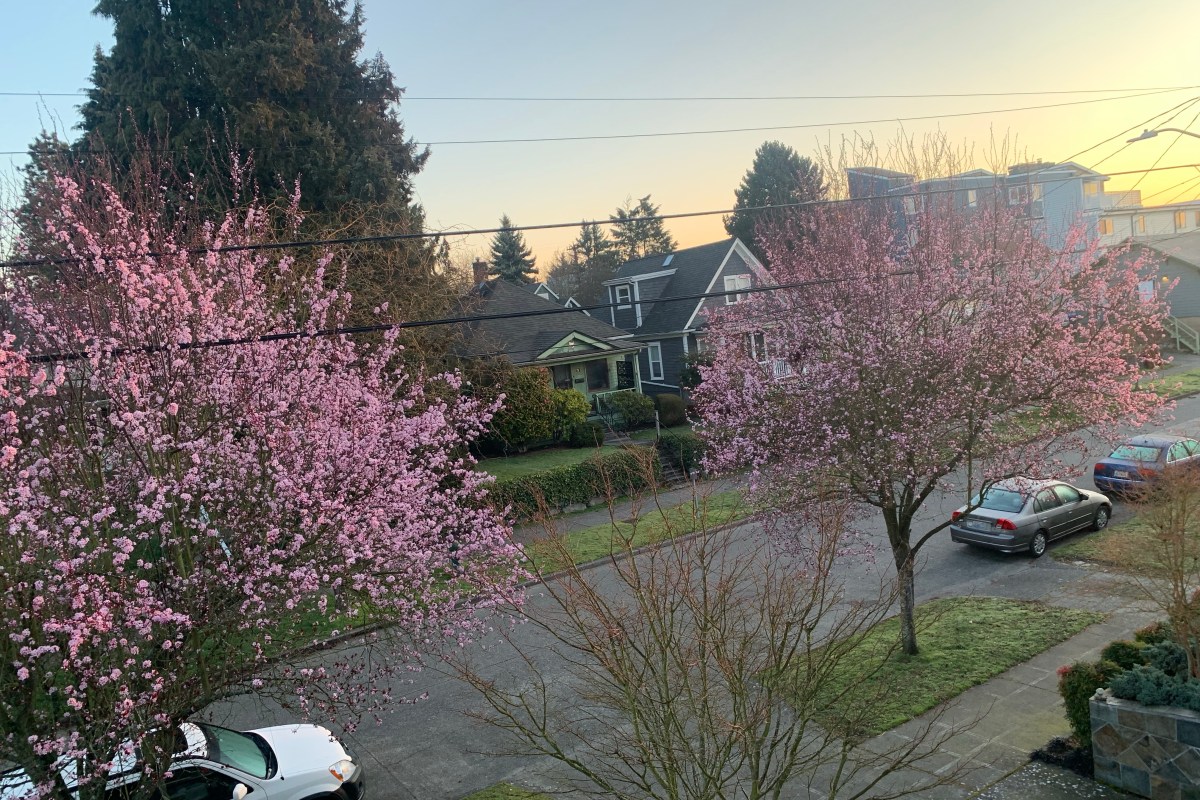
Or this morning my skin was feeling itchy like it couldn’t stand one more day of winter clothes, and I opened the window to see the blossoms on the tree out front had shown up like magic overnight. (see featured photo)

And my final example is right in this moment when I realized this post, that I thought was completely unconnected to my Wise & Shine post this morning Fear and Courage, is actually completely related in the way that when we acknowledge we are scared, lonely, or fed up, help arrives.

If our lives were a tv show like Arrested Development, the magic would probably be easy to see. But since life doesn’t work that way, it’s up to us to see the magic.

The Feeding and Nurturing of Life

Love and compassion are necessities, not luxuries. Without them, humanity cannot survive.” – Dalai Lama

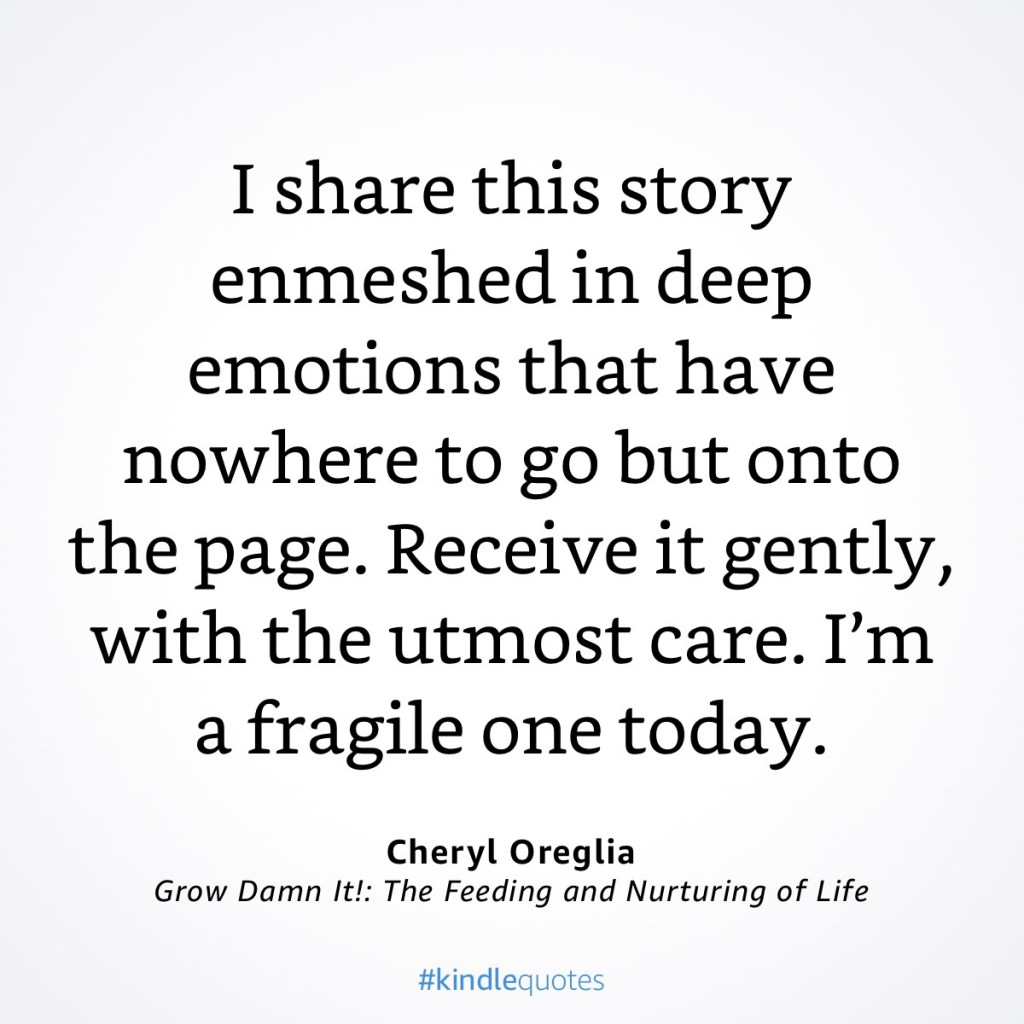
On Wednesday morning this week, I was driving the kids to school on the circuit around the lake and I felt softer and more patient. I appreciated the routine and the little people in my life more. I realized that it was because I’d just finished reading “Grow Damn It: The Feeding and Nurturing of Life” by author and blogger Cheryl Oreglia.

I clipped 23 quotes from my first reading of this book. And that was while trying to be mindful not to clip everything. Then I had the privilege of doing a Sharing the Heart of the Matter podcast with Cheryl to talk her journey and this book: Episode 7: Grow Damn It!

One of the stories Cheryl told me on the podcast was the one where she wrote a blog post and Krista Tippett of the On Being project (first aired on public radio, now as a podcast) tweeted about it. Cheryl laughingly said she assumed the technology was broken when she saw her stats after that.

In this great conversation, we got to talk about how the little stories make up the big picture, her journey to create this beautiful book, and asking people all the important questions before they go. I felt softened by reading the book and then I felt enriched after this beautiful conversation with Cheryl.

Cheryl said to me something like, “I know this book is not for everyone.” I agree – it’s only for people who want to feed and nurture their life – and laugh while doing it.

So if you do want to feed and nurture your life, please visit Cheryl’s blog, Living in the Gap, read the book, and listen to this podcast Episode 7: Grow Damn It (link opens the podcast to listen on Anchor). You can also find the podcast on Apple, Amazon, Spotify and Pocket Casts by searching for Sharing the Heart of the Matter.  Please subscribe!

Here’s link to the show notes on the HoTM site: Episode 7: Grow Damn It! show notes

The Next Chapter: Car Talk

Does anyone remember the car cake when our car turned 100,000 miles and we made a cake for it?

After we blew out the candles, Miss O turned to me and asked, “Are you going to be alive when this happens to me?”

Oh boy. I thought I better not go with the reply that she better get a used car with a lot of miles already on it. So after thinking about it for a few weeks, I’ve written my answer on Wise & Shine: The Next 100,000 Miles