The March of Time

Patience is a bitter plant, but its fruit is sweet.” – Chinese Proverb

I’m not friends with March. As a month, it’s long and slow. It has no holidays, in the U.S. at least. It feels like a placeholder month to me. March is the month in which I’m more likely to be irritated that my eight-year-old daughter, Miss O, has used my Tupperware for slime, my four-year-old son, Mr. D, only brushes the outside of his teeth, and Cooper the dog thinks that keep away is a fun game.

March wreaks havoc with my already-prevalent tendency towards impatience. It feels like the month that the year is most pregnant. Something great is about to burst onto the scene but for now, it’s nothing we can see or hold.

So, yesterday, on my third day of my penance, also known as March, that I made waffles with jam inside. Miss O said, “We are so lucky. And it’s not just me that’s lucky, but our whole family.

Dang. I’m being an ingrate. But as she said that, I also realized that what I’m pregnant with at this moment is hope. Yes, the laundry hasn’t been done, the dishwasher needs to be emptied, I haven’t started my taxes, and the yard looks like a mud pit interspersed with construction toys.

But I’m hopeful that some of the projects we started will get done. That some of the lessons we’ve been learning will stick. And that I will learn to be patient while the Higher Power works hand in hand with sunshine to make it happen.

For all of my childhood, one of our biggest family celebrations was Easter. My mom would spend all of March making me a new Easter dress, measuring, sewing, trying it on, usually right up to the night before.

Maybe that’s one of the seeds of my impatience with March. Waiting for the resurrection. Whether or not that matches your theology, I think Spring brings the hope of better things to come. I just have to remember to be grateful. And also note that bird song, blooms, and better sunshine are worth waiting for.

(featured photo from Pexels)

A Legacy of Love

The one thing that we can never get enough of is love.
And the one thing that we can never give enough of is love.”
– Henry Miller

When I published my book about my dad eight years ago, there was a consistent kernel of comment that I got about it from his peers that read it. It was stated or implied that they hoped they were remembered as fondly.

I’ve sat with that nugget for a long time to try to unravel what that meant. I’ve come to believe it reveals a truth about what’s important.

Let me start off with a list of the things that my dad wasn’t good at. He worked too much. He left the hard work of parenting largely to my mom. He could be sloppy with details. He was conflict averse and would turn most anything into something funny and light so as not to have to deal with it. He didn’t show his struggles or any negative emotion in a way that would make him more relatable.

But he had one major thing he did right consistently – he loved people. He managed his own neuroses, opinions, and worries in a way that made him open to love others. He’d say that it was following the example of Jesus to love, accept, and welcome others that allowed him to do that. He believed that was Jesus was the way, the truth and the life, but he also believed that it wasn’t the only truth. He came to appreciate any practice or belief in something bigger than ourselves.

On his birthday about four months after he died, I posted a tribute to him on Facebook based on the Maya Angelou quote, “I’ve learned that people will forget what you said, people will forget what you did, but people will never forget how you made them feel.“. An acquaintance from high school with responded with a comment like, “Not everyone had a dad like that.”

Right. I was incredibly lucky to have a dad that was so effusively warm and whose face lit up every time he saw me. I think he had an advantage as a pastor in that it was part of his profession to practice meeting, accepting and loving people. His resume virtues and his eulogy virtues were aligned, to borrow a phrase from David Brooks.

But I think we all have the opportunity to prioritize supporting and encouraging others in a healthy and boundaried way, and love people the best we can. I suspect it might be the key to how fondly we are remembered. The ultimate paradox is that we give love in order to be loved.

My book about my journey to find what fueled my dad’s indelible spark and twinkle can be found on Amazon: Finding My Father’s Faith.

Let’s Play

When one teaches, two learn.” – Robert Half

Last Saturday morning, four-year-old Mr. D wanted to drive his remote control car down the sidewalk. Since we were still in our pajamas, I tried to lobby for a back yard activity. But the sun was shining, the birds were singing, and Mr. D wanted to go out front, so I covered up with a coat and followed.

Funny thing – it’s hard to drive those remote control cars straight. We spent a fair amount of time just getting to two doors down, the side walk in front of my favorite neighbors. They are a retired couple in their 70’s. They’ve lived here for almost fifty years, I lived here for twenty and so we’ve got some history under our belt.

My neighbors are interesting, generous, and kind. We’ve shoveled five yards of delivered bark from the street to the yard together. I’ve gotten to know their kids and grandkids. My kids tell them all that’s top of mind every time they see them. They often rake my strip of grass between the sidewalk and curb in the fall. I bought them toilet paper at Costco during the pandemic.

When we got in front of their house, Mr. D said, “Let’s go ask them to play.” Some polite part of me thought we’d be pests asking them to do that on a Saturday morning. I said we shouldn’t. But Mr. D put his hand on his hip and said, “Follow my lead.

When we got up to the front door and they answered, Mr. D handed the remote control to them and said, “want to drive?” We had a lovely time standing on the porch and talking while Mr. D chased down the car any time it went astray. It was so enjoyable to chat with my neighbors that I don’t see nearly enough this time of year with short days and cozy couches inside.

My kids keep teaching me how important play is. For myself. And to keep inviting others to play. It connects us and relaxes us. And it’s fun. It isn’t an interruption – it’s what we need more of.

Preserving Kindness

Decency doesn’t require one to be a human sacrifice.” – Dr. Gerald Stein

This post was originally published on 1/18/2023. Heads up – you may have already read this.


When I was a sorority girl in college, we all took turns on phone duty – answering the house phone lines, paging girls, or taking messages when calls came in. But in the January of 1989, it wasn’t just guys calling for dates, we had a lot of calls coming in from journalists who wanted pictures of a girl who had been in our sorority in the 1970’s.

Florida was about to executive Ted Bundy and one of his claimed victims was Georgannn Hawkins, a young woman who had been a Theta at the University of Washington. The way I heard the story was that she was studying for spring term finals with her boyfriend who was a Beta. She’d left the Beta fraternity house, which was on the same block as our sorority about 5 or 6 houses down, about midnight one early June night and walked down the well-lit alley that ran behind our houses. She’d gotten her keys into the back door of the Theta house when Ted Bundy had approached her with a ruse to help him put his books in his car.

We never gave out the photo to the journalists that called but I was curious enough to go downstairs in the sorority to find the picture of Georgann Hawkins. A really pretty girl with lustrous brown hair parted in the middle. A young woman who died after she was willing to help someone else.

I remember this being hard to take in at 19-years-old. That kindness, something that was so highly prioritized in my home growing up, could be preyed upon in such an awful way.

Now more than 30 years later, I have all sorts of examples of kindness gone wrong. Listening to the news gives plenty, as does personal experience for me, my friends and family, although thankfully none so dramatic. After all, statistically speaking it is unlikely that we or our loved ones will die at the hands of a serial killer. But pretty likely we all will cross paths with sociopaths, narcissists, scammers, or hustlers.

But even so, kindness is still reported to be pervasive. When the University of Sussex conducted the largest in-depth study on kindness in 2021 that one of the findings was “Three-quarters of people told us they received kindness from close friends or family quite often or nearly all the time. And when we asked about the most recent time someone was kind to them, 16% of people said it was within the last hour and a further 43% said it was within the last day. Whatever people’s age or wherever they lived, kindness was very common.”

Studies have shown that being kind increases our well-being. People who volunteer live 20-40% longer. Kindness, whether on the giving or receiving end, helps us to report higher levels of well-being.

So how do we stay kind? Turns out there’s a strong link between setting boundaries and being able to be compassionate and empathetic. When we know what we can and cannot do, and communicate what is and is not okay for us, it seems we can refill our tanks more easily because we’re not wasting energy doing things that we know are not okay for us.

“I was recently struggling with a boundary issue (yes, still) and I told my therapist that I refuse to go back to saccharine – that I like solid better. Before I really understood how impossible it is to be compassionate to myself or others when people are taking advantage of me and when I’m prioritizing being liked over being free. I was much sweeter but less authentic. Now I’m kinder and less judgmental. But also firmer and more solid. Occasionally salty.”

Brené Brown in Atlas of the Heart

That testament from Brené Brown as well as the story of Georgann Hawkins makes sense to me. I’m much freer to go out of my way to be kind when I’m doing it for the right reasons and in a way that doesn’t go against my intuition.

From personal experience I can say this – my desire to be kind has survived some difficult situations because it’s part of the open way that I want to meet the world. I’ve learned that kindness is its own reward in its ability to frame hopeful and inspiring outcomes. But if we meet in an alley, I probably won’t offer to carry your books.


I’ve published a related post on the Wise & Shine blog: Six Reasons Giving is Good for You.

(featured photo from Pexels)

The Superhero In Us All

No act of kindness, no matter how small, is ever wasted.” – Aesop

This was originally published on 6/1/2022. Heads up – you may have already read this.


My kids have been watching a lot of Superman at my house. I’m talking about the 1978 movie with Christopher Reeve, Magot Kidder and Gene Hackman. I love it because it brings me back to when I was nine-years-old and saw it the first time. Back when they did all the credits at the beginning – remember that?

Gene Hackman plays the bad guy Lex Luthor. And as insensitive as he is to the loss of human life and calculating in his plans to get what he wants, he seems perfectly rational in his selfish pursuit of wealth and notoriety as the greatest criminal mind of the time. He even seems quite erudite as he reads newspapers, has a library full of books and even responds using the German “Jawohl” to respond with an enthusiastic yes to a statement.

This is the model of a bad guy that I grew up with. Someone with nefarious intentions but logical methods. Life has taught me that there is another type of bad guy – one who seems to reacts out of pain and hatred in a way that seems so pointless. And when I use the term “bad guy,” I intend it in a universal way that is not gender specific. Faye Dunaway plays a good female “bad guy” in the Supergirl movie from 1984.

Given my career and lifestyle, I will probably never meet a Lex Luthor. But the other type of bad guy is someone who lives in and among our communities. Someone who has interactions with others that influences whether or not they feel seen, heard or loved. Someone who, maybe from a very young age, can benefit from others taking a step to make them feel included or respected.

The poet Mark Nepo has a beautiful description of our world as a great wheel. We share a common center, our lives create all the different spokes and the integrity of the wheel overall depends on the health of those spokes. When we open ourselves up to whatever inspires each of us to beauty, transcendence and inclusion, we have the opportunity to shine the light for others because we are all connected.

Thinking back to how to ground myself in this work, I think of this quote from Elie Wiesel:

But where was I to start? The world is so vast, I shall start with the country I know best, my own. But my country is so very large. I had better start with my town. But my town too, is large. I had best start with my street. No: my home. No: my family. Never mind, I shall start with myself.

Elie Wiesel

The little things we do – a pause to let someone cut in traffic, or a smile passing someone on the street or a silent prayer of blessing for someone who is struggling, these are kindnesses that start in our hearts and touch all those around. The smallest nod to acknowledge that the person in front of us exists has impact.

Be nice to the 38 year old in your Freshman lecture and be nice to people at the gym. Those people are putting themselves in extreme anxiety-inducing situations in attempt to try to better themselves. Just a smile or a quick conversation can mean so much.

unknown

We might need Superman to fight the Lex Luthors of the world. But we all have a chance to touch others who may or may not become bad guys based on the path they walk among us. And we all have a chance to touch others who may or may not become great guys based on the peace and support passed to them. It starts small: be kind to yourself and be kind to others.

What are the small acts that have inspired or passed peace to you?


I’ve published a related piece on Wise & Shine: What Is It You Plan To Do With Your One Wild and Precious Post?

(featured photo from Pexels)

Waiting for a Break

We learn how to be resilient and handle difficult things by PRACTICING dealing with difficult things.” – Tina Payne Bryson

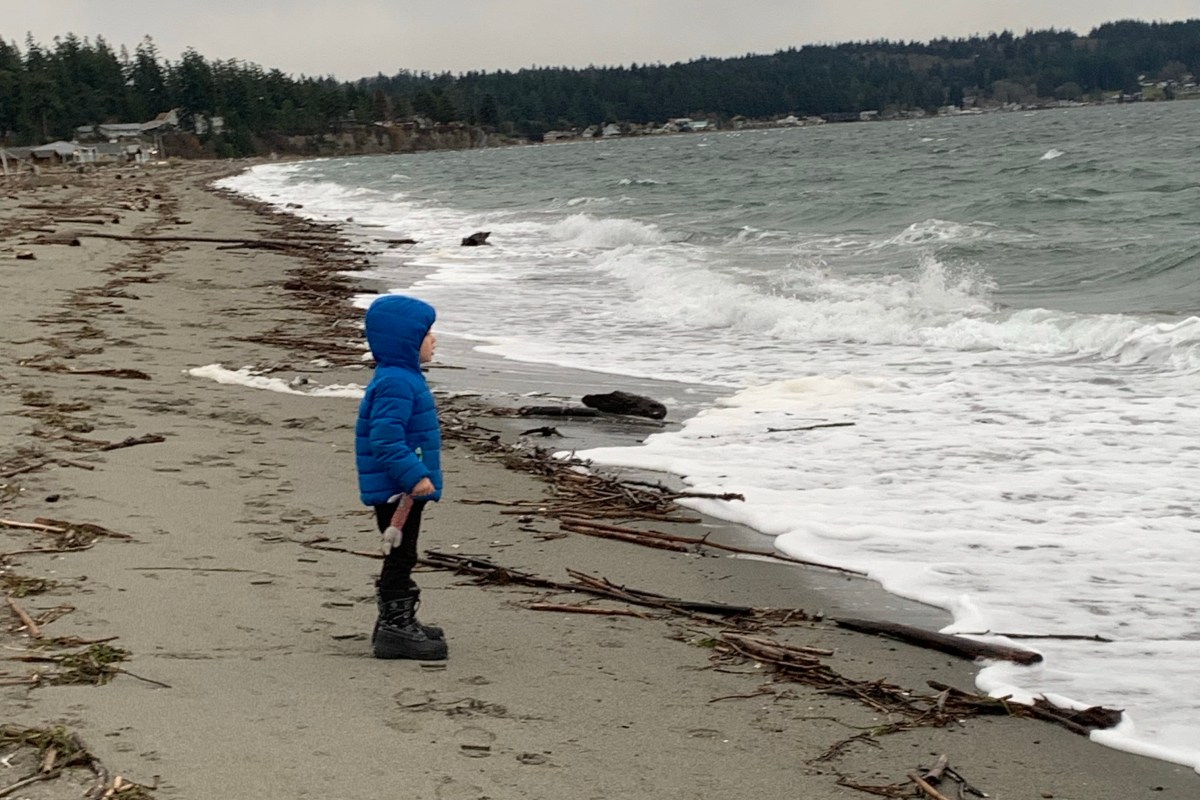
We went to our favorite beach on Whidbey Island this weekend. We rented an AirBnB that allowed dogs so it was our puppy, Cooper’s, first vacation.

The weather was really blustery. After a particularly stormy week in the Seatle area, there was driftwood all over the beach. When my son, four-year-old Mr. D and my friend, Eric, went down to the beach, Mr D busied himself throwing huge pieces of wood into the water. And by huge, I mean almost as big as he is.

When Eric remarked on this, Mr. D turned to him and said, “I can do hard things.

Here’s the thing about that. Every day for the ten days preceding the vacation, I’d sent Mr. D to school with a note. In the note, it counted down how many sleeps until vacation, explained that we had to go to school/work in order to be able to go on vacation, and ended with the sentence, “We can do hard things.”

Normally Mr. D doesn’t need coaxing to go to school. But coming off of some crud he caught at Thanksgiving, and the dark and stormy days of the last couple of weeks, it felt like he was tired. You know that deep, soul-level tired where even after good night’s sleep it feels like you are exhausted.

Of course, Mr. D cannot yet read but he carried the note with him anyway. He didn’t say much about it. But I knew he was paying attention because the note started ripping in places because it’d been opened and refolded so many times.

Sometimes we have to push through to earn a break. And I’m incredibly heartened to know that when we do, it builds the confidence that “We can do hard things.

Fatherly Wisdom

“I cannot do all the good that the world needs, but the world needs all the good that I can do.” – Jana Stanfield

I met a friend when I was in my 20’s who summed up his dad’s advice to him:

  1. Always buy the best tires you can afford
  2. Never buy a cheap garden hose
  3. Buy tools with a lifetime guarantee

I marveled upon hearing that about how straightforward that fatherly advice was. Because my dad’s advice was a lot more ephemeral – not surprising given his profession as a Presbyterian pastor.

Jane Fritz of the Robby Robin’s blog recently asked what my dad would say about answering the big questions and challenges of our time: war, climate change, inequality. If you haven’t read her incredible post, Profound questions, seeking our attention and deserving action that builds on Rose’s wonderful and thought-provoking post Meaningful Intelligent Conversations, please do.

Our exchange reminded me of three pieces of advice from my dad, Dick Leon:

  1. Do the next right thing: This is a continual instruction, not a one time thing. Do the right things to make this planet a better place to live in whatever way that you can and according to your passions. Stand up for those that have been treated unfairly. Be kind. Take action on the social issues that are meaningful. Do all that you can to work, support, and encourage a better planet.

    The Dick Leon approach was not to play it safe either. Over the years he worked for Civil Rights, on behalf of Russian citizens during the Cold War, and at the end of his life he was working on land rights for peaceful Palestinian Christians in the West Bank. Most of those issues got him in trouble with some factions of his congregations and his life.
  2. Be cheerful about it: My dad often said that doing the right thing often means doing the hard thing. He recognized that it wasn’t/isn’t easy. So his instruction to be cheerful was two-fold. First, do what you can, and be happy about it. Because if you’re gritting your teeth every step of the way, it’s not sustainable. 

    The second part is that when you are in the groove of doing what you can cheerfully, you attract other people to the cause. Even if they don’t agree, others are more likely to engage in conversation with someone who appears not to already be irritated. Hence how my dad managed controversial topics within a church congregation of varying viewpoints.

    Cheerfulness is not synonymous with toxic positivity. Some of the issues my dad advocated didn’t work out. Others took a long time. My dad’s definition of cheerfulness was what one can do with a happy heart.
  3. When you’ve done all that you can, give up the rest to God: Or a higher power or whatever thing bigger than yourself that you believe in. This was my dad’s way of not worrying about the stuff that was outside of his control. Less energy spent on anxiety equals more energy for doing the next right thing.

I envied my friend from my 20’s for the simplicity of a list of dad advice. But now that I’m middle-aged, appreciate my father’s wisdom more. I believe his list is the reason that I’m still paraphrasing him almost a decade after he died. I’m not sure my dad had any awareness of his impact beyond his lifetime. But I think his advice guaranteed that he did have impact because it was the way he created legacy with his actions every day.

It’s harder to check off things from my dad’s list. But when I follow it, I find great comfort. And cheerfulness, of course!

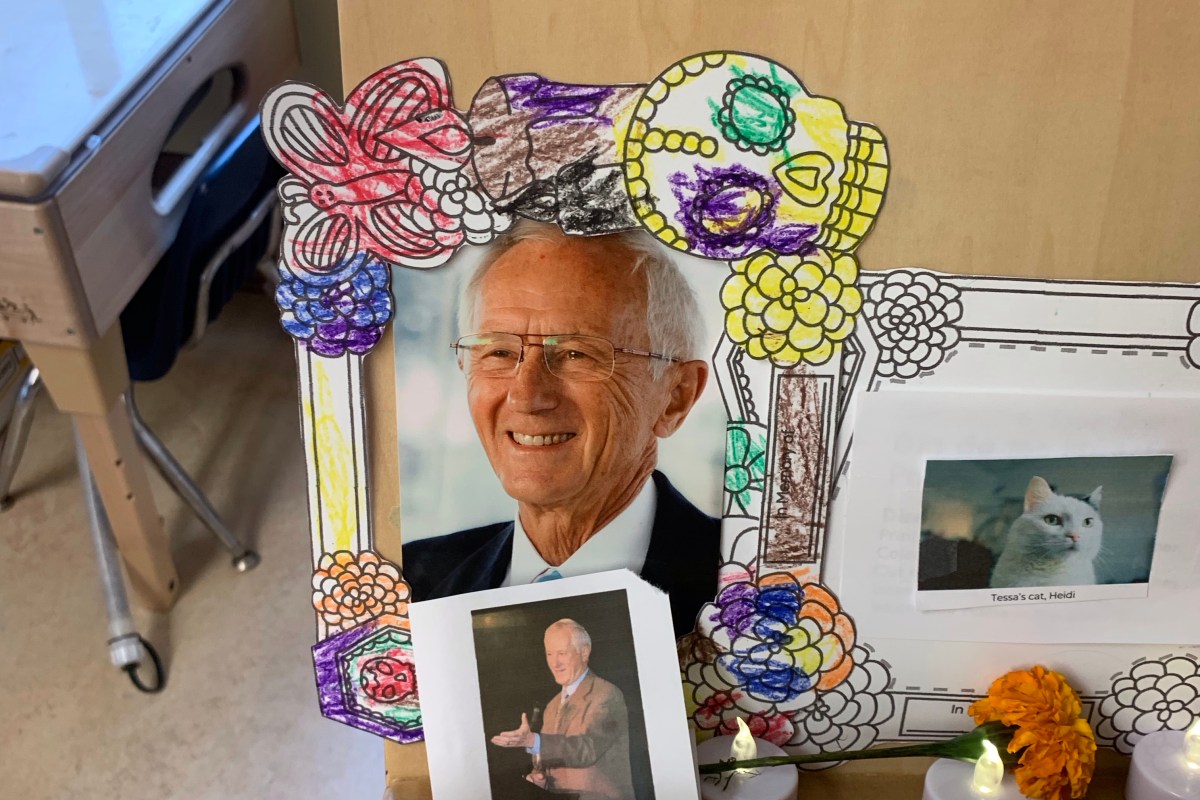
(featured photo is mine: Dick Leon, on a Dia de los Muertos ofrenda)

For another great list, please listen to Dr. Gerald Stein on the Sharing the Heart of the Matter podcast talk about Being Your Own Best Friend. Dr. Stein comes through with such wisdom and warmth as he provides some great tips for living our best lives.

Schools of Thought and Feeling

A teacher is never a giver of truth; he is a guide, a pointer to the truth that each student must find for himself.” – Bruce Lee

I once had a client tell me, with a hint of irritation in his voice, that he believed the schools of today in America were teaching kids to become socialists. There was so much in that sentence to unpack that I didn’t even touch it. But I remembered thinking at the time, that it probably had more to do with his relationship with his kids than anything else.

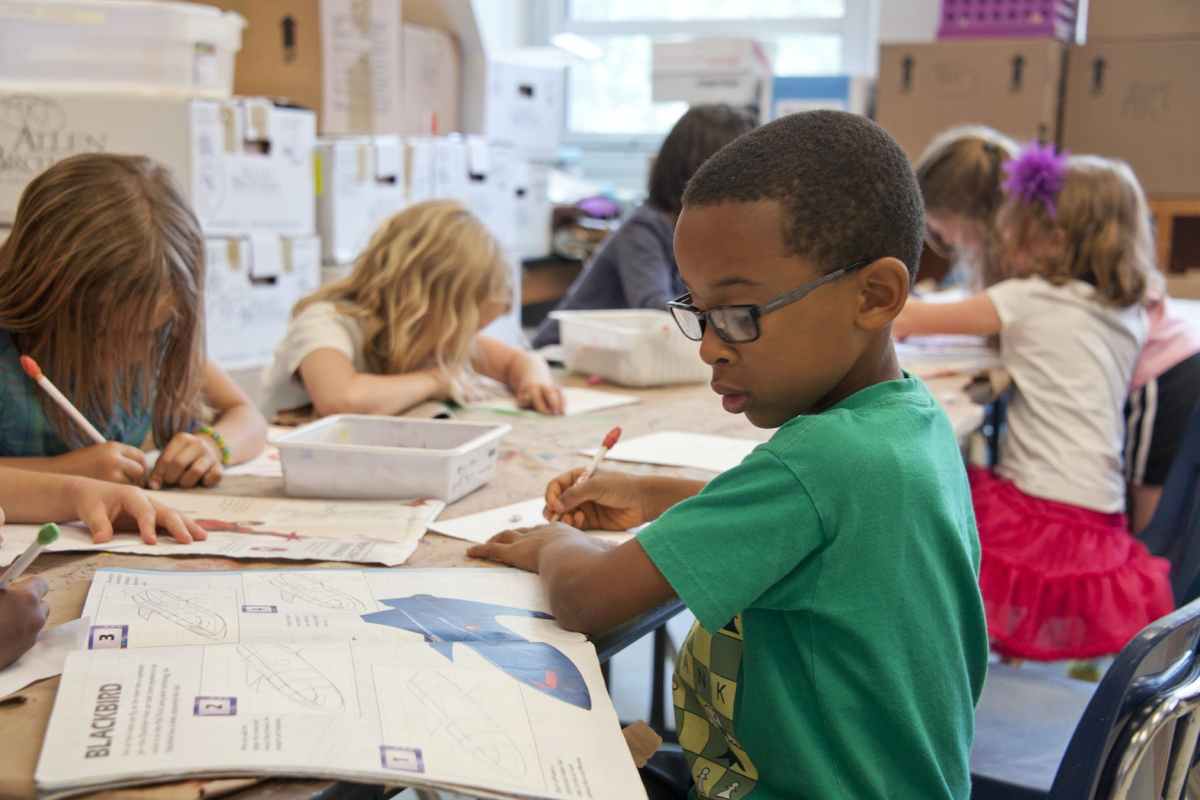
My kids weren’t school age when my client said that but now that eight-year-old Miss O has a few years in the public school system, it is interesting to notice what has and hasn’t changed since I was a kid. What hasn’t changed is the great teachers and administrators who are dedicated, imaginative, and delightful and somehow make it all work.

What I’ve noticed that has changed since I was young is how much social emotional learning they include. The kids get to school and do their mood meters and they talk about feelings, inclusion, and helping.

My kids seem to love way-back-when stories so the other day I was telling them that I remember when not-littering became a campaign and something punishable by fines. My two delightful young ones were amazed that people thought it was okay to just throw things out a car window when they were done with it.

Four-year-old Mr. D, who is not yet in the public school system, has gone on “garbage walks” since he was two-years-old. The kids would point out garbage and a teacher would pick it up with gloved hands.

So the other day when there was a piece of garbage on the ground, Mr. D pointed it out to me and said, ”It’s not healthy for the earth to eat.

The other day, Miss O was struggling with what to do next with a project and she suggested, “Instead of erasing unfairness, I could draw fairness.”

All this makes me think that what kids these days are learning in school today, in addition to the three R’s, is to be stewards. Stewards of themselves, the environment, and of others.

(featured image from Pexels)

Perfect Moment

“We love what we attend.” – Mwalimu Imaru

The other day something touched me at a deep level. I’ve been trying to peel back why ever since.

I’d picked four-year-old Mr. D up from preschool and he’d scrambled in the car and closed the door. I’d stopped to talk to a man walking his dog, and so it was a minute or two before I got around to my side of the car and realized Mr. D was crying. He’d tried to do his own seat belt and had gotten frustrated when the thing wouldn’t click. Then he got more frustrated when the belt got tangled as he tried to fix it.

When I opened his door to help, he reached up and with the back of both hands, swiped away the hot, frustrated tears from his eyes.

Something about that gesture just hit me deep down where it counts. I’m not sure I can even put it into words why. To the best of my translation, it’s some combination of the following:

Witnessing the dignity of another person

Gratitude that my kids’ problems are small at this age and I can mostly fix them

Realization of Mr. D’s sudden self-consciousness about crying

Commiseration with how frustrating technology and systems can be

Relating to how fiercely we want to do things for ourselves

The deep gut punch of how much I love my kids.

Whatever it was, it started to change how I think of perfect moments. They may have nothing to do with when we’re smiling and posing for a picture or spending a gazillion dollars on an experience.

I think perfect moments might be when the inside of me meets the inside of another, and in the process learns something real about being human.

Cookie Cutter Faith

There are two ways to live your life. One is as though nothing is a miracle. The other is as if everything is a miracle.” – Albert Einstein

This was originally published on 7/6/2022. Heads up that you may have already read this.


My kids and I went to a wedding out-of-town this past weekend. At the wedding, they gave out fortune cookies. My 6-year-old daughter opened hers and read “You will find a treasure soon.

The next morning we were driving around looking for an alternative to the planned hike because it was raining. I turned in at a sign that said, “Horseback riding.” It was a holiday weekend and we didn’t have reservations so I didn’t think we’d be able to ride but maybe we could see some horses, my daughter’s favorite animal even though she’d never actually touched one. Yet.

But they booked us for a ride. As my daughter sat atop a big quarter horse named Comanche, I could hear her tell the guide. “I got a fortune cookie and it said that I would find a treasure. It was right – THIS IS MY TREASURE.”

I chuckled but as the weekend went on she repeated the story a few more times adding at the end, “I need another fortune cookie.” I grew a little uneasy. Surely I needed to inject a little reality to this fortune cookie madness.

Wait a minute – one of my favorite quotes is from Albert Einstein’s “There are two ways to live your life. One is as though nothing is a miracle. The other is as if everything is a miracle.” And I’m clearly on Team Miracle. So why was I feeling the need to put the kibosh on her finding some magic in fortune cookies?

Because I’m a parent and I want her to believe in something more substantial that involves some responsibility and transcendence. Because I don’t want her to be disappointed.

It made me think of all the years that I didn’t discuss my faith with my beloved dad because I feared my spiritual beliefs weren’t religious enough. When I finally found the chutzpah to do it, we had deep and meaningful conversations about life, family and love. And it turned out that life and his 40 years as a pastor had instilled in him a bigger idea than the Presbyterian party line. In the end, he called himself a big tent guy. “In a way I have become less cocky or confident because I thought I had things all figured out early on, but now I know I have general things figured out, but the fact is that we differ in this huge tent of the family of faith on different things.

And then he went on to paint a picture of how my yoga/meditation/spiritual practice related to his beliefs in a unifying way:

“I’ve thought this often about you and your world with all the disciplines that are so wonderfully therapeutic. It seems to me that Christ is equally as present and could be equally named and known to you. The disciplines in a sense are more along the horizontal level than perhaps the vertical level (reaching up to God) and Christ honors anything that makes us more what God wants us to be.

I am thrilled with what is happening in you in this journey and one of the great benefits is that it brings us closer.  When kids follow in a trail similar to their parents, it creates one more way they can be close and can relate with each other … and in this case relate deeply and lastingly.”

Dick Leon

Thinking back to what I learned from talking with my dad, I think of all the time I didn’t talk about faith because of fear that it wouldn’t measure up. In the end, I realized that no two people see faith in exactly the same way, no matter how unified their theology is. Instead, there’s room in the tent for all of us.

I have faith that my daughter will grow up to experience God in her own nuanced way and I don’t need to fear it will be Fortune Cookie religion. So why not find some magic in it? After all, my fortune was “Your hard work will pay off soon.

What about you? Do you talk about faith in your family? Do fortune cookies count as miracles?


As a related post to this one, I’ve published a post on the Wise & Shine Blog: Do You Believe In Magic? Do You Write About It?

(featured photo from Pexels)