Home

“Stay close to those who make you feel alive.” – unknown

In the recent parent-teacher conferences I’ve had for each of my kids, I’ve gotten a feel for how my kids behave when they aren’t with me. It seems they are “go along to get along” people. Generally speaking, they follow the rules, don’t make a fuss, they don’t cry and they don’t get in trouble. My 6-year-old might talk a little too much sometimes but she gets her work done.

That’s not a big revelation since that matches my general approach to life. Although I am surprised that my two-year-old can do it at such a young age, especially because he’s never been told to. But hearing this is reshaping how I think of what my home is.

I used to think home was where our best-selves would shine through because of the love and nurturing there. I still think that – except that I’m realizing our best-selves are NOT our best-behaved selves, they are our most authentic, intimate selves.

Home is where we can take off our armor and practice speaking our truth. It is a place where it’s okay to have a soft underbelly and to let it all hang out. It’s where we can cry, have fits and let it fly (respectfully) when at home. Because, I figure, it’s the only way to get salve onto the sore spots and to receive sympathy for all the growing pains. It’s our place for practicing being leaders and followers and doing neither very well and learning.

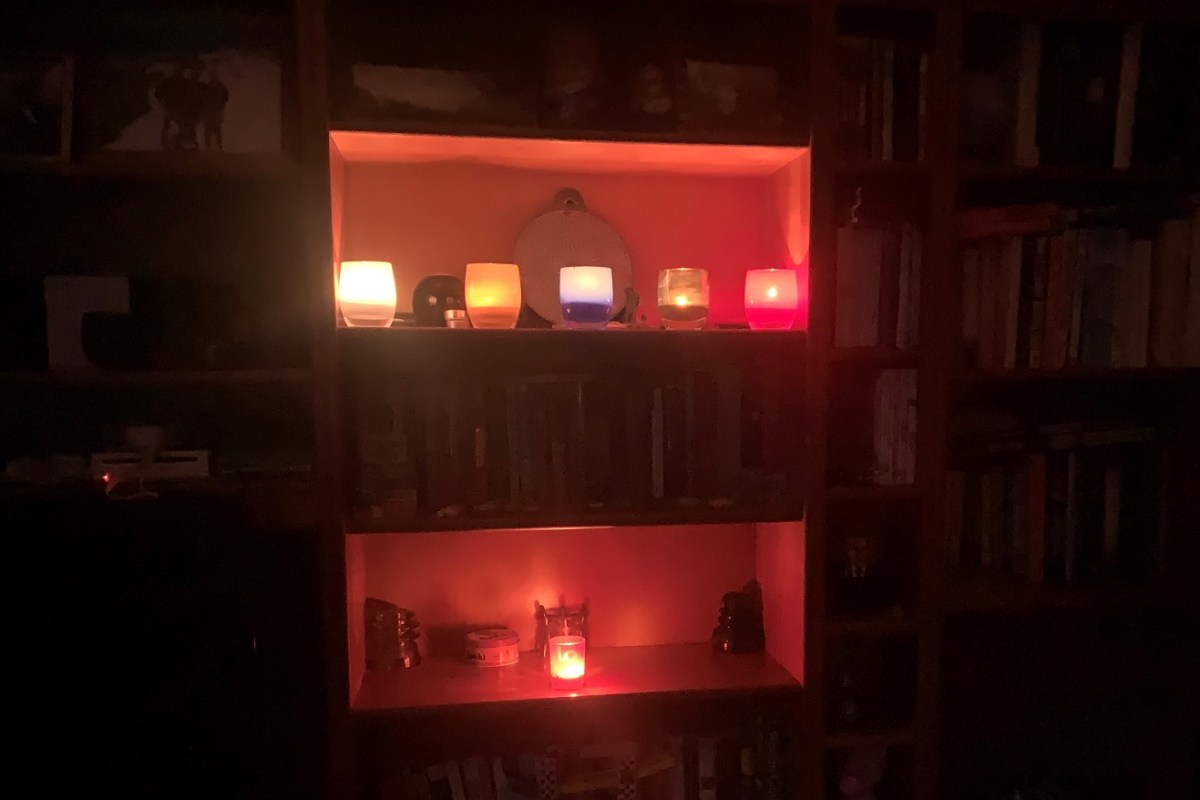
Home is where we learn grace. We can cry when it hurts, express disappointment, find out what truly refreshes us, practice imaginative play, be bored and unscripted. Home is where we light our candles, pray for peace and then figure out how to find that in ourselves. It is where we can be held through it all.

While it seems that I’m writing this for my kids, the truth is, I’m finding great comfort in defining this for myself. Somehow typing out a list of place of where and how we will be received and held is making my slippers feel a little more comfortable. In the years of the pandemic where home became where we do everything, it seems I got a little disoriented about my purpose in this structure.

So, I’m setting this down for all of us. Home is not just where the heart is – it is where the heart feels safest to be open, glow and grow in all directions.
Changing Your Mind

“Your imagination is a preview of life’s coming attractions.” – Albert Einstein

My toddler told me the other day that he wanted Mac ‘n cheese for dinner. As I was boiling the water, he discovered that he liked the food I already had on the table. He turned to me and said, “I changed mine mind.”

I was amused, not expecting such introspection and courtesy from a two-year-old. But of course, kids are constantly changing their minds. They like playing with dolls until they don’t. It’s fine to carry a lovey with you everywhere – until it isn’t.

I recently heard a fascinating podcast from Ten Percent Happier with Dr. Alison Gopnik, a psychologist at UC Berkeley and expert on cognitive development. She explained why it is that babies can change their mind – because their neural pathways are much less grooved than those of adults. In an analogy she gave, she said kid’s neural pathways are a lot like the streets of old Paris, with winding, interconnected little streets. By contrast with adults, our brains look like wider, efficient boulevards that can hold much more traffic that can go faster. The result is as Dr. Gopnik said, “Young brains are also much more plastic and flexible – they change much more easily.”

She also introduced me to the idea of the local optimum, a concept from AI (artificial intelligence). It describes a situation where you can’t really tune it because any small change would make it worse, but a big change might make it better. In her words:

“One of the challenges for intelligence is how do we kick ourselves out of these local optima when we’ve become really practiced and good at doing one particular thing for example, it becomes very easy and natural to think that’s the thing to do. And just doing something that we’re not good at, doing something really different than the things we do every day can be the sort of thing that will kick you out of that local optimum and give you a sense of other alternatives.”

What We Can Learn about Happiness from Babies Podcast with Alison Gopnik

This makes me think of the example provided by the podcast host, Dan Harris. He was a journalist for ABC News for many years. After experiencing an on-air panic attack in 2004, Dan turned to meditation. After practicing for many years and continuing his day job as a weekend anchor for GMA, he wrote the book 10 Percent Happier, published in 2014.

Still working for ABC News, he started a mindfulness company and published podcast content about meditation and mindfulness. Finally in the fall of 2021, he negotiated out of his contract with ABC News to focus on his life passion: bringing meditation and mindfulness to anyone interested.

Dan Harris is a parent of a 7-year-old son. I assume that part of his slow transition is providing that solid base for his family life. But I’m so heartened to see a live example of how grown-ups can make big changes, even slowly, while raising a young family.

My son really meant it when he “changed mine mind” the other night. He no longer wanted mac ‘n cheese. Hanging around with kids, traveling, meditation are all examples provided by Dr. Gopnik of ways that grown-ups can change their minds. I can confirm that my kids help me come unstuck and imagine life from different angles every day and that, as Albert Einstein says in the quote above, widens my view of life ahead.

Selective Hearing

“The years teach much which the days never knew.” – unknown

Have you heard the advice that Ruth Bader Ginsburg gave to Jennifer Lopez about relationships? It was something like, “It’s good to be a little deaf sometimes.”

I’ve been working on practicing that lately. My daughter snapped at me yesterday first thing in the morning for waking her first or not getting her brother up first, I can’t remember which. Whichever it was, I’m quite certain it needed no response.

Here is the list of times that are usually the best candidates for being deaf in my house:

  • First thing in the morning
  • When anyone is hungry, cold or tired
  • Anytime someone is sick
  • When excitement because a friend has arrived is at its fevered pitch
  • Last thing at night

I’m working on my own balance of when things need to be addressed. Maybe it’s 10 days of being together with no interruption but I’m finding less retort and more love is more effective. It’s not that I’m abdicating in my role as a parent, just that I’m saving my breath for our quieter moments.

My beloved dog, Biscuit, went selectively deaf as he got older. Somehow he couldn’t hear me calling him when he was sniffing something with great interest. But he never failed to hear the sound of the food hitting his metal bowl. I’m starting to think that deafness might not an infirmity that comes with age. Instead it seems it’s a sign of wisdom.

Rebranding Exercise

“Sometimes it’s okay if the only thing you remembered to do today was breathe.” – Unknown

Somewhere in the middle of yesterday morning, I realized that, although I was in the middle of a scenario that I dreaded, I was doing fine, in fact better than fine. The scenario: quarantined alone with two kids for days on end, no other grown-ups allowed in for help or distraction, not able to go outside which is both my and my kids’ happy place, feeling sick and trying to work.

It made me wonder – how much energy is wasted imagining dreaded scenarios? They may or may not happen. And this one has taught me, that even when they happen, they don’t feel like I feared they would. In fact, I felt so emboldened by the fact I was facing this nightmare down that I skipped through the rest of the morning.

This sparked a tidbit that I learned many years ago from someone who was researching how we RSVP events that are 1 month or 6 months out. They found that our minds have an image of who we’ll be and how we’ll feel in the future that isn’t accurate. When we respond based on that image, we often don’t predict well whether we’ll want to go. The trick, the research said, was to RSVP as if the event was tomorrow or next weekend. Because we just don’t know how we are going to feel about an event until we are facing it.

Also in my dread, I couldn’t imagine the beautiful difference that how other people would react would make. My friends, neighbors and colleagues have been so supportive and offered to drop off groceries, dinners and things for the kids. And in my imagining, I couldn’t factor in the great community of grown-ups that I’ve found in blogging. Reading other people’s blogs and writing through this has kept me in touch with the big picture reality in such a delightful way (thank you so much!). And finally, my kids have done pretty darn well in this break from normality. They’ve bickered and gotten grumpy but also taken it in stride.

And finally, the fear of the unknown made the idea of the quarantine much scarier than it is. When I fear things, it adds a patina to the image that doesn’t appear in the reality. Dealing with and dreading are two different things. Of course, that is also thankfully because our cases are mild, it gets better and more known each day and now the end is in sight.

The more often I face something I dread, the more I learn to return from that feeling. I think we all leave the present for someone imagined scenario but like just like blinking, we have the chance to clear our vision and return. No need to spend any time in the future – because how I think I will feel when I have to have a tooth drilled, hold a child that is hurt or face disappointment is not how I will actually feel.

And building on the other things I’ve learned this week, I sat my kids down to do a meditation last night after dinner. It worked wonderfully to settle us all into a fun evening routine. They loved it and my 6-year-old especially thought it was great.

So I’m rebranding this quarantine as a meditation retreat.

Happily Ever As-Is

“How simple it is to see that we can only be happy now, and there will never be a time when it is not now.” – Gerald Jampolsky

This week with the COVID quarantine and life interruptions that come with it – I’ve decided that happier ever after doesn’t exist. I blame the optimist in me that snow-balled me so I didn’t realize this until age 52. The optimist is always sure that the minute, day and week are going to go as planned and the grass is going to be greener after every milestone.

To be clear, I love my life now as a mom of 2 young kids. It’s delightful – they are bright, shining examples of love, light and inspiration.

And yet… I’m also always waiting for them to change. As an example, my two-year-old son likes the home-field advantage when he poops. He’s worked out how to be at daycare all day long without a dirty diaper and not poop until he gets home. Lucky me.

And my 6-year-old daughter frequently loses it when introduced to a situation where she has to play with kids in an unstructured environment. The two years of pandemic have meant she’s missed out on a lot of practice of that negotiation of rules and expectations that come when kids are playing and no adult is leading the way.

I know that both of those things will change sooner or later. I will potty train my son and work with my daughter on role playing and she will eventually get some more practice and mature.

This leaves me in great tension. How do I love my life as it is now and also long for things to change? It’s a paradox of life. It’s also why I’ve come to believe that happily ever after doesn’t exist. Because there will always be something that isn’t ideal and I’m waiting to change. Or something that I love that will also change. Or a disruption, hurry or maybe even… a pandemic that adds extra curve balls.

The funny thing is that I’ve gotten pretty good at appreciating the surprises that come with life. I’ve come to trust the Divine hand that holds mine and reveals in change and disruption what I need to learn. It’s just taken me until now to realize that there will never be a time that doesn’t come with unexpected twists. So I’m leaning into practicing “happily ever as-is.” It has a lot fewer expectations and even more delight.

(featured photo from Pexels)

Exceptions

“The most common way people give up their power is by thinking they don’t have any.” – Alice Walker

My mom doesn’t get hot meals often these days. In her senior living residence that is so concerned about COVID, meals either come in boxes delivered to her door and then she can microwave them or on the rare evenings she can go to the dining room, the kitchen is so short-staffed the food comes out lukewarm.

So I worked hard to make a great, hot meal for my mom when she came over for dinner last night. Not that she complains about the food at her place but I know she is tired of cold meals in boxes after two years of this protocol.

My rule at our house is that no devices are allowed during meals. My son, tired after his first day back to daycare, protested that rule but it was short-lived and we got everyone to the table.

Mid-way through the meal, my daughter was done, left the table and was playing around while the rest of us ate. My mom was telling me a story and went to pull out her phone to find a meme that was in her story. My son was distracted by what my daughter was doing and might not have noticed but I put my hand over my moms and quietly reminded her of the rule.

I felt a twinge of embarrassment enforcing my own rule with my mother who I was trying hard to please. It’s not like my mom is always on her phone. It’s also quite possible that the kids wouldn’t have noticed. And, I had the power to make the exception.

But it struck me that’s the thing with leadership that’s important – to live by the rules that you set even when you have the power not to have to. And although I rarely feel like I have any power, I do have the responsibility of living up to the standards that I set, which is a power in and of itself.

It was fine – my mom just told me the meme. It was about Barack Obama writing Betty White a birthday card when she turned 90 years old. In it he said he couldn’t believe she was 90. In fact, he was so skeptical that he thought she should send him a copy of her birth certificate. 😊

(featured photo by Pexels)

The Sleepover Test

“If you are walking down the right path and you’re willing to keep walking, eventually you’ll make progress.” – Barack Obama

When I had a dog, one of my goals was to make him an easy dog for someone else to take care of. It was a practical limit on how much I spoiled him because boy, did I spoil him! But he had to be trained so that if he was inside a house, he didn’t destroy things that weren’t his toys and his routine was simple enough (2 meals, 2 walks) that it wasn’t unreasonable to ask someone else to do. Outside of that, I thought it was fine to let him go everywhere with me, rub his belly and sing to him and say our prayers together at the end of the day with a kiss goodnight but those were extras.

I was thinking about this yesterday as I packed a suitcase so that my 6-year-old could sleep over at her aunt and uncle’s house. It’s only been a handful of times that she’s been away from me for a night and it’s been a long time – maybe a year or 18 months?

But as I got her ready, I was pleasantly surprised that I every confidence that she could go spend one night away and be okay getting herself ready, going to bed, and paying attention to what they told her to do. In fact, I had no written instructions to go with her at all. At one point I thought to text her aunt what time she went to bed but my daughter had already told her.

This seems like a parenting milestone I feel proud to reach. Like with my dog, I’ve raised a human being to a level that another person could reasonably care for. Yay!

Of course, I packed the suitcase mostly with stuffed animals, it’s good she’s only gone overnight because she might not eat anything that they serve and it’s only this stress free with about 3 people in this world. But hey, she’s only 6-years-old so I have more time to work on the rest 😉

Postscript: In contrast to the other day where I had high expectations that my son and I were going to have a great time alone and all he did was miss her — this time I had low expectations because I feared all he was going to do was miss her. And he only asked about her once and had a BALL being the center of attention. 🙂

Together In Sickness

“A year from now, what will I wish I had done today?” – unknown

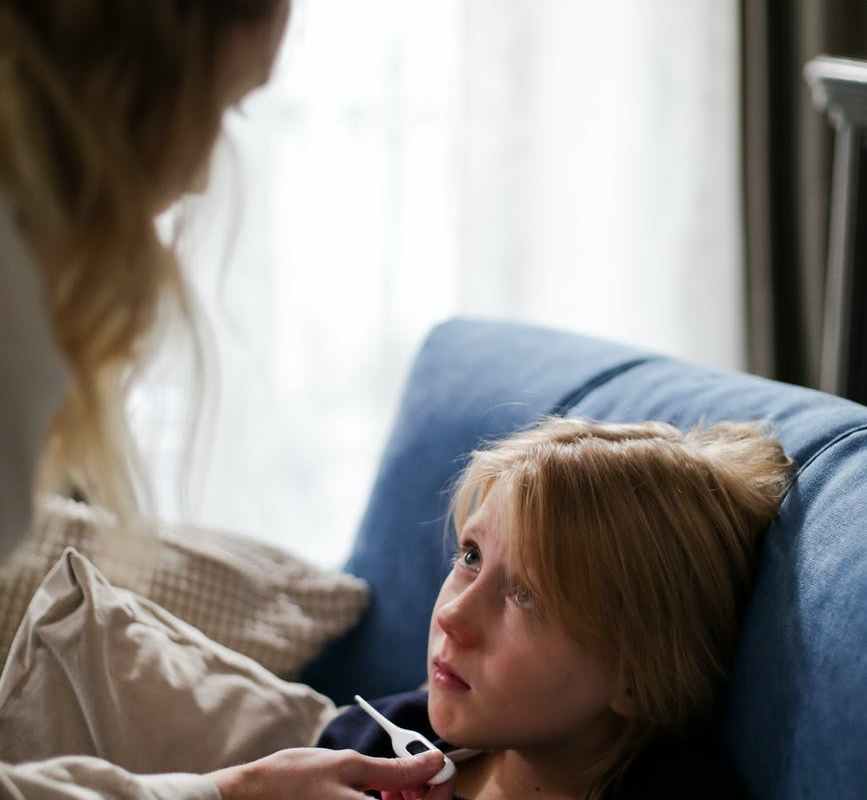
This week of my family coming down with a cold has made me think of attitudes about getting sick. Rina, my best friend in college, was the first person I learned from that being sick could be fun. From her stories, I gathered that her mother made the days she had to be home sick to be like spa days with lots of good food, sympathy and glossy magazines. Rina is Finnish and I’ve wondered if this particular way to embrace sick time is cultural.

By contrast in my family when you were sick, you stayed in bed, had no special privileges and if you were sick in the morning, you had to be sick all day so you couldn’t go play with your friends in the afternoon, even if you felt better. It was an experience designed to make sure there was no psychological advantage to being sick. In our house of Protestant productivity, being sick and the resulting impact on our usefulness was to be avoided at all costs.

So I find myself torn when my kids have to stay home from school because they are sick. On one hand I want to enjoy the break from routine and sympathetically help them feel better. On the other hand, it usually represents a stress to my work productivity that I have a hard time setting aside. But more than that, it goes against the grain of the self-worth as measured by productivity that was ingrained in me from the early days.

When I heard of the word hygge (pronounced hooga) it made me think of Rina and her mom. Hygge is a Danish word without any direct translation to English but according to this article on Quartz, has a meaning that encompasses both coziness and togetherness. It makes me think of that warmth that comes from deep companionship through better and worse.

The warmth of that word and idea, combined with my sense that being together should be celebrated in a family plus the lack of compassion I have for myself when I’m sick has spurred me to try to forge a new path for my little family when we are sick. I’ll probably never be able to reform so much that I drop everything, buy glossy magazines and bath bombs but I think a little fun and great food to help make it through when we feel crummy is worth aiming for. May it bring a sense of hygge to us, especially when we aren’t feeling well.

(featured photo from Pexels)

Expectations

“You can’t depend on your eyes when your imagination is out of focus.” – Mark Twain

On Friday, I was so excited to spend a morning with my toddler whose preschool was closed for a teacher in-service day. His sister had her last day of school before the holiday break so it would just be the two of us. I expected that he would soak up all the individual attention and enjoy all the fun we could cook up. I expected it would be a lot like spending time with my daughter when she was two-years-old and it was just the two of us.

What actually happened is that he spent the whole morning missing his sister and coming up with ideas like biking. I was happy to oblige only to find out the only route that he wanted to go was the one to his sister’s school so we could go get her. He wouldn’t listen to reason that it was too early to pick her up (after all, he is two-years-old) and my patience was frayed by not only his disappointment but also my own.

You know what they say – expectations are a bitch.

So I opened Dr. Brené Brown’s recently published book Atlas of the Heart to the section entitled “Places We Go When Things Don’t Go as Planned”

She does a beautiful job of defining disappointment – “Disappointment is unmet expectations. The most significant the expectation, the more significant the disappointment.”

And then she delves into expectations. The whole section is so illuminating but here is the part that caught my eye:

“When we develop expectations, we paint a picture in our head of how things are going to be and how they’re going to look. Sometimes we go so far as to imagine how they’re going to feel, taste and smell. That picture we paint in our minds holds great value for us. We set expectations based not only on how we fit in that picture, but also on what those around us are doing in that picture. This means that our expectations are often set on outcomes totally beyond our control, like what other people think, what they feel or how they’re going to react. The movie in our mind is wonderful, but no one else knows their parts, their lines, or what it means to us.”

Dr. Brené Brown – Atlas of the Heart

And the antidote to this disappointment? “Communicating our expectations is brave and vulnerable. And it builds meaningful connection and often leads to having a partner or friend who we can reality-check with.”

Reading over this, I thought of all the expectations that come with holidays – like that someone else will love the gift you got them or that loved ones will be able to perfectly see what you most desire and give that to you as a gift.  With little ones, I expect that they will treasure the gifts I spent time and money to get them – and not just the box that it came in!

While I couldn’t reality check my expectations about our morning together with my two-year-old, thinking through this process has helped me immensely to uncover my own hidden expectations. And then to recognize in turn how they lead to disappointment. It also made me see that my expectations that he will ever have moments of acting like a first child are completely silly. This helps me relax into the beautiful relationship that we do have so I can enjoy the time we have together for what it is, not what I imagine it should be.

Naming and Owning

“The limits of my language mean the limits of my world.” – Ludwig Wittgenstein

I was driving in the car with my kids talking about envy. It oftens happens in our house when one of my kids discovers a toy long hidden and invents a new game for it and the other wants to grab it from their hand. Or, as I heard a child quoted in a sermon once, “Why do I always want what’s in my brother hands?”

In response my 6-year-old daughter asked me, “How do you know so much about feelings?”

The voice in my head, a little exasperated, wanted to reply, “Because you two have so many of them! And guiding you through this minefield of growing up emotionally intelligent has required me to come to terms with my own emotions when I’d prefer just to always to say I’m happy and call it good!”

Dr. Brené Brown, research professor and author, lays the groundwork for mapping human emotions in her book Atlas of the Heart by describing a survey she used in workshops for five years. It asked people to list all the emotions that they could recognize and name as they were experiencing them. The average number named was three: happy, sad and angry.

Many of the parenting books I’ve read about raising resilient children have advised to help children move through situations that we have to help them name their emotions.

 In trying to help my kids identify what it is they are experiencing, I’ve found that I’ve had to name and face my own emotions. In this way I have learned so much nuance about my own interior, sometimes grudgingly, but always resulting in better color and effect in my own life.

So instead of voicing the snappy retort in my head, I responded from that place in my heart that holds love, warmth and awe for the lessons I continue to learn, “Because I love you two so very much that I want to help you grow up so healthy, inside and out.”