COVID Crush

We are fools whether we dance or not, so we might as well dance.” – Japanese Proverb

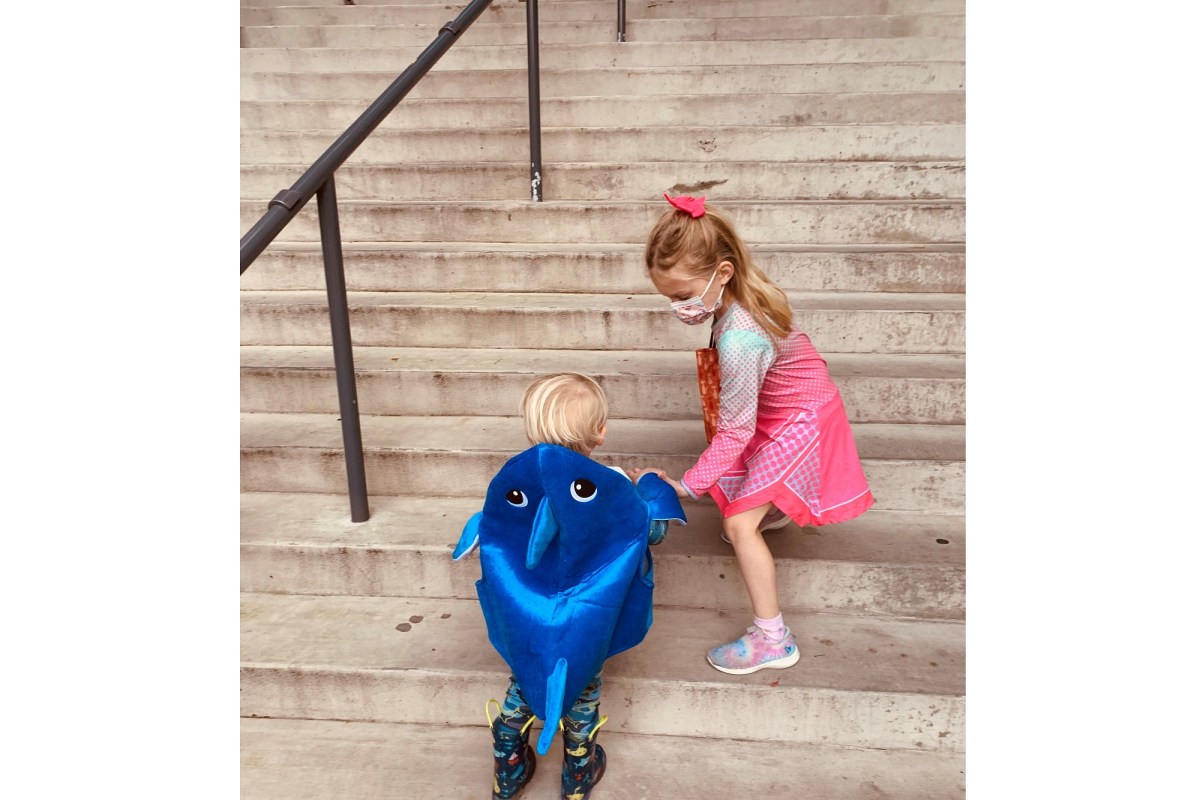
My daughter came home from first grade the other day and announced that Will has a crush on her. “Will?” I asked because I wasn’t familiar with that name. She said, “Yep. He’s from another class but he’s also a number 15.”

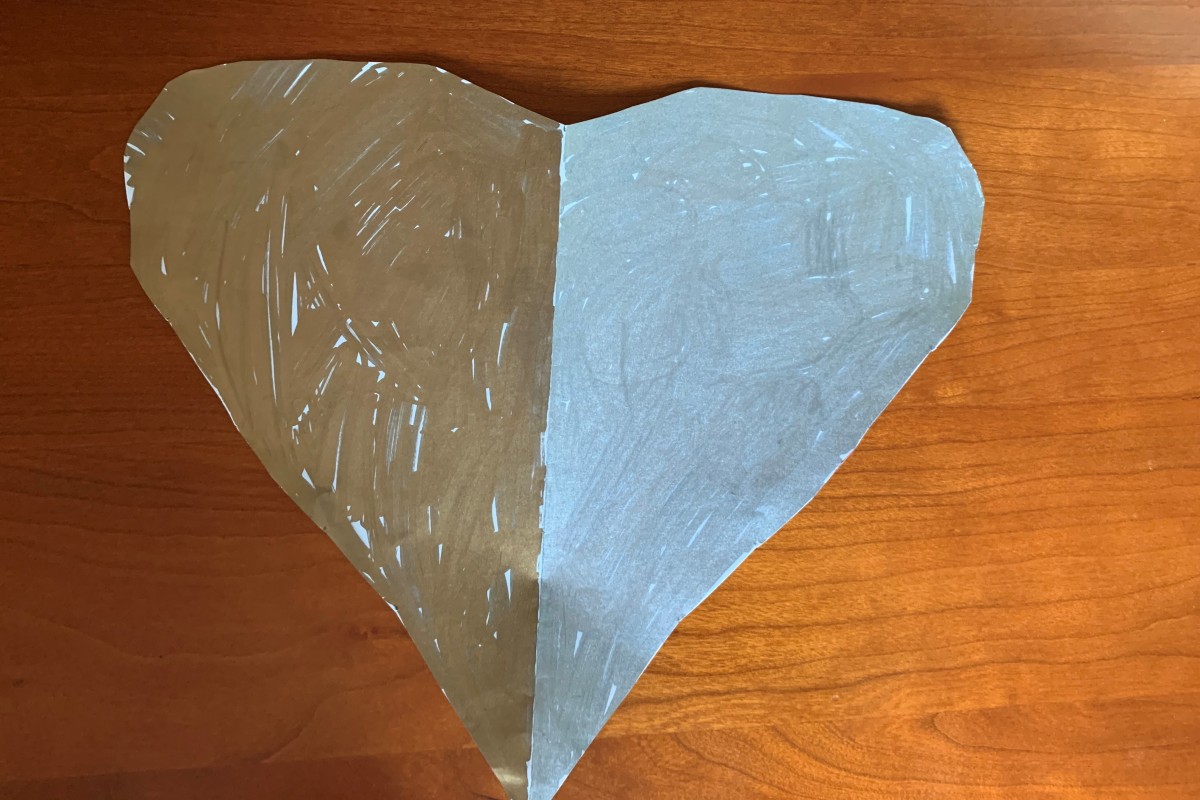
Apparently the school has the hearts that they line up on outside numbered. My daughter’s is number 15 and so is her new young friend’s.

My friend Eric calls it a COVID crush and had some other suggestions for other pandemic rom-coms:

Tom Hanks and Meg Ryan have face masks made of the same material. Breathless in Seattle?

Leo DiCaprio and Kate Winslet meet at the drugstore while getting booster shots. CVS-ic?

Adam Sandler and Drew Barrymore have to quarantine in the same Irish village. 15 Dates in Isolation?

My daughter told me she has a crush on Will too. Sometimes the hearts just line up!

The Courage Not to Quit

It always seems impossible until its done.” – Nelson Mandela

When my daughter, her friend and I were biking back from school the other day she absolutely refused to walk her bike up a steep hill even though her friend and I were walking our bikes. She would run out of steam, stop and then start trying to ride again in the middle of the hill. I repeatedly coached her ā€œwalk your bike.ā€

Finally she explained she wanted to be a story. ā€œWhat does that mean?ā€ She replied, ā€œI want to be a story we talk about at the dinner table.ā€

I assume this hearkens back to the time she bought an ice cream for her brother from the ice cream truck, all by herself, with her own money and without me telling, choose to get one for him too. I blogged about it in The Great Turnaround post. I was proud of her, she was proud of herself and I told many people the story when they came over for tea or dinner.

So I had to explain that for every epic journey, there is always a time that you want to quit. I’ve never climbed a mountain where there wasn’t a place where I totally wanted to quit. Just mentioning this brings back the time on the Mexican volcano, Mt. Ixtacchuatl right after we left high camp at about 14,000 feet.

It was dark, the middle of the night and we were walking on scree – that loose gravel that shifts every time you set your weight on it so that every step was a scramble and rebalancing effort too. We were on the way to the 17,600 foot summit so we had a long way to go and the only thing I could think was that I’d have to contend with this on the way back too. I totally wanted to quit.

And so I told her that’s where the stories come from – because you want to quit and yet you don’t. Whatever you do to get past that section where it’s hard and bleak doesn’t have to be pretty. The epic stories all have a middle section. Otherwise they aren’t very entertaining..

My daughter looked at me as if she wasn’t convinced. And since she’s 6-years-old and has had very little personal struggle in her life, I suspect that she doesn’t yet have a hook to hang that on.

So the next time she had to ride home from school, her friend’s dad ran behind them and pushed them up the hill as they stayed on their bikes and rode. She returned home to me triumphantly and said, ā€œI have my story now!ā€

Picture of the Week

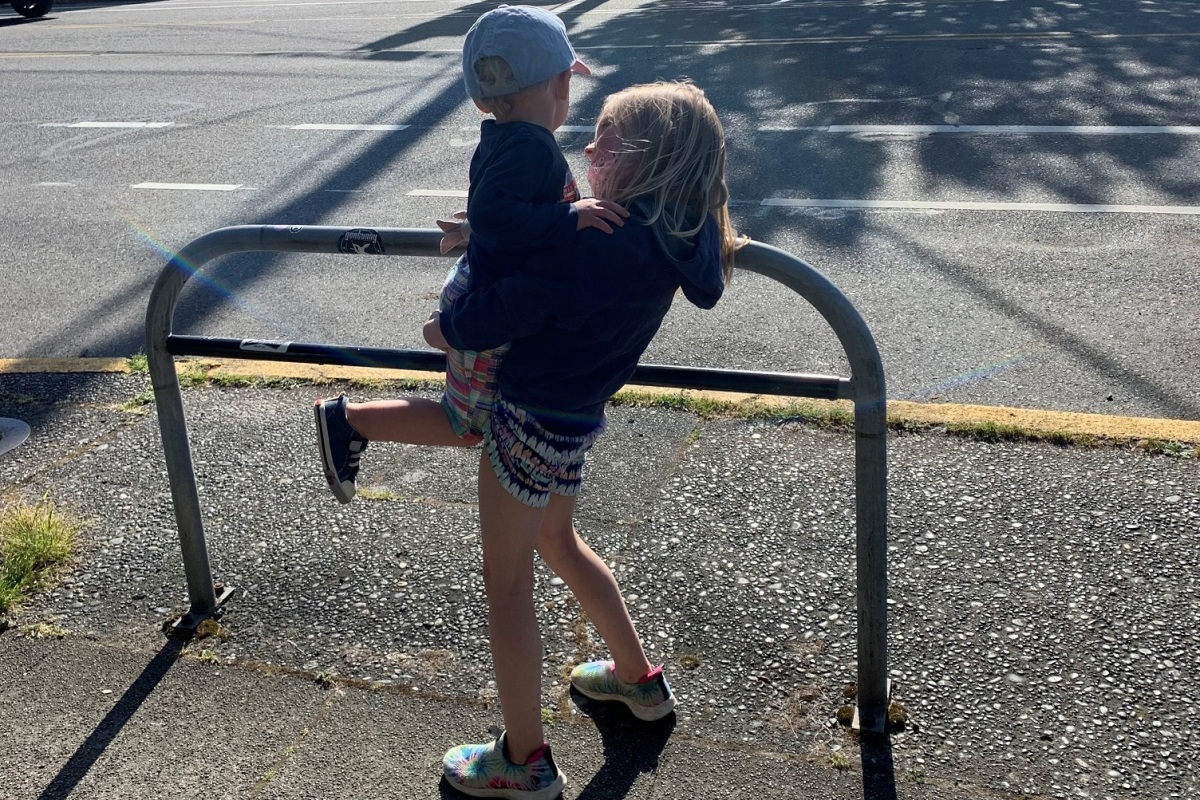
My 6-year-old daughter and her friends wanted to ride bikes to school. It felt hard to do – it was cold, difficult to get everyone ready early and took a lot of coordination with the other parents. As this was our second time doing this, my daughter felt confident enough to lead for some of the ride with me and her little brother on my bike behind her and her two friends following us. We turned a corner and all the difficulty stripped away when I took this picture. The promise of the day meeting the potential of youth.

I was so proud of them. But more importantly, they were proud of themselves.

Riding to school on a crisp October morning

Cut the BS

Life is the sum of all your choices.” – Camus

The first time I did preschool with my daughter she had just turned 2 years old and it was a co-op preschool. Parents worked in the classroom one day per week and dropped off our child the other day of the week. The teacher said to us, ā€œNever leave without saying good-bye to your child. It doesn’t work to sneak out.ā€

I think that might have been the best parenting advice that I may have ever received. I took it to mean to not undermine my child’s trust in me by being sneaky. Just because you can fool a small child doesn’t mean you should. I didn’t know any better at the time but witnessing parents do the ā€œsneak-awayā€ approach at other moments, I’ve seen the resulting effect when it’s happened. The child seems both dismayed that they can’t find the parent as well as beyond consolable because they want the parent for comfort.

I want to claim that I knew sneakiness doesn’t work in life before I was a parent but that would also be BS. I was not attuned to the feeling of tension that signals a choice of not facing or facing the emotions of someone who will be unhappy by what I chose to do. I have ducked out of many parties with a white lie about why I couldn’t come instead of telling the host the truth that I didn’t feel like coming. I shudder to think about the time I canceled going to see U2 with a friend and his son because I had a colossally bad day at work.

But what I’ve learned from parenting isn’t about lying per se – because I don’t tell my kids the truth about many things like Santa and the Easter Bunny and whether or not I’ve ever had sex. It’s more specific to not telling the truth in order to avoid emotions. Like saying we are out of cookies instead of being the bad guy who says “no” because they’ve had too much sugar.

Instead of amplifying feelings by adding the horror of being tricked, this advice has taught me to lean into the discomfort of the initial disappointment. It also honors the emotional intelligence of anyone that I might mislead who can often sense they are being tricked, even at a very young age, even if they don’t know exactly how.

I’m leaving. I will miss you and can’t wait to scoop you up when I return. There is nothing like the sweetness of reunion and it is not possible until we recognize the truth of being apart.

(photo by Pexels)

My Mother the Spy

Who in the world am I? Ah, that’s the great puzzle.” – Lewis Carroll

My 6-year-old daughter and her friend have a particular camper van that is regularly in the school parking lot. They are so fascinated by its story – it has a license plate that says VANLIFE and they wonder if anyone lives in it or if it belongs to a teacher. Playing along, I suggested that if we were spies, we’d put a tracking device under the bumper and see where it goes. They thought this was a great idea so I suggested my daughter should ask my mom for practical advice because we’ve always suspected she’s a spy.

My mom learned Russian in college while getting her major in Far Eastern Studies. When she graduated in the early 1960’s, the CIA offered her a job. She’s always said that she turned the job down and instead chose to get married.

But would there be a cover any better than being a pastor’s wife? In the 1970’s we lived in the Philippines and my mom took private Russian tutoring lessons. She and my dad visited the Soviet Union in that time when very few Americans ever did. I believe they even smuggled jeans in to give to their hosts.

When I was in college, my mom returned to college as well to get another degree in Russian Language and Literature.

After the wall came down, my mom lived in Moscow for five weeks to teach English. She developed such strong bonds that she and my dad led “work trips” there for most of the 90’s for people who were interested in supporting some soup kitchens and religious studies programs that were non-profits that she supported.

When I went to Russia almost 20 years ago to attempt to climb Mt. Elbrus, she sent cash with me to give to her contacts. They gave me the most vibrant walking night tour of Moscow in August I could have imagined.

And the last piece of “evidence” – she’s smart enough, adventurous enough and driven enough to pull it off. When you ask her if she’s a spy, she just smiles.

So it was my mom’s “professional” advice to my daughter NOT to track that van. She said she wouldn’t want anyone knowing where she goes so it’s best not to know that about others. šŸ™‚

The funny thing about family lore like this is that the secrets are so much fun to speculate about because don’t we all have mysterious sides? And by that I mean avenues we could have pursued and alter egos we might have been had the Fates come down just a little differently. I’m guessing that now that my mom is in her 80’s, it’s safe enough to hit publish on this – or so I hope.

(photo by Pexels)

Effective Redirection

It never hurts to see the good in someone. They often act better because of it.” – Nelson Mandela

The other day I quietly came into my still dark room and to put my toothbrush away before waking my daughter for school. She had migrated into my bed in the middle of the night as she often does so I brushed my teeth in a different bathroom so as not to wake her prematurely.

After setting my toothbrush down, I went to kiss her on the cheek. As soon as I did, she barked out ā€œYou are ignoring me and you’re late!ā€ And I was taken aback that the quiet had turned to this and started to retort, ā€œNow wait a minute, you are in my room and I’m just trying to get to my bathroomā€¦ā€

It made me think of a dog-training article I read the other day. One of the tips was that when telling a dog not to do something, it’s too vague for the dog because in essence we are saying ā€œdon’t chew my shoeā€ but then then dog has to both process that and also think of what it should be doing. The article, and I can’t think of where I read it or why I read since I don’t presently have a dog, suggested instead to tell the dog what to do. That in essence solves both problems – getting the dog to stop chewing the shoe and redirecting it to a new behavior – in one command.

This seems to be the work of relationships as well. I don’t think it’s just me that often responds that I don’t like what someone has said or done without ever saying what I’d prefer to happen. In fact, I often just hope the other person can intuit that! Because thinking and naming what I want comes from a different place than a retort, an intentional place that takes some work to access. It’s a subtle shift from defense to bridge-making.

When my sister-in-law nannied for me she was great at saying to my kids, ā€œA better way to say that isā€¦ā€ and it worked great at helping them know how to express their feelings but in a way that is more likely to be heard. My sister-in-law both was telling my kids what not to do and redirecting the behavior but in one efficient suggestion.

My 6-year-old daughter is so verbally adept so it’s really easy to forget that communication is still incredibly new to her. It may not be obvious how to express irritation and ask for what she needs. And more than that, it requires her to practice accessing her intentional space as well.

Even though I’m an old dog (or middle-aged one), I’m trainable too. So I stopped my retort and started again. ā€œHey darling girl, a better way to say it might be, ā€˜Morning, Mom. I’m frustrated you are taking so long because I’m dying to have your attention.’ ā€

(photo by Pexels)

Feedback Loops

Life is an echo. What you send out — comes back.” – unknown

My son and I were reading before bedtime. He climbed up on my bed with the pile of board books, snuggled in and then said, “Come up.” After I did, he said with a clap, “Good boy, Mama!”

When I put my daughter to bed, after we say our prayers and I snuggle her up so only her little face is showing above the comforter, I say “Good night, beautiful girl.” And she replies “Good night, beautiful mama.”

I studied feedback and control systems in college when getting my Electrical Engineering degree. But nothing has been more effective and more immediate than parenting in reminding me that life is an echo. My kids show me every day that what I send out comes right back to me, usually in the same tone.

Taking Off the Hats

Don’t go through life, grow through life.” – Eric Butterworth

In my daughter’s first grade class they fill in a mood meter for each day that tells how they feel and why. For example, last Tuesday she marked sleepy and proud and said she was proud because she made it in without being scared. Which is huge for my 6-year-old.

School has been in session for a month now. A month of adjustment to early mornings, pickups and drop-offs, new faces and routines for my kids, a quiet house during the day for me. It’s a lot and it’s taken the entire month to adapt.

The thing I’ve noticed most for me is the slow unwinding of some of the pandemic trauma that came from the necessity of being involved in everything in my kids’ lives. It’s like relaxing a spine that I had to hold stiff or I’d crumble. I was wearing so many hats – teaching assistant, school janitor, lunch lady, principal entertainer, class clown, mom, chief encouragement officer – that I’ve gotten to take off some of them and ease the strain. There is an intentionality to this restarting of activity that feels rich and treasured in a way that I took for granted before.

What I’ve uncovered is that I’m a way better parent when I don’t have to do it all. Which sounds so obvious but in crisis mode, I couldn’t gage the impact. Now when my 2-year-old son comes home and doesn’t want to have his diaper changed, I have the energy to fly him around the room pretending he’s an airplane on the way to the changing table. I’m listening better and I’m more playful when not having to run my engine all out to get everything done.

The uncertainty is still with us but I feel like I have a fuller tank to deal with it.

And the most delicious thing is that I miss my kids. I gather them up on Friday afternoon and can’t wait to spend a whole weekend playing together. I’m so incredibly impressed by how they’ve handled this transition. It hasn’t been without tears but we’ve faced these big moments talking to and understanding each other.

My mood meter is proud and grateful!

Betrayal and Forgiveness

True forgiveness is when you can say, ‘Thank you for that experience.‘” – Oprah Winfrey

My daughter’s 7-year-old friend came over the other day with the news that their former au pair had betrayed them (her words). The gist of the story was that au pair had agreed to stay with the kids for a weekend and then backed out. Our young friend said that her parents had found someone else to stay with the kids while they travel leaving only the feeling of betrayal to somehow process.

That word, betrayal, always reminds me of my ex-husband. Because when his friend and my business partner told me of my husband’s infidelities, my husband at the time felt so betrayed because his friend told me. And the more he declaimed it, the more embedded I felt in his betrayal of me and our wedding vows.

In this circular pattern of pain and distrust, there seemed to be no way out. I couldn’t get any resolution of what had happened because every time we touched on it, even in counseling, it just triggered my ex-husband’s feeling of betrayal. He could bring more dramatic outrage to the table so I always ended up bottling it up in a misguided effort to make it stop. When we finally divorced, I was so relieved that cycle was over.

But it left me having to forgive my ex-husband without any satisfying resolution about what had happened. Which was even harder work. Our wisdom traditions talk about the power and necessity of forgiveness. Growing up as a pastor’s kid, it was like the bread and butter of our family. Knowing that and wanting it, I still had to find out my way of actually forgiving. I was like a goat tethered to a stake always covering the same ground until I did.

In the end, I discovered meditation as a way to lean in to the mess of it all and develop a bigger perspective. That is when I finally figured out how to forgive. The pain of betrayal led me to the life of meditation and perspective. Which has then gone on to give so many more gifts of faith, confidence and personal belonging that allowed me to choose to have kids on my own. Looking back, I have never been so glad for the gift of pain leading me to the richness of life.

I know forgiveness is extremely hard to do when we feel like keep the wound open provides evidence that we were the injured party. I recently read a quote by Henri Nouwen, ā€œYour future depends on how you decide to remember your past.ā€ In that passage, he was talking to himself but the Truth of it brought tears to my eyes.

Watching my daughter’s friend as she told me the story, I could see her rewriting her history of the 18 months the au pair lived with and cared for her based on this last interaction. If I could amend Henri Nouwen’s Truth slightly, I’d add that ā€œYour kids future also depends on how you decide to remember your past.ā€

Receiving Pain

Only love, with no thought of return, can soften the point of suffering.” – Mark Nepo

When I trimmed my 2-year-old son’s hair recently, he’s started saying ā€œOwā€ with each snip. I checked to make sure I wasn’t pulling his hair or in any way touching his head with the tip of the scissors and continued. And he kept saying, ā€œOw.ā€ It was possible he was the first person I’ve ever heard of to have feeling in his hair but his body language and smile told me it was more likely he was saying something that got a reaction.

But it brought to mind for me all the different ways I’ve received other people’s pain. I’ve dismissed it as not as bad as they are reporting. I’ve wondered when they will get over it. I have compared it (both inwardly and outwardly) as not as bad as something I’ve experienced. And I can report that none of these methods are helpful. The only way that I’ve found to bear witness to pain and to help alleviate suffering is to believe that every word they say is true and to listen as they process their story.

This makes me think of a winter climb I once did on Mt. Whitney with a good friend about 3 months after her boyfriend died of cancer. He’d been cremated and she was climbing with him in a little urn attached to her pack. She kept on mentioning Rick to the other people in the group we were climbing with, none of whom knew us from before the trip. And because she was talking about Rick as if he was with us (and I suppose he was if you counted the urn), they would get a pretty confused look on their faces and eventually take me aside to ask me who Rick was. But it was a group of really nice people who let her talk and talk and talk about him. We were slogging in thigh deep snow up the side of the mountain and had days to listen. Ā It was like an extreme walking meditation.

After a while, I thought we’d heard enough about Rick. I fortunately never said anything. Because it wasn’t until my dad died that I understood that the telling of the story of his sudden death in a bike accident and talking about what an amazing person he was were both such healing ways to help process the surprise of finding him gone.

So I’ve adopted some of my dad’s wisdom. As a retired pastor, he often was asked by friends, mentees and former parishioners to go to coffee for advice or to air the pain of living. And if you asked him how it went, he’d smile kindly and say, ā€œMostly I listened.ā€

My kids give me lots of opportunities to practice to listen to their pains and I do my best to calmly bear witness, not lecture about safety (at that moment at least) and just slather them with love. As I cut my son’s hair and he giggled and said ā€œow,ā€ I started narrating that he was the bravest person on earth to get his hair cut. In that way, we made it through together!