The Feeling of Community

The deep irony, in order to be social, we first have to be individual.” – Nicholas Christakis

This was originally published on 2/16/2022. Heads up – you may have already read this.


When I was climbing mountains, I’d regularly sign up for a guided climbing trips, sometimes with a friend and sometimes by myself. It was a great way to travel and also get to climb a mountain or two. Typically we’d all converge in a meeting place and do the initial meet and greet and then go from there.

The groups of people that would come together were always interesting. I’m thinking about a particular climb of two volcanoes in Mexico. We all flew to Mexico City where we met our guides and fellow climbers before riding in a van to the base of Mt. Ixtacchuatl for our first climb.

The group was mostly Americans but otherwise there wasn’t an easily defined demographic, not gender, education level, personality type other than love of mountains.  On this particular trip, there were very outgoing people like my friend, Jill, and man named Trent who loved to talk and help anyone with anything. Most of the group was like Paul from Greenfield, NY who was really nice to talk to but more reserved about initiating conversations. There was our guide, Phil, who like to just spit out wisdom or quips in one line but not talk endlessly (e.g. “Watch out Jill, that guy has more moves than an earthquake.”)

As we went around doing introductions, one man named John stated very clearly, “I don’t like people. I’m just here to climb the mountains.”  Which was fine because that’s what we were there to do.

We summitted the first mountain, Mt Ixtacchuatl (17,338 feet) on October 31 and then headed down to celebrate the Day of the Dead in Puebla. After a day of rest, we started up our second mountain, Mt. Orizaba (18,491 feet).

After being dropped by trucks on the mountain, we spent the evening in a hut. At this point, we’d been together as a group for about 5 days and we were having a great time and working together pretty well as a team. The guy that didn’t like people was a very good climber and mostly stayed to himself, grabbing his share of dinner and finding a quiet place to eat it.

Around midnight, we got up from the few hours of rest we’d gotten and started preparing for our summit attempt in the dark using the light of our headlamps. We climbed steadily in the dark for about 6 hours until we reached an exposed couloir. We paused as the guides tried to get some ice screws deep enough into the fractious ice to secure our trip across the steep gully. Eventually we realized that the conditions wouldn’t allow us to cross safely over that part of the mountain and our summit bid had ended.

As we sat on the mountain watching the sun come up in no hurry to get anywhere, John, the climber who didn’t like people, pulled off his boot and found a Payday bar. He’d put the candy bar in his boot while preparing in the dark and then forgotten to take out. After being climbed on for 6 hours, it was shaped like an orthodic. He pulled it out, showed it around and we all had a good laugh alongside him as we imagined the journey of that candy bar. Even John enjoyed for that moment being part of a group that understood the crazy things that happen on a climb.

That particular event created an idea of community for me. One where we don’t have to all be best friends or come out of our comfort zones but can still enjoy the camaraderie of a shared experience focused on a common interest.

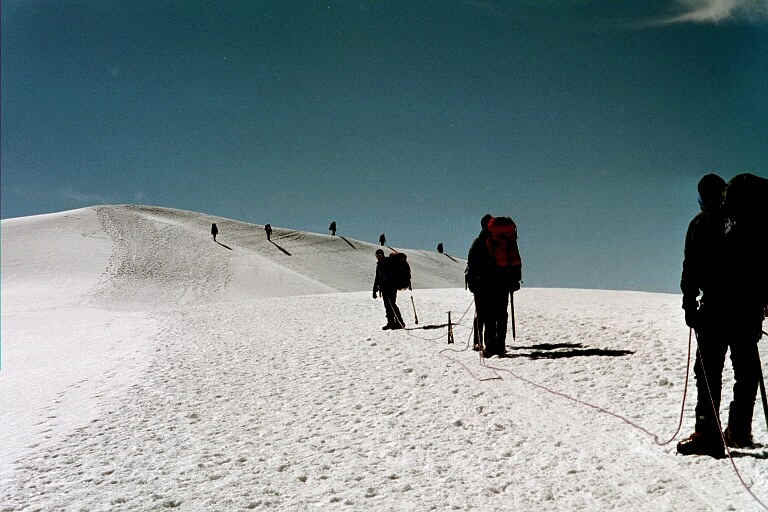
(featured photo is mine of the group leaving the top of Mt. Ixtacchuatl)

Climbing Out of My Gunk

When one tugs at a single thing in nature, he finds it attached to the rest of the world.” – John Muir

This post was previously published on 12/14/2022. Heads up – you may have already read this!


The other day I felt like I was working at my desk when pressure tipped the scales and slid into anxiety. I had a client project that wasn’t going well, something that I tried to do for a friend didn’t turn out as I hoped, the holiday bills were adding up and I had strange red spots splotching the skin on my face. In response, I was eating all the Christmas candy I could find even though I knew the only way that candy would solve my problems was that it soon would be my biggest belly-ache. So I managed to put down the sugar and I went for a walk.

And into the forest I go, to lose my mind and find my soul.”

John Muir

For all the John Muir and Henry David Thoreau quotes that I love, the person that I often think of when I feel this way is Beck Weathers. I wrote a post about him – The Power of Stories. He is the Texas pathologist caught in the 1996 storm on Everest that Jon Krakauer wrote about in Into Thin Air.

Beck tells the story that he climbed to escape depression. He’d head out into the mountains because climbing helped alleviate the darkness he was feeling. But it became a cycle of its own – he had to climb bigger and bigger things in order to keep depression at bay. Which is how he ended up at 27,000 feet on Everest in one of the deadliest storms.

I relate to Beck’s story not because I’ve suffered from depression but because mountains have given me relief from my own psychology. I started climbing in my late 20’s because I was bored after breaking up with a boyfriend and yearning for something bigger. I literally turned the corner on a street one day, Mt. Rainier lorded over my view, as it does so often in Seattle, and I knew I had to climb it.

What is it about climbing that makes it such a relief? For me it’s that when I’m having to work so hard to keep my body safe, my mind finally takes a back seat. When I’ve reduced what I have to do to the simple task of putting one foot in front of another and find a rhythm that works, I relax because I have far fewer choices about what to do or say next. At the same time, the perspective puts my ego into check because I’m no longer the main player in the small stage of my life, I’m a microscopic speck on the enormous stage of nature.

The clearest way into the Universe is through a forest wilderness.”

John Muir

In many senses, climbing was the beginning of my meditation journey. It slows my mind down, it simplifies what I need to do and it puts my ego in its place. To a degree now even walking does that for me when the muscle memory kicks in.

My favorite meditation is one that makes me think back to my climbing experiences. It’s where I feel the weight of everything I’m carrying on my back – the way the shoulder straps dig into my shoulders and the hip belt cinches my gut, the pressure of it all pushing my feet heavily into the ground. And then I take off the metaphorical backpack and sit with it in front of me, emptying out everything I carry one by one onto the ground before me. As I watch myself unload my problems and worries, I get a sense of detachment from them, a space that opens ever so slightly because they have been separated from my back. And then, after a few minutes of unloading, contemplating and breathing, I reload my backpack with only what I need to carry.

I always walk away from that meditation feeling lighter. Like walking and climbing, it gives me a bit of perspective and distance. I still need to return and figure out my problems but I can do it from a more capacious sense.

That happened with Beck Weathers as well. When he returned from Everest, albeit without his toes, nose, most of one arm and the fingers from the other, he was able to deal with his depression more holistically. His story always gives me inspiration – that I can face what’s weighing me down, use the tools I’ve learned from my experience, and maybe even roll it into something hopeful for others.

“Climb the mountains and get their good tidings. Nature’s peace will flow into you as sunshine flows into trees. The winds will blow their own freshness into you, and the storms their energy, while cares will drop off like autumn leaves.”

John Muir

And so it went the other day with my anxiety – I took it out for a walk and it came back in a much more manageable size. One where I could sit with one thing at a time, hold it in perspective to life and the world and then deal with it in its own rhythm.

I only scarfed down just a little more candy along the way.


I’ve written a post about a different type of letting go on Wise & Shine: Am I Copying? Getting Over Writing Defensiveness

Friendship Brownies

A friend accepts us as we are yet helps us be what we should.” – unknown

This was originally published on 2/9/2022. Heads up – you may have already read this.


After I wrote that post on Vulnerability last week, I had lunch with my friend Doug. He was the person I mentioned in the post as the friend who’d asked about the blog and then not responded when I shared it with him. Turns out that he’d both read and liked the writing very much but just had forgotten to respond. We had a good laugh about that. Fortunately I’d written another post about him on my personal blog that we could also talk about.

Doug is planning a climb of Mt. Adams with his son this summer. It’s a 12,280 foot mountain in Washington State – tall enough to be a challenge but not technical enough to need a lot of equipment and training. The last time we summitted this mountain was with his daughter about 10 years ago when she was 14 years old.

Doug asked if I remembered what packs we carried between our camp at about 9,000 feet and the summit. He is a meticulous packer and doesn’t carry anything more on his back than necessary.

I have a long history with backpacks – picking them out, carrying them, feeling relieved to take them off. At one point when I was in my thirties and planning a lot of climbing trips, I got one that was almost 6000 cubic inches. I can’t even describe how large that is but suffice it to say that when you have a backpack that big, your friends start believing you have room to carry their stuff.

Which is what happened when we were planning a climb on Mt. Rainier that would take place over Doug’s birthday. His wife asked me if I would carry some brownies up to celebrate Doug’s birthday. It was only after I happily agreed that she told me that Doug said he wouldn’t carry them because he didn’t want that unnecessary weight in his pack.

It is probably all this carrying of loads that makes one of my favorite meditations the one where I imagine I sit down, empty everything out of my pack, look carefully at each thing I’m carrying. When I’m done sorting through the worries, the presumptions, and fears as well as the love, the purpose, the nostalgia, the energy stored for digging deep, I mentally load the pack again with only what I need. I always carry a lighter load after that meditation.

But in thinking about those brownies, I realize that friendship means we are willing to carry things for other people that they won’t carry for themselves.

We hold in our packs a version of our friends at their brightest and most creative that can be shown to them when they are in a slump. We carry memories of the times we laughed, did silly things, failed and succeeded. We store all the depth of the ways we have walked side by side on the path as well as the times we waited at an intersection while they took a detour and vice versa.

Then at just the right moment, we unpack the brownies we’ve carried so far and celebrate our friends. There are some things worth the extra weight and friendship is one of them.


I’ve written about another powerful climbing story on Wise & Shine – Climbing to the Top of the Rankings.

(featured photo is my own – Mt. Elbrus, Russia)

The Power of Stories

See, broken things always have a story to tell, don’t they?” – Sara Pennypacker

Shortly after I returned from Everest Base Camp in 2001, I went with my dad to hear Beck Weathers speak. Anyone that has read Jon Krakauer’s book Into Thin Air or any of the other books about the 1996 disaster on Everest, is probably familiar with his story. Here’s my abridged version:

Beck was a pathologist from Texas that was climbing in New Zealand guide Rob Hall’s group during the 1996 Everest climbing season. He was high up on the mountain nearing the top when he went snow blind. So, Rob dug out a spot for him to sit and wait until Rob summitted with the other clients and returned for him.

Rob never returned for him because Rob died trying to help another climber and didn’t adhere to his turn-around time, the time when they needed to go back down no matter whether they’d summitted or not. But one of the other guides from Beck’s group came by and now that the storm was descending, Beck went down with them to Camp 4. They got within 150 yards of the camp but couldn’t find it in the blizzard conditions. As they circled in the storm, Beck just fell over and they left him lying in the snow. He laid there for 15 hours at 26,000 feet during a storm with his face and hand exposed.

And then he miraculously “woke up” and managed to make his way to camp. The other climbers were in complete disarray after the storm and were shocked to see him. They helped him into a tent – and then left him there, expecting that he’d die during the night. As Beck screamed because he couldn’t eat, drink or even keep himself covered with sleeping bags, they couldn’t hear him over the howling winds.

Beck didn’t die that night so the next morning the other climbers rallied to find a way to help him down the mountain as he was suffering frostbite to his hands, arm and face. He was short-roped (pretty much tied right to) a dream team of amazing climbers, Ed Viesturs and David Breashears. Ed and David weren’t from Beck’s group but were up there filming a Imax film about Everest and had aborted their climb to help others.

The Dream Team got Beck down to 20,000 feet where a helicopter that was rallied by Beck’s wife in Texas attempted to land. The air is so thin that the helicopter rotor blades could barely keep the machine aloft and to even try to do this once, the pilot off-loaded every bit of weight that he could. He was on the knife-edge of not making it when he came over the ridge to find the landing pad the Dream Team had marked with red Kool-aid.

And just as Beck is about to get on the helicopter, a climber who has more severe injuries from the Taiwanese team arrived. The helicopter could only take one person and Beck gave up his seat to the more injured climber. Beck assumed he’d just signed his death warrant because he couldn’t make it through the Khumbu icefall with his injuries, not even with the Dream team’s help because they’d have to cross huge blocks of ice on ladders. As he’s contemplating this, the helicopter rose one more time over the ridge – the pilot came back for Beck.

Beck lost his arm from his elbow down plus all the fingers on his other hand and parts of his feet. He had a prosthetic nose that they grew for 6 months on his forehead. He could never work as a pathologist again. He wrote a book called Left for Dead that recounts with detail those four times he was left for dead on Everest and began a second career as an inspirational speaker.

Sitting in the front row, I was transfixed watching Beck tell his story. Great story-tellers have a way of raising questions in us that have nothing to do with Mt. Everest. As author Brandon Mull said, “Sharp people learn from their mistakes. But the real sharp ones learn from the mistakes of others.”

Have you ever pursued a goal so obsessively you gave up everything else? Would you be able to keep going after being left for dead? Would you give up your seat to someone else that’s more injured or give up your IMAX filming to help someone else? Have you been able to find your way to a new career?

(featured photo from Pexels)

Life: Risky Business

Pushing through your fear. If there’s something you want, it usually worth the risk. I’ve found that on the side of fear is rebirth.” – Paula Whaley

One of the guides that I climbed mountains with, Phil, taught the skill of weighing objective risks versus subjective risks. Objective risks in the mountains include avalanche danger, weather forecast, rock fall areas, and navigating around crevasses. It is because of objective risk that we’d often leave for the summit in the middle of the night, when things like big blocks of rocks and ice are still frozen to the mountain. That way we reduced the risk of climbing in the heat of midday when the sun warms things up and they pop off to crush you.

As an aside, I found climbing at night to be one of the most beautiful things to do. While it was exceedingly painful to leave a warm sleeping bag, the intimacy of my steps enveloped only in the circle of my headlamp was a way to be both big and small. In a huge arena but only focused on a small area. Groups ahead look like a caravan crossing through the desert because the landscape could be anything. And, crossing things like ladders laid horizontally over crevasses is way more doable when you can’t see the gaping hole below.

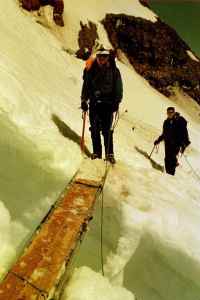
A friend ready to cross a crevasse on Mt. Rainier (image mine)

But subjective risk, as I understood it from Phil, is what we internally sense and measure. How do I feel? Does this seem doable today? Subjective risk is more personal, trickier to plan for, and different for everyone.

But this is a post about life, not climbing

I’d argue that in my life now, I have very little objective risk. Perhaps the most hazardous thing I do is forget to wear eye protection when I’m using the weed whacker.

But the subjective risks I’ve found in middle age to be plentiful. Daring to be vulnerable, trying to learn something new, opening to new friendships, asking to be seen, and offering grace instead of judgment – all those things lay bare my heart in a way that can be terrifying and precarious.

I think meditating and writing both are huge subjective risks to my perceived well-being. Hazarding a look inside at the goopy mix of who I am, taking on attempts to change myself, the conditions for my children, and generational patterns of my family. Geez, that’s harder stuff than I ever faced in the mountains.

And yet, I find when I try these things that are subjectively risky, they get me somewhere. Not always, and I haven’t kept track but I think it’s safe to say not usually, where I intend to go but with a receptiveness that moves me forward.

It’s a round-trip sport

As my guide friend, Phil, says, “Climbing is a round-trip sport.” It’s both the up and the down. And the risks are often greater on the down when I’m exhausted from the climb. And now have to cross the crevasse on a ladder in the daylight when I can see the gaping hole beneath me. It’s the same in life for me, taking the risk to extend myself in vulnerability and openness is hardest when I’m tired and depleted but it’s often necessary to lead me home.

I don’t think you have to have climbed to imagine how life can be a slog, both uphill and downhill. But whatever the slope looks like, thinking about it this way has helped me to take the steps to evaluate and take on subjective risks in order to get to my best and highest place.

There is no way to get to the summit, whatever our personal summit may be, without exposing ourselves to risk. But the view from the top and the learning from the trip change us forever.

View from Mt. Adams (image mine)

What do you think about risk? Any tips for how you face risk?

(featured photo is mine from Ixtacchuatl a 17,160ft mountain in Mexico)

Scaling the Walls of Our Dreams

“The purpose of life is to discover your gift. The meaning of life is to give your gift away.” – David Viscott

This is a repost of something I published on 5/11/2022. Heads up – you may have already read this.


I was talking with some friends the other day about the movie Free Solo. One of my friends breezily remarked that Alex Honnold was crazy for climbing El Capitan in Yosemite National Park, a nearly 3,000 foot ascent without ropes, anchors or any other protective gear. Before I watched the movie, I would have agreed. After all, the first time I climbed a rock face, I was only three feet off the ground when my leg start shaking, a condition so common it has a name – sewing machine leg.

But when you watch the movie, you see how impeccably he prepared for the challenge. Alex climbed each section over and over again with protective gear, until every move was automatic and if not easy, than at least anticipated.

For me the crux moment is when the film crew assembles to film his free solo attempt and he starts but then calls it off because he knows it’s not the right day. In that willingness under the pressure of expectation and respect for everyone else’s time and with the knowledge that they won’t be able to try again until the next year, he shows how incredibly brave he is.

For me this isn’t a movie about a climber ascending a famous wall at Yosemite. It’s an allegory for all of us about the call to recognize and commit to our gifts. It is about accepting our paths, the unique reason we are all on the planet, and then walking that path.

It contains both the vision piece – and execution piece, the incredibly hard work that we have to do to hone our gift once we accept it. It shows that purpose and practice go hand in hand.

And it speaks to how vital it is to listen to the quiet Divine voice within us. So that if the day, the conditions or the circumstances aren’t right, we are willing to honor the voice within that says “Don’t do it” no matter how silly it could make us look. We can listen, withdraw and wait for the right day.

When my daughter was 2-years-old and we were watching The Sound of Music, she asked why the characters at the convent were wearing habits and wimples. When I told her they were nuns, she repeated back to me, “They are nuts?

Yes, sometimes when we follow our calling, we might seem like we are nuts. It is hard to get quiet enough to listen to the small voice within. Even harder to put our gifts on display for the world to see and put in enough practice to bring them to bear in an audacious way.

But when we do scale that wall of gifts and dreams, when we stand on top and celebrate that unity of purpose, preparation and performance, we set the world on fire. As Howard Thurman said so well, “Don’t ask what the world needs. Ask what makes you come alive, and go do it. Because what the world needs is people that come alive.”


I’ve posted a related piece The Archetypes of Story on the Wise & Shine blog. If you have time, hop over there to check it out.

(featured photo from Pexels)

The Usefulness of Play

We are what we repeatedly do. Excellence, therefore, is not an act but a habit.” – Aristotle

In 2006 I went to a book reading and slide show by legendary alpine climber Ed Viesturs. He’d just published his book about summiting the world’s 14 peaks over 8,000 meters (26,26 feet) without supplemental oxygen, No Shortcuts to the Top and my friends and I had a front row seat for his show.

We were there early watching as he got his slide show ready. Ed came off the stage that was about 2 ½ feet above the level of the auditorium floor to fix the angle of the projector and then walked around to climb the stairs back onto the stage. As he did this when it would have been so easy for him to jump up, I joked, “No shortcuts to the top” and we howled in laughter.

There’s a famous story about Ed getting to the central summit (8,008m or 26,273 feet) of Shishapangma in Tibet and looking across the 100 meters of knife-edge climbing to get to the true summit that was a few meters higher in elevation (8,027m or 26,335 feet). He was by himself and decided it was too dangerous so he went home without summitting. Then he returned 8 years later to do it all again, this time shimmying across the knife ridge to get there.

So Ed has earned the reputation of being the boyscout of the climbing world and perhaps it’s no surprise he’d live out the motto of no shortcuts to the top. But I’ve revisited that scene in my head again and again when pondering the consistency of life on and off the mountain or more generally speaking, consistency between who we are at play versus “real” life.

I was recently moved to think differently about play by an interview I heard with Nikki Giovanni, the poet laureate of Virginia Tech. She said that her “grandmother didn’t waste anything. There was nothing that came into her kitchen that she didn’t find a use for.” Then she continued, “I feel the same way about experiences and words. Nothing is wasted.”

Looking back on the things that I’ve chosen as my hobbies, I see that they have not just been pastimes but instead the proving grounds to work through ideas and attributes that I would come to and continue to need.

When I took up amateur mountain climbing in my late 20’s, I thought it was a way to see the world from a different viewpoint. Now I see it was a way to build my endurance to push through in those moments when I’m physically exhausted, something I’ve needed a lot in these early years of parenting.

Rock climbing at the indoor climbing gym was a way to get a workout and build upper body strength. There is almost always a move, the crux move, on a route that requires flexibility and faith to push through, bending your body in a way that allows you to reach past the obstacle or overhang without seeing the next hold. Now I see it as a physical way to practice the ability to move through the many challenging changes and tough transitions in life.

Recently I got a mosaic art kit for my daughter so that she could create designs by gluing small pieces of colored glass near each other. It was so fun that I’ve started doing it myself. It has very little to do with what I create and a great deal to do with seeing how all the small things in life come together to create the arc of life.  

Here’s what I’ve come to believe: that play helps simulate the tough moments of life when you have to make decisions, have faith and maybe even carry on in conditions when you are tired, hungry and feeling defeated. The choices we make in those situations carry through to the paths we follow in life. We build confidence and get to know ourselves one step at a time on the proving ground and then know how to live.

Aristotle said, “We are what we repeatedly do. Excellence, therefore, is not an act but a habit.” We are what we practice, in play and in real life. Perhaps that’s how Ed Viesturs managed the fourteen 8,000 meter peaks without supplemental oxygen. By practicing who he was, on and off the stage.

Our Hobbies, Our Metaphors

In every walk with nature, one receives far more than one seeks.” – John Muir

The other day I did a really fun podcast recording with Todd Fulginiti, a musician and former teacher who is also a writer for Wise & Shine. We had a great time talking about trying – what enables and encourages us to try new things, who and what inspires us, what our limits are.

It occurred to me as I listened to this conversation that our hobbies fuel so much of how we see and face the world. For Todd, he gave examples as a musician. And for me as a climber/hiker, so much of my experience in the mountains still helps me face life. So I wrote about it for my Wise & Shine post this week: Climbing Out Of My Gunk

And here’s the link to the podcast in case anyone is interested: On Trying New Things

High Expectations

Things are always in transition. Nothing ever sums itself up the way we dream about.” – Pema Chodron

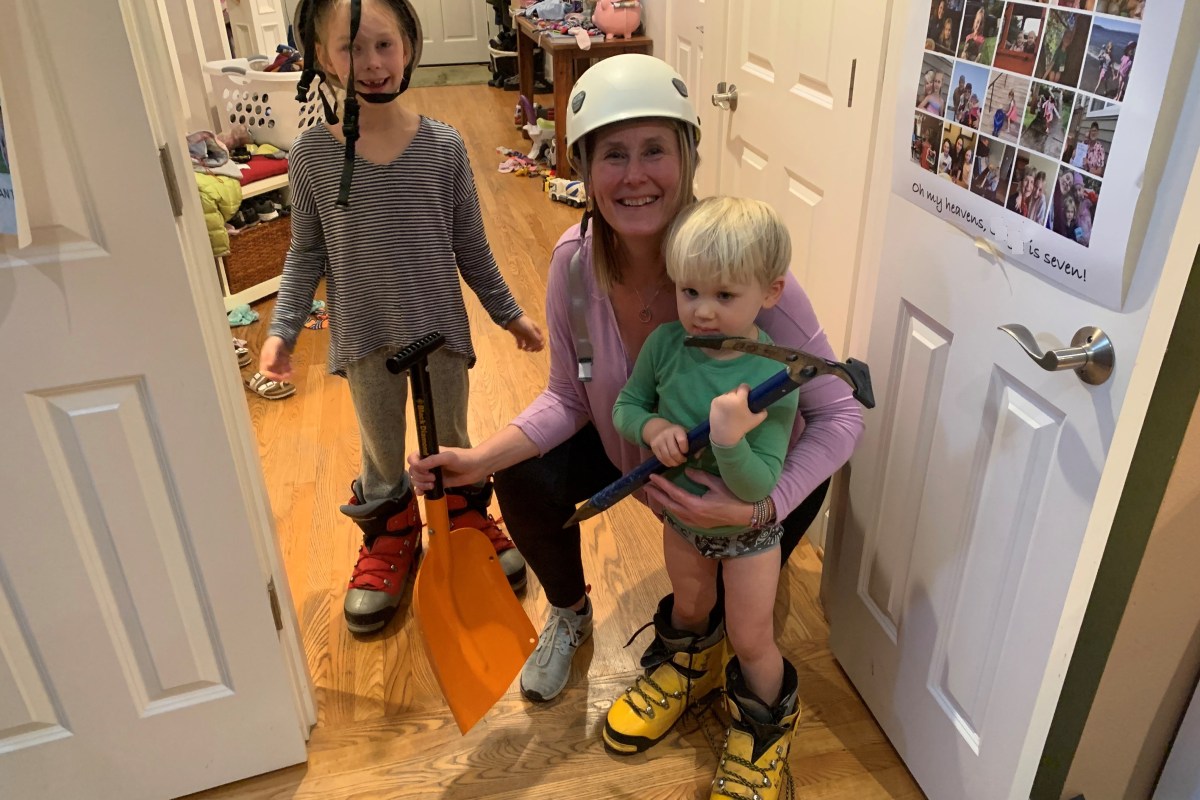
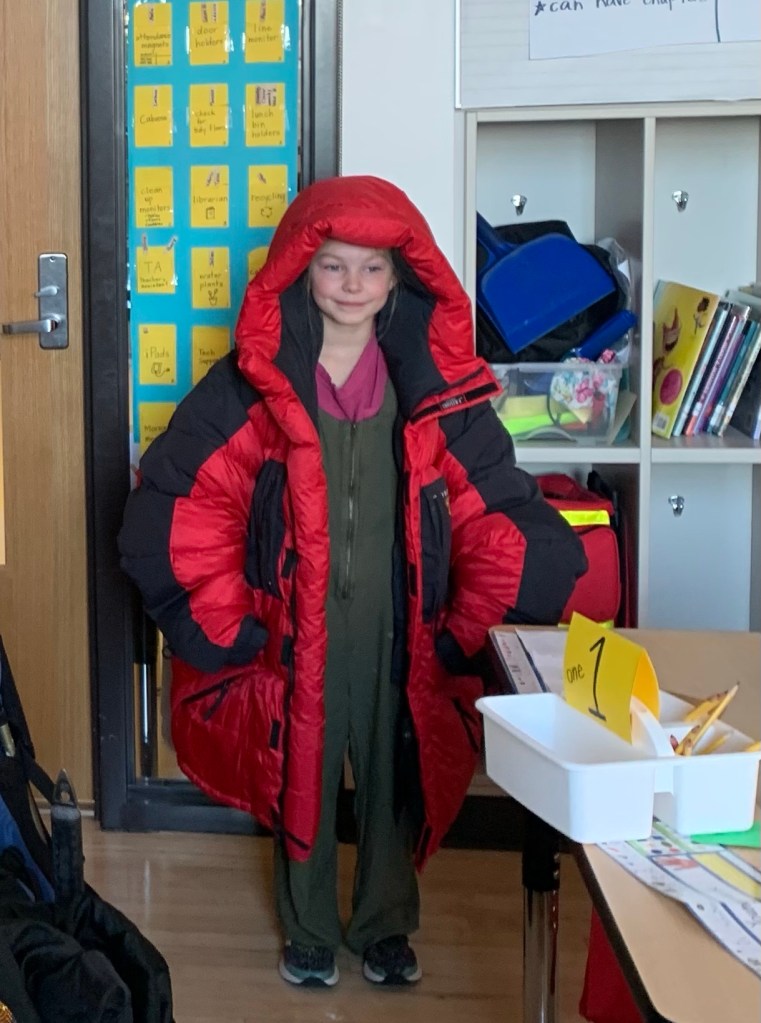
Yesterday I delivered a presentation on mountain climbing to Miss O’s class at school. My friend, Doug, who I’ve done a lot of my climbing adventures with, joined me and we had a talk filled with pictures, a lot of equipment, and stories. We also had the most enthusiastic audience of second graders (Natalie, Chaya, Belle and all the other teachers out there, hats off to you for years of being teachers to these young and energetic minds).

Miss O had been so excited all week. She’d told me and her teacher that she’d written “best week ever” over her mood meter assignment. And then when Doug came to stay the night before the presentation and we started packing our climbing gear, she extended that to this was going to make 2nd grade the best grade ever!

So it surprised me when Miss O had to step out of the room to collect herself in the middle of the presentation. Through teary eyes, she told me that she felt that Doug was bypassing her when he handed out all the equipment. Which might have been true to some degree since she’d handled all the stuff the night before.

But I think it was more that her expectations were SO high. And I think she had a picture for a part that she’d play in the presentation or how it would reflect on her that didn’t quite match to reality. She modeled my climbing parka but mostly she was a participant.

This reminded me of every big occasion in my life – parties, birthdays, holidays, presentations – I’ve always felt a let down when they passed and I was still the same person afterwards. All that looking forward to something and then I’m still me with my same life when its done.

I’m projecting here because these aren’t the words Miss O used when we talked about it later but I think it’s a fairly common experience after we look forward to something. As Pema Chodron says in the quote for this post, “Nothing ever sums itself up the way we dream about.” There’s a mismatch between how we imagine in and how we experience it, and more than that, there’s an exhale after its done and before we find the next thing to look forward to.

At the end of the presentation, I told the story of friendship brownies. It was the climb that Doug and I were doing and we were climbing on Doug’s birthday. His wife asked him to carry some brownies to celebrate and he said “no” because he’s vigilant about only carrying what’s necessary. So she asked me and I said, “Sure” because we sometimes carry weight for our friends when they can’t or won’t do it themselves.

Miss O passed out the friendship brownies to the class and so it all ended well. Then she asked me to tell the story of the guy who was dancing with his toilet paper and I think those 2nd graders might have liked that one the most! Hard to tell whether ending with potty stories meant we ended on a high note or low one but the audience, including my delightful daughter, was pleased.

Taking Risks

Sometimes it’s riskier not to take a risk. Sometimes all you’re guaranteeing is that things will stay the same.” – Danny Wallace

A few years ago, a man fell into the crater of Mt. St. Helens while taking a summit picture. He was standing too close to the edge when a huge piece of corniced snow fell off taking him with it.

When I heard the news, I thought, “Oh geez, I probably stood on just corniced snow there too.” On St. Helens, which blew a great deal of its top off when it erupted in 1980, it’s hard to tell where the actual rim is and the pull to look into the crater is powerful.

Taking risks, hopefully wiser ones than that, is the subject of my Wise & Shine post this week: Life: Risky Business.

(featured photo is me on the rim of Mt. St. Helens)