Curiosity, Crime Fiction, and the Brave Work of Understanding Others

Tell me facts, and I’ll learn. Tell me truth, and I’ll believe you. But tell me a story and it will live in my heart forever.” – Native American Proverb

I admit it – I’m a geek. Back in the day I got a lot of props from my fellow geeks when I caught an error in the movie The Net (released in 1995 with Sandra Bullock and Jeremy Northam). They had an Internet protocol address that was bigger than 255 which is the maximum number that can be represented in 8 bits. Yep, I’m a geek.

But I also learn a great deal about technology by how it’s presented in books and movies. Even for technologies that I know well, my focus is on helping people use them effectively so I often don’t truly grasp how they can be used for nefarious purposes until I read about it in a story. It is truly remarkable how much research goes into making a compelling narrative about some of the challenges facing our world.

For instance, Michael Connolly recently released a fantastic legal thriller, The Proving Ground, about the dangers of AI and the ability to hold companies accountable. And one of my favorite bestselling authors, Barbara Nickless, educated me about online gaming and the dangers presented by virtual manipulators in her latest fantastic thriller, A Voice in the Dark.

In this episode of The Life of Try podcast, I talk with Wall Street Journal bestselling author Barbara Nickless about A Voice in the Dark. Our conversation moves from the dark corners of online gaming and internet manipulation to the real-world vulnerabilities of teenagers, families, and people searching for belonging.

Barbara shares how deep research, FBI consultants, and her own curiosity shape her fiction, especially as she writes about FBI profiler Helen Belle, criminal humanist Benedict Hoffman, addiction, trauma, and the question of what draws people toward danger.

This thoughtful author interview explores how storytelling can help us understand complicated human experiences, including moral injury, PTSD, addiction, grief, law enforcement, cybercrime, and the healing power of writing. Barbara also reflects on teaching writing to military veterans and civilians, researching dangerous places and difficult subjects, and using narrative to “de-other” people we might otherwise misunderstand.

Key Takeaways:

  • A Voice in the Dark explores the dangers young people can face in online communities, especially when vulnerable teens and young adults are targeted by manipulative influencers.
  • Storytelling can help us “de-other” people by taking us inside their motivations, histories, and struggles in ways that facts and news stories alone often cannot.
  • Curiosity is at the heart of Barbara Nickless’s writing process. Her research into online gaming, FBI investigations, addiction, trauma, and moral injury helps make her fiction vivid, compassionate, and grounded in real human experience.
  • Researching modern crime fiction requires balancing accuracy with readability, particularly when writing about cybercrime, AI, online manipulation, and evolving law enforcement tools.
  • The conversation highlights a core Life of Try theme: trying begins with curiosity, openness, and a willingness to enter unfamiliar worlds in order to understand ourselves and one another more deeply.

If you love conversations about books, personal growth, curiosity, crime fiction, psychological thrillers, resilience, and what it means to keep trying, this episode offers a rich and compassionate look at the stories that help us make sense of ourselves and one another.

Here are some other ways you can listen and watch this episode:

Growth Takes Energy| How Rest Helps Habits Stick The Life of Try: Personal growth, one try at a time.

Why does growth feel so exhausting—and could rest be themissing ingredient that helps new habits stick? In this episode of The Life of Try, Wynne Leon connects Carol Dweck’s growth mindset research, Adam Grant’s ideas about habits and identity, and the restorative power of sleep,fewer decisions, intentional breaks, and creativity. Through stories from the first day of school, middle-school drop-off, mountain climbing, and her daughter’s crochet project, Wynne shares three practical ways to protect yourenergy while building sustainable change. If you’re navigating a transition, working on personal growth, or trying to avoid burnout, this episode is a reminder that rest is not stepping away from the try—it is what helps you return.Listen next: Identity Before Strategy withKevin Yoder, a conversation about why lasting change begins with who we believe we are—not simply with a better plan.ABOUT MEHi, I’m Wynne Leon — host of The Life of Try, a personal growth and self-improvement podcast exploring resilience, reinvention, uncertainty, and the courage to keep trying.Through thoughtful interviews, reflective conversations, and real-life stories, I share insights to help you navigate change, get unstuck, and move forward with more intention.🌍 Website: https://wynneleon.com
  1. Growth Takes Energy| How Rest Helps Habits Stick
  2. When You Know You're Not Going to Make It
  3. Creating Lift: Leadership, Mentorship and the Courage to Keep Growing
  4. Brand Strategy for Humans with Nancy Martira
  5. Identity Before Strategy: How To Break Through Invisible Ceilings with Kevin Yoder

📘 Order A Voice In the Dark from Barnes & Noble , Bookshop or Amazon

🌐 Visit Barbara Nickless’s website: https://barbaranickless.com/

🎥 Watch the Book trailer for A Voice in the Dark

🔔 Subscribe to The Life of Try for more conversations on personal growth, creativity, reinvention, resilience, writing, and mindset.

Barbara Nickless on A Voice in the Dark, Online Gaming, and the Power of Story transcript

Other Episodes you Might Enjoy:

➡️ Letting Go Of Outcomes: The Mindset That Keeps You Moving

➡️ 48: How to Get Unstuck: Michael Yang on Saying Yes, Resilience and Coming Alive

➡️ How to Finally Write That Book You’ve Been Dreaming About | Writing Motivation with Vicki Atkinson

(featured photo from Pexels)
Scaling the Walls of Our Dreams

“The purpose of life is to discover your gift. The meaning of life is to give your gift away.” – David Viscott

This is a repost of something I published on 5/11/2022. Heads up – you may have already read this.


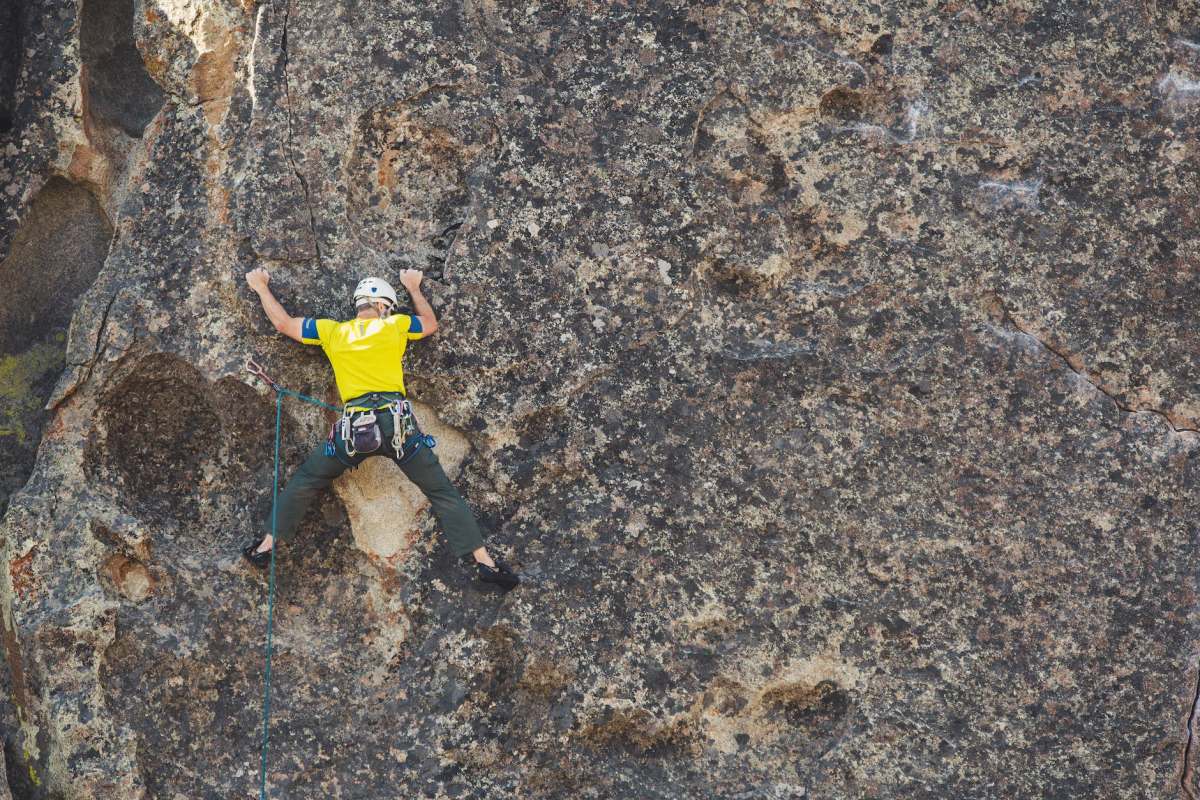
I was talking with some friends the other day about the movie Free Solo. One of my friends breezily remarked that Alex Honnold was crazy for climbing El Capitan in Yosemite National Park, a nearly 3,000 foot ascent without ropes, anchors or any other protective gear. Before I watched the movie, I would have agreed. After all, the first time I climbed a rock face, I was only three feet off the ground when my leg start shaking, a condition so common it has a name – sewing machine leg.

But when you watch the movie, you see how impeccably he prepared for the challenge. Alex climbed each section over and over again with protective gear, until every move was automatic and if not easy, than at least anticipated.

For me the crux moment is when the film crew assembles to film his free solo attempt and he starts but then calls it off because he knows it’s not the right day. In that willingness under the pressure of expectation and respect for everyone else’s time and with the knowledge that they won’t be able to try again until the next year, he shows how incredibly brave he is.

For me this isn’t a movie about a climber ascending a famous wall at Yosemite. It’s an allegory for all of us about the call to recognize and commit to our gifts. It is about accepting our paths, the unique reason we are all on the planet, and then walking that path.

It contains both the vision piece – and execution piece, the incredibly hard work that we have to do to hone our gift once we accept it. It shows that purpose and practice go hand in hand.

And it speaks to how vital it is to listen to the quiet Divine voice within us. So that if the day, the conditions or the circumstances aren’t right, we are willing to honor the voice within that says “Don’t do it” no matter how silly it could make us look. We can listen, withdraw and wait for the right day.

When my daughter was 2-years-old and we were watching The Sound of Music, she asked why the characters at the convent were wearing habits and wimples. When I told her they were nuns, she repeated back to me, “They are nuts?

Yes, sometimes when we follow our calling, we might seem like we are nuts. It is hard to get quiet enough to listen to the small voice within. Even harder to put our gifts on display for the world to see and put in enough practice to bring them to bear in an audacious way.

But when we do scale that wall of gifts and dreams, when we stand on top and celebrate that unity of purpose, preparation and performance, we set the world on fire. As Howard Thurman said so well, “Don’t ask what the world needs. Ask what makes you come alive, and go do it. Because what the world needs is people that come alive.”


I’ve posted a related piece The Archetypes of Story on the Wise & Shine blog. If you have time, hop over there to check it out.

(featured photo from Pexels)

The Power of Stories

Imagination is not only the uniquely human capacity to envision that which is not, and therefore the fountain of all invention and innovation; in its arguably most transformative and revelatory capacity, it is the power that enables us to empathize with humans whose experiences we have never shared.” – J.K. Rowling

When my 2 1/2 year-old son had to have a root canal a couple of months ago, I crudely drew out the story in 8 sequential panels so that he could see the story as it played out and also take it to school and show his friends why he’d been absent. It was my effort to help him not only understand but also know why he had to go back for the second part of the treatment once the infection had healed. I’ll never know if it changed his perception but he was amazingly cooperative in the dental chair when we went back.

I didn’t know before I became a parent how much story-telling is involved. Not just in the reading of books at night but helping to narrate their story as they come of age. But I recently watched a Ted talk about the science of story-telling that explained that the elements story-tellers use are similar to ones researchers have found that our brains use to understand the world. It is the topic of my Pointless Overthinking blog post this week, Telling a Good Story.

And here’s the story of Mr D’s root canal shown in 8 panels:

(featured photo from Pexels)