“Some people are born on third base and go through life thinking they hit a triple.” – Barry Switzer
My friend, Eric (from the recent On The Bus podcast), and I recently made a lottery ticket pact. Neither of us usually buys lottery tickets. But we saw a condo for sale at the place we like to go to on Whidbey Island. We can’t afford it, so we decided to buy a PowerBall ticket and if we won, we’d buy it.
I know, a silly idea all around. But the funny thing was that once we’d bought the ticket, I was beset by the idea that I didn’t want to win the lottery because I wanted to earn what I have in life.
Following this stream of consciousness made me realize how many “lotteries” I’ve already won in life.
Being raised by an incredibly smart mom who told me I could be whatever I wanted as long as I was willing to put in the effort.
Benefitting from mentors who were willing to help me discern what is important, how to navigate adversity, and retain integrity.
Having technical skills at a time when personal computers, the Internet, and mobile technology emerged.
Being blessed with kids that were healthy when they were born and being able to afford good health care for me and my children to help keep us well.
Living in the Pacific Northwest where there are mountains to climb, beaches to comb, and summer weather so nice that most people just want to stay near home. At least for these five months.
Having incredible friends who have walked alongside me for ups, downs, and adventures.
And the list goes on and on. It makes me realize how much my independence and sense of earning is a tenuous construct. It reminds me to balance my dreams with not just what I want and need, but what I can give in thanks.
“Courage doesn’t always roar. Sometimes courage is the quiet voice at the end of the day, saying, ‘I will try again tomorrow.’” – Mary Anne Radmacher
A couple of days before Miss O had her field day at school, I mentioned it to her. Much to my surprise she groaned.
“Why that response?” I asked, thinking of past years where she loved all the silly games like the Mustache Dash where you run with a piece of licorice between your lip and nose, and the water balloon toss.
My almost nine-year-old daughter replied, “I don’t like it when I try my best and don’t win. It makes me feel like I’m a loser.”
Oh. All I could think to say in the moment was, “Well, the only way you have a chance of winning is to try.”
But I couldn’t stop thinking about how early we learn that it hurts not to win and the feeling of competition.
I think the trait that has served me the best is my willingness to try. So I find it fascinating to consider all the things that teach us not to try.
To be fair, parenting has also given me insight into the many things I’m not interested in trying. Weird foods, holding insects, and playing with slime come to mind. Even trying comes with some limits. Or wisdom. Whichever way you want to look at it.
Fortunately, the topic of field day came up the next day so I had another shot at handling it. Miss O brought up the topic of practicing. And I concurred that we don’t practice things like potato sack races on a regular enough basis to have any predictable chance that we’ll win.
“Nothing has a stronger influence on their children than the unlived lives of their parents.” – Carl Jung
The post was originally published on 5/10/2023. Heads up – you may have already read this.
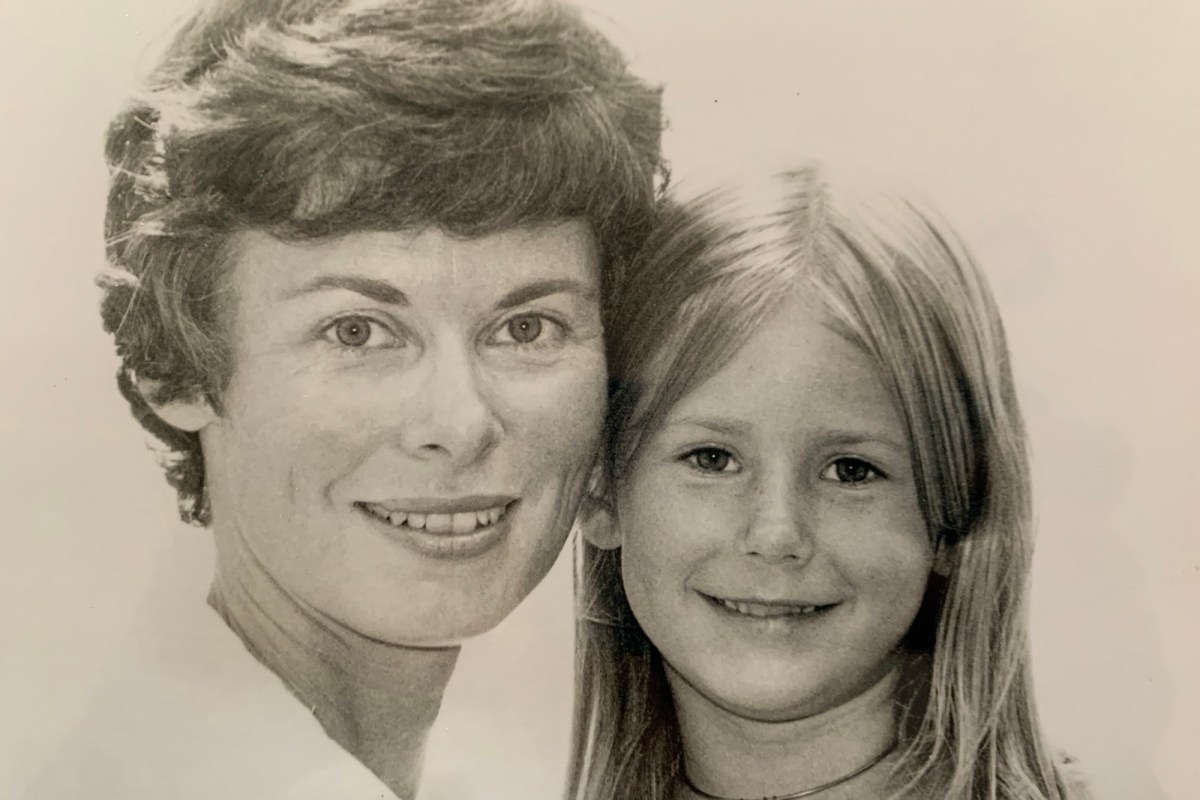
There’s a family joke that my mom is a CIA agent. Even now at 83-years- old, when we mention it, she just smiles and shrugs her shoulders, or says there is no point in denying it because we wouldn’t believe her.
As with most jokes, there is a kernel of truth in it. My very smart and capable mom graduated from college in the early 60’s with a degree in Far Eastern Studies and fluency in Russian. The CIA was actively recruiting from college campuses at the time and offered her a job. Her story is that she turned down the job because she met and married my father instead.
But over all the years since, she’s maintained her fluency in Russian, she went back to school when I was in college to get another degree in Russian language and literature, and she’s traveled there – when it was the Soviet Union in the 1970’s and later when it was Russia, many times. Would there be a more perfect cover for an agent than being a pastor’s wife?
It took me becoming a parent myself to understand how ridiculous this story, as fun as it is, really is. Not only because I finally understood that she didn’t have the time while raising three kids, of which I’m the youngest, but also because there is no way her heartstrings could have been in both places.
She made her choice. Instead of translating documents, she took on the work of translating the patter of baby talk into something intelligible. And then developing the sources into people who could talk the language properly.
She gave up a life of intrigue and instead instilled intriguing thoughts and ideas into her children’s lives.
Instead of secret meetings at night, she was called to hold our hair when we threw up and calm our fears when the bad dreams came.
She traded briefings about the state of affairs for parent-teacher conferences and traveling to sports events. And instead of establishing confidence in sources and colleagues, she choose to do the work of instilling confidence from the ground up in three young people.
Instead of fighting the bureaucracy at a government agency, she taught her kids that we had agency and were capable of fighting our own battles for what we believed in.
Instead of patiently nurturing a career that would challenge her brilliant mind and sense of adventure, she choose to nurture her patience with three young people who challenged her peace and equanimity.
Instead of running agents with their own backstories and motivations, she choose to help build a solid and stable backstory for us, fully present to launch our own motivations.
Instead of changing the world balance as a spy, she was the world for us.
My mom has never framed it as a sacrifice, but now that I see how much it takes to lose oneself to take care of others, I know that it was. I understand now that she had to make all these choices, from what might have been interesting and rewarding to her mind to hopefully what was interesting and rewarding to her heart.
She made her choices in life so that I could make the choices in mine.
“The good road and the road of difficulties, you have made me cross; and where they cross, the place is holy.” – Black Elk, Oglala Lakota Medicine Man
The other day I was sitting at the kitchen table with Miss O. One of the 20-somethings in our lives had just shared with us that she was pregnant and Miss O was so excited.
She asked, “Mommy, how did you tell Nana [my mom] that you were pregnant with me?”
I replied, “Well, it wasn’t that much of a surprise with IVF because she knew I went in to have an embryo implanted. Then 10 days later they did a blood test to determine whether I was pregnant. So I think I called her or I texted her.”
Then she surprisingly asked, “And she was happy?”
Trying to figure out the phrasing, I raised an eyebrow and replied. “She was thrilled.”
And then Miss O revealed why she’d asked like that, “Even though Bumpa [my dad] had just died?”
Oohhh, she was putting together the news with the story that she already knew which is that my dad died just as I was getting pregnant with her.
And then, my not quite 9-year-old daughter, replied, “We are the lost and found people.”
But Miss O’s comment about lost and found people made me think that maybe we all are. It seems like many new chapters are ushered in after we’ve given something up: a job, a partner, a story we believe about ourself.
And then, when we’ve given it up, we can proceed. Seems like the trick is not to get mired in the lost, so that we keep working towards the found.
We are the lost and found people. I couldn’t be more grateful to my beautiful daughter for pointing that out.
(featured photo is my dad and me when I was 2-years-old)
My book about my journey to find what fueled my dad’s indelible spark and twinkle can be found on Amazon: Finding My Father’s Faith.
“Believe you can and you’re halfway there.” – Theodore Roosevelt
This was originally published on 4/26/2023. Heads up – you may have already read this.
I was recently reminded of the time I did a long-distance bike trip on a bike with mountain biking tires. Here’s how that colossal misjudgment came to happen.
The first time I did a really intense workout to prepare for an upcoming mountain climb, my legs were shaking, I thought I’d pass out or throw up, possibly both, and instead I hung in there with the thought, “I can do anything for 20 minutes.”
And I could. So when it came to the next progression in the training, a fast, steep hike, I was equally as wobbly but thought, “I can do anything for a couple of hours.”
By the time it came to actually climb the mountain, I arrived with a 50-pound pack and the mantra, “I can do anything for two days.” I didn’t summit the mountain on that particular attempt but I did prove that I could endure for two days.
So when a friend invited me to do a long-distance bike ride down the California coast and my work schedule meant I could only be on the trip for two days. I thought, “No problem, I can do anything for two days.” It seemed to me that biking is very similar to mountain climbing – takes a lot of leg strength and more importantly, the same endurance muscle.
But I didn’t think long-distance biking was going to be the mainstay of my hobbies so when it came to shipping my bike to the starting point, for reasons of time and money, plus a little ignorance, I just sent my bike that had mountain bike tires. Not super heavy duty, grip the trail mountain biking tires but grippy enough to have a high amount on friction on a paved surface.
By lunch on the first day of the bike trip, my legs were completely gassed. I don’t think I’d experienced that level of fatigue even on the toughest mountain climb I’d done. I made it to the end of the day and then had to immerse myself in an ice bath to have any hope of getting my muscles flushed and restored to ride the second day.
But hey, I can do anything for two days and I made it.
Which is to say, it was a good lesson in endurance. Now when I look at a particular phase with my children that is getting my goat, I think “I can do anything for two years.”
But, and this is a big one for me, I’ve learned that enduring and enjoying are two different things.
On a recent Sunday morning, I was at home with my kids who are now 7 and 3 years old, and they were happily engaged with each other on a project. It left me with 20 minutes of discretionary free time and I was thrilled. As I actually took my time with some self-care, I marveled at the feeling of freedom and enjoyment I was experiencing.
That’s when it hit me. I thought “I can do anything for 20 minutes.” But that’s “anything” said with a sense of wonder and good fortune of an unexpected gift. That’s “anything” that acknowledges the enjoyment that comes with a little lessening of the strictures I tighten around myself. That’s “anything” that remembers that life is to be enjoyed and not just endured.
I’m so good at putting my head down and grinding out the miles to the end of the planned route each day. But it’s completely different training to raise my nostrils to the wind and my eyes to the scenery and notice each mile as it goes by. It’s a practice that is a lot less of a dramatic story tell but instead makes for a story worth telling.
So on Sunday, with a nod to the authors of The Power of Awe, I intentionally savored having unexpected moments to myself and micro-dosed some mindfulness full of gratitude and enjoyment and that made the experience even more impactful.
So I’m entering a new phase of training, one where I’m allowing myself the freedom and unscripted time so “I can do anything for 20 minutes.” I’d like to work up to “I can do anything for 2 days” but I’m taking my workouts slowly.
“The best and most beautiful things in the world cannot be seen or even touched — they must be felt with the heart.” – Helen Keller
I was digging around in my hiking gear this weekend and came across one of my CamelBak backpacks. Such an amazing concept to carry your water with an attached hose so that you could take a drink without stopping.
CamelBaks came with their own downsides though too. Slow leaks, fast leaks, and the time my friend Jill, had a hose that was stuck open. She kept turning around to try to grab as it sprayed in 360 degrees around.
A guide on Mt. Rainier once told me why they never recommended clients wear them while climbing. It surprised me because staying hydrated is so important to performance. The issue was that on the upper mountain above 10,000 feet, CamelBaks often froze. The result is that a climber ends up carrying an ice block next to their heart. If that happens, it cools blood flowing in and out, sometimes accelerating hypothermia.
That was an aha moment for me. It totally made sense why it would be detrimental to staying warm and having functioning extremities when climbing but I’d never thought of it. And well, you know how I like climbing metaphors. It also works to describe how dangerous it is to hold some things close to the heart. In my case, I’m thinking how anger, blame, guilt, shame, or fear reduce my overall warmth if I carry them around.
For better or for worse, what we hold next to the heart affects everything that’s pumped out.
(featured photo is mine of our group leaving the 17,160 foot summit of Mt. Ixtaccihuatl, October, 2000)
“Children are not a distraction from more important work. They are the most important work.” – C. S. Lewis
Sometimes I think Hallmark has it backwards. Take Mother’s Day for example. My kids didn’t do anything to choose me. I, on the other hand, took a very intentional path to become a mom.
You didn’t know me before I had kids. I didn’t write in the period of life when I was numbing my feelings with wine every night. Meditation changed that pattern so that I had a different way to irrigate my irritations.
But having kids has given me so much more practice. That’s a funny sentence. I didn’t mean that they give me many more irritations to irrigate but on some days that’s true too.
Mostly I meant that these beautiful and honest beings have shown me what emotional honesty is. By helping them name their emotions, I’ve learned how to name and feel mine too.
Every day is an adventure
I’m a creature of habit. Without kids, I’d have likely continued my pattern – hike every Saturday, do a big trip every two years. Like my trips to Everest Base Camp, climbing the Via Ferrata routes in the Dolomites, or biking from Vermont to Canada to New York – great trips that totaled about two weeks out of every 104.
But with kids – every day is an adventure of curiosity and learning. We rescue bunnies, dig in the dirt, ride bikes, or sell lemonade. I’m learning to be flexible and adventurous on a daily basis instead of a bi-annual one.
Big messy love
Parenting is the messiest form of love I’ve known. Not just sticky hands and faces but so much laundry, picking up detritus, territorial incursions because of changing boundaries, and spilled over spats between siblings.
But it seems to me, that the messiness that makes it stick like Velcro instead of slide off like a glossy surface. It’s proof that nobody is perfect any we love each other anyway. The repetitiveness reminds me how many chances we have to get it right. Over and over we make a mess. And over and over we get to come together and make it right.
The news has all sorts of stories about what isn’t working in this world. But then a day like Mother’s Day comes around and I look at all the people who are trying their best to love wholeheartedly – with young kids, and old kids, and/or other people’s kids. For me it’s a celebration that love wins.
‘‘Understand that the hardest times in life to go through are when you are transforming from one version of yourself to another.” – Mysticool
This post was originally published on 3/29/2023. Heads up – you may have already read this.
It’s something that I’ve found again and again in life – when I need to transform, someone or something shows up to be the catalyst. The Universe sends me a guide in some form or another. Here are some of my favorite examples:
When I was bored after a break-up with a boyfriend and I drove around a corner and Mt Rainier was squarely in my view. It started my amateur climbing career.
After I suffered from being stuck and closed down for a couple of years after my divorce, I received an invitation for a mediation class from my friend, Deirdre.
In my 40s when I was working out what was next in life, I would see images of the English Duchess Kate and start to cry. It totally unnerved me since I wasn’t much of a royal watcher and had eschewed having a family until then. And then I finally realized that I wanted to have kids.
I haven’t known all my guides. For example, researcher and author Brené Brown has been my guide towards being vulnerable and whole-hearted simply through the act of reading her books and listening to her.
As my meditation teacher, Deirdre says – transformation is what we need to be our best selves. Yes, it involves change but our spirits are wired to keep growing and finding the balance of all we can be when we need to evolve or simply have gone too far in one direction.
For me this goes in waves, I’ve changed my body to become a mountain climber only to find after years of doing that, my mind and soul needed to also get in shape through meditation. That change helped me open to understanding it was time for me to become a parent. And then I transformed almost completely to become a parent only to find as my kids age, it’s time to transform again to someone who remembers she has an individual, alive part that needs to dance too.
Perhaps this goes without saying, but the other part that I’ve noticed is that I don’t always get the message the first time. When I ignore the call, sometimes it builds into a crisis. In climbing terms, it goes from being a part of a team with a guide at the front to a rescue where I have to flail at the end of the rope.
Some of these changes are inspired from within and feel like evolution. Others come from the outside with disappointment and heart break and feel like erosion. However it comes, I’ve found it easier to take when I bow my head, put aside my opinion on whether I want it or not, and then look for guides.
Because I’ve found is that the Universe hasn’t left me to do this alone. It sends a guide or a catalyst to kick off the reaction. If you don’t believe in any Higher Power, I think that statement could also be cloaked in social learning theory – that all the people around us are walking advertisements for what we can be next. Whichever it is you believe, my experience has shown me that the guide may or may not be in our lives for the duration but they show up to help us over the threshold to what’s next.
“Above all, watch with glittering eyes the whole world around you because the greatest secrets are always hidden in the most unlikely places. Those who don’t believe in magic will never find it.” – Roald Dahl
The other day the paper on the end of my tea bag string had just two words, “Live consciously.” As I sat and sipped my tea, I thought, “say more.”
Years ago, I read a passage in Mark Nepo’s Book of Awakening that heightened my appreciation for tea.
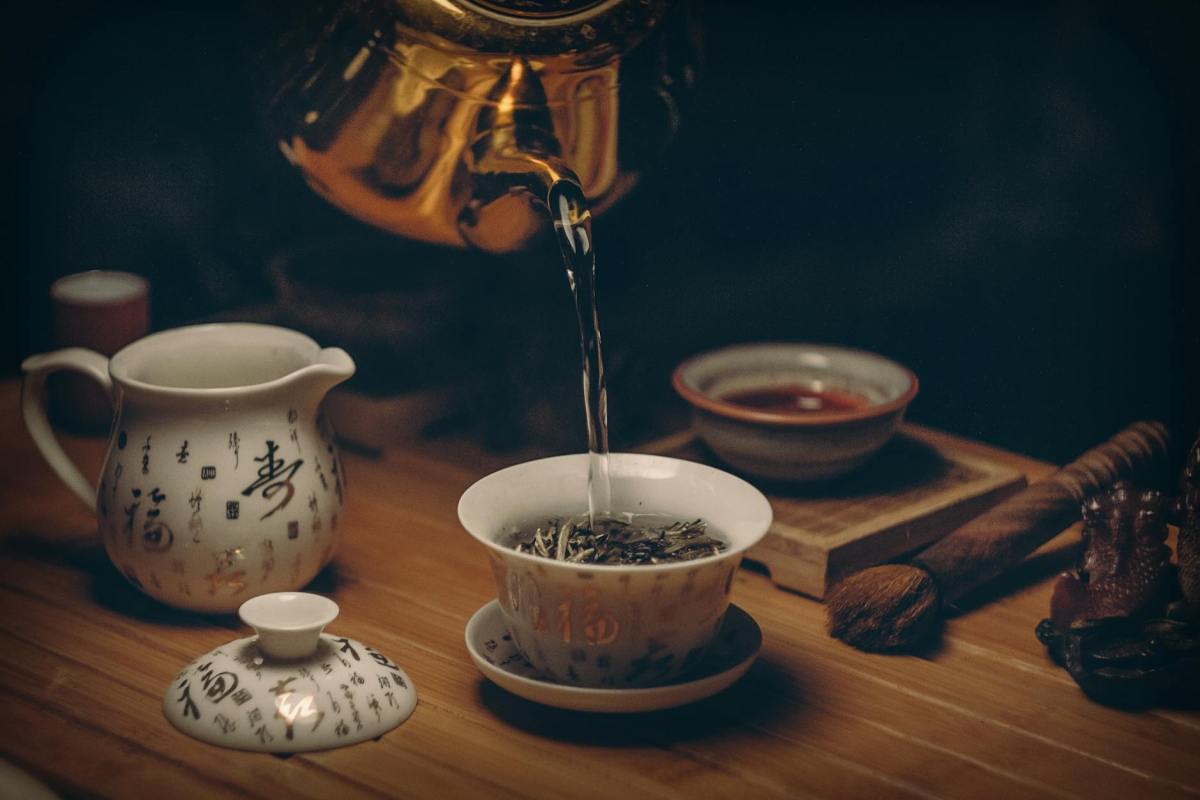
“If we stop to truly consider it, making tea is a miraculous process. First, small leaves are gathered from plants that grow from unseen roots. Then boiling water is drained through the dried leaves. Finally, allowing the mixture to steep creates an elixir that, when digested, can be healing.
The whole process is a model for how to make inner use of our daily experience. For isn’t making tea the way we cipher through the events of our lives? Isn’t the work of sincerity to pour our deepest attention over the dried bits of our days? Isn’t patience the need to let the mixture of inner and outer brew until the lessons are fragrant and soothing on the throat? Isn’t it the heat of our sincerity that steams the lessons out of living? Isn’t it the heat of those lessons that makes us sip them slowly.”
Steeping my “live consciously” tea bag made me think of three miraculous events that happened in the last 4 weeks.
The first leaf
A few weeks ago, on the last morning we were staying at an AirBnB on Whidbey Island, I took Cooper, the dog, out to go potty. It was 5:30 in the morning and still dark enough to notice that the dome light on my car was turned on. Ugh, it must have been on for almost 24 hours since the kids and I went to the grocery store. I got the keys and tried to start the engine and it wouldn’t turn over. But the dashboard lights came on so I knew it wasn’t entirely dead.
I turned off the light, locked the doors, and went back in to meditate. I tried to dial down the worry about what I’d do if the car wouldn’t start while on vacation and away from the usual people I’d lean on. Check out wasn’t until 11am so I told myself not to fret about it until 10:30am. Instead, the kids and I packed up and went to the beach one last time.
When 10:30am came, I unlocked the doors, put the key into the ignition, prayed, and turned the key. The car started.
The second leaf
Miss O had been asking for weeks to go to the new Boba tea shop in our neighborhood. We tried once and it wasn’t open. Other times we had too much going on. Finally, on a Sunday in mid-April, we got there. Miss O carefully scanned the menu. Her taste palates are pretty selective. After much consideration, she ordered a strawberry chocolate Boba. She took one drink and didn’t like it. She wondered if we could get our money back and looked absolutely miserable. I reminded her that it’s okay to try new things and to not like them.
Mr. D had a raspberry lemon rooibos and was blissfully sucking his down without noticing his sister’s unhappiness. I was standing there pondering. I wanted her to be open to trying new things. But I also didn’t want to signal we could buy $7 teas until she liked one.
Then there was a moment when the shop cleared out, no one was waiting for a drink and there was an extra raspberry lemon rooibos on the bar. I asked the barista if we could pay for it. She said to just take it. Pure magical rescue from our misery!
The third leaf
Mr. D said a few times that he wanted to learn to become a ninja. He repeated this again on a Monday afternoon about three weeks ago when I picked him up from school. Miss O was also in the car. On a whim, we all were up for popping in to the Aikido dojo in our neighborhood to see if it would work.
We showed up right at the time of the class for kids, the sensei told us this class is for training to be a samurai, not a ninja and Mr. D was okay with that. She invited Mr. D and Miss O to join the class starting right at that moment, and they both loved it.
It was one of those moments where everything lined up like dominos. The least planning I’ve ever had to do for a great fit.
Here’s the tea I made from this
Living consciously for me means finding the magic in moments. The light touch that I can sense sometimes when I’m scared, confused, or need an easy win. It doesn’t mean that the dog doesn’t throw up, or I won’t break and spill the glass of water right before I’m supposed to lead a webinar. But it gives me a glimpse of a wider view in which I can find the current to flow with.
“I began to realize how important it was to be an enthusiast in life. Embrace it with both arms, hug it, love it and above all become passionate about it. Lukewarm is no good. Hot is no good either. White hot and passionate is the only thing to be.” – Roald Dahl
This past Tuesday, eight-year-old, Miss O was working on a school project and announced “Volcanoes are boring.”
I harumphed thinking about all the beautiful, scenic, and climbable volcanoes in our vicinity. “I love volcanoes,” I said.
She shot back, “I bet you could make volcanoes interesting.”
So at bedtime that night, I told her and four-year-old Mr. D. about when I was 11-years-old and living in Spokane, Washington. We were driving home from church on a Sunday afternoon in May, 1980. We stopped to talk with a neighbor who told us that Mt. St. Helens had erupted. Mt. St. Helens was on the opposite side of the state from us. The eruption blew the top 1,300 feet and the north side of the mountain off. We nodded with interest and went about our day as usual thinking it had no bearing on us.
As we drove home from a playdate four hours later, the sunny May sky turned gun metal gray and ash started falling. We carefully drove home with our windshield wipers pushing the dusty pile off our windshield.
In Spokane where it snows usually from October through March, school is never canceled because of weather. But after Mt. St. Helens blew, they told us to stay indoors, and school was canceled for a week. Everyone tried to figure out what to do with Mt. St. Helens ash. We collected it to polish silverware. Others used it to make ceramics. My friend, Jiffy and I used it to build sand (ash?) castles. When we drove across the state on vacation that summer, we stopped on several occasions to watch impressive ash dust devils form in fields across the state.
Then I told my kids about how, in the year 2000, twenty years after it erupted it, I climbed Mt. St. Helens for the first time. It’s hard to get permits to climb in the summer. The park service limits traffic to help the flora to grow back. [And here I may have embellished a little side story imagining how excited the scientists were when they discovered the first flow to grow back after the eruption. “Look, look, the first tiny flower has come back to St. Helens!!”]
In order to bypass the permit lottery process my friend, Jill, and I climbed in the late spring when the traffic is low so it’s easy to get a permit. We climbed up 6,000 feet on a sunny April Saturday to look over the rim. Even though it wasn’t very high (any more) was a long one-day climb.
And the rim? Well, it was fascinating to look over the edge into gaping hole below with a little pot-belly lava dome in the middle. And then to have a sense of surreal shock that nothing was below us.
For as exhilarating as it is to stand on a mountain top, it’s a little dizzying to stand on only half of one.
This bedtime story session was on Tuesday night. By Wednesday afternoon, Miss O was telling me facts about volcanoes. “Mom, did you know there are three types of volcanoes?”
I didn’t even try to hide my glee.
This theme shows up for me again and again. When we share our stories – it matters. Our authentic voice telling our experiences are more than just a bedtime story. It’s the passing on of energy, passion, and warmth.
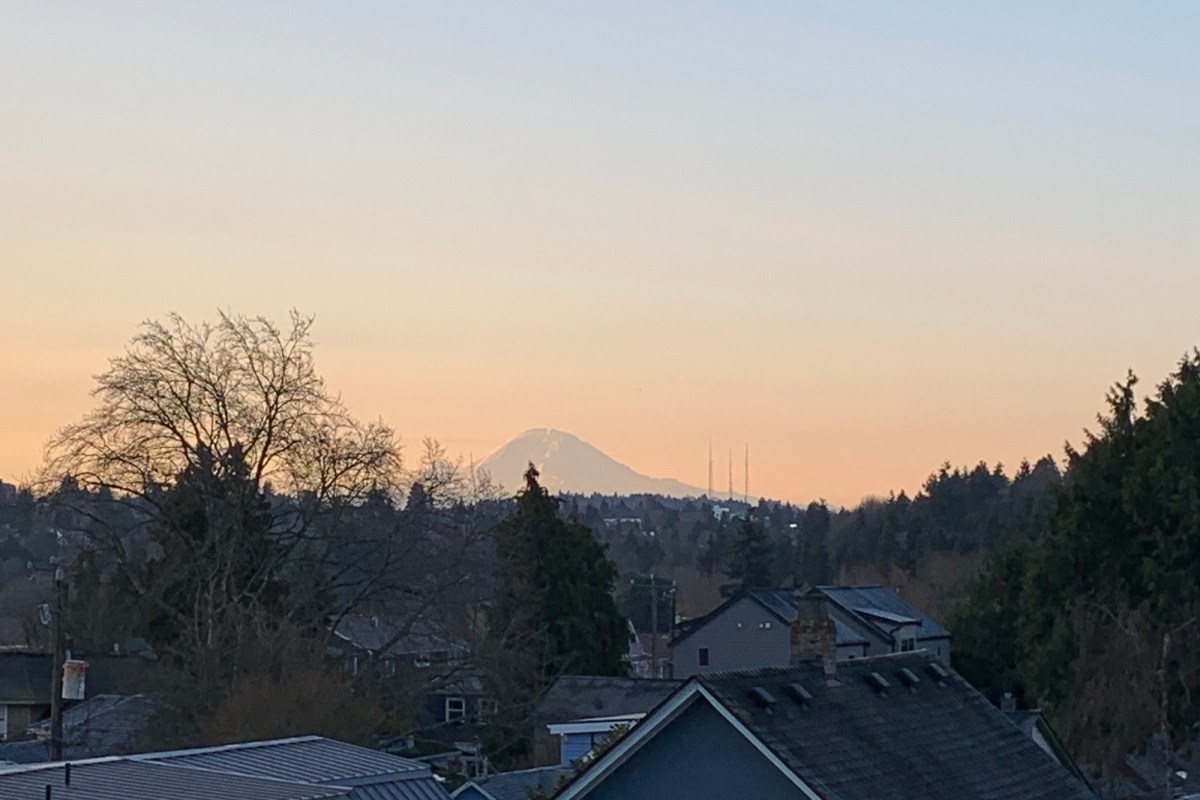
(photos in this post are mine – the featured photo is my favorite volcano, Mt. Rainier)
And speaking of authentic stories, Vicki and I talk with writer and blogger, Cheryl Oreglia on our podcast today about her experience at the San Francisco Writer’s conference. She sells us the idea that not only are we the only one to tell our stories – we might be obligated to. It’s such a great episode. Please tune in by searching for (and subscribing to) Sharing the Heart of the Matter on Apple, Amazon, Spotify or Pocketcasts




 Surprised By Joy