They Go Together Like Ra Ma La Ma Ka Dinga Kiding a Dong

You are not a drop in the ocean. You are the entire ocean in a drop.” – Rumi

To whoever thought of building a kid’s hair salon in the neighborhood toy store – wow, you are brilliant.

The other day, Mr. D needed to get his hair cut. So Miss O and I accompanied him to the back of the toy store so he could climb in to the fire engine shaped seat to hang out with “his best friend,” also known as Jenny, the stylist.

I sat on the couch in the toy store positioned just outside the salon while Miss O, and Mr D, when the haircut was done, roamed around to look at everything on the shelves. I was reading my book, but really was mostly reading the people.

I’ll start with my kids. Eight-year-old Miss O knew within minutes that she wanted slime and was willing to spend her own money on a second slime because it was worth it to her to have two fancy slimes, even though it was over the budget I had given her. She had a full story of why each one was important and how the characters portrayed for the slimes related to things she’d learned at school. In other words, she had an endless monologue for her shopping experience.

Four-year-old Mr. D roamed the store for an hour looking at everything, playing with display items, enjoying the experience but eventually rejecting each toy as not the right thing. Mr. D wasn’t aware of budget and so it wasn’t price that was informing his decisions. He either had something similar at home or it didn’t sing to him.

But he did pair up with Mikey who was about his same age. Mikey had $10 to spend which at a toy store in this day and age, doesn’t buy much. He was interested in a police car, and the small ones they had didn’t match his idea. But he didn’t complain about that, he just enlisted Mr. D in his help to find more options.

And then there was Teddy. I’d guess Teddy was halfway between Miss O and Mr D age-wise, probably 6-ish. He was playing with my kids at the train table by the couch I was sitting on. He was declaring all the demo trains were his, and might have taken a thing or two directly from the other kids. Miss O was facilitating play and just shrugged her shoulders and accommodated him, somehow sensing it was more important to him than to anyone else.

His mom was sitting next to me tried to get Teddy to modify his behavior. Seeing it was okay with the kids, she sighed, and said to me that Teddy was emotionally fragile at that moment. It was his dad’s birthday and he was having trouble sharing the spotlight. He’d had quite a few hard “no’s” to things he’d wanted that morning.

Holy cow! Great people watching. Each of the characters mapped to people I’ve known in my life and their approaches. Disappointment, idealism, pragmatism, story-telling, alliances. Yes, bravo to whoever thought of a salon (and couches) in a toy store.

(featured photo from Pexels)
Pause to Celebrate

Sometimes you will never know the value of a moment until becomes a memory.” – Dr. Seuss

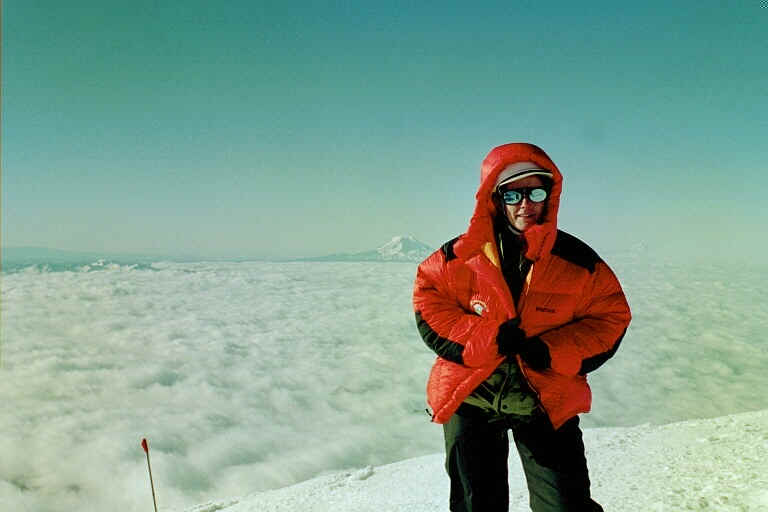
The first time I summitted a mountain, 14,411 foot Mt. Rainier, I was too cold to stand around and celebrate. I huddled with about five other climbers in the lee of some rocks waiting for the rest of the group to be ready to start the descent.

For the big summits I’ve stood on, that first one was the most uncomfortable, but none have been particularly pleasant.

I was thinking about this recently after we finished a big work project. The feeling upon a successful completion wasn’t that we were ready to celebrate – but that we were collectively exhausted.

Putting it together with mountain climbing, I realized that often, success feels like exhaustion. That applies to growth too. It’s only in retrospect that I can feel or recognize that something remarkable is finished.

Of course, the really good and experienced climbers that I climbed with would always say “Climbing is a round trip sport.” But even when we finished our round trip and went to the pub afterwards, we’d toast the summit, and quickly move on to spending most of the time talking about what we were going to do next.

Sometimes, we just need to take a pause to celebrate. Like now. Even on a Monday. If nothing else, we deserve a moment of applause for just showing up. Happy Monday!

I’ve written a post about recognizing our courage on the Heart of the Matter blog: We’ll Call it Courage Anyway

The Power of Stories

See, broken things always have a story to tell, don’t they?” – Sara Pennypacker

Shortly after I returned from Everest Base Camp in 2001, I went with my dad to hear Beck Weathers speak. Anyone that has read Jon Krakauer’s book Into Thin Air or any of the other books about the 1996 disaster on Everest, is probably familiar with his story. Here’s my abridged version:

Beck was a pathologist from Texas that was climbing in New Zealand guide Rob Hall’s group during the 1996 Everest climbing season. He was high up on the mountain nearing the top when he went snow blind. So, Rob dug out a spot for him to sit and wait until Rob summitted with the other clients and returned for him.

Rob never returned for him because Rob died trying to help another climber and didn’t adhere to his turn-around time, the time when they needed to go back down no matter whether they’d summitted or not. But one of the other guides from Beck’s group came by and now that the storm was descending, Beck went down with them to Camp 4. They got within 150 yards of the camp but couldn’t find it in the blizzard conditions. As they circled in the storm, Beck just fell over and they left him lying in the snow. He laid there for 15 hours at 26,000 feet during a storm with his face and hand exposed.

And then he miraculously “woke up” and managed to make his way to camp. The other climbers were in complete disarray after the storm and were shocked to see him. They helped him into a tent – and then left him there, expecting that he’d die during the night. As Beck screamed because he couldn’t eat, drink or even keep himself covered with sleeping bags, they couldn’t hear him over the howling winds.

Beck didn’t die that night so the next morning the other climbers rallied to find a way to help him down the mountain as he was suffering frostbite to his hands, arm and face. He was short-roped (pretty much tied right to) a dream team of amazing climbers, Ed Viesturs and David Breashears. Ed and David weren’t from Beck’s group but were up there filming a Imax film about Everest and had aborted their climb to help others.

The Dream Team got Beck down to 20,000 feet where a helicopter that was rallied by Beck’s wife in Texas attempted to land. The air is so thin that the helicopter rotor blades could barely keep the machine aloft and to even try to do this once, the pilot off-loaded every bit of weight that he could. He was on the knife-edge of not making it when he came over the ridge to find the landing pad the Dream Team had marked with red Kool-aid.

And just as Beck is about to get on the helicopter, a climber who has more severe injuries from the Taiwanese team arrived. The helicopter could only take one person and Beck gave up his seat to the more injured climber. Beck assumed he’d just signed his death warrant because he couldn’t make it through the Khumbu icefall with his injuries, not even with the Dream team’s help because they’d have to cross huge blocks of ice on ladders. As he’s contemplating this, the helicopter rose one more time over the ridge – the pilot came back for Beck.

Beck lost his arm from his elbow down plus all the fingers on his other hand and parts of his feet. He had a prosthetic nose that they grew for 6 months on his forehead. He could never work as a pathologist again. He wrote a book called Left for Dead that recounts with detail those four times he was left for dead on Everest and began a second career as an inspirational speaker.

Sitting in the front row, I was transfixed watching Beck tell his story. Great story-tellers have a way of raising questions in us that have nothing to do with Mt. Everest. As author Brandon Mull said, “Sharp people learn from their mistakes. But the real sharp ones learn from the mistakes of others.”

Have you ever pursued a goal so obsessively you gave up everything else? Would you be able to keep going after being left for dead? Would you give up your seat to someone else that’s more injured or give up your IMAX filming to help someone else? Have you been able to find your way to a new career?

(featured photo from Pexels)

Telling a Good Story

Just because they are a story doesn’t mean they’re not real.” – H.M. Bouwman

This is a repost of writing I posted on 7/13/22. Heads up – you may have already read this.


The other day my friend, Eric was over and started telling a story that had us all rapt, including my almost 7-year-old daughter and her friend who usually dismiss grown-up talk as boring. The story was about a summer job when he was in high school as a tennis instructor at a little neighborhood beach and tennis club.

One week they were short of lifeguards and asked him to fill in. He was neither certified nor a very good swimmer but this being the mid-1980’s, that was no problem because they just made him the shallow end specialist.

There was a group of 7-8 year old kids that showed up at the club in the mornings, had lunches their parents had packed and stayed all day. One sunny Seattle morning one of those kids, a 7-year-old boy announced he was going to catch a duck. Eric, as shallow end specialist of the week, said “No way, you are not going to catch a duck.” The boy proceeded to wade in to Lake Washington up to his neck and stand completely still for an hour.

Sure enough, the ducks got used to the boy and started swimming closer and closer until BAM, the boy caught one by the neck. Now Eric had both a boy and a duck, squawking in the shallow end and he was yelling, “Let go of the duck! Let go of the duck!” But the boy was conflicted because he’d spent an hour trying to catch the duck and now he didn’t know what to do.

At this point in the story, Eric had my daughter and her friend’s full attention and they were clamoring to know what the boy did with the duck. He let him go of course. But I was fascinated about what makes a good story.

According to journalist and author, Will Storr, there is a science to story-telling. As writers have worked to understand what captures an audience, psychologists have studied how our brains make sense of the world and both found the same elements. Stories have:

  • Change – good stories involve change because our brains are wired to identify change
  • Cause and effect – the wiring that makes the events understandable
  • Moral outrage – the motivation to act as seen in struggle between heroes and villains, the selfless versus the selfish
  • Effectance – humans like to be the causal effect on objects and the environment
  • Eudaemonic element – the happiness we get from pursuing goals that are meaningful to us but difficult
  • The God moment – how does the hero control the world?

These elements makes so much sense to me. We are all faced with change and we struggle mightily to define who we are in relation to it, what actions we take and how to be happy and ultimately control the world, or at least our perception of it. Stories are one of the tools we use to process our experience and follow the advice Maya Angelou gives, “If you don’t like something, change it. If you can’t change it, change your attitude.

I love watching how my kids have become pretty good listeners when a grown-up tells a story. I think it helps them try to understand the factors that go in to how the world works. They listen because they want a happy ending where they can control their world. Chances are, if among other things, they learn to tell themselves a good story filled with their responsibility and agency, they’ll probably have it. Chances are, that’s true for us grown-ups too.

My kids have been clamoring for me to tell them all the stories about real life that I can think of. I find it endearing and a little bit of an honor that they are interested, even at just 7-years-old and 3-years-old. This spate of stories brought up a memory of a friend who claimed to be clairvoyant and a cat lover. The combo didn’t work out so well for the cats. It’s the topic of my Wise & Shine post today: The Cat Conundrum

(featured photo from Pexels)

Connecting Through Stories

Some cause happiness wherever they go; others whenever they go.” – Oscar Wilde

At night after we’re done reading, I’ve been telling my kids stories from my life. It feels like a lot of work sometimes after a long day, but it also has this strange power of connecting past to present.

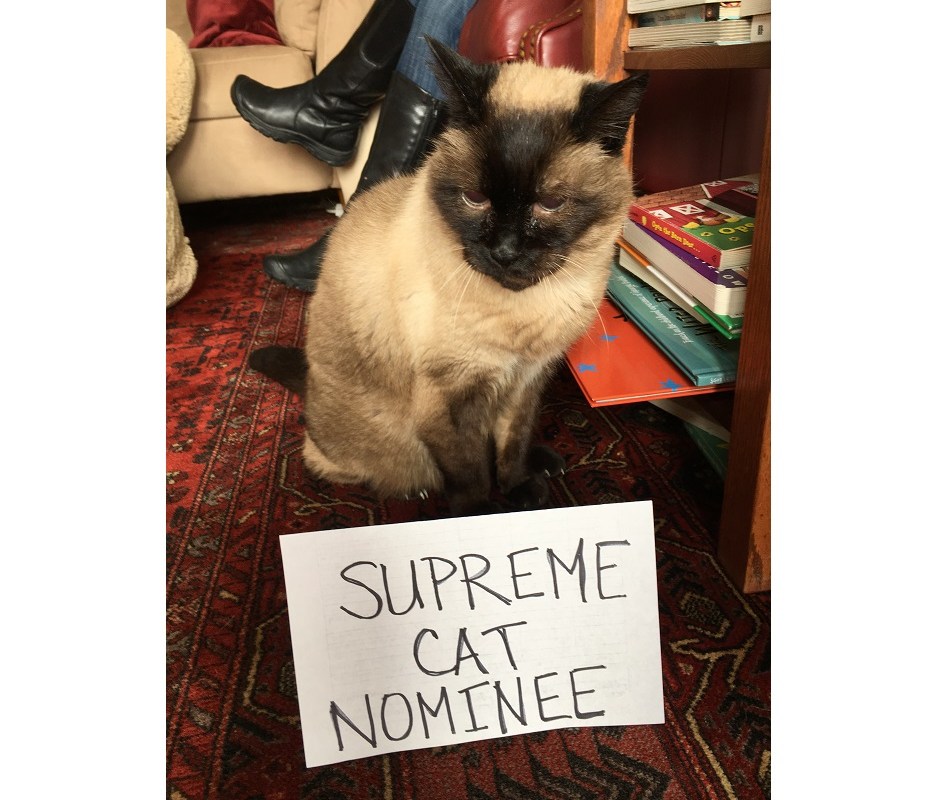
Some of their favorite stories are about Simon the bad cat. He was a cat that a neighbor left with me when she moved to Hawaii. Before he was my cat, he’d wait outside my house in the morning for me to take my 150 pound mastiff for a walk, jump out of the bushes, playfully smack my dog on the rump and then walk with us for 12 blocks.

Suffice it to say, he was a character perfectly made for bedtime stories. He got into all sorts of trouble – he’d break into other people’s houses, get stuck, and he fought with other cats. One time he must have ended up with a tooth or a claw stuck in the area between his shoulder blades because it abscessed and the vet had to do surgery to drain it. Simon died on the operating table and they had to do kitty CPR on him. It worked and he sprang back to his adventurous life.

There was one neighbor, Steve, who particularly hated Simon. One day when Steve was showing the new tenants of the duplex he lived in the shared basement laundry room space, he was telling them something like, “Whatever you do, close the door because there’s this terrible cat that comes in here if you don’t.” The new tenants asked what the cat looked like and as Steve described Simon, they pointed to the shelf behind Steve’s shoulder, “Oh, you mean that cat right there?” Simon had snuck in to listen to Steve’s whole speech.

When Steve worked on bicycles in his front yard, Simon would memorize where everything was laid out. And if Steve moved something or added a part, Simon would pee on it. It drove Steve crazy – but also fascinated him that the cat was that smart…and that bad.

Surprisingly, given all his dangerous antics, Simon lived to a ripe old age of 19 year old and died right after Miss O turned 3 years old. When we got the new cat, we just added an “e” to Simon so that Simone could share his Xmas stocking (always filled with coal of course). The quote for this post is a little tongue-in-cheek but I admit I felt a little relief when Simon went to Cat Heaven that I wouldn’t have to be apologizing for his antics any more.

Steve, the neighbor that hated Simon, has also moved on. He no longer lives on our block but must be in the area because I see him from time to time.

After several nights of these Simon the bad cat stories, one morning last week the kids and I were stopped at a stop sign on our drive to school when a man rode by the front of our car on a bike. It was Steve from the Simon stories! I yelled, “That’s Steve.”

We laughed all the way to school.

If you have a moment, I have another fun story from my past, a climbing story on the Heart of the Matter blog this morning, On The Way To the Top

(featured photo is mine)

A Voice From the Past

Would I rather be feared or loved? Um…Easy, both. I want people to be afraid of how much they love me.” – Michael Scott

On the first weekend of August, Seattle holds its Seafair festival. There’s a parade downtown, the Blue Angels do their airshow and at the center of the activity is the hydroplane races on Lake Washington. Most summers my brother hosts an outing on his boat to watch the Blue Angels fly. The featured photo is a picture I took from my brother’s boat this summer of the Blue Angels.

When my dad was alive and we were together watching, I’d make him recount the story of watching the first Seafair hydroplane race in Seattle when he was 15 or 16 years old. It was one of my favorite stories that Dad told.

So in light of this week of the anniversary of my dad’s death and of talking with Troy about writing about him, I put together this audio recording of my dad telling this story. It’s rough, informal and short (five minutes) – just a recording I made of him on my voice app but for anyone who loves my dad’s humor cards I feature on Sunday Funnies and is curious to hear his voice, here it is: Wynne Leon on Recording Your Loved Ones

Thank Goodness They Survived

The only way to make sense out of change is to plunge into it, move with it, and join the dance.” – Alan Watts

The other day I was out for breakfast with my brother, his wife and my kids. We went to my neighborhood cafe that we used to meet at every weekend before the pandemic but have only been back about a handful of times since. Greeted warmly by the staff who marveled at how big the kids have gotten, it was such a feeling of homecoming. As we left, my sister-in-law said, “Thank goodness they survived.”

I find myself saying that a lot these days about businesses that I love but imagine didn’t have an easy time weathering the pandemic. There has been much hardship but it’s also been combined with innovation. Like with the theater. As an example, my friend and colleague Jack Canfora is releasing a theatrical podcast this fall – his theater company is performing one of the plays he’s written and then releasing it in seven podcast episodes.

I had a chance to interview Jack about how he came up with this idea and that not only democratizes our access to theater but also lets us all participate and be patrons of the arts. It’s the topic of my Pointless Overthinking post this week: Adding Innovation to the Grand Theatrical Tradition

(featured photo from Pexels)

Want to Clip In?

You have a gift that only you can give the world – that’s the whole reason you’re on the planet.” – Oprah Winfrey

I saw this caption on Instagram from author and climber Jon Krakauer the other day.

“Today I watched the sun come up from this perch at 12,000 feet. It’s impossible to overstate how powerful experiences like this are for me, and how grateful I am to have such opportunities on our public lands.” – @krakauernotwriting

It reminded me of a story that my friend Doug told me. Doug was 15 or 16 years old climbing Mt. Hood in Oregon with his grandfather. They reached about 9,000 feet and his grandfather couldn’t climb any further. So he asked a passing rope team if his grandson could climb with them for the remaining 2,200 feet.

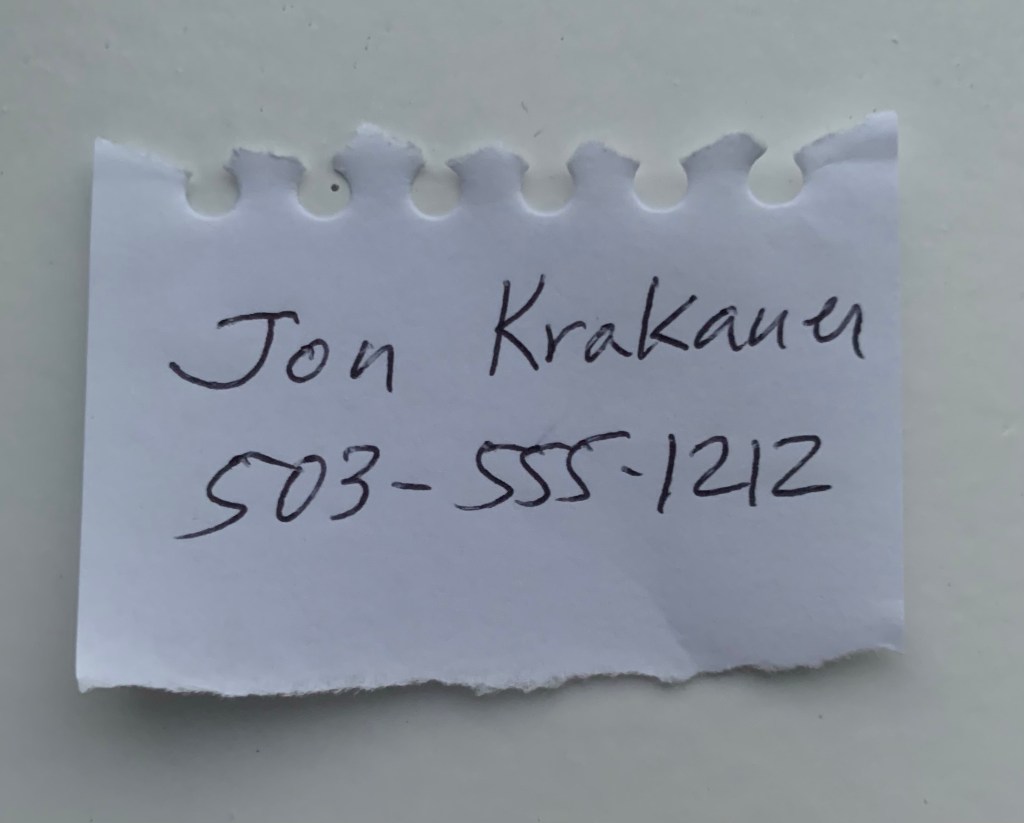
They agreed and Doug had a wonderful summit with these guys in their mid-20’s. When they returned to Doug’s grandfather, he thanked them for being willing to take Doug along. The rope leader said he’d done a great job and he was welcome to climb with them any time. Then he wrote his name down on a napkin and handed it to Doug. This is how I imagine it looked:

Doug never called the team leader – who was in fact THE Jon Krakauer who went on to write Into the Wild and Into Thin Air and many other great books (and climb some great routes). But in his own way, Jon Krakauer has been taking us along on his climbing adventures for 40 years. His passion for the outdoors and for writing has combined to bring us on his rope team for many years. And even when he’s not writing, according to his Instagram moniker, he’s sharing adventure with us and inspiring stewardship of this land.

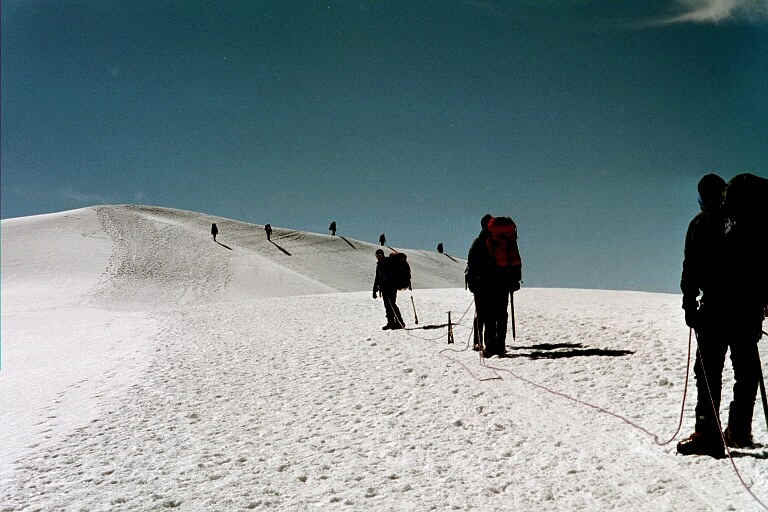
A rope team usually has 5-6 people on it. The leader is most often the strongest climber or navigator, there’s usually someone on the team that organizes and keeps people together but everyone on the team works equally as hard and contributes to the safety and inspiration of all.

This idea of how we all contribute to the rope teams reminds me of what Nicholas Christakis, professor of sociology at Yale, says about his work studying the long view of human history. He’s deeply optimistic about our ability to cooperate, teach others and love because we are one of the only species that does that outside of the family structure.

As Oprah says in the quote for the post, we all have a gift we can give the world, a reason that we are on this planet. Oprah, Nicholas Christakis, Jon Krakauer – they are like the dream team of climbers reminding us all that when we share with our gifts with others, we make the world a better place. Want to clip in?

(featured photo is mine from Mt. Ixtacchuatl, Mexico)

The Power of Stories

Imagination is not only the uniquely human capacity to envision that which is not, and therefore the fountain of all invention and innovation; in its arguably most transformative and revelatory capacity, it is the power that enables us to empathize with humans whose experiences we have never shared.” – J.K. Rowling

When my 2 1/2 year-old son had to have a root canal a couple of months ago, I crudely drew out the story in 8 sequential panels so that he could see the story as it played out and also take it to school and show his friends why he’d been absent. It was my effort to help him not only understand but also know why he had to go back for the second part of the treatment once the infection had healed. I’ll never know if it changed his perception but he was amazingly cooperative in the dental chair when we went back.

I didn’t know before I became a parent how much story-telling is involved. Not just in the reading of books at night but helping to narrate their story as they come of age. But I recently watched a Ted talk about the science of story-telling that explained that the elements story-tellers use are similar to ones researchers have found that our brains use to understand the world. It is the topic of my Pointless Overthinking blog post this week, Telling a Good Story.

And here’s the story of Mr D’s root canal shown in 8 panels:

(featured photo from Pexels)