Stubborn Acceptance

Wherever I go, I meet myself.” – Tozan

My friend Eric, called me stubborn this weekend. He didn’t say it directly to me but as an aside to my mom loud enough for me to hear because I didn’t want the pots in the dishwasher. It didn’t call for an answer but it’s an observation he’s made before so I thought about more deeply as my reactions rolled through me.

First, I got defensive and started wanting to point out all the ways and times that I am flexible.

Then, I got argumentative and created a list in my head of all the ways he is stubborn.

Next, associations started to weigh in and it reminded me of when my ex-husband used to call me in-de-pen-dent in four long syllables that made it clear it wasn’t a compliment.

And then I finally rolled to acceptance. It’s probably true. I’ve gotten a whole lot done in my life because I am pretty determined. This is the shadow side of that.

I wonder why it takes me so long to accept who I am. Probably because I’m stubborn. 😉

But I have hope because my determination to sit and meditate every day seems to help me cycle through all the defenses, arguments, and associations with less friction. It makes me think of the word humble and it’s origins in Latin from humus, meaning ground. Sitting on the ground meditating brings a repeated lesson of my small place in this Divine mystery, a humility that keeps me moving toward the reality of who I am and shedding of who I’m not. I find that most everything works better when I’m grounded.

(featured photo from Pexels)

Foreboding Joy

Wear gratitude like a cloak and it will feed every corner of your life.” – Rumi

Standing side by side yesterday with my 82-year-old mom as I made Thanksgiving dinner and she made the apple pie, I felt the physical presence of gratitude: the warm heart, the loving hands, the palpable sense of how many years we’ve been doing this. It, combined with the sounds of my kids playing in the other room with my friends, would have brought me to my knees in a prayer of thanks had my hands not been covered with turkey.

As I counted my many blessings in that moment, I couldn’t help but feel that pang of fear. What if something changes? It was the counter punch of foreboding joy.

It was such a relief when I started listening to the work of researcher, educator, author Brené Brown when she talked about the fact that we all stand over our babies at night or loved ones in a vulnerable moment and feel that seizure of heart that is “what if something happened to them?” And more so, her research that says giving in to the foreboding joy but trying not to enjoy it too much doesn’t work.

In fact, the only thing that works is to be grateful. Which in the midst of Thanksgiving seemed like a perfect full circle thing to remember.

So I’m grateful I know that other people feel this. And that it doesn’t mean that something bad is going to happen.

I’m grateful I know that I don’t need crisis to change. Because I associate the foreboding with my past when things fell apart so they could come together again. I’ve come to recognize that I can both keep evolving and handle things as they come.

I’m grateful that even the day after Thanksgiving, what I’m grateful for is still at the fore.

I’ve heard Brené give the example of a man who she interviewed as part of her research. He talked about losing his wife of 40 years after a car accident. He regretted holding back even a little bit of love so that he wouldn’t lose it all if something happened to her. Because when something did, all he thought was that he should have enjoyed it all more.

I’m carrying that story with me as we move into the Christmas season and all that’s good ahead.

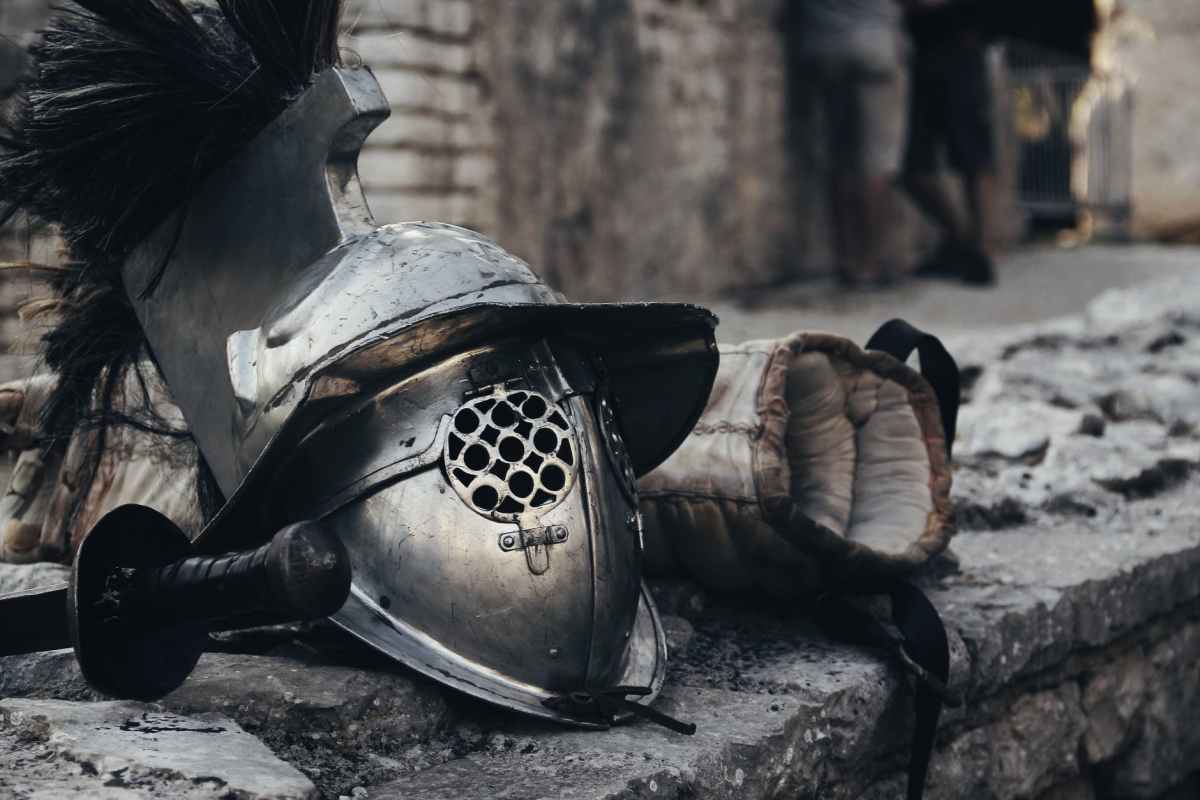
The Armor We Put On

Don’t ask what the world needs. Ask what makes you come alive, and go do it. Because what the world needs is people who have come alive.” – Howard Thurman

I watched my whole family don armor yesterday and I sit here writing this now stunned and a little sad.

It started with drama about drama camp. As I was preparing my 6-year-old daughter to go to the three day camp this week, there was a registration problem and I told her she might not be able to go. Then her friend was going with couldn’t come the first day. By the time we worked through the registration snafu and she was able to join the other kids, it had been 90 minutes of uncertainty.

I could feel the tension growing in my daughter’s body as she held my hand. Then she whispered to herself, “Be brave,” squared her shoulders and walked in the door. I should have been proud. I was proud. But it blew me away to watch.

It was similar with my two-year-old. He didn’t want to go to daycare after a week when his favorite teacher was on vacation. He was communicating this to me all the way up until I parked and then he completely shut it down as he walked in. It made me think of what one his teachers said to me after he’d recently been stung by a bee on the cheek, “I wondered if this would be the first time I would see him cry and even then, he didn’t.”  

My son is a pretty affable kid but that hit me hard. It made me a little sad not only for him but for all men who are told to be strong, brave and fearless at the expense of shutting down their emotions.

And then me. When this morning’s problem with the drama camp registration came up, I started feeling the fear of having to rearrange all of my work for these three days if my daughter couldn’t go. It created a tension of fear, mixed with disappointment, anger and self-pity since I’d juggled a day off last week when my son was sick.

But when I went to talk to the camp people, I put on my usual bubbly demeanor. Things generally work out pretty well for me because I lead with friendliness. As I’ve said before, my general disposition is a lot like a golden retriever – enthusiastic, friendly and goofy. And for the most part, my inside matches that disposition too but I’ve learned to wear it whether I’m feeling it or not.

I’ve thought a lot about authenticity and vulnerability in the last 10 years since I started to meditate. More than anything, it has changed my inner experience so that I truly know that with the help of God, I can handle whatever is thrown my way. These years of work has built my faith so that the faith tips the scales over the fear. It has made my inner experience match my outward affect.

Watching my kids don their armor at such young ages, it created an ache inside me for all of us. Not just my family but this whole world full of people whose insides don’t match their outsides. We’ve been living with it for so long, we don’t even realize it until we can no longer feel the caress of a hand on our cheek. Then we have to do the work to unpack it or continue to suffer the experience of not feeling fully alive.

I don’t have any solution with which to help my kids except to make it clear we take off the armor at home and practice stoking up the flames of the passion, the rawness and beauty of our whole beings. Then I pray that as Howard Thurman’s quote above says, that helps what the world needs too.

(featured photo from Pexels)

In Feeling

The problem with this world is that we draw our family circle too small.” – Mother Teresa

Here’s the way sickness travels in my family. One kid gets sick, the other one gets it and then finally I get sick. Fortunately, I don’t always get sick but if I do, I’ll be last to get it. And when I do, I learn how brave my kids have been.

This time it was my daughter who got a stomach bug first last weekend. She spit up a few times and then said, “Wow, I’ve never thrown up 4 times in a day before. When are we going to go hiking?” I replied that I thought she might want to rest given that she didn’t feel well. She exclaimed she felt fine so we went.

Then my son got it mid-week. It was very clear because I opened his door to get him out of his crib in the morning, and instantly got hit with the smell. “I sneezed it out!” he exclaimed, not all that upset. He stayed home from school but he too said he felt “good” and was pretty peppy playing around all day.

I thought I’d avoided getting it too until this weekend when my body, probably exhausted from all the cleaning, just gave up and succumbed. I wondered how the heck my kids were so delightful when their bodies were fighting this bug. It always looks easier when someone else is doing it, doesn’t it? As usually happens with getting sick, it comes with a huge heap of humility and admiration too.

This made me think of the words sympathy and empathy. Sympathy from the Greek of sun (with) + pathos (feeling). Oxford languages defines sympathy understanding between people, common feeling.  

Empathy, a word I hear so often these days in conjunction with raising emotionally intelligent kids, is from the Greek of em (in) + pathos (feeling). It is defined by Oxford languages as the ability to understand the feelings of another.

In my little family we have so many opportunities to have sympathy for each other because we share so much context at this stage – the people we know, the many hours we spend all together, the illnesses we pass along. It may be the easiest time for us to all stand in common feeling. And if we get that right, at least some of the time, it helps us become more empathetic toward others because we have the family experience of feeling understood.

The other thing I was reminded of as the illness ran its course is how much energy I spend resisting being sick. I didn’t want to throw up and I managed not to. But in hindsight, it may have made it last longer overall. Sometimes we just have to let the bad out so that the healing can begin, a lesson I keep having to repeat.

It’s funny as I type this thinking of my gratitude towards this stomach bug. It created a shared family experience, reminded me that resistance to uncomfortable things is often a harder route to go and most of all, makes me so thankful that we all feel well again. If only there was a virus that could unite our bigger human family….

(featured image photo from Pexels)

Story-Telling

Life is not measure by the number of breaths we take, but by the moments that take our breath away.” – Maya Angelou

I met my friend Phil on the side of Mt. Rainier in the middle of the night 20 years ago. The group I was with was just crawling out of our tents to get ready for a summit bid. The group he was guiding had started 1,000 feet lower down and was passing by on their way to the upper reaches of the mountain. He gruffly joked with me, “Keep that tent open, I think I’ll just crawl in and sleep awhile.”

Phil is a very accomplished climber and mountain guide – the first American to climb the north side of Everest, the eighth person to climb to the highest place on each continent, over 500 (I think) ascents of Mt. Rainier. But one of the most noticeable things about him is his ability to tell stories.

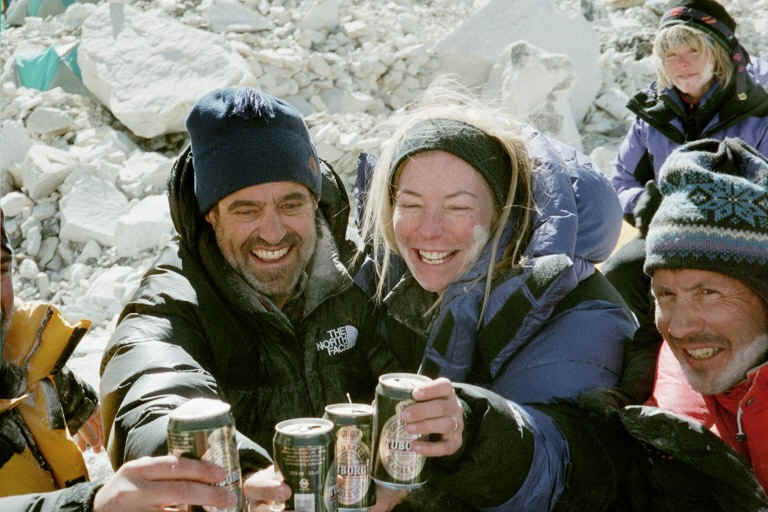
It seems like mountain climbers and story-telling often goes hand in hand. Probably because there is a lot of down-time waiting for the right time to summit. On our way to Everest base camp in 2001, we would trek one day and rest one day so that the group of 5 people who would be climbing Everest that season could acclimatize. On the days off, we’d just sit in the mess tent, play cards and tell stories.

Blogging reminds me of that. I’ve been blogging every day for over 6 months. The other day reading this blog post about lessons learned in marriage and parenting a special needs kid by Ab, I realized that blogging is part of my self-care. It’s a way of processing and sharing the things that I want and need to learn from. But it’s also just daily practice in telling a story.

On every trip I’ve done with Phil I’ve noticed how deep his relationship is with the people his climbed with over and over again. I’m thinking about a really nice man from Michigan that we climbed with both in Nepal and Peru, that Phil used to joke, “I keep saying to Bill that he reminds me of a helicopter. Just looking at him, it doesn’t look like he should be able to climb, but he does!”

Phil is now 70 years old and doesn’t climb much any more. But when I’ve visited with him over recent years, I’ve found that telling stories is a way to bring what means most alive to the fore. May we all live our best stories and then tell them again and again to celebrate where we’ve been.

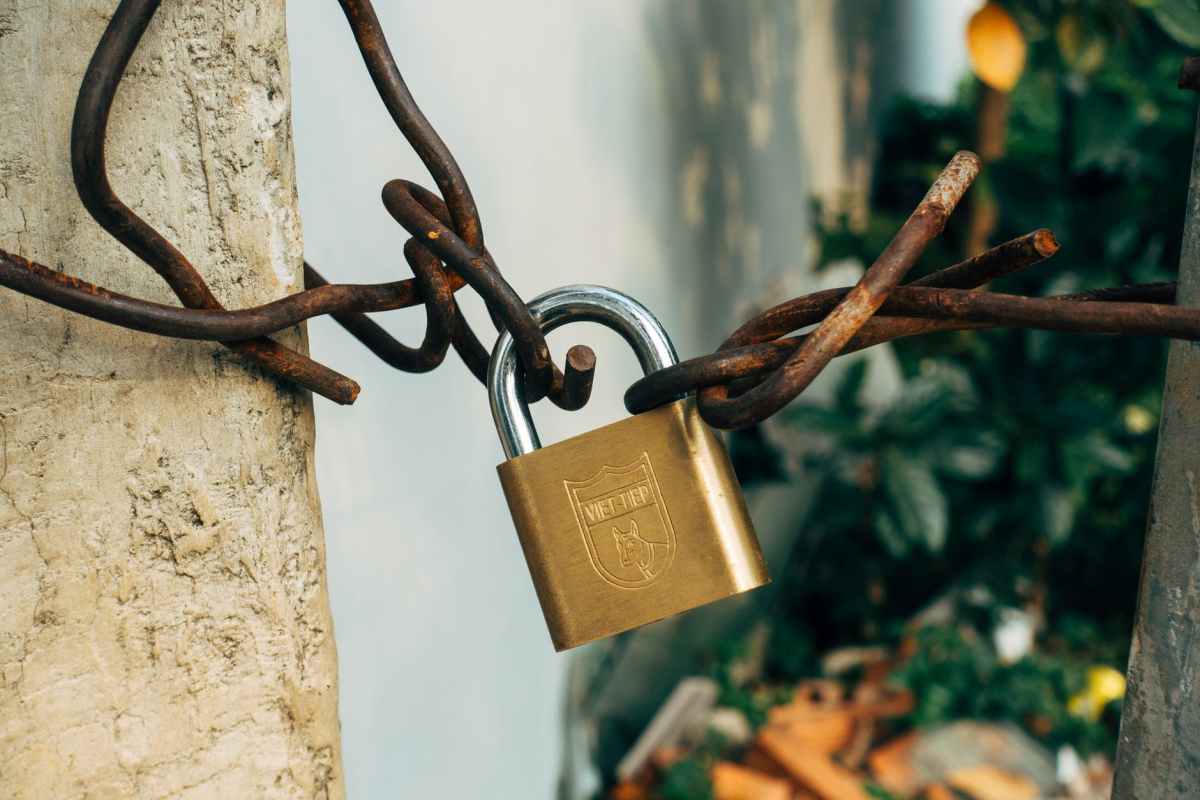
Barring the Doors

Peace is not something you wish for; It’s something you make, Something you do , Something you are, And something you give away.” – John Lennon

I dreamed last night that 2 carloads of people were trying to break into my house. To protect myself and my kids, I was in the garage, trying to roll the codes for the garage door opener and even reset the Internet router. I knew these steps would make it harder for me to get out, physically and on the Internet but it felt imperative enough to do it. As I dreamed about having to take these steps, I was so afraid that I woke myself up and could still feel the gritty fear lingering as I lay in bed.

I rarely spend any time trying to analyze my dreams but this one is too obvious to miss. I have a friend who over the last year has been flaky and disappointing. The reasons are rooted in what’s going on in her life but after almost a year of her not showing up for us, I want to lock her out. In the parallel to the dream, I know this type of shutting down makes me less accessible to others across the board but my fear of continuing in this cycle makes it seem urgent.

It all begs that classic question: how do I stay open without perpetuating the cycle? As I sit in this morning quiet place with my candles lit and my mind open, I can see the answer for me is forgiveness and boundaries.

Forgiveness to release the hold disappointment has taken in my heart. To breathe into the space of empathy and understanding for my friend’s life as she struggles to do her work. Letting go of the tally sheet that my mind has been keeping for this past year.

And setting boundaries that I can maintain. As Prentice Hemphill said, “Boundaries are the distance at which I can love both you and me simultaneously.” With boundaries I can create some order in this new phase of friendship without locking everything out.

The other day my 6-year-old daughter had some friends over and when the 3-year-old pulled down the fort my daughter had spent all morning making and then laughed about it, she hissed, “I’m never inviting you guys over again!” It seems so natural to want to lock others out until we are left lonely and bored without anyone to appreciate our forts. Coaching my daughter through it, I can see we can do better with forgiveness and boundaries instead.

(featured photo from Pexels)
Going Home

Just trust yourself, and then you will know how to live.” – Johann Wolfgang von Goethe

My mom’s 97-year-old friend is moving back to Utah. She’s lived in Seattle for more than15 years, has a daughter, granddaughter and great-grandson here as well as many friends and admirers. But she told my mom that she’s moving back because she looked up how expensive it was to transport a body after death. Apparently it’s costly so she decided to move now so she’s near the cemetery where her husband is buried when she passes.

Let me just admit that I don’t know how much it costs to transport a body 1,000 miles. But I can’t imagine it is more costly than packing all your stuff up and transporting it ALL 1,000 miles. While this invokes silly images from the 1983 movie, Vacation with Chevy Chase and Beverly D’Angelo, it also makes me think of a word that I saw on social media last week:

Hiraeth (n.) a homesickness for a home to which you cannot return, a home which maybe never was; the nostalgia, the yearning, the grief for lost places of your past

For me this Welsh word brings up a sense of the home I’m creating with my two kids as one that changes every minute. With each memory we build a new home and feeling of who we are together and as it evolves, it makes going back only possible in our hearts.

And hiraeth also invokes for me the final calling home that comes with death. For my mom’s friend who believes deeply, it must be a sense of getting ready to go not only to Utah but to her Creator.

Someone shared with me recently that the last word that he and his mom said before she passed was “Later.”  That story filled me with such a sense of promise that I can only hope is the same promise that is with my mom’s friend as she moves.

(featured image from Pexels)

Touch of the Divine

Above all, watch with glittering eyes the whole world around you because the greatest secrets are always hidden in the most unlikely places. Those who don’t believe in magic will never find it.” – Roald Dahl

My kids and I went to my friend’s new condo for a dinner party last night. I got the kids settled with the paper that I brought for them and then realized I’d dropped the markers in the car. My friend’s place is a 4th floor walk up so I left the kids with her, went down to the car and realized when I got there that the kids had left the inner dome light in the back of the car switched on. I thought “Thank God I had to come down for the markers. Otherwise, I could have returned to the car on a dark night in a hurry to get the kids to bed and found a dead battery.” That touch of the Divine made the four flights of steps going back up lighter.

Then my 6-year-old daughter needed a brown and yellow marker because the set I brought didn’t have those. I asked our host who said that all of her art supplies were still in boxes but we could open the box nearest to us that said “Art supplies” on it and check. We cut open the box. Right there on top in a neatly bundled and organized cup was her beautiful set of markers. “Wow, thank you Universe!” she exclaimed. I got a shiver.

I cyclically float between being at times easily able to see what God is doing in my life and in the other times, thinking I’m in charge. It’s a flow that I go back and forth on during any given day, week or month. Often seeing the Divine hand hinges on what I’m talking about and with whom I’m talking.

Jesus said, “For where two or three gather in my name, I am there with them.” (Matthew 18:20) Which I broadly observe in my life as those around us can help us uncover the magic in our existence. I’ve been doing some work with the church that my dad used to lead. The staff there often says about fortuitous events, “It was a God thing.”

I was going to write something else for my blog post this morning but for that touch of the Divine last night. Not only is it beautiful to see the hand of God, even in little things like markers, but it is fun. On this dark morning when I’m fresh from sleep and quiet meditation, I’m inspired to pass the spark of mystery and magic along.

Imitation

Imitation is not just the sincerest form of flattery – it’s the sincerest form of learning.” – George Bernard Shaw

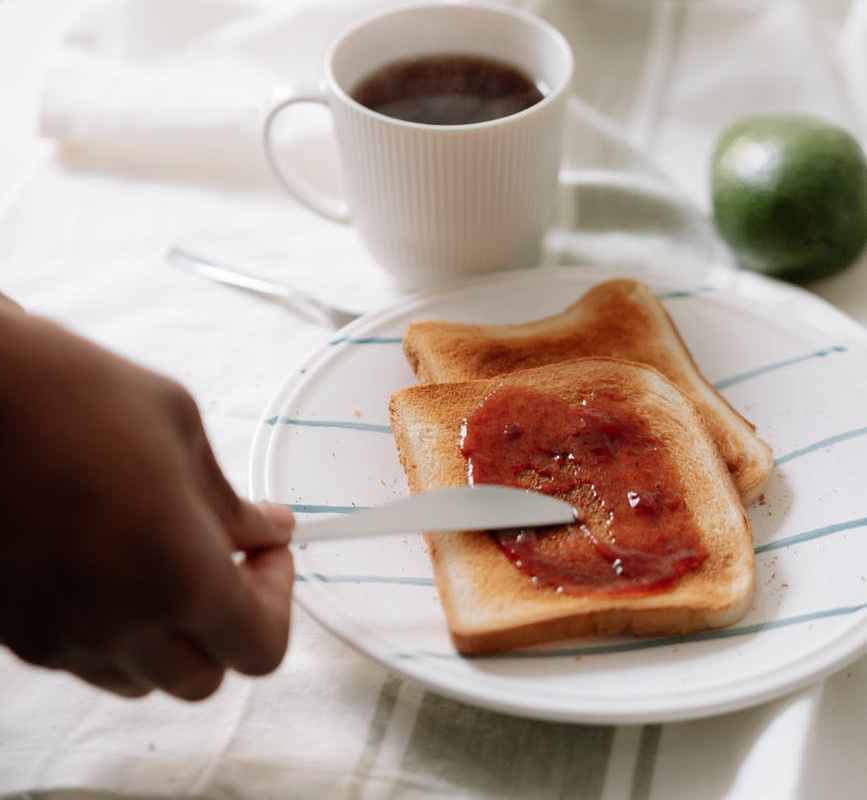
When we lived in the Philippines when I was growing up, we had two young women who helped us – one who cooked and one who cleaned. One day when the cook had a day off, my mom made toast and accidentally burned it. She took it to the sink and scraped off the burned bits before buttering it and serving it. The woman who did the cleaning thought this is how Americans made toast. Whenever she made toast for us, she intentionally burned it before scraping and serving it.

I thought of this story last night as I was sitting with my kids as they watched their shows. My daughter picked up her milk cup and accidentally banged it against her bowl of popcorn. My son, who even when he doesn’t seem to be is always watching his older sister, followed suit. He picked up his cup of milk and intentionally banged it on his popcorn bowl.

Imitation is such a natural way to learn. I know this from the last six years of seeing how children learn walking and talking just by imitation. As I watched my kids last night, it occurred to me that sometimes we copy people instead of asking.

In this week that mark’s the seventh anniversary of my dad’s sudden death, it’s no surprise he’s on my mind. But again and again, the thing I am so grateful for is that by following the Divine whisper in my heart, I found my way to asking him what was so important about his life and what he knew.

Imitation works fine for learning when how to make toast but doesn’t replace telling someone how much we admire them. Only by asking can we find out what are the important things they want to pass on to others. It feels more vulnerable to do it but it’s a precious gift that leaves us closer instead of at the sink, scraping off the burned bits of toast and wondering why we never asked.

(featured image from Pexels)

Crevasse Climbing

Be a fountain, not a drain.” – Rex Hurdler

My day job is to help corporate clients collaborate – create structure for creating and finding documents, workflows to smooth out processes, write some white papers. It isn’t the type of work that is typically full of emergencies. But recently I’ve had a couple of situations that were the corporate equivalent of people running around with their hair on fire.

The client has a possible security breach – AHHH. Someone deleted the collab site that everyone was saving their files to – AHHH!

These situations have reminded me how hard it is to stay centered while everyone around is in a panic. Trying instead to be open and even while listening and contributing to the solution is a difficult practice.

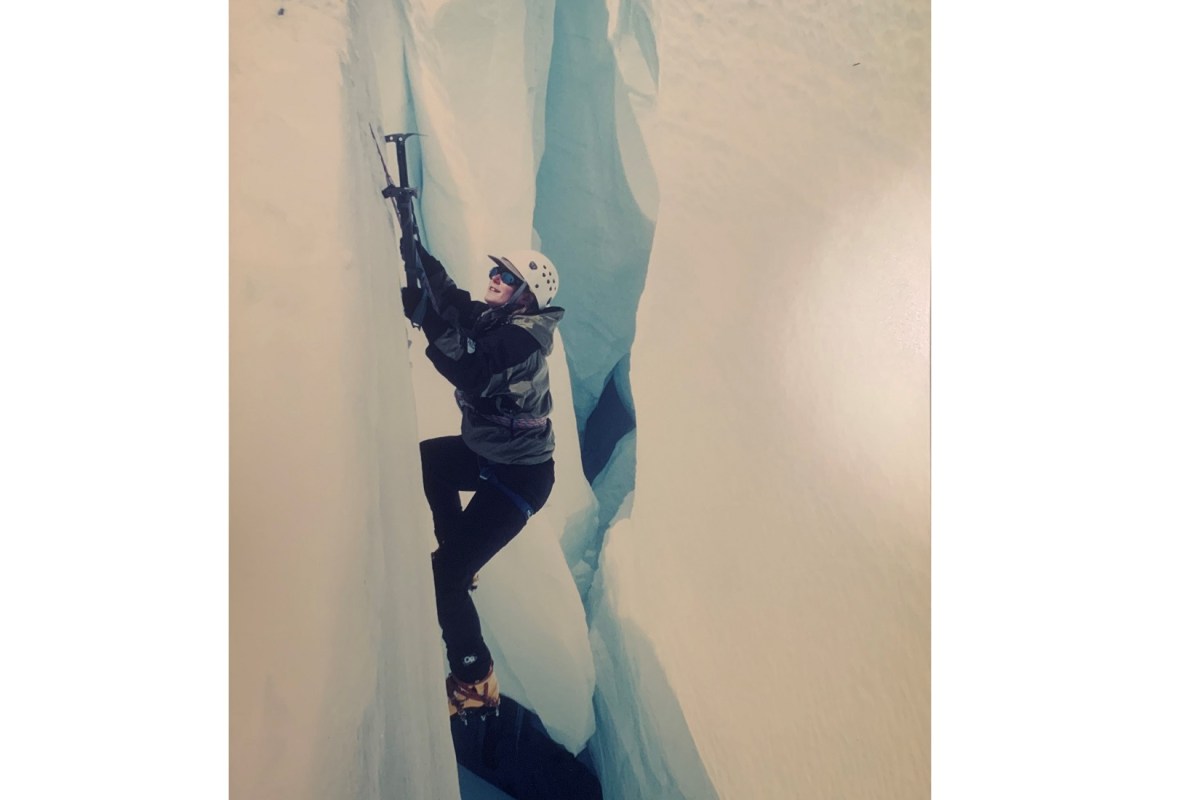
On one of my first mountaineering expeditions, the guides were teaching crevasse rescue techniques. When someone on your rope team falls in and the first thing you do is self-arrest. And then once you are stable and have assessed the situation, you can set up a pulley system to pull them out. You just make it worse if you fall or jump into the crevasse yourself. You have to pull from the top instead of push from below.

So I’m envisioning the meditation equivalent of staying out of the crevasses. Dropping on my belly, digging into the snow with the tip of my ice-axe and the crampon on my toes to self-arrest instead of jumping in to the panic.

What I’ve learned is that there is real wisdom in slowing down when life starts swirling around. It is too easy to create secondary problems when blundering around in reaction.

The last person on a rope team is called the anchor. They earn that title when they can stay grounded while everyone else is sliding towards the abyss.