The Return Trip

You must understand that there is more than one path to the top of the mountain.” – Miyamoto Musashi

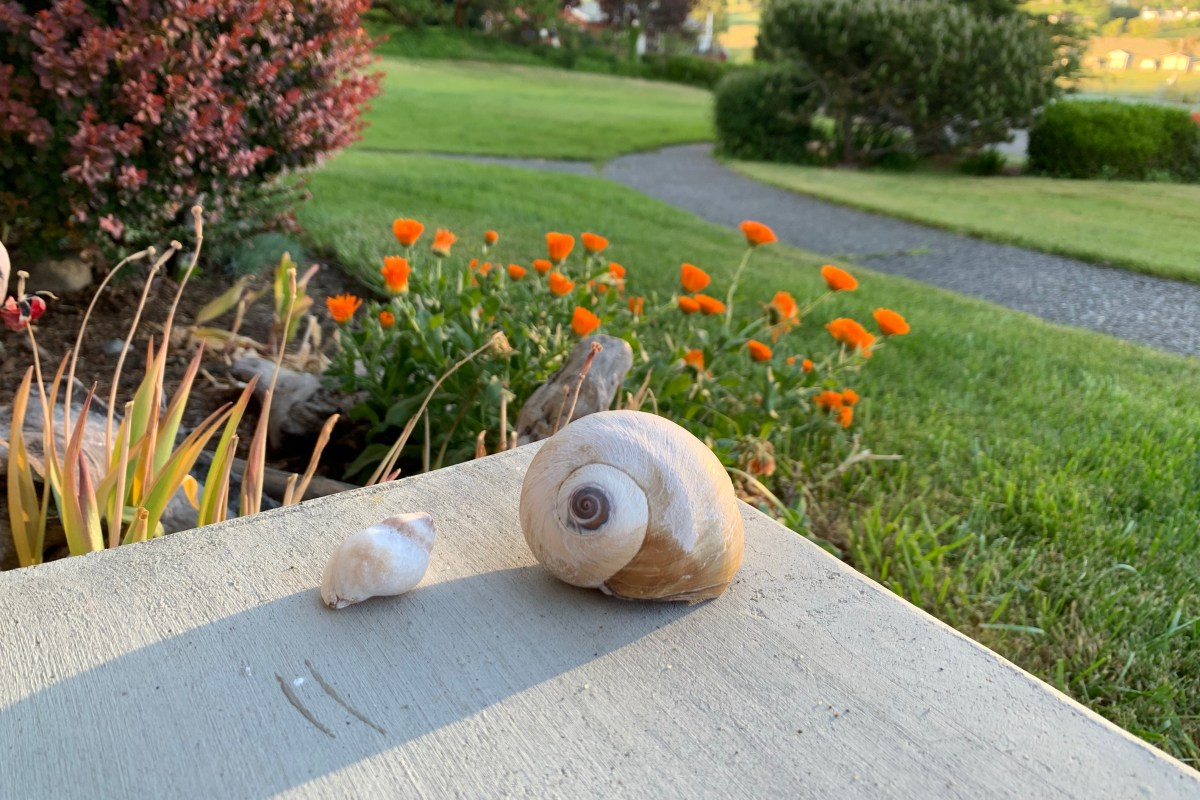
I was walking on the beach right at twilight on the first night on my mini vacation on Whidbey Island. I walked past a shell and went about five paces before I registered that I wanted to pick it up. I turned around to look for it and couldn’t find it – the tide line looked completely different.

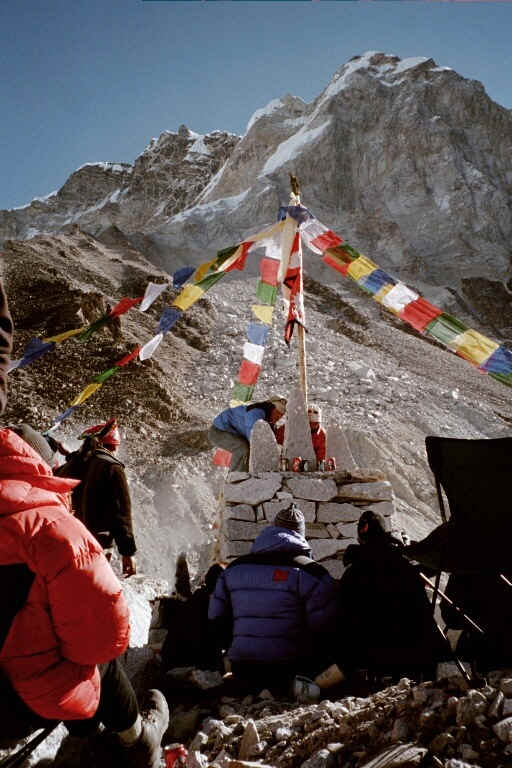
It reminded me of a lesson I learned climbing Mt. Ixtaccihuatl in Mexico. My guide friend, Phil, brought along a roll of crepe paper – lightweight, colorful, and paper, not plastic. At every decision point, Phil tied a small bit of crepe paper to a tree branch or stick.

When I asked for more detail about route-finding, Phil told me that when we make the choices about which fork to take and think we’ll remember, we often forget to turn around and look at what it will look like coming back. He pointed out that the light, the contrast with the surroundings, the angle, it all looks different on the return. What we think is memorable going one way looks completely different when we turn around.

This rings true for me in life as well. The choices I’ve made on the route I’ve taken through life – the scary, vulnerable, or leap-of-faith ones – they look different when I look back at them. Sometimes the return view has me asking why it took me so long while other times I just want to get on my knees and pray in gratitude that I choose the way I did.

The past few months I’ve been struggling with charging my iPhone. Every time I went to charge the phone, I’d have to fiddle with it for upwards of five minutes to get the plug in just right so that it could charge. Then I’d carefully pin the cord in its position with a book so that nothing would move. Then when it was charging, I’d try not to use it, or if I ABSOLUTELY had to, touch it so tenderly as not to disturb any part of the delicate configuration.

Finally this past week, I couldn’t get the cord in to charge it at all. In the middle of my workday, I just had to suck it up and go to the Apple store. It took about 20 minutes of waiting but the helpful tech dug out a small particle jammed in the charging port and now it takes all of 5 seconds to get the plug in. During the time I waited, I realized that I’d avoided doing it not only because it was time that I felt I didn’t have but also because I was scared the news would be that I had to buy a new phone.

Yes, things look different on the return trip. It something that I’m reminded of when I’m deciding something – that there’s another perspective I can’t even see yet, but as soon as I decide and move on, I’ll get the benefit of looking back. Knowing that helps me to keep fluid.

Like when I went back to find the shell, it took me some time to get adjusted to the new perspective, but I eventually found it.

This is a sister post to A Brief Interlude Provided by Nature on the Heart of the Matter blog.

Secret versus Private

Travel and tell no one, live a true love story and tell no one, live happily and tell no one, people ruin beautiful things.” – Kahlil Gibran

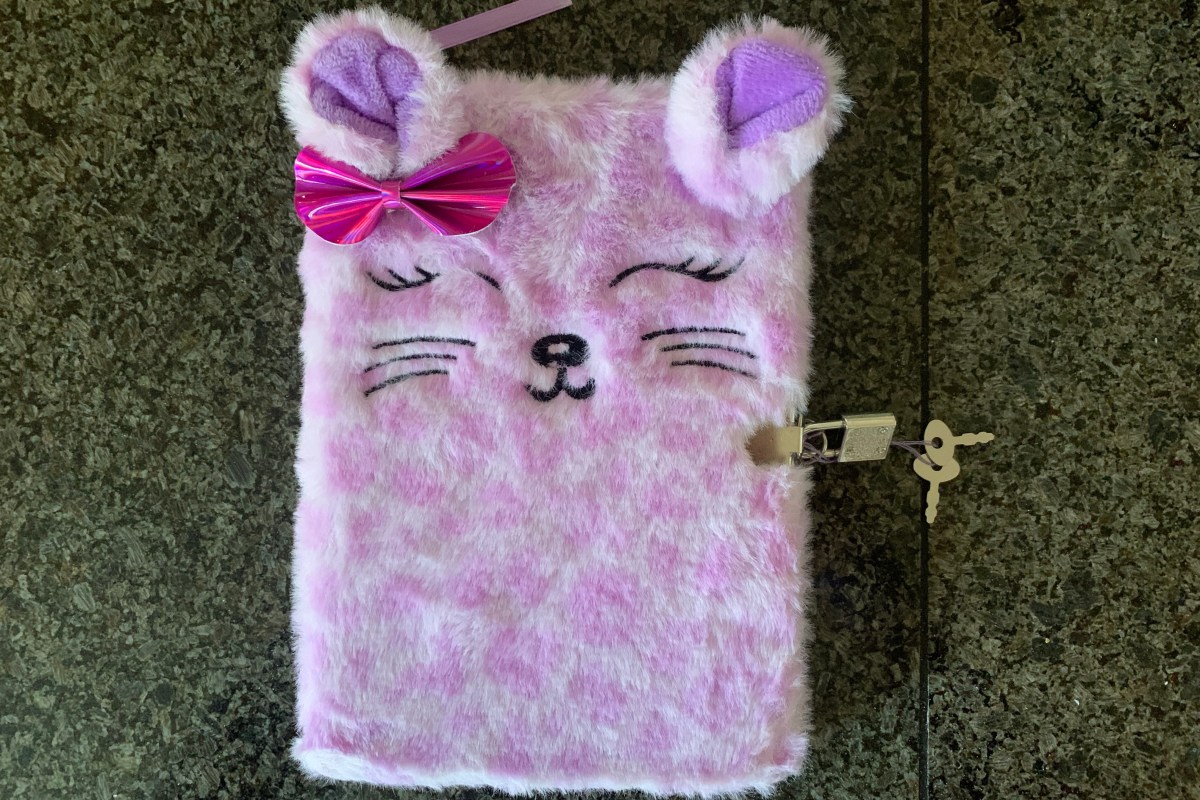
My daughter’s elementary school just had their annual book fair. One of the things Miss O selected was a fuzzy journal with a lock. She took it directly to my mom and had her sew the keys on to the journal so she wouldn’t lose them.

Miss O and I have been talking about secrets lately. Her second grade class is doing a section on identity and she’s learning the distinction between what is secret and what is private. One of the large parts of Miss O’s identity is that she doesn’t have a dad. Is that secret or is that private?

When she first asked me if she had a dad, she was three-years-old. It went like this: “Did I have a dad when I was born?” I answered “no” and waited for the follow-on question. And then she asked, “Did I have a dog when I was born?” I said “yes” and then she moved on to, “Did I have a cat?”

Following her cues, I’ve told her more and more as she’s asked. Mostly that I wanted kids so much that I went to a doctor to help me have them. It’s not a secret in any way and I want them to feel complete openness from me about how we came to be a family, even if they choose to keep it private.

The other day, Mr. D asked for the first time if we had a dad and when I said “no,” Miss O jumped in to say, “We’re special because Mama had us without one.” Okay, so I have to work on the messaging but not having a dad definitely isn’t a secret.

I suppose we all go through the figuring out the difference between what is secret and what is private. For me, what is private doesn’t take any energy to keep boxed up. It’s like inviting people over to my home. I don’t invite everyone I know into my house. And, for those that do come over, most people just visit in the kitchen. There aren’t many people that I invite up to the tiny space on the third floor. It’s messy up there but I don’t keep it locked.

When we were talking about secrets, Miss O wanted an example. I dug deep into my memory from high school to find an appropriate scenario understandable by a seven-year-old. I came up with the story about my best friend who was dating a boy named Craig. A new girl had recently been hanging out with my best friend and me, and one day when my best friend wasn’t present, the new girl told me she’d been making out with Craig behind my best friend’s back. But of course, I wasn’t supposed to tell anyone, especially my best friend. Ugh, I can still feel the weight of that secret.

I landed on the distinction that secrets are something you’d be ashamed if anyone found out. Things that are private aren’t anyone else’s business.

Maybe the keys sewed to the journal are a great metaphor. The lock reminds others to stay out but the barrier isn’t so high that you have to hide the keys away.

I wrote a related post about my learning not to keep secrets on the Wise & Shine blog: Can I Tell You a Secret?

Leaning in To Letting Go

The only way to make sense out of change is to plunge into it, move with it, and join the dance.” – Alan Watts

It seems like for every lesson I’ve learned in my life, I can trace it back to a particular story. Is that a sign of middle age? In this case, I’m thinking of the lesson of learning to let go and a consulting project I did for Microsoft about 25 years ago.

My colleague, Bill, and I were assigned by the consulting firm for whom we worked to write a white paper for a client at Microsoft. It was the late 90’s and Microsoft was in that phase where it was growing so fast that there wasn’t a lot of process but instead a lot of hard-working but perhaps egomaniacal cowboys.

Our assignment was to write this paper about how a group of these cowboys rolled out a new email software at Microsoft. Bill and I were experienced at deploying that software and had published a book about it so theoretically, this project should have been a snap.

After interviewing the key players, we drafted the paper. They hated it. We revised it. They still hated it. They would call us to meetings to tell us in detail how much they hated it. The problem wasn’t the technology – it was that we didn’t get the tone right. We didn’t think they were as cool as they thought they were so we missed the mark over and over again.

I can’t remember how many versions of that paper we wrote. Maybe five? But after torturing us for a while, they finally fired us and wrote it themselves. It hurt. I felt like I’d been at a rodeo and had hung on way too long.

I went on to learn that lesson about letting go in many ways as a consultant. I’ve found out that no matter what kind of a job that you are doing, if the person that hired you is replaced by someone else, you will most likely get replaced too.

I’ve hung on too long in those cases as well – trying to pretend it’s not going to happen. I’ve been sure I can make the new person pick me, and like a puppy at the pound, try to do any number of tricks to prove I’m likeable and reliable.

I’ve also done the opposite and just walked away when the staffing changes happen. Finally, I’ve figured out that when the changing of the guard happens, I say, “Here’s what I’m working on. I will continue to support it in whatever way works and if you prefer to have someone else do it, I will facilitate that in the smoothest way possible.”

It’s so natural to want to cling when things are coming to an end. Sometimes, it really hurts and is scary. I’ve found that acknowledging that, feeling it all the way through, helps. Because projects, groups, and companies, like life, have a cycle. I’ve come to learn that to stay loose is the best way to ride the current. That way, I’m ready to lean in to the next thing that comes to fill the opening. Because that happens too.

Leaning in is just one of the things I’ve learned to do the easier way. For a mountain climbing story that taught me the difference between doing things the easy way versus the hard way, check out my piece on The Heart of the Matter: Doing It The Hard Way Or the Easy Way

(featured photo from Pexels)

Old Routine, New Fit

“I am still in the process of growing up, but I will make no progress if I lose any of myself along the way.” – Madeleine L’Engle

I’m sore. Do you ever do the thing where you go back to doing something you used to do all the time only to find out it feels totally different?

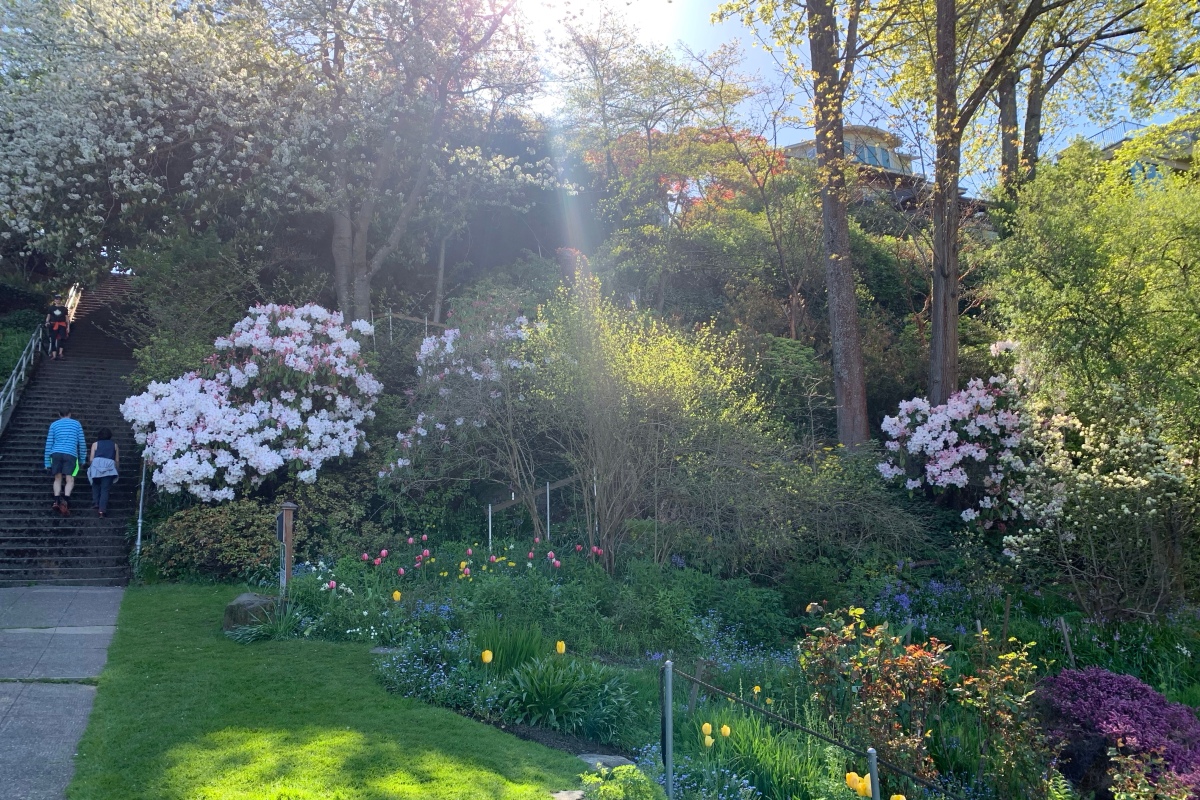
On Saturday morning, I was gifted a few free hours because my kids wanted to have a babysitter. Before I had kids, I used to spend almost every Saturday morning either hiking or doing my favorite sets of stairs, the Capital Hill stairs – 13 flights for a total of 290 stairs for each ascent. And descent, of course that is obvious, but as a math person, I couldn’t just let it go. Anyway – with free hours on a Saturday morning, the Capital Hill stairs seemed like an obvious thing to do.

As I was doing them, I felt how long it’s been. I’ve changed and grown (rounder, mostly) and finding my rhythm was hard and uncomfortable. My legs felt leaden, my knees stiff. There is a beautiful garden next to the top third of the stairs created by Ann and Dan, a couple that bought two properties there in the 1960’s, one for their house and one for the garden. Then they gifted the land with the garden to the City in the late 1990’s. Next to the garden was a plaque that commemorated that history and noted Dan’s passing at age 96 in 2020.

As I noticed all these differences, including the fact that I’ve lost my ability to sip from my water bottle while on the go without spilling all over myself, I started to feel all the versions of myself that have done the stairs. The 20-something woman who was building confidence for climbing mountains, the 30-something woman who was trying to keep in touch with that adventurous part of herself that her husband had little interest in, the 40-something woman working out her comfort with discomfort after divorce. All the way to now, the 50-something woman using a set of stairs to remember where she’s been.

Soon enough all the lessons I’ve learned about doing stairs came back to me. Take one step at a time, go slowly using a barely perceptible rest step when it gets hard, and pause for a deep breath before the last 90 stairs.

Yes, I’m sore today. But it seemed like a worthwhile exercise to find out that as I change and grow, my hard won lessons go with me.

Speaking of growth and change, I have a companion piece posted on The Heart of the Matter this morning, Growing Like a Weed.

Patience, Energy and a Little Bit of Flexibility

Patience is also a form of action.” Auguste Rodin

Yesterday, I was trying to get Mr. D’s pants on so that he could go to preschool. He was busy sitting on the floor playing with a truck and didn’t want to assist in any way.

When I consider the difference for me being a parent of young kids while I’m in my 50’s versus in my 20’s or 30’s, it’s this scenario with my kids that comes to mind. It’s like a silly sitcom – the same story line that happens every day but with slightly different entrances, exits, and accessories. And the thing that I bring to it as an older parent – a lot more patience. My egoic insistence that I am in charge, have to do it my way, with a rigid order has changed from my younger self.

This reminds me of playing tennis with my dad. When I was in my 20’s, I had loads of energy to run everything down and my tennis skills had got better. I thought I would have no problem beating my dad in his 50’s. But he had patience. He could steadily get all the balls back and not go for the risky winner. Instead, he had the friendliest form of banter/trash talk and he’d wait for the easy winner when I had run myself silly or was out of position.

If Mr. D doesn’t want to put his pants on at that particular moment, I let it go, do something else to get ready. When I circle back in one minute, he’ll usually cooperate with little to no problem. I can easily imagine what I would have done twenty years ago – worn myself ragged trying to either put pants on an uncooperative kid or talked myself blue in the face trying to convince him to cooperate.

Because on the flip side of this is that I don’t have the same high energy that I had 20 years ago so I have to give up the struggles that aren’t worth it. Worrying about what others think or sweating the small stuff like having a tidy house and matching socks has by necessity gone by the wayside because I simply don’t have the capacity to care about it. At the end of these days with young children, I am flat out exhausted. But with a little crafty patience, at least most days, I don’t end up as a sweaty mess.

If patience is my most useful tool as an older parent because I lack the energy of a younger one, then I’d name flexibility as the most predominant skill that parenting has taught me.

My guess is that this applies not only to tennis and parenting but also to most things we apply perspective to as we age. We learn to use a little patience to figure out which battles are worth fighting and which are avoidable skirmishes that our egos and inflexibility set us up for. Then, like my dad playing tennis, we can participate in some friendly banter and even sometimes get an easy winner in when we don’t overreach.

Still reading? I have another post today on creativity and the tools we can use to change our minds on Wise & Shine – Writing In The Dark

The Window Part 2

When we were children, we used to think that when we were grownup we would no longer be vulnerable. But to grow up is to accept vulnerability. To be alive is to be vulnerable.” – Madeleine L’Engle

Do you remember this scene in Winnie the Pooh?

“Piglet sidled up to Pooh from behind. ‘Pooh!’ he whispered.

‘Yes, Piglet?’

‘Nothing’ said Piglet taking Pooh’s paw, ‘I just wanted to be sure of you.'”

Winnie the Poor by A.A. Milne

Of the many sweet things about that exchange, one that I notice is how proximity is so reassuring. The “sure of you” quality of a hug or a hand.

When I wrote the piece about The Window six months ago, our neighbors and my daughter’s first best friend had just moved away. The window had shut and the only thing that I knew for certain was that the reassurance that comes from proximity was no longer going to be there.

Getting to the other side of that grief only comes with time. Now I’ve written The Window Part 2 on the Heart of the Matter blog. It’s part reflection on loss – and part reflection on what comes next…

Without Leaving Where He Was

At some point, you have to realize that some people can stay in your heart but not in your life.” – Sandi Lynn

I’ve written so much about my dad that it’s surprising that I still have something more to say about him. Except that even eight years after his death he’s still teaching me things.

There’s a phrase that my brother used for my father at his funeral, “He met you where you were without leaving where he was.” When Vicki graciously interviewed me about the book I wrote about my dad on this week’s Sharing the Heart of the Matter podcast, she asked me about it. In the same way that my Presbyterian pastor dad said that every time he wrote a sermon about a topic it made him more focused on that topic, her asking me about it has made me so much more aware of what an awesome trait it is.

I’ve been thinking about the part of the phrase “without leaving where he was.” Because it’s a lesson that I am learning all the time. I get around my climbing friends and have an enormous urge to work out, my emotive friends and I want to prove I can match their disclosure, or spend time with my children and my creativity explodes. I think that urge to blend in to our current environment is strong for humans – or at least for me.

Here are some of the things I noticed about how my dad, who was also a people pleaser handled this. I’ve spent some time reverse engineering it and come up with five examples:

If he was around someone grieving or sad, he’d definitely dial his energy down. If they were secular, he wouldn’t say anything particularly faith based to them. But he still radiated his love that was based on the belief there was something bigger than this moment, this life, and this pain. He never left his faith behind even when he wasn’t talking about it.

If he was on the golf course with foul-mouthed partners, he didn’t start swearing. But neither did he seem to mind if someone else did. He knew what his values were and was confident in them that he didn’t trade them to fit in. But he was certain enough of who he was so that he seem to understand that others’ behavior didn’t diminish him and therefore freed him from judgment.

If my dad walked into a room or you crossed paths with him in the store, on a hiking trail, waiting for a table at a restaurant, or anywhere else, his presence was palpable. He exuded well-intended welcoming. It wasn’t about him, as it can be sometimes when someone charismatic enters the room, but instead was about a curiosity and interest in others. He didn’t need to tell you who he was but instead was excited to find out who you were.

In that same way, he assumed a lot about the capabilities of others. He was the quintessential “I see things in you that you don’t see in yourself” guy. He would extend himself to help get others to the starting line – but had faith that you could continue on from there. He could help on an effort without needing to own it or control it.

My dad worried over relationships and conflict. It was palpable when something worried him – but then he’d move to do whatever he felt would restore his part of the balance. He definitely followed the advice of one of his favorite quips, “If you have to eat crow, eat it early while its tender.” Then he seemed to be able to let it go so that time and faith could do their parts.

When I break down that phrase that my brother used for my dad, I realize how much magic there was in not leaving where he was. It’s one of the reasons he accomplished so much in his life – because he didn’t waste any time or energy being someone else.

If you are a podcast person, I’d love for you to listen to the Sharing the Heart of the Matter podcast (and subscribe). It’s now on Spotify, Apple podcasts, Amazon podcasts, and Pocket Casts as Sharing the Heart of the Matter. And here’s a link to the shownotes to this episode about Finding My Father’s Faith.

Say That Again

One of the most sincere forms of respect is actually listening to what another needs to say.” – Bryant McGill

My brief foray into podcasting has taught me something about listening. I tuned in to the podcast I did with playwright and friend, Jack Canfora, about his play Step 9 that was just released as a theatrical podcast. As the podcast played, I heard things that I didn’t remember from the conversation. And it wasn’t that I forgot, it was that I never caught some particular details.

This surprised me because recording a podcast conversation is about as ideal of a situation for listening as I can imagine. I was at home by myself, no distracting music (or family members), my email was turned off and I’d done the work to get myself completely comfortable before the conversation began. I was in a space of complete focus on listening and having a conversation.

The biggest lapse that struck me was in a part of our conversation when Jack was moving his computer. We recorded the podcast on a video call so my visual field changed as he changed spots. There isn’t any break in our dialogue but that little disturbance was enough so that I caught the major drift of what was happening but not the undertones.

Here’s my take-away – we never listen as well as we think we do. And since very few of our conversations are recorded, we don’t have the chance to go back and understand what we missed (and thank goodness – that would be time consuming!).

And if we’re talking and someone is looking us in the eye and nodding, they still might not be getting it all. Especially if there is ANYTHING in the environment to distract them.

This brings to mind the classic experiment on selective attention where researchers asked people to count how many times people in the white shirts passed the basketball to each other. And then asked if the people that had watch the video if they spotted anything unusual that happened in the background. The finding was that many miss the other things happening in and around the action.

Some of the best wisdom I’ve heard about speaking and listening is from author Paula Underwood Spencer, “If you want to be truly understood, you need to say everything three times, in three different ways. Once for each ear…and once for the heart.

If we assume we get it all the first time it’s said we’re probably wrong. I know because I recently heard myself on a podcast.

Going Round in Circles

While the world is full of wondrous sights, inner peace comes from staying home.” – The Tao Teh Ching

I live next to a little lake in Seattle. A lake that is about 2.8 miles in circumference. In the morning, I take Miss O to school on the north end of the lake, Mr. D to daycare on the east side of the lake and then home to work on the west side of the lake.

And then most afternoons I do the circuit again and pick up my little family.

I’ve been trying to put my finger on why sometimes it just seems like I’m going in circles and others it feels like a beautiful rhythm.

When I feel like I’m just going in circles, it’s when I’m in a rut or really impatient for what comes next. In those moments, what I’m doing just feels like something rote especially because I’ve lived somewhere around this lake in one place or another ever since I graduated from college 30 years ago.

The cure I’ve found for this is to slow down and notice what I’m seeing – the ducks, the water, the runners, the sky. Anything to tether me more closely to the sensation of today instead of the culmination of all that I’ve seen in the yesterdays.

And when I’m in the space to appreciate the rhythm of my trip around the lake, I have this beautiful sensation of knowing what’s important to me. It’s an exceptionally warm sense of gathering my family and the idea that we’ll all be together again and bundled in close.

So I’m growing to appreciate the metaphor of this full circle trip. The letting go and then collecting. It reminds me of all the other cycles: being fully open but then needing to shut down, time of great productivity and then needing to relax. Or, as I wrote about in the When I Write post, the mystical, depth of my mood in the morning contrasted with the state of the evening when I’m a shallow as a muddy puddle and just as unclear.

For all of these contrasts, there is always one that I prefer – being open, greatly productive and deep. Or in the bigger cycles of life like birth and death, or seasons of light and dark, I’d choose birth and light every time.

But unless I’m resisting, I always learn from the less favored part of the cycle. Usually that’s when I get to see the connections and meanings. When I can lean in to what I don’t like, I find the heart of the matter.

So round and round the lake I go, dropping off and picking up which allows me to honor all the other cycles and hold my little ones more dear.

(featured photo is a picture of the lake that I took from the plane on my return from my trip about 6 weeks ago)

Pantless in Seattle

How many cares one loses when one decides not to be something, but to be someone.” – Coco Chanel

The other day some friends came to the door to pick up Miss O for an outing. Mr. D was standing in the hallway in a shirt and nothing else. My friend asked where his pants were and he replied, “They’re broken.”

There is something so refreshing for how kids come into this world not caring about what other people think or the “correct way” to do things. Caring less as a way to be authentic and open is the topic of my post on Wise & Shine today: Caring Less Without Being Care Less

(featured photo is Mr. D at a fire station without pants)