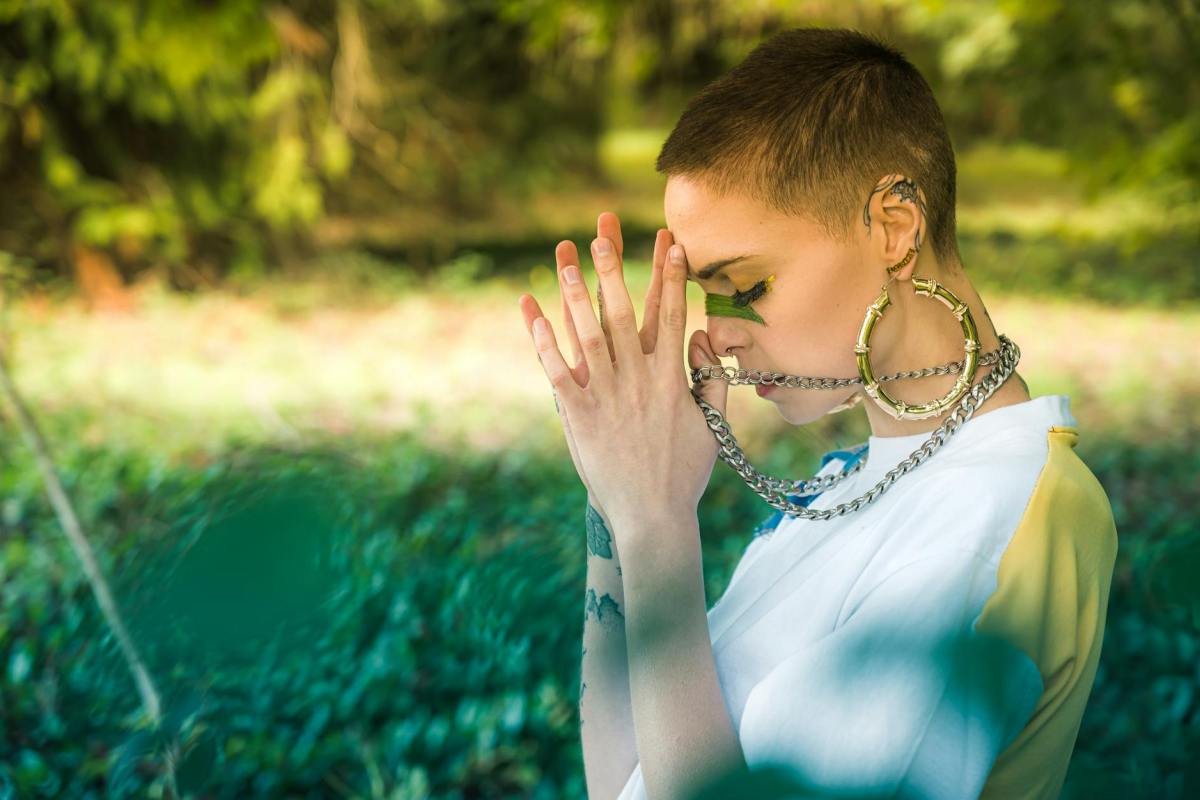
“I didn’t see one tree hurrying or worrying.” – Melody Beattie
I came to a full stop when I read the quote for this post. It was in a meditation book I’ve been reading in the mornings. Journey to the Heart: Daily Reflections by Melody Beattie. She was talking about visiting the redwoods in Northern California. Trees that have stood for hundreds of years growing steadily and weathering whatever came. “I didn’t see one tree hurrying or worrying.”
First, the beauty of one person being able to write something so powerful that it touches another. Isn’t that incredible we can do that?
Second, because I’ve felt unmoored in the last few weeks. The end of the school year came with so many opportunities to volunteer, amazing teachers to recognize, and fun to plan. Then we traveled to San Francisco for a family party. Upon our return, I landed in a week where the kids had vast amounts of free time and I struggled to get much done.
Too much fun, really. But I still felt like a boat without its keel in, being blown about by this and that without much ability to set my own direction.
And all that fun brought me to the third thing. I once heard an interview with Dr. Scott Peck – I think it was with Oprah. He said something like, “People ask how I get so much done. I reply that I’m able to because I spend two hours a day doing nothing. I used to call it my thinking time but then people felt free to interrupt. So I changed to call it my praying time and it made all the difference.”
Nature knows that we don’t need to hurry, scurry, and worry. Thanks to that one line written by a wise observer, I remember now too.
Have you read or written one line that has brought you to a full stop lately?
“If you do follow your bliss you put yourself on a kind of track that has been there all the while, waiting for you, and the life that you ought to be living is the one you are living. Follow your bliss and don’t be afraid, and doors will open where you didn’t know they were going to be.” – Joseph Campbell
Waiting well. I admit that the title of this post is aspirational. But I’ve been working on it and have to say that I’ve made progress in the last few years.
Here’s the latest thing I’ve been waiting for. I’m buying a car from my neighbors who are moving back to England. I need a car that has a third row of seats for when I carpool. And I’m such a terrible negotiator that if I went into car dealership to buy one, I’d probably introduce myself by saying, “how can I pay you more?” Suffice it to say, buying my neighbors car is a great option for me.
But the timeline is pretty variable. I planted the seed and they liked the idea. Then I’ve had to let it ride as they worked out all their more important tasks: securing a new house in England, shipping all their stuff, moving the kids and getting them settled in their new schools, and selling their house here in Seattle.
Here’s what’s helped me getting better at waiting: I’ve realized I’m not in charge. And I think that no matter your spiritual beliefs, we can all agree Wynne Leon isn’t running the show.
I’ve come to see that intent is like throwing an inner tube into the stream of life and then riding it wherever it goes.
My metaphorical inner tube snagged on a tree last week when my car died with about a week to go before I can buy the new one. I’d loaded my kids and the dog into the car on a Saturday morning to go on an adventure and it wouldn’t start. Of all the places and times to not start, in the garage on a Saturday morning isn’t a bad one.
So I rented a car. When I got to the agency, they said they I had a choice between a Jeep and a VW. We choose the VW — and it was even the same model we are buying. Funny how this stream of life flows.
Soon we’ll close on buying our friend’s car and be on to waiting for the next thing or milestone. It seems that the trick is enjoying the float down the river.
I host the How to Share podcast, a podcast about how to share anything – to the appropriate audience, with the right permissions, at the most opportune time.
“Good health is not something we can buy. However, it can be an extremely valuable savings account.” – Anne Wilson Schaef
I spent the last four days on the dark side. It started about 10 days ago when my nine-year-old daughter got sick. And then my five-year-old son and I succumbed a week later. Nausea, congestion, achy joints, headache, low energy – the works.
As much as I hate being sick, it always reminds me of how integrated mind, body, and spirit are. When something interferes with my usual blend of energy, optimism and faith, I get a glimpse of the flip side of fatigue, doubt, and cynicism. The foundation of what I believe to be so solid all of a sudden is revealed as a glass floor.
In the fifteen years before he retired, my dad was a pastor of a church in an affluent community. He remarked that it was hard for people who were so successful to see their spiritual needs. Flipping through some of his sermons from that era, that theme emerges again and again. When we are doing well, do we remember to tend to the beliefs and practices that see us through tough times?
It reminds me of people who are hard to help. You know the ones in your life that always have a plan and so much self-sufficiency that they never need a favor? I don’t have to look far because I’ve just described my family, myself included. If people are out of reach for human assistance, is it hard for God to help them too?
At least when I was sick and didn’t feel like eating, I had plenty of food for thought.
“The Heart has its reasons, that reason does not know.” – Blaise Pascal
I have a lot of opinions about all that’s going on in the world. Don’t worry – I’m not going to tell you them. I realized the other day that not only do I get a steady dose of news from my media intake, but I also am getting a whole lot of other people’s opinions about it from newsletters, expert commentary, inexpert commentary, memes, and more.
This a-ha made me realize that I needed to take a breath and find ground in what I know instead of just what I think. My dad was a great believer in the wisdom of the heart. The quote for this post was one of his favorites.
So here’s what I know:
No one knows the future, no matter what credentials they have.
People working together can accomplish great things. Pitting people against each other can lead to temporary gains but comes at a cost.
There are real feelings in the pancake vs. waffle debate.
One suffering soul can hurt a lot of people
Healing is always possible but it takes hard work. It’s my responsibility to do my work so that I can try not to add suffering to the world.
Believing is a way of life. If something requires me to check what I believe at the door, I should be doing everything I can to resist.
When I feel rushed, oppressed, and worried, the best thing to do is slow down, remember what I know, and find the next right thing to do. The rest is in God’s hands. Believing that there is Higher Power helps me to work hard in the day and sleep at night.
There are an infinite number of things that can bug me – and the at least the same number that can delight me. Whether I find one or the other, depends on me. Developing the discernment between what is irritating and what needs to be fixed is a constant practice.
Love is all there is, to quote the Fab Four. Being mindful of expansive love changes my experience: love of all the precious people around, the beauty of nature, the delight in the air I breathe, the gift of the day I’m in. Uncertainty triggers fear and moves me out of love.
Navigating uncertainty takes energy. Patience takes energy. So sleeping and eating well can truly change the world.
When choosing between the standard and the ultra, always make the ultimate pancake recipe
The golden rule to treat others the way that I want to be treated works to reminds me to flip my perspective. But I will never know what anyone else’s experience is like.
Sharing of authentic stories is transformative. Opinions rarely brings us together. Swapping stories often does.
There is no one else I can be. Conversely there is no one else others can be. People change; but not how you want or when you want them to.
Slowing down how I roll helps me find more opportunities to be kind.
Effort brings outcome. Exercise is worth it. Setting goals that are bigger than I believe I can accomplish will take me somewhere. There is nothing I can wear that will replace confidence. It is possible to live through hard times and learn from them.
My dad once wrote, “The distance between our heart and our head is about 13 inches. When our hearts are right, our heads will follow along by believing.“ And that leads to the last thing I know for this post: A hopeful heart is a powerful thing.
“Failure is only an opportunity to begin again more intelligently.” – Henry Ford
My mom said our prayer before dinner on Monday night. One snippet resonated deeply with how I’ve been feeling when I listen to the news these days.
I don’t have her words exactly right but it was something like, “Dear Lord, helps us with the distressing current events.” Then she added something like, “Lord, we trust you are at work in the world. Please help us to see how.”
I’ve come to realize that political failure is a lot like personal and professional failure. There’s a period to grouse about it, at least for a bit. But mostly it’s an invitation to work hard to learn from it and use it as motivation for change.
I realize that when I feel in agreement with my local and national leaders, I’m not very involved in politics. But when I feel like the actions of our leaders are reckless, cruel, divisive, greedy, and/or misaligned with our values, I’m fired up to do something. Whether it’s being of service, contributing where’s there’s need, or reaching out to representatives, I’m far more willing to jump in.
I’m not a fan of failure – but I have to admit it’s a great motivator. I’d love for there to be an easy answer to my mom’s prayer but I suspect that getting involved is one component.
“I do not understand the mystery of grace — only that it meets us where we are and does not leave us where it found us.” – Anne Lamott
One of the books I read in my morning meditation time is Listening to Your Life by author and pastor Frederick Buechner. My mom and I were talking about it a little while back. She mentioned that some find his writing to not be doctrinal enough. Funny because I read him and find at times that I think he’s too doctrinal.
When I was trying to understand how my view of faith differed from that of my dad (and mom) as I was writing my book Finding My Father’s Faith, I read Dr. M. Scott Peck’s book Further Along the Road Less Traveled. In it he describes four stages of faith.
The first stage, chaotic/antisocial, he reserves for people with anti-social tendencies; his second stage is formal/institutional in which faith is governed by an outside body, typically the church.
Dr. Peck calls stage three people “skeptic/individual.” Often stage three people are children of stage two people who have been raised with the values of the church but fall away from the formality and governance of it.
He then describes these stage-three people as usually scientific, truth-seeking people who often begin to see patterns in the big picture that tie them back to the beliefs of their parents and when they do, they transition to stage four, mystical/communal, “people who have seen a kind of cohesion beneath the surface of things.”
Those stages rang true to me and I found comfort in the classification of it all. Regardless of the theory behind it, I suspect that whatever our ideologies are, it’s a narrow band trying to find others who are align exactly or even fairly closely.
But I think we transcend that when we tell our stories. For me, authentic storytelling skips the doctrinal distinctions in the head and goes right to the heart. Here’s one that recently struck me, Buechner tells the story of a friend showing up when Buechner’s daughter was sick. He’d come from 800 miles away without any advance notice and then spent a couple of nights hanging out.
Buechner said they didn’t do anything particularly religious – went for walks, smoked some pipes, took a drive. “I believe that for a little time we both of us touched the hem of Christ’s garment, were both of us, for a little time anyway, healed.”
For me, it hits me right in what I believe is sacred: showing up, being present, holding space for one another to tell our stories.
“Everything will be alright in the end, and if it is not alright, it is not the end.” – The Best Exotic Marigold Hotel
Months ago, when I signed Mr. D up for his very first summer camp (rock climbing, in case it matters), I assumed that it would start at the same time as Miss O’s. For his age group 3-5, the camp ends at noon. Miss O’s older group goes until 3pm. But certainly they’d start all the groups at 9am, right?
When I took a closer look before the camp started this week, I discovered Mr. D’s doesn’t start until 9:30am. When I realized that detail, I started inwardly groaning about the inconvenience.
But just briefly. Because in the last dozen years, I adopted a shift that has made an immense difference to my happiness. I started assuming that “it” is for the best. That whatever is irritating me is just an opportunity opening that I can’t yet see. Or that I may never totally understand because it’s above my pay grade.
This has a Biblical basis (Romans 8:28), and a Buddhist basis, but I don’t think it requires a particular spiritual tradition. It’s just an act of staying open to the possibility that there’s a perspective that I can’t yet see.
For anyone that is thinking this sounds Pollyana-ish, I get it. But this change came from the darkest days of my life when I was stuck in all the feelings of failure after my divorce and clueless about what I was going to do next.
It’s easier to do this for things like camp drop-offs. In this case, the payoff came almost instantly. Of course, it was beneficial to have Mr. D’s camp start a half hour later. He got to see his sister get dropped off, and then have some time warming up on his own.
It gets harder when the kids are sick and I have to cancel my hair appointment. Or the babysitter cancels and I can’t go out with my friends.
So, I practice with the small irritations – believing that it’ll be alright in the end. And if it’s not alright, it’s not the end.
It doesn’t help that June comes with six birthdays of family, including Cooper the dog, and dear friends, including mine in mid-June. That’s always a reminder of time with a “capital T.”
On a recent Sunday morning, I was deep in the vortex of hurry worry. This year, my mom signed Miss O up for a youth choir in a neighborhood church. Miss O has a lovely voice and it was a fantastic activity for her. My mom managed all the transportation, and even took Mr. D along for some of the practices. All good.
But on the Sundays the choir performed, it was a struggle to both watch Miss O sing and keep Mr. D entertained throughout the service. So, on the particular Sunday morning in question, I came up with the idea that Mr. D and I would walk to the church to expend a little of the morning energy while Miss O went ahead with my mom.
Mr. D and I left with enough time to walk the eight blocks, but not extra. As we were walking, I was feeling the time pressure to get there. Enough so that it prompted me to remember the meditation practice I’ve been working on to not hurry. I said a prayer.
When I told my mom about this later, she asked, “What did you pray for? That Mr. D wouldn’t find anything interesting along the way?”
“No,” I answered. “I prayed that we’d have enough time. Then I enjoyed the walk without looking at the time and it all worked out.”
It’s funny. We can either pray/hope/wish/focus on everything to go right. Or pray/hope/wish/focus on being okay with how things work out. The latter has worked better for me.
Vicki Atkinson and I are big believers in the power of story – to connect us, to create intergenerational healing, and to make meaning out of the events of our lives. Each episode of our podcast will start with someone telling a story in each episode.
To listen to the podcast, Search (and subscribe!) for Sharing the Heart of the Matter on Apple, Amazon, Spotify or Pocket Casts. Or subscribe to our YouTube channel to see a video clip of each story: @SharingtheHeartoftheMatter.
“In faith, there is enough light for those who want to believe and enough shadows to blind those who don’t.” – Blaise Pascal
We have a family story that has always fascinated me. When I was in my 20’s, my dad’s mom, Nana, told me the story of my dad’s first two years and how she prayed for his life.
Following his birth, my dad contracted dysentery at the hospital and was sickly for two years, eventually resulting in rickets. All 13 bottle-fed babies born the same week as my father contracted dysentery because the machine for sterilizing the bottles was contaminated. My dad was the only baby to survive.
Finally, at the end of his second year, Nana was exhausted and worried. One day out in the back yard in the weak Seattle sun, trying to get my dad to soak up some Vitamin D, she made a bargain with God that if He would save him, my dad would be HIS for a life time.
My dad got better. And amazingly, he did go on to become a Presbyterian pastor. But not because of any overt influence from his parents who were not church-goers or in today’s parlance, even particularly spiritual. In fact, my grandmother didn’t tell my dad about her prayer until he was almost done with seminary.
I only heard the story because my grandmother told it to me. Whenever I brought it up with my dad, he’d always chuckle about it but he never seemed to give it much credence. Finally my mom added to my clarity about what she thought of the story when she said, “It was faith in a foxhole.”
She meant that my Nana only prayed because her back was up against the wall, not because she had any great faith. And for people who were incredibly dedicated to their faith as my dad was and my mom still is, I think my grandmother’s one-off belief seemed silly.
Mahatma Gandhi said about prayer, “Prayer is not asking. It is a longing of the soul. It is a daily admission of one’s weakness. It is better to have in prayer to have a heart without words than words without a heart.” And as someone who meditates daily, I agree that having a practice keeps the channel open and the sense of possibility alive.
But I also think that the Divine shows up whenever we bother to look. And the fact that some people look more often than others doesn’t make it less real or miraculous. God is in the foxholes and then it’s up to us to connect the dots when we get out. As the 12th century Jewish philosopher Maimonides said, “We are like someone in a very dark night over whom lightning flashes again and again.”
What about you – do you think faith in foxholes is real? Or is it only real if we consistently work at it?
(featured photo from Pexels)
My book about my journey to find what fueled my dad’s faith, spark and twinkle can be found on Amazon: Finding My Father’s Faith.

“A man with outward courage dares to die, a man with inner courage dares to live.” – Lao Tzu
This was published previously on 3/22/2023. Heads up – you may have already read this.
Before I left for three-hours the other day, I told my three-year-old son that his favorite babysitter was going to come hang out with him. Because he adores her, I was surprised at his answer and the vehemence with which it was said, “This is dumb. I don’t like her. No, you can’t go.”
It took me a second to realize that the last time I left him with her, it was for four days. I started to explain, “I’m just going to be gone for a few hours.”
He replied, “Mama, I’m scared.”
As soon as he said he was scared, his mood changed from angry to calm. It’s like it popped the bubble of fear so that we could move on.
I said, “Right. I can understand that. But I’m not going on a trip. I’ll be back by lunchtime.”
He said cheerily, “Kay. How bout this deal? I play with her and then we’ll have lunch.”
Deal.
“Everything you’ve ever wanted is on the other side of fear.”
George Adair
I think somehow I missed the memo about acknowledging fear. Growing up in a household with infectiously joyful and confident parents led me to assume they didn’t have any fears. So I’ve blustered through life without admitting my own.
One of the most ironic is that I have a fear of heights and yet I choose mountain climbing and rock climbing as hobbies and tried to just stampede over my fear. I remember a few years back doing a bouldering route at the climbing gym. These bouldering routes 12 -18 feet high and are climbed without ropes in a section of the gym padded with thick mats. I was on a wall that was angled out so I was climbing horizontally, my body almost parallel to the ground, couldn’t see what I was reaching for, and needed to shift my weight carefully to stay on the wall. I was in a position somewhat like I am in the photo below but I wasn’t smiling!
All of a sudden, I felt the full impact of my fear which amped up because I was five months pregnant at the time. I couldn’t move, my arms felt like they weighed two tons, I felt a heat flush all over my body. Then it passed, and I was 10 feet up, completely exhausted and wrung out. I managed to down climb a couple of feet and drop from there, landing on my feet and rolling tiredly onto my back.
I still climb – but not without acknowledging my fear before I get on the wall. It’s like saying “hello” on flat ground so I don’t have to greet it on trickier ground. I also didn’t climb again while I was pregnant. Regardless of all the assurances that babies in utero are fine being jostled, I realized it magnified my anxiety too exponentially.
This incident in concert with becoming more willing to be authentic and vulnerable have led me to understand that there is more room for courage once I let out my fear. That is to say, once I admit I’m afraid, it’s like a full exhale, after which I can take in a deep breath of courage.
“The perfect breath is this: Breathe in for about 5.5 seconds, then exhale for 5.5 seconds.”
James Nestor in Breathe
I bring up the perfect breath as described in James Nestor’s book Breathe because it has a spiritual connection. Nestor also notes that if we recite the Ava Maria or Om Mani Padme Om or the Sa Ta Ma Na (Kundalini Chant) – they all take about the same amount of time of 5.5 seconds.
That ties to the final element to expressing my fear that I’ve found to be at play – the spiritual connection. It isn’t until I own my vulnerability that I can receive help. Sometimes that’s from another person but more often it’s delivered in spiritual and mysterious ways. It’s the element I couldn’t see about my dad – that he didn’t seem to have any fears because he had so much faith.
“Our strength with continue if we allow ourselves the courage to feel scared, weak, and vulnerable.”
Melody Beattie
My lived experience resonates with Melody Beattie’s words. We can’t receive courage until we acknowledge that we need it because we’re afraid. Whether it’s taking on a bully, walking your authentic and individual path, risking to be vulnerable in a relationship, or any of the other million ways we need courage, I’ve found the relief comes much more quickly if we don’t muscle our way through but simply say, as my son did, “I’m scared.”