Love No-Matter-What

Love is God’s religion.” – Rumi

A couple of days ago, Miss O and I had a mother/daughter day of rock climbing at the climbing gym. As we were buying our after-climbing lunch at the neighborhood grocery story, Miss O dropped the glass bottle of soda she was carrying and it shattered right near the check-out lines.

Trying to ease her embarrassment and horror, I told her that it was okay. She hissed back, “It is not okay. Have you ever dropped something like that?”

And I replied, “Only all the time.”

Which is a phrase I picked up from a recent Ten Percent Happier podcast with Father Gregory Boyle . In it he suggested the most expansive view of love and the power of love that I’ve ever heard. Days after listening to it — twice — I clearly am still trying to ingest the beautiful view of loving people no-matter-what that he presents. So it’s the topic of my post today for the Pointless Overthinking blog: Expansiveness.

Interrupting the Pattern

All big things come from small beginnings. The seed of every habit is a single, tiny decision.” – James Clear

When my kids and I went on vacation a couple of weeks ago, Mr. D and Miss O had a room together with bunk beds. Little D was on the bottom and Miss O on top. Apparently every night D would wake up and not be able to find his favorite stuffy and wake his sister saying, “Lala, I can’t find real Bun Bun.”

Mis O would climb down the ladder and help him find his stuffy. This went on all week without me knowing because I think Miss O liked having older sister duties and being helpful.

But when we returned home and Mr. D was in his bedroom, all of a sudden I heard him calling out in the middle of the night, “I can’t find real Bun Bun.” I’d go in and groggily help him find where the little bunny was. Since sleep is critical to our household being able to function, I was not delighted by this new little touch point in the middle of the night.

It was by accident that one night we turned on the little fairy lights in Mr. D’s room. They added a little light and sparkle to a room that is pretty dark because of the heavy curtains necessary when we have our 16 hours of light summer days.

Mr. D didn’t call out the night the fairy lights were on. Once I figured that out, I’ve turned them on every night since and it interrupted the calling out.

This makes me think about how we create new habits. We think a lot about forming good habits – working out, eating healthier, starting a meditation practice. But there’s also a lot to be starting about not forming bad habits – thinking poorly of ourselves, deciding we need an extra cookie at the morning break, falling asleep in the downstairs chair.

As James Clear says in his book Atomic Habits, “The task of breaking a bad habit is like uprooting a powerful oak within us.” It seems so easy to observe new habits in my young children because they are so fresh from the source and they’re malleable. But what if we can also be intentional to stop patterns from grooving in? Maybe we just need to shine a little light on it.

What has helped you keep good habits or stop bad habits?

(featured photo from Pexels)

Finding What Hurts

I can bear any pain as long as it has meaning.” – Haruki Murakami

Last week, 3-year-old Mr. D had a lot of objections as we were getting into the car to go to preschool. “I don’t like those boots.” And “I don’t want to watch that on my tablet.” And “This isn’t the arm I put into the seat belt.” And “It’s too sunny.”

As I responded to each of the objections, I finally got the a-ha – it wasn’t any of these things that was really wrong. It was that he didn’t want to go to school. He’d been having fun with his sister at home and didn’t want to stop.

It adds to my long list of how confusing it is to be human. First, it’s hard to pinpoint exactly what is going on with us. In Atlas of the Heart, Brené Brown cites a survey that she gave out in workshops asking people to list the emotions that they could name as they were having them. “Over the course of five years, we collected these surveys from more than seven thousand people. The average number of emotions named across the surveys was three. The emotions were happy, sad and angry.” Which is stunning that out of our nuanced ranged of emotions, we have trouble identifying many of them at the time we are having them. But I can affirm that it’s almost always on reflection after the fact that I have any emotional literacy.

Secondly, as friends, parents, partners, we try to respond to what our loved ones tell us that is wrong. And as I found with Mr. D, it’s an exercise in frustration as we solve problems that aren’t the problem. It’s like putting a band-aid on the knee that isn’t scraped – a little waste of resources that don’t stop the bleeding.

And finally, because accurately describing the wound is the key to healing, we have to keep unpacking the distractions and figure out what’s wrong. Only then can we hold ourselves and each other for what really hurts and matters. Only then can we find the meaning behind what is happening and as the quote for this post from writer Haruki Murakami suggests, it helps us to bear the pain.

So I left the boots off, turned off the tablet, got him settled in his car seat and we just talked on the way to school. About how sometimes we don’t feel like doing what we have to do and sometimes we just have to look forward to the next thing and it’ll carry us through. He wasn’t convinced but he wasn’t fussing. Then we were able to move forward into the day.

Sunday Funnies: Aug 28

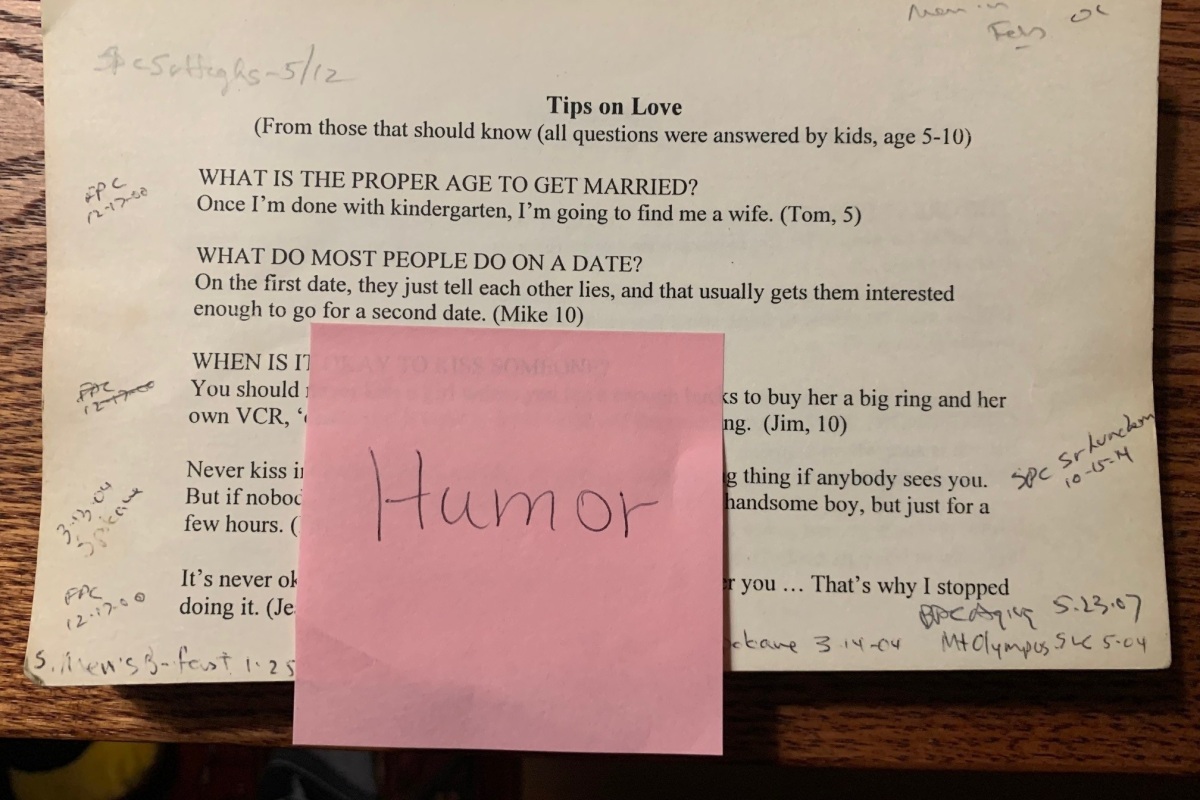
Another installment from my dad’s humor cards.

The backstory: My dad was a Presbyterian pastor for 40 years. He kept a well curated stack of humor cards – little stories or observations that he typed onto 5×7 cards. Then he wrote in the margins when he used that particular item. His humor was often an easy way to settle in to something deeper – by laughing and thinking about the buried truth in these little nuggets, it paved the way to an open heart.

When we cleaned out his desk after he died 7 years ago, I was lucky enough to stumble on this stack. I pull it out regularly to have a little laugh with my dear Dad. Now when I post one of them, I write my note next to his and it feels like a continuation.

Heaven

A family of mice attempted to cross the freeway and all 21 of them are killed by an 18-wheel truck. They all go to heaven at the same time.

After they’ve been there for one week, St. Peter asks how it is going for them. They say that its wonderful except that heaven is so big it takes them so long to get around. St. Peter responds by giving them all a roller skate to move a bit faster and they love it.

The next week an alley cat is killed and goes to heaven. After a few days St. Peter asks the cat how things are. He replies, “Terrific. I especially like your meals on wheels program.”

Photos of the Week: Aug 27

You must live in the present, launch yourself on every wave, find eternity in each moment.” – Henry David Thoreau

The last of the vacation pictures – a heron fishing in the morning and a brief sighting of orcas on the ferry ride home.

Miss O wanted a pink polaroid camera for her birthday. Which makes me laugh because as she very carefully takes the one picture that she wants so as not to waste her film, I get to snap 5 digital pictures of her in the process.

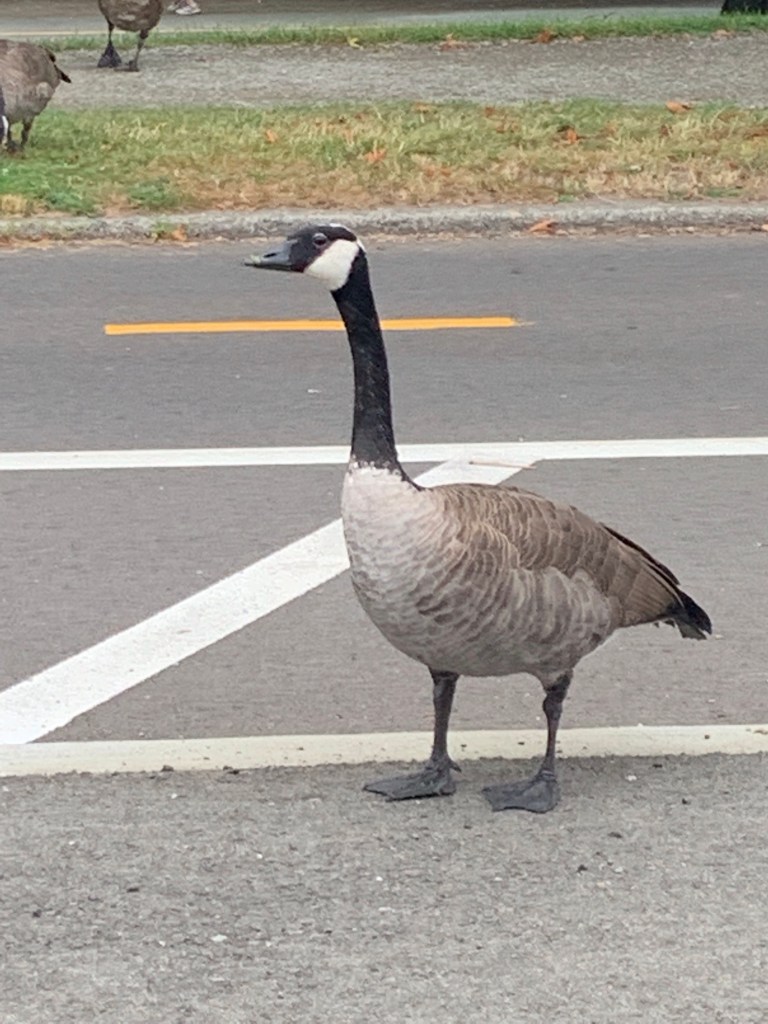
Wildlife at home – a raccoon eating plums in our backyard and a goose figuring out the neighborhood cross walks.

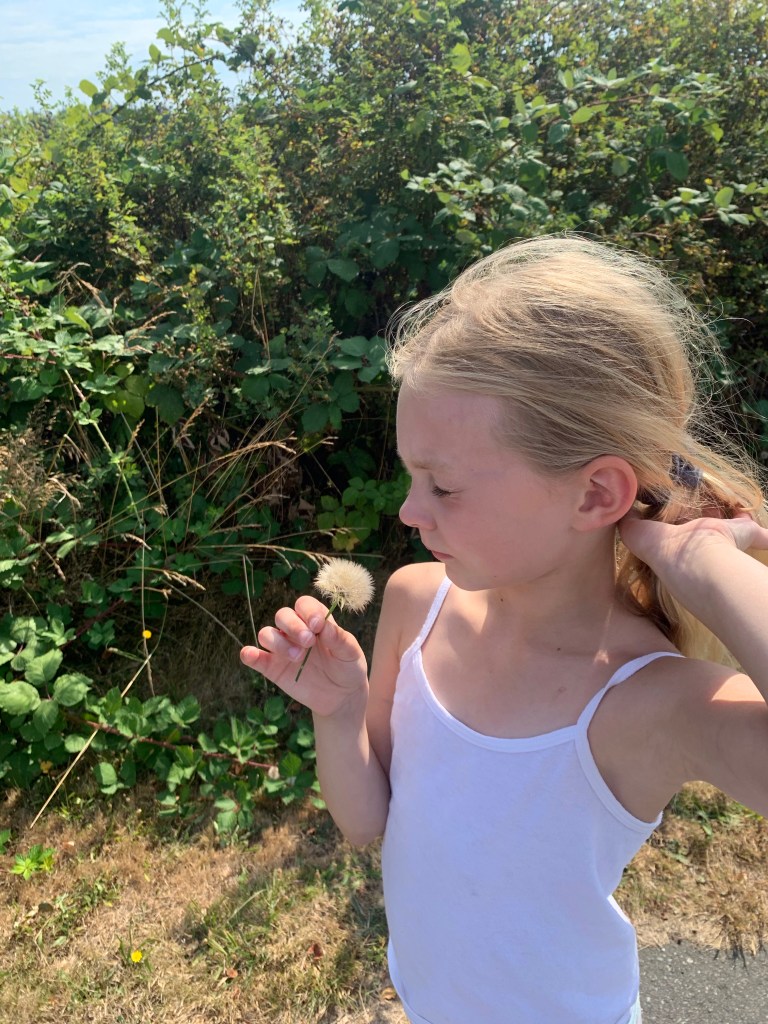
Finding dandelions to wish on…

Did you have a week full of wishes and dreams?

Freestanding and In Charge — Or Not

We are all apprentices in a craft where no one ever becomes a master.” – Ernest Hemingway

I often think of myself as freestanding and in charge – only to repeatedly learn I’m not. I say that even as I know my best decisions, like the ones to have my beautiful children as a single person, came from a calling that was far beyond me. I read an amazing piece on that subject this week from Mark Nepo that I am posting here in case anyone else needs to hear the same thing.

Teachers Are Everywhere

Teachers arise from somewhere within me that is beyond me, the way the dark soil that is not the root holds the root and feeds the flower.

So often we think of ourselves as freestanding and in charge, because we have the simple blessing of being able to go where we want. But we are as rooted as shrubs and trees and flowers, in an unseeable soil that is everywhere. It’s just that our roots move.

Certainly, we make our own decisions, dozens every day, but we are nourished in those decisions by the very ground we walk, by the quiet teachers we encounter everywhere. Yes, in our pride and confusion, in our self-centeredness and fear, we often miss the teachers and feel burdened and alone.

In trying to hear those quiet teachers, I am reminded of the great poet Stanley Kunitz, who as a young man struggling darkly with how to proceed with his life, heard geese cross a night sky and somehow he knew what he had to do. Or how a man I know was slowly extinguishing himself, sorely depressed, when, finally exhausted of his endless considerations, he heard small birds in snow in unexpected song. He realized he was a musician who needed to find and learn the instrument he was supposed to play.

From the logic of being freestanding and in charge, experiences of this sort seem crazy-making and untrustworthy. But the soil of life in which we grow speaks a different language than we are taught in school. In actuality, truth and love and the spirit of eternity are rarely foreseeable, and clarity of being seldom comes through words.

In my brief time on Earth, I have felt the light of ageless spirit fill me unexpectedly when I thought I would die, and as water pumps its way up a slim root making that plant leaf out toward the light, I have found myself, against all fear and will, flushed with possibility in the direction of dreams I had hardly imagined.

Whether through birds in snow, or geese honking in the dark, the brilliant wet leaf that hits your face the moment you are questioning your worth, the quiet teachers are everywhere. When we think we are in charge, their lessons dissolve as accidents or coincidence. But when brave enough to listen, the glass that breaks across the room is offering us direction that can only be heard in the roots of how we feel and think.

The Book of Awakening by Mark Nepo

The Four Habits of Happiness

It all comes to this: the simplest way to be happy is to do good.” – Helen Keller

I was listening to a 10 Percent Happier podcast that featured Arthur Brooks. A professor and social scientist, Arthur Brooks has recently published a book called From Strength to Strength: Finding Success Happiness and Deep Purpose in the Second Half of Life. He named a list from research of the 4 most important habits of happiest people:

  • Faith
  • Family
  • Friends
  • Work that serves others

But it made me wonder if everyone can fulfill that formula? First of all, faith means so many different things to different people. But perhaps it’s the trust in one of my favorite Steve Jobs quotes (which as Dr. Stein pointed out seems to build off Kierkegaard’s famous quote about living life forwards):

You can’t connect the dots looking forward; you can only connect them looking backwards. So you have to trust that the dots will somehow connect in your future. You have to trust in something – your gut, destiny, life, karma, whatever. This approach has never let me down, and it has made all the difference in my life.

Steve Jobs

But going down Brooks’ list, what about people who don’t have a lot of agency in their work? I recently heard an example of a hospital janitor. Instead of feeling like he didn’t have purpose in his work as he cleaned up vomit in the oncology ward, he’d framed it as an opportunity to make people feel a little bit better on what might be a low point in their lives.

And this made me think of my life. One of my least favorite activities about parenting is cleaning up spills. On a weekday when we are at work/school/daycare, it’s not so bad, but on any given weekend day, I clean up (or help my kids cleanup up) 6-10 spills a day. It feels like a waste of time to me, like I could be spending more time laughing and playing with my kids if we didn’t have spills.

But of course, despite my best precautions – kids, especially at age 3-years-old and age 7-years-old have accidents. They splash water out of the sink, they tip over the reservoir of paper they were using for a project, paint brushes fly out of little hands, and so on.

Reframing it, I see that I am not cleaning up spills. I’m teaching my kids how to react when things don’t go right. I’m helping them learn to pick up the pieces and continue when we have lost our mojo. And most importantly, I’m building up their belief that they can do it, even when it isn’t fun.

This big picture sentiment when it comes to caretaking is echoed by research professor Dr. Alison Gopnik “Taking care of children, like taking care of elders is frustrating, is tedious, and it’s difficult in all sorts of ways but it is also deep and profound and an important part of what makes us human.

In this way, maybe it is not only work that serves others but also quite possibly a habit of happiness.

What do you think about the four habits of happiness? Is there anything you do regularly that you’ve reframed as work to serve others?

(featured photo from Pexels)
The Big Questions

Be patient toward all that is unsolved in your heart and try to love the questions themselves, like locked rooms and like books that are now written in a very foreign tongue.” – Rainier Maria Rilke

I have a friend who is going through a hard break-up. Sitting with my friend as they process makes me think of all the questions I’ve wanted to know when going through hard times: When will I feel better?How will I survive this? What meaning is going to come from this? What is my purpose here?

Wanting the answer to big questions is the topic of my post for Pointless Overthinking this week: Waiting for the Big Answers.

(featured photo from Pexels)

Meaningful Interaction

Many people will walk in and out of your life, but only true friends will leave footprints in your heart.” – Eleanor Roosevelt

I was reading an article written by a single mom with kids who was bemoaning her situation in life. And there were many things I could relate to even though her kids are a lot older than mine (maybe in their 20’s). Because it’s hard to live in a house where you are loved dearly but not really cared for.

But there was a lonely note in her writing that I couldn’t place. So I looked up loneliness in Brené Brown’s Atlas of the Heart. Brené includes the definition of loneliness as defined by social neuroscientist, John Cacioppo and his colleague William Patrick as “perceived social isolation.” And Brené expands on this with “At the heart of loneliness is the absence of meaningful social interaction – an intimate relationship, friendships, family gatherings, or even community or work group connections.”

It brings to mind two times in recent years that I’ve felt lonely and had to adjust my social interactions to make them meaningful. The first was when I first became a mother. I remember one night I courageously left my daughter with a babysitter and went to a restaurant to drink wine and watch a Seahawks game with a good friend. I had fun – but the next morning got up and felt empty because what used to be fun for me longer met my needs. I longed for more meaningful interaction.

And the second was when the pandemic started. All of a sudden my meaningful interactions with other parents were eliminated or reduced to online. I had to find another way — and that eventually led me to blogging.

Thinking about Brené’s comment – it isn’t about how many friends we have or whether we are in a partnership, it’s about whether we are meeting our needs for depth. In fact, I think the loneliest place I’ve ever been is inside a committed relationship. I send a wish to the author of that article and for us all to have the focus on cultivating friendships where we are seen.

What makes you feel less lonely? What counts as meaningful interaction for you?

(featured photo from Pexels)
Sacred Time

Although the world is very full of suffering, it is also full of the overcoming of it.” – Helen Keller

Early the other morning, my cat came in with something in her mouth. It was so small, I couldn’t see what it was. When she put it down, I tried to pick it up and it fluttered against my hand and I saw a flash of green when it did so I discovered it was a bird. This was only about a week after the cat had brought a baby bunny in and both were during my sacred time, the 90 minutes I have to do yoga, meditate and write before the kids wake up.

I was irritated because I thought she was done with the phase of life of hunting little creatures.

I was distracted because wanted to go back to reading and writing about the precious things of life.

I was annoyed that instead of finding inner peace, I was scrambling around on my hands and knees doing the quiet angry whisper at the cat.

Despite all this, I managed to get the small lump of feathers between a greeting card and a paper towel and I took it outside. I thought it was dead and my plan was to just release it into the bushes off the side of my deck.

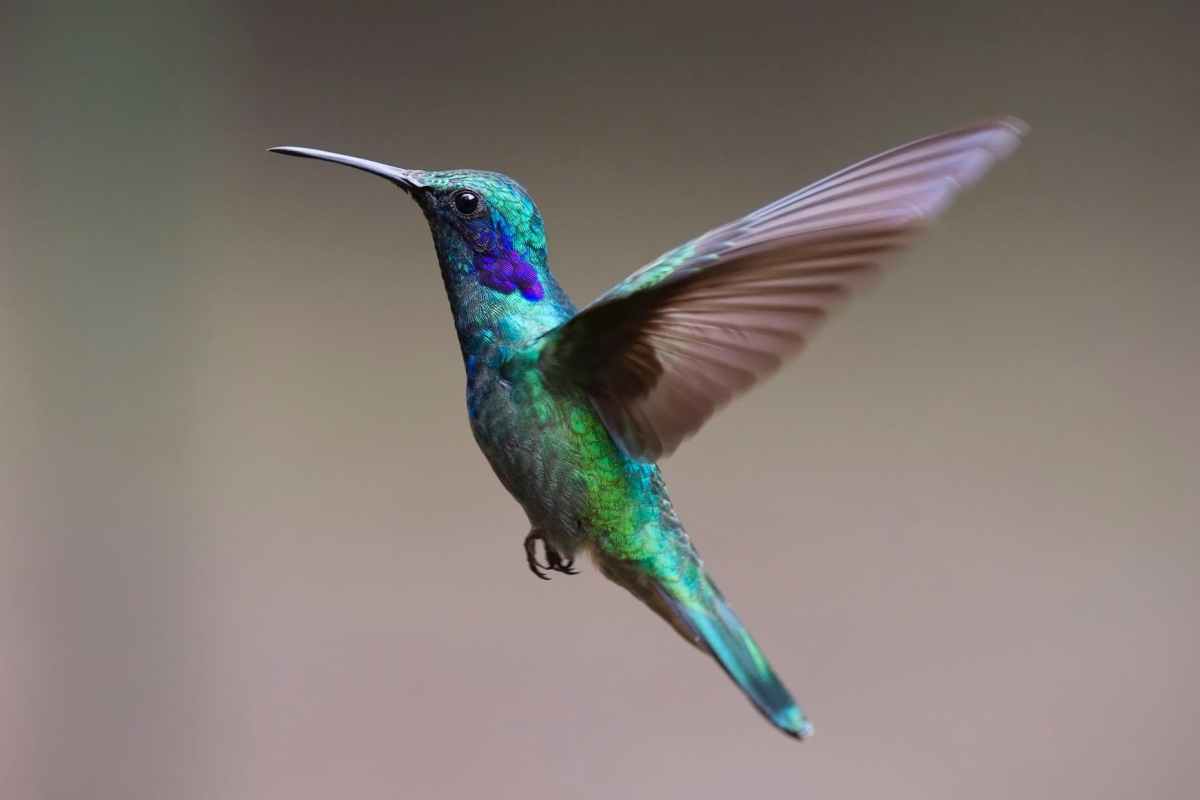
As I let go, the small lump of feathers fell for about a foot, then righted itself mid-drop and flew away. It revealed itself as a little hummingbird as it rose higher and higher.

Stunned, I just stood there for a long moment feeling the magic of that flight course through me. It was as if I had the after-image of that free fall into flight burned into my being. I had goosebumps all over.

It was life showing me that no matter what cat has got us in its claws, there’s always a chance that it will let up and we’ll fly away.

And to see it fly was poetry in motion that even as battered as we feel, we can always rise again.

Most importantly, I saw that this was my sacred time. This was the beautiful beat of life coming to me to be witnessed, held and let go.

Quote comes from a Real Life of an MSW post: Overcoming.

(featured photo from Pexels)