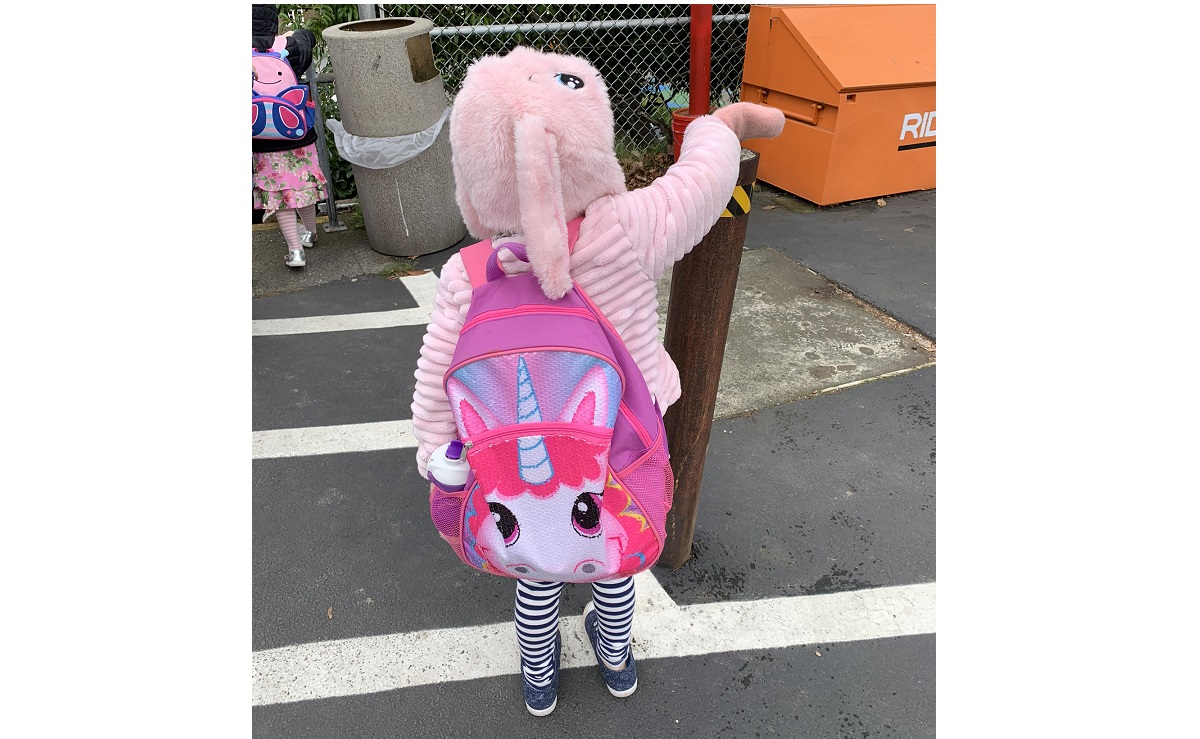
“If you are walking down the right path and you’re willing to keep walking, eventually you’ll make progress.” – Barack Obama
When I had a dog, one of my goals was to make him an easy dog for someone else to take care of. It was a practical limit on how much I spoiled him because boy, did I spoil him! But he had to be trained so that if he was inside a house, he didn’t destroy things that weren’t his toys and his routine was simple enough (2 meals, 2 walks) that it wasn’t unreasonable to ask someone else to do. Outside of that, I thought it was fine to let him go everywhere with me, rub his belly and sing to him and say our prayers together at the end of the day with a kiss goodnight but those were extras.
I was thinking about this yesterday as I packed a suitcase so that my 6-year-old could sleep over at her aunt and uncle’s house. It’s only been a handful of times that she’s been away from me for a night and it’s been a long time – maybe a year or 18 months?
But as I got her ready, I was pleasantly surprised that I every confidence that she could go spend one night away and be okay getting herself ready, going to bed, and paying attention to what they told her to do. In fact, I had no written instructions to go with her at all. At one point I thought to text her aunt what time she went to bed but my daughter had already told her.
This seems like a parenting milestone I feel proud to reach. Like with my dog, I’ve raised a human being to a level that another person could reasonably care for. Yay!
Of course, I packed the suitcase mostly with stuffed animals, it’s good she’s only gone overnight because she might not eat anything that they serve and it’s only this stress free with about 3 people in this world. But hey, she’s only 6-years-old so I have more time to work on the rest 😉
Postscript: In contrast to the other day where I had high expectations that my son and I were going to have a great time alone and all he did was miss her — this time I had low expectations because I feared all he was going to do was miss her. And he only asked about her once and had a BALL being the center of attention. 🙂





 Surprised By Joy