Going All-In

To lose balance, sometimes, for love, is part of living a balanced life.” – Elizabeth Gilbert

I dated a guy when I was in my mid-20’s that told me early on in the relationship, like before we’d even been on a dozen dates, that he would never take me to or pick me up from the airport. That way, he reasoned, it would never look like he loved me less when he stopped picking me up.

Around the same time I had a work colleague who was celebrating his one-year wedding anniversary. He said that the key was to go really small so that he wouldn’t set a precedent that couldn’t be maintained.

What I’ve found interesting is that with taking care of babies, there is no choice but to go all-in. You start out taking care of their every need and then with time have to negotiate new roles, responsibilities and boundaries.

I recently implemented the practice that once I sat down to dinner, I wouldn’t get up until I was done eating. If the kids are excused and they need help getting a toy, I tell them that I’ll get it when I’m finished. If they want something to eat or drink that was included in dinner, I give them choices they can get themselves or that are reachable. If they want me to watch them, I remind them to do it where I can see from the table.

This practice was incredibly hard work for me for about three weeks. I had to resist the temptation to just get up and do it. Or, if they spilled something, I had to let go of muttering under my breath because doing it would be easier than cleaning up when they do it. Setting the boundary meant creating the consistency in me as much as the expectation in them.

But it is the work of maturity – in our relationship as well as ourselves. It made me think about that boyfriend from my 20’s.  It’s no surprise that I broke up with him. Among many things, his practicality limited his openness. There’s a fine line between defining boundaries and not wanting people to breech our walls.

And my colleague – unfortunately the marriage ended in divorce. Life has taught me that hedging our bets almost always limits the full range of feeling. It’s hard to walk the service back, draw better boundaries as relationships mature. But parenthood has taught me that sometimes it’s necessary to start by going all in.

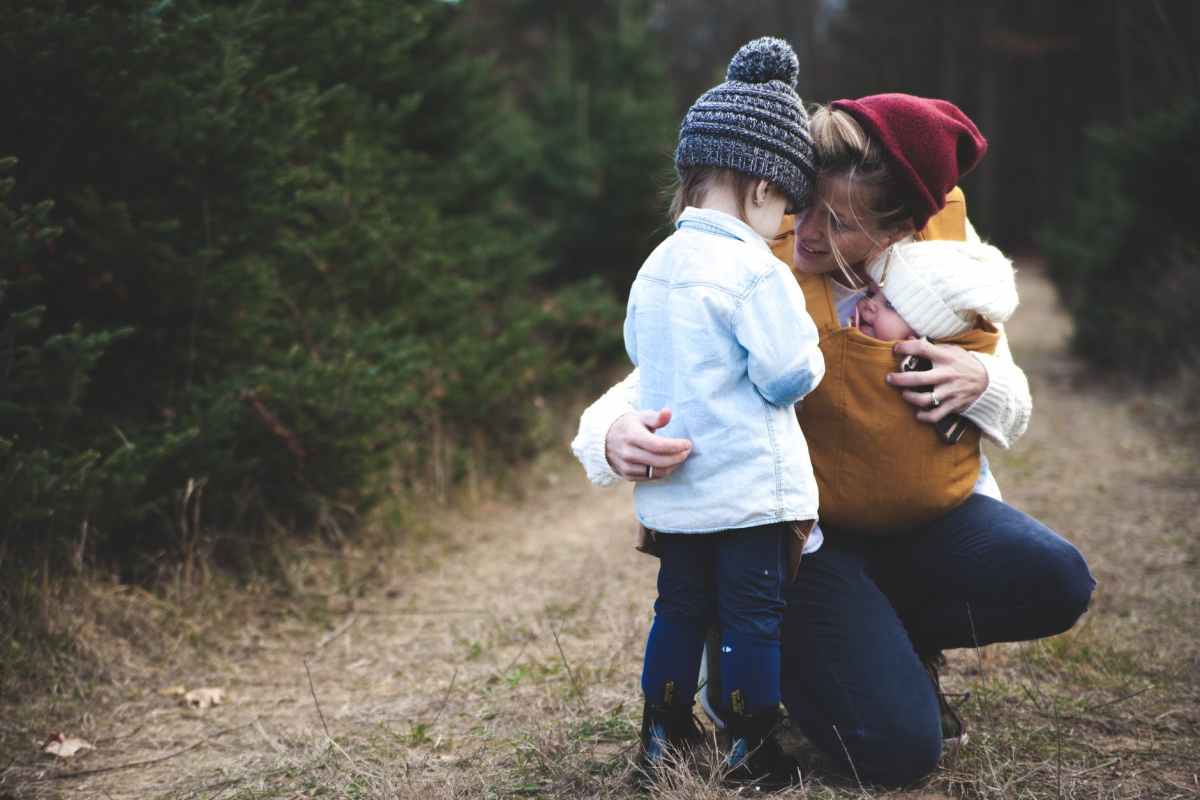
(featured photo from Pexels)

Meet Tenderness with Tenderness

My hands never feel empty because you hold them with care and love.” – unknown

Yesterday, my two-and-a-half year old son and I were sitting in the car goofing around while parked outside Starbucks before I dropped him at school. It was an early Monday morning after a really fun weekend as a family together and he said a couple of times that he didn’t want to go to school. Then he said, “I miss you, Mama.” And I started to protest that I was right there and talk him out of it. But before I could put the words together he followed up, “I miss you Mama atta school.”

My heart was gulping like a fish out of water and tears sprang to my eyes. Before I left the moment to justify that I can’t be do everything or to troubleshoot how we could spend more time together, my thoughts snagged on an idea from poet and author Mark Nepo that tenderness is best met with tenderness.

Frequently, this reflex to solve, rescue and fix removes us from the tenderness at hand. For often, intimacy arises not from any attempt to take the pain away, but from a living through together; not from a work out, but from a being with. Trust and closeness deepen from holding and being held, both emotionally and physically.

The Book of Awakening by Mark Nepo

So I gave him a big hug and said, “I miss you too, Buddy.” Then we went on our way.

I found out from his teacher that when the kids at school miss their families, she gets out a picture of their people for them so they can look at it. It’s the daycare version of the pictures I keep on my desk that give me a little zing whenever they catch my eye.

I felt my son’s statement all through the day as I went about my business. When it sparked a feeling of guilt or responsibility I kept practicing the return to the beauty of having a relationship worth missing.

Selective Hearing

The years teach much which the days never knew.” – unknown

Have you heard the advice that Ruth Bader Ginsburg gave to Jennifer Lopez about relationships? It was something like, “It’s good to be a little deaf sometimes.”

I’ve been working on practicing that lately. My daughter snapped at me yesterday first thing in the morning for waking her first or not getting her brother up first, I can’t remember which. Whichever it was, I’m quite certain it needed no response.

Here is the list of times that are usually the best candidates for being deaf in my house:

  • First thing in the morning
  • When anyone is hungry, cold or tired
  • Anytime someone is sick
  • When excitement because a friend has arrived is at its fevered pitch
  • Last thing at night

I’m working on my own balance of when things need to be addressed. Maybe it’s 10 days of being together with no interruption but I’m finding less retort and more love is more effective. It’s not that I’m abdicating in my role as a parent, just that I’m saving my breath for our quieter moments.

My beloved dog, Biscuit, went selectively deaf as he got older. Somehow he couldn’t hear me calling him when he was sniffing something with great interest. But he never failed to hear the sound of the food hitting his metal bowl. I’m starting to think that deafness might not an infirmity that comes with age. Instead it seems it’s a sign of wisdom.

From Secret to Surprise

Knowledge increases by sharing, not saving.” – Lyrical

My 6-year-old daughter’s best friend, who is 8-years-old and lives next door, came over this past Sunday with a secret. Here’s how it played out:

Sunday mid-day: “Oh, we’re…. <groan> Never mind. Forget I said anything. It’s nothing bad but I can’t tell you for 3 days.”

Sunday 20 minutes later: I heard her telling my daughter that they are getting a new car and then adding “Well, my dad just said not to tell EVERYONE.”

Monday morning carpool to school: “So I haven’t told ALL the kids on the block.” Then my daughter piped in “Yeah, and my mom doesn’t know.”

Monday evening: My 2-year-old came into the kitchen after playing with his sister and her friend. He ran to me and exclaimed “We have secret!”

Tuesday morning carpool to school: “It’s not too big a deal whether people know or not.”

Wednesday morning carpool to school: “In the new car, we are going to put a towel under my little sister’s seat because you know how messy she is. It should be here today. Or maybe tomorrow.”

Thursday morning carpool to school: “The surprise is going to be here next week.” I asked why it was a surprise now instead of a secret and she replied, “Well, we know it’s coming but not everything about what it’s going to look like so it’s a surprise.”

This must be why we don’t burden our kids with secrets, especially the ones that are heavier to bear!

Dichotomies

Follow the grain in your own wood.” – Howard Thurman

On a recent morning when my 6-year-old was tired at the end of her first week back to school after winter break, she ordered me to get her headphones. I stood undecided for a split-second – should I respond with the humor my dad would have used or the polite correctness my mom would have used?

It’s one of the challenges I’ve found with single parenting – not having someone represent the opposite end of the spectrum. There is no good cop/bad cop, just me, the tired and confused cop. Since I choose to have kids as a single parent, I have never part of a dichotomy in parenting. I can only imagine that it is probably both comforting and frustrating depending on how well it’s working in the moment.

We all take positions in our relationships whether we do it consciously or not. In one past relationship, I was the more active one. I’ve also been: the more cautious one, the more whimsical one, the more decisive one, the more expressive one, the more stubborn one. Which goes to show that each relationship brings out something different. In my family, I’m the younger sibling which allows my brother to be the older one.

I remember one Christmas in college when I was so frustrated with the conversation at the dinner table with my older brother because it made me feel so little and inexperienced again when I thought of myself as all grown-up. Walking into my parents’ house for a meal forced that role in the dichotomy I longed to be free of.

Now thirty years later, I don’t give it as much thought but still sometimes shake my head at my desire for my brother’s approval. There’s comfort in a dichotomy though, having a spot that makes us feel as if we don’t have to represent the full spectrum of possibilities on an issue. But when we get stuck in dichotomies, refusing the budge from our positions, as I’ve experienced not only in relationships but in our world, it can make talking feel futile. Then it takes whatever outside perspective we can access like therapy, spirituality, curiosity, to shift the dynamic before it gets toxic.

I think back to all the times in life that I’ve been single, and I see they have always forced me to do the work of discovering what I truly like and who I truly want to be. As Walt Whitman said, I contain multitudes and relating to others often brings out a facet that is appropriate for that interaction. Being alone forces an integration of my opinions and interests into what I’ve come to know as me. Dichotomies only work when there’s an opposing position to push against.

Which brings me back to single parenting. Not being able to rest in a dichotomy between the authoritative one vs the permissive one or the educator vs the voice of acceptance, I’ve had to uncover a lot of flexibility within myself. I’ve had to find out what kind of parent I am. It’s healed a lot of my internal unwillingness to see the other side. I can’t know what my next relationship will be but I do know that this awareness will help bring some humor and appreciation to the roles I may play.

So I responded to my daughter with a mix of my mom and dad. Bowing comically I said, “Here are your headphones, my highness. The only condition of my servitude is a please and thank you.”

(featured photo from pexels)

Exceptions

The most common way people give up their power is by thinking they don’t have any.” – Alice Walker

My mom doesn’t get hot meals often these days. In her senior living residence that is so concerned about COVID, meals either come in boxes delivered to her door and then she can microwave them or on the rare evenings she can go to the dining room, the kitchen is so short-staffed the food comes out lukewarm.

So I worked hard to make a great, hot meal for my mom when she came over for dinner last night. Not that she complains about the food at her place but I know she is tired of cold meals in boxes after two years of this protocol.

My rule at our house is that no devices are allowed during meals. My son, tired after his first day back to daycare, protested that rule but it was short-lived and we got everyone to the table.

Mid-way through the meal, my daughter was done, left the table and was playing around while the rest of us ate. My mom was telling me a story and went to pull out her phone to find a meme that was in her story. My son was distracted by what my daughter was doing and might not have noticed but I put my hand over my moms and quietly reminded her of the rule.

I felt a twinge of embarrassment enforcing my own rule with my mother who I was trying hard to please. It’s not like my mom is always on her phone. It’s also quite possible that the kids wouldn’t have noticed. And, I had the power to make the exception.

But it struck me that’s the thing with leadership that’s important – to live by the rules that you set even when you have the power not to have to. And although I rarely feel like I have any power, I do have the responsibility of living up to the standards that I set, which is a power in and of itself.

It was fine – my mom just told me the meme. It was about Barack Obama writing Betty White a birthday card when she turned 90 years old. In it he said he couldn’t believe she was 90. In fact, he was so skeptical that he thought she should send him a copy of her birth certificate. 😊

(featured photo by Pexels)

Pushing Our Limits

Only those who risk going too far can possibly find out how far one can go.” – T.S. Eliot

I just took care of my kids for 11 days without a break. Turns out that was two days too long. It was fine -we had lots of fun activities with our family and friends, new Christmas toys to play with and even two nights away at a cabin on the water. But without taking some intentional time to myself to take an hour’s walk alone or just sit on a bench and listen to sounds around me that wasn’t my kids’ voices, I hit my limit of tolerating chaos, my patience was thin and I didn’t have any of my usual zest for the experience.

Being pushed to the limit makes me think of the judgment calls mountain guides have to make on a climb. The ones that I’ve climbed with are very good at assessing an individual’s physical and mental state and making that call whether to push through or turn back.

On a five-day expedition climb of Mt. Rainier that I once did, there was a team member who when we did the group introduction said that he’d come from St. Louis, hadn’t worked out in preparation and was there for the most painful experience of his life. Then he disappeared for a few minutes while we were all packing up and returned with a chili dog. Just the thought of a chili dog in my gut as I cinched down the waist belt on my pack made me a little queasy.

When we left the lodge at 5,400 feet altitude for a five-hour climb to our camp for the night, the climber from St. Louis fell behind right away. A guide stayed with him and started the process of understanding his limits as I’ve seen practiced in the mountains several times.

Guides start by asking how you are doing to gauge a sense of your mental state and attitude. In between the lines of answers like “I just got a stitch in my side”, “I didn’t sleep well last night” or “I just can’t seem to get it together” are clues about how the climber is feeling about the journey.

Then they slow the pace down for the climber or take an extra break to see if that will help restore the equilibrium. I’ve often wondered why they don’t just turn people around right away if it seems to be a problem. But sometimes just a few minutes of rest can change the attitude from “I can’t” to “I can.”

And then, if someone is still struggling, the guide will walk the climber to the base. I’m know this is a safety thing to not leave people wandering around a mountain trying to get back but it’s always struck me as a beautiful act of kindness to walk someone home when they are done.

The climber from St. Louis hit his limit pretty early on that first day of climbing and turned back about three hours in. I never saw him again so I don’t know whether it was the chili dog or approaching the trip as the most painful experience ever that did him in.

As we face this new week, new month and new year, I think about the guides’ formula for understanding our limits: talking through how we feel, slowing down and take a rest and if necessary, having someone walk us safely back to the base when we have reached our limit so that we can climb again another day. It gives me inspiration for not only knowing when I’ve had enough but guiding others through theirs.

Sometimes we have to carry on in spite of our limits – like I had to my kids because the unusual Seattle snow hampered the breaks that I had planned. It worked out fine but I learned once again to respect the balance of life, pushing my limits and also finding a way back to home base when I’ve reached them.

The Sleepover Test

If you are walking down the right path and you’re willing to keep walking, eventually you’ll make progress.” – Barack Obama

When I had a dog, one of my goals was to make him an easy dog for someone else to take care of. It was a practical limit on how much I spoiled him because boy, did I spoil him! But he had to be trained so that if he was inside a house, he didn’t destroy things that weren’t his toys and his routine was simple enough (2 meals, 2 walks) that it wasn’t unreasonable to ask someone else to do. Outside of that, I thought it was fine to let him go everywhere with me, rub his belly and sing to him and say our prayers together at the end of the day with a kiss goodnight but those were extras.

I was thinking about this yesterday as I packed a suitcase so that my 6-year-old could sleep over at her aunt and uncle’s house. It’s only been a handful of times that she’s been away from me for a night and it’s been a long time – maybe a year or 18 months?

But as I got her ready, I was pleasantly surprised that I every confidence that she could go spend one night away and be okay getting herself ready, going to bed, and paying attention to what they told her to do. In fact, I had no written instructions to go with her at all. At one point I thought to text her aunt what time she went to bed but my daughter had already told her.

This seems like a parenting milestone I feel proud to reach. Like with my dog, I’ve raised a human being to a level that another person could reasonably care for. Yay!

Of course, I packed the suitcase mostly with stuffed animals, it’s good she’s only gone overnight because she might not eat anything that they serve and it’s only this stress free with about 3 people in this world. But hey, she’s only 6-years-old so I have more time to work on the rest 😉

Postscript: In contrast to the other day where I had high expectations that my son and I were going to have a great time alone and all he did was miss her — this time I had low expectations because I feared all he was going to do was miss her. And he only asked about her once and had a BALL being the center of attention. 🙂

Cracked Open

Never get so busy making a living that you forget to make a life.” – unknown

Yesterday I canceled all my work meetings and stayed home with my toddler who needed one more day of recovery from a cold. It was a hard thing to do. Like generations of parents before me, I found it difficult to put aside all the urgency my own life to support someone else when needed and not according to plan.

It was also the right thing to do. As my dad often said, “If it’s the hard thing to do, it’s probably the right thing to do.”

Sometime in the middle of the day, pinned down with a sleeping kid on my lap, frustrated the illusion of predictability in life being shattered yet again, time slowed enough for me to notice his heart beat. Once I felt that, then tuned in to his breathing and the weight and warmth of him, I was overcome with the sensation of the deepest meditation. That feeling that there is no doubt there is a Universal center that we all belong to and can reach. A sacred place of timelessness and love. The Divine heartbeat.

It never fails to surprise me that beneath my narrative is a rich and deep experience. Like a nut, when I crack open the hard exterior of my perspective, I am always rewarded but the meaty contents within. At the end of the day, my son felt better and I, surprisingly, found myself rested and restored even though not a single thing on my to-do list was done.

(featured image from Pexels)

Naming and Owning

“The limits of my language mean the limits of my world.” – Ludwig Wittgenstein

I was driving in the car with my kids talking about envy. It oftens happens in our house when one of my kids discovers a toy long hidden and invents a new game for it and the other wants to grab it from their hand. Or, as I heard a child quoted in a sermon once, “Why do I always want what’s in my brother hands?”

In response my 6-year-old daughter asked me, “How do you know so much about feelings?”

The voice in my head, a little exasperated, wanted to reply, “Because you two have so many of them! And guiding you through this minefield of growing up emotionally intelligent has required me to come to terms with my own emotions when I’d prefer just to always to say I’m happy and call it good!”

Dr. Brené Brown, research professor and author, lays the groundwork for mapping human emotions in her book Atlas of the Heart by describing a survey she used in workshops for five years. It asked people to list all the emotions that they could recognize and name as they were experiencing them. The average number named was three: happy, sad and angry.

Many of the parenting books I’ve read about raising resilient children have advised to help children move through situations that we have to help them name their emotions.

 In trying to help my kids identify what it is they are experiencing, I’ve found that I’ve had to name and face my own emotions. In this way I have learned so much nuance about my own interior, sometimes grudgingly, but always resulting in better color and effect in my own life.

So instead of voicing the snappy retort in my head, I responded from that place in my heart that holds love, warmth and awe for the lessons I continue to learn, “Because I love you two so very much that I want to help you grow up so healthy, inside and out.”