“When one tugs at a single thing in nature, he finds it attached to the rest of the world.” – John Muir
This post was previously published on 12/14/2022. Heads up – you may have already read this!
The other day I felt like I was working at my desk when pressure tipped the scales and slid into anxiety. I had a client project that wasn’t going well, something that I tried to do for a friend didn’t turn out as I hoped, the holiday bills were adding up and I had strange red spots splotching the skin on my face. In response, I was eating all the Christmas candy I could find even though I knew the only way that candy would solve my problems was that it soon would be my biggest belly-ache. So I managed to put down the sugar and I went for a walk.
“And into the forest I go, to lose my mind and find my soul.”
John Muir
For all the John Muir and Henry David Thoreau quotes that I love, the person that I often think of when I feel this way is Beck Weathers. I wrote a post about him – The Power of Stories. He is the Texas pathologist caught in the 1996 storm on Everest that Jon Krakauer wrote about in Into Thin Air.
Beck tells the story that he climbed to escape depression. He’d head out into the mountains because climbing helped alleviate the darkness he was feeling. But it became a cycle of its own – he had to climb bigger and bigger things in order to keep depression at bay. Which is how he ended up at 27,000 feet on Everest in one of the deadliest storms.
I relate to Beck’s story not because I’ve suffered from depression but because mountains have given me relief from my own psychology. I started climbing in my late 20’s because I was bored after breaking up with a boyfriend and yearning for something bigger. I literally turned the corner on a street one day, Mt. Rainier lorded over my view, as it does so often in Seattle, and I knew I had to climb it.
What is it about climbing that makes it such a relief? For me it’s that when I’m having to work so hard to keep my body safe, my mind finally takes a back seat. When I’ve reduced what I have to do to the simple task of putting one foot in front of another and find a rhythm that works, I relax because I have far fewer choices about what to do or say next. At the same time, the perspective puts my ego into check because I’m no longer the main player in the small stage of my life, I’m a microscopic speck on the enormous stage of nature.
“The clearest way into the Universe is through a forest wilderness.”
John Muir
In many senses, climbing was the beginning of my meditation journey. It slows my mind down, it simplifies what I need to do and it puts my ego in its place. To a degree now even walking does that for me when the muscle memory kicks in.
My favorite meditation is one that makes me think back to my climbing experiences. It’s where I feel the weight of everything I’m carrying on my back – the way the shoulder straps dig into my shoulders and the hip belt cinches my gut, the pressure of it all pushing my feet heavily into the ground. And then I take off the metaphorical backpack and sit with it in front of me, emptying out everything I carry one by one onto the ground before me. As I watch myself unload my problems and worries, I get a sense of detachment from them, a space that opens ever so slightly because they have been separated from my back. And then, after a few minutes of unloading, contemplating and breathing, I reload my backpack with only what I need to carry.
I always walk away from that meditation feeling lighter. Like walking and climbing, it gives me a bit of perspective and distance. I still need to return and figure out my problems but I can do it from a more capacious sense.
That happened with Beck Weathers as well. When he returned from Everest, albeit without his toes, nose, most of one arm and the fingers from the other, he was able to deal with his depression more holistically. His story always gives me inspiration – that I can face what’s weighing me down, use the tools I’ve learned from my experience, and maybe even roll it into something hopeful for others.
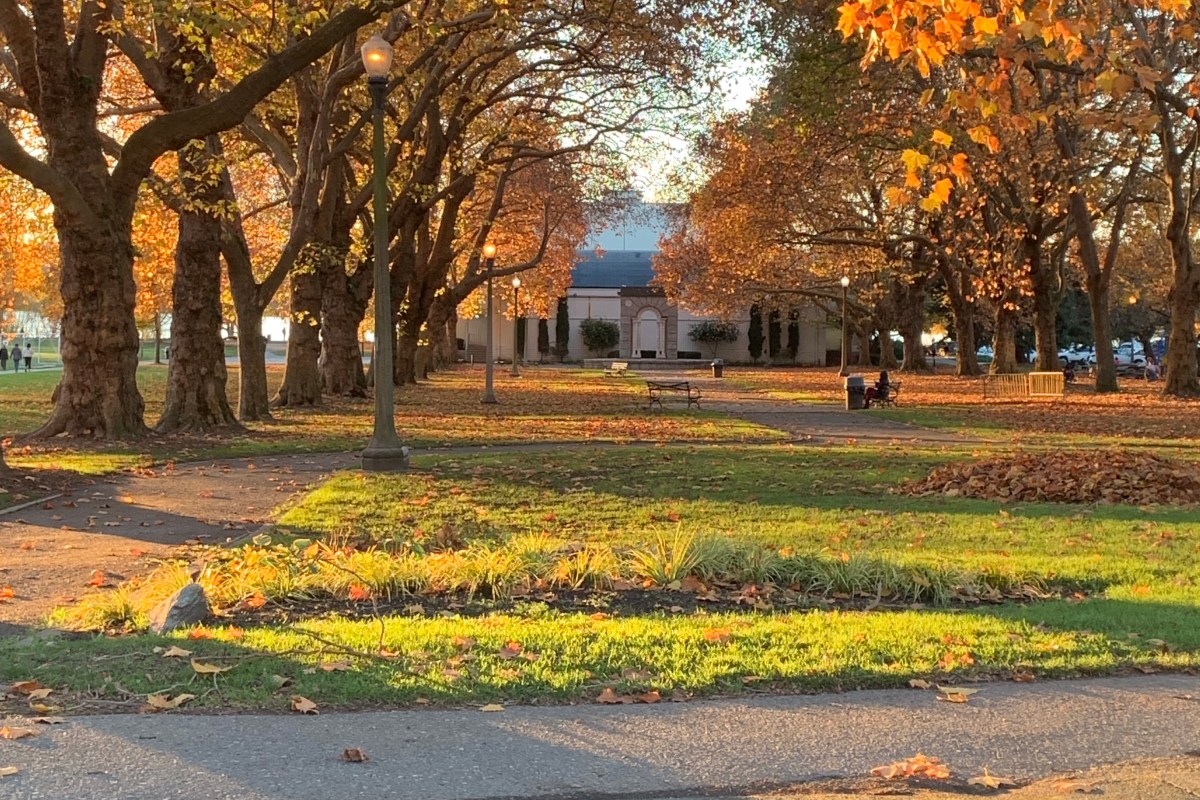
“Climb the mountains and get their good tidings. Nature’s peace will flow into you as sunshine flows into trees. The winds will blow their own freshness into you, and the storms their energy, while cares will drop off like autumn leaves.”
John Muir
And so it went the other day with my anxiety – I took it out for a walk and it came back in a much more manageable size. One where I could sit with one thing at a time, hold it in perspective to life and the world and then deal with it in its own rhythm.
I only scarfed down just a little more candy along the way.
I’ve written a post about a different type of letting go on Wise & Shine: Am I Copying? Getting Over Writing Defensiveness


 Surprised By Joy