The Usefulness of Play

We are what we repeatedly do. Excellence, therefore, is not an act but a habit.” – Aristotle

In 2006 I went to a book reading and slide show by legendary alpine climber Ed Viesturs. He’d just published his book about summiting the world’s 14 peaks over 8,000 meters (26,26 feet) without supplemental oxygen, No Shortcuts to the Top and my friends and I had a front row seat for his show.

We were there early watching as he got his slide show ready. Ed came off the stage that was about 2 ½ feet above the level of the auditorium floor to fix the angle of the projector and then walked around to climb the stairs back onto the stage. As he did this when it would have been so easy for him to jump up, I joked, “No shortcuts to the top” and we howled in laughter.

There’s a famous story about Ed getting to the central summit (8,008m or 26,273 feet) of Shishapangma in Tibet and looking across the 100 meters of knife-edge climbing to get to the true summit that was a few meters higher in elevation (8,027m or 26,335 feet). He was by himself and decided it was too dangerous so he went home without summitting. Then he returned 8 years later to do it all again, this time shimmying across the knife ridge to get there.

So Ed has earned the reputation of being the boyscout of the climbing world and perhaps it’s no surprise he’d live out the motto of no shortcuts to the top. But I’ve revisited that scene in my head again and again when pondering the consistency of life on and off the mountain or more generally speaking, consistency between who we are at play versus “real” life.

I was recently moved to think differently about play by an interview I heard with Nikki Giovanni, the poet laureate of Virginia Tech. She said that her “grandmother didn’t waste anything. There was nothing that came into her kitchen that she didn’t find a use for.” Then she continued, “I feel the same way about experiences and words. Nothing is wasted.”

Looking back on the things that I’ve chosen as my hobbies, I see that they have not just been pastimes but instead the proving grounds to work through ideas and attributes that I would come to and continue to need.

When I took up amateur mountain climbing in my late 20’s, I thought it was a way to see the world from a different viewpoint. Now I see it was a way to build my endurance to push through in those moments when I’m physically exhausted, something I’ve needed a lot in these early years of parenting.

Rock climbing at the indoor climbing gym was a way to get a workout and build upper body strength. There is almost always a move, the crux move, on a route that requires flexibility and faith to push through, bending your body in a way that allows you to reach past the obstacle or overhang without seeing the next hold. Now I see it as a physical way to practice the ability to move through the many challenging changes and tough transitions in life.

Recently I got a mosaic art kit for my daughter so that she could create designs by gluing small pieces of colored glass near each other. It was so fun that I’ve started doing it myself. It has very little to do with what I create and a great deal to do with seeing how all the small things in life come together to create the arc of life.  

Here’s what I’ve come to believe: that play helps simulate the tough moments of life when you have to make decisions, have faith and maybe even carry on in conditions when you are tired, hungry and feeling defeated. The choices we make in those situations carry through to the paths we follow in life. We build confidence and get to know ourselves one step at a time on the proving ground and then know how to live.

Aristotle said, “We are what we repeatedly do. Excellence, therefore, is not an act but a habit.” We are what we practice, in play and in real life. Perhaps that’s how Ed Viesturs managed the fourteen 8,000 meter peaks without supplemental oxygen. By practicing who he was, on and off the stage.
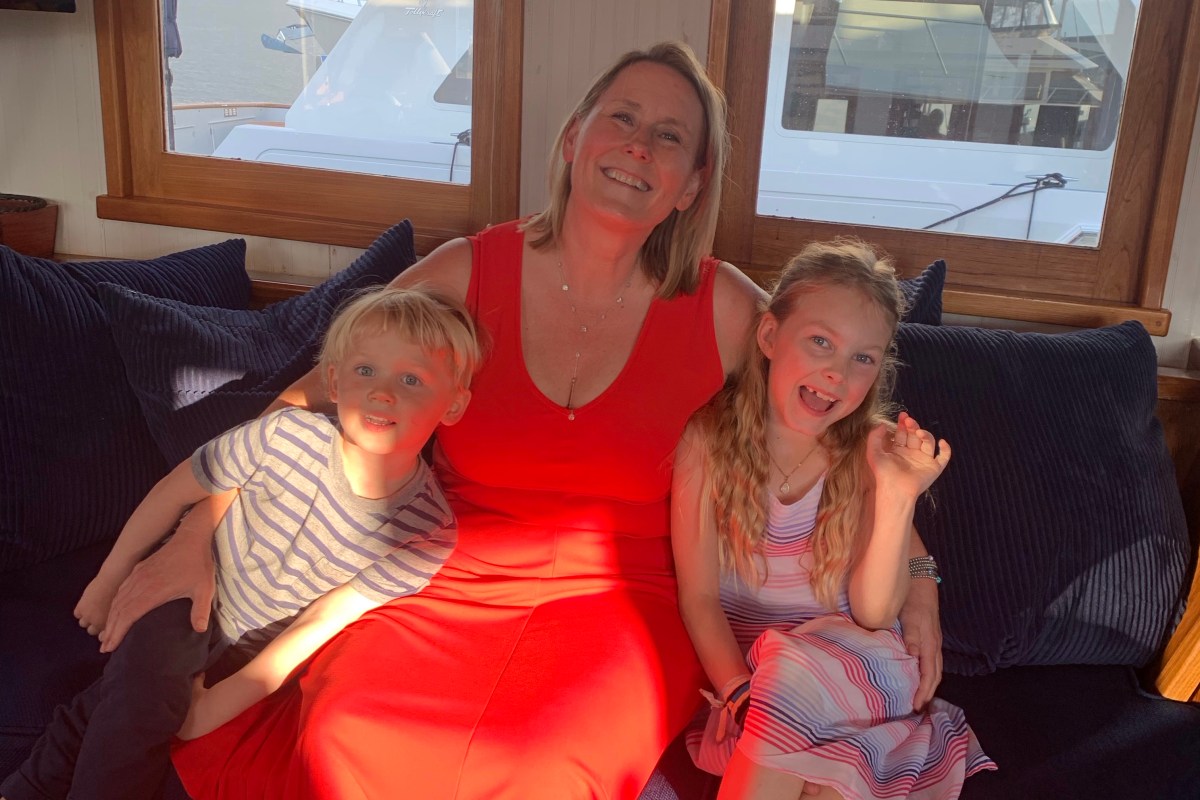
Our Gratefuls

Wear gratitude like a cloak and it will feed every corner of your life.” – Rumi

At bedtime after we’ve read books and told stories, I’ve been asking the kids what they are grateful for and how they helped that day. The latter is a question I got from Vicki early on in our blog buddy relationship. If I remember correctly, it was a question that her mom asked her sister Lisa on a regular basis.

The other night Mr. D answered that he was grateful for being grateful. It could be a three-year-old’s version of passing on the question, but he seemed to mean it.

While I sometimes envy the simplicity and directness of the animal life around, I wonder if there’s any other creature that feels gratitude. This started me down the rabbit hole of doing research on the Internet and as I encountered AI along the way, delved into Scientific American, and hopped over to the Greater Good Lab at UC Berkeley. My summary:

  1. There are a lot of cute animal article and videos on the Internet that can eat all your free time.
  2. No one knows if animals feel gratitude.
  3. Gratitude is a complex emotion that has components of reminiscence and reflection.

In her book, Atlas of the Heart, Brené Brown quotes Robert Emmons, professor of psychology at University of California, Davis and one of the world’s leading gratitude experts:

I think gratitude allows us to participate more in life. We notice the positives more, and that magnifies the pleasure you get from life. Instead of adapting to goodness, we celebrate goodness. We spend so much time watching things – movies, computer screens, sports – but with gratitude we become greater participants in our lives as opposed to spectators.

Roberts Emmons

Now who doesn’t want to become a greater participant in life? I’m grateful for my kid’s answers the other night. Mr. D. who’s grateful for being grateful and Miss O who added, “I’m grateful for family and that we are a unit, even though we sometimes fight.” Right – ditto what they said!

For a snapshot of a small moment of gratitude, I’ve written about one that I particularly enjoyed on the Heart of the Matter blog, A Brief Moment in Time.

Family Dynamics

Gotta move different when you want different.” – unknown

Last Monday I got frustrated with Miss O when we were getting ready for school. Or should I say, not getting ready for school. I prompted her five times to get her shoes on, she got mad at me for repeating myself. I told her that I wouldn’t have to repeat myself if she would put her shoes on…nothing new. I’m sure a conversation that happens between kids and parents in households all over the world since the beginning of time. Or at least since shoes became a thing.

So we were both irritated when I dropped her off to school. And then Mr. D was silent as we drove on. By the time we walked in the front door of his pre-school, it was clear that he was upset. We sat in the chairs outside his classroom for a while, and then had a tearful drop-off which is unusual for Mr. D.

This has happened enough times for me to discern the pattern – Mr. D is so attuned to the emotions of the household that any disturbances in our mostly good natured vibe affect him, even when the upset doesn’t involve him.   

Wow, families are complex. Now I don’t have to just be responsible for my own emotions but also the impact that I’m having on the group and vice versa?

I think about what it was like in my family growing up. My sister was usually upset about something, my brother was tired of hearing her complain and just disconnected, and I felt that I needed to be no problem since my parents were having to deal with my sister. It’s a pattern we maintain, by and large, to this day.

My mathematical nature likes patterns – they are so useful to predict what will happen next. But sometimes patterns just hold us in a mindless call and response. Until one person breaks out by saying, “I’m so tired of this banter that keeps us from saying anything real,” the other person(s) in the pattern may not realize there is something habitual that has been holding everyone in place.

Thinking back to my little family, I think this applies too. When I get tired of the same conversation about the same shoes, I’m always surprised how effective it is to change the dynamic by changing the order. Shoes before breakfast helps break the stalemate. What’s harder is changing the natural tendency that Mr. D has to carry the tension. Maybe that’s a case of where making it visible helps to dispel it. Hopefully that works because we aren’t going to stop wearing shoes.

I’ve written a companion piece on the Heart of the Matter blog about some advice I got from a friend long ago to never back a kid into a corner and instead always offer them a way out: Building Bridges to Each Other. Please check it out if you have a moment.

(featured photo is a pair of Converse high tops that Miss O got as hand-me-downs)

Healthspan

Aging is an extraordinary process where you become the person you should have always been.” – David Bowie

Listening to a recent Ten Percent Happier podcast, The Science of Longevity, with Dan Harris and his guest, Dr. Peter Attia introduced me to a new word: healthspan. Dr. Attia specializes in longevity and he was talking about his recently published book Outlive: The Science and the Art of Longevity

“There is this other component that if really I think push people will acknowledge is more important to them and that is healthspan. Which is harder to understand and define because it’s not binary but it’s an indication of quality of life. The medical definition of healthspan is the period of time from which you are free of disability and disease. I think some definition of healthspan needs to touch on physical robustness, cognitive robustness, and emotional resilience and health.”

Dr. Peter Attia, Ten Percent Happier Podcast

As I celebrate another birthday, this seems like a topic worth digging into. After all, when I grow up, I want to be just like our blogger friend, Julia Preston, who published a fantastic book at age 83, Voices: Who’s In Charge of the Committee in My Head?, and who regularly sprinkles this blogging community with delight, joy, and encouragement.

So how do we do it? Dr. Attia had five main areas: exercise, nutrition, sleep, pharmaceutical tools, and emotional health.

Exercise is the tool that turns out that it impacts lifespan (and healthspan) the most. The more exercise the better – he describes it as “the most potent longevity drug in our arsenal.” I found his breakdown on what we need to be very interesting – of the time we spend exercising, he gave the rough rule of thumb as half aerobic and half strength training. And of the aerobic half, 80% low intensity, 20% high intensity. For the strength half – 80% strength and 20% stability.

His comment on what we should do was more nebulous. It turns out that measuring our VO2 max is the best predictor of longevity, which matches what I remember when writing The Unified Theory of Breathing drawing from James Nestor’s book Breath. So the exercise we choose should ultimately improve our VO2 max because it is the best “predictor of length of life.”

Strength they measure by grip strength. Dr. Attia threw out this comparison: “If you compared the top 10% of grip strength to the bottom 10% – there is a 70% reduction in both incidence and mortality from dementia.” He followed that up with that it isn’t that they believe a strong grip protects the brain, but it works as an indicator.

The other bucket that really interested me was emotional health. Dr. Attia made the point that this one is different because it’s not age dependent but it affects the quality of life throughout. If we don’t have emotional health, we can make life more difficult for ourselves and those around us. Which makes me think of one of my favorite Oscar Wilde quotes, “Some cause happiness wherever they go; others whenever they go.

For me, my emotional health toolkit contains faith, meditation, writing, and love. When I start the day with meditation, faith, and writing, I have a better chance of facing the challenges of the day with openness and less worry. These tools help me put down the stuff I don’t need to carry and keep so that I can face the day, and my loved ones, with open arms.

Growing up with two parents who made emotional health look easy, I didn’t develop my toolkit until life tossed me around a bit. I thought enthusiasm and optimism could cover everything over. Maybe we all have maladaptive ways of doing things we have to relearn but don’t have the opportunity until life gives us something to practice. It makes me think of all the tools I carried when climbing to help in the case of falling into a crevasse or needing to rescue someone else. Thank goodness I never had to use them – because all I knew was the theory of what I should do, not the adrenaline packed reality of facing the tough situations.

But now that I’ve had plenty of opportunities to find out just how important emotional health is in the quality of life, I’ve found that doing my work, just like exercise, truly makes such a difference. There might not be the statistics to compare what happens when we do or do not do our work as it relates to emotional health, but I know for me, it is the key to enjoying each day that I’m lucky enough to walk on this green earth. And for each of these days I have in my life span, I’m so grateful. So thank you all for being part of my tool kit!

Speaking of someone who has done her work, I was lucky enough to have a wonderful podcast conversation with Vicki Atkinson about her book, Surviving Sue. As we talked through the themes in the book, she told me about doing the work to turn her well-deserved anger at her mother into compassion and positive regard. Episode 22: Themes in Surviving Sue with Vicki Atkinson

It’s a great episode, please give it a listen and subscribe! Search for Sharing the Heart of the Matter on Apple Podcasts, Amazon Music, Spotify, or PocketCasts or click on the link above.

Bemoaning Our Fate

You’re allowed to scream. You’re allowed to cry. But do not give up.” – unknown

This is a repost of writing I posted on 1/12/22. Heads up – you may have already read this.


Year ago I was writing a technical book with two business partners. It was a beast – 737 pages of dense and technical content. We divided up the chapters that each of us was going to write. I agreed to do more than the others because I’d written a technical book before. But it was still a pretty equitable split until one of my partners said he couldn’t do it. He said something to me like, “It’s so easy for you to do. You should take my chapters.” I was shocked. It wasn’t easy for me at all — I’d been sitting at my desk 12 hours a day, 6 days a week to get my portion done by the publisher’s deadline. I’d simply been too busy to sit around talking about how hard it was!

Which has always made me wonder, is there any benefit to bitching about life or bemoaning our fate?

This question makes me think of the tennis player John McEnroe. Given his reputation as someone who would contest a line call, did he get better calls from judges who wanted to make sure they were solid when they called a ball he hit out?

Even if there was an advantage to his tantrums, the fact remained that he had to be a person who could throw them.

It’s actually being a referee (aka a parent) that has taught me that there are two components to whether or not expressing our hardships in life makes a difference: authentic expression and boundaries.

The other day my 2-year-old son wanted to play with water in the sink. It was almost time to go somewhere and I didn’t want him soaked so I told him “no.” He said for the very first time, “I fustated!” I told him how incredibly proud I was of him for recognizing that he was frustrated. “Good for you for knowing that! But you still can’t play in the sink.”

Which leads me to my conclusion about whether or not life is easier if we expound on the pains of life to others. We have to express our life conditions authentically and that expression will improve our own ability to cope. There is always a need to speak to our honest experiences and when we do that, others understand us in a deeper way that supersedes whether or not it changes the outcome.

And the second part is that we all need to set and hold our personal boundaries of what we can or cannot do. Expressing ourselves probably won’t change how other people defer to us one way or the other. But it will change the one thing that matters – how we feel about the work we do.

As I parent, I know I change a little based on how my kids might react. I’m likely to soft pedal something that I know is going to start a fit, especially if I know my kids are tired. But even though I’ll change the delivery, I don’t change my decisions based on how it’ll be received because I have to hold the boundaries. In the case of my toddler playing in the water, I didn’t have the time or patience to change his clothes one more time before we left the house. I appreciated his ability to express to me that he was frustrated. The answer was still “no.”

John McEnroe wrote a book (co-authored with James Kaplan) published in 2002. The title, You Cannot Be Serious, was derived from his most often used phrase during the fantastic fits he used to throw when he disagreed with a line call. YOU CANNOT BE SERIOUS!!

In the book, he’s pretty reflective of his emotions and maturity between age 18 when he started winning on the tour and age 43 when he wrote the book. He recounts a time he went off during a match the summer when he was 18, “I ended up winning the match, but I was incredibly embarrassed – as I should have been. I was totally spent, and showing the strain.

Then near the end of the book, John McEnroe talked about his life as a father of eight kids and provided a telling reflection about maturity:

“I loved being a father. It was also the hardest work, by far, that I’d ever done. When your children range in age from the teens down to the teeny, it feels as though you’re in charge or a laboratory conducting multiple experiments, all of them dangerous and combustible, but just possibly life-saving. Every day seemed to bring situations that would try the patience of a saint – let alone John McEnroe. Of course there were times I lost it (there still are), but when you’re responsible to other people, and especially very young people, you quickly learn that you have to find ways to control yourself. However much you may feel the need to let off steam, the needs of people who depend on you for everything come first.”

You Cannot Be Serious – John McEnroe

In other words, we have the right to express our feelings about our experience. That expression will change as we mature and become more responsible to others. And if we lose it in as public of a forum as John McEnroe, we may have to write a book to apologize.

And then as we mature, we hold the boundaries of what we can or cannot do. Because at the end of the day, the only human who will likely think in great depth about our life is ourselves. And the only person who knows what we can handle is ourselves. As Vicki from Victoria Ponders writes so beautifully – it’s My Life, My Happiness.

When I took on the chapters that my business partner was not able to write, I did tell him that writing was hard for me too. (And I know there are many writers, especially technical writers who read this blog and can attest to the difficulty). But I didn’t belabor the point. It isn’t my personality. Writing more chapters was within my boundaries of what I could do. In the end, I was proud of the book we wrote, non-equitable distribution of work and all.

I have a new post today on the Wise & Shine blog: How to Recover From a Bad Post

(Featured photo from Pexels)

Party With Altitude

Passion is what makes life interesting, what ignites our soul, drives our curiosity, fuels our love and carries our friendship, stimulates our intellect, and pushes our limit…A passion for life is contagious and uplifting. Passion cuts both ways… Those that make you feel on top of the world are equally able to turn it upside down.” – Jon Krakauer

The most surreal party I ever went to: Drank too much, spent all my money, and then ended up sleeping in a field. No, this isn’t some weird WordPress prompt – just a memory that popped up from telling climbing stories.

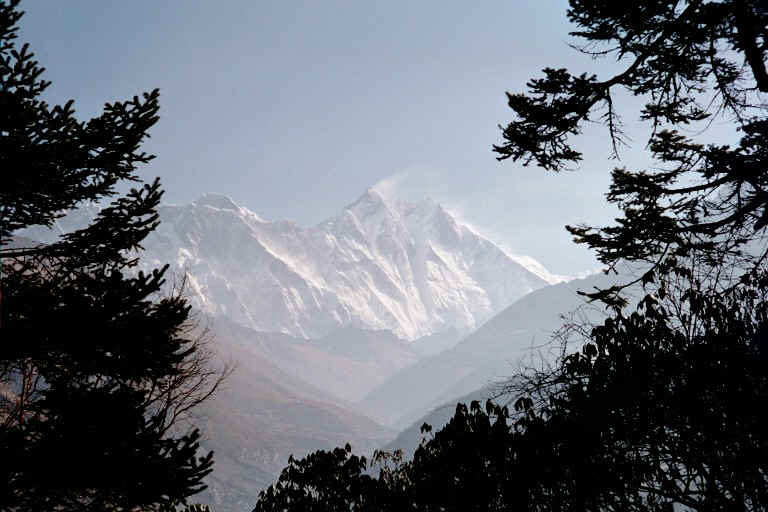
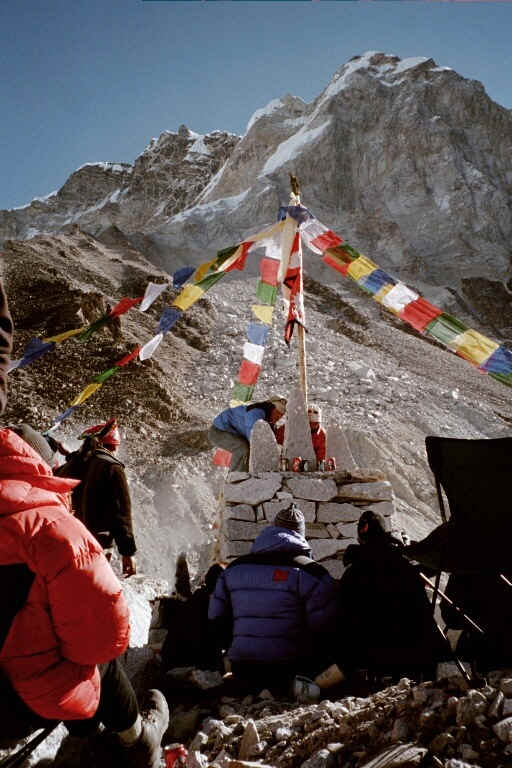
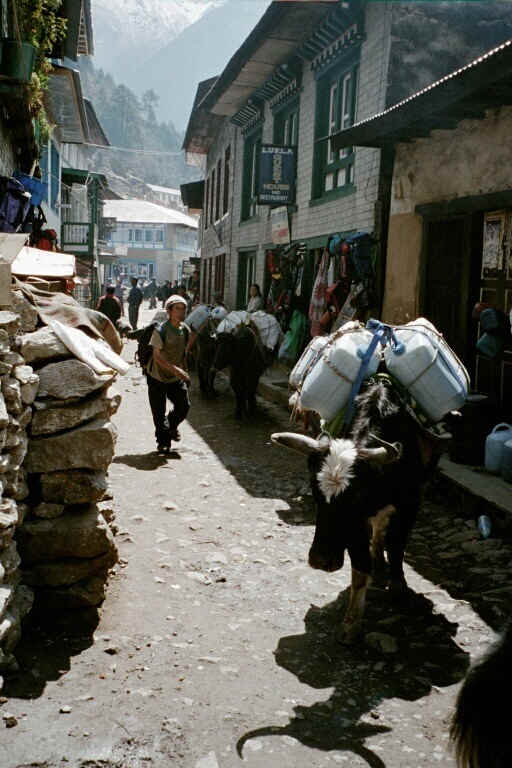
After we left my friends, Phil and Sue, and the other climbers in their group, at Everest Base Camp in March 2001, those of us who had trekked in with them headed back down the 30 mile route to hike out. I believe what took us 12 days to ascend while taking the time to acclimatize to the altitude, took us only 4 days to walk back.

Of course, we felt better and better as we descended. At our highest point, climbing a mountain called Kala Patar along the way with an altitude of 18,200 feet, the air contains about 45% of the oxygen that you would find at sea level but as we descended it increased by about 3% for every 1,000 feet of elevation. Our bodies had responded to the thin air by producing more red blood cells, and though they go back to normal after about a week at home, in the meantime, they combined with the denser air to make us feel GREAT.

On the way back down, we spent one night at a tea house at about 15,000 feet. After setting up our tents in the field, my fellow trekkers and I went into the main room for dinner and discovered that if you knocked on the shuttered door to the kitchen, you could order beer.

This was not the first time that the Sherpa at the hut had seen trekkers euphoric with a little more oxygen so they broke out the boom box with the Phil Collins tape. As we danced to Sussudio, practiced the white man’s overbite (imagine tall men jutting their jaws out to be funky), and generally cut loose, we kept on knocking on the shuttered door to order more beer.

Of course beer was relatively expensive. Everything had to be carried in on the backs of men or beasts so the higher up the hut, the more costly items were. I remember exhausting my cash on hand with the first round but fortunately my trekking friends, Dave and John, funded the next couple.

I’m not sure of the physiology of the next part, but alcohol packs a wallop at altitude, at least for me. I think it only took two or three cans of beers and a few flips of the Phil Collins tape and I was dancing on thin air. Shortly thereafter, I crawled into my tent and slept in a field. And the next morning woke up with a mountain of a headache.

Drank too much, spent all my money, and slept in a field. A party with altitude.

For another story about recovering from something else silly I did at high-altitude, please check out my Heart of the Matter Post: Yay, Yeah, Whatever.

Being Different

People take different roads seeking fulfillment and happiness. Just because they’re not on your road doesn’t mean they’ve gotten lost.” – Dalai Lama

I’ve only met one other person who intentionally choose to have kids as a single parent. Of course, I’ve heard of plenty, and known a lot of wonderful people who have become single parents because of circumstance, including my dear blog friends. I also know others that think they’d be better off as parents without their partners. Clearly, there are so many ways to do this parenting thing and no matter how we do it, it comes with plenty of challenges.

But back to the story about the woman I met who intentionally became a single parent. I was with my kids at the local wading pool last summer when I started talking to a woman who was there with her five-year-old twin girls. We hadn’t talked long when she revealed that she had chosen to become a single parent at 50-years-old and was just in town for a couple of weeks to visit her mom because she and the twins lived on the East Coast. She also had a 16-year-old son from a previous marriage.

Does it matter to meet people who have made similar life choices? It took me a long time trying everything else that I thought would work to have a family before I moved forward to become a single parent. It felt so vulnerable to have to intentionally walk down this path. As if everyone would know that I was the one that wanted to have kids and I couldn’t hide behind a “shared decision.” I’m laughing as I type this because now I don’t care at all if people know that. Hello? Obvious, please meet irrelevant.

And I thought it would signal that I wasn’t capable of a relationship. Well, that may or may not be true but again, who cares? After all, I created two people that I now have a relationship with so that worry seems beside the point.

But the instinctive social programming to not be different is strong, isn’t it? And I know you all are nodding because I believe there’s something each of us have done differently that caused angst – maybe being a vegetarian in a family of meat eaters, moving away from a family home, being an introvert, being an extrovert, going to college, not going to college, coming out, getting divorced, the list goes on and on.

In the case of meeting this woman who also chose to become a single parent, I’m glad that I didn’t meet her before I choose to have kids because she might have made me more neurotic about walking this path. She kept asking me over and over again, “People in your life didn’t tell you not to do this?” And I answered repeatedly, “Nope.” She was distracted, overwhelmed by her young daughters, and not at peace, like she was in the midst of some battle with naysayers.

I gave her the benefit of the doubt that life was more stressful because she was traveling. I know that without the regular supports of routine and familiarity, being alone with two kids, no matter how you got there, is harder.

But it reminded me we all represent something to someone – whether it be a choice, a lifestyle, a belief, an attitude, or anything else remarkable. Would I recommend choosing single parenthood to everyone? No, for a lot of reasons, including the fact that I adored my dad and I think it would be great if everyone had at least one awesome dad in their life.

But do I want people that I meet to know that parenting, even when, or especially if, you choose it later in life, is full of joy, inspiration, and wonder? Absolutely!

Do I want anyone that I meet to feel a little energy and inspiration for whatever notion inside them tells them to do something in a non-traditional way? For sure!

Do I want to represent the message that there is goodness when we stop caring what other people think and pursue our dreams? Most definitely.

I think about that sometimes when I’m out with my delightful little ones. Who knows who we are going to meet and how we’ll rub off on them. Let’s hope it’s for good.

Speaking of people who inspire for the good, this week Vicki and I got to talk with writer, and blogger, E.A. Wickham on the Sharing the Heart of the Matter podcast. Elizabeth reveals so much inspiration and wisdom about leading a creative life: Episode 21: A Creative Life with Elizabeth Wickham.

It’s a great episode, please give it a listen and subscribe! Search for Sharing the Heart of the Matter on Apple Podcasts, Amazon Music, Spotify, or PocketCasts or click on the link above.

Having Lunch with God

Everyone’s life is a fairy tale, written by God’s fingers.” – Hans Christian Anderson

The other day I read the suggestion in a meditation book that we could talk to God, whatever our idea of a Higher Power might be, as if God was our friend. I’ve been pondering it ever since because chattering away to the Universe about the latest cute thing my kids have said, relating the story about spilling water on my pizza, or who I have a crush on doesn’t match with my idea of prayer.

But it has me thinking about faith, prayer, and God in a slightly new way. That is, the one phrase that I hear said to me by my friends, the one that is consistent whether they be new or old friends, male or female, is “you don’t ask for help.

As is often the case with new angles, it’s led to an a-ha moment — that would likely be the same thing that God would say to me. I’ve long known that I tend towards doing instead of being and am impatient. The result is that I’d prefer to take things into my own hands instead of waiting for the Universe to work its magic.

If there’s a consistent trend that I notice looking back at my life so far, it’s that it’s only after I’ve mucked around trying to make things happen my way, only then do I sit back on my heels and try vulnerability, faith and patience.

This makes me think of Brené Brown’s recap of Joseph Campbell’s The Hero’s Journey. The protagonist tries everything they can to complete their quest, ruling everything else out, until they finally concede the only way through is to be vulnerable.

If God were a friend, I imagine I’d show up for our lunch date a little harried by life and then after a warm hug, sit down to change gears, and breathe deeply. I’d pick up the menu, only to put it down immediately so I could focus on the presence before me, and remember how good it is to sit in the company of my friend.

Ah yes, God and I would have a good laugh about my proclivity to engineer life and to try work above my pay grade. But then I’d thank God for all the wonderful ways God has delivered amazing miracles and results in my life, even when I couldn’t see it at the time. And then maybe we could work out a signal of when I’m supposed to stand down and ask for help.

If God were a friend, I’d ask questions about climate change and gun violence because I imagine God could provide a bigger picture view that would help inspire and motivate my efforts in the right direction. I would have the opportunity to ask, “How can I help?”

I’d unload the things the things that feel burdensome and heavy, share my recent mistakes that I haven’t quite forgiven myself for, and I’d glean a little insight about myself from how my friend responds.

I’d tell stories about Miss O answering why she got dressed on a weekend morning before she had to, “I want to be ready for the future.” I’d tell about the other night when Mr. D was fitful because he didn’t want to be back from our mini vacation, and in the middle of the night he sat up in my bed and said, “Mama?” And when I tiredly answered “yes”, he sighed and laid back and said, “Nothing.”

I’d remember to turn and ask, “I don’t have a map. Can you help me get to wherever I’m supposed to be going?” And I’d walk away a little bit lighter because of the time spent in the company who lets me know I’m loved, understood, and supported.

Maybe God has been a friend this whole time.

I also publish posts on the Heart of the Matter blog on Mondays. The Journey to Wholeness talks about writing about life from the understanding that comes from the second half of life.

(featured photo from Pexels)

The Top 5 Report

The guides who accompany the great expeditions in Kilimanjaro, one of the highest mountains in the world, use a Swahili expression to comfort fatigued walkers: ‘Polé, polé’, which means ‘slowly, slowly, one step at a time’.” – Cristiana Branchini

When I first started my own computer consulting business, I had a project that required a software developer. Since I don’t write code, I hired a smart friend of mine to do that piece of the project. He was delightfully full of ideas and capable, but getting things done on time wasn’t his strong point, and he was also a little lax on attention to detail.

One of the reports we had to deliver to the client was a Top 5 report. It was supposed to pull the top 5 results based in descending order from a database. Some requirements can be hard to define but this wasn’t one of them – the name of the report said it all.

When the day came for me to show the client our work, my developer friend was still working on it. I left to drive to the meeting and he assured me that it would be fine by the time I got there.

I pulled up the screen to show the client and the top 5 report returned 13 results. <groan> And then the client and I burst into laughter.

I thought of this particular project fail the other day when I was trying to prioritize what needed to get done. My top 5 list was returning 13 results:

  1. Meditate
  2. Be present to play with and listen to the kids
  3. Get my billable work done
  4. Write and podcast to ensure I’m focusing on the right things in life
  5. Exercise
  6. Sleep
  7. Cook healthy meals
  8. Take care of the cat
  9. Make meaningful connections with friends and family
  10. Plan the kids’ activities so they make meaningful connections with friends and family
  11. Laundry
  12. Hygiene/Cleaning/De-cluttering
  13. House maintenance, gardening, and mowing the lawn

Okay, so not all of those things need to be done every day. But most days require at least 1-8. I know you are worried that hygiene is item 12 but I promise I’m getting that done, more or less.

When I told the developer that 13 results were showing up, he said, “Maybe some have exactly the same value so it’s showing additional entries.” No, that wasn’t it. But maybe it’s a clue to the thing I need to work out now in life. Not everything has the same value so in the juggling of priorities, I can stay focused on what truly has the highest importance. The interesting thing about putting meditation at the top of the list is that it helps me stay centered for whatever else needs to be done.

And I just need to laugh. Whoever promised that life would fit in a box? Or a report?

It’s fitting that I’m posting this on the day that the Sharing the Heart of the Matter podcast Episode 20: The Art of the Interview with Dr. Gerald Stein goes live. In the discussion, that Vicki and I have with the illustrious Dr. Stein, he tells an incredibly poignant story about a man who’s brush with death at an early age made him realize that life is a lagniappe.

I wasn’t familiar with that word – it’s French/Creole for something extra. If you buy 12 rolls, the baker throws in another. A lagniappe. Kind of a cute tie in to my Top 13 items. Perhaps I should just consider it all “something extra” that at least I get to try to live this delightful life with its many priorities.

It’s a great episode, please give it a listen and subscribe! Search for Sharing the Heart of the Matter on Apple Podcasts, Amazon Music, Spotify, or PocketCasts or click on the link above.

The quote at the top of the post from blogger Cristiana Branchini is from her post Cultivating Trust in Life

(featured photo from Pexels)

When I Write

The words you speak become the house you live in.” – Hafiz

This is a repost of writing I posted on 10/12/22 – heads up that you may have already read this.


The other day a friend was telling me how his dad, who was a professor in the business school at the University of Washington, wrote books. He’d shut himself in his home office and for two months would just sit there with a note pad nearby. Sometimes he’d watch a game or organize stacks of papers. When my friend would come in and ask his dad what he was doing, his dad would say, “I’m writing a book.” My friend would say, “Nah, you’re listening to your police scanner.

And then in the third month, my friend’s dad would start typing and be done with the manuscript in a month.

After telling this story my friend turned to me and asked, “How do you write?

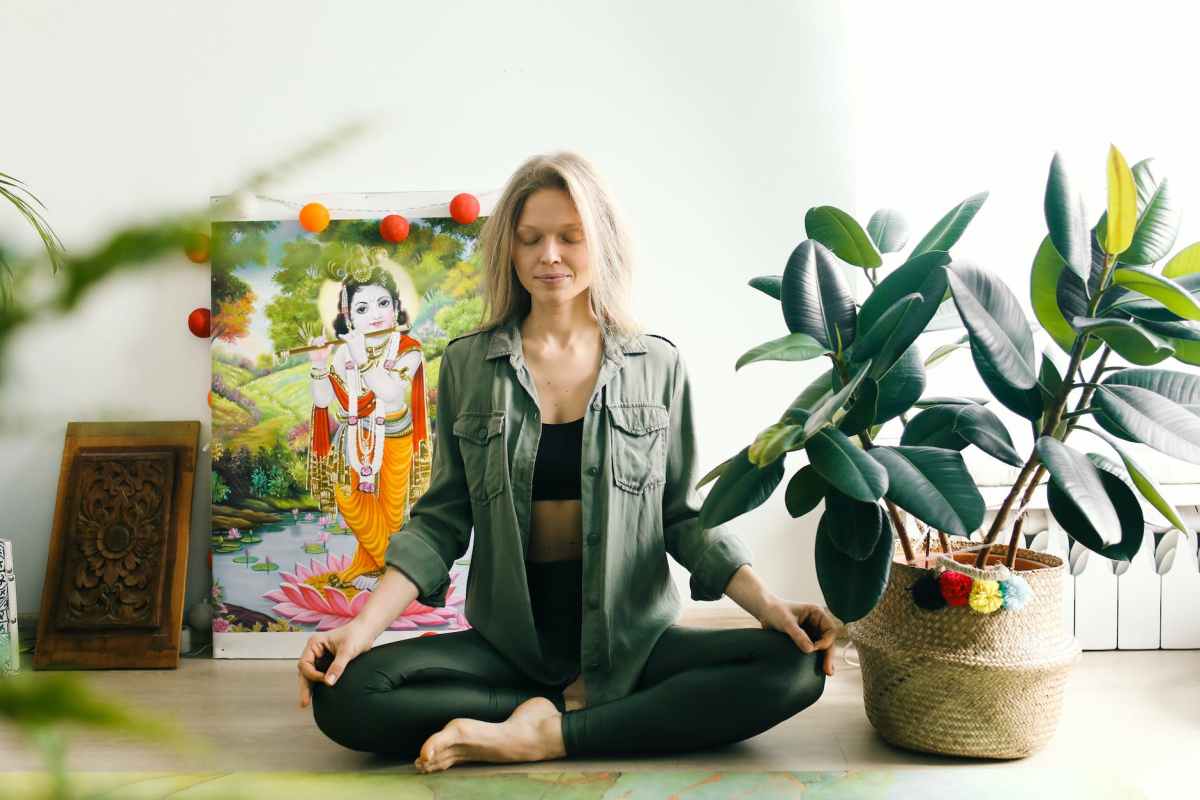
I have a very specific time to write each day. It’s in the morning after I’ve gotten up at 5 or 5:30am to do yoga and meditate and before I get the kids up at 6:45 am. I tackle ideas that have been floating around my head because of things I’ve heard, read or have been struggling with.

That time of day for me is when I’m most hopeful, mystical, and quiet. I can hear the small whisper at my core and I have better access to my creative muse.

Then the day starts and its drop-offs, pick-ups, doing my day job. By the evening, my creative muse has been pounded into bits. It’s tired, critical and tells me I don’t have anything worth saying. I don’t look in the mirror at that time of day because I will find fault with what I see. I tend to be pretty quiet in the evenings because I’m as shallow as a muddy puddle and just as unclear.

So I almost always write from my renewed self and never include words from my salty self. As I laid this out to my friend, the downfall of my approach became apparent to me. It’s like cooking with only sugar and no salt. I write from a place from which I’ve shaken off the dust that collects during each day and even my suffering looks shinier.

I’m only covering about half (or less) of my human experience. Not the times that I say “sh!t, f*&k, d@mn under my breath when I step on a kids toy in the dark and definitely not when I very badly want to blame my kids for causing me pain. I don’t write in the times when it truly feels like nothing is going to work out. And certainly not the times when I feel like the life I’m leading is unrelentingly tough.

I can meditate later in the day and get back some equanimity. But there’s a Buddha quote that says, “Sleep is the best meditation.” Indeed it is my best way to remove the tarnish of life and reinvigorate my creative muse. But if I want to write about the fullness of life, I need to remember it’s the whole day experience.

My take is that my friend’s father wrote a book in one month because he had spent the time to gather himself and then could get it all down in one go. It’s a good reminder to me that I need to gather all of me to bring to the writing table lest I leave out all the spice.

I’ve also posted today about how my purpose for writing has changed at the Wise & Shine Blog: The Writer’s Mission Statement

(featured photo from Pexels)