Backing Up My Assumptions

You can search throughout the entire universe for someone who is more deserving of your love and affection than you are yourself, and that person is not to be found anywhere. You yourself, as much as anybody in the entire universe, deserve your love and affection.” – Buddha

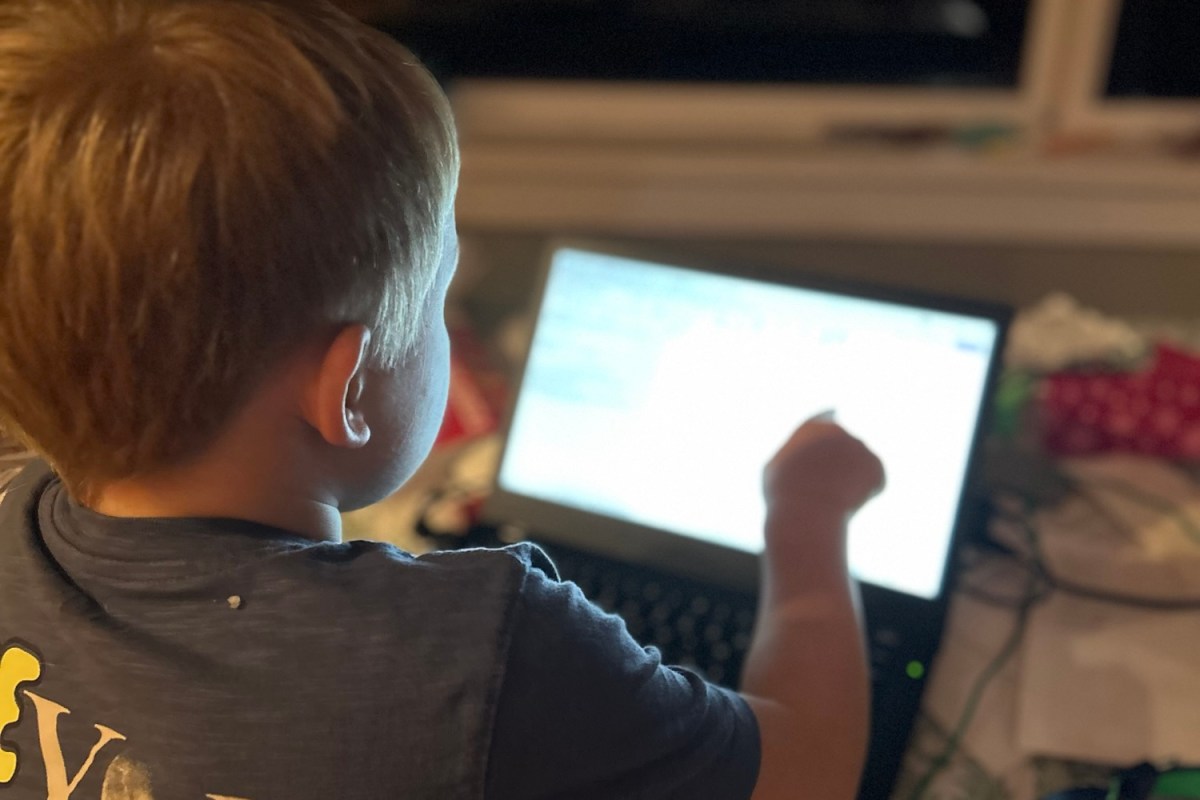
Last week I experienced the digital version of having to evacuate the house. My beloved laptop stopped being able to connect to AC power. It’s been touchy for a couple of years so I’d been putting the plug in a certain way and then jiggling it until the red light came on. And then it stopped being able to charge at all.

So I had to grab everything I needed in the span of the power remaining on the battery.

In theory, this should be no problem. I back everything up to the Cloud. In practice, I like to put things in places that aren’t backed up and think I’ll organize them later.

I closed my laptop (to save battery, of course) and thought about it. The first list of things I came up with were the things I needed in the short term. It felt like this was the equivalent of getting my family out of the house in the case of an emergency. Pretty obvious what to grab and the high-level “go bag” I’d prepared helped make me efficient.

But then the next list of things were the precious things in case I couldn’t get my laptop back. These were the digital version of grabbing the baby books and my dad’s lucky baseball mitt before running out the front door.

At this point I was pretty sure I could live with what I had and just needed to spend the time to rebuild my old laptop for what I needed to get done. This is the step where I learned the most because I started making mistakes. I flubbed a post, called someone by the wrong name, and didn’t have time to double-check details.

I ran smack-dab into my assumption that even in the case of disruption, I should be able to get operate like it’s business as usual. Sure, I can rebuild a laptop, stop by the repair shop and still get Miss O to the orthodontist, make all our classes and activities, and just do meetings in the car. <eye roll> Dang, my face still hurts from hitting that metaphorical wall.

The good news is that I got the laptop to the shop with enough battery power remaining that they could get the encryption key they needed in order to fix it. I’ll be back to full power in a couple of weeks. But more lastingly, I learned that in order to give other people grace, I need to learn to give myself some too.

(featured photo from Pexels)

You can find me on LinkedIn: https://www.linkedin.com/in/wynneleon/ and Instagram @wynneleon

I host the How to Share podcast, a podcast celebrates the art of teaching, learning, giving, and growing.

I also co-host the Sharing the Heart of the Matter podcast, an author, creator and storytelling podcast with the amazing Vicki Atkinson.
Share the Load

It’s not the load that weighs you down, it’s the way you carry it.” – C.S. Lewis

When my kids and I recently watched the movie, “A Boy Called Po,” 10-year-old Miss O asked what the description “heavy” meant. The movie is about a widowed father struggling to take care of his autistic son in the wake of his wife’s death and a lot of work pressure. Heavy applies but it’s also a delightful drama.

We’ve had some really interesting family conversations about this movie. Miss O really empathized with the boy in the story who seems to be about 10 or 12-years-old. She was also pretty critical of the dad who she thought should be more patient.

This came on the wake of comment she made to me that the staff at school working with disability students should be more patient. From my point of view, both the dad in the movie and the staff at school are doing the best they can and a pretty good job. So I countered that adults need empathy too.

This is where it gets interesting – because then Miss O said she wanted to do everything I do in a day just to see. We picked Saturday of this weekend. I gave her a list of all the food prep, pet care, chores, and special projects we had for the day.

I checked in to see how she was feeling at lunchtime. She said, “Right now I feel okay. We’ll see how I feel at the end of the day. I can see it might be okay to do for a day but it would be tiring to do all day, every day, for years.

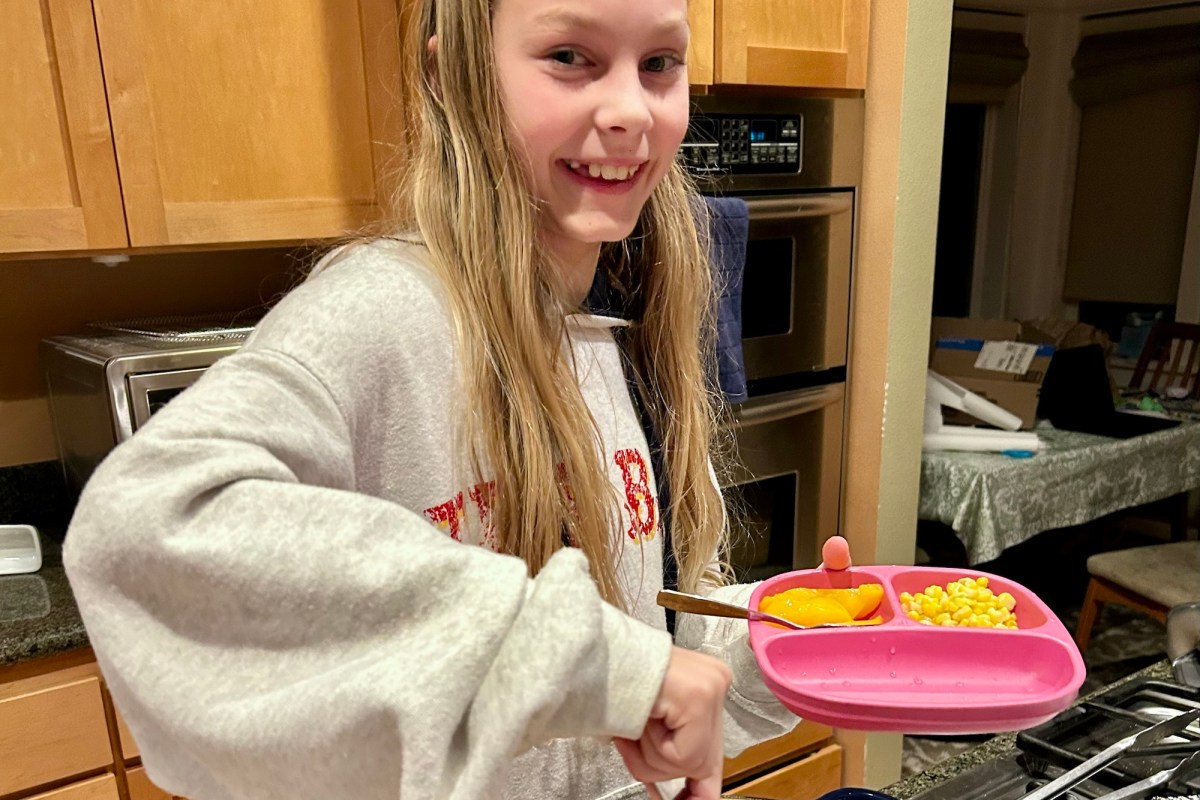
Then we returned home a little before 5pm after a fun outing, and it was time feed the dog, the cat and make dinner. She made a plan of what she wanted to cook, then discovered she had to empty the dishwasher she’d run earlier, and in the midst of doing that, her younger brother said, “I’m hungry.”   

I offered to help and even so, it was almost two hours between when we came home from our activity and when she got to sit down and eat her dinner. Then the kitchen had to be cleaned, the gecko had to be fed, and there were snacks to prepare for while we watched shows.

At the end of the day she said, “I don’t know how you do it. It’s impossible to get it all done.” She’d finished one load of laundry but it needed to be pulled out of the dryer to fold so the second load could be dried. She observed, “it’d be okay if you could carry things over to the next day but then you have to start everything else all over again.”

For my part, I just tried to let her do it, do everything she asked, and roll with her decisions and timeframe. So I experienced what it’s like to not be in control of the flow and the timing. It was a great lesson for how adaptable my kids are. I also felt far more rested at the end of the day and it gave me an idea of how much wear and tear what I’m trying to do is.

So I’m scripting my own movie, “A Girl Called O.” It’s a comedy, with a side of drama, and the lead is pretty heroic. She cares enough to want to understand and try it all. In the end, not everything is tidied up but the characters care enough for each other to show up and share the load.  

(featured photo is mine)

You can find me on LinkedIn: https://www.linkedin.com/in/wynneleon/ and Instagram @wynneleon

I host the How to Share podcast, a podcast celebrates the art of teaching, learning, giving, and growing.

I also co-host the Sharing the Heart of the Matter podcast, an author, creator and storytelling podcast with the amazing Vicki Atkinson.
Out of the Mouth of Babes: Three Lines That Open Us Up

Kindness in words creates confidence. Kindness in thinking creates profoundness. Kindness in giving creates love.” – Lao Tzu

One of my takeaways from social psychologist Jonathan Haidt’s recent book The Anxious Generation is that kids need to practice working out their relationships with each other. Negotiating what they want and also how to take care of each other is invaluable experience.

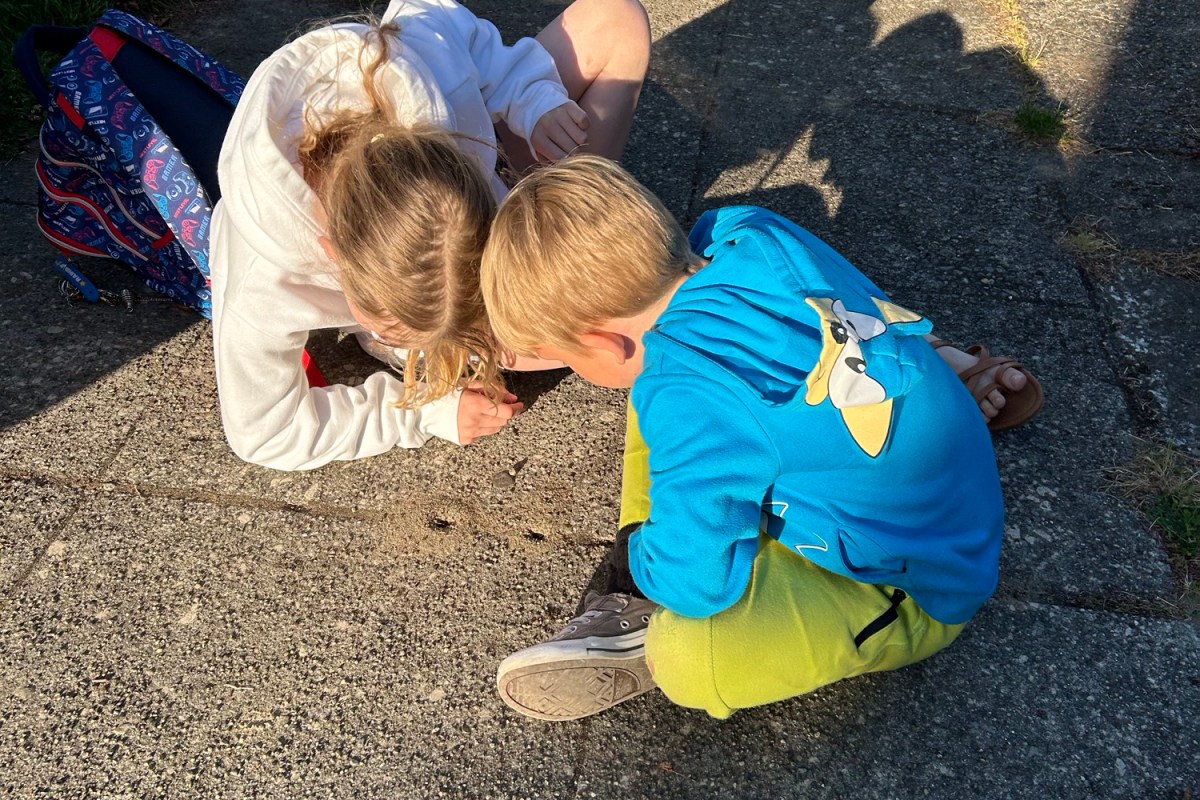
So I try to give my kids a lot of room to relate before stepping in. It feels like I have one ear open for how they talk to each other, especially when it’s at high volume. I hear plenty of statements like: “You can’t do that, it’s not fair.” and “Don’t do that ever again.”

But this week I heard three lines that immediately changed the tenor of the conversation. And the best thing about them? They were not specific to childhood.

Line #1

  • Six-year-old said, “I wish Miss O wanted to help.”

And she did. But prior to Mr. D saying that, she wasn’t clued in that he needed help.

Line #2

  • Ten-year-old Miss O said, “Okay, I’m listening.

The conversation was tense before Miss O said this. Once she said it, they worked out whatever it was they were trying to do.

Line #3

Mr. D said, “Imagine we could…

And then they were off building a better world.

(featured photo is mine)

You can find me on LinkedIn: https://www.linkedin.com/in/wynneleon/ and Instagram @wynneleon

I host the How to Share podcast, a podcast celebrates the art of teaching, learning, giving, and growing.

I also co-host the Sharing the Heart of the Matter podcast, an author, creator and storytelling podcast with the amazing Vicki Atkinson.
How To Share the Ball

It is in your hands to create a better world for all who live in it.” – Nelson Mandela

There was a moment on Monday night when I thought, “I hate baseball” as both of my kids were sitting on the couch crying.

The Mariners had just lost Game 7 of the ALCS to the Toronto Blue Jays (congrats to my Blue Jay friends). Six-year-old Mr. D cried, “I don’t think I can go to school tomorrow.” And 10-year-old Miss O plaintively added, “Maybe if I buttoned up my jersey they would have won.” I was thinking, “I can’t believe I let them watch the 9th inning right before bed!” And then we thought of how the Mariners must be feeling and it started a whole new round of tears.

As with many things that can reduce us to tears, baseball also has great power to lift us up. I have a fantastic example of this in the How to Share podcast this week with hydrogeologist and Mariner’s fan, Glenn Mutti-Driscoll.

Glenn caught a ball at a Mariner’s game in September. But it wasn’t just any ball, it was Cal Raleigh’s 60th homerun ball. A significant marker when Cal joined the ranks of Babe Ruth, Roger Maris and Aaron Judge to hit that milestone.

Glenn and I talked about what happened next – because Glenn gave that historic ball away to a 12-year-old boy near him in the stands.

I’m so grateful that Glenn agreed to podcast with me because he didn’t do this for the recognition. We talk about what inspired him to share the ball and the ripple effects of kindness. What’s so incredible about this example is that we can see the rewards of giving in this case to both the giver, receiver, and everyone around.

Glenn tells us about the serendipity of the moment and how the action was more automatic than deliberated. We also discuss that the long effect that this lesson will have to this next generation – especially Marcus, the boy that Glenn handed the ball to as well as Glenn’s own sons.

This is a fantastically inspiring example of how (and why) to share. I know you’ll love it.

Takeaways

  • Glenn’s act of kindness was spontaneous and automatic.
  • The decision to give the ball away was influenced by his role as a parent.
  • Kindness can have a ripple effect on the community.
  • The media response highlighted the importance of positive stories.
  • Glenn’s children learned valuable lessons about generosity.
  • The experience brought unexpected joy and recognition to Glenn’s family.
  • Acts of kindness can uplift people’s spirits in challenging times.
  • Sharing experiences can inspire others to act kindly.
  • The moment of catching the ball was filled with serendipity.
  • Glenn’s story serves as a reminder of the power of giving.

Here’s a clip of Glenn telling the story of the catch and release:

Here are some ways you can watch this heartwarming and inspiring episode:

How to Share Our Luck with Gil Gillenwater How To Share

In this enlightening conversation, Gil Gillenwater is with host Wynne Leon and shares his experiences and insights from over 35 years of philanthropic work along the US-Mexico border. He discusses his book, 'Hope on the Border,' which highlights the transformative power of education and community service. Gil emphasizes the importance of enlightened self-interest over traditional charity, advocating for a model that empowers individuals and fosters dignity. He explores the duality of poverty, the need for sustainable opportunities, and the joy found in serving others, ultimately presenting a vision for a more connected and compassionate world.TakeawaysEducation is the key to breaking the cycle of poverty.Enlightened self-interest can lead to personal and communal growth.Charity should not be viewed as a sacrifice but as a mutual benefit.Volunteering provides a sense of purpose and fulfillment.Welfare can disempower individuals and communities.Community service fosters connections and shared humanity.The disparity in wealth is a significant issue that needs addressing.Experiencing poverty firsthand can change perspectives.Creating opportunities in one's home country can reduce migration.The joy of service is a pathway to personal happiness.Links for this episode:How to Share homeHope on the Border at AmazonGil's organization: Rancho FelizGil Gillenwater on FacebookWynne’s book about her beloved father: Finding My Father’s Faith; Blog: https://wynneleon.com/; Substack: https://wynneleon930758.substack.com/
  1. How to Share Our Luck with Gil Gillenwater
  2. How to Share 1970's Chicago with Doug. E. Jones
  3. How to Share Feedback with Dr. Vicki Atkinson
  4. How to Share the Next Generation with Mari Sarkisian Wyatt
  5. How to Share Impactfully with Social Media Friends with Amy Weinland Daughters

How to Share the Ball transcript

Links for this episode:

Cal meets fan who gave HR No. 60 to kid — and comes bearing gifts

Mariners reward fan who gave valuable Cal Raleigh 60th home run ball to nearby child – The Athletic

From the host:

My book about my beloved father: ⁠Finding My Father’s Faith⁠;

(featured photo from Pexels)

How to Share a Sandwich

When we do the best that we can, we never know what miracle is wrought in our life, or the life of another.” – Helen Keller

Karen Olson shares a statistic in her book Meant for More: Following Your Heart and Finding Your Purpose that one in thirty children in the United States experience homelessness annually.

That means that when I volunteered last week at my kids’ elementary school last week to walk the approximately 400 students at school down to have their photo taken for Picture Day, statistically speaking, 13 of them could have experienced homelessness in the last year. It’s overwhelming to even try to comprehend that.

So I love the conversation that Vicki Atkinson and I had with Karen Olson because she has done so much to help homeless families. Karen is the founder and CEO emeritus of Family Promise, an organization committed to ending family homelessness.

Karen shares the story of her encounter with Millie, a woman experiencing homelessness, and how that her decision to not only share a sandwich but also her time as she listened to Millie’s story changed her life forever (see clip below).

She tells us how her sons who were 10 and 12 at the time got involved. And she shares how the “no’s” she received help shape her mission into something even better – an organization that has involved a million volunteers and a nation-wide presence.

In her book, Meant for More, Karen tells not only her story but also some stories of the people Family Promise has helped – from those who experienced homelessness to the volunteers.

In this episode we talk about some of the reasons we hesitate to help people experiencing homelessness. Karen’s guidance is so helpful to help direct our efforts in ways that make a difference.

This is a great episode with a woman who was wired to help others. We know you’ll love it.

Takeaways from this episode:

  • Karen Olson founded Family Promise to help homeless families.
  • The organization mobilizes community resources to provide shelter and support.
  • 80% of families in the program find housing within nine weeks.
  • Personal acts of kindness can lead to significant change.
  • Engaging with the homeless can break down barriers and stereotypes.
  • Community service fulfills the needs of both the giver and receiver.
  • Advocacy is essential for systemic change in homelessness.
  • Many homeless families are hidden from public view.
  • Compassion and kindness can inspire others to act.
  • The journey of helping others can lead to personal healing.

Here’s Karen telling the story about the sandwich that started it all.

Here are some ways you can watch this heartwarming and inspiring episode:

How to Share a Sandwich transcript

How to Share Our Luck with Gil Gillenwater How To Share

In this enlightening conversation, Gil Gillenwater is with host Wynne Leon and shares his experiences and insights from over 35 years of philanthropic work along the US-Mexico border. He discusses his book, 'Hope on the Border,' which highlights the transformative power of education and community service. Gil emphasizes the importance of enlightened self-interest over traditional charity, advocating for a model that empowers individuals and fosters dignity. He explores the duality of poverty, the need for sustainable opportunities, and the joy found in serving others, ultimately presenting a vision for a more connected and compassionate world.TakeawaysEducation is the key to breaking the cycle of poverty.Enlightened self-interest can lead to personal and communal growth.Charity should not be viewed as a sacrifice but as a mutual benefit.Volunteering provides a sense of purpose and fulfillment.Welfare can disempower individuals and communities.Community service fosters connections and shared humanity.The disparity in wealth is a significant issue that needs addressing.Experiencing poverty firsthand can change perspectives.Creating opportunities in one's home country can reduce migration.The joy of service is a pathway to personal happiness.Links for this episode:How to Share homeHope on the Border at AmazonGil's organization: Rancho FelizGil Gillenwater on FacebookWynne’s book about her beloved father: Finding My Father’s Faith; Blog: https://wynneleon.com/; Substack: https://wynneleon930758.substack.com/
  1. How to Share Our Luck with Gil Gillenwater
  2. How to Share 1970's Chicago with Doug. E. Jones
  3. How to Share Feedback with Dr. Vicki Atkinson
  4. How to Share the Next Generation with Mari Sarkisian Wyatt
  5. How to Share Impactfully with Social Media Friends with Amy Weinland Daughters

Links for this episode:

Karen’s book: Meant for More: Following Your Heart and Finding Purpose on Barnes & Noble , Bookshop.org and Amazon

Karen Olson, Author

Family Promise Organization

From the hosts:

Vicki’s book about resilience and love: ⁠Surviving Sue⁠; Blog: ⁠https://victoriaponders.com/⁠

My book about my beloved father: ⁠Finding My Father’s Faith⁠;

(featured photo from Pexels)

The Power of Sharing: Lessons from a Bunny Encounter

We form friendships with unrelated people. It’s universal in human groups. We cooperate with each other, altruistically. We’re kind to strangers — again, to unrelated individuals. This is different than many other types of cooperation, which are also seen in other animal species, but often that cooperation is between genetically related individuals. We do it with genetically unrelated individuals. We teach each other things. People take this for granted, but it’s actually unbelievable” – Nicholas Christakis

I find it fascinating when my kids demonstrate something that we do all the time as grown-ups. In this case, discern who to share with.

My six-year-old son, Mr. D, and I were walking on our favorite beach on Whidbey Island this weekend when we saw a bunny in trouble. It was trying to climb the bank back to the grassy top about 100 feet above. It kept on getting about two-thirds the way up. But then the incline was too vertical so the bunny fell back down.

Mr. D and I were watching it. He said the thing that was running through my head. “Take a rest. Calm down. Try another approach.

But its frantic efforts made it lose ground and attract our dog, Cooper’s attention. The bunny started running along the bank parallel to the beach about 10 feet up. Cooper started chasing it. Because he wasn’t on the leash, all I could do was call him (good luck with that) and run after him to try to leash him.

The bunny finally exhausted itself and fell to beach level. Cooper caught up and nosed it but I don’t think did any more damage than what happened when it fell. When Mr. D and I got there, it was breathing and moving its front paws, but I’m not sure its back paws worked any more. We put Cooper on leash and left the bunny to rest but we weren’t feeling hopeful about its survival. It was a tender moment.

Later that afternoon, Mr. D quietly said to me, “I told Miss O about the bunny. I didn’t tell Eric though. He’s too funny for that.

It was such a great example of what we all do when we share something. We evaluate who the audience is, whether they can be trusted with the information, and if it’s the appropriate time. It’s just like sharing a file in the office. Are we putting it in the correct location with the right permissions?

Sometimes we get it right, sometimes we get it wrong but we keep trying. Because to share is human, and as Yale sociologist Nicolas Christakis says, it’s unbelievable!

There are times I get rusty and the words for any experience that is hard or tender come out slowly. I’ve found that it’s easier to keep it flowing than let myself get encased in my armor. Thank goodness for kids that show me how. And for this beautiful blogging community who receives so beautifully!

Happy Thanksgiving, Canada!

(featured photo from Pexels)

You can find me on LinkedIn: https://www.linkedin.com/in/wynneleon/ and Instagram @wynneleon

I host the How to Share podcast, a podcast about collaboration – sharing leads to success.

I also co-host the Sharing the Heart of the Matter podcast, an author, creator and storytelling podcast with the amazing Vicki Atkinson.
Life Begins Now: The Parenting Trap

“It still amazes me that we insist on teaching algebra to all students when only about 20 percent will ever use it and fail to teach anything about parenting when the vast majority of our students will become parents.” – Nel Noddings

My dad used to tell this joke: Three religious leaders were asked the question, “When does life begin?”

The Catholic priest said, “At conception.

The Protestant pastor replied, “At birth.

The Rabbi answered, “When the last kid goes to college and the dog dies.

I’m laughing. Wow do I feel this. As a parent of young children, I do more things in a day that I wouldn’t choose to do than things I would choose. That alone can make me feel as if my life is not my own. Add in the noise and chaos and it’s hard to find peace. Taken all together, that can make this phase of life seem like one to rush through.

 But I know I can’t assume that I’ll be able to enjoy my kids when they are mature adults. I had my kids when I was aged 46 and then 50. When my youngest is 30, I’ll be 80-years-old. Hopefully an alive, healthy, and active 80 years old but nothing is a given. I know that’s true at any age.

So I try to flip the punchline and enjoy my kids, and life, now.

Cleaning up messes

Things in my house are spilled nearly every day. Sometimes by me. Often not very big deals like when a glass of milk with a top on spilled the other day. It just left a corona of milk dotting the carpet.

Here’s the thing I’ve realized. It’s a chance to convey to my dear children that I’ll love them when things are messy.

Bonus points: Longevity specialist Dr. Peter Attia includes getting up from the floor with max of one arm for support on his Centenarian Decathlon list. It includes the ten most important physical tasks you will want to be able to do for the rest of your life. Every time I’m down on the floor cleaning, I celebrate working out the strength and neuromuscular control that I need.

Helping with personal hygiene

It’s funny that kids don’t come with personal hygiene habits baked in. I’d prefer not to have to remind others to brush their teeth or wipe their tush. Add a dog, cat and a crested gecko in the mix and I can pretty much guarantee that most days will have some involvement in someone else’s hygiene.

I love this one because it’s foundational to my outlook. It’s forced me as a congenital optimist, to accept that every day is not going to be perfect, comfortable, or even pretty.

And long after I’m gone, I can trust my kids will have some idea of how to keep their bodies safe.

Bonus points: My personal hygiene has suffered as a parent. Kudos to me when I remember to take care of myself as well.

Feeding them

There are some days where I make food, clean up from making food, only to find that by that time, more food is already required.

But, whether real or metaphorical, I’d argue that giving others fuel to live by is what we are here for.

Bonus points: This is a reminder that cooking is all about exercising our creative muscles. How can I make something when I realize I’m missing an ingredient? How do I make something that’ll last with what I have?

Melt downs

Oh, those moments when big emotions take over and make us uncomfortable. And by us, I mean not only the person melting down but also everyone close at hand. It can be precarious, unpredictable, and draining. It’s also 100% real.

Recently, I took my kids rock climbing. My six-year-old son got stuck halfway up the rock face. He couldn’t find a way past – not moving right or left or shifting his weight. He started to cry. Since I was belaying him, there was nothing I could do except be there with him. And it was the perfect metaphor because I was connected to him by a rope.

From 40 feet away, I shouted up my empathy for his frustration, tried some suggestions, told him he could come down, emphasized that I knew he could do it – everything I could do to help from afar. Finally he shook it off. Then he managed the coolest move — palming the rock with his right hand and smearing the face with his left foot, he leveraged himself up high enough to the next good hold.

It was as rousing of a feat of personal triumph as I’ve ever witnessed.

Here’s where you get to pick your image: port in the storm, rope anchor on a mountain, sacred ground – you have the chance to be that for someone else. And to learn a little bit about what it kicks off in you as well. We don’t often get to see adults do that – the trying, melt down, return and overcoming is usually a longer (and more hidden) process for grown-up risks and triumphs. There is nothing as powerful as watching someone overcome some real adversity. With young kids we get to see that nearly every day.

And then we get to celebrate their success.

Bonus points: It’s hard to stay regulated when someone else is dysregulated. Whether it’s my verbal 10-year-old daughter talking grown-up sounding sass that covers for her childlike emotions underneath or a stranger at the store, I feel it all the way through. But all this practice is helping my central nervous system to be buff!

Distraction

When awake and nearby, my kids provide continual distraction. I could be inside sitting at my computer typing and instead I’m out in a creek skipping rocks. Or I could be sitting on the couch with my phone in hand texting and instead I’m having a dance party and moving my hips. I hunt for snails and hold my kids’ hands while they learn to hoverboard.

Oh, that’s right – I’ve never once regretted a dance party, a rock skipping contest, time in nature, or moving my body.

Bonus points. Psychologist Dr. Alison Gopnik says that kids have lantern brain. They see everything that is around. Adults have spotlight brain – we focus on what needs to be done. Switching into lantern brain can help us solve problems, be creative, and open us to new insights. The distractions can actually help us with solutions for our work when we return to it.

Invasion of personal space

Yesterday my six-year-old son stuffed something in the pocket of my jeans. Gah.  

I’m all for enforcing the boundaries necessary to maintain healthy relationships. But before I decide what those boundaries are, I consider that my kids embody what we look like as open creatures that assume other people will help you carry your stuff.

Bonus points: Ask someone else to help you carry your stuff.

Time

I’m the only one that cares about time in my house. Being on time, getting to bed, the school bell is about to ring, dinner time, time for annual physicals, or it’s about time. All of it.

Because I’m the one that understands time is limited.

Bonus points: Stop caring about the future and enjoy the now.

I’m not guaranteed to get to 80 years old. But I bet that if I do, parenting will have extended my healthspan so that I enjoy it more. And I know I’ll be glad that I didn’t wait until the kids went to college and the dog died to begin living.

(featured photo is mine)

You can find me on LinkedIn: https://www.linkedin.com/in/wynneleon/ and Instagram @wynneleon

I host the How to Share podcast, a podcast about collaboration – sharing leads to success.

I also co-host the Sharing the Heart of the Matter podcast, an author, creator and storytelling podcast with the amazing Vicki Atkinson.
How to Share Patience

Have a heart that never hardens, a temper that never tires, and a touch that never hurts.” – Charles Dickens

I love story time at night. Having 6-year-old and 10-year-old kids means that most evenings for the past 10 years, we’ve read a children’s book at bedtime. As they’ve gotten older, it’s been so heart-warming to hear them start to read the books aloud to me.

No matter what has happened in the day or what is scrolling across the news feed, this ritual has meant we end the day centered around messages like acceptance, kindness, sharing, love, or gratitude.

For example, I would guess that most people who spend five minutes with Good Night Moon feel the calmness that comes with the simple practice of saying good night to what’s around combined with the lovely rhythm. Even as the books get more sophisticated, they usually come with an uplifting message that is good for both kids and adults.

This is certainly true with Christine Devane’s book Elephant Beach. Vicki Atkinson and I were lucky enough to talk with Christine on the How To Share podcast about this terrific tale of patience and appreciating our differences.

Christine tells us what in her childhood made her want to write this book. She also shares how it applies to her young kids now. We learn how she brings this inspiring message to classrooms to enchant young audiences and what she hopes adults will take away from this beautiful book.

This is such a heartwarming episode that speaks to how we show up for each other. We know you’ll love it.

Takeaways

  • Christine Devane’s book ‘Elephant Beach’ promotes kindness and social skills.
  • The story features a shy girl who learns to embrace fun and friendship.
  • Elephants symbolize social connection and humor in the book.
  • The book encourages children to step out of their comfort zones.
  • Patience is essential for understanding shy children.
  • Parents should be supportive and patient with their shy kids.
  • Every child has a unique personality and needs different encouragement.
  • The importance of inviting others to join in activities is highlighted.

Here’s Christine talking about Elephant Beach:

Here are some ways you can listen and watch this heart-warming episode:

Please listen, watch, provide feedback and subscribe.

Transcript for How to Share Patience

Links for this episode:

⁠Christine Devane’s ⁠website

⁠Elephant Beach⁠ on Amazon, Barnes & Noble, and Archway Publishing

From the hosts:

Vicki’s book about resilience and love: ⁠Surviving Sue⁠; Blog: ⁠https://victoriaponders.com/⁠

My book about my beloved father: ⁠Finding My Father’s Faith⁠;

(featured photo from Pexels)

Connecting the Dots

You can’t connect the dots looking forward; you can only connect them looking backwards. So you have to trust that the dots will somehow connect in your future. You have to trust in something – your gut, destiny, life, karma, whatever. This approach has never let me down, and it has made all the difference in my life.” – Steve Jobs

Like the quote for this post, I couldn’t see how all the dots on this story connected until the end. But I know how it started — when I showed up at the school playground Monday afternoon with an envelope full of money.

I’d signed nine-year-old Miss O for Glee Club. Because she’d joined the after school club late, the teacher gave me a pro-rated fee for the activity. She hadn’t included a payment link. So in the spirit of not wanting to make any more work for her, I put $160 in an envelope, sealed it and wrote only the teacher’s name on the front. My plan was to hand it to her when I picked Miss O up after class.

But I had to pick up five-year-old Mr. D at the regular end of the school day. I was talking with other parents when he came over to tell me that two kids weren’t letting a little kid go on the playground. Another parent and I went to investigate. Two boys had a smaller one pinned. As we tried to convince them to let him go, one hit the kid a couple of times and the other kid kicked the smaller kid when he was on the ground. Then they walked away.

We helped the smaller kid get a shoe back on and then as he got up, he started to follow the other boys. I said something to him about letting things cool down but he either didn’t hear, understand, or agree.

I walked back to the other parents. Something caught my eye across the playground. The kids again had the little boy on the ground and were kicking him. Some instinctive thing kicked in and I started running the 100 yards towards where they were yelling, “Stop! Cut it out.”

Let’s be clear – I’m an endurance person, not a running person. If my yelling didn’t scare them, I bet my awkward sprint probably did. One kid let go, the little one got up, and the second kid started chasing him with me running after them both.

Fortunately, the director of the after school program was alerted by my yelling and came over to handle the situation. No doubt that not only he was more qualified but he also had a relationship with the kids. I walked away knowing the situation was in good hands.

But when I got home, I couldn’t find the envelope with the cash. I felt sick about it. However, I rationalized that my adrenaline fueled run across the playground was worth it.

I knew this wasn’t the Glee Club teacher’s problem so I figured out how to Venmo her the money. When I returned to pick up Miss O at the end of the after school class, the teacher said to me, “I got the money.

Confused, I asked, “The Venmo?” She shook her head and said, “The envelope with the cash.”

A student had found the envelope on the playground and tracked the teacher down to give it to her.

I don’t know how you connect the dots in this story. But for me, it was a God moment. I felt a shiver as I saw in hindsight the hand of something bigger than me drawing the thru line from start to finish.

(featured photo from pexels)

You can find me on Instagram @wynneleon and LinkedIn: https://www.linkedin.com/in/wynneleon/

I co-host a storytelling podcast featuring authors and artists with the amazing Vicki Atkinson. To tune in, search for Sharing the Heart of the Matter on Spotify, Apple, Amazon Music or Pocketcasts (and subscribe) or click here. Or the YouTube channel features videos of our interviews. Please subscribe!

My other projects include work as a CEO (Chief Encouragement Officer), speaking about creativity and AI through the Chicago Writer’s Association, and my book about my journey to find what fueled my dad’s indelible spark and twinkle can be found on Amazon: Finding My Father’s Faith.

Inter-generational Impact

I hold that a strongly marked personality can influence descendants for generations.” – Beatrix Potter

I’ve mentioned these details before but every once in a while I’m reminded of how remarkable it is that:
– In 2014, I made all the final arrangements to get pregnant via IVF on November 6th and thought, “Wow, life is about to change.” And then on November 7th, my dad died in a bike accident and I thought, “No, not like that!”
– Ten months later, I finished the line edits on the book I wrote about my dad at 8pm and seven hours later at 3am, I went into labor with Miss O

I’ve always known their stories are inextricably tied. But it is fascinating to see Miss O’s understanding of that evolve in ways that I can’t predict. How her perception of the grandfather she next met grows is really cool to see. It’s like a sneak peek into the inter-generational impact from the Beatrix Potter quote for this post.

This coming Sunday, March 9th would be my dad’s 90th birthday if he were alive. Vicki Atkinson and I sat down with my nine-year-old daughter, Miss O in Episode 106: The Miss Factor with Miss O. to talk about him.

Miss O was given a fourth grade class assignment to write about a perspective change. When she came home with this short essay about my dad, I was stunned.

She reads the essay to us and tells us what inspired her. Clearly I have a personal interest in this but at a bigger level, it’s fascinating to see what kids take away from family stories.

Vicki asks about how Miss O finds her voice and is so good at teasing out why it’s so meaningful to hear it from her perspective.

When we dig in to what Miss O knows about her grandfather who she never met, it’s both interesting and endearing to see the impression she’s gleaned of my dad. It’s also really funny to see the many ways they are alike.

Miss O talks about what she is doing next. Namely, making a slime channel on YouTube kids. As Miss O says, she is passionate about slime and she wants to share her creations. Fortunately, for all us we have boundaries – the slime has to stay in the rec room and she’s only showing her hands.

We’re confident you’ll love the scenic and beautiful places we explore as we talk about family stories!

We know you’ll love it!

Search (and subscribe!) for Sharing the Heart of the Matter on Apple, Amazon, Spotify or Pocket Casts OR Listen to it from your computer on Anchor: Episode 106: The Miss Factor with Miss O

Episode 106 transcript

AND subscribe to our YouTube channel to see a video clip of each story: @SharingtheHeartoftheMatter.

From the hosts:

Vicki’s book about resilience and love: Surviving Sue; Blog: https://victoriaponders.com/

My book about my beloved father, Finding My Father’s Faith that I wrote in the months after he died and before Miss O was born.

(featured photo is my dad and me at age 2)