How To Share the Ball

It is in your hands to create a better world for all who live in it.” – Nelson Mandela

There was a moment on Monday night when I thought, “I hate baseball” as both of my kids were sitting on the couch crying.

The Mariners had just lost Game 7 of the ALCS to the Toronto Blue Jays (congrats to my Blue Jay friends). Six-year-old Mr. D cried, “I don’t think I can go to school tomorrow.” And 10-year-old Miss O plaintively added, “Maybe if I buttoned up my jersey they would have won.” I was thinking, “I can’t believe I let them watch the 9th inning right before bed!” And then we thought of how the Mariners must be feeling and it started a whole new round of tears.

As with many things that can reduce us to tears, baseball also has great power to lift us up. I have a fantastic example of this in the How to Share podcast this week with hydrogeologist and Mariner’s fan, Glenn Mutti-Driscoll.

Glenn caught a ball at a Mariner’s game in September. But it wasn’t just any ball, it was Cal Raleigh’s 60th homerun ball. A significant marker when Cal joined the ranks of Babe Ruth, Roger Maris and Aaron Judge to hit that milestone.

Glenn and I talked about what happened next – because Glenn gave that historic ball away to a 12-year-old boy near him in the stands.

I’m so grateful that Glenn agreed to podcast with me because he didn’t do this for the recognition. We talk about what inspired him to share the ball and the ripple effects of kindness. What’s so incredible about this example is that we can see the rewards of giving in this case to both the giver, receiver, and everyone around.

Glenn tells us about the serendipity of the moment and how the action was more automatic than deliberated. We also discuss that the long effect that this lesson will have to this next generation – especially Marcus, the boy that Glenn handed the ball to as well as Glenn’s own sons.

This is a fantastically inspiring example of how (and why) to share. I know you’ll love it.

Takeaways

  • Glenn’s act of kindness was spontaneous and automatic.
  • The decision to give the ball away was influenced by his role as a parent.
  • Kindness can have a ripple effect on the community.
  • The media response highlighted the importance of positive stories.
  • Glenn’s children learned valuable lessons about generosity.
  • The experience brought unexpected joy and recognition to Glenn’s family.
  • Acts of kindness can uplift people’s spirits in challenging times.
  • Sharing experiences can inspire others to act kindly.
  • The moment of catching the ball was filled with serendipity.
  • Glenn’s story serves as a reminder of the power of giving.

Here’s a clip of Glenn telling the story of the catch and release:

Here are some ways you can watch this heartwarming and inspiring episode:

How to Share Our Luck with Gil Gillenwater How To Share

In this enlightening conversation, Gil Gillenwater is with host Wynne Leon and shares his experiences and insights from over 35 years of philanthropic work along the US-Mexico border. He discusses his book, 'Hope on the Border,' which highlights the transformative power of education and community service. Gil emphasizes the importance of enlightened self-interest over traditional charity, advocating for a model that empowers individuals and fosters dignity. He explores the duality of poverty, the need for sustainable opportunities, and the joy found in serving others, ultimately presenting a vision for a more connected and compassionate world.TakeawaysEducation is the key to breaking the cycle of poverty.Enlightened self-interest can lead to personal and communal growth.Charity should not be viewed as a sacrifice but as a mutual benefit.Volunteering provides a sense of purpose and fulfillment.Welfare can disempower individuals and communities.Community service fosters connections and shared humanity.The disparity in wealth is a significant issue that needs addressing.Experiencing poverty firsthand can change perspectives.Creating opportunities in one's home country can reduce migration.The joy of service is a pathway to personal happiness.Links for this episode:How to Share homeHope on the Border at AmazonGil's organization: Rancho FelizGil Gillenwater on FacebookWynne’s book about her beloved father: Finding My Father’s Faith; Blog: https://wynneleon.com/; Substack: https://wynneleon930758.substack.com/
  1. How to Share Our Luck with Gil Gillenwater
  2. How to Share 1970's Chicago with Doug. E. Jones
  3. How to Share Feedback with Dr. Vicki Atkinson
  4. How to Share the Next Generation with Mari Sarkisian Wyatt
  5. How to Share Impactfully with Social Media Friends with Amy Weinland Daughters

How to Share the Ball transcript

Links for this episode:

Cal meets fan who gave HR No. 60 to kid — and comes bearing gifts

Mariners reward fan who gave valuable Cal Raleigh 60th home run ball to nearby child – The Athletic

From the host:

My book about my beloved father: ⁠Finding My Father’s Faith⁠;

(featured photo from Pexels)

Six Reasons Giving is Good for You

It is not how much we give but how much love we put into giving.” – Mother Teresa

This post was originally published on a different site on 12/20/2023. Heads up – you may have already read this.


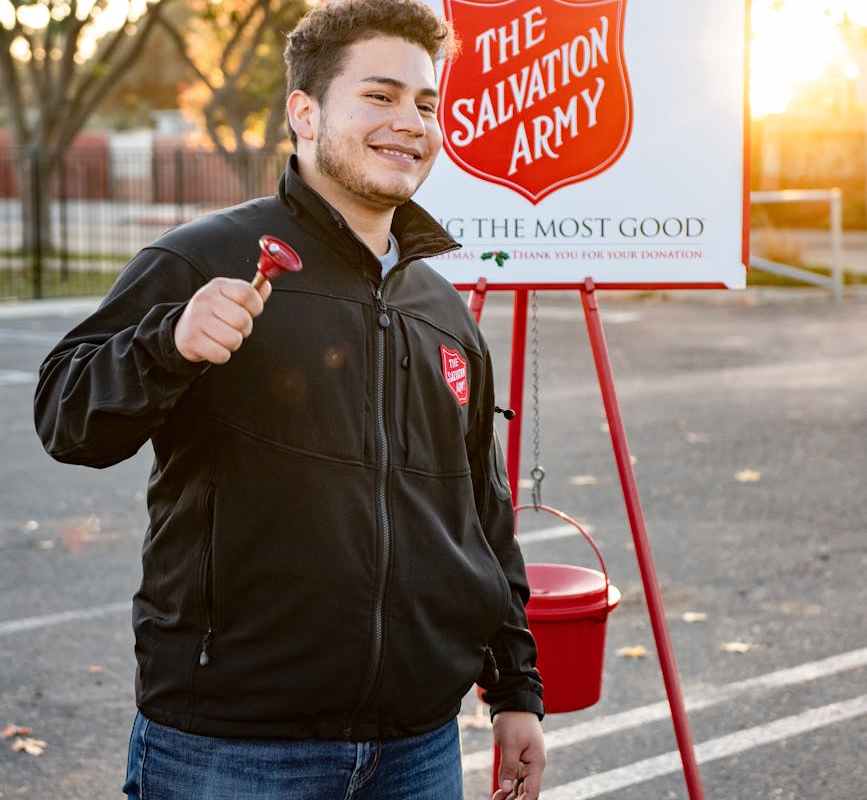
My eight-year-old daughter and I were hurrying into a store to grab a couple of holiday things the other day. When she asked about the Salvation Army bell ringer out front, I gave her a couple of dollars to put in the pot. She was hesitant so we did it together. As she wiggled the bills into the slot, the bell ringer paused for a moment and asked, “Do you know what this money goes for?

My daughter shook her head “no.”

The bell ringer leaned in to look her right in the eye, and said, “If people don’t have money for rent or to buy food or money for presents, it’ll help.”

My daughter replied, “So people can buy toys for their kids!” and walked away smiling.

The Greater Good lab at Berkeley offers some research back evidence that there are five ways giving is transformative.

  1. Giving makes us feel happy
  2. Giving is good for our health
  3. Giving promotes cooperation and social connection
  4. Giving evokes gratitude
  5. Giving is contagious

And there’s a bonus reason as well. Research shows that people that donate money earn MORE the next year. It’s not that there is a cosmic hand that makes it so (not to say there isn’t a cosmic hand but the research doesn’t prove it one way or another, of course!). But the explanation was that it makes us feel so good that we are more happy and effective at our jobs. How’s that for lining up giving and our self-interest?

So, if you are looking for a way to earn more at your job next year, let me suggest the Fulginiti Family Trio’s holiday song fundraiser led by Todd Fulginiti. You get to both listen to a great song and help a good cause addressing homelessness in Lancaster, PA.

I hope that all the giving of the season is leaving you feeling healthy, happy, grateful, and connected!

(featured photo from Pexels)

The Practice of Kindness

As rain falls equally on the just and the unjust, do not burden your heart with judgment but rain your kindness equally on all.” – Buddha

For Christmas, Miss O bought Mr. D a Buzz Lightyear spaceship. It was a big deal for her – she picked it out and paid for it all by herself. Then she hid it away in a spot in the laundry room she thought was safe and guarded his access to that room for three or four weeks. I cut the wrapping paper for her but she wrapped the present herself and placed it in the perfect spot under the tree.

Then on Christmas morning when he opened the present, she was right next to him. She helped him opened the box and then started assembling the few pieces that needed to be attached. She was being really helpful and had so many reasons to be proud but there was a point where the gift really became more important to Miss O than Mr. D.

Watching this all, I thought of all the times that I’ve tried to control how my kindness lands or had that done to me. It perfectly illustrated for me how letting go of control is so essential so I wrote it about this topic for my Heart of the Matter post today: When Kindness Falls Like Rain.

(featured photo from Pexels)

The Give and Take Problem

Alone we go faster, together we go further.” – African Proverb

For my birthday six months ago, my brother and sister-in-law gave me a voucher for taking care of the kids for two nights. I haven’t used it yet because I’m saving it up. I’m not sure for what but it’ll be big. For example, if some great opportunity to spend the weekend with the love of my life (not yet found or looked for), I want to have that voucher in my pocket to use.

This uncovers what I think is a flaw in my default mode. I tend to think of relying on others as “using chits.” For a project a couple of years ago when I was replacing the tension coil on my garage door, my mom suggested that maybe I should get my brother to do it. And it was a good idea but I thought I’d give it a try first so I could use my “chits” for something that I couldn’t fix.

In this way, I’ve learned to be very self-reliant. And I value that. But I’ve also become increasingly hardened against needing others. I’ve forgotten that needing others isn’t a bad thing.

This is probably no surprise to anyone reading this. After all, this might be exactly how I came to choose to have children on my own. While on the practical level it was because I hadn’t found the right partner and time was running out, it’s probably healthy to admit that I have some work to do on being inter-dependent on others.

I’m thinking about this because of the gift giving that goes on this season. We have to be as good at receiving as giving. It reminds me of a great post that Todd Fulginiti wrote: Helping Others: Can You Dish It Out But Not Take It? He made the point that receiving with gratitude feels good. It doesn’t make us needy, it makes the other person feels like they’ve given something of value.

I know when I find the love of my life, I’ll need to drop that independent shield to be vulnerable. And I bet my brother and sister-in-law will be so thrilled that they’d happily take the kids whether or not I have a voucher.

(featured photo from Pexels)

(The quote for this post came from a post by my lovely Wise & Shine colleague Cristiana Branchini on her blog Appreciating the Differences)

Asking for Help

Life isn’t about getting and having, it’s about giving and being.” – Kevin Kruse

I don’t think I’m alone in noticing there are a lot of people and organizations asking for donation this time of year. But I got this one from a friend the other day:

“I am late with this project this year, but I am adopting a family through the YWCA this year, Holly is a single mom with one daughter Zoe, they are low income and struggling.  They are asking for gift a gift card at Safeway and Target, I’ll be going to the gift cards today at 2pm today, so please consider donating to my venmo. Any donations will go into the two gift cards!  Of course there’s no obligation.”

The specificity, the timeline and the story all came together in one simple pitch. On top of that, the source was someone I trusted so I chipped in right away.

It made me think of the components of asking for help. If we can do it directly with clear details, it makes it so much easier for people (or the Divine) to respond.

Digging Deep Into the Christmas Spirit

We are only as blind as we want to be.” – Maya Angelou

For an outing this weekend, I took my kids to downtown Seattle to see the Christmas decorations and we rode the bus, my toddler’s first time. He was wide-eyed by being able to be inside the vehicle that he admires too much.  

It’s been a while since I’ve taken that bus so I selected a stop too early and we had to walk a ways down one of the streets downtown. My 6-year-old daughter found this distressing because of the homelessness. Eventually stepped into a Starbucks to get out of the cold and have a moment of reprieve from humanity.

Eating our snacks outside, my daughter got worried again. We were in Westlake Center park sparkling beautiful Christmas lights but someone was cooking heroin 10 feet away. Not that she knew that specifically but she has an eagle eye for anything out of the ordinary. And a woman stopped us to ask for a couple of dollars to get something to eat. I didn’t have any cash accessible so I said “no” and she started yelling at us.

I am completely aware of my hypocrisy of feeling like our adventure to see the Christmas lights and decorations was in part spoiled by the presence of such need. In the gentle way that meditation often shows me where I need work, I realize it is so unkind of me to say that and is completely antithetical to the Christmas spirit not to help.

When it was just me and my dog, we walked everywhere in the neighborhood and got to know all the homeless in our area. I used to prepare Christmas cards with $20 in them to give to people I’d encounter on my walks this time of year. I also had time to do things like to volunteer for an organization that fed homeless teens.

Now I’m so challenged these days about how to help. Now that I’ve had kids, I have fewer resources both in time and money. And the homeless problem has gotten so much more visible in the COVID era when the shelters reduced capacity and the mayor decided to stop enforcing the laws not to camp in parks. Also for the part of the population who is suffering from addiction, empathetically I have a harder time relating to people suffering from opoid addiction as opposed to alcohol addiction, probably simply because I’ve never dreamed of trying heroin but I had many years when I drank too much.

With all that said, the incongruity of this weekend when I felt angry that the homeless were spoiling my kids’ Christmas celebration instead of the Christmas spirit I should have felt has spurred me that I need to find other ways to help. My protective instincts are too overwhelming when I have my kids in tow but turning my back is neither what I want to be nor what I want to teach my children. “There but for the grace of God” rings in my head as I try to fix my heart on some solution of what I can do to help.

(featured photo from Pexels)

Some Things Can’t Be Dropped

If peace comes from seeing the whole, then misery stems from a loss of perspective.” – Mark Nepo

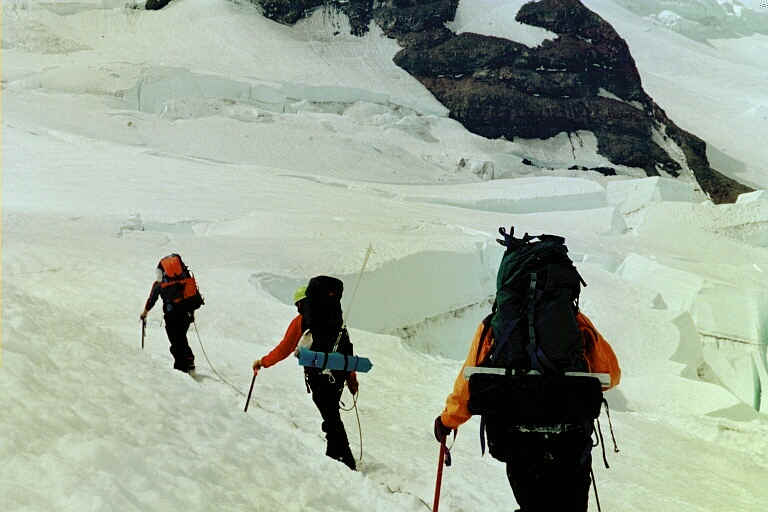
The year after I’d summitted Mt. Rainier for the first time with a guided group, my friends and I put together a team of four of us to make an attempt on our own without a guide. We left on a Friday afternoon, climbed three and a half hours to ascend about 3,500 feet in altitude and started to make our camp.

It was dark by this time and as we hurried around with our headlamps on, I went to pull the tent poles I was carrying out of my pack. One of the poles slipped from my hand and started to slide down the mountain. Panicked by my mistake, I leapt forward and fell on it before it could disappear out of the spotlight of my headlamp.

I was thinking about that pole as I hurried around making Christmas plans yesterday. In a season where it seems like there are a hundred things to do, some things can’t be dropped.

The slipperiest sometimes is the whole point in all we are celebrating. In my family, we celebrate the birth of Jesus and the promise that love, light and kindness spread generously can make a difference in this world. As we celebrate the delight of this year, we also recognize that there are many ways we can do it better next year.

On that climb twenty years ago, fortunately I caught that tent pole because without it, there wasn’t going to be a tent. At 9,000 feet of altitude on a dark night with a whole lot of mountain to search, we weren’t going to find it if it slipped out of sight. But with it, we went on to climb and summit the mountain safely with a warm, dry tent as our base.

I keep coming back to that story as a way to keep me centered this Christmas season. With the point of all we are celebrating in the spotlight, it gives us a solid base from which to attempt everything else we are doing.