Vulnerability at Any Age

I believe that you have to walk through vulnerability to get to courage.” – Brene Brown

Let me take your temperature on something. Do you think that middle-aged and older means that you don’t have to be vulnerable any longer? Emotionally vulnerable, that is.

After all, we don’t have to go door to door with our resumes looking for our first job. And many who have life partners have had them for quite some time. We know our hobbies and interests and don’t have to try a bunch of new things to see what fits. We’ve even developed our conversational patter so that anything that comes close to a sensitive spot can be deflected without much effort.

Here’s the discovery I’ve come to after many years of searching for the things that make me feel vital. Continued vulnerability is one of them.

When I believe that vulnerability is off the table, I’m unlikely to:

Move out of my established lane

Upset the status quo of “my success”

Market or promote my writing

Try to find love

Brainstorm wild ideas

Try new things

Make new friends

Learn new technologies/applications

Express my feelings in relationships that have gone on so long that it risks the status quo

State my opinion about politics or religion

Here’s what I’m afraid of. If we retire from life, we leave so much potential and wisdom gained from 50 years or more unsaid. The things we’ve learned through trial and error that we are passionate about? We fail to bring them up.

When I was in my mid forties and wanted to have children, I found it incredibly difficult to say out loud. In one respect, it makes sense because such a precious dream is fragile in its early stages. But when I managed to broach the subject with a few of my dear friends, the incredible support they offered helped to fuel the vision.

So for me, I think I want to keep pushing myself towards openness. But I’d love to know what you think about vulnerability at any age.

(featured photo from Pexels)
Fear and Courage

A man with outward courage dares to die, a man with inner courage dares to live.” – Lao Tzu

This was published previously on 3/22/2023. Heads up – you may have already read this.


Before I left for three-hours the other day, I told my three-year-old son that his favorite babysitter was going to come hang out with him. Because he adores her, I was surprised at his answer and the vehemence with which it was said, “This is dumb. I don’t like her. No, you can’t go.”

It took me a second to realize that the last time I left him with her, it was for four days. I started to explain, “I’m just going to be gone for a few hours.”

He replied, “Mama, I’m scared.

As soon as he said he was scared, his mood changed from angry to calm. It’s like it popped the bubble of fear so that we could move on.

I said, “Right. I can understand that. But I’m not going on a trip. I’ll be back by lunchtime.

He said cheerily, “Kay. How bout this deal? I play with her and then we’ll have lunch.”

Deal.

“Everything you’ve ever wanted is on the other side of fear.”

George Adair

I think somehow I missed the memo about acknowledging fear. Growing up in a household with infectiously joyful and confident parents led me to assume they didn’t have any fears. So I’ve blustered through life without admitting my own.

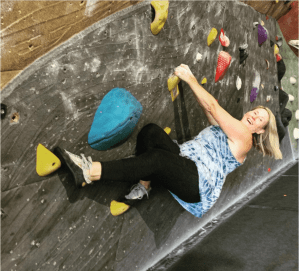
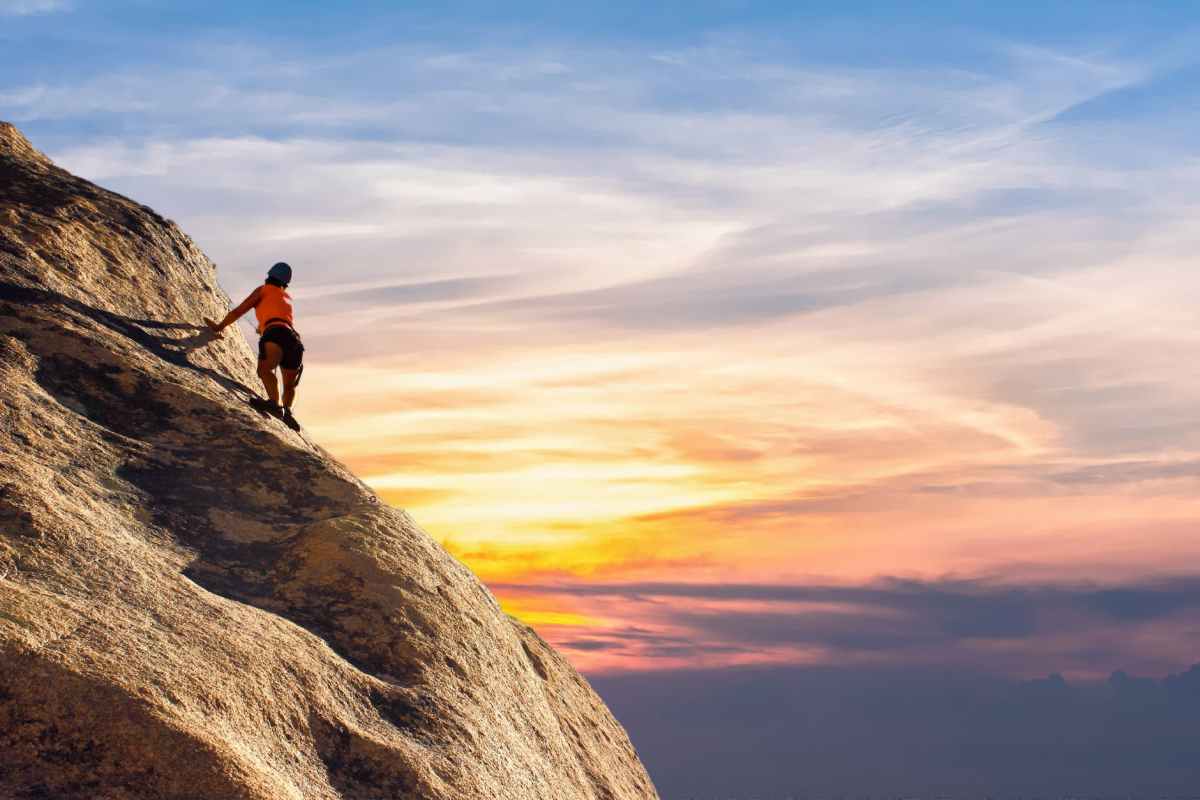
One of the most ironic is that I have a fear of heights and yet I choose mountain climbing and rock climbing as hobbies and tried to just stampede over my fear. I remember a few years back doing a bouldering route at the climbing gym. These bouldering routes 12 -18 feet high and are climbed without ropes in a section of the gym padded with thick mats. I was on a wall that was angled out so I was climbing horizontally, my body almost parallel to the ground, couldn’t see what I was reaching for, and needed to shift my weight carefully to stay on the wall. I was in a position somewhat like I am in the photo below but I wasn’t smiling!

All of a sudden, I felt the full impact of my fear which amped up because I was five months pregnant at the time. I couldn’t move, my arms felt like they weighed two tons, I felt a heat flush all over my body. Then it passed, and I was 10 feet up, completely exhausted and wrung out. I managed to down climb a couple of feet and drop from there, landing on my feet and rolling tiredly onto my back.

I still climb – but not without acknowledging my fear before I get on the wall. It’s like saying “hello” on flat ground so I don’t have to greet it on trickier ground. I also didn’t climb again while I was pregnant. Regardless of all the assurances that babies in utero are fine being jostled, I realized it magnified my anxiety too exponentially.

This incident in concert with becoming more willing to be authentic and vulnerable have led me to understand that there is more room for courage once I let out my fear. That is to say, once I admit I’m afraid, it’s like a full exhale, after which I can take in a deep breath of courage.

“The perfect breath is this: Breathe in for about 5.5 seconds, then exhale for 5.5 seconds.”

James Nestor in Breathe

I bring up the perfect breath as described in James Nestor’s book Breathe because it has a spiritual connection. Nestor also notes that if we recite the Ava Maria or Om Mani Padme Om or the Sa Ta Ma Na (Kundalini Chant) – they all take about the same amount of time of 5.5 seconds.

That ties to the final element to expressing my fear that I’ve found to be at play – the spiritual connection. It isn’t until I own my vulnerability that I can receive help. Sometimes that’s from another person but more often it’s delivered in spiritual and mysterious ways. It’s the element I couldn’t see about my dad – that he didn’t seem to have any fears because he had so much faith.

“Our strength with continue if we allow ourselves the courage to feel scared, weak, and vulnerable.”

Melody Beattie

My lived experience resonates with Melody Beattie’s words. We can’t receive courage until we acknowledge that we need it because we’re afraid. Whether it’s taking on a bully, walking your authentic and individual path, risking to be vulnerable in a relationship, or any of the other million ways we need courage, I’ve found the relief comes much more quickly if we don’t muscle our way through but simply say, as my son did, “I’m scared.

(featured photo from Pexels)

The Monster of My Own Making

Fear is the cheapest room in the house. I’d like to see you in better living conditions.” – Hafiz

Eight-year-old Miss O told me that she is afraid to go to the bathroom in the middle of the night because she’s scared there could be a thief in my walk-in closet.

I told her about being scared of snakes and lava as a kid. I spent two whole years jumping onto my bed from about six feet out so that the King Cobras wouldn’t get me. I jumped off too.

Miss O thinks her fear is more reasonable than mine was. I asked why a thief would come into the room only to stand in a closet?

Funny how strange other people’s fears are when our own feel so familiar and fitting. May we all learn to shake off the monsters of our own making.

(featured photo from Pexels)

Let’s Not Be Grabby

Be kind whenever possible. It is always possible.” – Dalai Lama

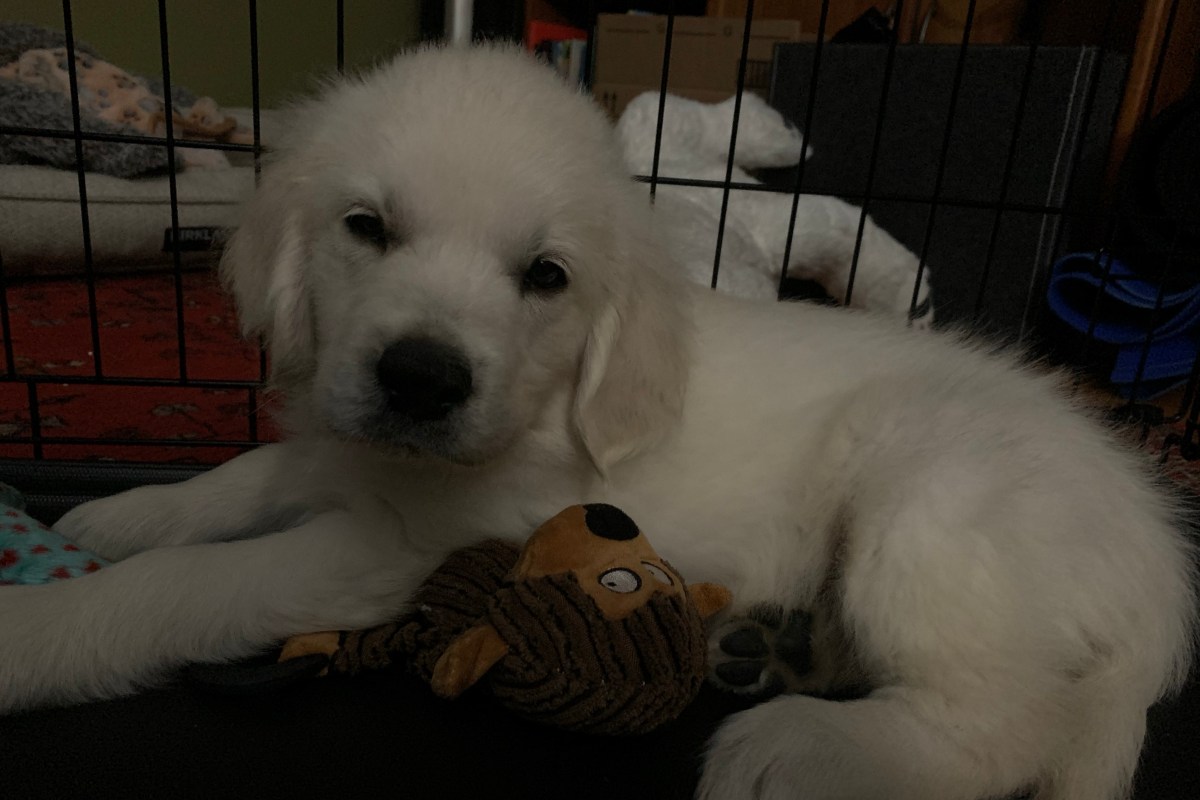
The other evening, I was out walking with my little family. We’d managed to get our puppy Cooper to walk a whole block in a semi-efficient fashion before we ran into some friends and it became a puppy love fest. Then more friends pulled up in their car and the whole family piled out after a three week road trip, with that day being a seven-hour stretch. Their three kids got into the puppy/kid mix and it was an excited muddle of energy.

Amidst all the noise and excitement, I heard Miss O trying to help the 6-year-old neighbor girl get the juggling balls from the girl’s older brother.  Miss O advised the girl, “If you ask nicely, maybe he’ll just give them to you.”

This thing is something we’ve worked on again and again in my family – the practice to ask for something from someone else instead of just trying to grab it or take it because you fear they are going to say “no.”

Watching my kids has made me connect with how strong an impulse it is to just take something. The way I experience it, it’s an incredibly powerful fear that if you ask that you’ll just get turned down so it’ll be better to craft another way by force or trickery to get what you want. Is it the beginning of vulnerability?

When I was telling Miss O and Mr. D stories at bedtime the other night, I told them the story of when I was in preschool and found some brand-new erasers in a box. They were absolutely beautiful – never used and had the alphabet on them. I wanted them so badly, so I filled my pockets with them. And then to create a back story, I dropped the erasers on the way home from school and pretended to find them. Yep, my mom didn’t buy it, and I had to give them back.

 But I feel it even now when I’m working with others. I’m inclined to forge a path that doesn’t involve having to ask someone else, mostly because of impatience. When I’m working with Vicki Atkinson, on the Heart of the Matter blog, I find myself having to consciously slow my roll to run something by her before making a decision or sending out an invitation to someone we want to podcast with. Thank goodness she is so incredibly smart and fast in responding because both reinforce the wonderful benefits of collaborating.

Given my own inclinations, I’ve worked and worked with my kids to ask before they take something from each other – even if it’s just goldfish crackers. And then our rule is that we have to abide by that answer, even if we have the strength and power just to take it. I’ve noticed that if they just ask straight off, the answer is often “yes.” If they ask after they’ve already been tussling about it, the answer is frequently “no.”

It is so hard to fight against the fear we won’t get something that we want. But hearing Miss O advise our young neighbor to ask made me think we’re making some progress. And guess what? The girl asked nicely and her older brother happily handed her the balls she wanted.

Now if I could just get Cooper not to nip when he wants attention.

Gratitude Over Fear

“Dogs have given us their absolute all. We are the center of their universe. We are the focus of their love and faith and trust. They serve us in return for scraps. It is without a doubt the best deal man has ever made.” – Roger Caras

It’s our day to go pick up our new puppy. I’ve found myself feeling tight and nervous, unable to plan out all the things of how this will play out with a puppy and two kids in the mix. So, I’ve indulged my brain by writing out two lists: my fears and my gratitude.

Here are the things I’m afraid of:

I won’t have time to pay attention to my kids

The puppy will be a distraction from my work

That this will be my undoing when I finally find that I’ve pushed it too far and I end up exhausted

That we collectively won’t be good puppy trainers and dog owners

That the puppy will find a box of crayons and a box of Cheez-Its, eat both, and leave rainbow throw up all over the house.

That Mr. D will be displaced as the baby of the family and won’t get some focus, not yet identified, that he needs

That I’ll have to get better at asking for help.
Or that I’ll have to let something else that I personally love go in order to support this bigger collective

I fear Mr. D’s beloved stuffy, Bun Bun, will be torn to shreds.

I won’t be able to train the puppy to understand my morning sacred time

What I’m grateful for:

That we have so much love to give
That the default for my little family is to be willing to try

The excitement that comes with new family members
That my faith and my heart tell me we are ready for this, even when my head forgets.

For the ability of puppies and dogs to love, listen, and lean in.

That I’ve worked out many of my problems in life while walking my dogs.

For the melting way that puppies and dogs look at their owners to show loyalty and trust
That my kids will get to experience that from a young age

The way that dogs can lighten up almost any situation with a wag, a toot, or a yowl.
That my kids will get to experience what a loyal friend is as they maneuver through their own growing friendships.

That being a head of family has taught me that I don’t have to figure out all the details, just set people in the right direction

That tears, anger, and exhaustion lead to opportunities for repair.

That typing out this list has made me feel better.

As I put these down on paper, I find the gratitude is far more substantial on the scale of importance. Funny how big my fear feels until I actually write it down and find it’s really just uncertainty. But I have to give it its moment in the sun, as I did here, in order to fully let it go.

Post-script: I wrote this post before we went to pick up the puppy, Cooper. Then on the way home, Miss O had Cooper in a box on her lap. She was explaining the world to him – this is a car, that is a phone, and overhead we see an airplane. And then I heard her say, “And you are something called my best friend.” I’d already dispelled most of my fears by writing out my gratitude. Whatever remained was blown away by that.


For something almost as sweet and fun as that last comment, check out the latest Sharing the Heart of the Matter podcast with the amazing writer and blogger, Cheryl Oreglia: Episode 30: True Grit with Cheryl Oreglio or search (and subscribe!) for Sharing the Heart of the Matter on Apple, Amazon Music, PocketCasts or Spotify.

Being a Humble Realist

I’ve missed more than 9000 shots in my career. I’ve lost almost 300 games. 26 times I’ve been trusted to take the game winning shot and missed. I’ve failed over and over and over again in my life. And that is why I succeed.” – Michael Jordan

Listening to a Ten Percent Happier podcast with Dr. Valerie Young, an expert on Imposter Syndrome for more than 40 years, I was surprised to hear her say that about 70% of people will experience feelings of being an imposter at some point. She explained Imposter Syndrome as, “explaining away our accomplishments & having a fear of being found out as a fraud.”

Thinking about it in terms of writing, I wondered if writers experienced it even more than others. Dr. Young did affirm that people in creative fields do seem to be more vulnerable because they are “only as good as their last book or their last performance.”

When I’ve managed to write a meaningful post that I feel really good about, how many times have I felt, or heard another blogging friend express, “but now I have to do it again? I’m not sure that I can.”

Dr. Young went on to talk about studying the other 30% – the ones that don’t experience Imposters Syndrome. Not the ones that are narcissist or at the complete opposite end of the Imposter Syndrome, but the ones that have a realistic sense of competence.

“These are people who are genuinely humble but have never felt like an imposter. And the point that I always make is that people who don’t feel like imposters, setting aside that arrogant, narcisstic, smartest-guy in the room, that’s not who we’re going after. But that subset, I call them humble realists, they are no more intelligent, capable, confident that the rest of us – but in the exact same situation, they’re thinking different thoughts. It’s not a pep talk like ‘you’ve got this, you can do it, you deserve to be here’ all of which is true but they think differently (based on my research) about three things:

  1. Competence – what it means to be competent, they have a realistic understanding of competence
  2. Healthy response to failure, mistakes, constructive feedback, even negative feedback
  3. Healthy response to fear”
Dr. Valerie Young

Looking at that list, I think of all the things I’ve failed at. It does get easier to pick myself up after failure – or as Michael Jordan says in the quote for this post, “I’ve failed over and over and over again in my life. And that is why I succeed.

My post for Wise & Shine this morning is about Imposter Syndrome: The Imposter Syndrome in Blogging

(featured photo from Pexels)

The Daring Practice of Compassion

Love and compassion are necessities, not luxuries. Without them, humanity cannot survive.” – Dalai Lama

Yesterday Miss O was with me when I dropped Mr. D at his daycare for the last time in 2022. There was another little person having a hard time with drop-off. She didn’t want to cross the threshold to go in and her dad needed to step away.

As we walked out of the building, we could hear the little girl’s cries. Miss O said, “I hate hearing little ones cry.” We talked all the way to the car about what the little girl could be feeling and why.

When we got home, I pulled out Atlas of the Heart by Brené Brown and looked up compassion. Brené’s working definition of compassion is, “Compassion is the daily practice of recognizing and accepting our shared humanity so that we treat ourselves and others with loving-kindness, and we take action in the face of suffering.”

I read this to Miss O along with some supporting paragraphs about how compassion is scary because of it reminds us that we all have pain and struggle. It isn’t feeling better than or fixing it, it’s being with another in their experience.

Brené includes a passage from The Places That Scare You by Buddhist nun Pema Chödrön:

“When we practice generating compassion, we can expect to experience our fear of pain. Compassion practice is daring. It involves learning to relax and allow ourselves to move gently toward what scares us… In cultivating compassion we draw from the wholeness of our experience – our suffering, our empathy, as well as our cruelty and terror. It has to be this way. Compassion is not a relationship between the healer and the wounded. It’s a relationship between equals.”

The Places That Scare You by Pema Chödrön

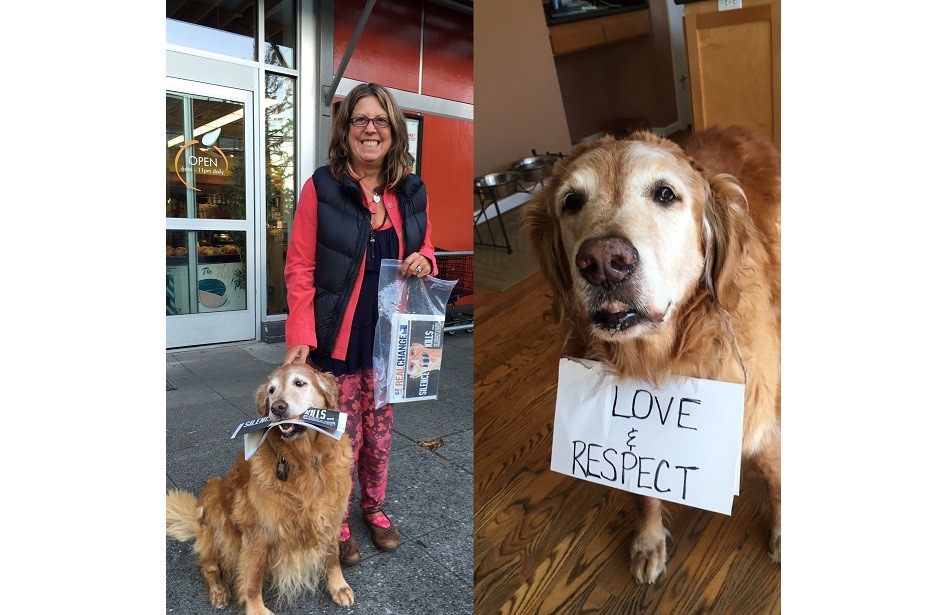
It is this feeling of fear that resonated with me. Before I had kids, I got to know the homeless people in my neighborhood that sell the Real Change newspaper, a Seattle newspaper that exists to give low-income and homeless people a job opportunity. Walking around the neighborhood with my dog, I got to know their names and some of their stories. At Christmas I would prepare Christmas cards with $20 in them and walk my dog around until I found them.

Then I had kids and stopped. Now I realized that it wasn’t just because my budget was more squeezed but because it became so much more uncomfortable for me to consider their situation. Somehow the high hopes I have for my little ones never to suffer made me so much more ill-at-ease with the journey of these people who have some pretty hard life stories.

Brené, Pema and Miss O all touch on the difficulty that comes with compassion. It hurts to see people cry and struggle and the action that is often the most helpful is just to be with others as they move through it.

Miss O summarized, “It’s being with them to show them its normal to feel that way.” And now that I know that compassion is supposed to be scary, it helps normalize my reluctance to feel it at times. It helps put me back into the holiday spirit of giving to my homeless friends.

***As a sidenote, my friend and colleague Todd Fulginiti has released a single of a holiday single, Snowfall performed by The Fulginiti Family Band. All proceeds/donations for anyone that wants to download it go to an organization that helps the homeless in Lancaster, PA. For more info see: Todd Fulginiti Music

(featured photo is my dog Biscuit taking the paper from one of our favorite Real Change sellers)

Dancing In the Dark

Though my soul may set in darkness, it will rise in perfect light; I have loved the stars too fondly to be fearful of the night.” – Sarah Williams

My kids are going through this “scared of the dark” phase. It seems to be seasonally inspired as the nights and mornings get darker. When we have 16 hours of daylight in the summer, they don’t see the dark very often but right now we’re at just over 10 hours of daylight. By the time we get to the solstice, it’ll be something like only eight hours of light each day.

I asked them what the dark feels like to them. Mr. D said surprise. Miss O added that someone could be a foot away in the dark waiting to snatch them and they wouldn’t know.

It makes me think of one of my darkest moments. When I miscarried a baby 4 years ago, overnight the world completely lost all its color and I couldn’t give a care about anything. In the moments that I felt anything, it was anger like I’d never felt before – rage, really – and nobody could do anything right. Except Miss O – I could muster some energy to pull it together for her. This started 4 days before Christmas, and I stumbled through the motions of the holidays just trying to be polite. I could get the smallest glimmer of peace in the morning when I meditated and every once in a while something amused me but overall the landscape looked completely black/white/gray with an occasional spot of color that pulled me through.

In a few weeks I evened out and I could work through the loss. I had stopped taking all the hormones that come with invitro fertilization when I miscarried so I guessed that there was a strong physical component to my experience of darkness.

Going through this gave me the great big a-ha that my assumption that my life experience and outlook were solid was totally wrong.  And I also began to understand that others might come at life from a completely different felt experience.

Mr. D told me his strategy about his dark – get a flashlight. And I love that because it’s a brave looking into the dark. To illuminate the things that scare us so we can lean in to look more closely. And I keep reminding them that there are many things we see in the dark that we can’t see otherwise – like our adventure to see the stars, Halloween decorations not to mention our own frailty. It’s easier to be vulnerable in the dark.

Sometimes the dark makes things visible– and they are different things to see and learn from than in the light.

My kids love Rihanna’s song, “Dancing in the Dark” from the movie, Home. So I’m suggesting that we can dance in the dark until it doesn’t seem so scary and then stay with it long enough to maybe even understand ourselves and others better.

When We Look Closely

Who sees all beings in his own Self and his Self in all beings, loses all fear.” – The Isa Upanishad

The other day my son was nose to nose with our cat then turned to me and said, “I see me in kitty’s eyes.“

It reminded me of a story from the Talmud that I read in Mark Nepo’s Book of Awakening:

A Rabbi asks his student, “How do you know the first moment of dawn has arrived? After a great silence, one pipes up, “When you can tell the difference between a sheep and a dog.” The Rabbi shakes his head no. Another offers, “When you can tell the difference between a fig tree and an olive tree.” Again the Rabbi shakes his head no. There are no other answers. The Rabbi circles their silence and walks between them, “You know the first moment of dawn has arrived when you look into the eyes of another human being and see yourself.”

The Book of Awakening by Mark Nepo

I was talking with a friend the other day about Monsters, Inc. which is my son’s favorite movie these days. She asked the question, “Wouldn’t it be great if we as humans figured out how to harness laughter & love instead of screams & fear?”  

To me, it feels with almost 8 billion people on the planet like an almost overwhelming task for the dawn to break so that we can all see we are all different yet we share the same aches and pains of life. But then I breathe and remember, it happens one person at a time. It happens when I remember to be open and take the time to look into someone else’s eyes and gather the power of laughter and love.

And maybe when we exercise gentleness and closeness, it happens too between species like with my son and the cat. That is hopeful too.

Fear and Confidence

Everything you’ve ever wanted is on the other side of fear.” – George Adair

The other night our iPad fell on the ground. My kids and I were getting in the car after visiting my brother and his wife. My brother folded the stroller and the iPad that my 6-year-old daughter always uses fell out of the pocket and landed on its corner. We picked it up and went on our way but as we drove, my daughter discovered that the power button had been slightly crimped down by the fall and so all the iPad would do was show the Apple icon and then go black over and over again.

This iPad is her favorite thing in the world. It represents her agency in the world to discover things that other 6-year-olds are doing. It has her books, videos and games so it is also her main source of entertainment. That iPad holds a lot of power and possibility in one sleek package.

She started wailing in the backseat that it was broken. I calmly said, “Don’t worry, I’ll take a look at it when we get home. We’ll try to fix it.” And she wailed back, “We can’t try. It won’t work.”

What?? We fix things all the time. This was the little girl that just an hour before had confidently stood up on a paddle board and was paddling it by herself on Lake Union. And then she was jumping off the paddle board over and over into the lake to swim around with not a worry in the world.

And now she was saying we couldn’t even try. That all was lost. Everything was broken and would stay broken. This wasn’t normal or rational, this was fear.

It struck me that confidence can’t show up when fear is running the show. So in my ongoing inquiry into confidence, I went digging in to get some perspective into this.

In their book The Confidence Code, authors Katty Kay and Claire Shipman distill the definition of confidence from all their sources of research and erudition into “Confidence is the stuff that turns thoughts into action.” They also describe the other positive attributes that often go hand in hand with confidence, what they label as the confidence cousins: self-esteem, optimism, self-compassion, and self-efficacy. But all of these things, confidence and the cousins that work to create belief that you can make something happen, are part of our rational/thinking brain.

Neuropsychiatrist Dan Siegel and parenting expert Tina Payne Bryson have great illustrations in their book The Whole-Brained Child that illustrate how fear is a downstairs (limbic) brain function and that when we flip our lids, we temporarily lose access to the upstairs brain that supports thinking. The downstairs brain that provides quick reaction so when we are in critical moments of fight of flight doesn’t stop to think about it.

So in our moments of fear we lose, maybe just momentarily, access to the stuff that creates confidence until we move though it. This brought to mind for me of one of the rapid fire questions Brené Brown often asks her guests on her podcast Unlocking Us: “You are called to be very brave but your fear is real and you can feel it in your throat, what is the very first thing do you do?” And the answers from her guests are things like:

  • Oprah: “Take a deep breath. Remind myself to breathe.
  • Dr. Angus Fletcher: “I think of the bravest person I know who happens to be my son who is much, much braver than me.
  • Dr. Julie Gottman: “Put my hand on my heart.

Coming back to my daughter in the car I asked her if what she was saying was because she was afraid of losing her iPad. She said she guessed it was. And owning that, we then could reason through the fact that the only sure outcome was the one if we didn’t try. If we did nothing, the iPad would stay broken. So we had nothing to lose by trying.

Sure enough, we got home, fiddled with the button and it came back to life. The button is a little tricky now but our confidence is restored. We could try – and it worked. As the quote for this post says, and it is one of my all-time favorite quotes because it has gotten me through many barriers of my own making, “Everything you’ve always wanted is on the other side of fear.

This is my second post delving into confidence. I Can was the first.

(featured photo from Pexels)