The Art of Apology

And now that you don’t have to be perfect, you can be good.” – John Steinbeck

This piece was originally posted on 3/9/2022. Heads up – you may have already read this.


The other night my two-year-old son wanted me to get a step stool out of the closet. As I was lifting it out of the storage space, he reached for it and his littlest pinky finger got pinched in the hinge that connects the sides of the ladder as it opens.

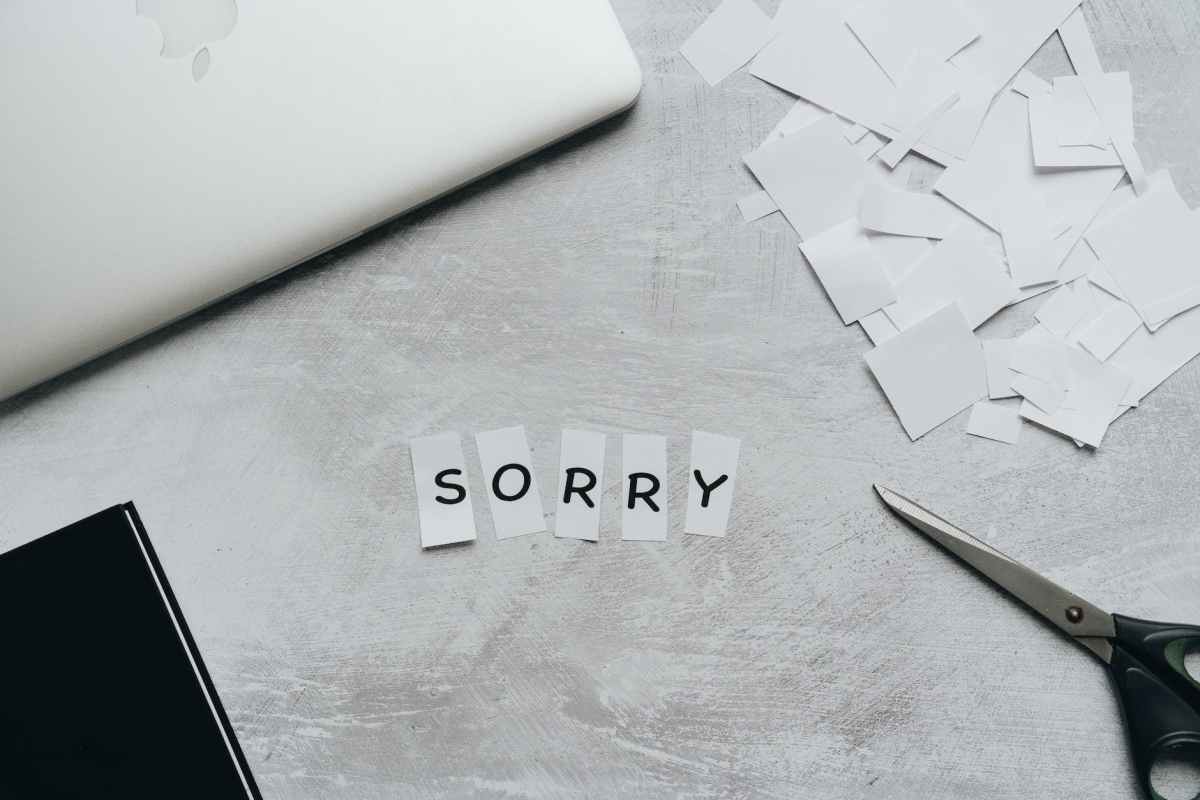
Yikes! I put the step ladder down, scooped him up and said, “I’m so sorry.”

I wanted to say, “But you need to wait til I get it all the way out.” And “That’s why these things are grown-up things.” And probably 15 other things in order to make myself feel better because I very much didn’t like being responsible for an action that pinched his finger.

But I didn’t, because I remember listening to a podcast with psychologist Harriet Lerner on Brené Brown’s Unlocking Us series that was like a master class on apologies. It was 2 years ago and so well done that I still remember some talking points. One being “When ‘but’ is tagged on to an apology, it undoes the sincerity.” If there is a genuine counter point or excuse to the apology, it needs to happen as a separate conversation.

So I looked up some more details from Dr. Lerner’s book, Why Won’t You Apologize: Healing Big Betrayals and Every Day Hurts. She notes there are cultural differences when it comes to apologies. There are also gender differences – males are more likely to be non-apologizers, women are more likely to be over-apologizers. But for anyone trying to craft a sincere apology, here are some pointers she provides of things not to do:

  • Saying I’m sorry you feel that way: These are apologies that don’t address what happened but instead try to target the emotions of the other party.
  • The “IF” apology: I’m sorry IF you thought is a weaselly effort to not own what happened.
  • The mystifying apology: What is it that the apologizer just said? Apologies that usually are too wordy and talk around the issue, leave the other party feeling confused.
  • The apology as instant expectation of forgiveness: I apologize now you must forgive me is a quid pro quo that undermines the apology as a genuine offering and not just a means to an end.
  • Not listening: If we don’t hear the injured party out, they will not feel heard and any apology will fall short of the entire wound.

So what is a good apology? A simple statement expressing remorse for the action we are apologizing for, owning what we did, not taking more that our share of blame (because that comes across as insincere) and not trying to speak to how the other person feels.

Just thumbing this book reminded me of some old wounds that I was surprised to find hadn’t fully healed over because I can still think of the poor apologies I’ve received. The down-played sorry – “I’m sorry that I called you a ‘brat’ when I was feeling crappy” when that wasn’t the word used at all. The blame-shifting excuse: “I was feeling sick, what was I to do?” when someone no-showed/no-called to the birthday party I threw for her. And the non-apology because the person who caused the injury paraded around all his own hurts as a way to claim he couldn’t be responsible for his actions.

And it also brought to mind incidents where I owed an apology and fell short. The little hitches where I still feel a little guilty or ashamed because my actions were thoughtless, careless, or uninformed and I never had the guts to address it properly.

All these memories make the case of how important a good apology is. As Dr. Lerner says, “I believe that tendering an apology, one that is authentic and genuinely felt, helps the other person to feel validated, soothed and cared for and can restore a sense of well-being and integrity to the one who sincerely feels she or he did something wrong. Without the possibility of apology and repair, the inherently flawed experience of being human would feel impossibly tragic.”

This makes me think of one of the best apologies I’ve ever heard. When my friend Jill was feeling tender because something her partner did, he said, “Please tell me what I did so I can never do it again.”

Fortunately having two young kids gives me plenty of opportunity to apologize. Thankfully it’s usually for skinned knees and stubbed toes for which I have no responsibility but am still sorry they happen. Then I get to participate in the healing. As my son said for the pinched finger incident, “Mama, kiss it?” And then we get to continue growing and learning, all the while in relationship to each other.


Saying “I’m sorry” reminds me of the power of keeping it simple. I’ve posted about The Power of Short Sentences on the Wise & Shine blog today.

(featured photo from Pexels)
The Dog Ate My Homework

Your beliefs become your thoughts. Your thoughts become your words. Your words become your actions. Your actions become your habits. Your habits become your values. Your values become your destiny.” – Mahatma Gandhi

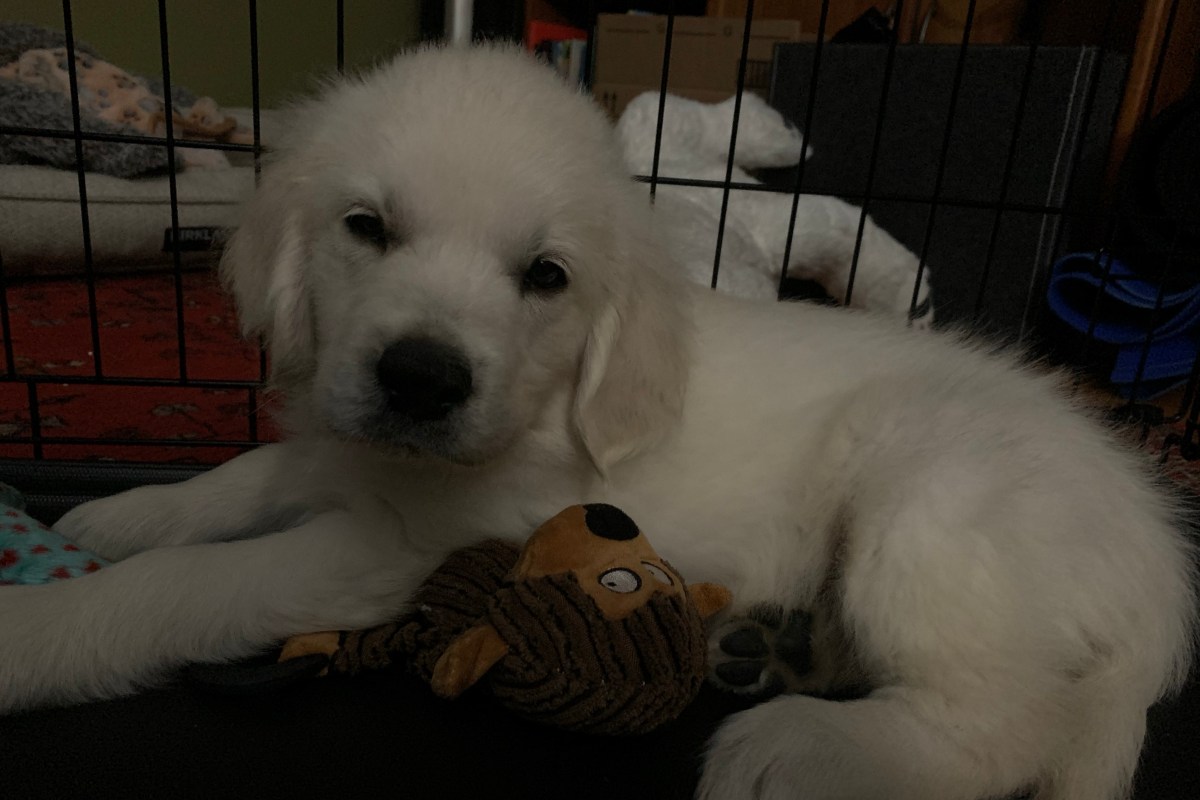
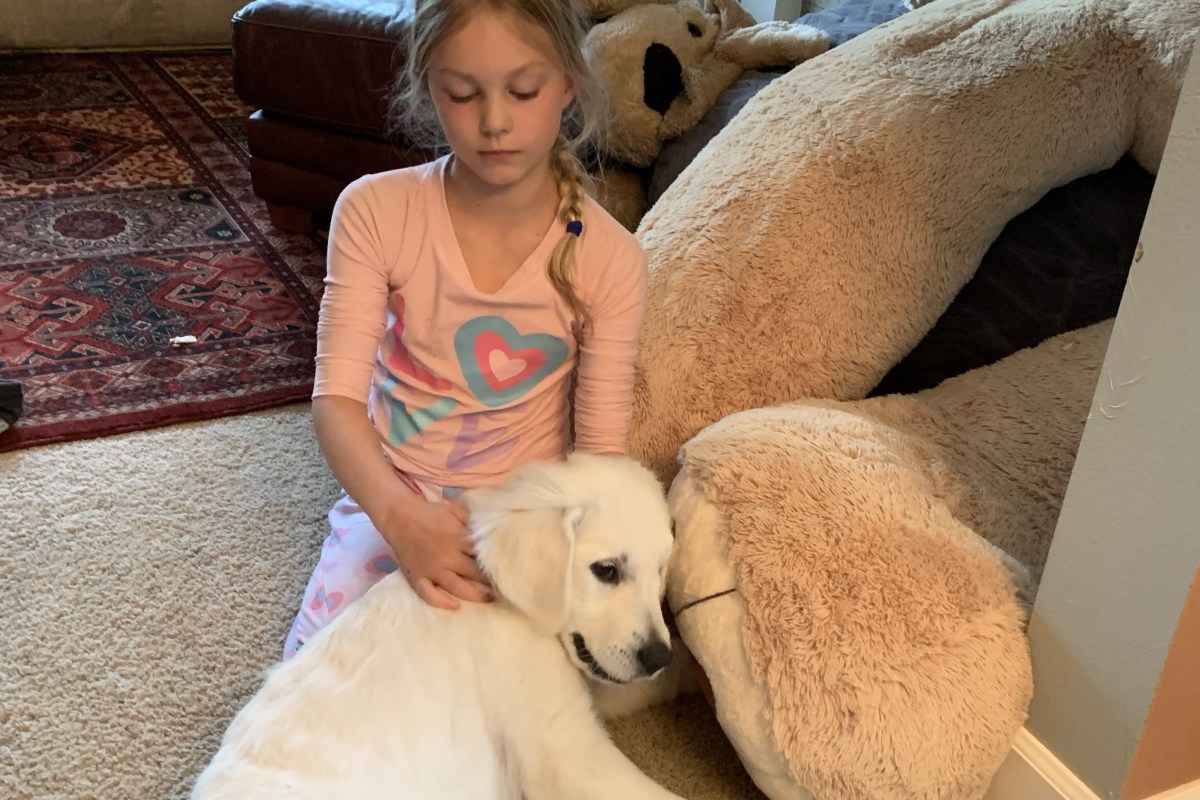
The other night our puppy ate Miss O’s homework. Such a cliché but truly, it happened. It was something she’d brought home finished, so it wasn’t like she had to turn it in. But when she saw the remnants of the paper in Cooper’s dog bed, this homework became the best thing she’d ever done.

Miss O was so angry. I’m not sure I’ve ever seen my generally happy kid this angry. She wanted to hit and kick the dog. Someone had to pay for ruining her beautiful work product.

Had it been the beginning of the day, I’m not sure she would have lost it to the degree that she did. But it was the end of the day, and tolerance was down across the family.

So, I stopped her from beating the dog and felt a huge surge of anger in myself as well. Something along the lines of, “How dare you want to hit the dog for ruining things without understanding how many things of mine YOU have destroyed! And do I hit you for that? NO!!!

Three things strike me about this.

  1. How transferrable anger is
  2. That life is defined by these moments, not just the ones where we are all happy
  3. How much energy it takes to transmute anger into something expressed but not acted upon

Scenes like this make me think about psychologist and author, Jonathan Haidt’s, metaphor of the elephant and the rider. We think our minds are in control but as the rider atop the elephant of our feelings, it’s just an illusion. Or, in this case, it takes a lot of effort for the rider to turn the elephant away from rampaging down a path.

I’ve wondered why we are designed like this but as I see this play out close up with my family, I’m struck by the possibility that how we traverse the gulf between emotion and action is in part driven by our values. We start the groove the reactions and they become at least slightly easier.

That is to say, as we train the dog, we train ourselves.

When we’d all calmed down, I told Miss O that beating a dog doesn’t make it so that it won’t eat your homework, it just makes it a mean or fearful creature. And I suspect that it makes us a little meaner or more fearful when we do the same. So, we lost a piece of homework but learned a little bit of a lesson. Probably a fair trade.

There’s no doubt that I got my values from my parents. For more on my discovery about my dad’s source of the always present glint in his eye, I’ve written a book, Finding My Father’s Faith. For a bit about the courage I learned from my dad, please see my post on Heart of the Matter: The Courage to Not Be Divisive

(featured photo is a photo of Miss O and Cooper in a calmer moment)

Sweet Tooth

It’s not the mountain we conquer, but ourselves.” – Edmund Hillary

My math brain likes to discern patterns. If you call me out of the blue at 4pm on Monday and then do it more than once, I’ll jump to wondering what you are doing Mondays at 3pm that makes you think of me.

The patterns that interest me most are the ones that take me a long time to pick up on. Here’s one.

I have a sweet tooth. Like a big sweet tooth. More than one – actually, a whole mouthful. I’ve frequently argued with it, sometimes ignored it, but very rarely analyzed it.

My dad had a big sweet tooth as well. Are these kinds of things inherited?

But recently I was describing my sweet tooth to someone as something that starts with Halloween, carries through the holidays, and best case, abates sometime around Memorial Day.

When I started stashing those mini candy bars in my pantry again, I chalked it up to the pre-Halloween availability of those bite size snacks. Besides, I’m especially busy, so it’s just part of keeping up the quick energy to get everything done, right?

And then my recent description of my sweet tooth jiggled something loose. The memory that last year my reason was that it was because I was traveling for work. And the year before that? I don’t know – probably post-pandemic back to in-person school or something.

The point being – I have a new reason every year. If I look at the pattern, it starts with fall. I start feeling like sleeping more with the earlier sunsets and crisper evenings. And it’s a little harder to get up at 5am in these cold, dark mornings. I’m looking for the natural summer productivity that I get here in Seattle with the 16 hours days, to be all year round. When my body tries to pick up the seasonal cues to slow down, I jack it up on sugar.

You know what? I bet my dad did that to a degree too. He also had a problem slowing down, being anything less than on-the-go. So is it inherited? Well, maybe it is. The go-go pattern not the sweet tooth. Not that I’m ruling that out either.

Now that I see it, I wonder if this is a pattern I want to pass on. Isn’t that a funny thing about families? Sometimes it’s hardest to see the patterns closest to us.

For a related post about change in energy, please see my Heart of the Matter post Department of Low Energy.

Gratitude Over Fear

“Dogs have given us their absolute all. We are the center of their universe. We are the focus of their love and faith and trust. They serve us in return for scraps. It is without a doubt the best deal man has ever made.” – Roger Caras

It’s our day to go pick up our new puppy. I’ve found myself feeling tight and nervous, unable to plan out all the things of how this will play out with a puppy and two kids in the mix. So, I’ve indulged my brain by writing out two lists: my fears and my gratitude.

Here are the things I’m afraid of:

I won’t have time to pay attention to my kids

The puppy will be a distraction from my work

That this will be my undoing when I finally find that I’ve pushed it too far and I end up exhausted

That we collectively won’t be good puppy trainers and dog owners

That the puppy will find a box of crayons and a box of Cheez-Its, eat both, and leave rainbow throw up all over the house.

That Mr. D will be displaced as the baby of the family and won’t get some focus, not yet identified, that he needs

That I’ll have to get better at asking for help.
Or that I’ll have to let something else that I personally love go in order to support this bigger collective

I fear Mr. D’s beloved stuffy, Bun Bun, will be torn to shreds.

I won’t be able to train the puppy to understand my morning sacred time

What I’m grateful for:

That we have so much love to give
That the default for my little family is to be willing to try

The excitement that comes with new family members
That my faith and my heart tell me we are ready for this, even when my head forgets.

For the ability of puppies and dogs to love, listen, and lean in.

That I’ve worked out many of my problems in life while walking my dogs.

For the melting way that puppies and dogs look at their owners to show loyalty and trust
That my kids will get to experience that from a young age

The way that dogs can lighten up almost any situation with a wag, a toot, or a yowl.
That my kids will get to experience what a loyal friend is as they maneuver through their own growing friendships.

That being a head of family has taught me that I don’t have to figure out all the details, just set people in the right direction

That tears, anger, and exhaustion lead to opportunities for repair.

That typing out this list has made me feel better.

As I put these down on paper, I find the gratitude is far more substantial on the scale of importance. Funny how big my fear feels until I actually write it down and find it’s really just uncertainty. But I have to give it its moment in the sun, as I did here, in order to fully let it go.

Post-script: I wrote this post before we went to pick up the puppy, Cooper. Then on the way home, Miss O had Cooper in a box on her lap. She was explaining the world to him – this is a car, that is a phone, and overhead we see an airplane. And then I heard her say, “And you are something called my best friend.” I’d already dispelled most of my fears by writing out my gratitude. Whatever remained was blown away by that.


For something almost as sweet and fun as that last comment, check out the latest Sharing the Heart of the Matter podcast with the amazing writer and blogger, Cheryl Oreglia: Episode 30: True Grit with Cheryl Oreglio or search (and subscribe!) for Sharing the Heart of the Matter on Apple, Amazon Music, PocketCasts or Spotify.

Try, Try, and Try Again

Courage doesn’t always roar. Sometimes courage is the quiet voice at the end of the day, saying, “I will try again tomorrow.” – Mary Anne Radmacher

I’m sure I’m not the first parent to say that my kids are making me insane. I don’t mean that in a pull-my-hair out kind of way though. I mean it according to the phrase, “insanity is doing the same thing and expecting a different result.”

Because it feels to me that letting my kids do the same thing over and over again, often comes with the different result.

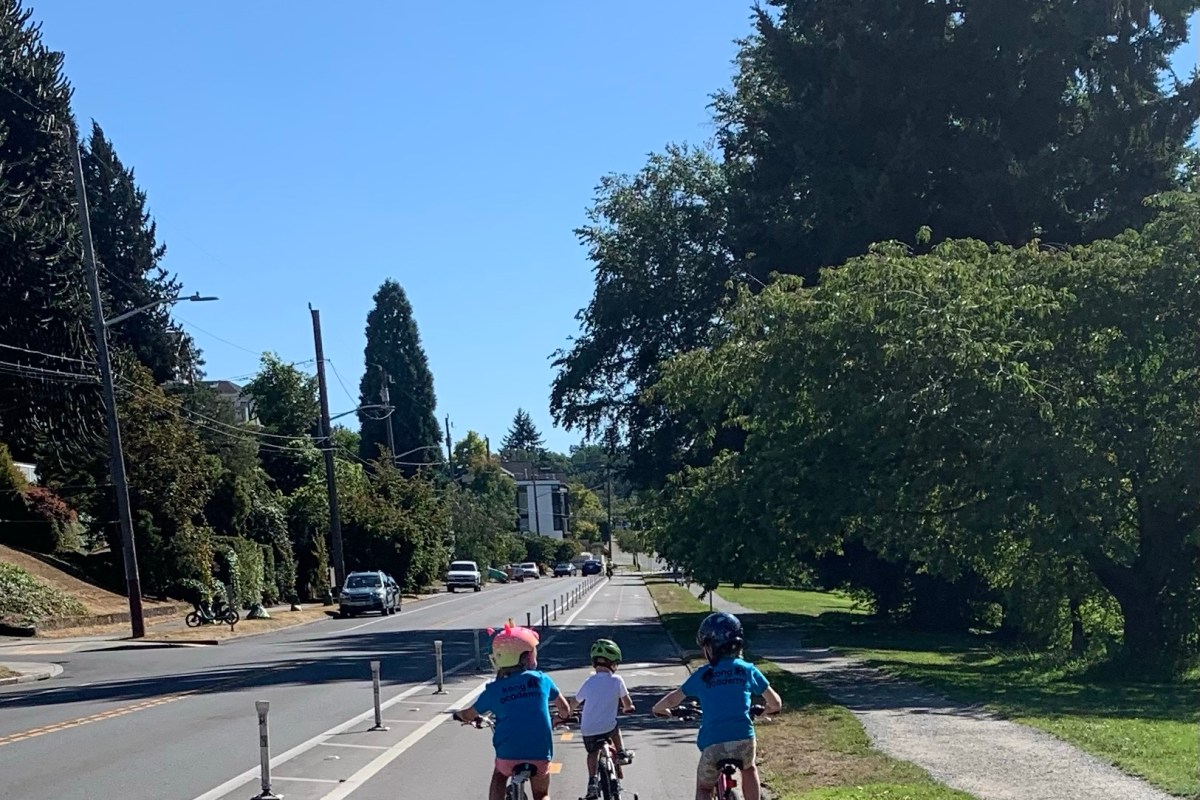
Last week, Mr. D wanted to ride his bike home from pre-school. We couldn’t do it on Monday or Tuesday. But when Wednesday rolled around, I dropped him at school with his bike, that he proudly rolled in to park next to his teacher’s bike, so that we could ride home.

I had Miss O and her friend with me that afternoon so the three of us rode to Mr. D’s school to pick him up. It took us about 10 minutes to get there. Mr. D sagely choose to walk his bike down the hill to the bike path to begin the mile-and-a-half home. Which is a long way on a bike with training wheels, but he, as our leader, bravely started out.

And then 50 yards later stopped and said he couldn’t do it. Uh-oh. We were a long way from home. So I suggested we take a snack break. After a nice snack break in the shade, we were back on the bikes. Mr. D again set off as the leader and this time went about 100 yards before stopping and declaring he couldn’t do it. That time we stopped to look at ants.

In that fashion, we slowly made our way home with a great deal of tension between the two girls who were antsy to race ahead and Mr. D taking breaks. It took us almost an hour-and-a-half.

The next day, Thursday, when we got in the car to take Mr. D to school, he said, “I want to ride my bike home from school.”

Oh boy. I might have rolled my eyes when no one was looking. But here’s the thing – I know he can do it. He’s done it before, just not at the end of the day. So I loaded his bike in the car and dropped him at school. This time when I picked him up, Miss O wasn’t with me and I attached a third wheel seat to the back of my bike so that if he chose not to ride his own, he could sit back there.

For that attempt, he made it about halfway round the lake before he decided to try out the third wheel. I chained his bike to a tree and we rode home that way, even though he’d never wanted to try that “trail-a-bike” before. Then I had to pack up both kids into the car, drive back around the lake to pick up his bike chained to the tree. The result – another hour-and-a-half expedition to pick up Mr. D from school a mile and a half away.

So then Friday rolled around. When we got in the car to take Mr. D to school, he said, “I want to ride my bike home from school.”

This is where the insanity comes in — I said “Okay” and loaded the bike into the car. On the way home, he made it half way round, I chained the bike to the tree and he rode the rest of the way on the third wheel. But it was easier this time and I popped by the tree to pick up his bike when I went to get Thai food after my friend Eric arrived for dinner.

And each time? Well, there were moments of tension but we also had a good time, and had fun trying. My kids constantly remind me that life is insane – in the best way. That the boundaries of what I previously thought I could do are just mental barriers to blow through. That there is joy in trying the same thing over and over again – and getting a different result.


I’ve written a companion piece about kids and joy: Bundle of Whose Joy? on the Heart of the Matter blog. Please pop over there if you have a minute.

Loving Our Differences, or at Least Understanding Them

Bless the people who see life through a different window. And those who understand their view.” – unknown

Sometimes the people closest to us see things differently. I’m throwing that out there as my opening line although I suspect that it surprises no one. But it is one of the conundrums that fascinates me.

Here’s an example. My 84-year-old mom and I were recently talking about the information I learned from the Ten Percent Happier podcast, The Science of Longevity with Dr. Peter Attia, a longevity specialist. Specifically, we were talking about exercise and how it really is the wonder “drug” of aging well. I shared with my mom the measures that I wrote about in my Healthspan post: that longevity research has found we should be doing both aerobic and strength training for the best outcomes. For aerobic fitness, VO2 max which measures lung capacity among other things, is the longevity predictor and grip strength is what they use for strength training.

About a month after that conversation, my mom told me that she’d been using a stress ball to increase her hand strength. Then she added she’s been working on lung capacity using the breath device they gave her after she broke her ribs in the ping pong accident when her competitive nature got the best of her common sense.

Huh, I marveled – she’s directly working to improve the two factors we’d discussed. As an aside, let me say that my mom exercises a lot – golf, bike riding, strength training – so these are not the only things she’s doing. But given the information from Dr. Attia, I would have never thought to work specifically on lung capacity and grip strength. Since they are indicators, I took the information to remind me that I should work out more, both aerobically and strength training, figuring that if I did that, it would affect the things they measure. Sort of the indirect method. In fact, as I type this, I realize that I think that it’s kinda cheating to affect the things directly as I worry that I’d miss the point of overall fitness.

Two people and two different reactions to the same information. Not only that, two people from the same family so it’s not like some different cultural bias is at play. It highlights a difference between my mom and I that I’ve often thought of as the forest and the trees. My mom is incredibly detail-oriented and often sees the details I miss.

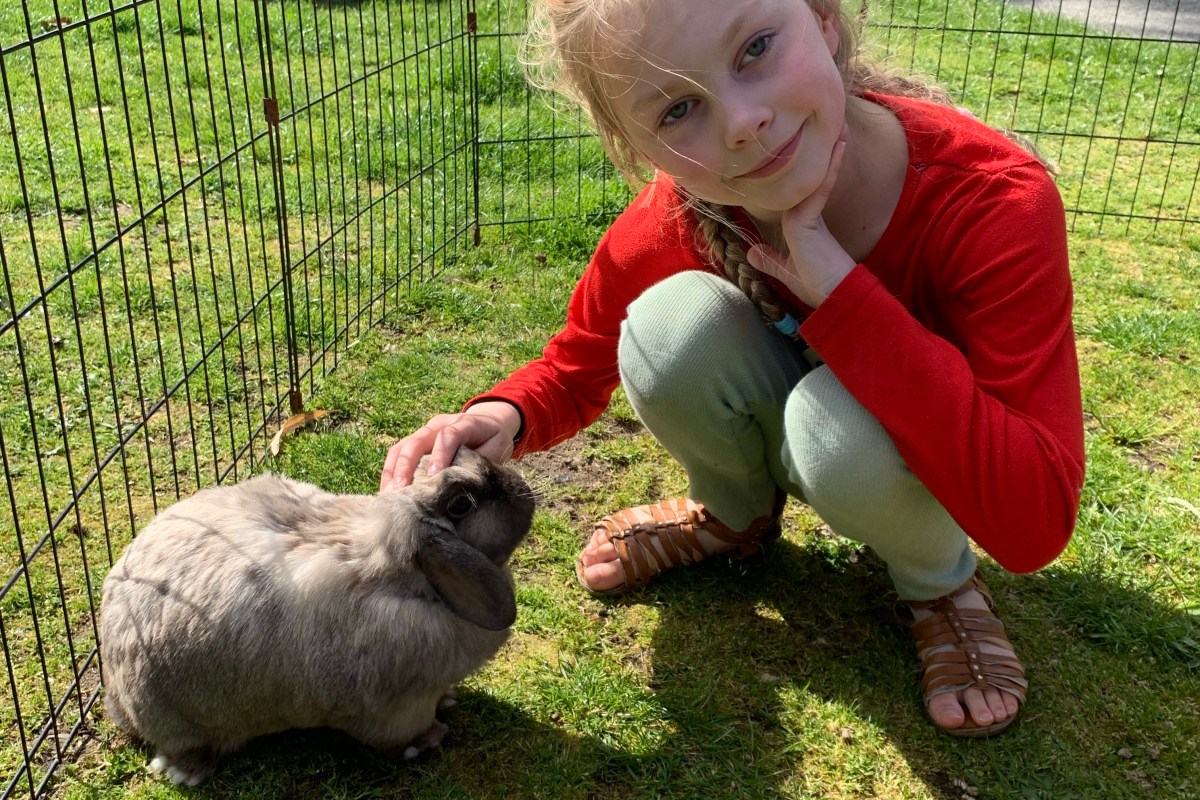
I recently sent her an adorable picture of Miss O petting a bunny and her response was, “Do you think Miss O minds the hair in her eyes?” I had to go back to look at the picture to see the one wisp of hair out of place. (see featured photo) My reaction was, “Sheesh, Miss O’s hair was pretty tidy that day because usually it’s way worse than that!”

Because I’m a forest person. If most things are flowing towards the end result in a somewhat reasonable fashion, I’m happy. Picking out the details in a day or a project that are a little out of order is not something I’m good at. Really, I don’t really care if something is a little wonky. It would take a lot of energy for me to get worked up about it – so I don’t. To put it succinctly, my mom is a great line editor. I am not. But give me an idea you are working on, and I can contribute a lot of enthusiasm about the big picture.

Here’s where I appreciate aging. I have come to find that the truth of life is not my way or my mom’s way. I think we’re both right. I no longer feel like I have to convince anyone, especially my mom, that she needs to see it my way.

But I still find it absolutely fascinating how differently people see things and that it presents a challenge when communicating, to find a way to speak my truth and feel seen. Often that is much harder to do with my mom because it feels like she gets stuck on the details. That’s where I’m thankful that I’m a big picture person, because I can rest easy knowing she loves me dearly and given her exercise regimen, will probably be around to do so for quite some time!

Let’s Be Unreasonable

Life is full of surprises and serendipity. Being open to unexpected turns in the road is an important part of success. If you try to plan every step, you may miss those wonderful twists and turns. Just find your next adventure-do it well, enjoy it-and then, not now, think about what comes next.” Condeleeza Rice

When Miss O was about six months old, I went out to dinner with a couple of business acquaintances that had kids were teenagers and young twenty-somethings. As I was enjoying fantastic Chinese food in the dark atmosphere of a fancy downtown Seattle Asian fusion restaurant, one of the women slipped in an aside that has stuck with me for all these years. It was something like, “You can’t reason with kids that are 2 ½ to 4 years old.” Wide-eyed with new motherhood, I wondered what holy hell that would be.

Now that Mr D is about to turn four years old, I’ve gone through the window that the woman mentioned twice. That’s enough to realize that it isn’t as precise as I took her comment to be at the time. And also enough to find some interesting lessons about what lies underneath “reasonableness.”

I consider myself to be a pretty reasonable person. This is a perfect spot to insert some joke about whether others in my life would say the same. But more or less, I think they would. There may be an exception about my propensity to bite off a lot but as I wrote in my Being a Yes-Sayer post, I’ve got Shonda Rhimes on my side on that one.

But watching the small examples of humanity I see in my children has made me realize three things:

Routine: When reason doesn’t work, routine often does. I’m guessing this is how most parents of small children manage to make things happen. But looking at my life I see how much I do simply by routine – yoga, meditation, writing, showering, making breakfast to name just one routine that I do every morning. And it flows because I don’t question it. Also, when it’s interrupted, I’m very unsettled.

Override: There’s a lot of things little kids don’t want to do. I’m thinking specifically about inserting a stick with bristles and flavored paste in their mouths to scrub all sides of every surface, and then go to bed. But when some parental influence is exerted, it usually happens.

Cue to the end of the night when I’m sitting in my chair reading. Guess what? I often don’t feel like getting out of the chair, brushing my teeth, putting on face creams (there’s a lot more these days), and going to bed. But I do it. Watching kids makes me think about how many things we do in a day that we don’t really want to do – eat vegetables, go to school/work, brush our teeth, wash our hands. I’m sure the list varies for everyone but to one degree or another we are doing a ton of things that we don’t “feel” like doing. I think we all deserve some recognition and applause.

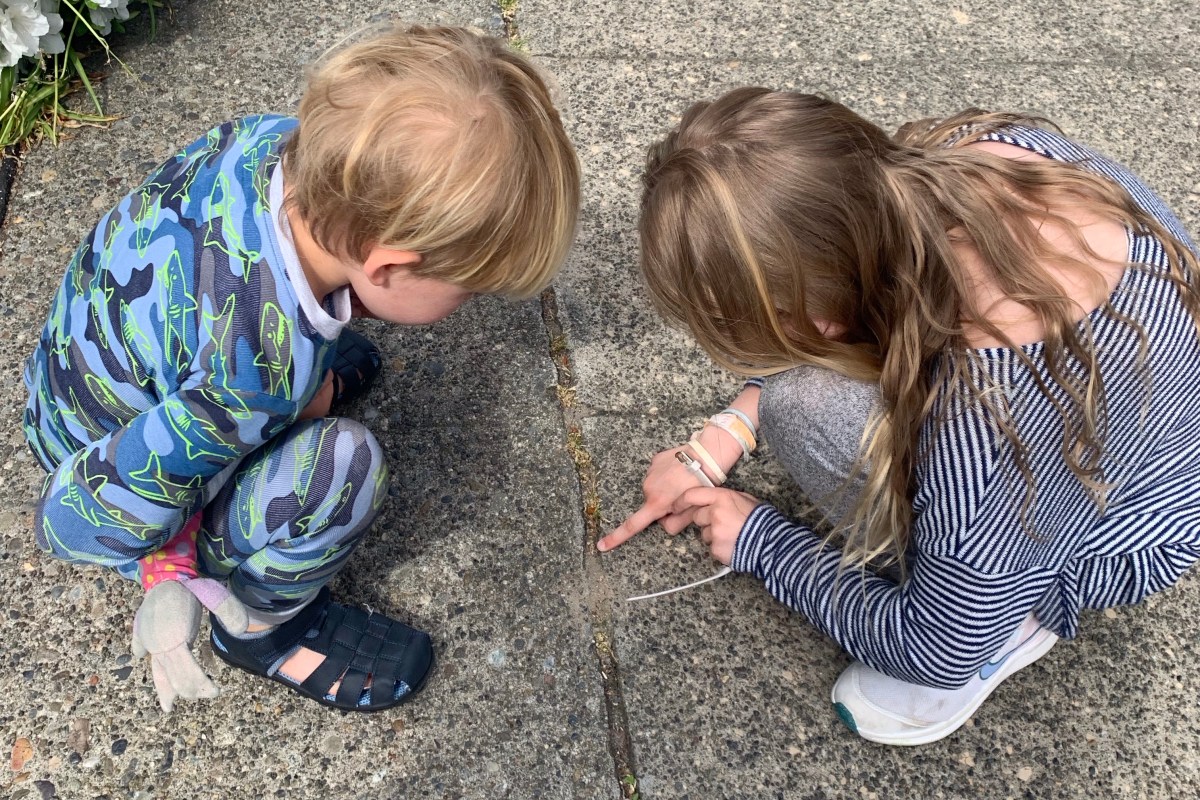
Delight: Reason is not a pre-requisite for delight. In fact, my observation is that reason might hinder delight when we are too focused on the above routines and overrides. Mr. D was riding his training wheeled bike in a bike lane along a well-traveled route the other day when he got off to crouch down and point out the ants he saw also commuting down the road. He was fascinated by the activity and direction and wanted me to join in on his delight. I, however, was almost too preoccupied by trying to get us out of the lane of bike traffic even though no one was coming.

It’s a scene that plays out over and over with my kids. There are a myriad of wonders up, down, and around, and these beautiful young minds around me point them out to me. Only then do I notice, and when left on my own I only tune into a FRACTION of what they see.

Maybe this is why I feel a little sad leaving this “window of unreasonableness” as coined by my colleague. Sure, we’ll get a lot more done – but I’d like to keep the congratulations and delight.

At the Pace of Love

To lose balance, sometimes, for love, is part of living a balanced life.” – Elizabeth Gilbert

The last two weeks have been really busy. Traveling, birthdays, my 7-year-old is out of school – wonderfully fun things that have made it so I have to schedule time to breathe. It’s all good – I’m just setting up my excuse for what’s to come next.

Because when I get busy like this, I don’t want to take the time to teach or do things collaboratively. I just want to get things done and the extra time and patience it takes to direct small hands with inquisitive minds attached? I feel like I don’t have it.

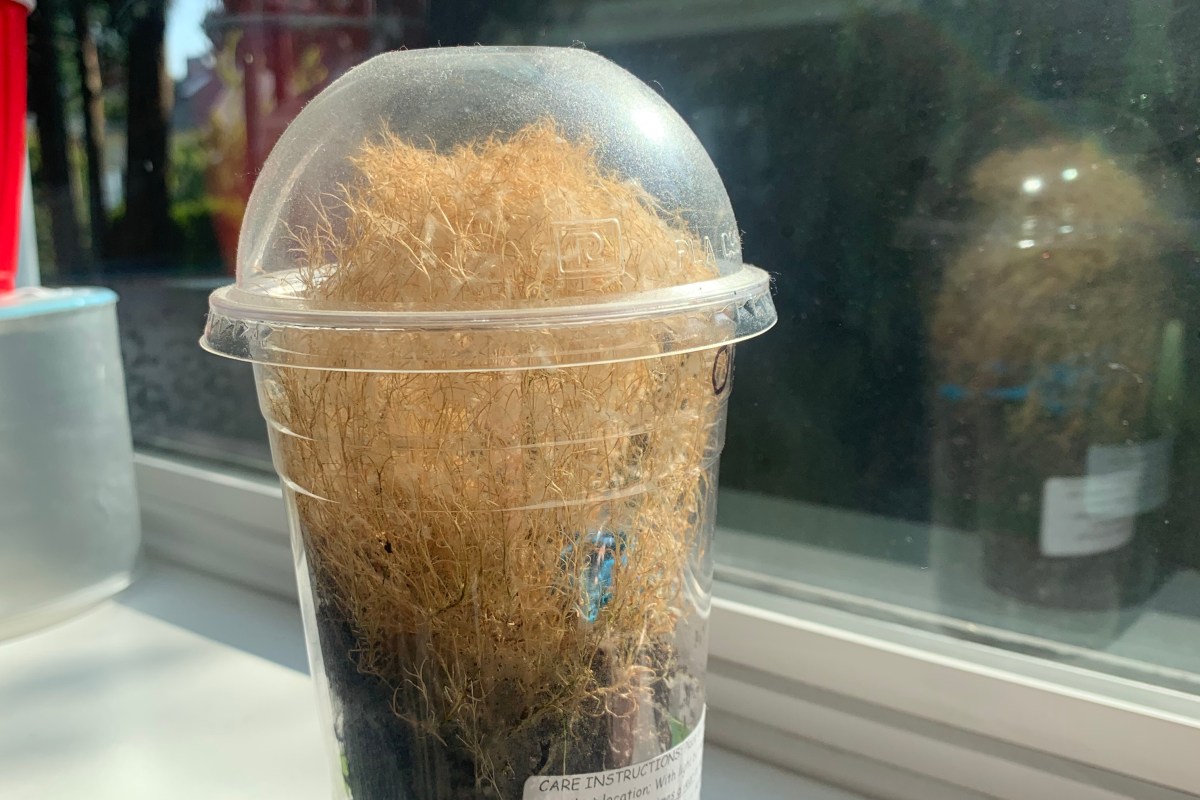
For example, Miss O brought a little terrarium project home from school about six months ago. It only needs water once or twice a year but I noticed that the grass in it is all brown. Seemed like a good cue for adding water.

I know that it would be a bad thing to just do it. It’s not my project and we all need to learn sooner or later the steps to keep something alive. Right?

So I mentioned it to Miss O. She took one look and then started wondering about the calendar. She had it in mind that it wouldn’t need care until her classmate, Jonas G’s birthday and then she was off and running down that track of wondering when his birthday is and what to get him.

All that chatter and no watering. <groan> I just want to water the damn thing.

It reminds me that I often want to just do things for other people, grown-ups and kids alike. That way I can do it my way, in my time, and get it done. But that’s not the way that life works, is it?

This is when a particular phrase from my dad comes to mind. “We just need to love people where they are at, wherever that is.” It works for me because it slows me down to the pace of loving which is A LOT slower than my pace of doing.

What good is getting stuff done if we miss the opportunities to learn and love in the meantime? In weeks like this one, I’m tempted to answer that there’s a lot of good in getting stuff done…but then I grumble that I know that’s not the right attitude. After all, I’m teaching something to my kids whether I just water the terrarium myself or support them doing it. Maybe when I model what we need to do, I can also groove new habits for myself about slowing down to the pace of love.

Our Gratefuls

Wear gratitude like a cloak and it will feed every corner of your life.” – Rumi

At bedtime after we’ve read books and told stories, I’ve been asking the kids what they are grateful for and how they helped that day. The latter is a question I got from Vicki early on in our blog buddy relationship. If I remember correctly, it was a question that her mom asked her sister Lisa on a regular basis.

The other night Mr. D answered that he was grateful for being grateful. It could be a three-year-old’s version of passing on the question, but he seemed to mean it.

While I sometimes envy the simplicity and directness of the animal life around, I wonder if there’s any other creature that feels gratitude. This started me down the rabbit hole of doing research on the Internet and as I encountered AI along the way, delved into Scientific American, and hopped over to the Greater Good Lab at UC Berkeley. My summary:

  1. There are a lot of cute animal article and videos on the Internet that can eat all your free time.
  2. No one knows if animals feel gratitude.
  3. Gratitude is a complex emotion that has components of reminiscence and reflection.

In her book, Atlas of the Heart, Brené Brown quotes Robert Emmons, professor of psychology at University of California, Davis and one of the world’s leading gratitude experts:

I think gratitude allows us to participate more in life. We notice the positives more, and that magnifies the pleasure you get from life. Instead of adapting to goodness, we celebrate goodness. We spend so much time watching things – movies, computer screens, sports – but with gratitude we become greater participants in our lives as opposed to spectators.

Roberts Emmons

Now who doesn’t want to become a greater participant in life? I’m grateful for my kid’s answers the other night. Mr. D. who’s grateful for being grateful and Miss O who added, “I’m grateful for family and that we are a unit, even though we sometimes fight.” Right – ditto what they said!

For a snapshot of a small moment of gratitude, I’ve written about one that I particularly enjoyed on the Heart of the Matter blog, A Brief Moment in Time.

Family Dynamics

Gotta move different when you want different.” – unknown

Last Monday I got frustrated with Miss O when we were getting ready for school. Or should I say, not getting ready for school. I prompted her five times to get her shoes on, she got mad at me for repeating myself. I told her that I wouldn’t have to repeat myself if she would put her shoes on…nothing new. I’m sure a conversation that happens between kids and parents in households all over the world since the beginning of time. Or at least since shoes became a thing.

So we were both irritated when I dropped her off to school. And then Mr. D was silent as we drove on. By the time we walked in the front door of his pre-school, it was clear that he was upset. We sat in the chairs outside his classroom for a while, and then had a tearful drop-off which is unusual for Mr. D.

This has happened enough times for me to discern the pattern – Mr. D is so attuned to the emotions of the household that any disturbances in our mostly good natured vibe affect him, even when the upset doesn’t involve him.   

Wow, families are complex. Now I don’t have to just be responsible for my own emotions but also the impact that I’m having on the group and vice versa?

I think about what it was like in my family growing up. My sister was usually upset about something, my brother was tired of hearing her complain and just disconnected, and I felt that I needed to be no problem since my parents were having to deal with my sister. It’s a pattern we maintain, by and large, to this day.

My mathematical nature likes patterns – they are so useful to predict what will happen next. But sometimes patterns just hold us in a mindless call and response. Until one person breaks out by saying, “I’m so tired of this banter that keeps us from saying anything real,” the other person(s) in the pattern may not realize there is something habitual that has been holding everyone in place.

Thinking back to my little family, I think this applies too. When I get tired of the same conversation about the same shoes, I’m always surprised how effective it is to change the dynamic by changing the order. Shoes before breakfast helps break the stalemate. What’s harder is changing the natural tendency that Mr. D has to carry the tension. Maybe that’s a case of where making it visible helps to dispel it. Hopefully that works because we aren’t going to stop wearing shoes.

I’ve written a companion piece on the Heart of the Matter blog about some advice I got from a friend long ago to never back a kid into a corner and instead always offer them a way out: Building Bridges to Each Other. Please check it out if you have a moment.

(featured photo is a pair of Converse high tops that Miss O got as hand-me-downs)