Recycling and Enlightenment

Do the best you can until you know better. Then, when you know better, do better.” – Maya Angelou

Seattle has great recycling. I know that’s probably not on the list of things that makes you want to come visit but I think it’s pretty cool. We don’t have to sort things into separate bins for aluminum, plastic and cardboard anymore and it’s free.

Also in 2015, Seattle declared that food waste was no longer okay to put in the garbage. They improved the composting capabilities so that food waste can be put in our yard waste bins for weekly curbside pickup service. The estimate was that a third of food in America is thrown away. When put in garbage, it rots and produces methane but if composted, it can become rich material to facilitate growth.

Here’s the complication – it makes it awkward when we travel. We’ve been on Whidbey Island for a week. One of my favorite places in the world. But they don’t have composting and they don’t pick up recycling.

To be fair, there are big garbage dumpsters at the place we are staying so there’s plenty of space to just throw everything in to go out with the garbage service. Except that I can’t do it – and none of my Seattle friends can either. We make our little piles of recyclables and create schemes to haul them away.

I find this incredibly hopeful. Just like the Maya Angelou quote for this post. Because as we up our game, whether it be in how we dispose of things, or our relationships to others and the world, it becomes very hard to go back.

Isn’t it interesting that when you stumble on enlightenment, that you can’t unsee it? Perhaps this is a stretch but I’m recycling the analogy – it’s kinda like self-awareness. Once I notice that I see something through a lens of fear, greed, or selfishness, it’s harder to maintain that lens.

It means that when we know better, we do better. Also, that progress can be sticky and have an impact. We just need to keep upping the game.

(featured photo from Pexels)

You can find me on LinkedIn: https://www.linkedin.com/in/wynneleon/ and Instagram @wynneleon

I host the How to Share podcast, a podcast about collaboration – in our families, friendships, at work and in the world.

I also co-host the Sharing the Heart of the Matter podcast, an author, creator and storytelling podcast with the amazing Vicki Atkinson.
Inculcating Sustainability

“We have not inherited the earth from our parents; we have borrowed it from our children.” – Wendell Berry

A while ago we were driving and saw litter by the side of the freeway. Mr. D said, “It’s not healthy for the moon to eat.” It started a rousing discussion of not only what planet we live on but also Earth sustainability.

A lot of the climate change messaging these days doesn’t seem to resonate with kids. First, it’s rife with fear and disgust – like humans strangling the planet because they are short-sighted and selfish. I’m not sure that resonates with grown-ups but I know for certain kids can’t grok the cynicism.

Second, they have a sense that grown-ups don’t know what to do about it so it feels too big for kids to take on.

Third, they are just developing their altruism muscles so giving up things when other people are not lands as unfair.

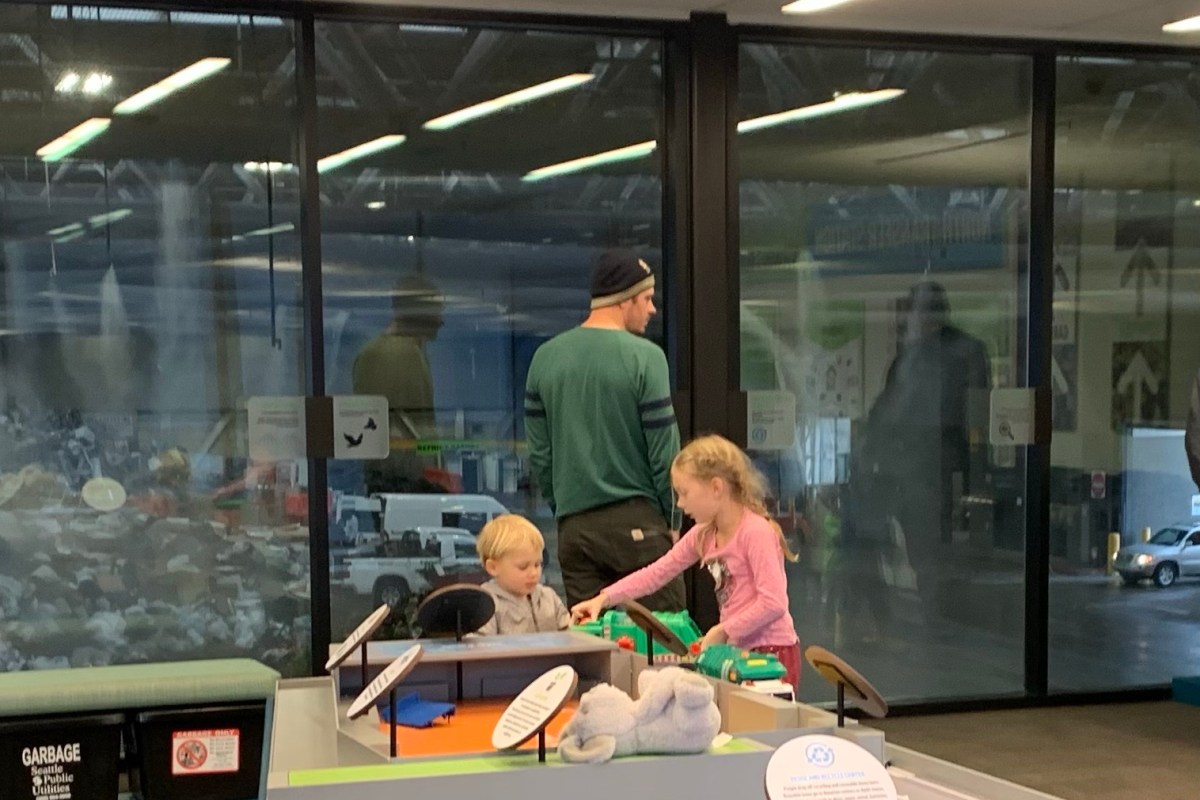
Fortunately, Seattle has a great recycling and composting program. In the winter, we’ve spent a lot of time at the dump (the transfer station) watching how it works and playing with the educational models (see pictures here). Inculcating some sustainability habits to go hand-in-hand, seemed to me like a good next step.

After trial and error, some climate change for kids books, and thinking, here are some of the things I’ve come up with to teach my kids:

One in, one out: We participate in hand-me down chains for toys, books, and clothes. We try to give away at least one thing for everything we get. I can’t claim we do this every time – but we try.

Involve them: I reuse a lot of containers – like hand soap. They love participating in refilling our containers.

Full life cycle: We grow strawberries, try to grow peas and pumpkins, visit pumpkin farms, and give away our plum crop to people who are food insecure. Even though we live in a city and are disconnected from where our food comes from, I try to connect them to the bounty of the Earth when possible.

Teach them skills: Things break and need maintenance and there are a lot of skills to repair and reuse things instead of just discarding them. I’m not much of a seamstress but I do know my way around drills, saws, caulk, and glue. Seeing that we can not only fix things but also make them better.

Selling our stuff and buying second hand: We have a great second hand kids shop in our neighborhood that makes it possible to sell what we don’t give away – and buy at the same store.

Don’t get me wrong, I’m not trying to oversell what we are doing. They are small efforts and I’m far from consistent and perfect on these things. But these things are doable and sustainable for us. They counterbalance the messages of judgment and fear that leave us feeling helpless. If nothing else, it convinces my kids that they can do something to help. And believing that might just make a difference.

Fatherly Wisdom

“I cannot do all the good that the world needs, but the world needs all the good that I can do.” – Jana Stanfield

I met a friend when I was in my 20’s who summed up his dad’s advice to him:

  1. Always buy the best tires you can afford
  2. Never buy a cheap garden hose
  3. Buy tools with a lifetime guarantee

I marveled upon hearing that about how straightforward that fatherly advice was. Because my dad’s advice was a lot more ephemeral – not surprising given his profession as a Presbyterian pastor.

Jane Fritz of the Robby Robin’s blog recently asked what my dad would say about answering the big questions and challenges of our time: war, climate change, inequality. If you haven’t read her incredible post, Profound questions, seeking our attention and deserving action that builds on Rose’s wonderful and thought-provoking post Meaningful Intelligent Conversations, please do.

Our exchange reminded me of three pieces of advice from my dad, Dick Leon:

  1. Do the next right thing: This is a continual instruction, not a one time thing. Do the right things to make this planet a better place to live in whatever way that you can and according to your passions. Stand up for those that have been treated unfairly. Be kind. Take action on the social issues that are meaningful. Do all that you can to work, support, and encourage a better planet.

    The Dick Leon approach was not to play it safe either. Over the years he worked for Civil Rights, on behalf of Russian citizens during the Cold War, and at the end of his life he was working on land rights for peaceful Palestinian Christians in the West Bank. Most of those issues got him in trouble with some factions of his congregations and his life.
  2. Be cheerful about it: My dad often said that doing the right thing often means doing the hard thing. He recognized that it wasn’t/isn’t easy. So his instruction to be cheerful was two-fold. First, do what you can, and be happy about it. Because if you’re gritting your teeth every step of the way, it’s not sustainable. 

    The second part is that when you are in the groove of doing what you can cheerfully, you attract other people to the cause. Even if they don’t agree, others are more likely to engage in conversation with someone who appears not to already be irritated. Hence how my dad managed controversial topics within a church congregation of varying viewpoints.

    Cheerfulness is not synonymous with toxic positivity. Some of the issues my dad advocated didn’t work out. Others took a long time. My dad’s definition of cheerfulness was what one can do with a happy heart.
  3. When you’ve done all that you can, give up the rest to God: Or a higher power or whatever thing bigger than yourself that you believe in. This was my dad’s way of not worrying about the stuff that was outside of his control. Less energy spent on anxiety equals more energy for doing the next right thing.

I envied my friend from my 20’s for the simplicity of a list of dad advice. But now that I’m middle-aged, appreciate my father’s wisdom more. I believe his list is the reason that I’m still paraphrasing him almost a decade after he died. I’m not sure my dad had any awareness of his impact beyond his lifetime. But I think his advice guaranteed that he did have impact because it was the way he created legacy with his actions every day.

It’s harder to check off things from my dad’s list. But when I follow it, I find great comfort. And cheerfulness, of course!

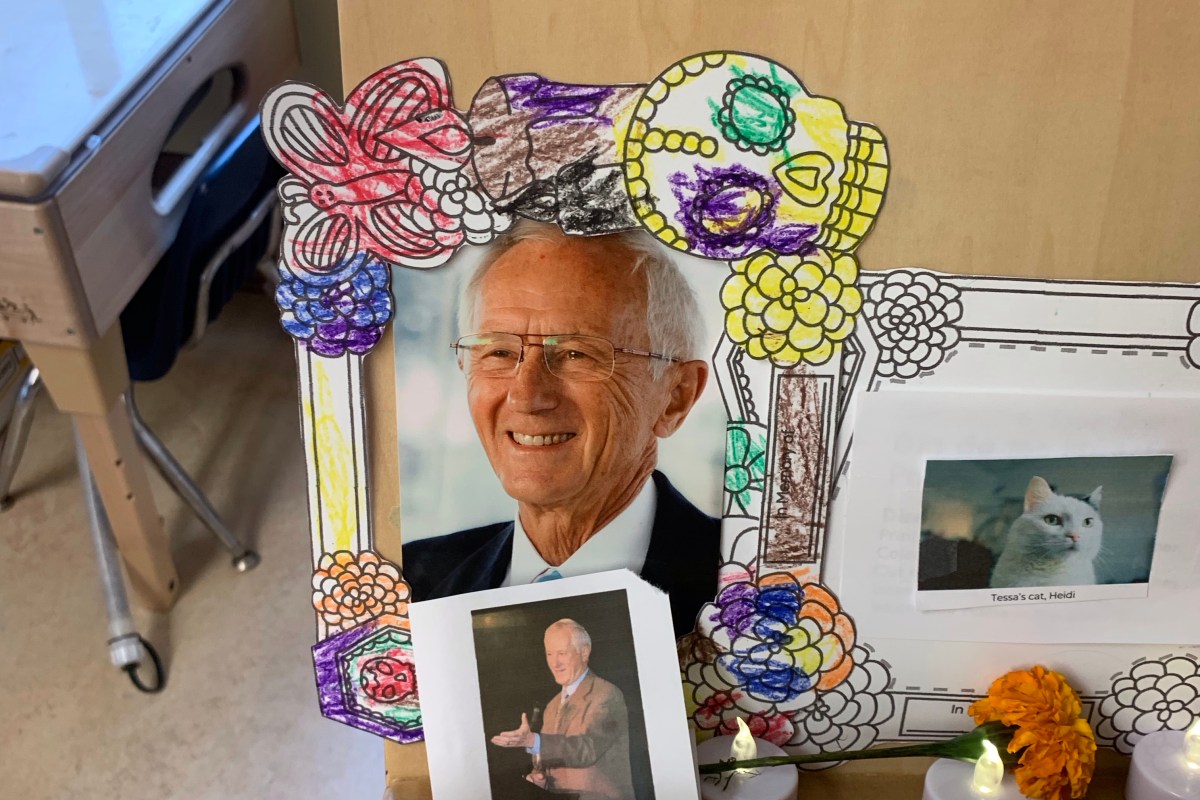
(featured photo is mine: Dick Leon, on a Dia de los Muertos ofrenda)

For another great list, please listen to Dr. Gerald Stein on the Sharing the Heart of the Matter podcast talk about Being Your Own Best Friend. Dr. Stein comes through with such wisdom and warmth as he provides some great tips for living our best lives.

Schools of Thought and Feeling

A teacher is never a giver of truth; he is a guide, a pointer to the truth that each student must find for himself.” – Bruce Lee

I once had a client tell me, with a hint of irritation in his voice, that he believed the schools of today in America were teaching kids to become socialists. There was so much in that sentence to unpack that I didn’t even touch it. But I remembered thinking at the time, that it probably had more to do with his relationship with his kids than anything else.

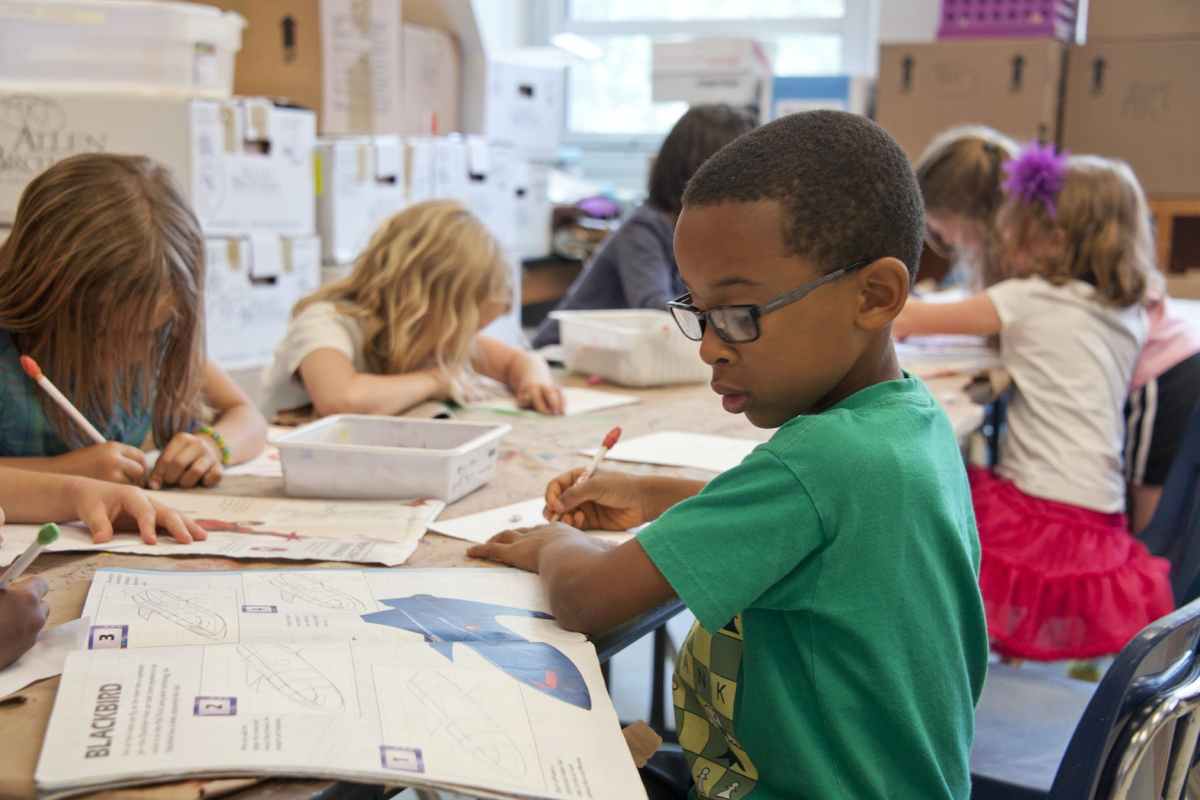
My kids weren’t school age when my client said that but now that eight-year-old Miss O has a few years in the public school system, it is interesting to notice what has and hasn’t changed since I was a kid. What hasn’t changed is the great teachers and administrators who are dedicated, imaginative, and delightful and somehow make it all work.

What I’ve noticed that has changed since I was young is how much social emotional learning they include. The kids get to school and do their mood meters and they talk about feelings, inclusion, and helping.

My kids seem to love way-back-when stories so the other day I was telling them that I remember when not-littering became a campaign and something punishable by fines. My two delightful young ones were amazed that people thought it was okay to just throw things out a car window when they were done with it.

Four-year-old Mr. D, who is not yet in the public school system, has gone on “garbage walks” since he was two-years-old. The kids would point out garbage and a teacher would pick it up with gloved hands.

So the other day when there was a piece of garbage on the ground, Mr. D pointed it out to me and said, ”It’s not healthy for the earth to eat.

The other day, Miss O was struggling with what to do next with a project and she suggested, “Instead of erasing unfairness, I could draw fairness.”

All this makes me think that what kids these days are learning in school today, in addition to the three R’s, is to be stewards. Stewards of themselves, the environment, and of others.

(featured image from Pexels)

The Environment

I cannot do all the good that the world needs, but the world needs all the good that I can do.” – Jana Stanfield

At the end of every day my house is a mess. There is litter (toys on the floor), dangerous spills (popsicle residue on the floor), waste of precious resources (water, electricity and paper), some areas have been taken over by debris (the dining room table) and I think the couch could be a Super Fund clean up site (crumbs, toothpaste and other unidentifiable debris). There is an invasive species in with the dishes (toys in the sink) and measurable climate change (I keep the house is four degrees warmer than I used to at night). Having kids is really messing with my environment.

The environmentalist Wendell Berry is credited with the profound idea that we have not inherited the earth from our parents; we have borrowed it from our children. But he must have been talking about the concept of children and not actual children who seem to naturally tend toward not worrying about limited resources.

Given the numerous stories and approaches that I’ve heard from parents, I’d guess raising an environmentalist is hard, even when the practice is limited to only their room or a play room. My friend told me her daughter once excitedly said to a guest to their house, “Come see my ruin!” A miscommunication so apt that they are still laughing about it 30 years later.

Another family tried teaching by logical consequences so that any toys left on the floor were likely to be trod upon and that must be an effective method because the girls, now in their college years, can still enumerate the toy fatalities (toy-talities?).  Eventually these kids grew up to be good stewards of their environments but not without someone helping them see the big picture and how they can make a difference.

A quote from the Dalai Lama, “Human use, population, and technology have reached that certain stage where Mother Earth no longer accepts our presence with silence,” has spurred me to action because up to this point I’ve been often opting for silence — mostly cleaning it myself rather than teaching them how.

My son goes on garbage walks with his school – the kids identify garbage and the teachers pick it up and put it in bags. My daughter loves to be organized. So I have some raw capabilities to work with and just might be able to make some good stewards of the environment out of them yet!