The Hook

Just because they are a story doesn’t mean they’re not real.” – H. M. Bouwman

I was talking to Adam, one of Mr. D’s preschool teachers who was a newspaper writer in one of his previous jobs. (I think there’s a whole post I should write of how lucky Mr. D is to have such interesting and experienced teachers). He told me that he once interviewed Jim and Lou Whittaker, the now 94-year-old legendary Seattle mountain climbing twins and entrepreneurs.

So I asked him what his favorite interview was and he said, without hesitation, Ginger Rogers. Apparently, the arts writer was sick the day Ginger Rogers came to Seattle to promote a book she’d written and Adam said he couldn’t get his hand up fast enough to volunteer. His memory of it was that “It was the closest thing to royalty I’ve ever experienced.

I bring this up because Vicki Atkinson and I did a Sharing the Heart of the Matter podcast interview with Stuart Perkins, of the Storyshucker blog. In my mind, he is part of WordPress community royalty. Part of this is strictly personal because he was the first person to follow me, and most of it is because of his ability as a storyteller. He told us he loves to use a “hook,” something to draw the reader in and it’s a tool he uses to great effect.

Talking with Stuart, we learned about his base – growing up on a plot of land in rural Virginia. His grandmother, “Nannie” had land there and gave each of her 5 kids adjoining plots so Stuart grew up in the rich base of family and garden that he describes so often in his posts. Nannie and that simple life as told in evocative, touching, and rich stories.

A great base, a simpler time, a big family of storytellers – all great hooks. Like Mr D’s preschool teacher, Adam described, I couldn’t have been more thrilled to do this interview with the fantastic and fun Stuart Perkins. I hope you’ll listen and subscribe.

Search for Sharing the Heart of the Matter on Apple, Amazon, Spotify or Pocket Casts or click here to listen to Episode 12: On Storytelling with Stuart M. Perkins on Anchor.

Show notes are on the Heart of the Matter blog: Episode 12 show notes

Putting Pen to Paper

We do not learn from experience. We learn from reflecting on experience.” – John Dewey

As part of the consulting work I do, I have four additional email boxes on top of my work and my personal email boxes. Technically, I have three more work emails than that but with fairly little flow so I don’t check them. So let’s just call it six email boxes that I check more or less every day.

It’s not that bad – I can make a quick round in the morning and evening and button most things up which gives me that sense of completion of having things finished, and if not finished, at least tied down.

But this week, a couple things happened and I got buried under an avalanche of email. First, I volunteered to chaperone a field trip with my daughter’s 2nd grade class. It was wonderful – I wouldn’t have missed riding on a school bus to the Seattle Center, seeing a play, eating lunch, and then playing at a playground with those fantastic kids for anything.

But my daughter left her coat on the playground and I ended up driving back down to Seattle Center and picking it up after the field trip ended. It turned a 4.5 hour commitment into something like 6 and then between picking up and dropping off my kids, I essentially got nothing done for an entire day.

The second thing that happened was that one of my clients had a crisis so all his email flowed into my box and I had to sort out what was a priority and what was not without much context or foundation.

Suffice it to say, I have emails coming out my ears. My nice and tidy practice of at least skimming them has blown up, at least temporarily.

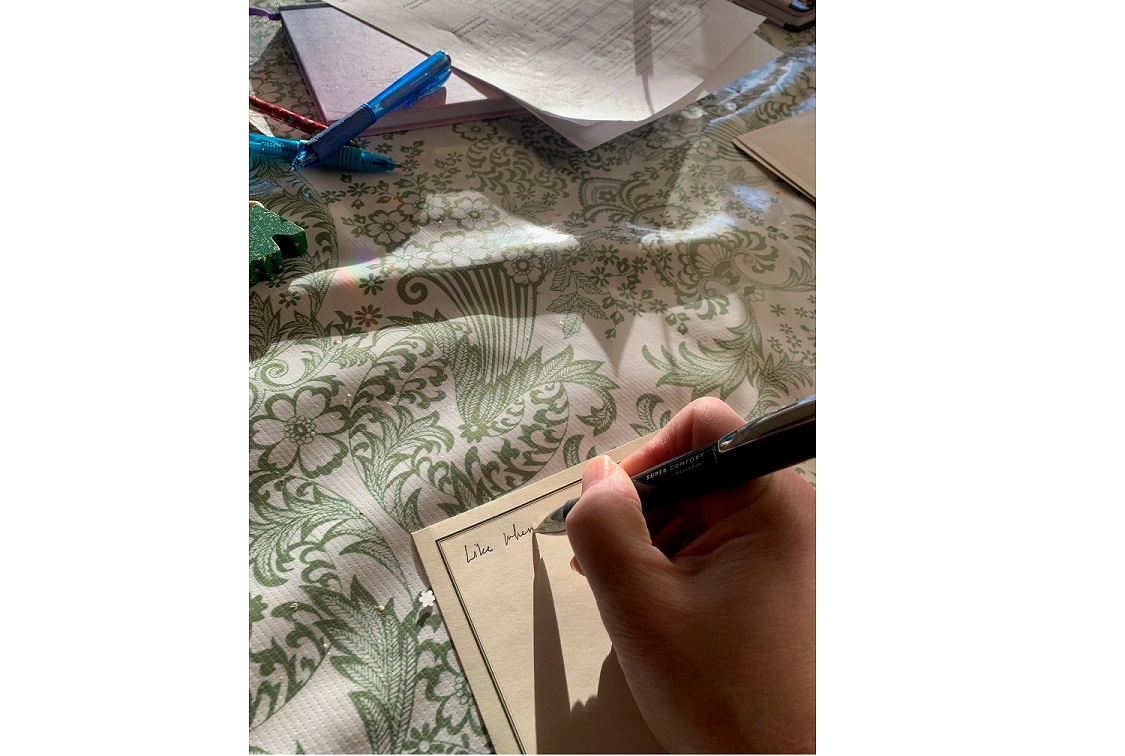
Amidst this electronic mayhem, I sat down to write a thank you card and a birthday letter. Old-fashioned, put the pen to the paper, nothing electronic involved, notes.

It was a wonderful experience for me – the words and images flowed in a different way than if I’d been at the keyboard. Instead, I sat at my dining table late at night after I put the kids to bed and wrote down what was on my mind.

I slowed down and really thought about the words I wanted to choose. And when I’d written my way into a sentence that didn’t work, I had to pause to think if I could weave my way out or if I’d have to take that terrible step and scratch out a word. In that pause, I wondered why I’d used a particular word.

In theory that’s what I do when I write an email as well. Except that other emails come in, I get distracted by a new notification of a WP post, or I want to look up facts and figures to go with some line of thinking. Then the result is more like an edited research paper than a narrative of life.

Sure, I’ll catch up on my email (or I won’t – apologies to anything I’ve missed this week), but I’ve made a note to myself (in long-hand) to remember to keep slowing down and writing something meaningful now and again.

And the timing of this letter writing couldn’t have been more fortuitous because Vicki Atkinson and I talked with artist and writer, Libby Saylor, about journaling, including the benefits of writing things out by hand, in the latest episode of the Sharing the Heart of the Matter podcast: Episode 11: How to Journal the Right Way with Libby Saylor.

The Feeding and Nurturing of Life

Love and compassion are necessities, not luxuries. Without them, humanity cannot survive.” – Dalai Lama

On Wednesday morning this week, I was driving the kids to school on the circuit around the lake and I felt softer and more patient. I appreciated the routine and the little people in my life more. I realized that it was because I’d just finished reading “Grow Damn It: The Feeding and Nurturing of Life” by author and blogger Cheryl Oreglia.

I clipped 23 quotes from my first reading of this book. And that was while trying to be mindful not to clip everything. Then I had the privilege of doing a Sharing the Heart of the Matter podcast with Cheryl to talk her journey and this book: Episode 7: Grow Damn It!

One of the stories Cheryl told me on the podcast was the one where she wrote a blog post and Krista Tippett of the On Being project (first aired on public radio, now as a podcast) tweeted about it. Cheryl laughingly said she assumed the technology was broken when she saw her stats after that.

In this great conversation, we got to talk about how the little stories make up the big picture, her journey to create this beautiful book, and asking people all the important questions before they go. I felt softened by reading the book and then I felt enriched after this beautiful conversation with Cheryl.

Cheryl said to me something like, “I know this book is not for everyone.” I agree – it’s only for people who want to feed and nurture their life – and laugh while doing it.

So if you do want to feed and nurture your life, please visit Cheryl’s blog, Living in the Gap, read the book, and listen to this podcast Episode 7: Grow Damn It (link opens the podcast to listen on Anchor). You can also find the podcast on Apple, Amazon, Spotify and Pocket Casts by searching for Sharing the Heart of the Matter.  Please subscribe!

Here’s link to the show notes on the HoTM site: Episode 7: Grow Damn It! show notes

I Have No Words

Dogs do speak, but only to those who know how to listen.” – Orhan Pamuk

When I first started this blog, it was mostly a place for the pictures I took of my dear dog, Biscuit, and the signs he’d pose with. And even though I wrote them, I swear I was channeling his sweet and funny messages, referee calls, and commentary on life. Every once in a while the cat would get to pose with a sign as well. Here’s a slideshow of some of his best signs:

So I felt wordless when Biscuit died six years ago at almost 14-years-old. The day after he passed, all I had was a sign for the cat who seemed equally as lost:

That space and time we need to find our words again after something monumental has happened in our lives is the subject of my Wise & Shine post for today: Writing From The Heart

The Flip Side of Writing

You think your pains and your heartbreaks are unprecedented in the history of the world, but then you read. It was books that taught me that the things that tormented me most were the very things that connected me with all the people who were alive, or who have ever been alive.” – James Baldwin

I think I’ve been ruminating for the past week or so about the idea of reading ever since I saw Davy D’s post What Kind of Reader Are You? Because when I woke up yesterday morning with no idea what I’d write about for my Wise & Shine post today, it popped in my head that what we all have in common on this platform is that we are readers.

Given the descriptions Davy provides, I relate to being a Skim Reader. When I was talking about this with my dear friend, she told me her husband who reads so thoroughly that the Kindle estimates about how much time is left to read a book actually go UP the longer he reads. They joke that the author must still be writing when her husband reads.

But whatever kind of reader we are, we create a space that we inhabit, even if briefly, with the author. My post today for Wise & Shine reflects on what a gift that is: The Ultimate Reader.

Leaps of Possibility

I am convinced all of humanity is born with more gifts than we know. Most are born geniuses and just get de-geniused rapidly.” – R. Buckminster Fuller

There’s a line from the Cars movies, “He saw things in you that you couldn’t see in yourself.” Because my kids like Disney movies in general and that series of movies in particular, I’ve heard the line a lot. Every time it touches me with that tingle of significance.

Especially in this last month since Vicki and I started, with a group of great writers and thinkers, the shared blog The Heart of the Matter and podcast Sharing the Heart of the Matter. This endeavor has been filled with intense learning for me. First with very specific skills like figuring out how to put together sound files for the podcast. But also in a greater sense of encouraging and being encouraged by others.

It’s reminded me that self-awareness doesn’t just mean knowing our limits – but that sometimes others can see things in us that we can’t see in ourself. When we trust the other people around you, it feels like it speeds up the growth because they help us take leaps of possibility.

Self-awareness is the topic of my post for The Heart of the Matter today, Here’s Looking At You, Kid And while you are there, check out the rest of the site and subscribe – if just for the sense of possibility!

(featured photo from Pexels)

Creative Restoration aka Mouping

Creativity is the power to connect the seemingly unconnected.” – William Plomer

By the time my kids went back to school on Tuesday of this week, we’d been together for 11 days. Christmas, New Year, a few days at an AirBnB on the coast – all great things. But I imagine like a lot of people, the days without a predictable rhythm, rich foods to eat, and special events have left their mark. The house is a mess, my body is out of whack, and my mind needs some help settling down.

I have a young friend, Alia, who told me she made up a name for creative restoration – mouping. When she’s mouping, she’s drawing, crocheting or doing something else creative but also a little mindless and repetitive.

It reminds me of the advice that scrolling social media is not restorative (why is it that I have such trouble putting the phone down?). But doing something like coloring or my recent favorite, glass mosaics, feels to me much more therapeutic.

Trying to connect the dots on why this might be makes me think of something I learned from Brené Brown: “unexpressed creativity is not benign – it’s malignant.”

Here’s one of the points the Brené makes about what she’s learned about creativity from her research:

“If we want to make meaning, we need to make art. Cook, write, draw, doodle, paint, scrapbook, take pictures, collage, knit, rebuild an engine, sculpt, dance, decorate, act sing – it doesn’t matter. As long as we’re creating, we’re cultivating meaning.”

Brené Brown in The Gifts of Imperfection

When I’m in the rush of the holidays, I am spending my time interacting with others at best, and reacting to others at the most exhausting points. But mouping feels like changing the rhythm — moving from ping pong to tai chi. It’s reestablishing the flow of life and balance that exists within me that I’ve suppressed when surrounded by others.

Alia texted me her explanation, “It’s one of my favorite things I’ve done for myself. It doesn’t mean I’m just hanging out when I could be doing other things but is dedicated time to recharging bc that time is just as necessary for me as checking things off a list is. 😊”

I have to say that I’m impressed she’s figured this out at 23-years-old (and actually she started mouping as a teenager) because I’m just now putting my finger on what really works to help renew me. Even Brené didn’t figure it out til she was in her 40’s.

But whenever we figure it out, it’s helpful to know that time mouping is not frivolous but something that helps us cultivate meaning.

Podcasting

Your first podcast will be awful. Your first video will be awful. Your first article will be awful. Your first art will be awful. Your first photo will be awful. But you can’t make your 50th without making your first. So get it over with and make it.” – unknown

I was recently interviewed by Troy Headrick on the Wise and Shine podcast about my creative process. It was my first time and if I haven’t set your expectations too low with the quote above 🙂 and you are interested in listening, here’s a link to the podcast: Wynne Leon On Writing and the Creative Process Or you can search on Spotify for Wise and Shine and find it there (and subscribe).

After we were done, Troy asked why podcasts are so popular since there are at least 2 million out there (more if you could episodes). So I’m throwing that out as a question. Anyone have any theories?

List of Lists

Love is patient, love is kind. It does not envy, it does not boast, it is not proud. It does not dishonor others, it is not self-seeking, it is not easily angered, it keeps no record of wrongs. Love does not delight in evil but rejoices with the truth. It always protects, always trusts, always, hopes, always perseveres.” – 1 Corinthians 13:4-7

My engineering brain like lists to create order. But I think that lists can also be used in the creative process as a powerful writing tool. The quote for this post is 1 Corinthians 13 which must be one of the most often quoted verses and lists of what love is and is not.

Lists are the topic of my Wise & Shine post today: Give Me a List

More Lists

And as a bonus, here’s a list of some of my favorite WordPress lists:

Endless Weekend’s Top 5 Halloween Theme Comedy Shows:

Staying with the Halloween theme, Todd Fulginiti has a list of his Halloween Hall o’ Fame

One of my all time favorite lists is one Jack Canfora did when he turned 53 maybe because it made me feel more prepared to turn 53 in two months hence: Things I Think I’ve Learned so Far

And my last list is one I published from Miss O from her first grade journal on this blog with her permission:


And to bring the list full-circle to a conclusion, there are more links to lists in my post today on Wise & Shine: Give Me a List

The Story of Life

Just because they are a story doesn’t mean they’re not real.” – H. M. Bouwman

I was listening to Brené Brown’s podcast, Dare to Lead last night and the first question she asked her guest was, “Tell us your story.”

It is probably an offshoot of my dad – who loved parables more than directives and could tell a great story – but I love stories. Hearing them, telling them and the way they stick with you. Like yesterday, I read Ally Bean’s story of the self-scan mishap and then when I went to the grocery store, I chuckled all the way through check out.

So stories are the topic of my post this week for Wise & Shine: The Power of Story.

(featured photo from Pexels)