My Go-To Metaphor

One climbs, one sees. One descends, one sees no longer, but one has seen. There is an art in conducting oneself in lower regions by memory of what one has seen higher up. When one can no longer see, one can at least still know.” – Rene Daumal

This was originally posted on another blog on 7/19/2023 and I’m republishing here to consolidate. Heads up – you may have already read this.


I recently had one of those weeks. You know the kind I mean? The ones where you have to dig extra deep to stay focused and get everything done but there’s a payoff at the end? Like the week before vacation where you have to get your work projects in order, home projects in order, buy extra food for the cat sitter, set the watering system, and pack all the while still feeding, watering, and caring for yourself and your family.

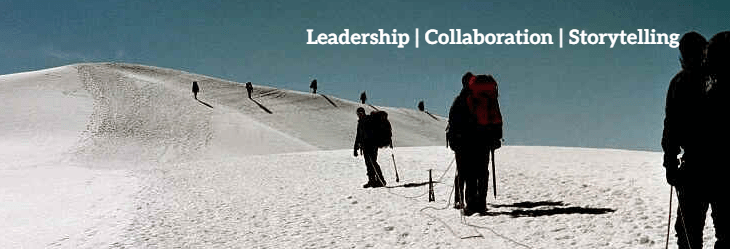
So, during this particular week I kept coming back to my go-to metaphor for life: mountain climbing. That’s the one that sticks for me even though I haven’t climbed a proper mountain in ten years.

One step at a time: For any mountain that I’ve climbed, there is a moment in the parking lot that I look up at the summit, or what I can see of it from the base, and doubt that I have any chance of reaching that point in two or three days time. The mountain looks massive and my stride looks incomparably small. But seeing the task ahead of me, I shoulder my pack, and start one step at a time.

Rest breaks: The first time I climbed a mountain it was with a guide named Jason. For every hour we climbed, we took a 10 minute rest break and he would lie down on the breaks. He had a simple philosophy: Why stand when you can sit and why sit when you can lie down? He was a master of not only making sure we stopped to care for ourselves, but also capitalizing on that time.

Team work: On the higher reaches of most mountains we rope up in teams of five or so, with about 30 feet of rope between each climber so that if someone falls, the rest of the team can dig into the snow with their ice axes. This method either keeps them from falling very far, or serves an anchor to pull the climber out if they’ve fallen into a crevasse. Is there a better metaphor for remembering that others are there to help us?

Self-care tricks: When you stop to rest, especially during the pre-dawn hours, the sweat instantly freezes on your skin and you get really cold, really quick. So the trick is to have your parka handy. And here’s the key, you load your parka pockets with yummy snacks so that when you put it on, it’s like one-stop shopping. By yummy snacks, I mean trail mix with candy mixed in or your favorite nuts, not protein bars that are going to look, feel and chew like leather. Because when you’re so incredibly tired that feeding yourself feels like a chore, it has to be appetizing and handy.

Set a turn-around time: The idea of a turn-around time makes me think of the guide Rob Hall who died on Everest in 1996. He was so focused on getting his client to the top that he ignored the time he had told his team they would turn-around no matter whether they’d summitted or not. While the consequences are usually not nearly as dire, there is often a similar limit in life, whether it be bedtime or the time you have to leave for the airport. There’s a moment where you just have to stop what you are doing and call it good.

The slide down: One of my favorite mountains to climb is Mt. Adams in Washington State. We leave our camp in the middle of the night to head for the summit. About 20 minutes out of camp there’s a 50-degree slope that takes hours to tackle. But what takes about five hours to climb only takes 45 minutes to slide down on our butts for one of the best payoffs ever.

So that’s my metaphor for life – climbing. I haven’t even touched on false summits, the rest step, and the pressure breath. When I’m tackling something hard, it works for me to envision the components that will get me through: put one step in front of the other, take regular rest breaks, rely on my teammates, make it easy to take care of oneself when things are hard, set a limit for when you have to stop and then enjoy the payoff.

What’s your go-to metaphor?

You can find me on Instagram @wynneleon and LinkedIn: https://www.linkedin.com/in/wynneleon/

I co-host a storytelling podcast featuring authors and artists with the amazing Vicki Atkinson. To tune in, search for Sharing the Heart of the Matter on Spotify, Apple, Amazon Music or Pocketcasts (and subscribe) or click here. Or the YouTube channel features videos of our interviews. Please subscribe!

My other projects include work as a CEO (Chief Encouragement Officer), speaking about creativity and AI through the Chicago Writer’s Association, and my book about my journey to find what fueled my dad’s indelible spark and twinkle can be found on Amazon: Finding My Father’s Faith.

Confession of an Over-Exclaimer

Never use abstract nouns when concrete ones will do. If you mean ‘More people died,’ don’t say, ‘Mortality rose.’” – C. S. Lewis

This was originally posted on another blog on 2/7/2024 and I’m republishing here to consolidate. Heads up – you may have already read this.


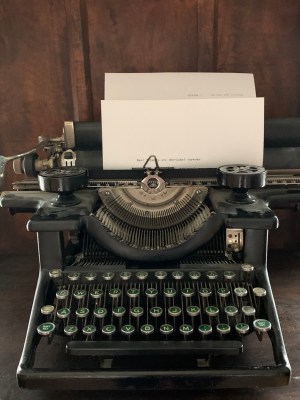
I recently had an opportunity to use a vintage typewriter. I’ve included a picture below for reference. My kids and I visited a friend and he had this beautiful and functional typewriter.

I found myself so excited to show my kids some of the sounds that come with my romanticized view of typewriters. The clack of the keys, the ding at the end of the line, and the zzzhhh of the carriage return. I rolled in a piece of paper so my eight-year-old daughter, Miss O, could give it a try.

Sheesh, it takes more finger strength than I remember. Especially for the pinkies.

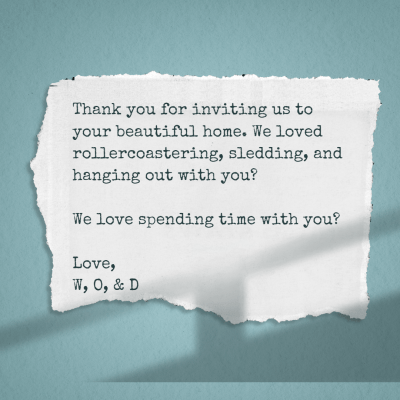
Knowing that I wouldn’t have a chance to mail our host a thank you note and have it arrive before he left on a vacation, I decided to type him a thank you note. And that’s where it all started to go wrong. I didn’t have my glasses on but I’m a decent touch typist so I figured I was fine. [aside: beth’s I didn’t have my glasses on is one of my favorite blog names and is such a delightful read]

Just as I was rolling out the piece of paper, Miss O came back into the room to see what I was doing. I handed her the note. She read it and laughed. “It’s great except you used question marks instead of exclamation points.

It read something like:

Taking a closer look, the typewriter didn’t have an exclamation point. It didn’t even have a number one key (use lower case L?). To do an exclamation point would have meant typing a period, backing up the carriage and then doing a single quote.

No way I would have done a lot of exclamation points if I was using that typewriter for my missives. But I use them all the time when I write – and especially comment these days. Seems like I might be using punctuation as a crutch instead of choosing the words that convey enthusiasm.

In retrospect, I’ve rewritten it without exclamation points:

What do you think? Better with exclamation points or without? Do you use them?

(featured photo from Pexels)

You can find me on Instagram @wynneleon and LinkedIn: https://www.linkedin.com/in/wynneleon/

I co-host a storytelling podcast featuring authors and artists with the amazing Vicki Atkinson. To tune in, search for Sharing the Heart of the Matter on Spotify, Apple, Amazon Music or Pocketcasts (and subscribe) or click here. Or the YouTube channel features videos of our interviews. Please subscribe!

My other projects include work as a CEO (Chief Encouragement Officer), speaking about creativity and AI through the Chicago Writer’s Association, and my book about my journey to find what fueled my dad’s indelible spark and twinkle can be found on Amazon: Finding My Father’s Faith.
Transforming Criticism into Creative Fuel

Focus more on the people who inspire you rather than annoy. You’ll get much further in life.” – Kristen Butler

This was originally published on another site on 12/13/2023. Heads up – you may have already read this.


I was listening to social scientist and author, Arthur Brooks talk with Oprah on her Super Soul Sunday podcast. He was talking about the human tendency towards negativity bias. His example was something like we go to a lovely holiday dinner and have a great time – except for the 20 minutes when Aunt Polly went on a rant. And what do we remember afterwards? Aunt Polly’s rant.

I suppose I knew this to some degree before but it was gratifying to find out that this isn’t just a me thing. It’s a survival mechanism that helps us identify the sticky spots. Safe to say, it’s a little maladaptive at times in our modern society.

I realized that one of the places that I do this is in writing. I often draft a piece thinking about the naysayers in the audience. After listening to Arthur Brooks, I noodled on this practice. I think writing with critics in mind has some advantages – like developing a fuller view of my position and for motivating my inner editor.

But I can’t type when in a defensive crouch.

Thinking of some of my favorite lines from authors:

Tell me, what is it you plan to do with your one wild and precious life?” from Mary Oliver.

Or from John O’Donohue:

When you beautify your mind, you beautify your world. You learn to see differently. In what seemed like dead situations, secret possibilities and invitations begin to open before you. In old suffering that held you long paralyzed, you find new keys. “ – John O’Donohue

These examples touch me in my bones in a way that makes me know they were written from the expansive space of possibility instead of the small space of fear.

Some of my best words have come when I’m surprised into them – I’ve laughed my way in or come fresh from sleep before my inner critic has arisen. Other times, I find I have to shift my posture – actually stretch or move out of that hunch over the keyboard that I naturally fall into. Anything to open the heart space in the front of my body as a physical reminder to let the words flow from my heart.

Maybe a rant from Aunt Polly is memorable. But the feeling of being touched from the inside out leaves a different kind of mark. One of possibility and inspiration. I’d much prefer the latter.

(featured photo is mine)

You can find me on Instagram @wynneleon and LinkedIn: https://www.linkedin.com/in/wynneleon/

I co-host a storytelling podcast featuring authors and artists with the amazing Vicki Atkinson. To tune in, search for Sharing the Heart of the Matter on Spotify, Apple, Amazon Music or Pocketcasts (and subscribe) or click here. Or the YouTube channel features videos of our interviews. Please subscribe!

My other projects include work as a CEO (Chief Encouragement Officer), speaking about creativity and AI through the Chicago Writer’s Association, and my book about my journey to find what fueled my dad’s indelible spark and twinkle can be found on Amazon: Finding My Father’s Faith.
Use Your Words

One ought, every day at least, to hear a little song, read a good poem, see a fine picture, and, if it were possible, to speak a few reasonable words.” – Johann Wolfgang von Goethe

As a mom of a 4-year-old and 8-year-old, I frequently find myself using the phrase, “Use your words.” The other day, my youngest wanted something on a high-up shelf and was pointing to it. I looked up and there were only like a gazillion possibilities. So I said, “use your words.”

At his age, his words are imprecise. Last night could mean the night prior but it could also mean anytime in the past. Orange might be anything on the spectrum between yellow and magenta. But even words that don’t guide directly are more helpful than guessing.

It made me think about all the ways we can use words, especially in writing. Here are three of my favorites:

Direction-instruction

Our ability to teach other people what we know or have discovered is astounding. If I had to draw it out or act it out, we’d all be here for a LOOOONG time.

“The capacity to learn is a gift; The ability to learn is a skill; the willingness to learn is a choice.”

Brian Herbert

Whether I’m reading how to replace a board on my deck or the finer points of philosophy, I’m so grateful that others use their words to communicate what they have learned because it helps me immensely.

Process-connect

“The words you speak become the house you live in.”

Hafiz

I frequently don’t understand “life.” I wend my way through the day and it seems like there are some unifying threads running through it if I could just see it from enough distance. But then I slow down to write it down and something magically pops. Here’s an example.

The other day a co-worker unloaded in an out-of-character way. I was so surprised and impacted by this that I wrote it down as a story, simply for my own use – almost a transcription of “they said” and “I said.” By the time I’d gotten the words out, I felt as if I’d created a storage space for the event; a way to buffer the rest of my day so that the after-effects of my conversation didn’t layer on to all the rest of my interactions.

Then two days later I got an email from the co-worker apologizing. They let me know about some personal stuff going on that colored their conversation with me. We can process it now (and maybe save ourselves from having to apologize) or we can process later, but putting words to the experience helps sort it all out.

One of the most impactful ways I think we use words is this full-circle processing and connection. We write to understand and then, for the stuff we publish, it connects us to others and their experience.

Amuse-entertain

At bedtime the other night, I was warning my 8-year-old daughter not to hit her brother. She retorted to me, “What? Do you want to me to grow up all Martin Luther King like non-violent?” I was so surprised by the out of the blue reference that I not only stopped talking, but also burst out laughing. And then we were all giggling and whatever had caused the kerfuffle was forgotten.

Words have magical power. They can bring either the greatest happiness or deepest despair.

Sigmund Freud

Yes, I do want my kids to grow up all non-violent. They probably have a better chance of that if they remember to use their words, hopefully in ways that invoke the best use of that magical power.

(featured photo from Pexels)

The Whole-Hearted Profile

Very often what people would accurately claim as what they DO isn’t where they want to GO.” – Dr. Vicki Atkinson

I wonder if Leonardo da Vinci would have had trouble creating a LinkedIn profile. Here’s how Wikipedia describes him: painter, draughtsman, engineer, scientist, theorist, sculptor, and architect.

We might not have a list as long as da Vinci’s but we’re all Renaissance people to a degree, right? People who pivot between roles and evolve to own different titles throughout life. Writers, moms or dads, professionals, leaders, caretakers, gardeners, woodworkers, advocates, seekers, athletes to name a few.

A few months ago I asked my dear friend, Dr. Vicki Atkinson, for some tips about updating my LinkedIn profile. And then I sat on her expert advice for two months because marketing one’s self seems so vulnerable.

When I sat down to actually follow her clear and helpful advice, it only took me about 90 minutes. So we podcasted about this effort to build profiles that honor all our facets.

Dr. Atkinson has so much good guidance on how to build a presence that reflects our many facets. Her professional experience as a career counselor, therapist, and educator comes shining through in this episode. We learn some great how-to’s in this episode.

I found updating my LinkedIn profile to be challenging. I have 30+ years in the technology industry and I’m unsure how to marry that with my writing and experience as an author.

So Vicki walks me through using headlines instead of titles. She provides a great tip about using tags to introduce some dynamism into our profile and ability to be found.

Dr. Atkinson talks me through the idea of integrity as it applies to building a profile that honors ALL of who we are. As we pivot from professional experiences, interests and passions, she coaches us to do the story-telling to paint a picture of our whole-hearted experience.

And finally, we talk about the use of images to compliment our presentation.

I’m confident you’ll learn a lot — and also love the scenic and beautiful places we explore as we share the power of storytelling in our profiles.

We know you’ll love it!

Search (and subscribe!) for Sharing the Heart of the Matter on Apple, Amazon, Spotify or Pocket Casts OR Listen to it from your computer on Anchor: Episode 87: LinkedIn Tweaks for Authors with Dr. Vicki Atkinson

AND subscribe to our YouTube channel to see a video clip of each story: @SharingtheHeartoftheMatter.

Links for this Episode:

HoTM episode 87 transcript

PDF presentation of Vicki’s recommendations and LinkedIn changes

Wynne Leon | LinkedIn

Dr. Victoria Atkinson, Ed.D. | LinkedIn

It’s Never Too Late for Courage – Victoria Ponders

Realizing Potential – Victoria Ponders

Vicki’s book: Surviving Sue

Speed Reading

No two readers can or will ever read the same book, because the reader builds the book in collaboration with the author.” – Neil Gaiman

This was originally published on 10/11/2023. Heads up – you may have already read this!


I’ve been speed reading blogs lately. My apologies to anyone with whom I haven’t done a good job of keeping in touch. Somehow, I got behind (I say it somehow like I don’t know how, but we all know how life piles up sometimes). Then with notifications that I had 200+ blogs to read, just from the blogs that I follow, I endeavored to speed read my way through.

Interesting thing though. When I did that, I got a glimpse of the bigger picture of our collective writing. Something like flipping through a book with a drawing in the corner to get the feel of animation. I picked up Word Press like a magazine to thumb through and get a sense of what kind of publication it was.

We all have a story to tell

It’s magical when we are treated to another person’s story. We get a little moment of being able to inhabit someone else’s shoes. In the posts I sped through, I found so much vitality created by writers opening up a vein, to steal from Ernest Hemingway, and leaving a bit of themselves on the page.

The narratives range from trauma to kindness, optimistic to pessimistic, factual to fiction which makes it hard to figure out what this collection has in common. But my speed read led to an a-ha. What binds it together is a rich tradition of story-telling.

We are trying mightily to understand what it all means

To borrow another writing quote, Anne Lamott said “Books help us understand who we are and how we are to behave.  They show us what community and friendship mean; they show us how to live and die.” There is something in the practice of putting words on a page that defines the outline of what we are trying to live. And as we draft new versions, we keep reshaping what that looks like. We are writing things into life.

It seems this was even more palpable during the beginning of the Covid pandemic when we were faced with something most of us had never seen in our lifetimes. Collectively we were trying to understand the landscape of socialization and security as conditions changed. We faced fear and grief by writing about it.

Now that those concerns have receded, or at least become a familiar backdrop, I see us wrestling with love, parenting, the state of our planet, success, family, aging. Sometimes with humor, and other times with tears, but we show up on the page as real people writing it out.

There is a beautiful persistent vibe of trying to get better

That leads to the final gem that I gleaned from the pile of posts I sped through. There was a consistent spirit of trying to share knowledge. The collective is telling their stories, processing life through writing, and when we learn a lesson, we memorialize it in words.

This might be the highest hurdles of our collective writing. How to offer up the individual lessons so that others can heal and learn. What I noticed is that we are learning through teaching. Often humbly, and with a dose of personal perspective, but as Yale sociologist Nicholas Christoff says, one of the incredible things we do as humans is cooperate with genetically unrelated individuals, “We teach each other things. People take this for granted, but it’s actually unbelievable.

iWe are publishing a magazine every day. A lifestyle magazine. An inspirational writing journal. A guide to healing. I’m sorry I’ve missed your individual posts but I’m glad for the opportunity to thumb through this magazine. Well done!

(featured photo from Pexels)

Life is Like Legos

Learn the rules like a pro so you can break them like an artist.” – Pablo Picasso

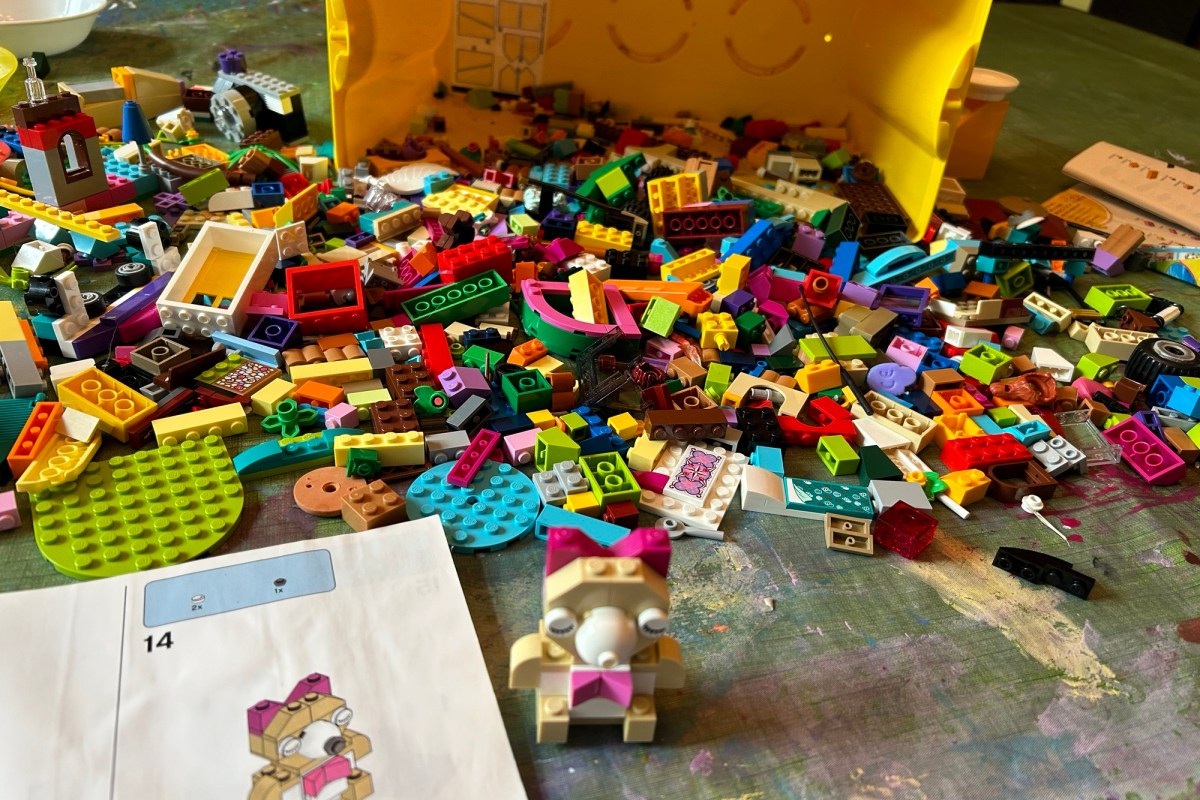
This weekend I played a lot of Legos with my kids. Mr. D was building a house, finding any square or rectangular pieces and putting them together.

I was following an instruction booklet to build a teddy bear. I spent most of my time looking through the 800 pieces for pieces the size of my pinky fingernail that were the right size, shape and color to match the instructions.

It struck me that life in general, and creativity specifically, is a lot like building Legos. We start out life creating off the cuff – listening to our gut, stacking and combining from what’s available. It’s intuitive and faster but it’s not long before we are told there are norms and expectations we are supposed to be adhering to.

Then we discover the instruction booklet and shift into making the prescribed things. In this mode, we make things that cutely and appropriately match other people’s expectations and instructions. But it takes a lot longer to find exactly the right pieces and we have to guard the pieces we find really carefully lest someone else takes the only one that will fit the specifications.

Once I was done building my teddy bear, I discovered a third way. I started building a structure with some of the remnants of our past creations. It built on both the structured and unstructured components. I went back to working like Mr. D and listening to my gut.

Seems like this is a great place to get to in creation and in life – where we can still be mindful of others, incorporating what has already been built, but leave the instructions behind.

The Inspiration to Write: A Short Vignette

Sometimes the questions are complicated and the answers are simple.” – Dr. Seuss

This post was originally published on 8/23/2023. Heads up – you may have already read this.


I was sitting at my kitchen table working yesterday afternoon, trying to tie up the last few items before closing my laptop and going to get my kids when the doorbell rang. It was the <ding-dong><ding-dong><ding-dong> of repeated bell pushes used most frequently by the 7-years-old and under set.

So I wasn’t surprised to find the 6-year-old twins from four doors down the street hanging out on my porch. “We’ve come to see the puppy!” they announced in unison. Maybe a twin thing although these aren’t identical and I’m not sure if the twinning mind meld thing happens with all twins or if this was a fluke. But it was convincing enough that I held the door open wide to let them in, and we walked out to the yard.

I introduced them to the puppy and said, “I have to get back to work.” The more talkative one, Twin 1, said, “Okay, we’ll stay out here and play.”

And then the quieter one, Twin 2 said, “But do you have scissors to cut this tag off?” Pulling out a dog toy from her side.

Twin 1 interjected, “That toy is for our puppy!” And Twin 2 replied, “But Mom handed it to me on our way out.”

I said, “I have to get back to work.

They said, “Okay.”

After a few minutes, they came in from the yard to where I was working and thought to ask, “Where are your kids?” I replied that they were at camp and school. Twin 2 said, “I’m hungry.

I said, “Oh, I’m sorry. I have to get back to work and can’t make a snack right now but if you come back…”

Twin 2 said with a smile, “No problem, I can get the snack myself.”

Twin 1 said, “Where’s the cat?” I explained she was probably in my bedroom because she’s upset about the puppy. Twin 1 said, “Oh, I know where that is, I can go on my own” and left the room.

I felt myself shrugging my shoulders and smiling at this random interruption when I heard rustling noises from my pantry. Twin 2 reappeared with her cheeks full of food, and said, “You have good nuts.

I said “thank you” and was still chuckling when the twins older sister appeared at the door and took them home.

No point to this – I just was thinking that maybe Dr. Seuss worked from home.

Where have you gotten your inspiration to write today? Any twins show up on your porch lately?

(featured photo from Pexels)

Your Favorite Quotes About Writing

Writing also makes you process memories in a different way. You have one idea and then remember another. It’s like each one is a cow in a field, and you have to round them all up.” – Michael J. Fox

Last week I posted my favorite quotes about writing. This week, I’m sharing the fantastic quotes shared in the comments. Each quote is posted along with the link to the thoughtful contributor (and their blog) that submitted it.

Thank you all for sharing this amazing wisdom!

“Fill your paper with the breathings of your heart.” – William Wordsworth

Contributed by Dana at Regular Girl Devos

“When in doubt, write.” – Mark Twain

Contributed by Jane Fritz from Robby Robin’s Journey

“I can shake off everything as I write; my sorrows disappear, my courage is reborn.” – Anne Frank

Contributed by Endless Weekend

“Write what you know.” – Mark Twain

Contributed by Brad Borlund

“I write entirely to find out what I’m thinking, what I’m looking at, what I see and what it means.” – Joan Didion

Contributed from Brian from Writing from the Heart with Brian

“” I want to write so well that a person is 30 or 40 pages in a book of mine … before she realizes she’s reading.” – Maya Angelou

Contributed by Rebecca Cuningham from Fake Flamenco

“If there’s a book that you want to read, but it hasn’t been written yet, then you must write it.” – Toni Morrison

Contributed by Kym Gordon Moore from From Behind the Pen

“Habitual handwriting opens up space for generating good ideas, organising them on the page and constructing nuanced vocabulary choices.” – Dr. Hetty Roessingh, professor emerita University of Calgary

Contributed by Edward Ortiz from Thoughts about leadership, history, and more

(featured photo from Pexels)

My Favorite Quotes about Writing

I love quotations because it is a joy to find thoughts one might have, beautifully expressed with much authority by someone recognized wiser than oneself. ” – Marlene Deitrich

This post was originally published on 8/30/2023. Heads up – you may have already seen this.


I think it’s safe to say that writing is the subject that I’ve studied longest. Sure, it started with just grasping the pencil with some dexterity and has developed through school essays, technical writing, and now to developing a personal angle with memoir writing, and blogging. But whatever the genre, it feels like an incredibly rich and vast subject of study.

So here are five of my favorite quotes about writing.

What are your favorite quotes for writing inspiration?