When the Clouds Roll In

One climbs, one sees. One descends, one sees no longer, but one has seen. There is an art in conducting oneself in lower regions by memory of what one has seen higher up. When one can no longer see, one can at least still know.” – Rene Daumal

Twenty-three years ago when I was practicing to get ready for a five-day expedition on Mt. Rainier, my friend Jill and I went up to the mountain to do a day climb up to Camp Muir at 10,200 feet. It’s is a non-technical climb of almost 5,000 vertical feet starting on trails and then trudging up the Muir snowfield which is snowy but not glaciated. On that June morning it was a lovely 4-5 hour hike up with views of the mountain and surrounding peaks to the south. It was early enough in the season that there were a few people on the route but it was comparatively quiet to the really busy high summer season.

When we got to Camp Muir, we sat on a rock outcropping and were eating our sandwiches when we saw the clouds coming in. They started from below and then just rolled up the mountain, thick and gray. Jill had summitted Mt. Rainier the year before, I had attempted it but not summitted so even though we didn’t have a lot of experience, we had heard warnings of how conditions on the mountain could change quickly with dire consequences.

Jill and I started hiking down and very soon were enveloped in the clouds. It was so thick, we couldn’t see the route. If you hike straight down from Camp Muir, you end up off the snowfield and in dangerous glacier territory strewn with crevasses. So Jill and I searched for the wands left by the guiding service. We couldn’t see from one wand to the next one about 150 yards away so we developed a strategy. We’d hike down about 50 yards from one wand until we could just barely see it and I’d stay there while she went down about 50 yards until she could see the next one and then I’d join her and we’d walk together to the next wand. It took us several hours to get down but eventually we reached the paths and got safely to the parking lot.

This hike makes me think of what we do when the clouds roll in. When we can’t see the horizon or any way points and everything looks white, grey or something in between. Do we look for the Divine waypoints marking the route? Do we ask our friends, therapists or other professionals to help us navigate safely through? Or do we keep walking in hope that motion will carry us down?

I think there as many answers to these questions are there are Wisdom traditions and personality types. But life has taught me that there are markers out there, just like the wands in the snowfield, if we bother to look.

The older I get the more I find it easier to stop and ask for Divine guidance. And when I have trouble discerning that, to seek out help from my friends. Whether it’s my ability to be vulnerable, imperfect or just because I know more quickly that I’ve lost perspective, I’m quicker to seek safety. When I’m having trouble finding my way, I have found that talking or writing about it helps me immensely.

The reason I remember this particular hike so well was the day after we returned the news reported that a 27-year-old doctor that had just moved from Georgia for a resident program in Seattle was missing after snowboarding on Mt. Rainier the same day we were climbing. The park rangers were out searching for him but in the days and week to follow there was no luck finding any sign of him.

Then the epilogue to the snowboarder story came for me about 3 years after that climb. The “nice guy” (from The Deep Story post) I dated told me that he had been hiking on Mt. Rainier the summer before with a friend and had gotten lost in the clouds. Knowing they were in dangerous territory, he set up camp and they waited out the night. The next morning rangers found them right on the edge of the Nisqually Glacier. And right around the corner, under a waterfall, was the body of the missing snowboarder who hadn’t been discovered for 2 years.  

While I drew parallels between my hike and life experience in this post, I don’t mean to infer any parallels or judgment on that snowboarder, a promising young man tragically lost too early.

(featured photo is of me and my parents at Camp Muir that same summer)
Showing Up When It Matters

Look at the bright spots. Look at the things that energize you.” – China Brooks

“Your son did a great job and you were amazing too” the dentist said to me as we were heading out the door. I know she meant it sincerely but it’s hard to accept a compliment for something that you never wanted to be good at. As was the case here as I had just held my 2-year-old son through getting a root canal.

It had all started with Mr. D’s dental checkup on Tuesday when they noticed a cavity. Two hours after the appointment his temperature spiked at daycare and they sent him home. I called the dentist, described the bump she saw on his gum and she dismissed it as unlikely he had an infection.

Until we showed up Friday to get it filled and she took one look and declared it was abscessed and he had to have a root canal. The tooth is important for the spacing of the next tooth to come in so they have to try to save it.

I’d spent the last two and a half days nursing him back to health after the temperature spike and so this was an unwelcome surprise on top of a dumpster fire of a week of only being able to work at night after the kids were in bed.

The only routine that made it through the week intact for me was my self-care routine in the morning – yoga, meditation and writing.

As I sat in that hot room, stinky with the smell of teeth and hissing with the noise of the drill I wondered if the reading, writing, and meditating made any difference. Then I paged through the thoughts that arose:

Therapist and author Deb Dana declares having a well-regulated central nervous system a gift to those around you. Whether or not we intellectualize why, the “neurosception” of our body as it senses another nervous system often reacts to what it finds. Our brain then gets a sense of whether or not we feel safe simply cued by the nervous system.

I thought of the comment that apeacefultree made in this post asking Can we be selfish and selfless at the same time?  “Healthy selfishness can include self-care and putting our own oxygen masks on.”

Then I landed on the research of Daniel Kahneman, psychologist, behavorial economist and author of Thinking, Fast and Slow who found the way that we remember both painful and pleasureful experiences as defined by the peak moment and the end moment. It helped prompt me to try to make the end moments of this procedure as good as possible in order to help Mr. D’s memories of it less painful.

Cycling through those thoughts, I came to the conclusion that the time reading, writing and meditating made a big difference. Because this was life – this was showing up when it mattered. Of course it’s also in the dance parties and the snuggling up to read at night but you can’t have one without the other. Or at least not the depth of one without the depth of the other.

It was because I’d taken the time to meditate and get myself in order before this appointment that I got through. The credit goes to Mr. D for being an easy-to-calm kid but I can at least say that I didn’t make it worse as I’m sure I would have if I’d gotten in a few more billable hours but had come in hot.

It’s so hard to stay present for someone else’s suffering. But it also is an honor to be able to do that for the people we love.  And I think why we call people like Mother Theresa saints for witnessing the suffering of people they don’t even know.

At the heart of this is that I wouldn’t have chosen to be anywhere else. The experience taught me that I need to keep doing my self-care if I’m to have any chance to help Mr. D work through this a traumatic experience. Especially because we have to go back for the second part of the root canal in 8 days.

(featured photo is of Mr. D playing at the dentist before the procedure)

An Honest Mistake

Make your ego porous. Will is of little importance, complaining is nothing, fame is nothing. Openness, patience, receptivity, solitude is everything.” – Rainier Maria Rilke

I wrote a post for today to celebrate one year of doing a post every day. Then I looked back at my posts to confirm whether it was May 19th or May 18th when I started the practice, I found that I skipped a post on June 11th. Damn! If I hadn’t looked, I could have posted my victory lap and it would have been an honest mistake but once I knew, then I couldn’t celebrate because it became a dishonest mistake.

Not that I think anyone who reads the blog would have noticed. In fact, there could be some followers who wished I skipped more than one day, if you know what I mean… 😉

But somehow it matters to me because I think that if I’m going to go to the effort to write about my life, I might as well be as honest as I can be. I’m sure I have blind spots that keep me from seeing who I am in totality but at the very least I can not believe the BS my brain produces when I see it. Because when I do buy into the fiction, it just wraps one more layer between me and my experience of life that keeps me from feeling the beautiful, joyful, and yes, sometimes gritty reality.

I dated a guy when I was in my early 30’s who was always telling me what a nice guy he was. He’d usually say that as an addendum to a story he’d be relating from work or his first marriage that involved a kerfuffle of some sort. And because he got into a lot of disagreements that related to him needing to be in control or not listening very well, he had to tell me quite often what a nice guy he was. I think he really thought of himself that way but (and this probably goes without saying) I think that he was many things good and bad but objectively speaking, he wasn’t that nice of a guy.

Reflecting on the relevance of this to life, I went looking through Brené Brown’s book Atlas of the Heart to find the section on Places We Go To Self-Assess. There are three definitions offered there:

Pride: Pride is a feeling of pleasure or celebration related to our accomplishments or efforts.”

Hubris: Hubris is an inflated sense of one’s own innate abilities that is tied more to the need for dominance than to actual accomplishments.”

Humility: Humility is openness to new learning combined with a balanced and accurate assessment of our contributions, including our strengths, imperfections, and opportunities for growth.”

I loved that Brené Brown includes that word humility derives from the Latin word meaning groundedness. So I’m practicing humility to try to accurately assess my blogging contribution and opportunities for growth until I actually reach the 365 days of posting. And then I’ll celebrate the milestone with pride, not hubris, I hope!

Anyone else meet a “nice” guy that wasn’t? Or discovered an honest mistake recently?

(featured photo from Pexels)

The Deep Story

Our days are happier when we give people a bit of our heart, rather than a piece of our mind.” – unknown

I have a perception problem that caused a disagreement. I adore my brother. I see him as smart, likeable, responsible, resilient and industrious. I also know he has faults and avoids conflicts, will disengage instead of work things out or stand up for himself and has trouble being vulnerable.

We have another family member that sees him as manipulative, irresponsible, underhanded and arrogant.

Generally, we know the same history of my brother with the ups and downs of his life and interpret the story with our own lenses. I see him as the older brother I can always call and she seems him as the schmuck that dated her best friend in junior high.

In this On Being podcast, sociologist and Professor Emeritus Arlie Hochschild talks about the idea of a deep story which she defines as what you feel about a highly salient situation that’s very important to you. A story that explains how we can look at the same set of facts but come up with different conclusions because of the emotions that underlie the story. Her work has been primarily about our political divide – the deep stories of the red states and blue states.

But I see it at work in the stories of my family. It explains why we see things differently and have this perception problem that no amount of facts can solve. It points to the amount and type of work my brother and our family member would have to do in order to rewrite the deep story.

It also predicts that my brother and I will probably always be in accord through the rest of our lives. For me it makes some sense out of the unconditional love and adoration I have always felt and acted on through our many different phases of life.

Finally, it reminds me that the work of empathy for and listening to others is not only necessary for our relationships but also possibly the most transformative. Because even when we don’t agree on the facts, understanding someone else’s deep story at least brings the a-ha moment of understanding.

Are their deep stories in your family? Are there places where facts don’t seem to matter?

(featured photo from Pexels)

The Short Good-Bye

Dogs are not our whole lives, but they make our lives whole.” – Roger Karas

At the end of April, a few days before we were leaving for vacation in Colorado, my friend Eric mentioned his dog, Argus, started limping. Since Eric was going on vacation with us he wanted to get his Argus into the vet before we left. His regular vet didn’t have any openings but fortunately he found one a little further away that could see him on a Sunday. I texted him after the appointment asking how it went and he didn’t respond. A delayed response is pretty normal for Eric but this felt ominous.

Five years ago, I was feeling pretty tender after losing my beloved dog Biscuit and as an antidote was browsing the local shelter’s website for available dogs. It was a Friday afternoon and all of a sudden a dog that was a yellow lab/golden retriever mix popped up – so new to the site he didn’t even have a picture.

As soon as Miss O woke from her nap, I scooped her up and we went to the shelter. The dog had just come in, they thought he was 2-3 years old. He’d been adopted out from a shelter and then returned two weeks later because he was too high energy. I knew that with a 1 ½ year-old child that I couldn’t adopt him but I filled out the paperwork to put him on hold in case Eric did. Many years prior when Eric and I dated (before we become just friends and it’s not just a phrase but it works for us), he had a yellow lab and I had a golden retriever. His lab had died at a ripe old age and he hadn’t yet gotten a new dog.

Eric came down and visited the dog the next day with us. When he jumped at the opportunity to adopt him, he was surprised to find that I’d already filled the paperwork out. It started the joke that I adopted the dog for him.

Argus was high energy and full of surprises but he fit with Eric. Argus would find a way to lie on the couch no matter how many stools or chairs Eric put up there to keep him off. So Eric came up with a plan to put a towel on Argus’ side of the couch where he could lie – but that just meant Argus laid on Eric’s side. Have you seen that Internet meme where there’s a couch with three dogs on it and a man sitting on the floor in front of it that says, “It took a lot of training but finally he learned”? That was a perfect description for Eric and Argus.

A few months ago Eric ordered take-out Indian food. He put the Naan bread on the table when he stepped into the kitchen for a moment to load his plate and came back. There was “non” bread anymore and Argus didn’t even look guilty.

Miss O thought she could practice training dogs by working with Argus. Which worked pretty well when Argus felt like complying. One day we right behind her as she walked Argus until he saw some dogs ahead and pulled off like a shot, Miss O hanging on to the leash as he pulled her along on her butt down the sidewalk for 50 feet.

Eric called me the day after his vet appointment. The vet found cancer all through the leg and it had already spread to the lungs. Treatment meant amputating the leg and a lot of chemotherapy and the vet was pretty clear it still wouldn’t likely work. Eric had to make the decision to put Argus down. He said it took 90 minutes from the beginning of the appointment to the end.

Hot tears spilled on my cheek as we talked about Argus and saying good-bye. It didn’t feel like he was old enough to have to go. Where were the golden years when he mellowed out? It’s taken me three weeks to write about this because my ache for my friend and this beautiful dog is too close to the heart.

But then yesterday I listened to a Ten Percent Happier podcast with New Yorker writer and author of Lost & Found Kathryn Schulz and it helped me find the words. She observes that it’s funny that we use the same word “lost” to describe the hat we misplaced and the people we love who have died. She added that we grieve in proportion to the way we love them which I take to mean that I wouldn’t have spent six paragraphs describing my hat like I just did with Argus. But she eloquently described the bafflement we feel when we’ve lost our keys and when we’ve lost someone to be very similar. Even though the time and way we’ll grieve will be different, the feeling of “What? I just had them in my hand!” is the same incomprehension.

I’ve been writing about the long good-bye for my daughter and her friend that is moving in three months and then this too short good-bye snuck up to show me the opposite end of the spectrum. It turns out that all good-byes feel hard. But I find solace in to knowing that good-bye started as a shortening of “God be with you,” I find comfort in wishing God be with you to Argus.

P.S. If the name Argus (or sometimes spelled Argos) sounds familiar, Eric named him Argus after Odysseus’ faithful dog. When Odysseus returned from his 20 years at war and wandering, Argus was the only one that recognized him. He lifted his head to see his master one last time and then died.

To Start

Do the difficult things when they are easy and do the great things when they are small. A journey of a thousand miles must begin with a single step.” – Lao Tzu

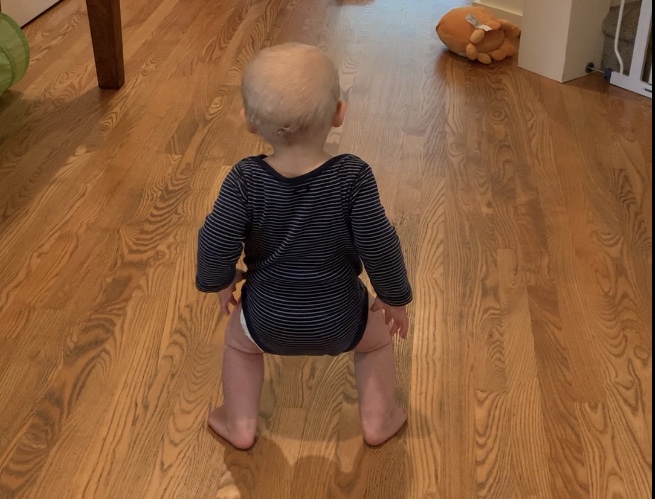
When my toddler learned to walk about a year and a half ago, he would slowly teeter his way to standing and then do what looked like a couple of deep knee bends to gain momentum before thrusting his foot forward. It was a great visual on preparing to get moving. I think of it often when I’m starting something.

Often when I get out the yoga mat, spread it on the floor, light the candles all around, I find myself just standing on the front of the mat, feeling the stiffness of my body straight out of bed and the reluctance to start.

Or I’ll have a tedious task at work, one that requires me to block out everything else to do it but I stall at the start finding five other things to do that don’t require the commitment.

And when I have an idea of what I want to write about sometimes before I can even put my fingers on the keyboard, I get lost because I get distracted by trying to map out where the thread will end.

I’ve come to think of that pause before beginning as a gathering. It’s the natural pause that allows my heart, mind and spirit to all show up. I used to have a great deal of impatience with this delay thinking it was a lack of willpower.

But now I recognize the beauty of it and see how often it is that I do daily tasks like the dishes without being all there. That’s okay for the things I do by rote but for things that require true presence, I’ve come to relish the practice of gathering my heart and soul.

If I’m too much in my head, I get distracted because the end isn’t clear. If I’m too much in my body, I feel the inertia that prevents me from beginning. But when the spirit comes to join the rest, it moves me into gear. Sometimes, I picture my toddler and do some deep knee bends, literal or metaphorical, as I gather and get ready to go.

This idea seemed perfect to post for a Monday. Do you ever have trouble starting? Or a ritual that helps move you into gear?

Here and Now

How simple it is to see that we can only be happy now, and there will never be a time when it is not now.” Gerald Jampolsky

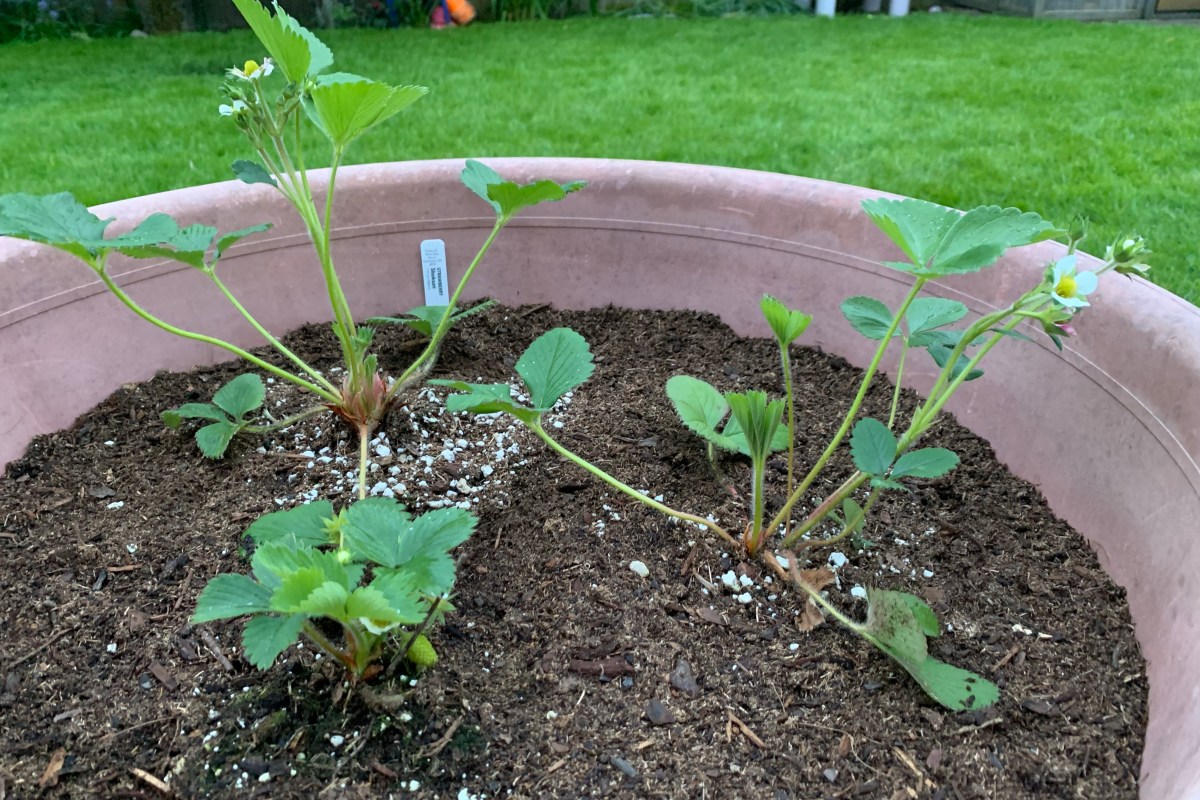
Last weekend as I was planting some new strawberry plants in a planter next to some well-established ones, the 8-year-old girl from next door reached out to gently finger the leaves. “I am going to move before these strawberries come” she said a little wistfully but not too sadly.

As I wrote about in the post The Long Good-bye, our neighbors and my daughter’s best friend are moving to a city 1,200 miles away in 3 months. Every time I see the girl, she says something about moving.

“I want to ride bikes to school again before we move.”

“I think we are going to start packing soon.”

“Eighty-seven days until we move.”

I asked my daughter how her friend feels about moving she says disappointed to be leaving but excited to have a bigger house. Watching this happy and social child talk about her family’s plans, I recall that before this move came to be, the farthest forward time I ever heard her mention was dinner that night.

I know leaving now to imagine what the future might be like is pointless. More than that, every time I give in to worry over the specifics of how it might come to be I feel the drain of energy and faith that pulls at me.

But there is nothing like watching a child leave right now to visit some fuzzy future to illustrate the point. I see her eyes get a little unfocused as she tries to imagine what her days will hold in this vision she has no control over. Then she gives an almost imperceptible shake and returns.

This little girl calls my daughter her soul sister and me her soul mother. Trying not to mother too much, I mentioned that we don’t even know if the strawberries will bear fruit this year but there were some inside right then if they wanted to taste the present.

The Inner Hustler

We drink the poison our minds pour for us and wonder why we feel so sick.” – Atticus

I woke up this morning in a sheer panic at 5am worried about money. Getting up at that time isn’t unusual but the panic is. And I wasn’t worried about money now – I was worried about money in 6 months for no particularly good reason because as a self-employed person (or maybe even an employed person), the future that far out is never possible to see.

Sitting on the meditation cushion 15 minutes later, I went diving to find the source of the panic. As I peeled back the layers, I kept stumbling on the idea that I hadn’t been working hard enough.

Taking two days off to take care of Mr. D as he’s recovered from his cough had been enough to awaken my inner hustler. And this beast was telling me I wasn’t keeping up with my hustle for self-worth.

I find it so insidious that the more work I do to meditate and be aware of my internal state, the more I sometimes have to face the things that are as natural as breathing. Hustling for self-worth being one of them. As the daughter of two parents with a strong Protestant work-ethic, I like to say that I come by my productivity panic honestly.

Sure, I have to be responsible for my little family and that means constantly juggling trade-offs and boundaries as they relate to the work I do. But managing practicalities is a completely different reality from appeasing my inner hustler – you know the one that tells me that I have to DO something to be WORTH something.

Looking for some perspective on this panic, I found this passage from The Gifts of Imperfection by researcher, professor and author Brené Brown. “We convince ourselves that if we stay busy enough and keep moving, reality won’t be able to keep up. So we stay in front of the truth about how tired and scared and confused and overwhelmed we sometimes feel. Of course, the irony is that the thing that’s wearing us down is trying to stay out in front of feeling worn down.”

The remedy that Brené prescribes for letting go productivity as self-worth is cultivating play and rest. She quotes psychiatrist, clinical researcher and author Dr. Stuart Brown, “Play helps us deal with difficulties, provides a sense of expansiveness, promotes mastery of our craft, and is an essential part of the creative process.”

Play, as in activities that have no purpose, isn’t a part of my life that I have been focusing on even though I have two very willing playmates. I count this morning’s panic as my wake-up call to incorporate more of it.

(featured photo from Pexels)

The Right Thing To Do

We must be willing to let go of the life we planned so as to have the life that is waiting for us.” – Joseph Campbell

After I dropped my daughter and her friend at school yesterday, I kept driving towards my toddler’s daycare while an inner debate raged over whether I should take him to school. He had a cough that he’s 85% recovered from and never had a fever. I tested him and it wasn’t Covid. He was mostly fine but cranky enough that he’d likely not have an easy day. I could drop him off and still be within the guidelines of the school.

But I kept hearing my dad in my head saying, “If it’s the right thing to do, often it’s the hard thing to do.”

Not taking my son to daycare would definitely be the hard thing to do. It was a Monday morning and I had a day packed with work and things to get done. After spending a weekend primarily focused on my children, I was more than ready to switch gears to productivity.

Pondering why the right thing to do is often the hard thing to do, I think it’s because it requires a sacrifice. We give up our plans in order to help someone else. We give up our pride in order to say we are sorry. Or we are giving up the expected path in order to find a deeper answer.

But on the other hand, we gain a freedom of spaciousness within ourselves. It’s a little like telling the truth all the time and then you don’t have to remember all the lies you told. It’s also like forgiveness – where you free up that energy that you no longer have to hang on to. It’s got a payoff in inner unity and less worry.

When I turned the car for home instead of his daycare, I felt the reward immediately because I was listening to my inner voice. In this case it was the voice of my dad but it was also the voice of the wisdom within.

Listening to that voice is never easy because it always makes me wonder if I’m crazy to give up my plans to follow it. But I’ve found when I do, it always puts me into the Heart of life where I can be surprised by the joy. In this case, the joy of an uncomplicated day with my son.

What about you – is the right thing to do is often the hard thing to do?

(featured photo from Pexels)

Life Banged Me On the Chin

Turn your wounds into wisdom.” – Oprah Winfrey

The other day my 6-year-old daughter and my mom were climbing into my car when my daughter said, “Mom, I hurt my chin.” I scanned the car to see how and she explained that she’d hit it the evening before when she was having an overnight with her aunt and uncle. Then they’d taken her to drama camp, my mom had picked her up so I hadn’t seen her all day and she was reporting something that had happened almost 24 hours prior.

It is unusual that we spend that long apart so of all the things she had to tell me from her many adventures that day, it’s funny that was the one she picked. She didn’t need any extra hug or even an after-the-fact ice pack, she just wanted me to know.

I’ve had to think about it for a couple of weeks to piece together why she told me. Then I happened upon a book about parenting I read a couple of years ago. The Whole-Brained Child by neuropsychiatrist Dr. Dan Siegel and Tina Payne Bryson, PhD. In it they explain the different parts of the brain – the logical left part of the brain, the emotional right part of the brain, the upstairs brain, which makes decisions and balances emotions and a downstairs brain that is in charge of automatic processes, innate reactions (fight or flight) and strong feelings (anger and fear).

They explain that the work of parenting is to help kids wire the parts of the brain together. By letting kids tell stories, they wire the words of the left brain to the emotions of the right. And by helping them calm the downstairs brain of fight or flight, we can then engage the upstairs brain to “think” about it.

But I don’t think this is just the work of parents. I think as friends, partners and bloggers, we are continually helping ourselves and others to make sense of experiences. We all need help interpreting, finding perspective, extracting the “lessons learned” from life.

I remember a particular friend in college whose long-time boyfriend had cheated on her and then broken up with her. She told the story over and over again to anyone that would listen. She was trying to figure out why it happened. It was a perfect example of this quote from The Whole-Brained Child, “The drive to understand why things happen to us is so strong that the brain will continue to try making sense of an experience until it succeeds. As parents, we can help this process along through storytelling.”

The reactions from our college-aged friends tended toward the sympathetic “What a jerk.” and “You were better than him anyways.” As momentarily comforting as those were, it wasn’t until someone pointed out that breaking up was always messy but she had faith in other parts of her life and she had to have faith about this too that my friend started to see the bigger picture and heal. Helping her see the mystery of life was just what she needed to become unstuck from the mire of life not being fair.

So we tell our stories to each other and the process hopefully helps us turn our wounds into wisdom. Because sometimes life bangs you on the chin and then you need to understand why it happened and what to learn.

(featured photo from Pexels)