Life: Risky Business

Pushing through your fear. If there’s something you want, it usually worth the risk. I’ve found that on the side of fear is rebirth.” – Paula Whaley

One of the guides that I climbed mountains with, Phil, taught the skill of weighing objective risks versus subjective risks. Objective risks in the mountains include avalanche danger, weather forecast, rock fall areas, and navigating around crevasses. It is because of objective risk that we’d often leave for the summit in the middle of the night, when things like big blocks of rocks and ice are still frozen to the mountain. That way we reduced the risk of climbing in the heat of midday when the sun warms things up and they pop off to crush you.

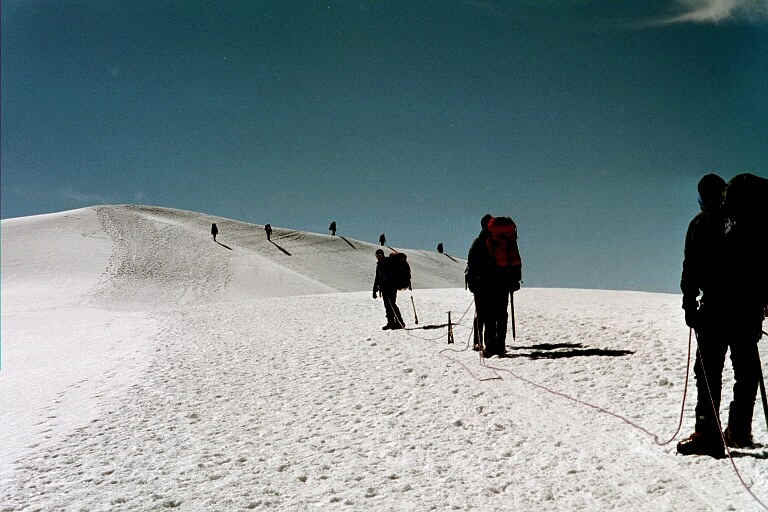
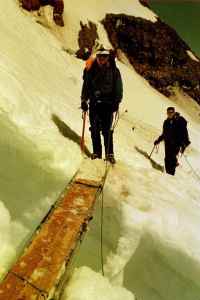
As an aside, I found climbing at night to be one of the most beautiful things to do. While it was exceedingly painful to leave a warm sleeping bag, the intimacy of my steps enveloped only in the circle of my headlamp was a way to be both big and small. In a huge arena but only focused on a small area. Groups ahead look like a caravan crossing through the desert because the landscape could be anything. And, crossing things like ladders laid horizontally over crevasses is way more doable when you can’t see the gaping hole below.

A friend ready to cross a crevasse on Mt. Rainier (image mine)

But subjective risk, as I understood it from Phil, is what we internally sense and measure. How do I feel? Does this seem doable today? Subjective risk is more personal, trickier to plan for, and different for everyone.

But this is a post about life, not climbing

I’d argue that in my life now, I have very little objective risk. Perhaps the most hazardous thing I do is forget to wear eye protection when I’m using the weed whacker.

But the subjective risks I’ve found in middle age to be plentiful. Daring to be vulnerable, trying to learn something new, opening to new friendships, asking to be seen, and offering grace instead of judgment – all those things lay bare my heart in a way that can be terrifying and precarious.

I think meditating and writing both are huge subjective risks to my perceived well-being. Hazarding a look inside at the goopy mix of who I am, taking on attempts to change myself, the conditions for my children, and generational patterns of my family. Geez, that’s harder stuff than I ever faced in the mountains.

And yet, I find when I try these things that are subjectively risky, they get me somewhere. Not always, and I haven’t kept track but I think it’s safe to say not usually, where I intend to go but with a receptiveness that moves me forward.

It’s a round-trip sport

As my guide friend, Phil, says, “Climbing is a round-trip sport.” It’s both the up and the down. And the risks are often greater on the down when I’m exhausted from the climb. And now have to cross the crevasse on a ladder in the daylight when I can see the gaping hole beneath me. It’s the same in life for me, taking the risk to extend myself in vulnerability and openness is hardest when I’m tired and depleted but it’s often necessary to lead me home.

I don’t think you have to have climbed to imagine how life can be a slog, both uphill and downhill. But whatever the slope looks like, thinking about it this way has helped me to take the steps to evaluate and take on subjective risks in order to get to my best and highest place.

There is no way to get to the summit, whatever our personal summit may be, without exposing ourselves to risk. But the view from the top and the learning from the trip change us forever.

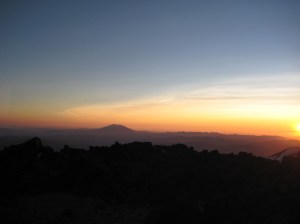
View from Mt. Adams (image mine)

What do you think about risk? Any tips for how you face risk?

(featured photo is mine from Ixtacchuatl a 17,160ft mountain in Mexico)

The Usefulness of Play

We are what we repeatedly do. Excellence, therefore, is not an act but a habit.” – Aristotle

In 2006 I went to a book reading and slide show by legendary alpine climber Ed Viesturs. He’d just published his book about summiting the world’s 14 peaks over 8,000 meters (26,26 feet) without supplemental oxygen, No Shortcuts to the Top and my friends and I had a front row seat for his show.

We were there early watching as he got his slide show ready. Ed came off the stage that was about 2 ½ feet above the level of the auditorium floor to fix the angle of the projector and then walked around to climb the stairs back onto the stage. As he did this when it would have been so easy for him to jump up, I joked, “No shortcuts to the top” and we howled in laughter.

There’s a famous story about Ed getting to the central summit (8,008m or 26,273 feet) of Shishapangma in Tibet and looking across the 100 meters of knife-edge climbing to get to the true summit that was a few meters higher in elevation (8,027m or 26,335 feet). He was by himself and decided it was too dangerous so he went home without summitting. Then he returned 8 years later to do it all again, this time shimmying across the knife ridge to get there.

So Ed has earned the reputation of being the boyscout of the climbing world and perhaps it’s no surprise he’d live out the motto of no shortcuts to the top. But I’ve revisited that scene in my head again and again when pondering the consistency of life on and off the mountain or more generally speaking, consistency between who we are at play versus “real” life.

I was recently moved to think differently about play by an interview I heard with Nikki Giovanni, the poet laureate of Virginia Tech. She said that her “grandmother didn’t waste anything. There was nothing that came into her kitchen that she didn’t find a use for.” Then she continued, “I feel the same way about experiences and words. Nothing is wasted.”

Looking back on the things that I’ve chosen as my hobbies, I see that they have not just been pastimes but instead the proving grounds to work through ideas and attributes that I would come to and continue to need.

When I took up amateur mountain climbing in my late 20’s, I thought it was a way to see the world from a different viewpoint. Now I see it was a way to build my endurance to push through in those moments when I’m physically exhausted, something I’ve needed a lot in these early years of parenting.

Rock climbing at the indoor climbing gym was a way to get a workout and build upper body strength. There is almost always a move, the crux move, on a route that requires flexibility and faith to push through, bending your body in a way that allows you to reach past the obstacle or overhang without seeing the next hold. Now I see it as a physical way to practice the ability to move through the many challenging changes and tough transitions in life.

Recently I got a mosaic art kit for my daughter so that she could create designs by gluing small pieces of colored glass near each other. It was so fun that I’ve started doing it myself. It has very little to do with what I create and a great deal to do with seeing how all the small things in life come together to create the arc of life.  

Here’s what I’ve come to believe: that play helps simulate the tough moments of life when you have to make decisions, have faith and maybe even carry on in conditions when you are tired, hungry and feeling defeated. The choices we make in those situations carry through to the paths we follow in life. We build confidence and get to know ourselves one step at a time on the proving ground and then know how to live.

Aristotle said, “We are what we repeatedly do. Excellence, therefore, is not an act but a habit.” We are what we practice, in play and in real life. Perhaps that’s how Ed Viesturs managed the fourteen 8,000 meter peaks without supplemental oxygen. By practicing who he was, on and off the stage.

Bemoaning Our Fate

You’re allowed to scream. You’re allowed to cry. But do not give up.” – unknown

This is a repost of writing I posted on 1/12/22. Heads up – you may have already read this.


Year ago I was writing a technical book with two business partners. It was a beast – 737 pages of dense and technical content. We divided up the chapters that each of us was going to write. I agreed to do more than the others because I’d written a technical book before. But it was still a pretty equitable split until one of my partners said he couldn’t do it. He said something to me like, “It’s so easy for you to do. You should take my chapters.” I was shocked. It wasn’t easy for me at all — I’d been sitting at my desk 12 hours a day, 6 days a week to get my portion done by the publisher’s deadline. I’d simply been too busy to sit around talking about how hard it was!

Which has always made me wonder, is there any benefit to bitching about life or bemoaning our fate?

This question makes me think of the tennis player John McEnroe. Given his reputation as someone who would contest a line call, did he get better calls from judges who wanted to make sure they were solid when they called a ball he hit out?

Even if there was an advantage to his tantrums, the fact remained that he had to be a person who could throw them.

It’s actually being a referee (aka a parent) that has taught me that there are two components to whether or not expressing our hardships in life makes a difference: authentic expression and boundaries.

The other day my 2-year-old son wanted to play with water in the sink. It was almost time to go somewhere and I didn’t want him soaked so I told him “no.” He said for the very first time, “I fustated!” I told him how incredibly proud I was of him for recognizing that he was frustrated. “Good for you for knowing that! But you still can’t play in the sink.”

Which leads me to my conclusion about whether or not life is easier if we expound on the pains of life to others. We have to express our life conditions authentically and that expression will improve our own ability to cope. There is always a need to speak to our honest experiences and when we do that, others understand us in a deeper way that supersedes whether or not it changes the outcome.

And the second part is that we all need to set and hold our personal boundaries of what we can or cannot do. Expressing ourselves probably won’t change how other people defer to us one way or the other. But it will change the one thing that matters – how we feel about the work we do.

As I parent, I know I change a little based on how my kids might react. I’m likely to soft pedal something that I know is going to start a fit, especially if I know my kids are tired. But even though I’ll change the delivery, I don’t change my decisions based on how it’ll be received because I have to hold the boundaries. In the case of my toddler playing in the water, I didn’t have the time or patience to change his clothes one more time before we left the house. I appreciated his ability to express to me that he was frustrated. The answer was still “no.”

John McEnroe wrote a book (co-authored with James Kaplan) published in 2002. The title, You Cannot Be Serious, was derived from his most often used phrase during the fantastic fits he used to throw when he disagreed with a line call. YOU CANNOT BE SERIOUS!!

In the book, he’s pretty reflective of his emotions and maturity between age 18 when he started winning on the tour and age 43 when he wrote the book. He recounts a time he went off during a match the summer when he was 18, “I ended up winning the match, but I was incredibly embarrassed – as I should have been. I was totally spent, and showing the strain.

Then near the end of the book, John McEnroe talked about his life as a father of eight kids and provided a telling reflection about maturity:

“I loved being a father. It was also the hardest work, by far, that I’d ever done. When your children range in age from the teens down to the teeny, it feels as though you’re in charge or a laboratory conducting multiple experiments, all of them dangerous and combustible, but just possibly life-saving. Every day seemed to bring situations that would try the patience of a saint – let alone John McEnroe. Of course there were times I lost it (there still are), but when you’re responsible to other people, and especially very young people, you quickly learn that you have to find ways to control yourself. However much you may feel the need to let off steam, the needs of people who depend on you for everything come first.”

You Cannot Be Serious – John McEnroe

In other words, we have the right to express our feelings about our experience. That expression will change as we mature and become more responsible to others. And if we lose it in as public of a forum as John McEnroe, we may have to write a book to apologize.

And then as we mature, we hold the boundaries of what we can or cannot do. Because at the end of the day, the only human who will likely think in great depth about our life is ourselves. And the only person who knows what we can handle is ourselves. As Vicki from Victoria Ponders writes so beautifully – it’s My Life, My Happiness.

When I took on the chapters that my business partner was not able to write, I did tell him that writing was hard for me too. (And I know there are many writers, especially technical writers who read this blog and can attest to the difficulty). But I didn’t belabor the point. It isn’t my personality. Writing more chapters was within my boundaries of what I could do. In the end, I was proud of the book we wrote, non-equitable distribution of work and all.

I have a new post today on the Wise & Shine blog: How to Recover From a Bad Post

(Featured photo from Pexels)

Party With Altitude

Passion is what makes life interesting, what ignites our soul, drives our curiosity, fuels our love and carries our friendship, stimulates our intellect, and pushes our limit…A passion for life is contagious and uplifting. Passion cuts both ways… Those that make you feel on top of the world are equally able to turn it upside down.” – Jon Krakauer

The most surreal party I ever went to: Drank too much, spent all my money, and then ended up sleeping in a field. No, this isn’t some weird WordPress prompt – just a memory that popped up from telling climbing stories.

After we left my friends, Phil and Sue, and the other climbers in their group, at Everest Base Camp in March 2001, those of us who had trekked in with them headed back down the 30 mile route to hike out. I believe what took us 12 days to ascend while taking the time to acclimatize to the altitude, took us only 4 days to walk back.

Of course, we felt better and better as we descended. At our highest point, climbing a mountain called Kala Patar along the way with an altitude of 18,200 feet, the air contains about 45% of the oxygen that you would find at sea level but as we descended it increased by about 3% for every 1,000 feet of elevation. Our bodies had responded to the thin air by producing more red blood cells, and though they go back to normal after about a week at home, in the meantime, they combined with the denser air to make us feel GREAT.

On the way back down, we spent one night at a tea house at about 15,000 feet. After setting up our tents in the field, my fellow trekkers and I went into the main room for dinner and discovered that if you knocked on the shuttered door to the kitchen, you could order beer.

This was not the first time that the Sherpa at the hut had seen trekkers euphoric with a little more oxygen so they broke out the boom box with the Phil Collins tape. As we danced to Sussudio, practiced the white man’s overbite (imagine tall men jutting their jaws out to be funky), and generally cut loose, we kept on knocking on the shuttered door to order more beer.

Of course beer was relatively expensive. Everything had to be carried in on the backs of men or beasts so the higher up the hut, the more costly items were. I remember exhausting my cash on hand with the first round but fortunately my trekking friends, Dave and John, funded the next couple.

I’m not sure of the physiology of the next part, but alcohol packs a wallop at altitude, at least for me. I think it only took two or three cans of beers and a few flips of the Phil Collins tape and I was dancing on thin air. Shortly thereafter, I crawled into my tent and slept in a field. And the next morning woke up with a mountain of a headache.

Drank too much, spent all my money, and slept in a field. A party with altitude.

For another story about recovering from something else silly I did at high-altitude, please check out my Heart of the Matter Post: Yay, Yeah, Whatever.

The Return Trip

You must understand that there is more than one path to the top of the mountain.” – Miyamoto Musashi

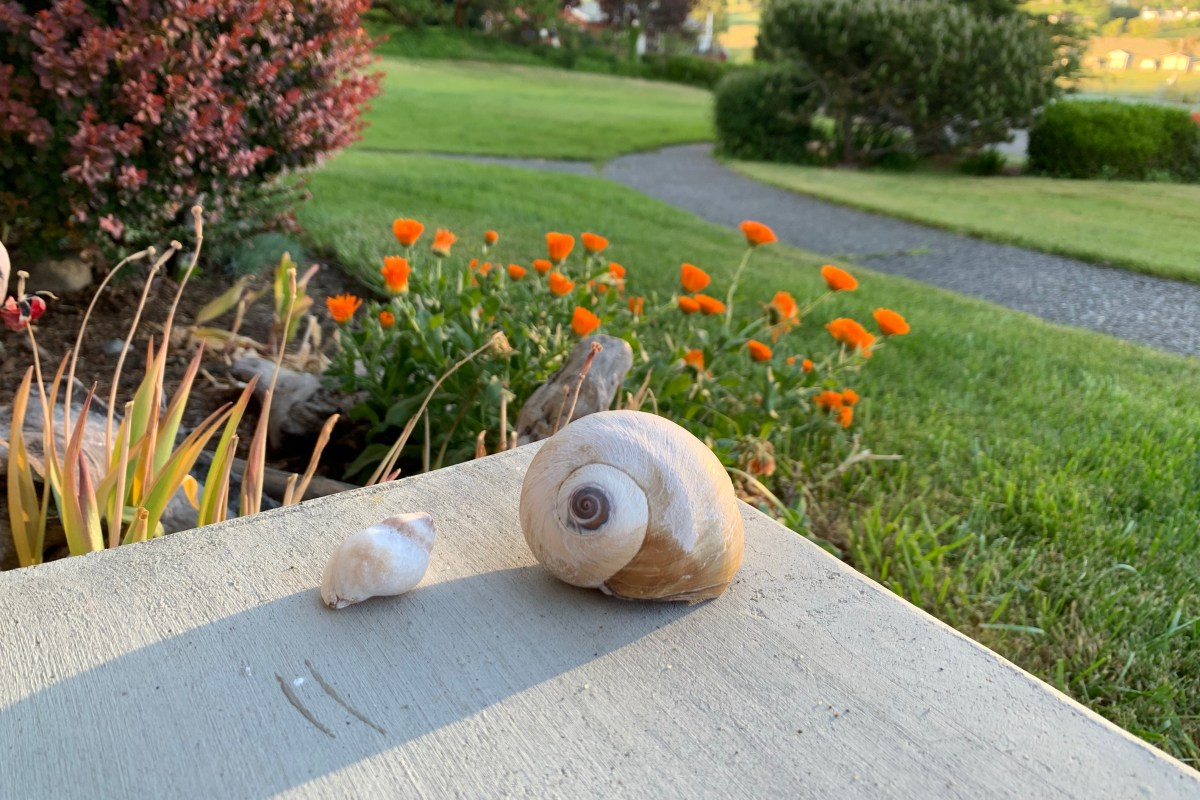
I was walking on the beach right at twilight on the first night on my mini vacation on Whidbey Island. I walked past a shell and went about five paces before I registered that I wanted to pick it up. I turned around to look for it and couldn’t find it – the tide line looked completely different.

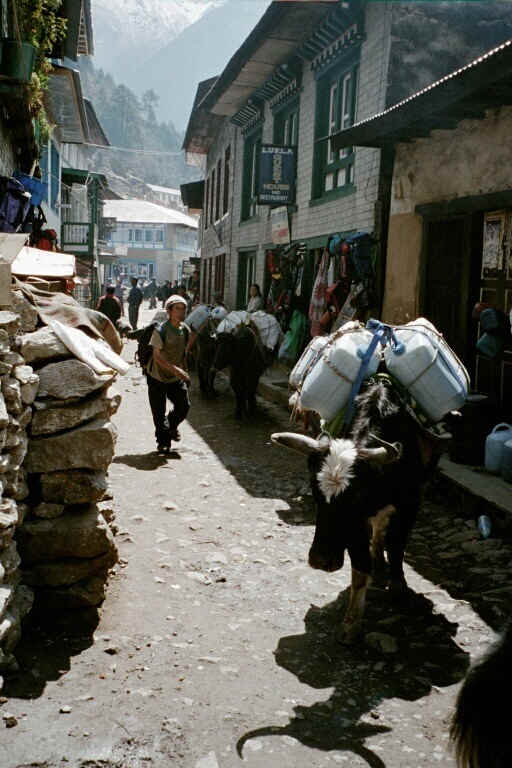
It reminded me of a lesson I learned climbing Mt. Ixtaccihuatl in Mexico. My guide friend, Phil, brought along a roll of crepe paper – lightweight, colorful, and paper, not plastic. At every decision point, Phil tied a small bit of crepe paper to a tree branch or stick.

When I asked for more detail about route-finding, Phil told me that when we make the choices about which fork to take and think we’ll remember, we often forget to turn around and look at what it will look like coming back. He pointed out that the light, the contrast with the surroundings, the angle, it all looks different on the return. What we think is memorable going one way looks completely different when we turn around.

This rings true for me in life as well. The choices I’ve made on the route I’ve taken through life – the scary, vulnerable, or leap-of-faith ones – they look different when I look back at them. Sometimes the return view has me asking why it took me so long while other times I just want to get on my knees and pray in gratitude that I choose the way I did.

The past few months I’ve been struggling with charging my iPhone. Every time I went to charge the phone, I’d have to fiddle with it for upwards of five minutes to get the plug in just right so that it could charge. Then I’d carefully pin the cord in its position with a book so that nothing would move. Then when it was charging, I’d try not to use it, or if I ABSOLUTELY had to, touch it so tenderly as not to disturb any part of the delicate configuration.

Finally this past week, I couldn’t get the cord in to charge it at all. In the middle of my workday, I just had to suck it up and go to the Apple store. It took about 20 minutes of waiting but the helpful tech dug out a small particle jammed in the charging port and now it takes all of 5 seconds to get the plug in. During the time I waited, I realized that I’d avoided doing it not only because it was time that I felt I didn’t have but also because I was scared the news would be that I had to buy a new phone.

Yes, things look different on the return trip. It something that I’m reminded of when I’m deciding something – that there’s another perspective I can’t even see yet, but as soon as I decide and move on, I’ll get the benefit of looking back. Knowing that helps me to keep fluid.

Like when I went back to find the shell, it took me some time to get adjusted to the new perspective, but I eventually found it.

This is a sister post to A Brief Interlude Provided by Nature on the Heart of the Matter blog.

Secret versus Private

Travel and tell no one, live a true love story and tell no one, live happily and tell no one, people ruin beautiful things.” – Kahlil Gibran

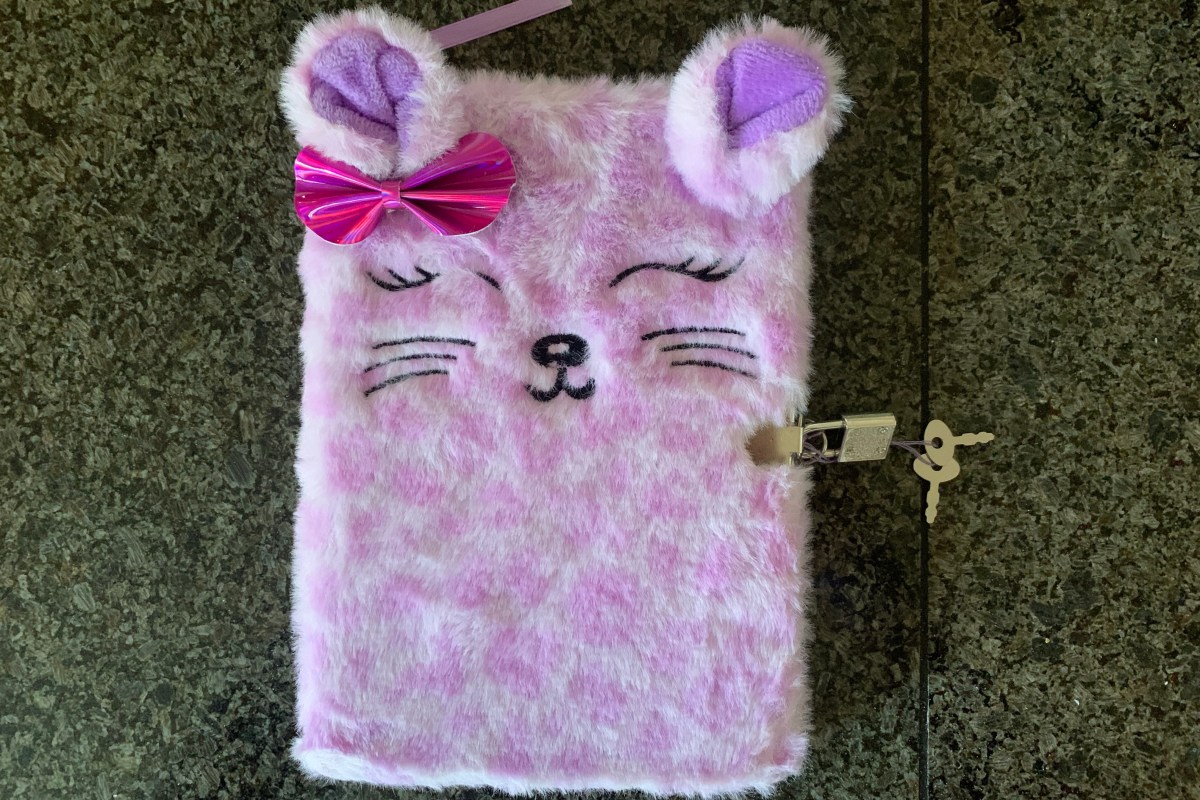
My daughter’s elementary school just had their annual book fair. One of the things Miss O selected was a fuzzy journal with a lock. She took it directly to my mom and had her sew the keys on to the journal so she wouldn’t lose them.

Miss O and I have been talking about secrets lately. Her second grade class is doing a section on identity and she’s learning the distinction between what is secret and what is private. One of the large parts of Miss O’s identity is that she doesn’t have a dad. Is that secret or is that private?

When she first asked me if she had a dad, she was three-years-old. It went like this: “Did I have a dad when I was born?” I answered “no” and waited for the follow-on question. And then she asked, “Did I have a dog when I was born?” I said “yes” and then she moved on to, “Did I have a cat?”

Following her cues, I’ve told her more and more as she’s asked. Mostly that I wanted kids so much that I went to a doctor to help me have them. It’s not a secret in any way and I want them to feel complete openness from me about how we came to be a family, even if they choose to keep it private.

The other day, Mr. D asked for the first time if we had a dad and when I said “no,” Miss O jumped in to say, “We’re special because Mama had us without one.” Okay, so I have to work on the messaging but not having a dad definitely isn’t a secret.

I suppose we all go through the figuring out the difference between what is secret and what is private. For me, what is private doesn’t take any energy to keep boxed up. It’s like inviting people over to my home. I don’t invite everyone I know into my house. And, for those that do come over, most people just visit in the kitchen. There aren’t many people that I invite up to the tiny space on the third floor. It’s messy up there but I don’t keep it locked.

When we were talking about secrets, Miss O wanted an example. I dug deep into my memory from high school to find an appropriate scenario understandable by a seven-year-old. I came up with the story about my best friend who was dating a boy named Craig. A new girl had recently been hanging out with my best friend and me, and one day when my best friend wasn’t present, the new girl told me she’d been making out with Craig behind my best friend’s back. But of course, I wasn’t supposed to tell anyone, especially my best friend. Ugh, I can still feel the weight of that secret.

I landed on the distinction that secrets are something you’d be ashamed if anyone found out. Things that are private aren’t anyone else’s business.

Maybe the keys sewed to the journal are a great metaphor. The lock reminds others to stay out but the barrier isn’t so high that you have to hide the keys away.

I wrote a related post about my learning not to keep secrets on the Wise & Shine blog: Can I Tell You a Secret?

Leaning in To Letting Go

The only way to make sense out of change is to plunge into it, move with it, and join the dance.” – Alan Watts

It seems like for every lesson I’ve learned in my life, I can trace it back to a particular story. Is that a sign of middle age? In this case, I’m thinking of the lesson of learning to let go and a consulting project I did for Microsoft about 25 years ago.

My colleague, Bill, and I were assigned by the consulting firm for whom we worked to write a white paper for a client at Microsoft. It was the late 90’s and Microsoft was in that phase where it was growing so fast that there wasn’t a lot of process but instead a lot of hard-working but perhaps egomaniacal cowboys.

Our assignment was to write this paper about how a group of these cowboys rolled out a new email software at Microsoft. Bill and I were experienced at deploying that software and had published a book about it so theoretically, this project should have been a snap.

After interviewing the key players, we drafted the paper. They hated it. We revised it. They still hated it. They would call us to meetings to tell us in detail how much they hated it. The problem wasn’t the technology – it was that we didn’t get the tone right. We didn’t think they were as cool as they thought they were so we missed the mark over and over again.

I can’t remember how many versions of that paper we wrote. Maybe five? But after torturing us for a while, they finally fired us and wrote it themselves. It hurt. I felt like I’d been at a rodeo and had hung on way too long.

I went on to learn that lesson about letting go in many ways as a consultant. I’ve found out that no matter what kind of a job that you are doing, if the person that hired you is replaced by someone else, you will most likely get replaced too.

I’ve hung on too long in those cases as well – trying to pretend it’s not going to happen. I’ve been sure I can make the new person pick me, and like a puppy at the pound, try to do any number of tricks to prove I’m likeable and reliable.

I’ve also done the opposite and just walked away when the staffing changes happen. Finally, I’ve figured out that when the changing of the guard happens, I say, “Here’s what I’m working on. I will continue to support it in whatever way works and if you prefer to have someone else do it, I will facilitate that in the smoothest way possible.”

It’s so natural to want to cling when things are coming to an end. Sometimes, it really hurts and is scary. I’ve found that acknowledging that, feeling it all the way through, helps. Because projects, groups, and companies, like life, have a cycle. I’ve come to learn that to stay loose is the best way to ride the current. That way, I’m ready to lean in to the next thing that comes to fill the opening. Because that happens too.

Leaning in is just one of the things I’ve learned to do the easier way. For a mountain climbing story that taught me the difference between doing things the easy way versus the hard way, check out my piece on The Heart of the Matter: Doing It The Hard Way Or the Easy Way

(featured photo from Pexels)

Old Routine, New Fit

“I am still in the process of growing up, but I will make no progress if I lose any of myself along the way.” – Madeleine L’Engle

I’m sore. Do you ever do the thing where you go back to doing something you used to do all the time only to find out it feels totally different?

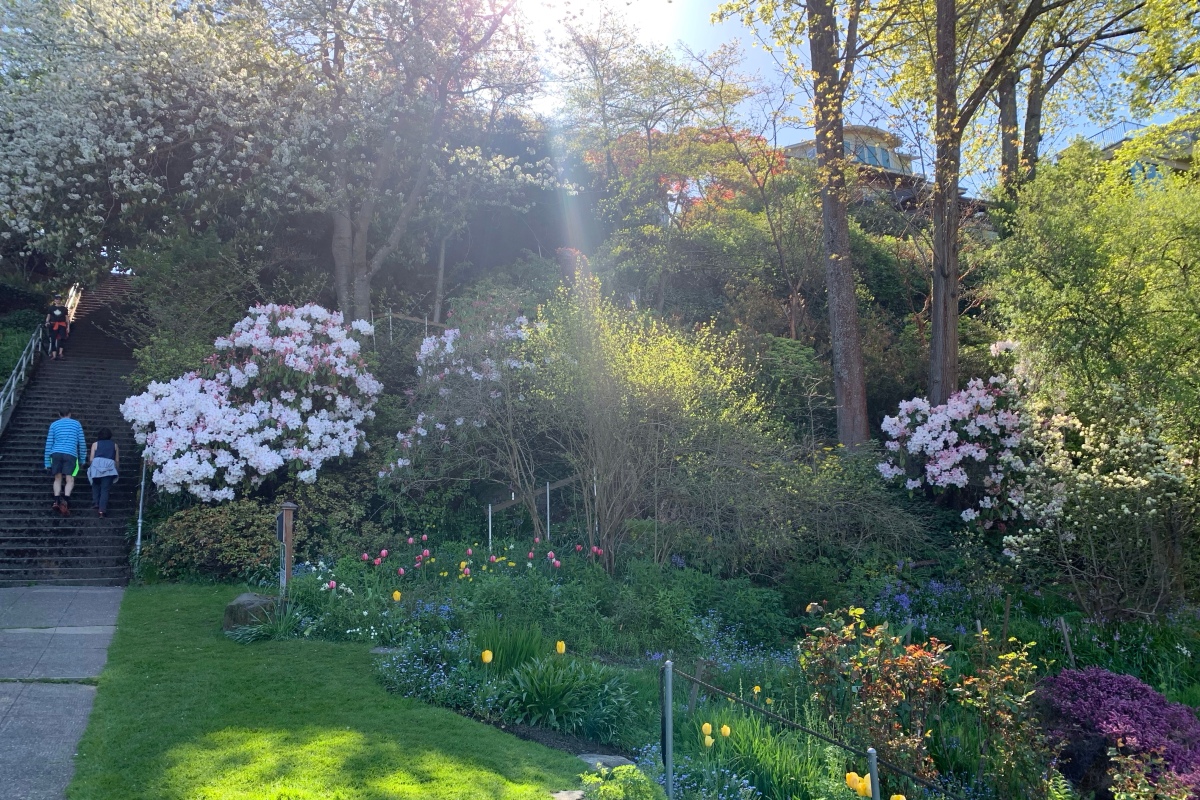
On Saturday morning, I was gifted a few free hours because my kids wanted to have a babysitter. Before I had kids, I used to spend almost every Saturday morning either hiking or doing my favorite sets of stairs, the Capital Hill stairs – 13 flights for a total of 290 stairs for each ascent. And descent, of course that is obvious, but as a math person, I couldn’t just let it go. Anyway – with free hours on a Saturday morning, the Capital Hill stairs seemed like an obvious thing to do.

As I was doing them, I felt how long it’s been. I’ve changed and grown (rounder, mostly) and finding my rhythm was hard and uncomfortable. My legs felt leaden, my knees stiff. There is a beautiful garden next to the top third of the stairs created by Ann and Dan, a couple that bought two properties there in the 1960’s, one for their house and one for the garden. Then they gifted the land with the garden to the City in the late 1990’s. Next to the garden was a plaque that commemorated that history and noted Dan’s passing at age 96 in 2020.

As I noticed all these differences, including the fact that I’ve lost my ability to sip from my water bottle while on the go without spilling all over myself, I started to feel all the versions of myself that have done the stairs. The 20-something woman who was building confidence for climbing mountains, the 30-something woman who was trying to keep in touch with that adventurous part of herself that her husband had little interest in, the 40-something woman working out her comfort with discomfort after divorce. All the way to now, the 50-something woman using a set of stairs to remember where she’s been.

Soon enough all the lessons I’ve learned about doing stairs came back to me. Take one step at a time, go slowly using a barely perceptible rest step when it gets hard, and pause for a deep breath before the last 90 stairs.

Yes, I’m sore today. But it seemed like a worthwhile exercise to find out that as I change and grow, my hard won lessons go with me.

Speaking of growth and change, I have a companion piece posted on The Heart of the Matter this morning, Growing Like a Weed.

Patience, Energy and a Little Bit of Flexibility

Patience is also a form of action.” Auguste Rodin

Yesterday, I was trying to get Mr. D’s pants on so that he could go to preschool. He was busy sitting on the floor playing with a truck and didn’t want to assist in any way.

When I consider the difference for me being a parent of young kids while I’m in my 50’s versus in my 20’s or 30’s, it’s this scenario with my kids that comes to mind. It’s like a silly sitcom – the same story line that happens every day but with slightly different entrances, exits, and accessories. And the thing that I bring to it as an older parent – a lot more patience. My egoic insistence that I am in charge, have to do it my way, with a rigid order has changed from my younger self.

This reminds me of playing tennis with my dad. When I was in my 20’s, I had loads of energy to run everything down and my tennis skills had got better. I thought I would have no problem beating my dad in his 50’s. But he had patience. He could steadily get all the balls back and not go for the risky winner. Instead, he had the friendliest form of banter/trash talk and he’d wait for the easy winner when I had run myself silly or was out of position.

If Mr. D doesn’t want to put his pants on at that particular moment, I let it go, do something else to get ready. When I circle back in one minute, he’ll usually cooperate with little to no problem. I can easily imagine what I would have done twenty years ago – worn myself ragged trying to either put pants on an uncooperative kid or talked myself blue in the face trying to convince him to cooperate.

Because on the flip side of this is that I don’t have the same high energy that I had 20 years ago so I have to give up the struggles that aren’t worth it. Worrying about what others think or sweating the small stuff like having a tidy house and matching socks has by necessity gone by the wayside because I simply don’t have the capacity to care about it. At the end of these days with young children, I am flat out exhausted. But with a little crafty patience, at least most days, I don’t end up as a sweaty mess.

If patience is my most useful tool as an older parent because I lack the energy of a younger one, then I’d name flexibility as the most predominant skill that parenting has taught me.

My guess is that this applies not only to tennis and parenting but also to most things we apply perspective to as we age. We learn to use a little patience to figure out which battles are worth fighting and which are avoidable skirmishes that our egos and inflexibility set us up for. Then, like my dad playing tennis, we can participate in some friendly banter and even sometimes get an easy winner in when we don’t overreach.

Still reading? I have another post today on creativity and the tools we can use to change our minds on Wise & Shine – Writing In The Dark

The Window Part 2

When we were children, we used to think that when we were grownup we would no longer be vulnerable. But to grow up is to accept vulnerability. To be alive is to be vulnerable.” – Madeleine L’Engle

Do you remember this scene in Winnie the Pooh?

“Piglet sidled up to Pooh from behind. ‘Pooh!’ he whispered.

‘Yes, Piglet?’

‘Nothing’ said Piglet taking Pooh’s paw, ‘I just wanted to be sure of you.'”

Winnie the Poor by A.A. Milne

Of the many sweet things about that exchange, one that I notice is how proximity is so reassuring. The “sure of you” quality of a hug or a hand.

When I wrote the piece about The Window six months ago, our neighbors and my daughter’s first best friend had just moved away. The window had shut and the only thing that I knew for certain was that the reassurance that comes from proximity was no longer going to be there.

Getting to the other side of that grief only comes with time. Now I’ve written The Window Part 2 on the Heart of the Matter blog. It’s part reflection on loss – and part reflection on what comes next…