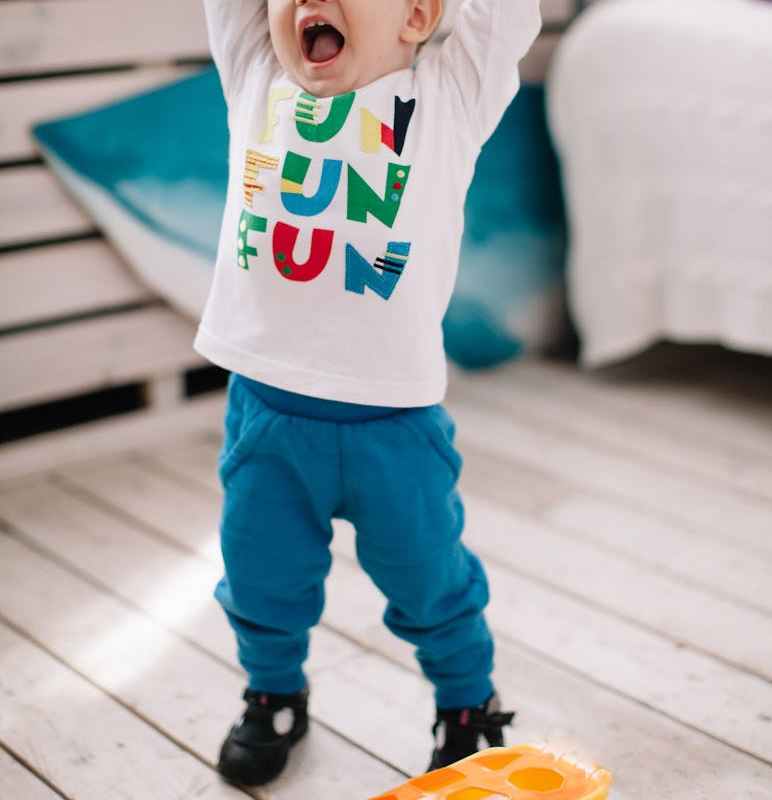
“If you’re not having fun, you’re not learning. There’s a pleasure in finding things out.” – Richard Feynman
What if fun isn’t a reward for getting everything done—but a skill that helps us live better right now?
Recently as I was driving ten-year-old Miss O to a rehearsal for a musical, she said, “I always have fun at rehearsals.” Six-year-old Mr. D had a similar answer as I was bringing him home from baseball practice the other night. I asked what he liked best – the base running practice, the scrimmage, the throwing contest? His answer was, “I like all of it.“
What kids know and grown-ups seem to forget (speaking for myself) is that fun is a day-to-day practice, not a reward only to be savored when we get everything else done. Fortunately, my guest for The Life of Try podcast this week, Mike Rucker, PhD, reminded me that parents have some agency in this too. We aren’t just Uber drivers getting our kids to the places they need to go. And that prompted me to put on my mitt and take part of the scrimmage at Mr. D’s baseball practice. The ball didn’t come to me but I enjoyed standing in the field and being part of the fun immensely for a couple of innings.
In this episode of Life of Try, I talk with Mike Rucker, PhD author of The Fun Habit, about the science-backed value of fun and why it matters for stress relief, resilience, creativity, relationships, and well-being. We discuss positive psychology, the “sandwich generation,” burnout, parenting, savoring joyful moments, and how to create simple systems that bring more play, rest, and connection into daily life.
Here are some of my favorite takeaways from this great book and fantastic, science-backed conversation about fun:
- Fun is not frivolous — it’s restorative.
Being intentional about fun can help reduce burnout, restore energy, and bring more meaning into everyday life. - Happiness and fun are not the same thing.
As Mike says, “Happiness is a state of mind, but fun is something we can do.” - Agency matters.
When we feel like we have a say in how we spend our time and energy, life becomes more enjoyable and sustainable. - Small “pattern interrupts” can change everything.
Breaking our routines in creative ways can open up more space for joy, connection, and better habits. - Fun looks different for everyone.
It doesn’t have to be loud, social, or high-energy. Fun can be calm, quiet, and personal. - Burnout narrows our thinking.
When we’re depleted, we tend to rely on autopilot. Renewal helps us think more creatively, flexibly, and expansively. - Enjoyment is a powerful predictor of sticking with a habit.
If you want to build sustainable habits, choose approaches you genuinely like—not just ones you think you “should” do. - You don’t need a total life overhaul.
Reclaiming fun can start with just a few intentional hours, a simple list, or one activity that brings you back to yourself. - The “Fun File” is a practical tool.
Keeping a running list of activities that genuinely light you up can make it easier to choose joy on purpose. - Making life better doesn’t always mean adding more.
Sometimes it means removing, reframing, outsourcing, or rethinking routines that quietly drain you.
Here is a clip of one of Mike’s eye-opening points – that having fun is an upward spiral that creates more capacity for challenge and growth:
This conversation is for anyone looking for better work-life balance, more joy, and practical strategies for living with greater intention.
Here are some other ways you can listen and watch this great episode:
- The podcast player embedded below
- Click this link to watch in a browser: How to Reclaim Fun in Adult Life | Mike Rucker, PhD, on joy, burnout and The Fun Habit
- Subscribe to The Life of Try on Spotify, Amazon Music, or Apple Podcasts
- Subscribing to the YouTube channel: https://www.youtube.com/@thelifeoftry
Way Will Open: How To Trust Life's Timing – The Life of Try: Personal growth, one try at a time.
Links for this episode:
How to Reclaim Fun in Adult Life | Mike Rucker, PhD on Joy, Burnout and the Fun Habit transcript
The Fun Habit on Amazon and Barnes & Noble
Michael Rucker, Ph.D. on LinkedIn
(featured photo from Pexels)


I can’t do all the things I do, Wynne, unless I find them fun —- and this includes sleeping 🙂
LikeLiked by 3 people
See? You know it, John!
LikeLiked by 1 person
This was such a refreshing reminder that joy was never meant to be postponed until life becomes less busy. Sometimes the healthiest thing we can do is intentionally make room for the simple moments that restore the soul.
LikeLiked by 3 people
Yes! You said it perfectly!! And it’s amazing how easy it is to forget.
LikeLiked by 1 person
Yes! This! Finding fun and joy in small things each day is key. Making time for ourselves is vital.
LikeLiked by 1 person
Having a full “fun cup” as a tool for growth…I love that. Thanks for the introduction to Dr. Rucker and his book, Wynne! 💝
LikeLiked by 1 person
A tool for growth — you said it, Vicki!! I hope you enjoy this episode – he’s so interesting and, dare I say it, fun!
LikeLike
I see that Mike’s wall behind him contains the bus to fun, happiness and joy. No wonder he was able to write the book! I am also impressed that you have a baseball mitt, Wynne. No wonder you were able to jump right into your son’s practice!
LikeLiked by 2 people
Ah, you have a good eye, Dr. Stein! I do have a nicely worn in baseball mitt – it’s been a key tool in the fun kit! 🙂
LikeLiked by 1 person
This sounds like just what I need. To more fun! 😊
LikeLiked by 1 person
Oh, I’m so glad to hear it, Brad. This podcast and his book were so inspiring to me. He really made me think about where I can incorporate fun every day. It doesn’t have to be high energy or even take a lot of time but just being intentional. Hope you enjoy it too!
LikeLiked by 1 person
Stope and smell the roses…:0) My middle aged kids remember the simple things we did and not all the manic running around I did trying to be a super mom lol
LikeLiked by 1 person
Isn’t that interesting? I’ve got to stop doing the dishes and start doing more fun!! 🙂 Thanks for the great comment!
LikeLiked by 1 person
Me too…;0)
LikeLike
this is a great message and i so agree about the need for fun in our lives, it has incredible rewards on so many levels – good for you other there with mitt, ready for anything –
LikeLiked by 1 person
Ah, I suspect having fun on a daily basis is one of your super powers, Beth. I see it in the speed puzzling contests, visits with friends and all the other important things you do!!
LikeLiked by 1 person
it is very important to my life balance –
LikeLike
It was a good and helpful talk. The key takeaways for me are to make a list, be intentional, fun is a skill we can develop, good base for growth. Thanks Wynne and Mike.
LikeLiked by 1 person
Oh, those are great takeaways, Brad. Thank you for listening!
LikeLiked by 1 person
Honestly, I feel like Mike validated my life approach, Wynne. 😊 I pretty much am always making room for fun – maybe too much sometimes! My sister and I felt our dad’s desire for fun. I married someone who was fun (and very funny.) I can be serious, of course, but I am not “serious” by nature. I had some serious relatives though, it felt awkward as a child, maybe that helped push me towards the life is too short model. I don’t know. You know what though? I think I’m going to ask my grown son if he remembers his parents inserting fun into daily life, if it made him happy. I’d like his perspective. Anyway, today, riding my bike lights me up; with music in my ears, and sometimes with beautiful scenery. And hopping on a cruise ship lights me up too. Maybe it’s all about exploring.
LikeLiked by 1 person
I see the fun in you, Melanie!! Yes to all that lights you up. And also to your approach of “why not try?” like with your newspaper column idea. And I love that your husband is fun too! Thank you for validating this approach.
There’s a great chapter on making parenting more fun in Mike’s book. Your son might appreciate that at this stage in life! And I’ll be so curious to find out what he does remember about the fun in his childhood!
Thanks for tuning in, Melanie!
LikeLiked by 1 person
Wow! You remember the newspaper column idea. That was a while ago. Thank you for that. And thanks for the suggestion for Will – it’s his first Father’s Day; I’ll have to investigate Mike’s book as a gift. 😊
LikeLiked by 1 person
What a great message! Fun is not frivolous — it’s restorative. It’s so easy to get caught up in the minutia and forget the importance of slowing down, laughing, and enjoying ourselves. Thanks, Mike and Wynne, for the timely reminder! 😊
LikeLiked by 1 person
Restorative — exactly. You’re right – we get caught up in the minutia. Exactly! Thanks, Erin!
LikeLiked by 1 person
even thought I haven’t read this book yet, from this post I had a great overview. Starting from the title and the takeaways I think it’s very engaging. And the author is absolutely right!
LikeLiked by 1 person
I love this comment, Cristiana, because Mike’s book and message are so in sync with so many of the things you highlight about intentional living. So good!
LikeLiked by 1 person
I love all the takeaways. Thank you for sharing.
LikeLiked by 1 person
Thank you, MSW!
LikeLiked by 1 person
Great topic and I love the premise! Great job getting out on the field too! 😎 looking forward to listening to the episode!
LikeLiked by 1 person
I think this one is right up your alley, Todd. Because I see your monthly pics and you are so good at identifying and doing what lights you up!
LikeLiked by 1 person
Thanks Wynne! 🙂 You know- those monthly pic posts were inspired by your weekly ones 😎
LikeLiked by 1 person
I didn’t know that. That’s cool!
LikeLike
“Fun is finding enjoyment in what you do.” What a profound statement, Wynne, and a fun conversation about fun.
I often say that if we have fun doing what we do, then it’s never a chore, an assignment, a task or a job. It’s just fun – and a blessing to find that alignment.
Love the advice around trying to create variety in our schedules so we can encode memories in what we like and break the habituated routine. This is why sometimes life feels like it’s flying by, because it all feels like routine. I can see that in how you sprinkle the unexpected moments and weekend activities with your children.
Social contagion is also a fascinating insight – on how we try to numb the feelings of unease rather than face them. And that those whose fun cups are full can truly start to experience growth. I sure wanna hop into an upward spiral – as well have a babysitter to do bath time… and homework… and park time… and everything for me. 🤣😊
LikeLiked by 1 person
Oh, I’m laughing, Ab! Wasn’t that fascinating how they solved the bathtime dilemma? Wish I would have heard that 6 years ago. And it’s fascinating all the things that keep us from solving those problems.
Your takeaways are so good as always – like catching Mike’s point about expanding time using variety. Isn’t that a good point. And the way we numb our unease. I loved doing this podcast (and reading his book) because he had so many good ideas and for all areas of life.
Thanks for listening, my friend!
LikeLiked by 1 person
Ahh…no wonder you mentioned how much you admire my ability to have fun in everyday situations on my last blog post. It’s definitely something to strive for!
LikeLiked by 2 people
Yes – isn’t it funny how what we focus on becomes a theme? And your ability to have fun is impressive!
LikeLiked by 1 person
A long one, my friend, but it was excellent. I just finished listening to the podcast and I really enjoyed it. I think what he said about creating space for doing things outside of what is dutiful is so important. Of course, this applies to other areas aside from work. Talking about work, I was laughing at the “Fun lunch at work is actually work” discussion. So true, and I wish bosses would stop doing that. Well done, my friend.
LikeLiked by 1 person
Thanks for listening – it was a long one. As I edited it, I strove to shave it down but I just liked all Mike’s info so much! I really appreciate you tuning in.
I’m laughing about the “fun lunch at work.” So true!!
I loved Mike’s invitation to think creatively about routines we are stuck in. Your comment about “creating space” is so good. Right!
LikeLiked by 1 person
You’re so welcome. For that kind of discussion, the length was spot on. I know some people’s attention spans are short, but mine is pretty good, so I enjoyed the episode. Again, well done, my friend.
LikeLiked by 1 person
That’s great feedback. Thank you, Edward!
LikeLike
A great post, Wynne, and so many important messages, but I love this one:
You don’t need a total life overhaul. Fun doesn’t have to be overwhelming. It’s about baby steps.
And thanks for the introduction to Mike too. ❤️
LikeLiked by 1 person
Thank you, Lauren! And I like that takeaway, too. It’s kind of a reminder to have fun about having fun, right? Thanks for the great comment!
LikeLiked by 1 person
What a wonderful interview and message. Fun has always been something I think will happen once I’ve finished all the important work. Thanks for the ‘permission’ and the encouragement to have fun because it’s healthy and restorative. 💞
LikeLiked by 1 person
That’s how I’ve typically thought of it too, Rose. Right – we need permission to think outside of the mold. Thank you for the great comment. I appreciate you tuning in!
LikeLiked by 1 person
I think my fun is always calm and quiet in nature, and sometimes with animals. I have fun with family members, too. I like this line, Wynne, and it’s a lovely podcast.
LikeLiked by 1 person
So many great ways to have fun. Thank you, Hazel!
LikeLiked by 1 person
My pleasure, Wynne.
LikeLike
This is so good! I’m going to let fun be the soundtrack of my journey!
LikeLike
I think fun is an important part of the journey. That’s why Eagle is at a school emphasizing experiential learning rather than cramming for the test. : )
LikeLike
It’s true for me that adding more doesn’t make life better. I think I have spoiled meals by adding that little bit of spice that no longer enhanced it, it just confused the taste.
Having fun is important but kids show us that fun is easy. It’s running around a table and singing out loud. It’s swinging in the playground, it’s knocking over lego and watching it crash.
Keep it simple and being there is the most important part of memories, not the menu or toys.
LikeLike
So encouraging! Thank you, Wynne. I need to think about this more. Sometimes I think I don’t really know how to have fun. It feels like a very important issue right now, definitely one worth exploring.
LikeLike
I loved this one, Wynne! I think people crave fun in our frenetic society. One of my most popular blog posts ever is one I wrote about 25 ways to have fun at work.
I really enjoyed the take on how society makes fun performative. We had a conversation with Colleen while we were visiting. She said if you’re not travelling or doing fun stuff all the time, people thing you’re boring. She’s very much a introvert and enjoys doing puzzles, knitting, and more solitary activities.
Thanks for this.
LikeLiked by 2 people