Emotions about Emotions

“A gem cannot be polished without friction, nor a man perfected without trials.” – Chinese Proverb

The other day I was in my car driving my toddler out of a park. We’d met some friends, played a while but had to leave because it was his naptime. His older sister was able to stay because our friends were bringing her home.

He was crying “go back” and “no, no, La-la (his name for his sister).” I totally sympathized with why he’d be frustrated, disappointed and feel it was unfair. I was glad he felt free to express himself. But after a couple minutes of this, I felt miserable listening to him.

I continued to feel so uncomfortable listening to him continue to cry for the entire winding road up and out of the park, probably five minutes. I kept thinking, “ I am so done with this emotion. I can’t wait until you grow up and can deal with disappointment quietly.”

I want my kids/friends/family to express themselves. I also feel miserable sometimes having to witness these messy emotions. How can both things be true?

I asked my meditation teacher. We talked through a history we both share of childhoods where “suck it up, buttercup” was the rule of the house. And we talked through the feeling of wanting to shut down and run away when someone wants to emote. I’d like to problem solve, move past, read it in a letter, whatever it takes not to just have to sit and bear witness for as long as they’d like to go on.

My teacher pointed out that this IS the practice of meditation. Observing what arises, not attaching, not resisting, not judging. Not piling on with feelings about feelings.

Damn, it’s hard.

I remember when my sister spent a month staying with my mom just after my dad died. She texted me something about my mom along the lines of “I can’t tell if she’s crying because she misses him or she feels sorry for herself.” It seemed so unfair to me to read that about my strong mother who is so put together and also allowed to grieve. But I’ve come to believe my sister was feeling that same need to escape someone else’s emotion.

The other day, I never mastered my emotion driving out of the park but did manage to sit in silence as my son worked it out. Once we drove through the park gates, he quieted down and shifted to observing trucks, pumpkins and being his usual affable self. Thank goodness. But next time, I aspire to not adding my emotions about other people’s emotions to create more misery.
Stories Again

“The best and most beautiful things cannot be seen or even touched – they must be felt by the heart.” – Helen Keller

My 6-year-old daughter declared the other day that she had it all planned out. She was going to go back to being a baby. That way she could be carried everywhere, be picked up every time she cried and wear diapers so she never had to use the bathroom.

I started gently exploring this idea. I asked “So you are going to give up reading?” Her answer “No way!” And then I asked if she was going to sleep in a crib again so that she wouldn’t be able to get out and come sleep in my bed whenever she pleased. Again – “NO!!”

We’ve had extensive conversations about the fact that when she was 2-years-old like her brother is now, I only had one kid so she got carried everywhere and my attention was only on her. Not only did she get everything that her little brother is getting now, she got it in an even more focused fashion.

That logic does nothing to stop the feeling of jealousy over the easy life she perceives her brother has. Fortunately, they adore each other so she doesn’t begrudge him much. But she sure wishes she had more and it does not work to rationalize it away.

So on a whim I switched to telling her stories about when she was 2. Like the time we went to the Fall Pumpkin Festival and I was trying to carry her and a big pumpkin and then the pumpkin stem broke off. Or the time we went to Canada and how it seemed like the whole trip she was either on her uncle’s shoulders or being swung by her arms between 2 adults.

The stories work. They calm the sense that her little brother is loved more in a way that logic doesn’t. It’s like fighting fire with fire. They engage her heart and are proof that she is someone and has always been someone worth telling stories about.

It makes me think about the last time I heard someone tell a story about me. It was about the time I invited a family that I didn’t know to stay with me when my son was two-months old. The mom was a friend of a friend and she had come to town to help her college aged daughter after she had gotten hit by a car while jogging. The mom, her daughter, her son and the daughter’s boyfriend ended up staying with us for almost 2 months and we had a great time. The story I heard about me was, “Who invites strangers to live with them when they have a newborn?”

Hearing it makes me feel brave, strong, and open. Maybe a little crazy but in a good way. The stories people tell about us – they convey much more than just the adjectives. And of course, there are the stories we tell ourselves like I wrote in one of my favorite posts The Most Influential Person in the Room.

The power of stories keeps showing itself to me. In our spiritual traditions, in our self management, in our relationships, it seems we have the opportunity to reach down deep, touch our core and lift each other up at such a deep level with this one tool. So I’m practicing responding with prose instead of facts. Sometimes it feels like a lot of work. But hey, it’s better than changing the diapers for two kids if she goes back to being a baby!

Comparative Suffering

“Comparison is the thief of joy.” – Theodore Roosevelt

I’m old for a parent of a 2-year-old and a 6-year old. I had my son when I was 50 years old. Most of my long-time friends have kids in college which is great when I need babysitters. So part of my parenting journey has been to make new friends with people that have young children and have met many delightful ones.

But the other parents don’t complain to me. That isn’t to say that they don’t like me or include me, it’s just that generally they refrain from sharing their parenting woes. Every once in a while I’ll get a hint of why they don’t when a mom friend will say to me, “My husband was out of town for this week and wow, it’s so hard to get two kids to bed!” And they will often then add, “But I shouldn’t complain about that because you have to do it all the time.”

While I reassure them that it is totally fine to say that to me, I completely understand. More than that, I don’t feel bad that I do it by myself because I chose to. In fact, I often think about what would have happened if I’d had children when I was married and shake my head in relief that it’s only two kids that I have to get ready in the morning and not three if I was still married to my ex. 😊

But I finally have a term for why parents don’t complain to me because of a great Brené Brown Unlocking Us podcast episode with Esther Perel that I heard this week. Comparative suffering. When we start to complain about something and then cut ourselves off because others have it so much worse. I was recently talking with my friend Mindy about my dad’s death when I was 45-years-old and then stopped because her mom died when Mindy was only 23-years-old. I felt insensitive because I’d been able to have him in my life so much longer.

But I heard a heart-changing quote from Brené Brown on that podcast: “I had very little empathy for other people because I wasn’t open to my own pain.” When we stop to acknowledge that something hurts, sucks, is difficult — without comparing it to anyone else’s journey — we land ourselves back in reality. And from there, we can reach other people.

I frequently use “Comparison is the thief of joy” with my 6-year-old when she resorts to comparison with her friends. But now that I heard that wisdom I’m thinking of expanding it to “comparison is the thief of relationship.” We don’t have to compare any of our experience – good or bad. And when we do, we just have to acknowledge our own experience and theirs, and then continue to be real because that’s the glue of friendships, old and new.

(photo from Pexels)

Becoming Real

“I am still in the process of growing up, but I will make no progress if I lose any of myself along the way.” – Madeleine L’Engle

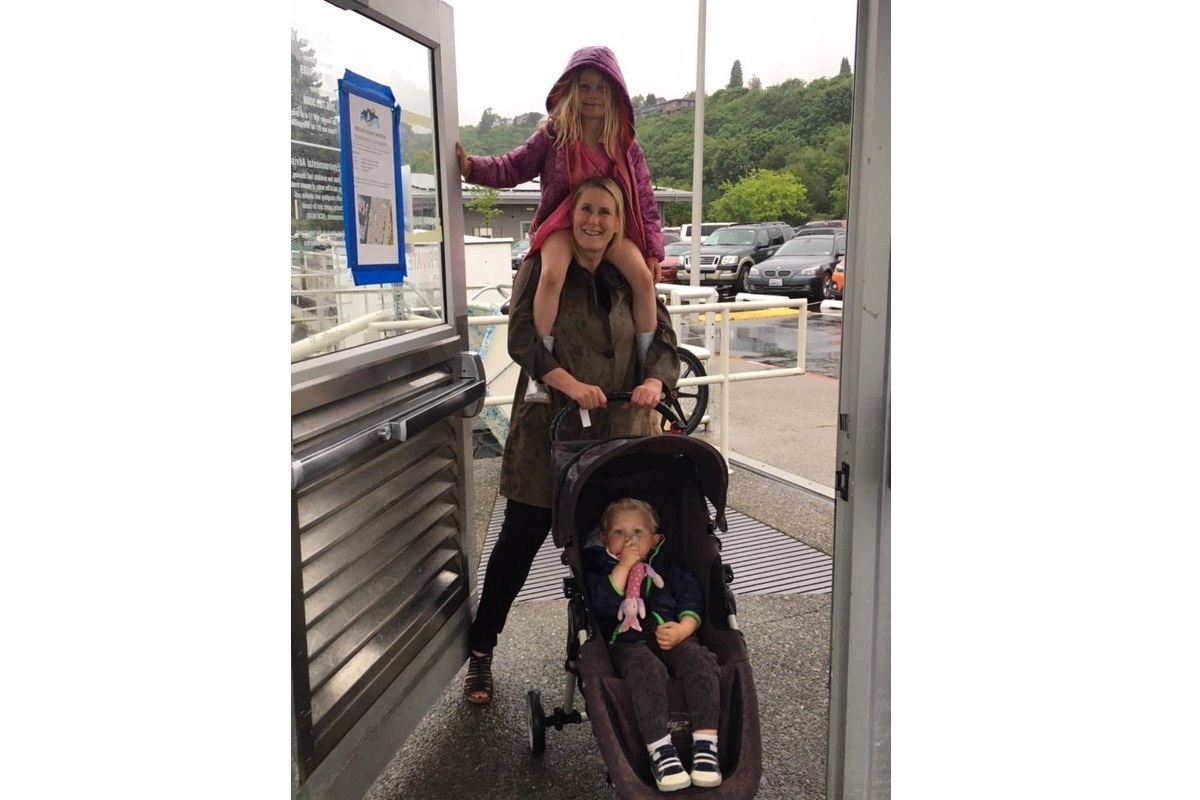
My nanny sees the same massage therapist, Deirdre, as I do and as does my sister-in-law who used to nanny for me. The other day Deirdre told my nanny that she can feel the side that each of us carries my baby on. Because of course he isn’t a baby any more, he’ll be two this month and he’s 30+ pound bundle of love. So we contort our bodies to accommodate his weight and motion, cook one-handed and endlessly stoop to pick things up off the floor twisting to use one arm while balancing his heft with the other. Even when I’m pushing the baby in the stroller, I sometimes find myself on situations where I carry my daughter on my shoulders and hold a door open with my foot to get the stroller through. Then we schedule an appointment with Deirdre to help us put our bodies back together.

I’m happy to contort myself for my children. That feels like part of the process of extending myself to help them grow. But it makes me think the ways that I’ve contorted myself in relationships. Because carving my work and enjoyment time out of the space after I’ve made sure everyone else is taken care of and living in a house where projects don’t get finished and supplies are spread all over sounds like what comes with the parenting territory but also describes what I’ve previously done for some the men in my life.

With kids, this is tolerable because I know they’ll change. And even if they don’t learn how to pick up after themselves, one day they will not live with me, or so I hope. But when I think back the relationships I’ve had, I think I’ve often contorted myself because I’ve been unwilling to say, “I can’t live like this.” And if I dig really deep, I have to admit that don’t say that because I believe that love requires women to not ask for what they need and to instead just be grateful for what they have.

But I am starting to reshape that belief. Because when I play a role, I don’t feel seen as me. Then I require time away so I can take the role off and need people like Deirdre to restore me. I’m coming to see I only have endurance for life that is authentic and that is changing how I show up. I’ve come to see being real as part of having faith that others will truly love me if I do the hard work to let them.

What I’m learning is that there are a hundred little ways to practice saying what I need so that I can change alongside my kids. “Clothes” is sometimes all I have to utter to remind my daughter to pick up the outfit she just took off and threw on the ground instead of doing it myself. “Not now” buys me a rest from exertion when my body is just too tired. And “I’d like” is a great preface to naming what I want to do for fun. The repetition is necessary for both me and for them. I’ve been able to see how I can be optimistic, warm and loving AND real. I’m finding that I have a lot of opportunities to practice being grateful for what I have — and also asking for what I need.