Without Leaving Where He Was

At some point, you have to realize that some people can stay in your heart but not in your life.” – Sandi Lynn

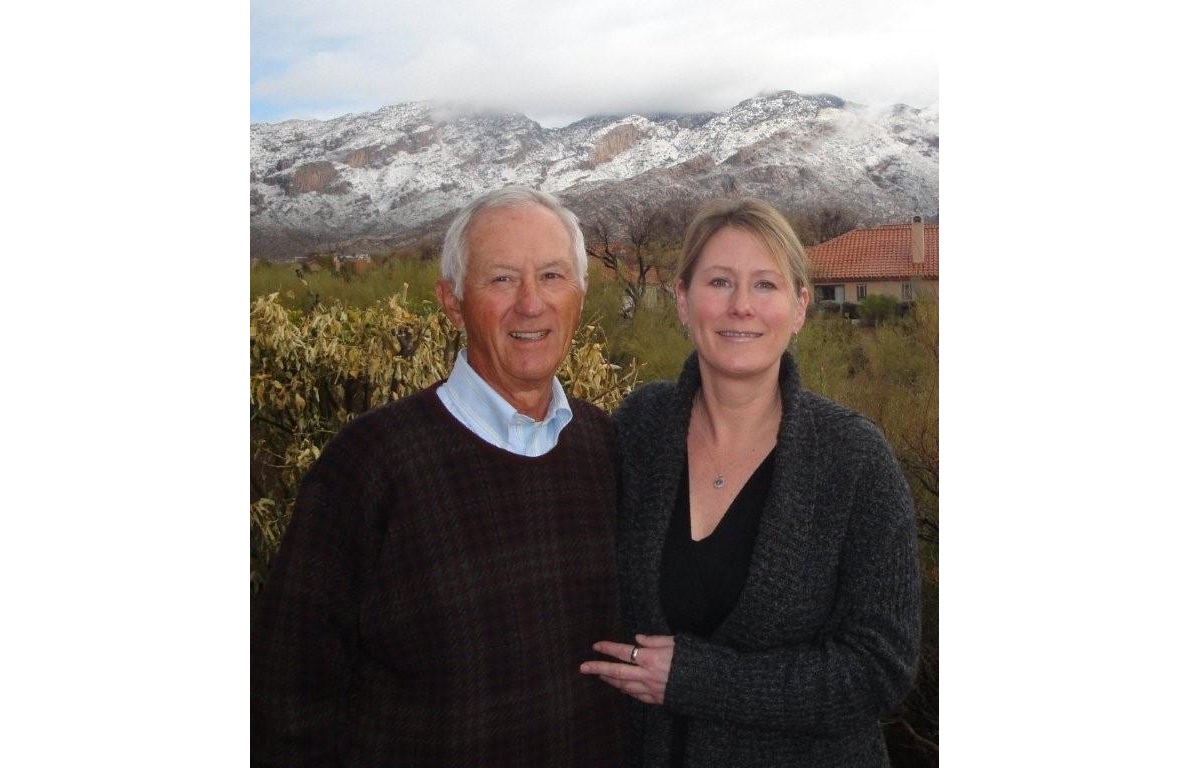
I’ve written so much about my dad that it’s surprising that I still have something more to say about him. Except that even eight years after his death he’s still teaching me things.

There’s a phrase that my brother used for my father at his funeral, “He met you where you were without leaving where he was.” When Vicki graciously interviewed me about the book I wrote about my dad on this week’s Sharing the Heart of the Matter podcast, she asked me about it. In the same way that my Presbyterian pastor dad said that every time he wrote a sermon about a topic it made him more focused on that topic, her asking me about it has made me so much more aware of what an awesome trait it is.

I’ve been thinking about the part of the phrase “without leaving where he was.” Because it’s a lesson that I am learning all the time. I get around my climbing friends and have an enormous urge to work out, my emotive friends and I want to prove I can match their disclosure, or spend time with my children and my creativity explodes. I think that urge to blend in to our current environment is strong for humans – or at least for me.

Here are some of the things I noticed about how my dad, who was also a people pleaser handled this. I’ve spent some time reverse engineering it and come up with five examples:

If he was around someone grieving or sad, he’d definitely dial his energy down. If they were secular, he wouldn’t say anything particularly faith based to them. But he still radiated his love that was based on the belief there was something bigger than this moment, this life, and this pain. He never left his faith behind even when he wasn’t talking about it.

If he was on the golf course with foul-mouthed partners, he didn’t start swearing. But neither did he seem to mind if someone else did. He knew what his values were and was confident in them that he didn’t trade them to fit in. But he was certain enough of who he was so that he seem to understand that others’ behavior didn’t diminish him and therefore freed him from judgment.

If my dad walked into a room or you crossed paths with him in the store, on a hiking trail, waiting for a table at a restaurant, or anywhere else, his presence was palpable. He exuded well-intended welcoming. It wasn’t about him, as it can be sometimes when someone charismatic enters the room, but instead was about a curiosity and interest in others. He didn’t need to tell you who he was but instead was excited to find out who you were.

In that same way, he assumed a lot about the capabilities of others. He was the quintessential “I see things in you that you don’t see in yourself” guy. He would extend himself to help get others to the starting line – but had faith that you could continue on from there. He could help on an effort without needing to own it or control it.

My dad worried over relationships and conflict. It was palpable when something worried him – but then he’d move to do whatever he felt would restore his part of the balance. He definitely followed the advice of one of his favorite quips, “If you have to eat crow, eat it early while its tender.” Then he seemed to be able to let it go so that time and faith could do their parts.

When I break down that phrase that my brother used for my dad, I realize how much magic there was in not leaving where he was. It’s one of the reasons he accomplished so much in his life – because he didn’t waste any time or energy being someone else.

If you are a podcast person, I’d love for you to listen to the Sharing the Heart of the Matter podcast (and subscribe). It’s now on Spotify, Apple podcasts, Amazon podcasts, and Pocket Casts as Sharing the Heart of the Matter. And here’s a link to the shownotes to this episode about Finding My Father’s Faith.

In Awe

Our life experiences will have resonances within our innermost being, so that we will feel the rapture of being alive.” – Joseph Campbell

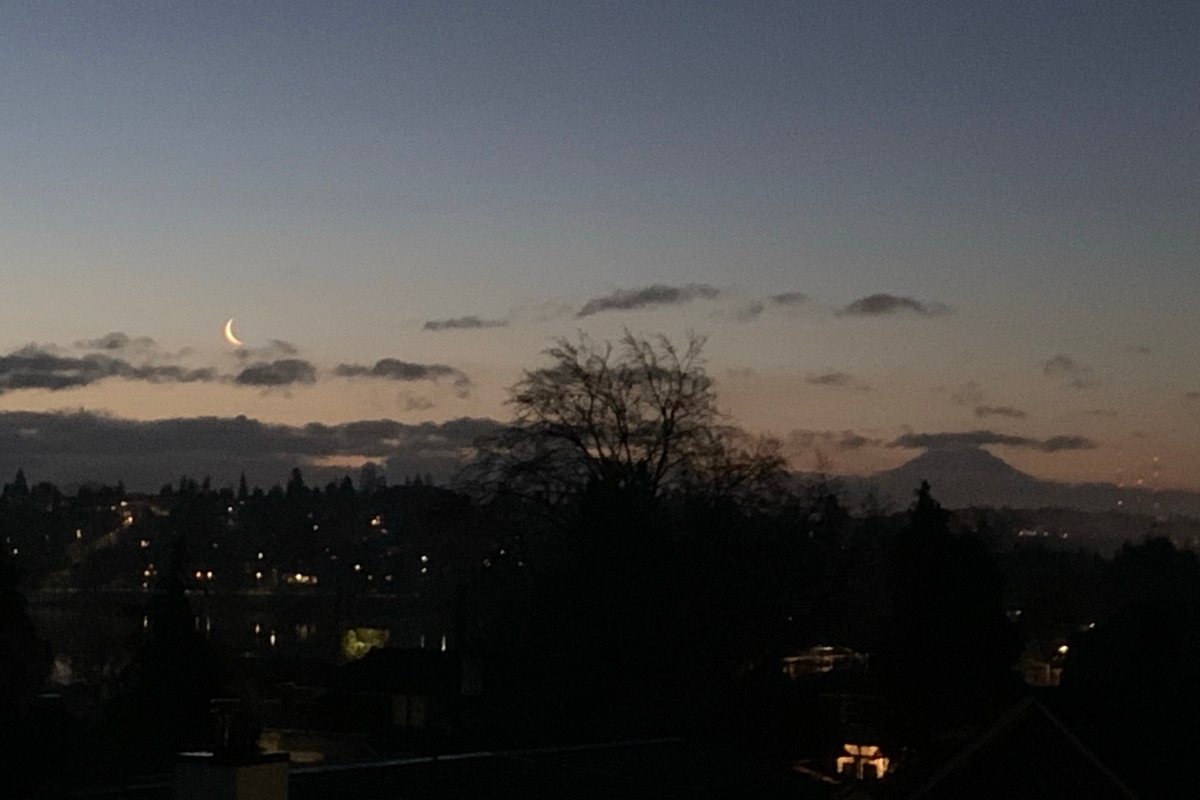
I frequently divert and delay my family’s morning routine to take a look at the sunrise. This time of year, while it is often grey, there are also so many sunrises that we can witness together since the sun and my kids are getting up at about the same time, even if it means we are going to have to rush a bit to get to school. If you follow me on Instagram, you probably are tired of my sunrise pictures.

But I still persist because I’m not tired of sunrises and my kids are still willing to humor me. A book that just came out on January 3rd of this year is helping me to understand why it matters to me to witness this every day. Awe: The new Science of Everyday Wonder and How It Can Transform Your Life by UC Berkley psychology professor Dacher Keltner talks about the effect of awe in our lives:

“How does awe transform us? By quieting the nagging, self-critical, overbearing, status-conscious voice of our self, or ego, and empowering us to collaborate, to open our minds to wonders, and to see the deep patterns in life.”

Dacher Keltner, Awe: The New Science of Everyday Wonder and How It Can Transform Your Life

Whoa – I want more of that. In fact, if I had to give a reason why I meditate, write, and now podcast – I’d be hard pressed to describe it more perfectly than the quote above.

(I did just throw podcast in to the list above – because I’m launching the Sharing The Heart of the Matter podcast with Vicki Atkinson today. It’s a podcast where we want to focus on people sharing their heart stories – please listen and also if you have one to tell, let me know so we can record it.)

The definition of awe that Dacher Keltner gives is:

“Awe is the feeling of being in the presence of something vast that transcends your current understanding of the world.”

Dacher Keltner, Awe: The New Science of Everyday Wonder and How It Can Transform Your Life

When he collected personal narratives from people in twenty-six different countries in the world, he and his team distilled down “eight wonders of life, which include the strength, courage, and kindness of others; collective movement in actions like dance and sports; nature; music; art and visual design; mystical encounters; encountering life and death; and big ideas or epiphanies.

I think of the awe I felt when I was pregnant with Miss O and was writing my book about my dad. He’d died suddenly in a bike accident just the day after I’d finalized my IVF plan to get pregnant. As I took the recordings that I’d made with him, and wrote the book about him that I told him I wanted to write (but thought it would be with him in attendance), I felt the swirl of birth and death every day. I danced in the love of my dad and the life that was within me for all of those nine months.

Then on the night after I finished every last line edit, I went into labor and gave birth to my daughter. In many ways, I gave birth to two things – the book Finding My Father’s Faith and the beautiful Miss O. All of this happened in a way that was far bigger than me. There is much that I can’t name or understand about that experience except to say that I wasn’t alone as I wrote. There were definitely three of us there – me, my dad, and my baby. I was in awe for sure. It’s a beautiful feeling – just like witnessing the sunrise every morning.

(featured photo is mine – the moon and the mountain)

Say That Again

One of the most sincere forms of respect is actually listening to what another needs to say.” – Bryant McGill

My brief foray into podcasting has taught me something about listening. I tuned in to the podcast I did with playwright and friend, Jack Canfora, about his play Step 9 that was just released as a theatrical podcast. As the podcast played, I heard things that I didn’t remember from the conversation. And it wasn’t that I forgot, it was that I never caught some particular details.

This surprised me because recording a podcast conversation is about as ideal of a situation for listening as I can imagine. I was at home by myself, no distracting music (or family members), my email was turned off and I’d done the work to get myself completely comfortable before the conversation began. I was in a space of complete focus on listening and having a conversation.

The biggest lapse that struck me was in a part of our conversation when Jack was moving his computer. We recorded the podcast on a video call so my visual field changed as he changed spots. There isn’t any break in our dialogue but that little disturbance was enough so that I caught the major drift of what was happening but not the undertones.

Here’s my take-away – we never listen as well as we think we do. And since very few of our conversations are recorded, we don’t have the chance to go back and understand what we missed (and thank goodness – that would be time consuming!).

And if we’re talking and someone is looking us in the eye and nodding, they still might not be getting it all. Especially if there is ANYTHING in the environment to distract them.

This brings to mind the classic experiment on selective attention where researchers asked people to count how many times people in the white shirts passed the basketball to each other. And then asked if the people that had watch the video if they spotted anything unusual that happened in the background. The finding was that many miss the other things happening in and around the action.

Some of the best wisdom I’ve heard about speaking and listening is from author Paula Underwood Spencer, “If you want to be truly understood, you need to say everything three times, in three different ways. Once for each ear…and once for the heart.

If we assume we get it all the first time it’s said we’re probably wrong. I know because I recently heard myself on a podcast.

Democratizing the Theater

Gotta move different when you want different.” – unknown

My friend, award winning playwright, Jack Canfora has been working with his theater company, New Normal Rep to democratize theater. That is to say, they are trying to bring a dramatic theater experience to everyone, no matter where we live and at a cost that isn’t a whole paycheck.

So recently New Normal Rep produced a theatrical podcast of Jack’s play, Step 9 and released it on all podcast platforms for free. Doing it this way means a completely different marketing paradigm than brick and mortar theaters and they are relying on social media and word of mouth to spread the word about this really great play.

I was lucky enough to be able to interview Jack about Step 9, apologies and healing on the latest Wise and Shine podcast. For anyone who does podcasts and is interested in a great conversation, you can listen to the podcast on Spotify or via this link: Wise and Shine Podcast Episode 10: Jack Canfora on Step 9

And if you’d like to see the podcast show notes, I’ve posted them on Wise & Shine: Episode 10: On Step 9, Apologies and Healing

Finally, I highly recommend checking out the audio drama, Step 9. You can find it by searching New Normal Rep Step 9 wherever you podcast or going to: https://tinyurl.com/Step-9-NNR