The Mysterious Case of the Barking Dog

In school we learn that mistakes are bad, and we are punished for making them. Yet, if you look at the way humans are designed to learn, we learn by making mistakes. We learn to walk by falling down. If we never fell down, we would never walk.” – Robert Kiyosaki

On a recent afternoon I was going through the mail in the mailbox and found an unsigned, handwritten note on a plain piece of paper that read (including word error),
“Please do not leave you dog out barking. It is unpleasant for neighbors.”

My ten-year-old daughter, Miss O, saw the look on my face as I tried to discern the message. She came to read over my elbow. Sensing a family meeting, six-year-old Mr. D wandered over and asked what we were doing. We read the note through one more time.

But Cooper doesn’t bark,” Mr. D said. And he’s right, Cooper isn’t a barker. He’ll steal your socks and your steak but he’s quiet about it.

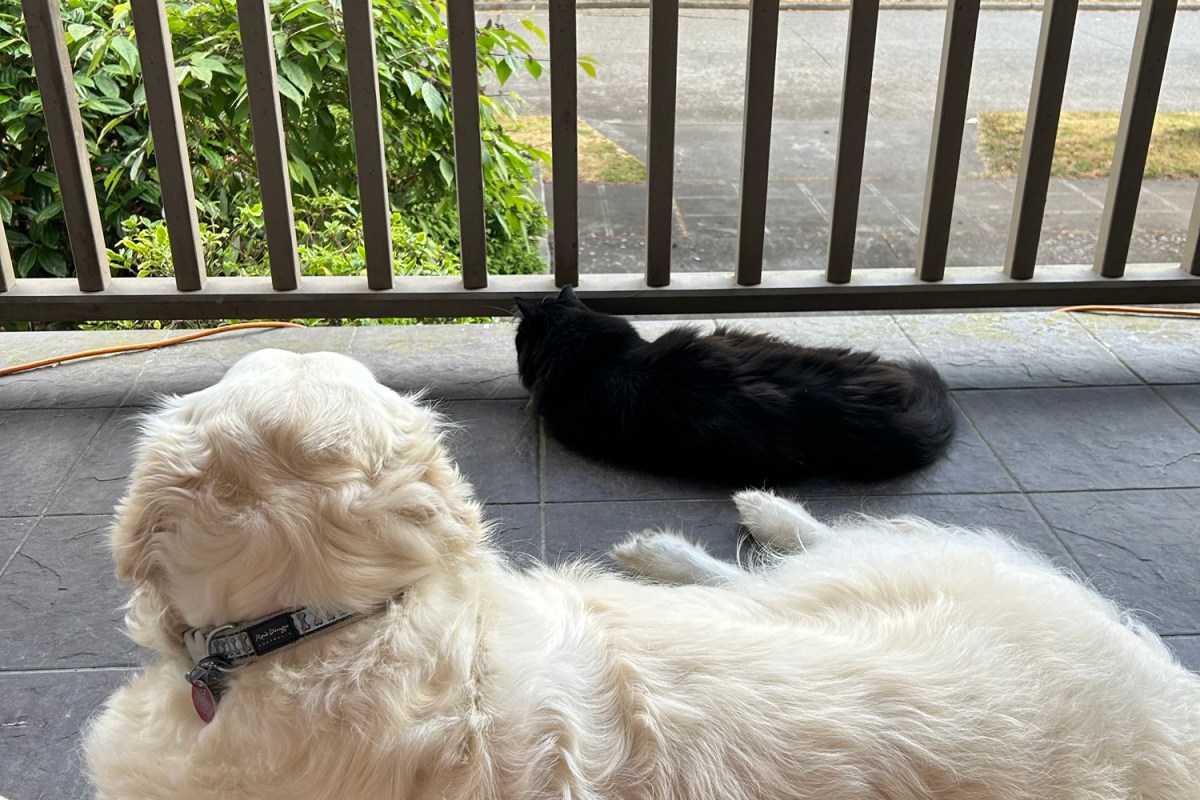
And we don’t leave him outside,” Miss O added. Also true. Cooper is in the habit of lying on the front porch to watch the neighborhood but that’s when we’re home and the door is open.

Maybe they have us confused with someone else,” I mused.

We couldn’t figure out the note but we were united in our righteous indignation in defense of Cooper’s honor. Mr. D suggested he rip up the note and throw it as far as he could.

It wasn’t until the next morning in the shower that I connected the dots. One day the week before we were getting ready to leave the house so that I could drive the kids to camp. Cooper was out on the front porch. I called him in and locked the door.

But when I came home about 90 minutes later after dropping the kids and picking up supplies, Cooper was on the front porch and the door was unlocked. One of the kids must have opened the door to check the weather and Cooper snuck out. He wasn’t barking when I came home so I didn’t realize it right away. He must have barked when he realized he was trapped out there.

The funny thing was that I almost didn’t tell the kids once I figured it out. Our righteous indignation felt so comfortable that I kinda wanted to keep wearing it.

But I also know that it builds up over time. The vulnerability of confession doesn’t come naturally to me, but I’ve found owning my errors and frailty keeps my pipes clean. Everything flows better when I don’t let the grime build up. More than that, I feel everything more fully when I shake off the protective coat of righteous indignation or defensiveness.

And it creates space for learning. When I told the kids my solution to the mysterious case of the barking dog, they both nodded and went, “Ooohhh, right!” I bet we’ll remember that lesson.

(featured photo is mine)

You can find me on LinkedIn: https://www.linkedin.com/in/wynneleon/ and Instagram @wynneleon

I host the How to Share podcast, a podcast about collaboration – sharing leads to success.

I also co-host the Sharing the Heart of the Matter podcast, an author, creator and storytelling podcast with the amazing Vicki Atkinson.

The Verdict

Integrity is the ability to listen to a place inside oneself that doesn’t change, even though the life that carries it may change.” – Rabbi Jonathan Omer-Man

Elizabeth Holmes, the tech entrepreneur and founder of Theranos whose trial has fascinated me for the last 4 months, was found guilty on 4 counts of fraud and conspiracy for lying to investors and not guilty on 4 counts. The jury was hung on 3 counts.

As I’ve written about this, I realized that it’s triggered my past experiences with money in tech and the question of how to develop character when people are throwing money at you. Listening to the jury’s decision, I don’t disagree with their findings but I’m flooded with empathy for her.

That’s probably because I can relate in a very small way to her experiences. The specific incident I’m thinking of was in 2007 when my two business partners (one of whom was my husband) and I were buying a small office building for our little company of 19 people to use as an office.

On the Friday before the closing, the bank realized that we all had one more paper to sign – a personal guarantee of the bank loan. It had to be received by Monday and my husband and the other business partner were traveling to a client’s wine tasting weekend. My husband wanted me to forge our other business partner’s signature on the document. The other business partner wanted me to forge his signature on the document. Neither of them wanted to be bothered to find a FedEx office from which to overnight the document in question.

I felt immense pressure to do it. The two of them, my husband and our other partner had made many business and personnel decisions that I didn’t agree with and I thought I could insulate myself by just focusing on my part of the business. But this was over the top. I held my ground after repeated phone calls and texts and refused to do it. There was no way I was going to forge a signature on a personal guarantee for a bank loan.

Two years later after the market crashed in 2008 and real estate prices dropped significantly so that the valuation of the building was under water, the bank put the loan into a special assets group. We had never missed a payment (and thankfully never did) but they felt the loan deserved additional scrutiny. Fortunately, my business partners had eventually figured out how to FedEx the personal guarantee document so it was on file.

By this time both the business partnership and my marriage had fallen apart so I was the one handling all the details. To say I was so relieved I didn’t forge that signature is an understatement. I shepherded the building through those tough years until we could sell it for what we bought it for and gratefully walked away.

But all this happened when I was almost 40-years-old and had almost 20 years of business experience both working for others and for myself. I doubted myself. I felt the huge pressure. I thought it would have been so much easier to not have the values I was raised with. I’m not so sure I would have been able to hold out to what these guys said was “business as usual” had I been in my 20’s like Elizabeth Holmes.

We don’t often get to see what we are able to avoid when we don’t do something risky. In this case I did and now with the trial of Elizabeth Holmes, I’m reminded of it again. If it doesn’t feel like the right thing to do, don’t do it. It doesn’t matter if someone tells you it’s how it’s done or makes it seem like how sophisticated and experienced people act. Thanks for raising me with these values, Mom and Dad!

(featured photo by Pexels)

Building Character

There are no shortcuts to any place worth going.” – Helen Keller

I’ve been listening to the Dropout podcast about the Elizabeth Holmes trial this fall. She is charged with 12 counts of felony fraud in regards to how she handled investor money and advertised to patients. As I said in a previous post, High-Tech Drama I’m fascinated because in my career, I’ve been privy to all the money in high-tech, mostly at Microsoft and how it influences innovation and character.

Elizabeth Holmes was 19-years-old when she dropped out of Stanford and started Theranos in 2003. She positioned the company as a start-up that would revolutionize the blood testing industry by being able to test for a wide array of factors on a portable testing device that only required a small volume of blood.

It never worked – or at least not reliably. For the short time that the devices were rolled out at Walgreens, they provided bad test results like telling a man he had indications of a prostate problem when he didn’t, another that he was HIV+ when he wasn’t, and an excited mother-to-be that she’d miscarried when in fact she hadn’t. Clearly, there were major problems with big consequences for people that received inaccurate results.

I think this trial could be titled “What happens when you give a 19-year-old college dropout 750 million dollars.” (To be fair, Elizabeth Holmes raised most of the 750 million dollars when she was in her 20’s.)  I don’t assume that you have to go to college to be a success but I would think that some training or apprenticeship on how to be a leader, manage finances and run a company, whether it be institutional learning or otherwise would be helpful.

It’s left me wondering if it’s possible to develop character when you are 19 years old and people are throwing money at you. It’s been intimated that she shows narcistic tendencies but I would think it would be more surprising if she didn’t, given that trajectory.

Elizabeth Holmes, who is now 37 years old, testified at the trial. I cannot begin to do justice to all of her testimony but she seem to do a beautiful job of representing herself. She said there’s many things she wished she did differently – like when she put logos from other companies on documents to make it seem like a 3rd party endorsement. But there’s a lot that she can’t remember, even when emails and texts are read to refresh her memory. Her defense has pointed the finger at a lot of other people: the investors should have done better due diligence, the lab director should have spoken up more loudly, her boyfriend and COO was controlling her and so on.

The thing that I heard Elizabeth say that resonated a great deal with me was something like “The investors weren’t interested in the details of what we could do today, they wanted the big vision of what we could do in five years.” Whatever her intent was in making false statements, that matches much of what I’ve seen in high-tech. People want the hear the magic of what might work one day and are willing to entertain a lot of smoke and mirrors in the process of trying to make something real.

If Elizabeth is found guilty (the jury is currently deliberating), there must be hundreds of CEO’s currently doing exactly the same thing. In no way am I justifying lying and deceitful practices but I’m affirming that venture capitalists of Silicon Valley aren’t usually trying to create truth-tellers and reinforce good values.

All I can say is that I’m really glad that no one handed me three-quarters of a billion dollars at age 19, or at any age. I’ve gained so much character by having to earn one dollar at a time.

(featured photo by Pexels)

Cut the BS

Life is the sum of all your choices.” – Camus

The first time I did preschool with my daughter she had just turned 2 years old and it was a co-op preschool. Parents worked in the classroom one day per week and dropped off our child the other day of the week. The teacher said to us, “Never leave without saying good-bye to your child. It doesn’t work to sneak out.”

I think that might have been the best parenting advice that I may have ever received. I took it to mean to not undermine my child’s trust in me by being sneaky. Just because you can fool a small child doesn’t mean you should. I didn’t know any better at the time but witnessing parents do the “sneak-away” approach at other moments, I’ve seen the resulting effect when it’s happened. The child seems both dismayed that they can’t find the parent as well as beyond consolable because they want the parent for comfort.

I want to claim that I knew sneakiness doesn’t work in life before I was a parent but that would also be BS. I was not attuned to the feeling of tension that signals a choice of not facing or facing the emotions of someone who will be unhappy by what I chose to do. I have ducked out of many parties with a white lie about why I couldn’t come instead of telling the host the truth that I didn’t feel like coming. I shudder to think about the time I canceled going to see U2 with a friend and his son because I had a colossally bad day at work.

But what I’ve learned from parenting isn’t about lying per se – because I don’t tell my kids the truth about many things like Santa and the Easter Bunny and whether or not I’ve ever had sex. It’s more specific to not telling the truth in order to avoid emotions. Like saying we are out of cookies instead of being the bad guy who says “no” because they’ve had too much sugar.

Instead of amplifying feelings by adding the horror of being tricked, this advice has taught me to lean into the discomfort of the initial disappointment. It also honors the emotional intelligence of anyone that I might mislead who can often sense they are being tricked, even at a very young age, even if they don’t know exactly how.

I’m leaving. I will miss you and can’t wait to scoop you up when I return. There is nothing like the sweetness of reunion and it is not possible until we recognize the truth of being apart.

(photo by Pexels)

Know Your Audience

Integrity is the ability to listen to a place inside oneself that doesn’t change, even though the life that carries it may change.” – Rabbi Jonathan Omer-Man

My 6-year-old daughter asked me yesterday if stealing was bad. I told her it was always wrong and then tried to illustrate it with the example of us going to the store to buy groceries and then coming out and finding our car was stolen. How would we feel? Would that be okay? She countered, “But then we could just walk home.”

I agreed with her resourcefulness and then tried another example. “What if someone stole our Halloween decorations we just put up this weekend?” “That”, she emphatically agreed, “would be so, so bad! You can’t just go around taking other people’s Halloween decorations!”

Which reminded me that while our values don’t change, stories need to be tailored to the audience. 😊