Stories Matter

I began to realize how important it was to be an enthusiast in life. Embrace it with both arms, hug it, love it and above all become passionate about it. Lukewarm is no good. Hot is no good either. White hot and passionate is the only thing to be.” – Roald Dahl

This past Tuesday, eight-year-old, Miss O was working on a school project and announced “Volcanoes are boring.”

I harumphed thinking about all the beautiful, scenic, and climbable volcanoes in our vicinity. “I love volcanoes,” I said.

She shot back, “I bet you could make volcanoes interesting.

So at bedtime that night, I told her and four-year-old Mr. D. about when I was 11-years-old and living in Spokane, Washington. We were driving home from church on a Sunday afternoon in May, 1980. We stopped to talk with a neighbor who told us that Mt. St. Helens had erupted. Mt. St. Helens was on the opposite side of the state from us. The eruption blew the top 1,300 feet and the north side of the mountain off. We nodded with interest and went about our day as usual thinking it had no bearing on us.

As we drove home from a playdate four hours later, the sunny May sky turned gun metal gray and ash started falling. We carefully drove home with our windshield wipers pushing the dusty pile off our windshield.

In Spokane where it snows usually from October through March, school is never canceled because of weather. But after Mt. St. Helens blew, they told us to stay indoors, and school was canceled for a week. Everyone tried to figure out what to do with Mt. St. Helens ash. We collected it to polish silverware. Others used it to make ceramics. My friend, Jiffy and I used it to build sand (ash?) castles. When we drove across the state on vacation that summer, we stopped on several occasions to watch impressive ash dust devils form in fields across the state.

Then I told my kids about how, in the year 2000, twenty years after it erupted it, I climbed Mt. St. Helens for the first time. It’s hard to get permits to climb in the summer. The park service limits traffic to help the flora to grow back. [And here I may have embellished a little side story imagining how excited the scientists were when they discovered the first flow to grow back after the eruption. “Look, look, the first tiny flower has come back to St. Helens!!”]

In order to bypass the permit lottery process my friend, Jill, and I climbed in the late spring when the traffic is low so it’s easy to get a permit. We climbed up 6,000 feet on a sunny April Saturday to look over the rim. Even though it wasn’t very high (any more) was a long one-day climb.

The view over the rim of Mt. St. Helens to the little pot-belly lava dome in the top center.

And the rim? Well, it was fascinating to look over the edge into gaping hole below with a little pot-belly lava dome in the middle. And then to have a sense of surreal shock that nothing was below us.

The rim of Mt. St. Helens 20 years after the top and half the mountain blew off.

For as exhilarating as it is to stand on a mountain top, it’s a little dizzying to stand on only half of one.

This bedtime story session was on Tuesday night. By Wednesday afternoon, Miss O was telling me facts about volcanoes. “Mom, did you know there are three types of volcanoes?

I didn’t even try to hide my glee.

This theme shows up for me again and again. When we share our stories – it matters. Our authentic voice telling our experiences are more than just a bedtime story. It’s the passing on of energy, passion, and warmth.

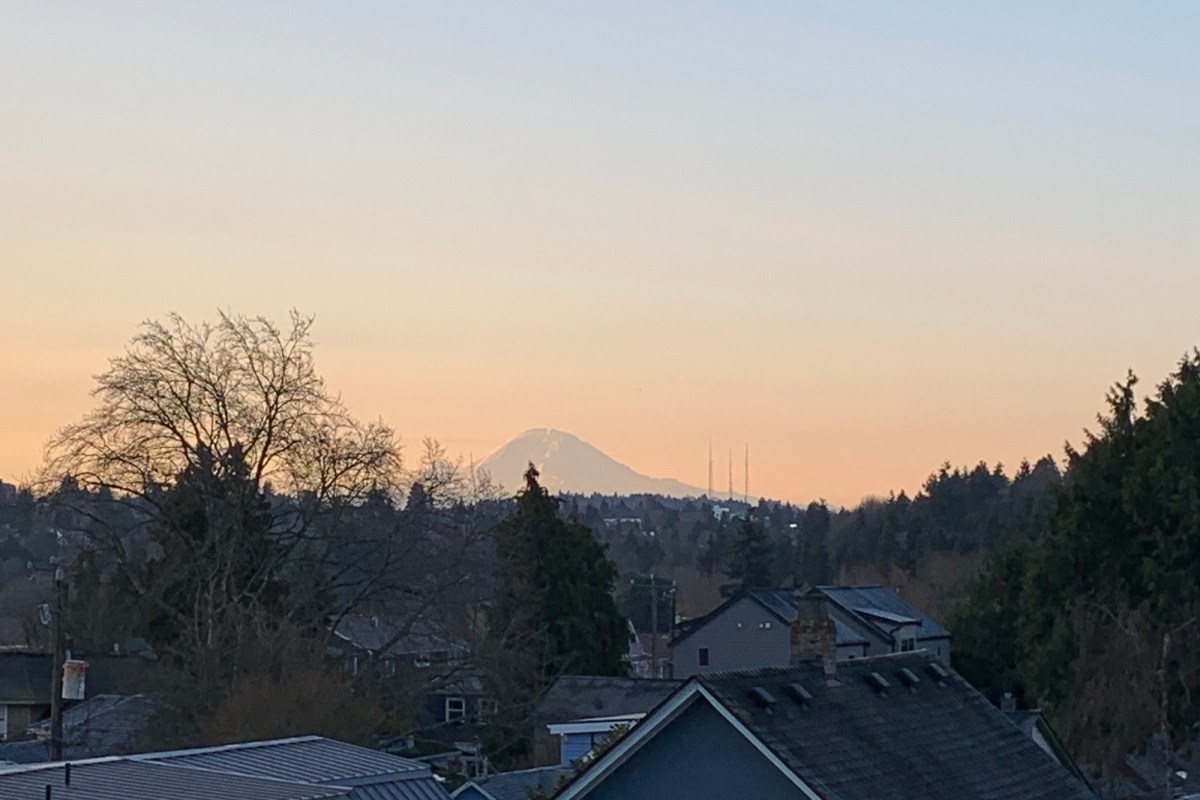
(photos in this post are mine – the featured photo is my favorite volcano, Mt. Rainier)

And speaking of authentic stories, Vicki and I talk with writer and blogger, Cheryl Oreglia on our podcast today about her experience at the San Francisco Writer’s conference. She sells us the idea that not only are we the only one to tell our stories – we might be obligated to. It’s such a great episode. Please tune in by searching for (and subscribing to) Sharing the Heart of the Matter on Apple, Amazon, Spotify or Pocketcasts

Or click through to the show notes Episode 61: The Writers Conference with Cheryl Oreglia for the link to listen on Anchor on whatever device you are using.

The Feeling of Community

The deep irony, in order to be social, we first have to be individual.” – Nicholas Christakis

This was originally published on 2/16/2022. Heads up – you may have already read this.


When I was climbing mountains, I’d regularly sign up for a guided climbing trips, sometimes with a friend and sometimes by myself. It was a great way to travel and also get to climb a mountain or two. Typically we’d all converge in a meeting place and do the initial meet and greet and then go from there.

The groups of people that would come together were always interesting. I’m thinking about a particular climb of two volcanoes in Mexico. We all flew to Mexico City where we met our guides and fellow climbers before riding in a van to the base of Mt. Ixtacchuatl for our first climb.

The group was mostly Americans but otherwise there wasn’t an easily defined demographic, not gender, education level, personality type other than love of mountains.  On this particular trip, there were very outgoing people like my friend, Jill, and man named Trent who loved to talk and help anyone with anything. Most of the group was like Paul from Greenfield, NY who was really nice to talk to but more reserved about initiating conversations. There was our guide, Phil, who like to just spit out wisdom or quips in one line but not talk endlessly (e.g. “Watch out Jill, that guy has more moves than an earthquake.”)

As we went around doing introductions, one man named John stated very clearly, “I don’t like people. I’m just here to climb the mountains.”  Which was fine because that’s what we were there to do.

We summitted the first mountain, Mt Ixtacchuatl (17,338 feet) on October 31 and then headed down to celebrate the Day of the Dead in Puebla. After a day of rest, we started up our second mountain, Mt. Orizaba (18,491 feet).

After being dropped by trucks on the mountain, we spent the evening in a hut. At this point, we’d been together as a group for about 5 days and we were having a great time and working together pretty well as a team. The guy that didn’t like people was a very good climber and mostly stayed to himself, grabbing his share of dinner and finding a quiet place to eat it.

Around midnight, we got up from the few hours of rest we’d gotten and started preparing for our summit attempt in the dark using the light of our headlamps. We climbed steadily in the dark for about 6 hours until we reached an exposed couloir. We paused as the guides tried to get some ice screws deep enough into the fractious ice to secure our trip across the steep gully. Eventually we realized that the conditions wouldn’t allow us to cross safely over that part of the mountain and our summit bid had ended.

As we sat on the mountain watching the sun come up in no hurry to get anywhere, John, the climber who didn’t like people, pulled off his boot and found a Payday bar. He’d put the candy bar in his boot while preparing in the dark and then forgotten to take out. After being climbed on for 6 hours, it was shaped like an orthodic. He pulled it out, showed it around and we all had a good laugh alongside him as we imagined the journey of that candy bar. Even John enjoyed for that moment being part of a group that understood the crazy things that happen on a climb.

That particular event created an idea of community for me. One where we don’t have to all be best friends or come out of our comfort zones but can still enjoy the camaraderie of a shared experience focused on a common interest.

(featured photo is mine of the group leaving the top of Mt. Ixtacchuatl)

Marking the Trail

The softest things in the world overcome the hardest things in the world.” – Lao Tzu

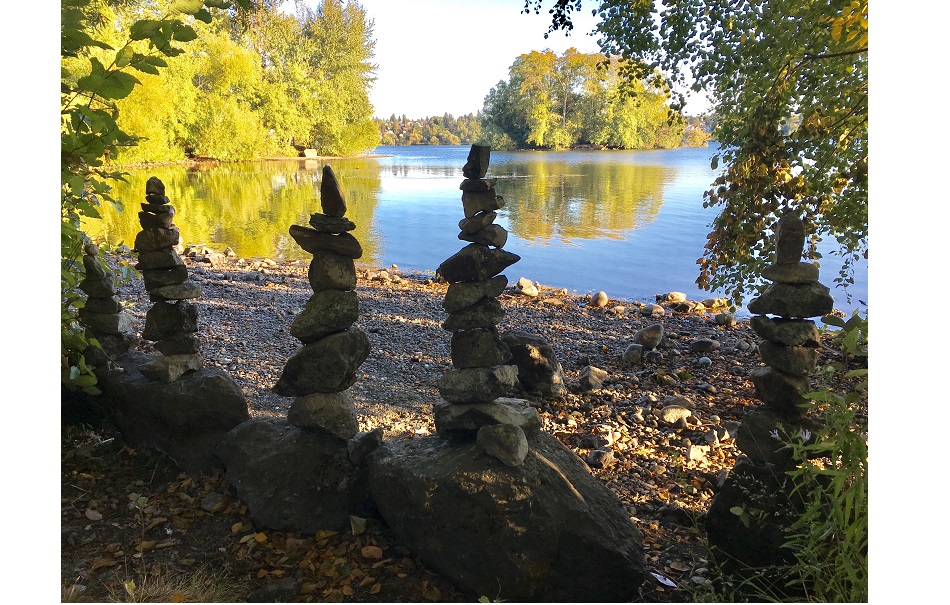
Almost 4 years ago I was out walking on the day after the mass shooting in Las Vegas and came across these beautiful rock cairns on the shore of a little local lake. It was a calm and quiet morning with the chill of October in the air and I just stopped in my tracks, wanting to spend a sacred moment in the presence of this inspired creation.

I imagined that in the wake of something so horribly violent, someone needed to make themselves feel calmer by creating something beautiful. Of course I’ll never know if it worked for them but I do know that just looking at this impromptu art installation worked to soothe that raw and exposed grief I was feeling.

When I think about whether anything I do, say or write has any meta-effect on the world at large, I think of those rock cairns. I might be working out my own grief, demons, cares and worries but if I do it in a peaceful and creative way, I have a small chance that it will express empathy and understanding for others walking a similar path.

Most of the rock cairns I’ve come across are on hiking paths marking the way to go. They are minimally invasive ways to communicate that the trail continues here. They are ways that one human tells another that they’ve walked this same way and don’t want anyone else to feel unsure or to be lost. May we all continue to be rock cairns for one another, marking the trail with peace.