At the Core

Whether you think you can, or you think you can’t — you’re right.” – Henry Ford

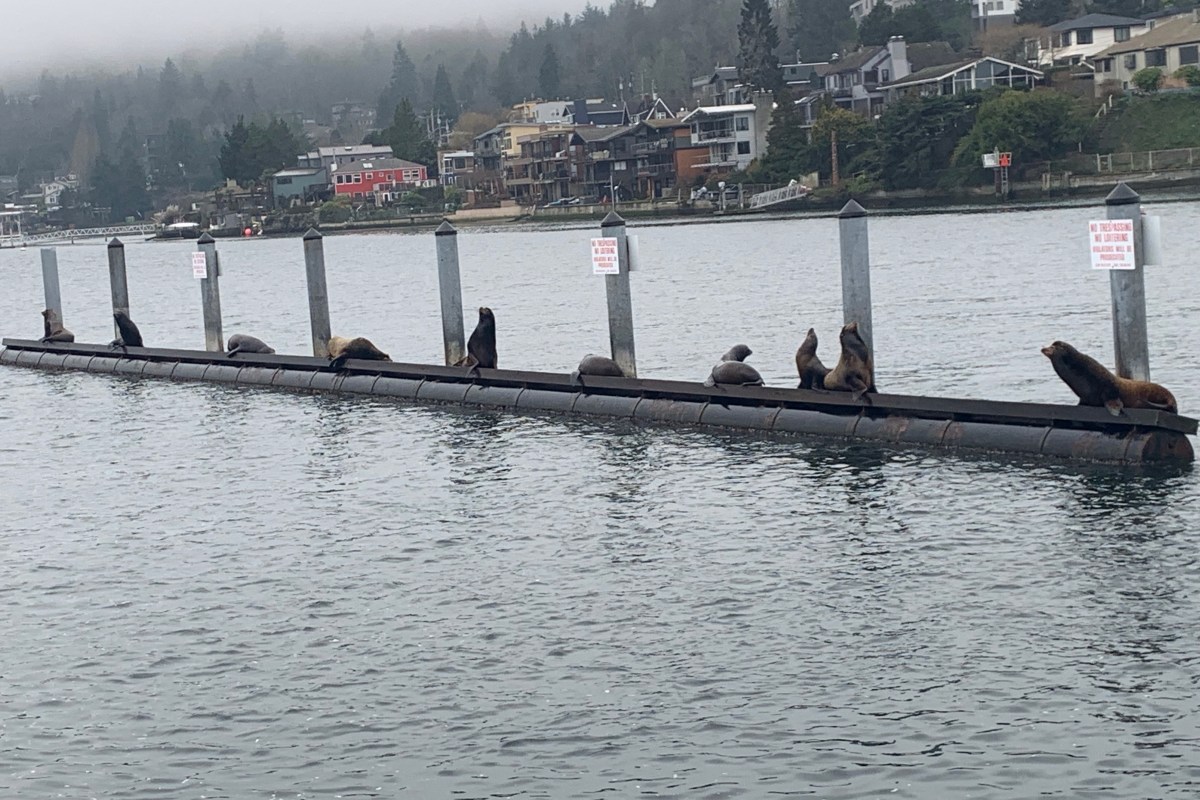
Last weekend we drove about 15 minutes down to Shilshole Bay on Puget Sound to see a dock where sea lions like to congregate. It was packed with sea lions – usually a dozen on the dock and I counted a least a dozen more swimming in the water.

Every once in a while, a sea lion would launch itself out of the water in an attempt to land on the dock. The new weight would make the dock roll one way or the other causing all the sea lions to bark. But there was one sea lion in the center who was doing most of the work to keep the dock level. It would lift its head high and shift its weight this way or that to stabilize the dock again.

It made me think of how impactful what is at the center is. As I was pondering what was at my core, Life, in that beautiful way that sometimes happens, delivered the answers to the question I’d just uncovered. In this case it was through the latest the Unlocking Us podcast about living into our values. In it, Brené Brown had an exercise to determine our core values.

Her research shows that when in a tight spot, most people call on their one or two go-to values. So on her site, there is a pdf of about 120 values. Her recommended approach was to circle the ones that called to you and then distill them to the two values that encompass what is central for you. It may change over time but this exercise was to identify what is key for right now.

Doing the exercise, I came up with faith and usefulness. Faith, which for me encapsulates confidence, courage, adventure, integrity, spirituality, openness, love, optimism and gratitude. Usefulness I thought did a good job of rolling up my other values of reliability, learning, kindness, growth, family, and independence,.

Over the years I’ve done a lot of work to strengthen my physical core. It has enabled me to carry heavy loads up mountains and I feel it most now when I hoist my toddler onto my shoulders. But thinking about my core values, faith and usefulness, I realize that they are what I go to again and again to power me when I have to dig deep. Like with the sea lions, when I am living into my values, they are the center that brings me back to level when the world is rocking.

Happily Ever As-Is

How simple it is to see that we can only be happy now, and there will never be a time when it is not now.” – Gerald Jampolsky

This week with the COVID quarantine and life interruptions that come with it – I’ve decided that happier ever after doesn’t exist. I blame the optimist in me that snow-balled me so I didn’t realize this until age 52. The optimist is always sure that the minute, day and week are going to go as planned and the grass is going to be greener after every milestone.

To be clear, I love my life now as a mom of 2 young kids. It’s delightful – they are bright, shining examples of love, light and inspiration.

And yet… I’m also always waiting for them to change. As an example, my two-year-old son likes the home-field advantage when he poops. He’s worked out how to be at daycare all day long without a dirty diaper and not poop until he gets home. Lucky me.

And my 6-year-old daughter frequently loses it when introduced to a situation where she has to play with kids in an unstructured environment. The two years of pandemic have meant she’s missed out on a lot of practice of that negotiation of rules and expectations that come when kids are playing and no adult is leading the way.

I know that both of those things will change sooner or later. I will potty train my son and work with my daughter on role playing and she will eventually get some more practice and mature.

This leaves me in great tension. How do I love my life as it is now and also long for things to change? It’s a paradox of life. It’s also why I’ve come to believe that happily ever after doesn’t exist. Because there will always be something that isn’t ideal and I’m waiting to change. Or something that I love that will also change. Or a disruption, hurry or maybe even… a pandemic that adds extra curve balls.

The funny thing is that I’ve gotten pretty good at appreciating the surprises that come with life. I’ve come to trust the Divine hand that holds mine and reveals in change and disruption what I need to learn. It’s just taken me until now to realize that there will never be a time that doesn’t come with unexpected twists. So I’m leaning into practicing “happily ever as-is.” It has a lot fewer expectations and even more delight.

(featured photo from Pexels)

The Next Right Thing to Do

Fear is the cheapest room in the house. I’d like to see you in better living conditions.” – Hafiz

I received the dreaded close contact notification last night. My 2-year-old son was exposed at daycare last week to someone who later tested positive for Covid-19.  

In the middle of the night I heard a single cough from him and though he’d been healthy all weekend, my mind was off and racing. I was tracing vectors of sickness with my family, trying to redesign the house to make it so I could both isolate and entertain my daughter, notifying all the people in my head. What I meant was making a list of people to notify but when I typed it “notifying all the people in my head” it also rang true – I had a whole committee up there.

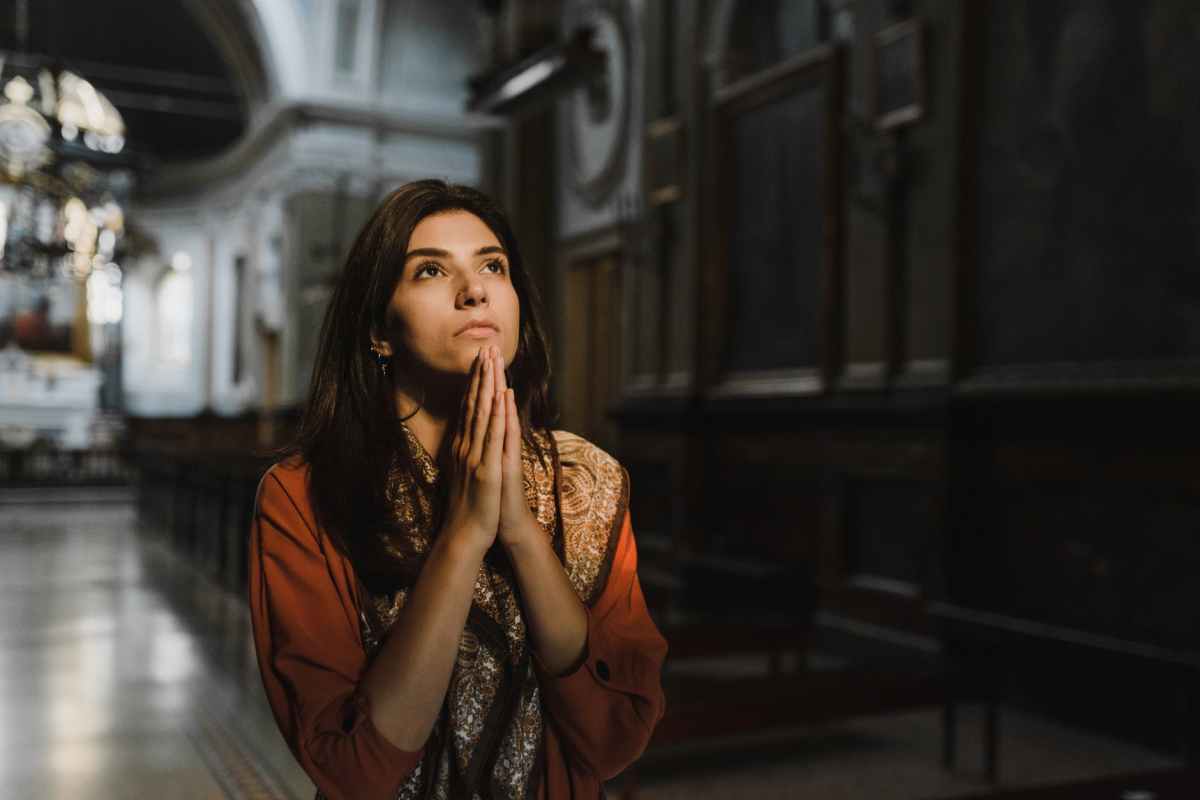
This went on for a couple of hours as I lay awake at 3am trying to control everything I didn’t know, keep people safe from everything that hasn’t happened and mentally grocery shop for anything we could need. And then finally, I landed on the only thing I needed to pray for – the next right thing to do and I went back to sleep.

Because the next right thing to do is clear – cancel everything for today and keep praying for the next right thing to do.  The simplest and maybe only way through is one step at a time.

(featured photo from Pexels)

Other People’s Writing: Dec 31st

I had a different piece of writing picked for today but then I got a piece of news yesterday that sent me to Pema Chödrön’s writing in When Things Fall Apart. Pema Chödrön is a Buddhist nun that writes so intimately about groundlessness, that moment when we can’t find anything solid to stand on to pretend we have it all together. Oh, how I love my life when I’m not experiencing groundlessness – but wow, how much I’ve learned when I have.

And here’s what sent me to this place. First, before Christmas my son caught the bug going around daycare so he had to be out sick a couple of days. Next I got sick. Then we were all well and the scheduled holidays with no school and daycare happened. Fine – I’ve now missed about 6 days of work in December but some of those were expected and I’m rolling with it.

Then it snows in Seattle. And Seattle is ridiculous when it snows so 2 more days of daycare for my son this last week were canceled. Then, and this was the latest, Seattle Public Schools just announced they are canceling school for my 1st grader on Monday, January 3rd so they can hand out COVID tests. <scream>

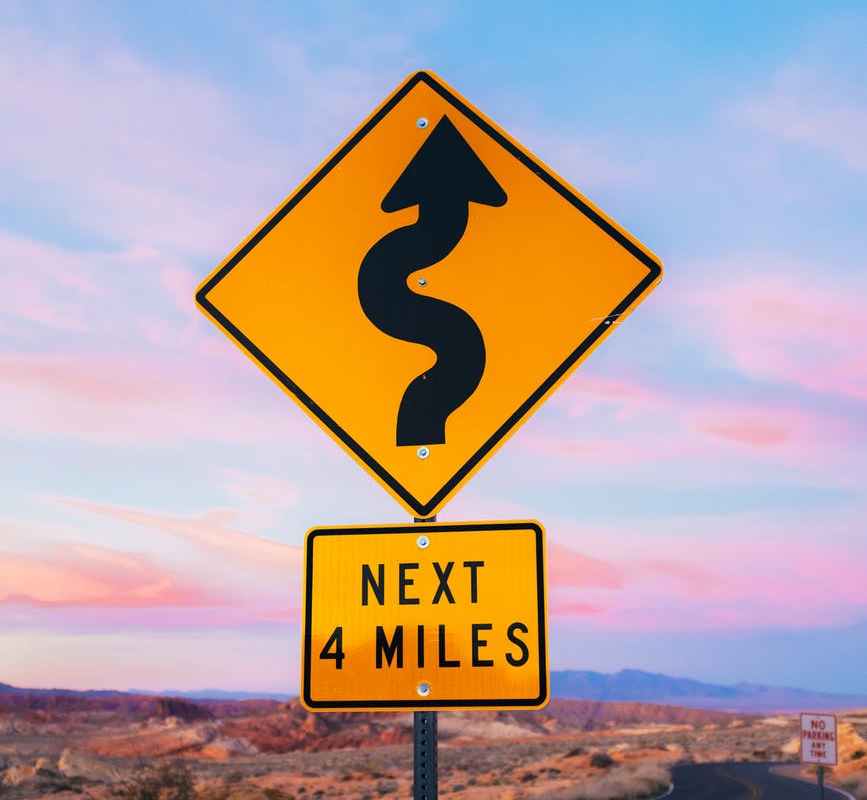
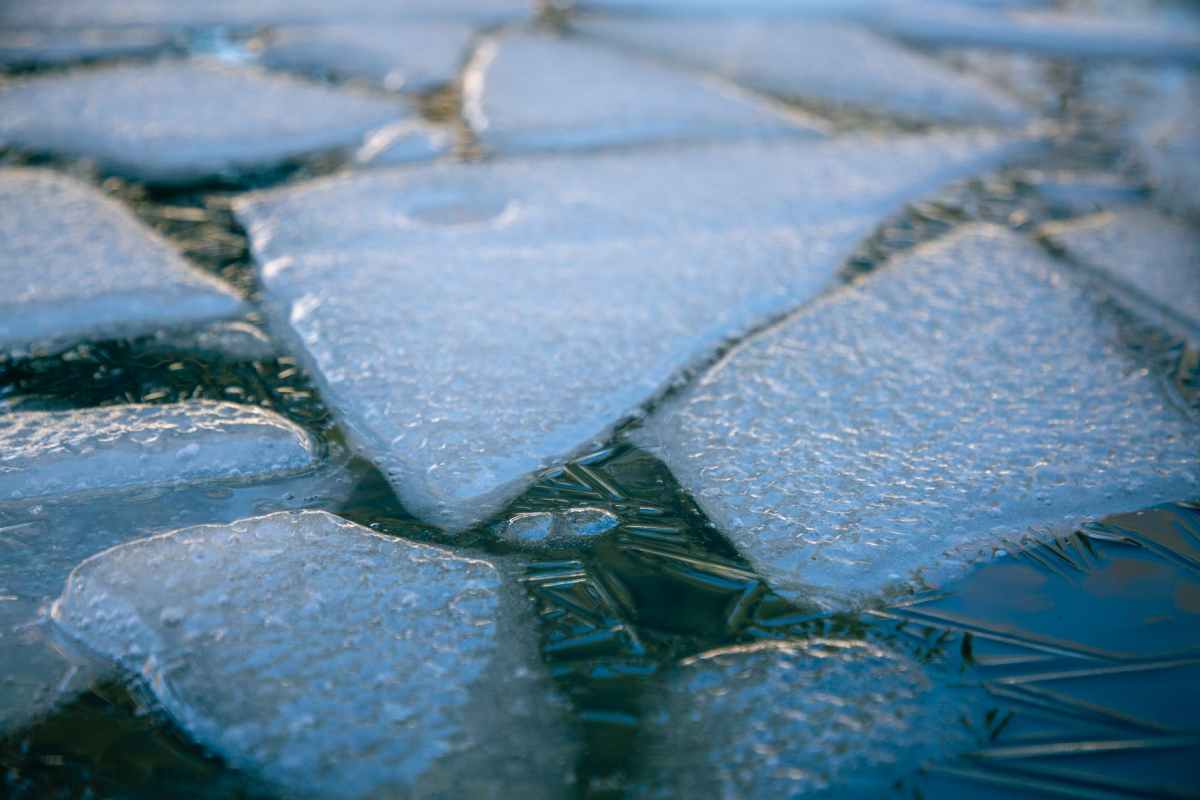
How the heck am I supposed to be responsible, professional and earn a living when the ground beneath my feet is always shifting? The fact that I know I’ve typed that question in practical terms in order to gain the most sympathy tells me that I’ve at least gained some consciousness about my situation. Groundlessness is like a patch of ice on a mountain – the trick is not to dig in and try to plant your feet but instead walk lightly across letting your momentum work for you.

For me, this COVID era has been one big patch of ice. I’ve always figured out a way through before and I know that I will again. Re-reading Pema’s words reminds me that in moments like these that I get to learn so much as I do so.

Basically, disappointment, embarrassment, and all these places where we just cannot feel good are a sort of death. We’ve just lost our ground completely; we are unable to hold it together and feel that we’re on top of things. Rather than realizing that it takes death for there to be birth, we just fight against the fear of death.

Reaching our limit is not some kind of punishment. It’s actually a sign of health that, when we meet the place where we are about to die, we feel fear and trembling. A further sign of health is that we don’t become undone by fear and trembling, but we take it as a message that it’s time to stop struggling and look directly at what’s threatening us. Things like disappointment and anxiety are messengers telling us that we’re about to go into unknown territory.

…How do we work with our minds when we meet our match? Rather than indulge or reject our experience, we can somehow let the energy of the emotion, the quality of what we’re feeling, pierce us to the heart. This is easier said than done, but it’s a noble way to live. It’s definitely the path of compassion – the path of cultivating human bravery and kindheartedness.

In the teachings of Buddhism, we hear about egolessness. It sounds difficult to grasp: what are they talking about, anyway? When the teachings are about neurosis, however, we feel right at home. That’s something we really understand. But egolessness? When we reach our limit, if we aspire to know that place fully – which is to say that we aspire to neither indulge nor repress – a hardness in us will dissolve. We will be softened by the sheer force of whatever energy arises – the energy of anger, the energy of disappointment, the energy of fear. When it’s not solidified in one direction or another, that very energy pierces us to the heart, and it opens us. This is the discovery of egolessness. It’s when all of our schemes fall apart. Reaching our limit is like finding a doorway to sanity and the unconditional goodness of humanity, rather than meeting an obstacle or punishment.

…If we’re willing to give up hope that insecurity and pain can be exterminated, then we can have the courage to relax with the groundlessness of our situation. This is the first step on the path.

When Things Fall Apart by Pema Chödrön

(featured photo from Pexels)

Other People’s Writing: Dec 30th

Henri Nouwen was a Dutch Catholic priest and prolific author. In the forward to his book, The Inner Voice of Love he describes a period of mental and spiritual anguish catalyzed by the sudden interruption of a friendship. To heal from this agony, he took a six month retreat during which he wrote down spiritual imperatives that were his notes on working through his pain and healing.

He never intended for these notes to anything other than private. But eight years after he’d worked through his anguish, a friend convinced him they could be helpful to others. The last note of the book, it includes a quote that knocked me over with its power: “Your future depends on how you decide to remember your past.” Here’s the passage:

As you conclude this period of spiritual renewal, you are faced once again with a choice. You can choose to remember this time as a failed attempt to be completely reborn, or you can also choose to remember it as the precious time when God began new things in you that need to be brought to completion. Your future depends on how you decide to remember your past. Choose for the truth of what you know. Do not let your still anxious emotions distract you. As you keep choosing God, your emotions will gradually give up their rebellion and be converted to the truth in you.

You are facing a real spiritual battle. But do not be afraid. You are not alone. Those who have guided you during this period are not leaving you. Their prayers and support will be with you wherever you go. Keep them close to your heart so that they can guide you as you make your choices.

Remember, you are held safe. You are loved. You are protected. You are in communion with God and with those whom God has sent you. What is of God will last. It belongs to the eternal life. Choose it, and it will be yours.

The Inner Voice of Love by Henri Nouwen

(featured photo from Pexels)

Other People’s Writing: Dec 29th

I don’t know where I got this book, The Faith of a Writer by Joyce Carol Oates nor can I even say that I’ve read her work extensively. But this author of 58 novels who was first published at age 26 and taught at Princeton for 36 years certainly has so many great stories to tell about writing with sections on inspiration, self-criticism, memory and more. But it’s the description of her process that caught my attention and charmed me.

The Writer’s Studio

It’s a room much longer than it is wide, extending from the courtyard of our partly glass-walled house in suburban/rural Hopewell Township, New Jersey (approximately three miles from Princeton) into an area of pine trees, holly bushes, and Korean dogwood through which deer, singly, or does-with-fawns, or small herds, are always drifting. Like the rest of the house my study has a good deal of glass: my immediate study area, where my desk is located, is brightly lighted during the day by seven windows and a skylight.

All the desks of my life have faced windows and except for an overwrought two-year period in the late 1980’s when I worked on a word processor, I have always spent most of my time staring out the window, noting what is there, daydreaming, or brooding. Most of the so-called imaginative life is encompassed by these three activities that blend so seamlessly together, not unlike reading the dictionary, as I often do as well, entire mornings can slip by, in a blissful daze of preoccupation. It’s bizarre to me that people think that I am “prolific” and that I must use every spare minute of my time when in fact, as my intimates have always known, I spent most of my time looking out the window. (I recommend it.)

The Faith of a Writer by Joyce Carol Oates

And as a bonus selection – here’s a small part of her reflection on inspiration.

Inspiration

Yes, it exists. Somehow.

To be inspired: we know what it means, even how it sometimes feels, but what is it, exactly? Filled suddenly and often helplessly with renewed life and energy, a sense of excitement that can barely be contained; but why somethings – a word, a glance, a scene glimpsed from a window, a random memory, a fragrance, a conversational anecdote, a fragment of music, or of a dream – have the power to stimulate us to intense creativity while most others do not, we are unable to say. We all know what it was like to have been inspired, in the past; yet we can’t have faith that we will be inspired in the future. Most writers apply themselves doggedly to their work, hoping that inspiration will return. It can be like striking a damp match again, again, again: hoping a small flame with leap out, before the match breaks.

The Faith of a Writer by Joyce Carol Oates

(featured photo from Pexels)

Other People’s Writing: Dec 27th

I’m dedicating this dark and quiet week before the New Year begins to posting writing that has inspired me this year. To start, this meditation by Frederick Buechner who was a writer before he became an ordained Presbyterian pastor.

In addition to being an author and pastor, he has taught both religion and writing at a number of places including Exeter, a boarding school in New Hampshire. One of his students was John Irving, who included a quote of Frederick Buechner in A Prayer for Owen Meany. His meditations often strike me often as a writing lesson as much as spiritual guidance.

Silence of the Holy Place

What deadens us most to God’s presence within us, I think, is the inner dialogue that we are continuously engaged in with ourselves, the endless chatter of human thought. I suspect that there is nothing more crucial to true spiritual comfort, as the huge monk in cloth of gold put it, than being able from time to time to stop that chatter including the chatter of spoken prayer. If we choose to seek the silence of the holy place, or to open ourselves to its seeking, I think there is no surer way than by keeping silent.

God knows I am no good at it, but I keep trying, and once or twice I have been lucky, graced. I have been conscious but not conscious of anything, not even of myself. I have been surrounded by the whiteness of snow. I have heard a stillness that encloses all sounds stilled the way whiteness encloses all colors stilled, the way wordlessness encloses all words stilled. I have sensed the presence of a presence. I have felt a promise promised.

I like to believe that once or twice, at times like those, I have bumbled my way into at least the outermost suburbs of the Truth that can never be told but only come upon, that can never be proved by only lived for and loved.

Listening to Your Life by Frederick Buechner

(featured photo from Pexels)

Cracked Open

Never get so busy making a living that you forget to make a life.” – unknown

Yesterday I canceled all my work meetings and stayed home with my toddler who needed one more day of recovery from a cold. It was a hard thing to do. Like generations of parents before me, I found it difficult to put aside all the urgency my own life to support someone else when needed and not according to plan.

It was also the right thing to do. As my dad often said, “If it’s the hard thing to do, it’s probably the right thing to do.”

Sometime in the middle of the day, pinned down with a sleeping kid on my lap, frustrated the illusion of predictability in life being shattered yet again, time slowed enough for me to notice his heart beat. Once I felt that, then tuned in to his breathing and the weight and warmth of him, I was overcome with the sensation of the deepest meditation. That feeling that there is no doubt there is a Universal center that we all belong to and can reach. A sacred place of timelessness and love. The Divine heartbeat.

It never fails to surprise me that beneath my narrative is a rich and deep experience. Like a nut, when I crack open the hard exterior of my perspective, I am always rewarded but the meaty contents within. At the end of the day, my son felt better and I, surprisingly, found myself rested and restored even though not a single thing on my to-do list was done.

(featured image from Pexels)

With Me Still

“You cannot know what you cannot feel.” – Mary Shelley

I hiked a trail this week that I had unconsciously avoided for 4 years and didn’t realize until I wrote a post about patterns. The last time before now that I had walked it was after I miscarried a baby at 10 weeks. But more than that, this trail reminds me of loss because I walked it so often with my beloved dad and dog.

When my dad died suddenly 7 years ago after colliding with a car on his bike, I naturally went through a range of emotions. One of the most recurrent was gratitude that my dad didn’t have to get old. When he died at age 79, he was still so vibrant and fit, retired but so active in the organizations he cared about. He would have made a terrible old person if somehow limited in what he could do. And he never had to find out.

Then my beautiful golden retriever collapsed on a walk 5 years ago when he was almost 14 years old. He was such an amazing companion, enthusiastic and faithful, and I was so grateful that the vet made it clear that the time had come and saved me and my dog the angst of trying to cure a cancer that would just torture us both.

After I lost my pregnancy in miscarriage, two years later I had my son. I have two happy and healthy kids that have a relationship that seems perfect for the age difference between them. I’m so grateful that how life worked out set their capabilities at just this range.

I truly live in all that gratitude AND still avoid the trail. When I walked it, I remembered all the times my dad and I walked and talked about so many deep and interesting subjects. I could practically see the way Biscuit the dog would wiggle in excitement at the trailhead and come out the other side so muddy and happy. I felt their absence so clearly but more than that, I felt their presence.

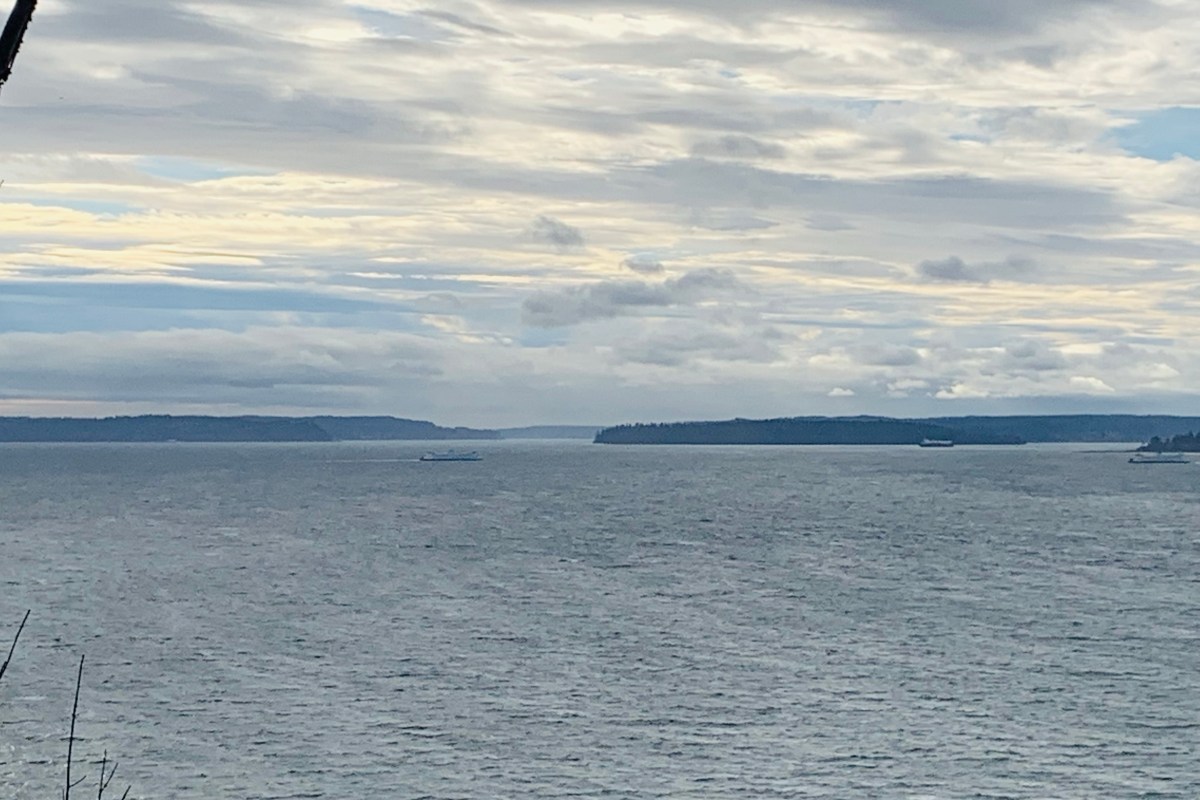
As I visited the beautiful old trees I’ve missed so much and looked out onto the amazing view of Puget Sound stretched before me, I realized that not feeling their losses didn’t save me any grief. It only robbed me of the opportunity to go walking with my dearly departed yet again.

We lose things in life. But we don’t have to set aside a part of ourselves to go along with them. I remember this every time I let myself feel the loss all the way through. More often than not, it isn’t that I’m consciously blocking feeling it, instead I’m just choosing to feel the gratitude instead of the ache. Then something like this trail comes along and reminds me that the ache is proof that the enthusiasm of my dad and the loyalty of my dog are with me still.

Being vs. Doing

I am too alone in the world and not alone enough to make every moment holy.” – Rainier Maria Rilke

Willie Nelson and his son Lukas Nelson were talking about the power of manifesting life on a podcast with Brené Brown that I recently listened to. They suggested that the secret is in dreaming what you want in your life and then letting it go for God to make possible. This secret speaks to the line between being and doing that always confounds me.

When I first wanted to have a baby at age 45, I talked with the general practitioner that I was seeing at the time. She told me to eat organic. I was pretty sure that I needed to do a little more than that to have kids – either that or the organic food industry has a whole other marketing niche they aren’t plugging. 😊 So I went to talk with a fertility specialist next who had some very concrete steps for me to do.

On the other hand, I’ve always joked I’ll get married again when a man falls out of the sky and lands on my head. So far just putting that one out there and letting it manifest hasn’t created any results but I’m not all compelled to take more action in this moment.

I suspect the line between being, just putting it out there and letting it happen in God’s flow, and doing, taking very specific action to make things happen, is so difficult because no one can pass on that wisdom for anyone else’s life. It’s just between us and God. And it’s further complicated, at least for me, because I very much believe that I’m responsible for my own happiness so I don’t leave much for God to do.

Listening to that podcast inspired me to wonder about this balance all over again. The Nelson’s with their deep faith also talked about working hard to practice, embodying the same push and pull of being vs. doing. It illuminated part of my struggle and the beginnings of a solution – I suspect that I’ll never have a line that I can chart with any mathematical precision. Instead I was directed back to my daily practice of listening to the Divine about what I need to do that day, doing my best at that and leaving the rest to God.

(featured image from Pexels)