Telling a Good Story

Just because they are a story doesn’t mean they’re not real.” – H.M. Bouwman

This is a repost of writing I posted on 7/13/22. Heads up – you may have already read this.


The other day my friend, Eric was over and started telling a story that had us all rapt, including my almost 7-year-old daughter and her friend who usually dismiss grown-up talk as boring. The story was about a summer job when he was in high school as a tennis instructor at a little neighborhood beach and tennis club.

One week they were short of lifeguards and asked him to fill in. He was neither certified nor a very good swimmer but this being the mid-1980’s, that was no problem because they just made him the shallow end specialist.

There was a group of 7-8 year old kids that showed up at the club in the mornings, had lunches their parents had packed and stayed all day. One sunny Seattle morning one of those kids, a 7-year-old boy announced he was going to catch a duck. Eric, as shallow end specialist of the week, said “No way, you are not going to catch a duck.” The boy proceeded to wade in to Lake Washington up to his neck and stand completely still for an hour.

Sure enough, the ducks got used to the boy and started swimming closer and closer until BAM, the boy caught one by the neck. Now Eric had both a boy and a duck, squawking in the shallow end and he was yelling, “Let go of the duck! Let go of the duck!” But the boy was conflicted because he’d spent an hour trying to catch the duck and now he didn’t know what to do.

At this point in the story, Eric had my daughter and her friend’s full attention and they were clamoring to know what the boy did with the duck. He let him go of course. But I was fascinated about what makes a good story.

According to journalist and author, Will Storr, there is a science to story-telling. As writers have worked to understand what captures an audience, psychologists have studied how our brains make sense of the world and both found the same elements. Stories have:

  • Change – good stories involve change because our brains are wired to identify change
  • Cause and effect – the wiring that makes the events understandable
  • Moral outrage – the motivation to act as seen in struggle between heroes and villains, the selfless versus the selfish
  • Effectance – humans like to be the causal effect on objects and the environment
  • Eudaemonic element – the happiness we get from pursuing goals that are meaningful to us but difficult
  • The God moment – how does the hero control the world?

These elements makes so much sense to me. We are all faced with change and we struggle mightily to define who we are in relation to it, what actions we take and how to be happy and ultimately control the world, or at least our perception of it. Stories are one of the tools we use to process our experience and follow the advice Maya Angelou gives, “If you don’t like something, change it. If you can’t change it, change your attitude.

I love watching how my kids have become pretty good listeners when a grown-up tells a story. I think it helps them try to understand the factors that go in to how the world works. They listen because they want a happy ending where they can control their world. Chances are, if among other things, they learn to tell themselves a good story filled with their responsibility and agency, they’ll probably have it. Chances are, that’s true for us grown-ups too.

My kids have been clamoring for me to tell them all the stories about real life that I can think of. I find it endearing and a little bit of an honor that they are interested, even at just 7-years-old and 3-years-old. This spate of stories brought up a memory of a friend who claimed to be clairvoyant and a cat lover. The combo didn’t work out so well for the cats. It’s the topic of my Wise & Shine post today: The Cat Conundrum

(featured photo from Pexels)

When I Write

The words you speak become the house you live in.” – Hafiz

This is a repost of writing I posted on 10/12/22 – heads up that you may have already read this.


The other day a friend was telling me how his dad, who was a professor in the business school at the University of Washington, wrote books. He’d shut himself in his home office and for two months would just sit there with a note pad nearby. Sometimes he’d watch a game or organize stacks of papers. When my friend would come in and ask his dad what he was doing, his dad would say, “I’m writing a book.” My friend would say, “Nah, you’re listening to your police scanner.

And then in the third month, my friend’s dad would start typing and be done with the manuscript in a month.

After telling this story my friend turned to me and asked, “How do you write?

I have a very specific time to write each day. It’s in the morning after I’ve gotten up at 5 or 5:30am to do yoga and meditate and before I get the kids up at 6:45 am. I tackle ideas that have been floating around my head because of things I’ve heard, read or have been struggling with.

That time of day for me is when I’m most hopeful, mystical, and quiet. I can hear the small whisper at my core and I have better access to my creative muse.

Then the day starts and its drop-offs, pick-ups, doing my day job. By the evening, my creative muse has been pounded into bits. It’s tired, critical and tells me I don’t have anything worth saying. I don’t look in the mirror at that time of day because I will find fault with what I see. I tend to be pretty quiet in the evenings because I’m as shallow as a muddy puddle and just as unclear.

So I almost always write from my renewed self and never include words from my salty self. As I laid this out to my friend, the downfall of my approach became apparent to me. It’s like cooking with only sugar and no salt. I write from a place from which I’ve shaken off the dust that collects during each day and even my suffering looks shinier.

I’m only covering about half (or less) of my human experience. Not the times that I say “sh!t, f*&k, d@mn under my breath when I step on a kids toy in the dark and definitely not when I very badly want to blame my kids for causing me pain. I don’t write in the times when it truly feels like nothing is going to work out. And certainly not the times when I feel like the life I’m leading is unrelentingly tough.

I can meditate later in the day and get back some equanimity. But there’s a Buddha quote that says, “Sleep is the best meditation.” Indeed it is my best way to remove the tarnish of life and reinvigorate my creative muse. But if I want to write about the fullness of life, I need to remember it’s the whole day experience.

My take is that my friend’s father wrote a book in one month because he had spent the time to gather himself and then could get it all down in one go. It’s a good reminder to me that I need to gather all of me to bring to the writing table lest I leave out all the spice.

I’ve also posted today about how my purpose for writing has changed at the Wise & Shine Blog: The Writer’s Mission Statement

(featured photo from Pexels)
Writing For a Different Result

Gotta move different when you want different.” – unknown

I wrote a Wise & Shine post this morning about writing outside of our comfort genres: Writing Outside of the Box

That post and this one were, largely inspired by an interesting post by Jack Canfora I read recently about trying a different style of writing when you are stuck or want to get out of a groove. In the post, The Virtue of Walking in Different Shoes Jack tries his hand at writing Bob Dylan lyrics and extols the practice of writing something entirely different as a way to break away from our habits.

Ode to Joy

I read an article about a man
Playing ping pong in the dorm
He was dropping his son at college for the term
And not ready for good-byes to become the norm.

He said, “one more game” and his son complied.
Finding his own rhythm for the change of the day
The man served instead of cried.
Knowing both he and his son were finding a new way.

I read this article and looked at my two, feeling how soon they’ll both fly.
As the tears welled up and I honked back a wheeze
I thought, “I’m not ready to let go of these wee moments of glee
Sponsored by luck and joy.”

So now I’m on notice to really savor the fun
Complete with spills, drills and mess.
I’ve got you for now, my little ones
So let’s play while you’re still in the nest.

Okay – so I’m not taking up writing verse anytime soon. But it really was a good exercise to change things up – to really think about every word I used and to really listen to the cadence. Besides, I consider any day I can use the phrase “honked back a wheeze” a good one…

Being a Humble Realist

I’ve missed more than 9000 shots in my career. I’ve lost almost 300 games. 26 times I’ve been trusted to take the game winning shot and missed. I’ve failed over and over and over again in my life. And that is why I succeed.” – Michael Jordan

Listening to a Ten Percent Happier podcast with Dr. Valerie Young, an expert on Imposter Syndrome for more than 40 years, I was surprised to hear her say that about 70% of people will experience feelings of being an imposter at some point. She explained Imposter Syndrome as, “explaining away our accomplishments & having a fear of being found out as a fraud.”

Thinking about it in terms of writing, I wondered if writers experienced it even more than others. Dr. Young did affirm that people in creative fields do seem to be more vulnerable because they are “only as good as their last book or their last performance.”

When I’ve managed to write a meaningful post that I feel really good about, how many times have I felt, or heard another blogging friend express, “but now I have to do it again? I’m not sure that I can.”

Dr. Young went on to talk about studying the other 30% – the ones that don’t experience Imposters Syndrome. Not the ones that are narcissist or at the complete opposite end of the Imposter Syndrome, but the ones that have a realistic sense of competence.

“These are people who are genuinely humble but have never felt like an imposter. And the point that I always make is that people who don’t feel like imposters, setting aside that arrogant, narcisstic, smartest-guy in the room, that’s not who we’re going after. But that subset, I call them humble realists, they are no more intelligent, capable, confident that the rest of us – but in the exact same situation, they’re thinking different thoughts. It’s not a pep talk like ‘you’ve got this, you can do it, you deserve to be here’ all of which is true but they think differently (based on my research) about three things:

  1. Competence – what it means to be competent, they have a realistic understanding of competence
  2. Healthy response to failure, mistakes, constructive feedback, even negative feedback
  3. Healthy response to fear”
Dr. Valerie Young

Looking at that list, I think of all the things I’ve failed at. It does get easier to pick myself up after failure – or as Michael Jordan says in the quote for this post, “I’ve failed over and over and over again in my life. And that is why I succeed.

My post for Wise & Shine this morning is about Imposter Syndrome: The Imposter Syndrome in Blogging

(featured photo from Pexels)
The Games We Play

Children are great imitators, so give them something great to imitate.” – unknown

Miss O came home from school on Friday with a complaint that one of her classmates was taunting her with “Leon the Lion.” Geez, I thought – it could be way worse than that, but the classmate is one that just knows how to effectively get her goat so I understand how that gets under the skin.

[An aside here: My friend, Eric, tested the names I picked for my kids before I had them against playground taunts. I’d kinda forgotten about this teasing phase but he did his best to steer me away from anything that rhymed with “farts.” Not that I can remember having an option that did. On the other hand, he thought Lancelot Leon would be a great name for Mr. D so I’m not sure why Eric was even on the committee except for his excellent sense of humor.]

The other thing that seven-year-olds do is that thing where the repeat the thing you said so that when you say, “Please stop copying me,” you get to hear it in maddening echo. We also have the situation when the older sibling says to the younger sibling “Stop copying me!” and then mere minutes later becomes interested in what the younger sibling is doing and starts copying them.

I’m guessing that my description of playground taunts or the echo game is surprising to not a single reader because they were around when we were kids and also when our parents were kids. It makes me wonder – is there anything about human experience that is original? And although we continually invent new ways to hurt each other like online bullying and more deadly bullets, the concept isn’t anything new.

So is it worth speaking about and writing about if it’s all a rehash? Here’s what I found listening to Miss O. The work of relationship and living is about listening to how an experience lands for a person. Even if it is the exact same experience we had a minute ago or forty years before, it will feel differently. It’s the first time Miss O has gone through this so I get to apply any wisdom I’ve been able to glean to the patience and warmth I bring to the situation.

We all need our chance to express the pain of living, the joy of discovery, the pull of love, the singular a-ha moments because it keeps us healthy. It keeps pulling the inner to the outer and even when it’s all familiar, it’s authentic expression. And that has the chance to inspire us all or unlock the doors of our own memories. Sure, none of it is new – and that’s good news because we get the opportunity to do it better each time we play our role as participant, speaker, or guide.

My post on the Heart of the Matter this morning is of a similar theme – Originality. Do we ever write anything new? Please check it out and subscribe!

(featured photo from Pexels)
The Hook

Just because they are a story doesn’t mean they’re not real.” – H. M. Bouwman

I was talking to Adam, one of Mr. D’s preschool teachers who was a newspaper writer in one of his previous jobs. (I think there’s a whole post I should write of how lucky Mr. D is to have such interesting and experienced teachers). He told me that he once interviewed Jim and Lou Whittaker, the now 94-year-old legendary Seattle mountain climbing twins and entrepreneurs.

So I asked him what his favorite interview was and he said, without hesitation, Ginger Rogers. Apparently, the arts writer was sick the day Ginger Rogers came to Seattle to promote a book she’d written and Adam said he couldn’t get his hand up fast enough to volunteer. His memory of it was that “It was the closest thing to royalty I’ve ever experienced.

I bring this up because Vicki Atkinson and I did a Sharing the Heart of the Matter podcast interview with Stuart Perkins, of the Storyshucker blog. In my mind, he is part of WordPress community royalty. Part of this is strictly personal because he was the first person to follow me, and most of it is because of his ability as a storyteller. He told us he loves to use a “hook,” something to draw the reader in and it’s a tool he uses to great effect.

Talking with Stuart, we learned about his base – growing up on a plot of land in rural Virginia. His grandmother, “Nannie” had land there and gave each of her 5 kids adjoining plots so Stuart grew up in the rich base of family and garden that he describes so often in his posts. Nannie and that simple life as told in evocative, touching, and rich stories.

A great base, a simpler time, a big family of storytellers – all great hooks. Like Mr D’s preschool teacher, Adam described, I couldn’t have been more thrilled to do this interview with the fantastic and fun Stuart Perkins. I hope you’ll listen and subscribe.

Search for Sharing the Heart of the Matter on Apple, Amazon, Spotify or Pocket Casts or click here to listen to Episode 12: On Storytelling with Stuart M. Perkins on Anchor.

Show notes are on the Heart of the Matter blog: Episode 12 show notes

Putting Pen to Paper

We do not learn from experience. We learn from reflecting on experience.” – John Dewey

As part of the consulting work I do, I have four additional email boxes on top of my work and my personal email boxes. Technically, I have three more work emails than that but with fairly little flow so I don’t check them. So let’s just call it six email boxes that I check more or less every day.

It’s not that bad – I can make a quick round in the morning and evening and button most things up which gives me that sense of completion of having things finished, and if not finished, at least tied down.

But this week, a couple things happened and I got buried under an avalanche of email. First, I volunteered to chaperone a field trip with my daughter’s 2nd grade class. It was wonderful – I wouldn’t have missed riding on a school bus to the Seattle Center, seeing a play, eating lunch, and then playing at a playground with those fantastic kids for anything.

But my daughter left her coat on the playground and I ended up driving back down to Seattle Center and picking it up after the field trip ended. It turned a 4.5 hour commitment into something like 6 and then between picking up and dropping off my kids, I essentially got nothing done for an entire day.

The second thing that happened was that one of my clients had a crisis so all his email flowed into my box and I had to sort out what was a priority and what was not without much context or foundation.

Suffice it to say, I have emails coming out my ears. My nice and tidy practice of at least skimming them has blown up, at least temporarily.

Amidst this electronic mayhem, I sat down to write a thank you card and a birthday letter. Old-fashioned, put the pen to the paper, nothing electronic involved, notes.

It was a wonderful experience for me – the words and images flowed in a different way than if I’d been at the keyboard. Instead, I sat at my dining table late at night after I put the kids to bed and wrote down what was on my mind.

I slowed down and really thought about the words I wanted to choose. And when I’d written my way into a sentence that didn’t work, I had to pause to think if I could weave my way out or if I’d have to take that terrible step and scratch out a word. In that pause, I wondered why I’d used a particular word.

In theory that’s what I do when I write an email as well. Except that other emails come in, I get distracted by a new notification of a WP post, or I want to look up facts and figures to go with some line of thinking. Then the result is more like an edited research paper than a narrative of life.

Sure, I’ll catch up on my email (or I won’t – apologies to anything I’ve missed this week), but I’ve made a note to myself (in long-hand) to remember to keep slowing down and writing something meaningful now and again.

And the timing of this letter writing couldn’t have been more fortuitous because Vicki Atkinson and I talked with artist and writer, Libby Saylor, about journaling, including the benefits of writing things out by hand, in the latest episode of the Sharing the Heart of the Matter podcast: Episode 11: How to Journal the Right Way with Libby Saylor.

The Feeding and Nurturing of Life

Love and compassion are necessities, not luxuries. Without them, humanity cannot survive.” – Dalai Lama

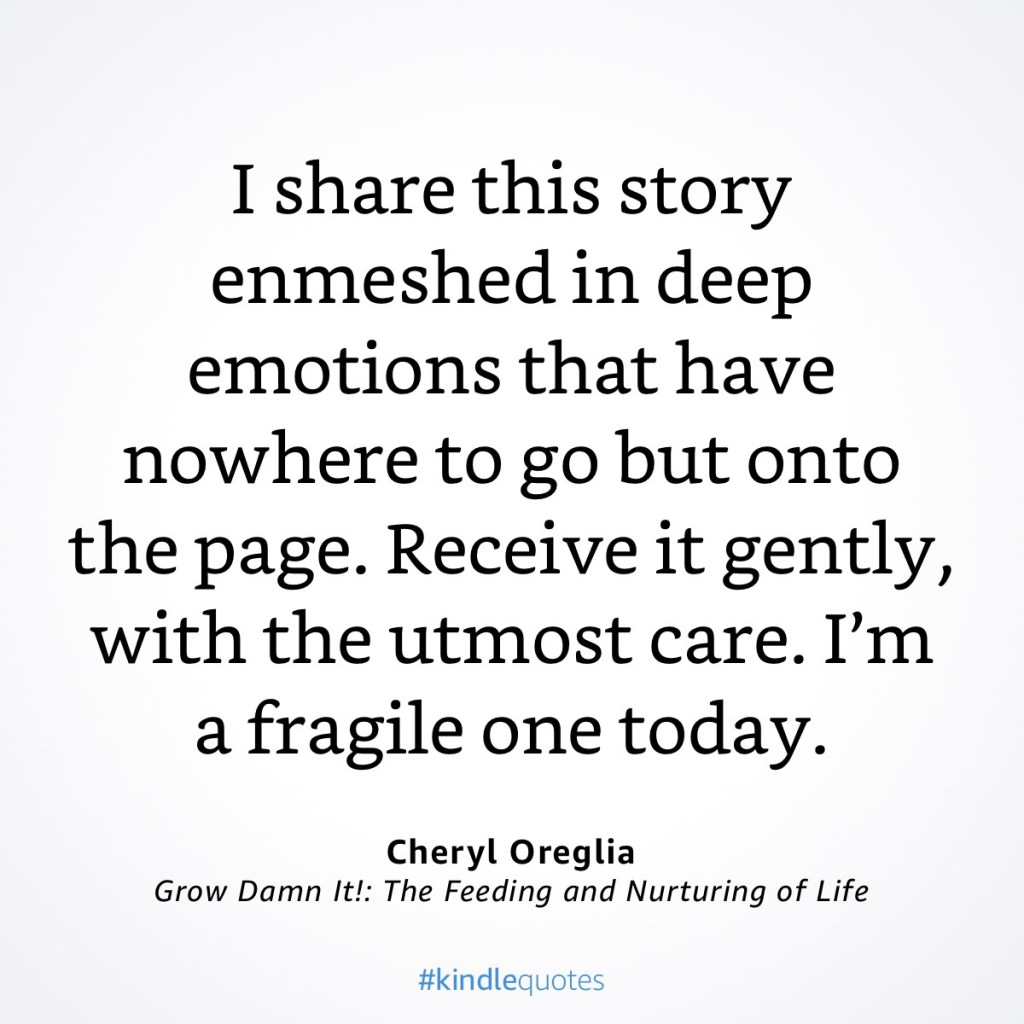
On Wednesday morning this week, I was driving the kids to school on the circuit around the lake and I felt softer and more patient. I appreciated the routine and the little people in my life more. I realized that it was because I’d just finished reading “Grow Damn It: The Feeding and Nurturing of Life” by author and blogger Cheryl Oreglia.

I clipped 23 quotes from my first reading of this book. And that was while trying to be mindful not to clip everything. Then I had the privilege of doing a Sharing the Heart of the Matter podcast with Cheryl to talk her journey and this book: Episode 7: Grow Damn It!

One of the stories Cheryl told me on the podcast was the one where she wrote a blog post and Krista Tippett of the On Being project (first aired on public radio, now as a podcast) tweeted about it. Cheryl laughingly said she assumed the technology was broken when she saw her stats after that.

In this great conversation, we got to talk about how the little stories make up the big picture, her journey to create this beautiful book, and asking people all the important questions before they go. I felt softened by reading the book and then I felt enriched after this beautiful conversation with Cheryl.

Cheryl said to me something like, “I know this book is not for everyone.” I agree – it’s only for people who want to feed and nurture their life – and laugh while doing it.

So if you do want to feed and nurture your life, please visit Cheryl’s blog, Living in the Gap, read the book, and listen to this podcast Episode 7: Grow Damn It (link opens the podcast to listen on Anchor). You can also find the podcast on Apple, Amazon, Spotify and Pocket Casts by searching for Sharing the Heart of the Matter.  Please subscribe!

Here’s link to the show notes on the HoTM site: Episode 7: Grow Damn It! show notes

I Have No Words

Dogs do speak, but only to those who know how to listen.” – Orhan Pamuk

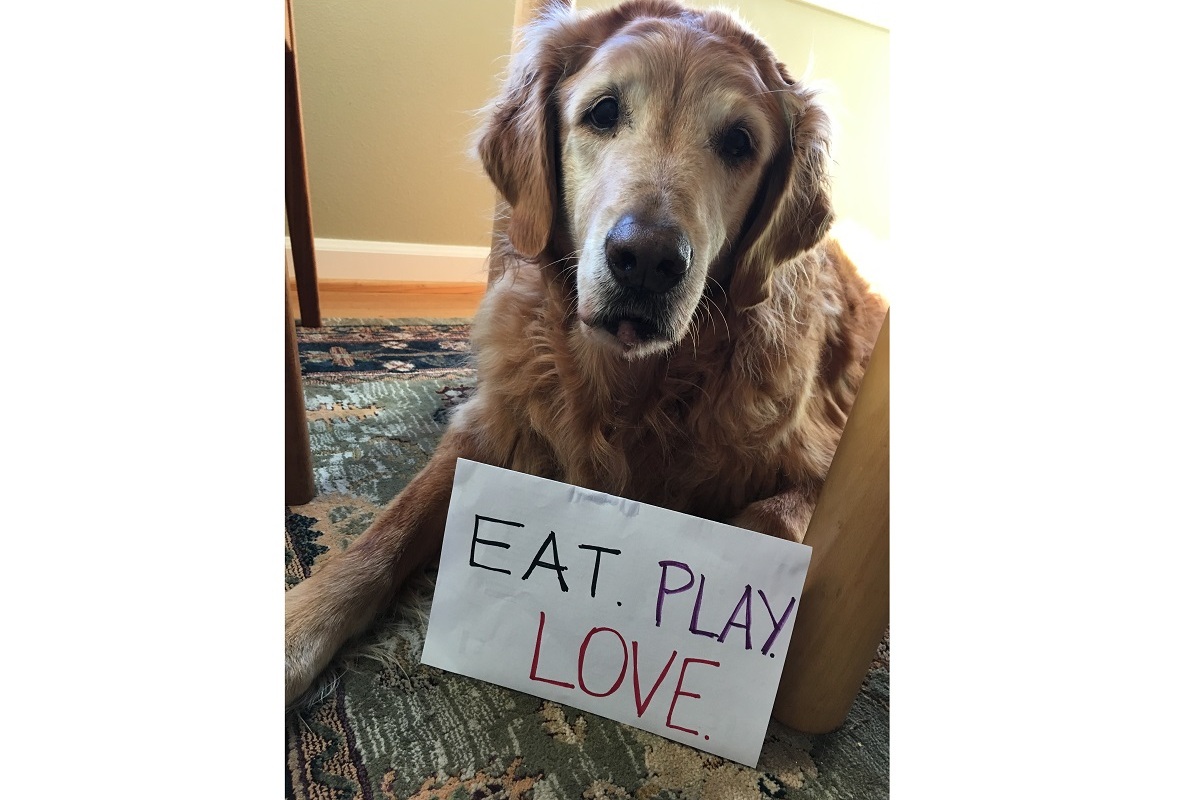
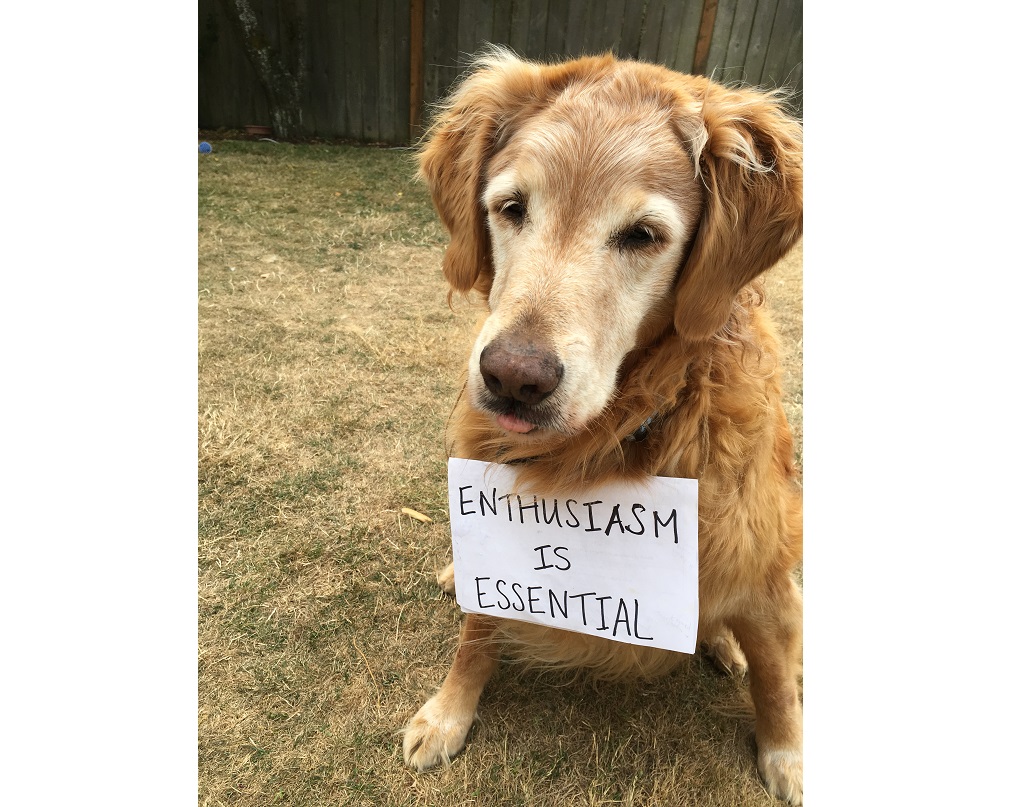
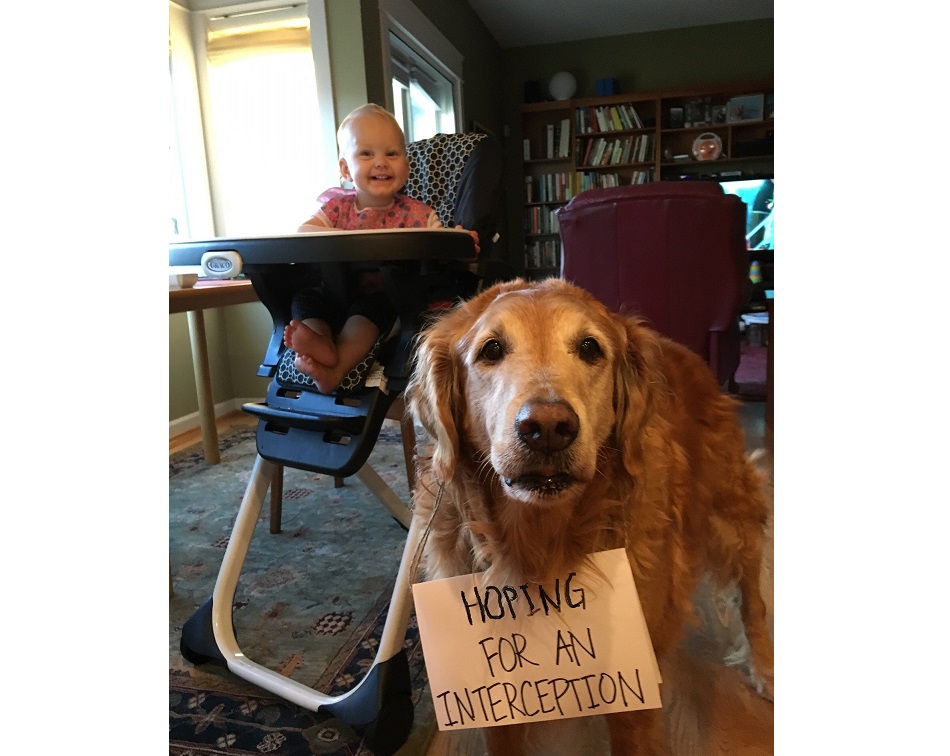
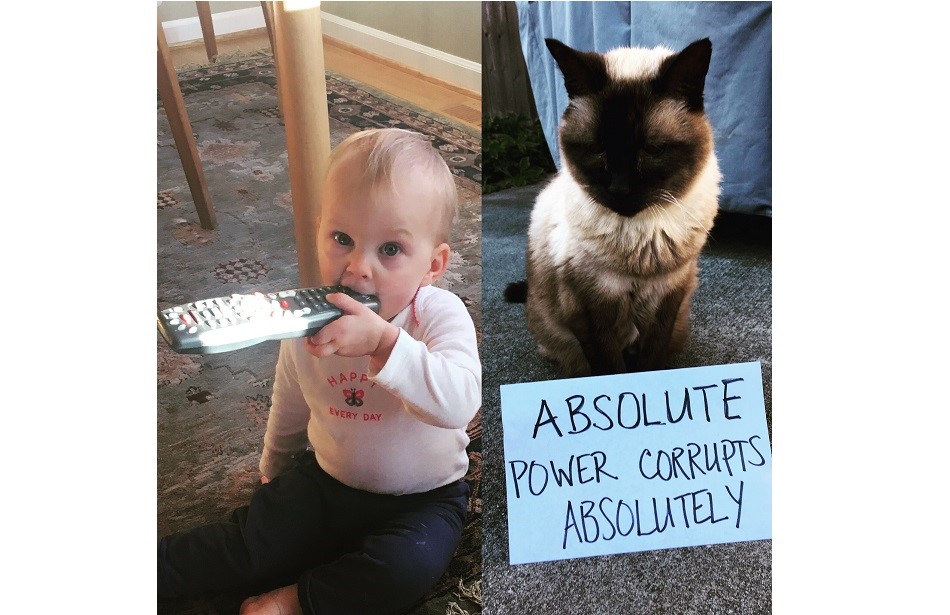
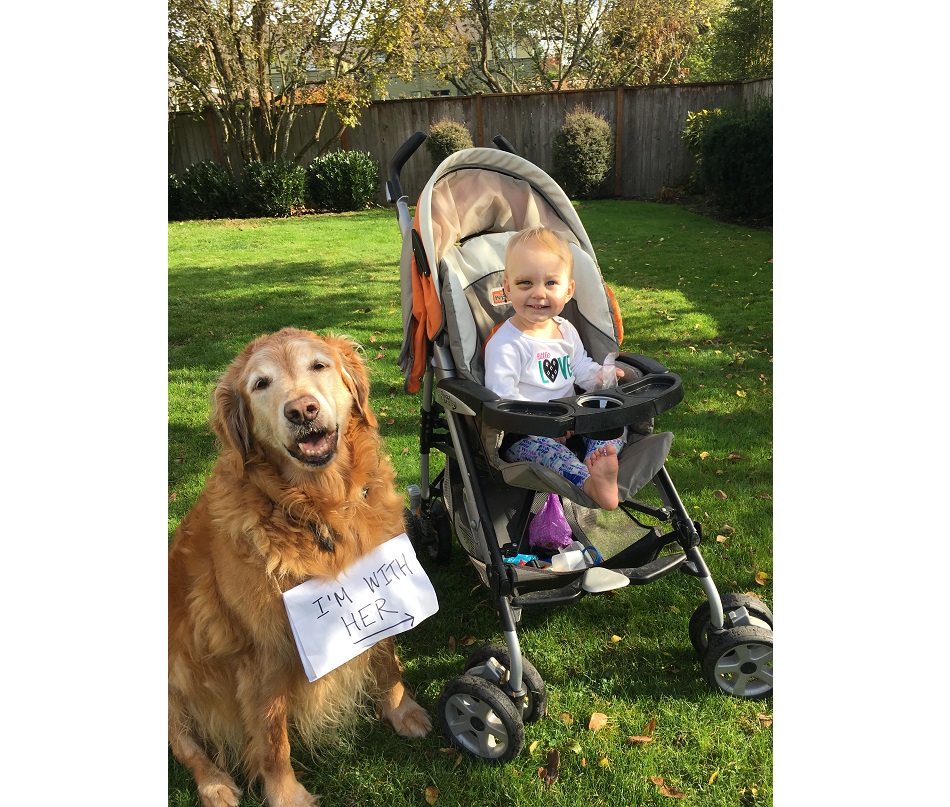
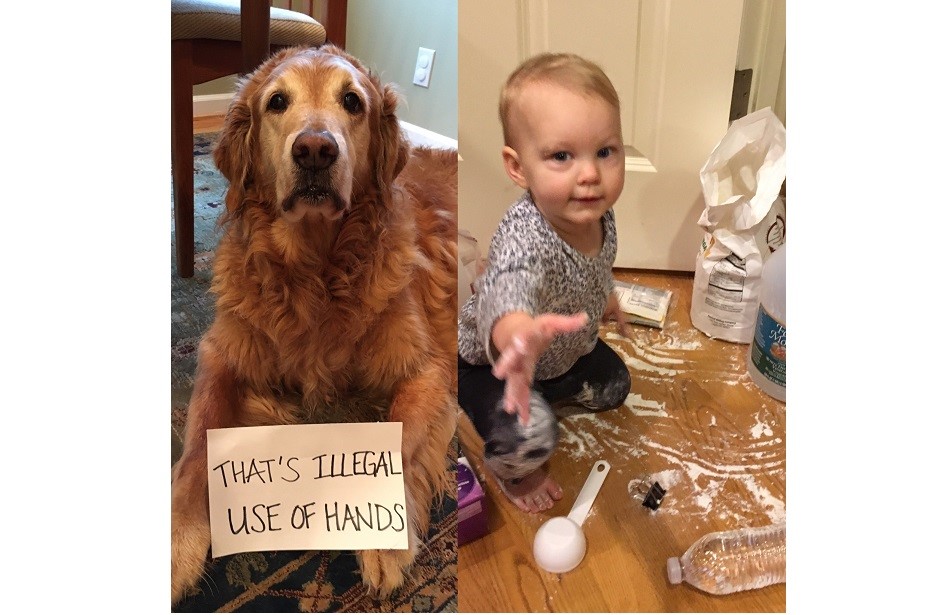
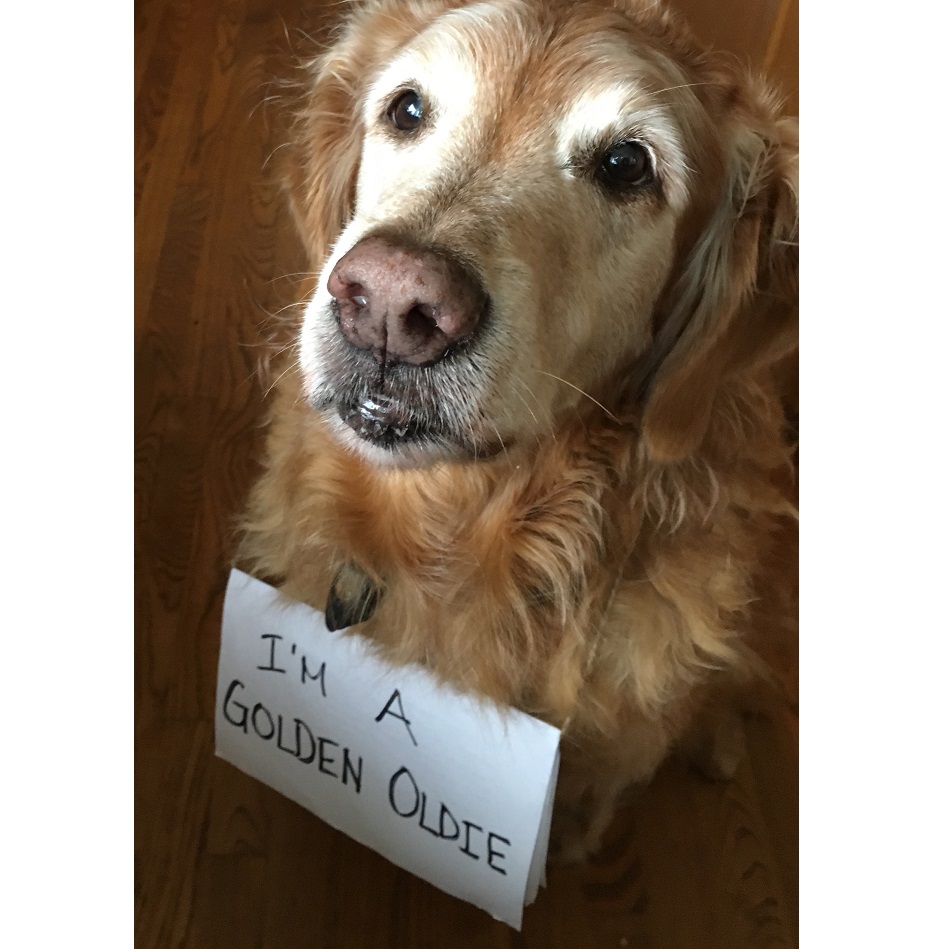
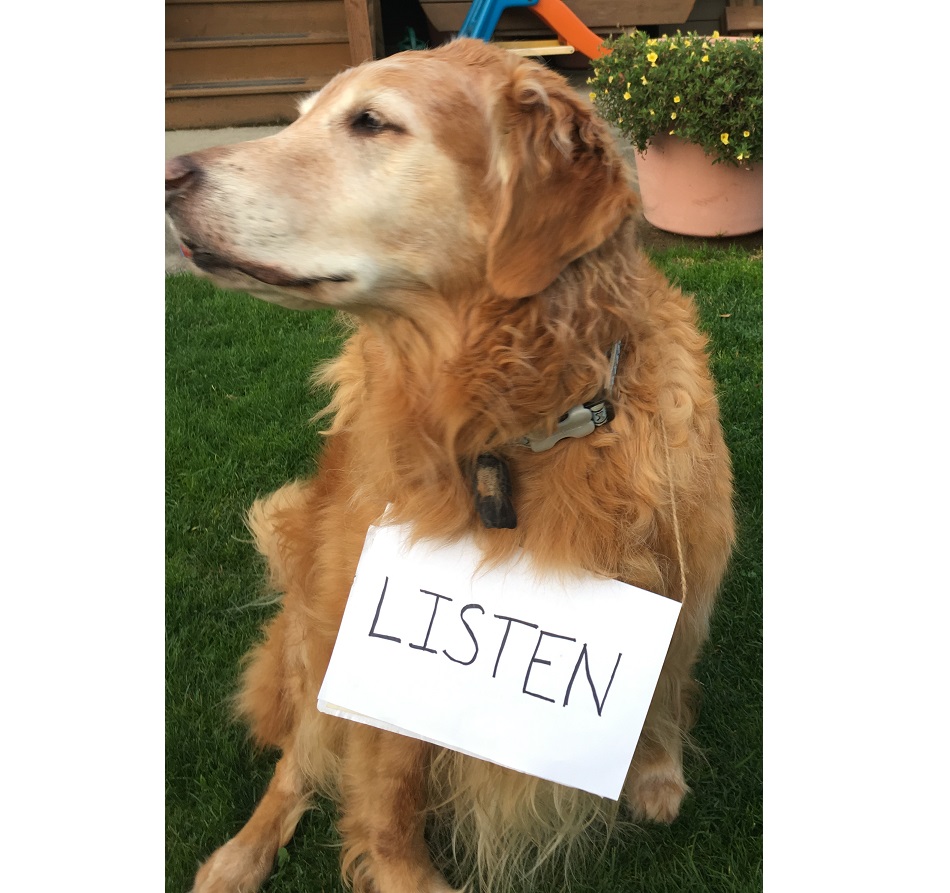
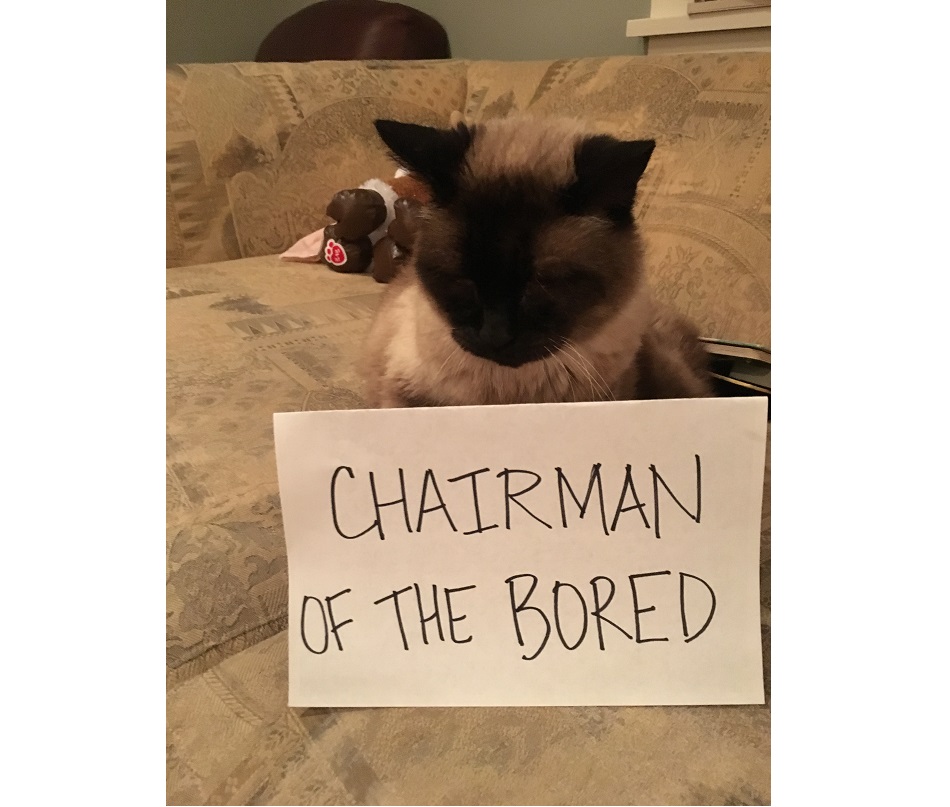
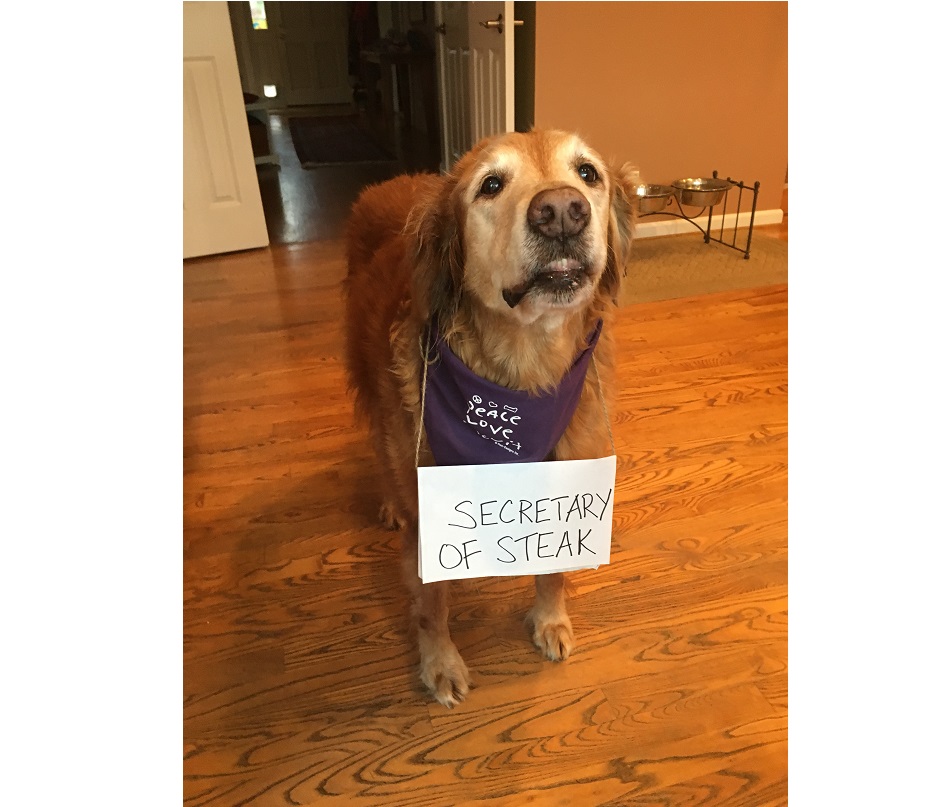
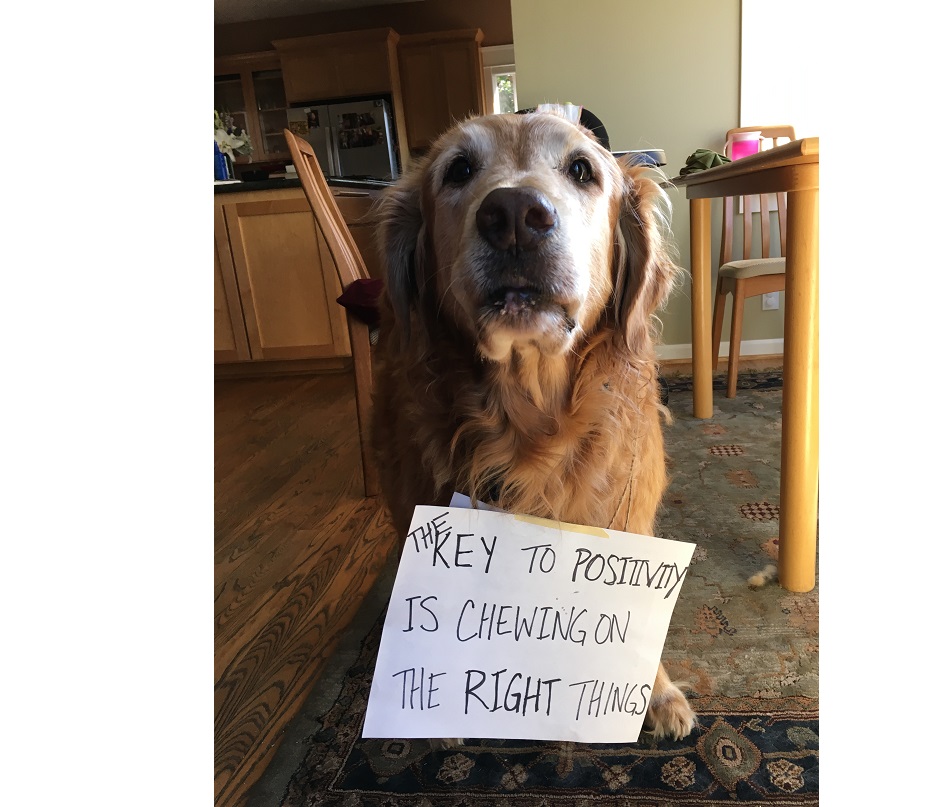
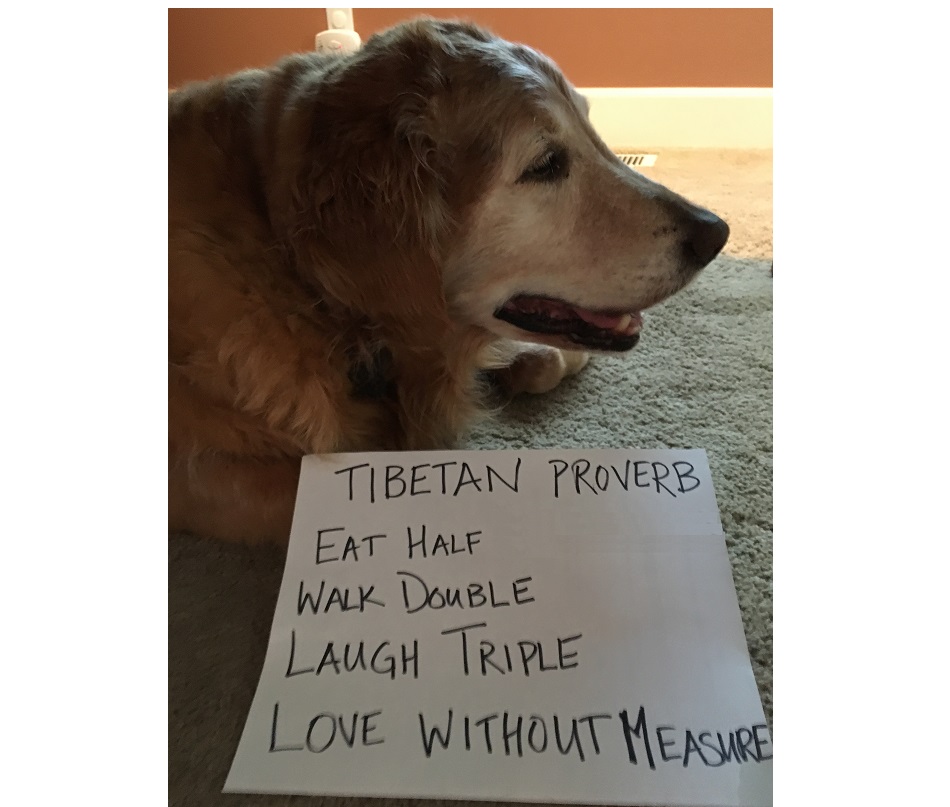
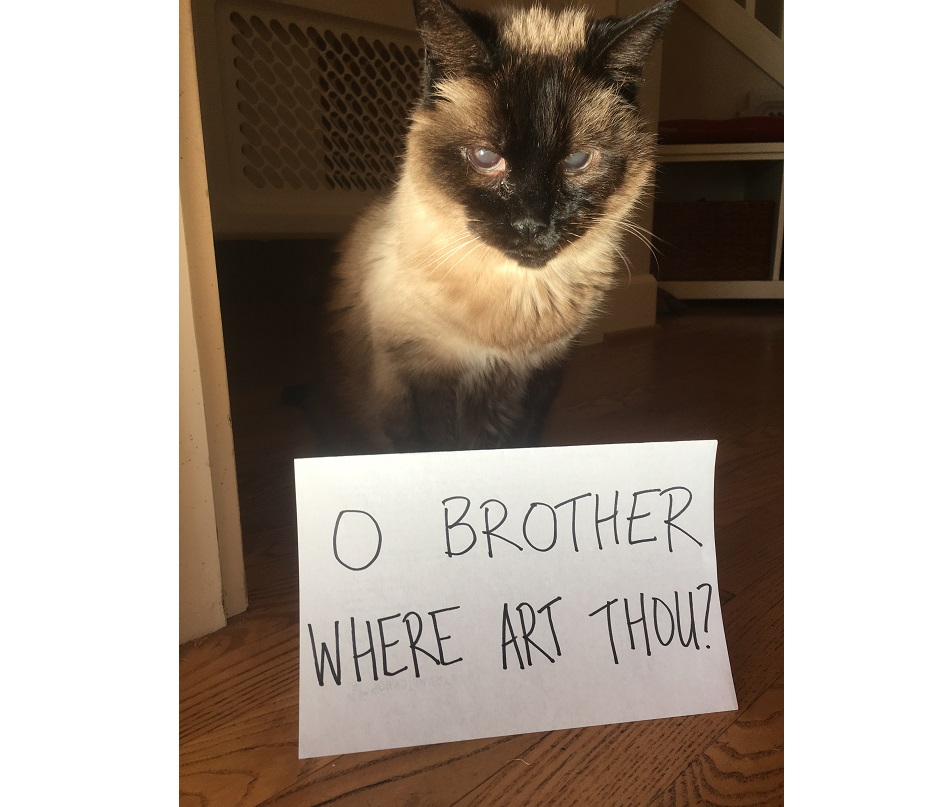
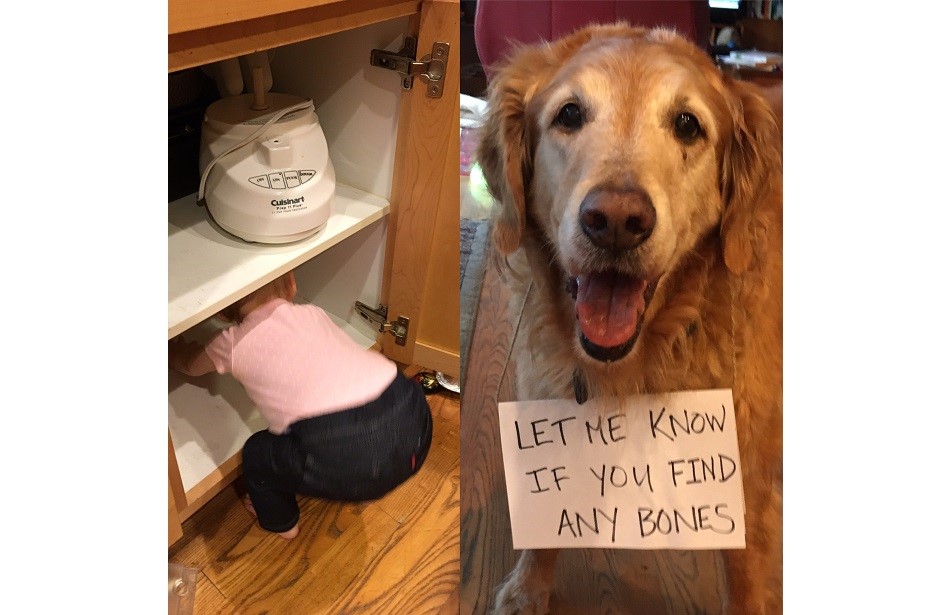
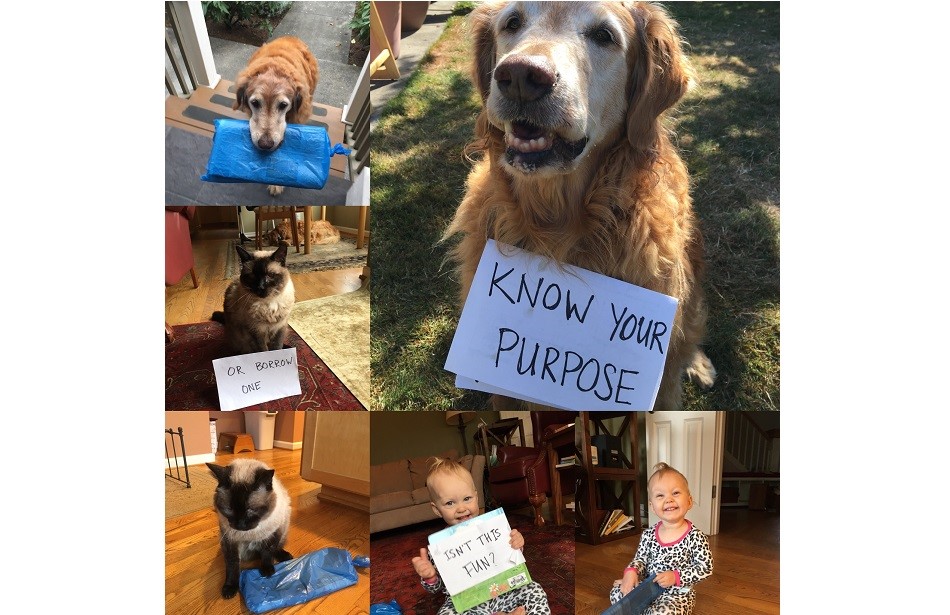
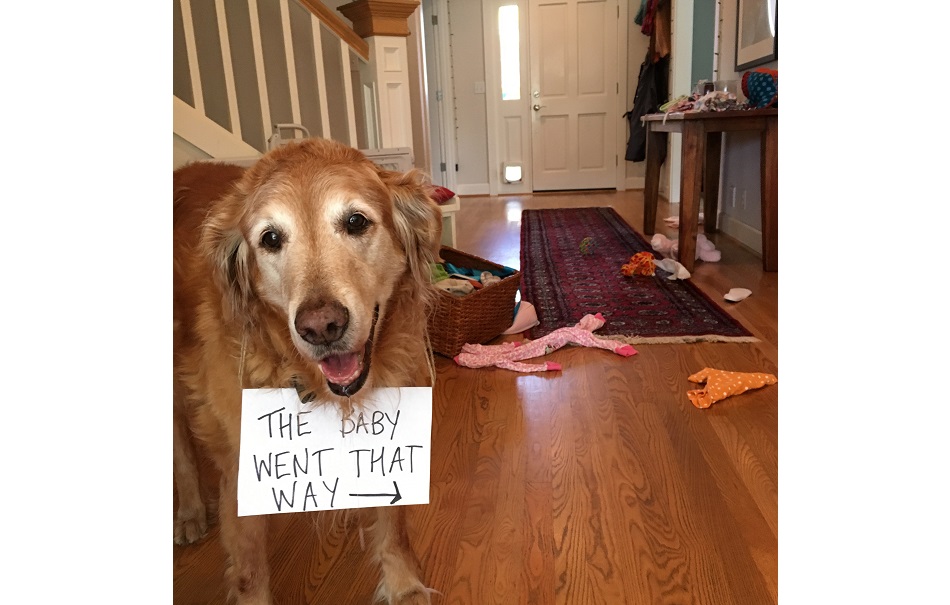
When I first started this blog, it was mostly a place for the pictures I took of my dear dog, Biscuit, and the signs he’d pose with. And even though I wrote them, I swear I was channeling his sweet and funny messages, referee calls, and commentary on life. Every once in a while the cat would get to pose with a sign as well. Here’s a slideshow of some of his best signs:

So I felt wordless when Biscuit died six years ago at almost 14-years-old. The day after he passed, all I had was a sign for the cat who seemed equally as lost:

That space and time we need to find our words again after something monumental has happened in our lives is the subject of my Wise & Shine post for today: Writing From The Heart

The Flip Side of Writing

You think your pains and your heartbreaks are unprecedented in the history of the world, but then you read. It was books that taught me that the things that tormented me most were the very things that connected me with all the people who were alive, or who have ever been alive.” – James Baldwin

I think I’ve been ruminating for the past week or so about the idea of reading ever since I saw Davy D’s post What Kind of Reader Are You? Because when I woke up yesterday morning with no idea what I’d write about for my Wise & Shine post today, it popped in my head that what we all have in common on this platform is that we are readers.

Given the descriptions Davy provides, I relate to being a Skim Reader. When I was talking about this with my dear friend, she told me her husband who reads so thoroughly that the Kindle estimates about how much time is left to read a book actually go UP the longer he reads. They joke that the author must still be writing when her husband reads.

But whatever kind of reader we are, we create a space that we inhabit, even if briefly, with the author. My post today for Wise & Shine reflects on what a gift that is: The Ultimate Reader.