Choosing What to Work On

Whatever you are not changing, you are choosing.” – Laurie Buchanan

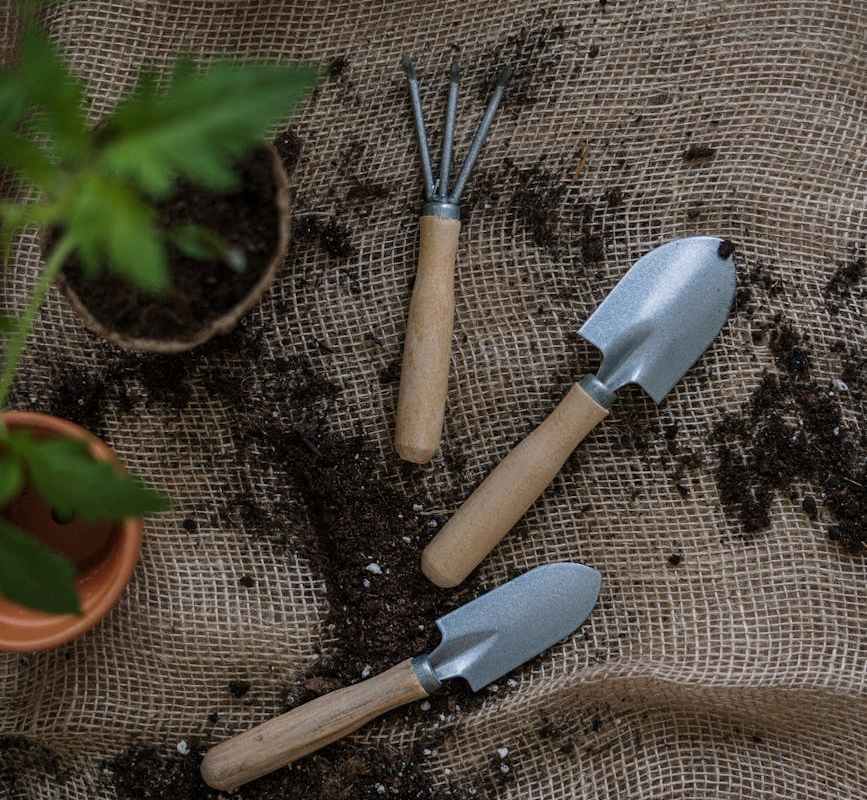
It’s that time of year when my yard needs a lot of work. Weeding, trimming, pruning, planting – there’s a lot to be done.  Whenever my mom offers to help, she grabs her gardening gloves and heads to the front of the house. It’s taken me several years to figure out the pattern, because I’m always surprised. I think we should start in the back.

The back is off the kitchen and family room. It’s where we BBQ, sit and eat. It’s also where we play 90% of the time we’re outside. It seems like a logical choice to focus my time there because it’s the biggest need.

[I know I usually write about podcasts on Fridays. Trust me, I’m getting there.]

My mom’s way of thinking is that the front is what everyone sees and so it needs the most attention because of its visibility.

When Vicki and I podcast with authors, we try to read all the books we are talking about. It’s all the back yard work to prepare and have thoughtful conversations.

In my analogy, the resulting podcasts are like the front yard – it’s what everyone sees. But all the preparation and production is like the back yard where we spend most of our time.

We’ve slowed our pace at putting out podcasts to bi-weekly because the back yard work is taking a lot of time. We hope that makes the resulting productions even more fun to watch!

So stay tuned for next week’s podcast with author, teacher, and former reporter, Mark Wukas. He’s going to tell us about his fantastic novel, The Kiss of the Night and how it was more than 40 years in the making!

We know you’ll love it!

(featured photo from Pexels)
Joy Is…Focusing on the Right Things

You are a living magnet. What you attract in your life is harmony with your dominant thoughts.” – Brian Tracy

My dad used to say that if he was working on a sermon about parenting, he was a better parent that week. Same went for forgiveness, faith, bearing witness, friendship, marriage, and on and on. I’m sure it surprises no one that what we focus on has a powerful effect in our lives.

But dang, it can be so hard to stay attuned to the good news. Which is one of the reasons that I found writer, poet, artist, and blogger, Dave Williams’ recent project Joy is ______ so compelling. Over the last five weeks, he opened his blog up to anyone who wanted to fill in the blank and give a description.

Vicki and I were delighted to participate in that project and then extend that note by being able to podcast with Dave about it on Episode 105: Joy Is…with Dave Williams.

Dave tells us how he was inspired by the spirit of his Aunt Diane. Celebrating her infectious personality after she passed away last summer was one of the motivations behind this project.

Another was the idea to strengthen the delight muscle. A suggestion in The Book of Delights by Ross Gay prompted Dave to want to cultivate the same upward spiral.

And Dave was also inspired by Teri Polen’s Bad Moon Rising blogging project that brings the WordPress community together.

In the end, Dave found and shared so much joy in this community project. He’s compiled a Joy Is _____ table of contents that we know will inspire you.

We’re confident you’ll love the scenic and beautiful places we explore as we talk about what joy is and how to celebrate that as a community!

We know you’ll love it!

Search (and subscribe!) for Sharing the Heart of the Matter on Apple, Amazon, Spotify or Pocket Casts OR Listen to it from your computer on Anchor: Episode 105: Joy Is…with Dave Williams

Episode 105 transcript

AND subscribe to our YouTube channel to see a video clip of each story: @SharingtheHeartoftheMatter.

Links for this Episode:

Dave’s Blog: https://davewilliamswriter.wordpress.com/

Dave’s “Joy is…” Index of posts: https://davewilliamswriter.wordpress.com/2025/02/27/index-of-posts-in-the-joy-project/

The Book of Delights by Ross Gay on Amazon

From the hosts:

Vicki’s book about resilience and love: Surviving Sue; Blog: https://victoriaponders.com/

My book about my beloved father: Finding My Father’s Faith;

(featured photo from Pexels)

The Lens We Look Through

Gotta move different when you want different.” – unknown

The other day on a weekend I was trying to get my children out the door to go to the zoo. I looked over and both my children were lying on the floor near the back door looking at a lady bug.

When was the last time you laid on the ground to look at something? My dad used to joke that he knew he was getting older because he’d bend over to tie his shoes and look around for anything else he needed to do when he was down there.

There’s a scientific reason that adults aren’t usually found on the floor looking at insects and children are. According to Dr. Alison Gopnik, a professor of psychology at UC Berkeley, young brains are wired to be attracted to the things that can teach them the most. Adult brains are wired to be attracted to things that reward them the most. And unless you are an entomologist, you probably aren’t rewarded for studying bugs.

But there are times when the adult brain gets stuck. In our grooved pathways that Dr. Gopnik likens to boulevards, adults can cruise back and forth much quicker than children but we don’t always rethink how we got there. Kids brains have neural pathways that look more like the streets of Old Paris. Windy, slow-going but able to approach something from many directions.

Getting stuck might be in a mindset or unable to solve a problem. We can be in a rut in a relationship or unable to see the other side of an argument. Or we can just be downright bored and completely unable to see what it could take to change it.

And that’s when we need to do something entirely different.  When we are stuck, the best advice is to do something else. We can go for a walk. Or we can learn to play. Or we can travel. We can even get down onto the floor with some kids. Doing something different will help us come back to what we are doing with newfound perspective and energy.

The other day, my first reaction to seeing my kids on the floor looking at the ladybug was frustration. I was stuck in my mindset of getting us to where we wanted to go efficiently. But after a moment I relented and got down on the floor and looked at the lady bug too. There was awe to be found in a tiny bug spreading her wings and twitching her antennae in a pool on sunlight.

There was also irony that I didn’t want to take time to look at a living creature because I was too busy trying to get us to the zoo. We ushered the lady bug out the door before leaving ourselves, still awash in the wonder of when you do something different.

(featured photo from Pexels)

Do One Thing Well

A year from now, what will I wish I had done today?” – unknown

Deep into the section on expectations in Brené Brown’s book Atlas of the Heart, I had a huge a-ha moment. She was talking about a conversation with her husband in which they both confessed to each other that they had an easier time parenting on the weekends they did it solo. Because they set aside their expectations to be able to do anything other than parent for that weekend.

This put a shape to the experience I have had as a single parent. Because I never expect that someone else will take the night shift or be there on the weekend, I have had to set really clear boundaries on the work and hobbies that I do because I know I won’t be able to duck out for a couple of hours.

That means that nights and weekends, I pretty much focus on hanging out with my kids. I do get a few chores around the house done with their “help.” The tradeoff for giving up Saturday morning hiking with my friends has been the gift of not believing I can try to do both things.

I know many of my parenting friends do an incredibly great job of splitting up the parental labor. One person will do the 9am-noon shift on Saturdays so that the other can go swimming and then they switch and the other gets “time off.” I have a pretty good inkling that if I was doing parenting with a partner that I would try for that approach and be a lot more confused about what I could handle.

I don’t know who said “Do one thing at a time and do it well.” My mom? Winnie-the-Pooh? Or maybe it’s not ascribed to a particular person because everyone who has learned the wisdom repeats it. When I wrote the post a couple of weeks ago about being invited to climb a mountain this summer, so many of my dear and wise blogging friends reminded me that parenting goes fast and there will likely be time to return to my hobbies later.

I believe that at some point I will have a partner again and more personal freedom. However, there isn’t anything I would trade for this uncomplicated time where I learned to really spend time with my children and enjoy it. Sometimes not having help forces us to distinctly draw boundaries we wouldn’t know to set otherwise.

(featured photo from Pexels)

Are Buddhists Bad Texters?

Joy is not in things; it is in us.” – Richard Wagner

I have a couple of friends that identify as serious Buddhists. Neither is the Dalai Lama but I’d stereotype them as people that have made mindfulness a way of life which is a level (or more) up from my I’m committed to sitting down and meditating every morning level.

They are both terrible texters. That is to say I will text them and they will respond without my prompting them for a response. But probably not for days. And no, it isn’t something specific to this friend group because neither knows the other.

Not responding for days seems to me like a violation of the texting technology. It’s made so that you don’t have to pick up the phone at any specific moment but that conversational-ish communication is available to you when you are ready. Right?

My other explanation about their behavior was that they could be unfamiliar or uncomfortable with the technology. Nope, not true – they both will initiate text threads.

But I was listening to the Ten Percent Happier podcast the other day with Matthew Hepburn, a Buddhist Teacher and it prompted another thought.

Matthew Hepburn’s summary about mindfulness was a practice so that we can use our attention intentionally. That is to say that if life is made up of what we pay attention to, mindfulness helps make the sum total of what we pay attention to better and under our control.

When we meditate or sit quietly in any practice and notice where our mind goes – and I’ll speak for myself personally here – it’s most often to my to-do list or where my loved ones are. My attention when I call it back is somewhere between the laundry and my next meal. Nothing wrong with that except that I don’t imagine that is where I’d like the sum total of my life to be. I’d rather it be in the love and friendships I had with others and my usefulness on this planet Earth.

I don’t have a big enough sample to know if Buddhists are bad texters. But my theory reminds me that I can’t pay attention to everything. And that means putting down my phone, turning off the sound on my laptop so I can’t hear the <ding> of a new email. Or better yet, going for a walk outside with a friend.

The idea that we can intentionally set our attention is so appealing to me. It rings true that I can determine the life I want to live just by aiming my focus. Even if that means I won’t be a very good texter.