Working Out My Change Muscle

Everybody wants to be enlightened but nobody wants to change.” – Andrew Cohen

Last Monday when my mom was over, my 6-year-old daughter asked her if she wanted to get the stem out of a strawberry. Thinking that Miss O meant for her to do it, my mom grabbed a paring knife and reached for the strawberry. Then Miss O explained that she was going to show her how to do it.

Grabbing a straw, she pushed it up from the bottom of the strawberry until it popped out of the top, taking the stem with it. A pretty neat hack she learned from a You Tube video.

This makes me think of the quote from Andrew Cohen at the top of this post, “Everybody wants to be enlightened but nobody wants to change.” For me, I take that to mean at this phase of life that change is more about attitude than substance. That is to say, an openness to change is more important than what exactly it is that I will change.

I can name a half a dozen reasons why I wouldn’t stem a strawberry with a straw without even trying it. But that leaves me in a position of only trying change when I deem it to be important. How can I believe I’ll have the spiritual wherewithal to recognize and accept the one change I may need for enlightenment if I’m out of practice of changing at all?

So this week for Miss O’s school lunches, I’ve been popping the stem out with a straw all week. A change I’m not committing to stick to because I usually have knives more readily available than straws. But I consider it a workout for my flexibility.

What does change look like for you in your stage of life? Have you ever tried to stem a strawberry with a straw?
Reach Out and Touch Someone

Compliment people wherever you go. Praise every single thing you see. Be a ray of sunshine to everyone you meet.” – Rhonda Byrne

A couple of weeks ago my friend, Scott was watching the movie The Net and it reminded him of me. When that movie came out 27 years ago (I looked it up), it was in the brief time we worked together and I commented on a small technical detail about an IP address that pertained to the work we were doing at the time. He saw that detail as he watched the movie again and texted me.

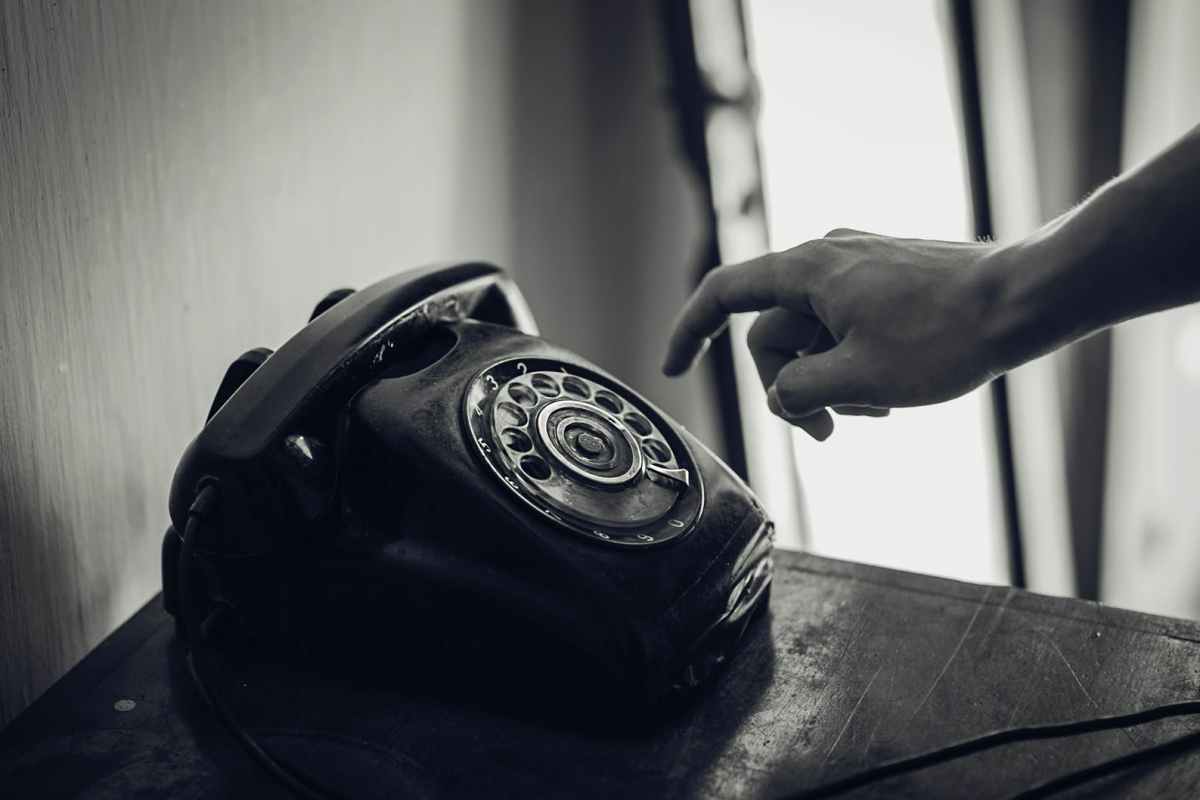
I wonder what it is that makes us pick up the phone when reminded of someone from a long time ago – or answer when someone else does.

It seems like our imaginations often get in the way because I think more often than not I think we think of people and DON’T pick up the phone – we can’t imagine what their reaction will be because it’s been too long or we imagine that it will take more time that we have. And then we stop before we’ve even dialed or written the note.

Many years ago, I had a friend who was writing a novel and was trying to think of a plausible way to introduce time travel. We brainstormed ideas and I remember not having much to offer. Thinking about it now – I realize that reaching out to someone when we think of them is a great way to travel in time.

Because whenever I take the time to pick up the phone, write a letter or make a comment, I get a boost of good feeling. Even in the cases that it doesn’t work out the way I expected, I feel more connected to others for making the effort. It is another way of experience the goodness of our interconnected humanity.

So when Scott texted, I said “yes” to meeting him for tea to catch up. Not only did I get to find out how he, his wife and kids are doing, I got a little chance to travel in time and remember the energy and promise of those days when we were getting paid to wire people to the Internet. It probably was back when AT&T ran the commercials reminding us, “Reach out and touch someone.”

Have you called an old friend lately?

(featured photo from Pexels)

Looking for Evidence

Remember it is who you are that heals not what you know.” – Carl Jung

Yesterday I came across some notes I jotted on my phone of books that my brother recommended the last time we were together.

I adore my brother. He’s 6-years-older than I am and has been the sibling that I’ve looked up to since I learned how to look up. I’ve lived near him my entire adult life, I was very close with his daughters when they were growing up and now he’s very close with my kids. There was even a time 20 years ago when I worked for my brother at his company.

So I think it’s safe to say we have a natural affinity for one-another – we have lovely conversations, enjoy our time together and have stuck together through the ups-and-downs of life.

But I can’t name a single book that I recommended to my brother that he has read. And he reads all the time so it isn’t because he doesn’t like to read. Same goes for podcasts, tv shows (back when I watched tv) and spiritual practices like meditation.

It’s taken me a lot of growing up to be able to say with certainty that it isn’t because I’m his younger sister. I know he thinks I’m smart and he respects me.

I’m sure I’m not the only person who has looked for evidence that they matter in the lives of the people close to them. I’m thinking of a comment I once heard a husband tell me that his wife had to vote exactly the same way on a ballot which surprised me for an independent couple.

When my brother eulogized my dad he described my dad’s ability to “meet you where you were at without leaving where he was at.” Coming back to that helps me remember that hearts are the center of friendships, not heads. The work of love is to meet each other so we all know we aren’t walking alone. Instead of looking for the ways I’ve influenced my brother, perhaps I should just count all the miles we’ve walked together.

 I ended up not checking out any of the books on the list from my brother. Not because he doesn’t read mine, but because I like it when he tells me the stories of what he’s read and where’s he been. It gives us something to talk about when our hearts meet.

Do the people in your lives read the books or content that you recommend? Does it matter?

The Peak-End Rule

All’s well that ends well.” – William Shakespeare

On our way home from the airport after 9.5 hours of traveling, my kids broke into a scrum. Mr. D was saying, “This is not our car. This is not a Toyota!” and Miss O had discovered on the trip that giggling softly when he talks is a truly effective way to make Mr. D mad. After doing so well on all the different legs of our journey including all the waiting when our plane was delayed, we were at risk for falling apart.

It made me think of the research of Daniel Kahneman, psychologist, behavioral economist and author of Thinking, Fast and Slow who found the way that we remember both painful and pleasureful experiences as defined by the peak moment and the end moment. So, if we are getting a painful medical procedure, we’ll generally not remember how it felt all the way through, just how it felt at the end and at its most intense. Research bears this out for positive experiences as well.

Applying this to life, it made me think of my relationship with my ex-husband. Over 8 years of marriage, we laughed a lot. In fact, that was probably what we did best. But I have a hard time remembering that because I most often think of the moment my business partner told me of my exes infidelities and I not only had to deal with that in my personal life but also walk into work the next business day and face all the people I worked with who knew. And I think of the end of the marriage, when no amount of talking could overcome the defenses we’d built.

Now, a dozen years later with the remove of time and healing, I strain to think of the fun times and I honestly can’t. I come back to the peak moment and the end moment.

Conversely when I think of every mountain I’ve ever climbed, even though I know it was a lot of hard work, what I picture is the summit and having beers with friends at the end. The peak-end rule as applied to fun stuff is capable of filtering out a lot of discomfort.

Not wanting the same rule of memory to apply to our very enjoyable recent vacation, I sat in the car trying to think of how to turn around these last moments when we were all tired and past our limits. But the kids did it for me when they started singing The Lion Sleeps Tonight from the Lion King and we bopped along to wim-o-weh. I needn’t have worried – it felt so good to be home, we all ended on a good note!

Just Say Yes

“Respond to every call that excites your spirit.” – Rumi

A couple of months ago when my high school friend generously offered me and my family a free place to stay in Vail, Colorado for 4 nights, I didn’t think about it much and just said “yes.” Now my little family and my friend Eric have made our way here. It took us 10 hours of car, bus, airplane, bus, and car transport to get here but we made it.

Then we walked in to a place so fancy I have trouble believing it’s a vacation place. If all the coffee mugs match and the appliances are not cast offs from some other home, it somehow doesn’t match with my image of vacation accommodations. But I have proof that we are on vacation, because I’m saying “yes” to most everything.

“Mom, can we stay up late?” – YES

“Can we make s’mores out by the fire pit tonight?” – YES

“Will you go swimming with us in an outdoor (heated) swimming pool when it’s 50 degrees out?” – YES

“Can I put this dirty brown snow in my mouth?” – NO

Okay, so I’m not saying yes to everything. But I’m finding that this adventure is all about living life without the rules and schedules that mark life at home.

And the effect has been to shake off the sliver of patina that grows between our hearts and living on a regular basis. Getting everything done in a day means keeping a bit of wildness in check and not listening to where our adventurous souls want to go.

Now we have a couple more days of leaving behind the rules and finding our natural rhythm close to nature and close to each other. As long as it doesn’t break any matching coffee mugs, I’m up for saying “yes” for just about anything today.

What are you saying “yes” to today?

Keeping Up the Good Work

To create one’s own world takes courage.” – Georgia O’Keefe

Before I got married to my former husband, I would throw all the clean Tupperware into one big cupboard. But my ex had a great idea that if the tops and bottoms were matched when it was put away, it would be way easier to use the Tupperware.

The problem was, he liked to have the Tupperware like that but he didn’t want to do the work to put it away like that. I’m not really dogging on my ex-husband (well, not much) because I think there’s always a big divide between knowing what to do and doing it.

For all our human knowledge and experience, the hardest part is implementing it.

I know I need to get 7-8 hours of sleep at night. But it’s still hard to get out of the chair at night and go to bed.

I’m completely aware I need to eat more greens and less sugar. But then the Easter candy is left out and I’m helping myself.

I want to teach the kids to put their coats away in the proper place when we come in but I often find it easier to just pick them up and put them away myself instead of tracking them down.

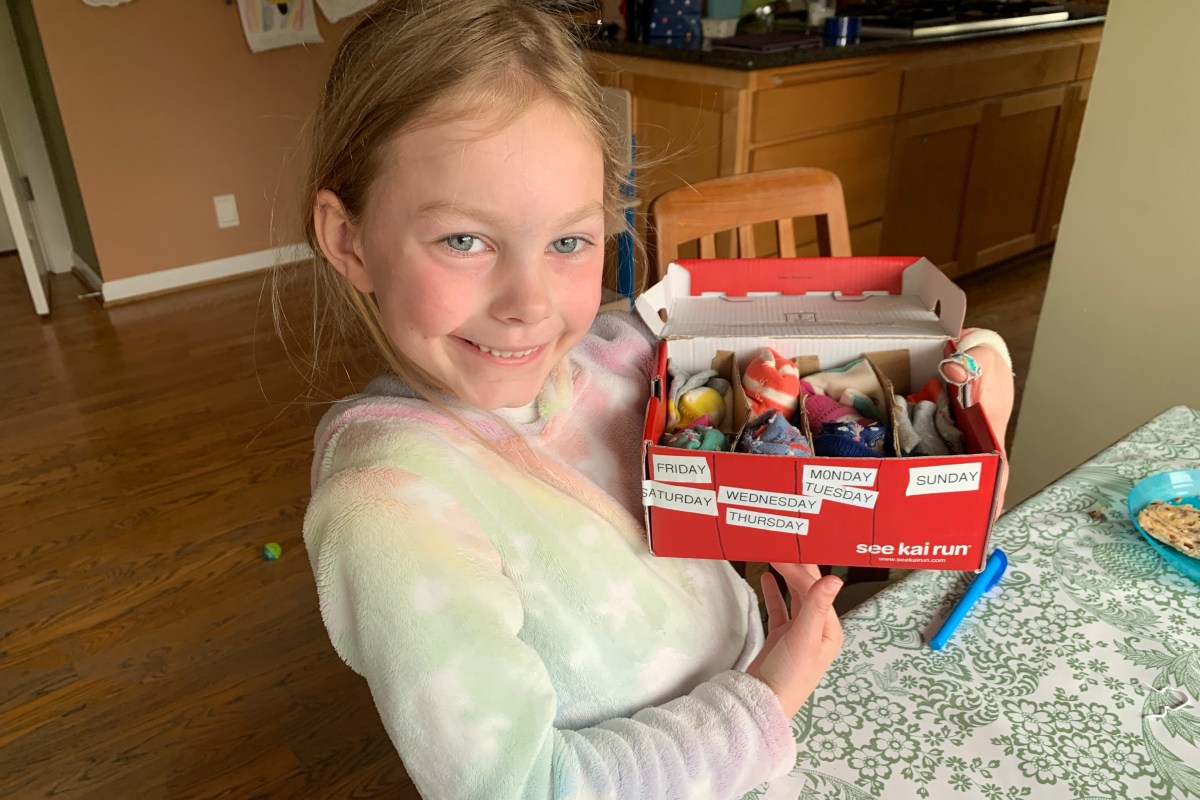
All this thinking about systems came up for me because I recently bought my daughter some socks that show the day of the week and she spent an hour devising a box in which they can be neatly stored. It’s delightful. I’m laughing because I’m the one that does the laundry and therefore it reminds me very much of putting the Tupperware away for my ex.

Maybe, in an effort to instill part of the DOING for her, I’ll wash them – but she has to put them away. 😊

How about you? Any tricks to narrow the gap between knowing and doing? Does anyone remember the scene in the RomCom where someone tells the funny break-up story due to day of the week underpants?

Dancing with Our Stuff

Wherever I go, I meet myself.” – Tozan

When I was climbing Mt. Elbrus in the Caucasus Mountains in Russia about twenty years ago, the first stage of the ascent was to climb to the hut we stayed at until our summit attempts. At about 13,000 feet, it was a pretty rough shelter with nails that hadn’t been all the way hammered in, porch railings that didn’t go all the way around (see featured photo) and no exterior finish but it afforded us a good place to rest and try to summit the 18,510 feet peak.

The outhouse was just down a little path and set right on the edge of the ridge. That is to say, the hole in the floor opened directly onto a rock field. The placement was interesting and created some aerodynamic challenges. Anything light put down the hole would come right back up again.

This was discovered by the first climber from our group to go in there — a really funny, nice guy from California. He came back to the hut with his cheeks flushed, a little out of breath with a surprised look on his face. He announced, “I just spent 5 minutes dancing with my toilet paper.” At that altitude, any kind of dancing would take your breath away.

This always reminds me that, as the quote at the top of this post says, wherever we go we meet ourselves. Even when we are in the most scenic places, poised to accomplish some personal milestone, we still might have to dance with our toilet paper. If we’ve done our work, that can be more amusing than horrifying.

(featured photo is mine)

Other climbing posts:

Life Lessons

Every day is an opportunity to make a new happy ending.” – unknown

The other evening on a clear night my kids and I were out riding bikes. As I pumped up a hill, my two-year-old son sitting on the back on my bike noticed the moon bright in the sky. He softly said, “I want to hold the moon.”

It’s a good thing parents and lovers aren’t omnipotent. I assume it would result in the moon being pulled out of the sky on a regular basis.

A few days later my 6-year-old daughter was excitedly awaiting a new clock to arrive from Amazon. She was so excited to have the very first clock that she picked out herself and could set the alarms on. I question why she’d want to start with alarms so early in life but keeping my opinion to myself, helped her track the package. On the day it was supposed to arrive, the status went from “out for delivery” to “undeliverable” right before bedtime.

My daughter was so disappointed. Rightly so and exacerbated by being tired. In that moment, I would have driven the Amazon truck myself to make sure there wasn’t a tired six-year-old lamenting about unpredictability.

Sometimes I wonder what I’m teaching my kids. Fortunately life partners with me so that I have plenty of opportunities to talk about what we dream about. I get to review what we can and cannot control. And I can demonstrate how we can to flex our muscles of patience and perspective when things don’t work the way we want.

Gratefully, I have the chance to assure my kids that we might not always get what we want but we always get what we need. And remind myself of the same along the way.

(featured photo from JOOINN)

The Beauty of Failure

Don’t let the internet rush you, no one is posting their failures.” – Wesley Snipes

The other day I failed for the second time to guess a Wordle and learned another life lesson as exemplified by this word game. By the way, no knowledge or affinity for Wordle is necessary to understand this life lesson but for anyone who hasn’t tried Wordle and is curious, here are the basics:

You have six tries to guess a five letter word. You are not given any information to start with but when you enter a guess, you are told if you have any right letters and they are green if correct in the right spot and yellow if they are used on the word but in the wrong spot. There is one word per day.

By the third guess I’d figured out the pattern was _ O _ E R

There were too many possible combinations – LOWER, MOVER, CODER, JOKER so I didn’t work out FOYER within the allotted 6 guesses.

But here’s what I noticed – it was WAY easier to fail the second time. The first time ended my 50 win streak and I was pierced, more than felt reasonable for a silly word game.

Noticing this, I think failing helps me shake the belief that I can be perfect. The longer streak that I had, the more brittle I became about not failing. It felt like there’s a longer way to fall, even if it’s just a silly word game.

It reminded me of a definition of perfection that Brené Brown provides in her book, The Gifts of Imperfection. “Perfection is the belief that if we live perfect, look perfect and act perfect, we can minimize or avoid the pain of blame, judgment and shame. It’s a shield. Perfectionism is a twenty-ton shield that we lug around thinking it will protect us when, in fact, it is the thing that’s really preventing us from taking flight.”

I’m not advocating practicing failing. But I am suggesting talking about it and laughing about it when we do. For me, it doesn’t change the impression of anyone around me who are well aware I’m not perfect. But it does penetrate my illusion that I think I can or have to maintain some persona that is impervious to failure. Even the fact that I have an ego still after years of meditating to find the Unity in life needs piercing.

So, thank you, Wordle. Not only for the two minutes of daily entertainment but a few good life lessons too!

(featured photo by Pexels)

Feet

May your feet take you where your heart wants to go.” – unknown

When my mom went to the marketing seminar five years ago for a senior residence community she was considering moving to, I went along with her. In the presentation, they talked about how important care of the feet is for the elderly. Specifically the presenter mentioned an anecdote from Atul Gawande’s book Being Mortal that what geriatricians often look at when they see a patient, regardless of the symptoms presented, are the feet. Because when the elderly don’t take care of the feet – if they are overly callused, have ingrown toenails, or have sores, it exposes them to falls. And falls for older people are hard to recover from and can cost them their independence.

I was chastened by the discussion because even though I was only in my late 40’s at the time and not in any particular danger of falling, I was taking terrible care of my feet. Case in point, the massage therapist I’d seen on and off for years had commented that I needed to shave down the corn on my left pinky toe and I’d replied, “Why? It’ll just grow back.”

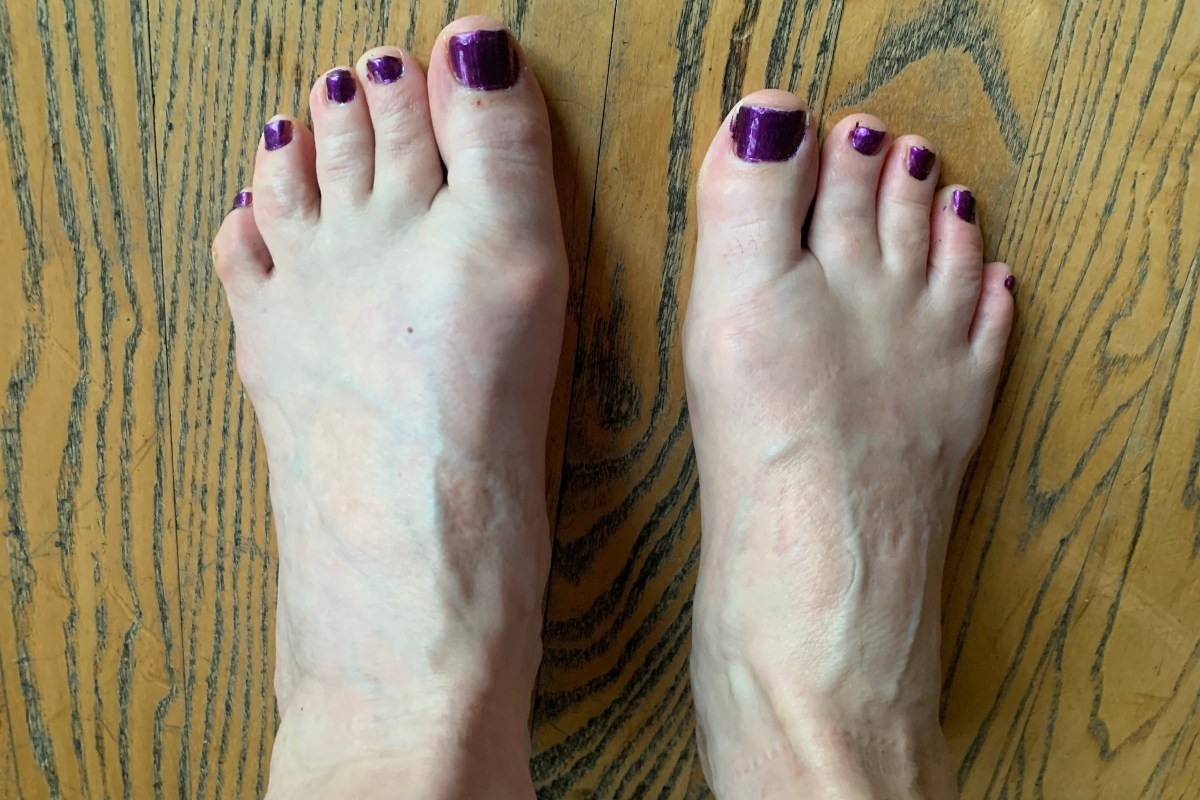
And indeed it will but clearly I was missing the big picture – that feet need to be cared for, just like the rest of the body, repeatedly. In fact, my feet are a disaster. They have calluses from jamming them in rock climbing shoes and bone spurs sticking out of the top of my big toes, maybe from my hiking or climbing boots that restrict range of motion, and plantar fasciitis from all the dogwalking, hiking and climbing. And given that I like to be on my feet and walking, one would think that I would have learned earlier to care of these precious platforms on which everything else balances.

I read a delightful meditation on the foot by Frederick Buechner in Listening to Your Life: “I say that if you want to know who you are, if you are more than academically interested in that particular mystery, you could do a lot worse than look to your feet for an answer. …when you wake up in the morning, called by God to be a self again, if you want to know who you are, watch your feet. Because where your feet take you, that is who you are.”

And adding to that, I’d add that if you want to check in on how you are taking care of your body, we could check with our feet for evidence for how well we are doing. Because as the geriatrician in Atul Gawande’s book notes, they feel further away and harder to care for as we age.

What are your feet doing today?

(feet pictured are my own)