Receiving Pain

Only love, with no thought of return, can soften the point of suffering.” – Mark Nepo

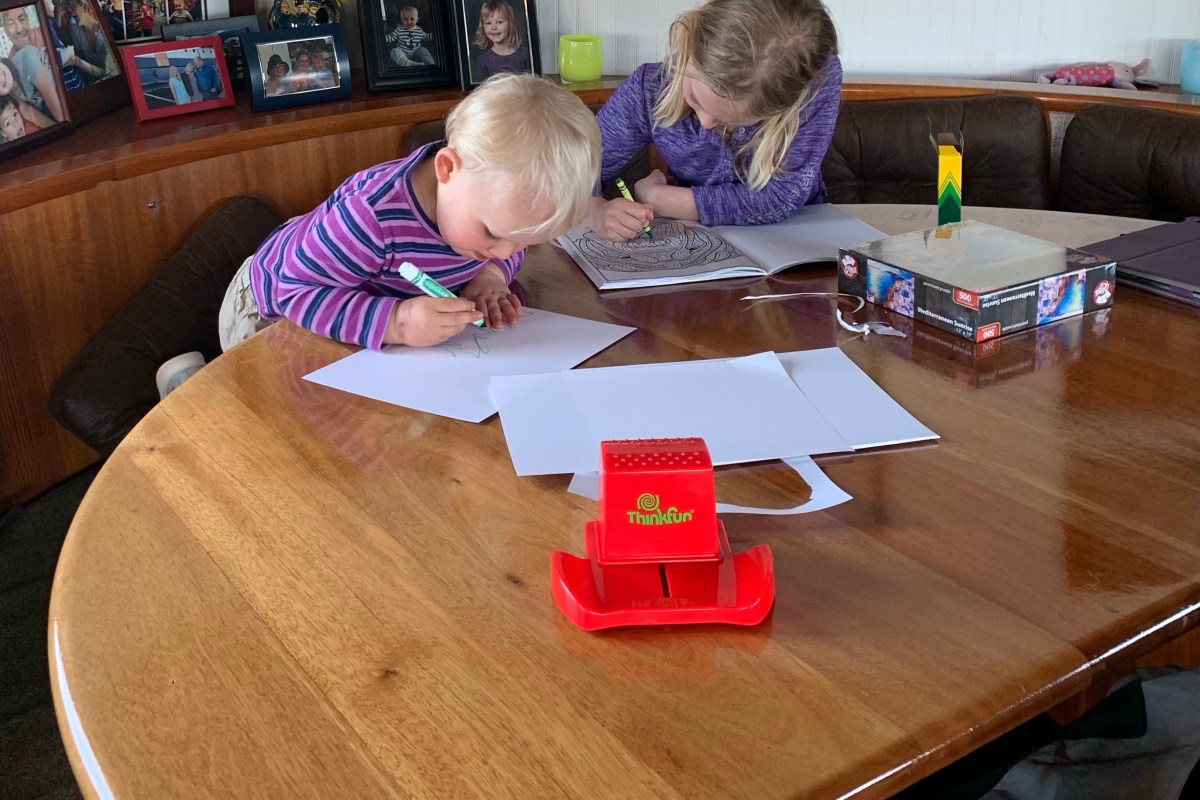
When I trimmed my 2-year-old son’s hair recently, he’s started saying “Ow” with each snip. I checked to make sure I wasn’t pulling his hair or in any way touching his head with the tip of the scissors and continued. And he kept saying, “Ow.” It was possible he was the first person I’ve ever heard of to have feeling in his hair but his body language and smile told me it was more likely he was saying something that got a reaction.

But it brought to mind for me all the different ways I’ve received other people’s pain. I’ve dismissed it as not as bad as they are reporting. I’ve wondered when they will get over it. I have compared it (both inwardly and outwardly) as not as bad as something I’ve experienced. And I can report that none of these methods are helpful. The only way that I’ve found to bear witness to pain and to help alleviate suffering is to believe that every word they say is true and to listen as they process their story.

This makes me think of a winter climb I once did on Mt. Whitney with a good friend about 3 months after her boyfriend died of cancer. He’d been cremated and she was climbing with him in a little urn attached to her pack. She kept on mentioning Rick to the other people in the group we were climbing with, none of whom knew us from before the trip. And because she was talking about Rick as if he was with us (and I suppose he was if you counted the urn), they would get a pretty confused look on their faces and eventually take me aside to ask me who Rick was. But it was a group of really nice people who let her talk and talk and talk about him. We were slogging in thigh deep snow up the side of the mountain and had days to listen.  It was like an extreme walking meditation.

After a while, I thought we’d heard enough about Rick. I fortunately never said anything. Because it wasn’t until my dad died that I understood that the telling of the story of his sudden death in a bike accident and talking about what an amazing person he was were both such healing ways to help process the surprise of finding him gone.

So I’ve adopted some of my dad’s wisdom. As a retired pastor, he often was asked by friends, mentees and former parishioners to go to coffee for advice or to air the pain of living. And if you asked him how it went, he’d smile kindly and say, “Mostly I listened.”

My kids give me lots of opportunities to practice to listen to their pains and I do my best to calmly bear witness, not lecture about safety (at that moment at least) and just slather them with love. As I cut my son’s hair and he giggled and said “ow,” I started narrating that he was the bravest person on earth to get his hair cut. In that way, we made it through together!

Witty Remark

Against the assault of laughter, nothing can stand.” – Mark Twain

My kids and I were driving in the car up a long, gently rising hill when my son noticed a jogger on the sidewalk beside us. Here’s the conversation that ensued:

[My toddler]: What man doing?

[Me]: He’s jogging.

[My 6-year-old daughter]: Jogging is what you call it when grown-ups run because they are really slow.

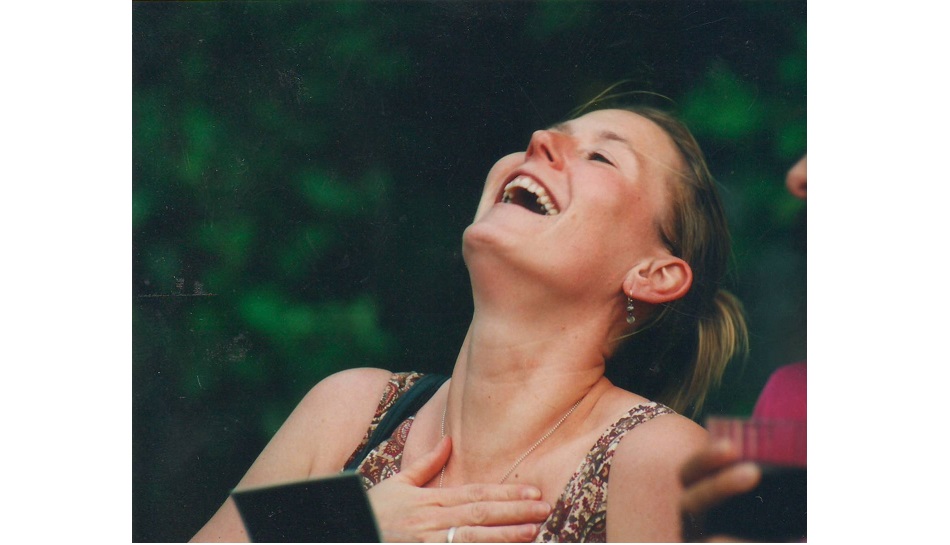
Of course, I immediately burst into laughter and my daughter was delighted to have said something so witty that she has been trying to recreate the humor of it ever sense. Which is hard to do without the setup.

One of the things that fascinates me about witnessing my kids and their friends grow up is the development of their story-telling capabilities. Knowing that narrative shapes our inner lives as well as our interaction with others, I love talking with my daughter about the stories we read and see.

So when Mitch Teemley published this great post Hitting the Creative Bullseye, I thought about my daughter’s witty remark to see if his breakdown of the hallmarks of creativity helped analyzed why we laughed: is unexpected, feels right and surprises them.

Ticking through the points:

  • Was it unexpected? We were just chit chatting in the car so no one was primed for a joke and so yes, it was unexpected.
  • Did it feel right? Yes. There is so much undeniable truth to the remark “jogging is what you call it when grown-ups run because they are really slow.”
  • Did it surprise us? I think the benefit of being 6-years-old is that no one expects you to come up with observations that hit the mark so when you do, it’s both surprising and memorable.

Of course the problem is in repeating it. But that’s why we practice — so that we can access both wit and wisdom, the “Feels right” insight in the moments that are both unexpected and surprise us. Because after all, wit is often how grown-ups deliver wisdom so that others will remember it.

High-Tech Drama

It is curious that physical courage should be so common in the world and moral courage so rare.” – Mark Twain

I’ve been listening to The DropOut podcast about the trial of Elizabeth Holmes that is starting this week and it’s got me hooked. Elizabeth Holmes is the woman who dropped out of Stanford after one year and started Theranos, a company she said would revolutionize the blood testing industry because with just one drop of blood they could analyze for up to 200 factors. She raised billions of dollars of investor money, signed a huge deal with Walgreens, was on the cover of Fortune magazine, and lived a 5 star lifestyle. The technology never worked. Now she’s standing trial for 12 counts of fraud and facing 20 years in prison. She maintains her innocence saying this is the resistance you meet when you try to change the world.

This is not the uplifting, inspiring content that I usually listen to but I find it so reminiscent of my early career in tech that I can’t helped be taken in by the characters. When I graduated from college with my electrical engineering degree, I spent a lot of time working on projects as a consultant at Microsoft in its early days. They were growing so fast they gobbled up engineers. The narcissistic, massive egos, show-off-smart, bullying personalities they describe at Theranos remind me of some of the people I worked with back then.

Microsoft revolutionized the idea of giving stock to employees and they did it at all levels of the company so when the company did well, everyone made money. It was a big change from the old days when the engineers were paid a salary and when a company was successful, it was usually the sales people and the executives that got rich. At Microsoft in those early days when the stock went up so fast, everyone was getting rich. I remember working at a trade show with a Microsoft employee who just sat and watched the stock ticker all day so that they could calculate what “they made” during that day.

It made their employees very loyal and very proud but created a lot of arrogance and petty behavior.  I observed people who met with resistance to an idea and would throw a fit announcing that “they were going to retire.” Usually it was someone that was in their mid-30’s. <eye-roll> Once I working on a tech conference where we were practicing the keynote speech and a MS executive didn’t like the version of the script he was given. He shamed and bullied the person who had stayed up all night working on the recent revisions in such a loud and vocal way that it made me physically feel ill just to watch.

I probably learned more about human behavior, leadership and integrity in those days than all the rest of my career combined. I don’t work with those types of clients any more and other than the lessons that I’m grateful to have gleaned, I don’t miss those days. My 6-year-old daughter said something about someone in the news the other day – “Well, they are famous so they must be good.” We had to take a minute to talk about how character and values don’t necessarily come with fame and fortune.

In the coming months we’ll find out whether the jury will hold Elizabeth Holmes accountable for the billions of dollars she lost or whether that’s the price of doing business. In the years since Theranos went defunct in 2018, she’s started a relationship with a man from a wealthy hotelier family and they had a baby born just 6 weeks before the trial started. However it turns out, listening to the details as they are presented, being reminded of my days watching the power of money makes me so grateful for my life now in the slow lane where I earn my living with no drama attached.

Minding My Own Business

If what you believe does not impact how you behave than what you believe is not important.” – Shaykh Yassir Fazaga

This year I’m celebrating having my own business for 20 years. It’s hard to unpack all that means to me but my business was there before I got married and carried me through when I got divorced. It gave me the flexibility to trek to Everest Base Camp for 3 1/2 weeks when I was single and has given me the time and money to have kids as a single woman now. It’s held different structures like when I had business partners and employees and like now when I am a sole proprietor with subcontractors. There have been ups and downs that seemed so huge that they’d swallow me at the time but now in hindsight are now just good stories. While many of the things I’ve learned are specific to my company’s focus which is to provide consulting to businesses about how they can better implement computer collaboration like document sharing and approval processes, the three most key lessons are life lessons:

  • Always pay everyone else, including the government, before you pay yourself. I remember the first payment I got 20 years ago was for $5,000 and it seemed like so much money that I went out and bought a tile saw so I could tile the floor of my home office. But once I paid the state and city taxes, my start up costs and legal fees, my take home was about $1,200. I could still afford the tile saw but I learned not to look at any payment as my money. Instead I pay my expenses often before the client remits payment so that when I look at the bank account, I know how much I can pay myself.
  • Finish your projects and create relationships, and your reputation will take care of much of your marketing. After my business partner told me of my now ex-husband’s infidelities and it became clear we needed to all go our separate ways, I was left maintaining a small office building that we all still owned together. It was after the financial crisis of 2008 so the building was worth less than the mortgage and we couldn’t sell it. So I went to the local SBA office to talk with someone about how to restructure the loan. He gave me a series of things I had to do, accounting, legal and structural and told me if I did, we could restructure them. It took me five months of hard work and when I made an appointment with him and returned, he said, “Wow, you came back. Not many people do.” Which made me cry. And I also was able to reshape the loan to work until I could sell the building. That same tenacity in finishing projects and maintaining my reputation through all circumstances has worked to give me repeat business and referrals that have made the business easier to run over time.
  • Have faith. Every year at this time, my business slows down in late summer because people are on vacation. It doesn’t matter that it’s different customers on one year versus the next, it always happens. And I always worry. So the third lesson is have faith. I think of it like the story of Manna in the Bible. Enough manna would fall each day to feed the Israelites when they were in the desert. But they couldn’t store it from one day to the next. They had to have faith it would come again the next day.
    So I spend August doing my part – honing my skills and reaching out to people and sooner or later my pipeline fills and the business continues. Like with all problems, worrying only drains the energy out of what needs to be done so I’ve learned take a deep breath, focus on faith and keep working.

I’ve heard the phrase “it’s not personal, it’s business” many times. It seems often right before someone is unkind or unfair to someone else. I’m guessing whoever coined that phrase didn’t run a small business for 20 years because at some point it becomes indistinguishable. But when your values are infused in your business, it can be a beautiful thing.

Five Pieces of Writing that Inspired Me: #2 Self-Compassion

Wisdom is oft-times nearer when we stoop than when we soar.” – William Wordsworth

I’m a master at slicing and dicing things so that I have to be perfect even as I cut everyone else slack. Most recently it’s that as a single parent, I better have things totally dialed otherwise people will think I expect help. Before that it was because I was the only female in a group of mountain climbers, I couldn’t forget anything or be the last to have my pack on to leave camp or the other climbers wouldn’t want to have a woman in their group again. And before that it was because I was the only blonde in an electrical engineering class, I better get a good grade or be a disgrace to all blondes.

Reading the work of Brené Brown has shown me that I’m better off at using my energy to practice self compassion than to keep believing that I’m the one person that can’t make mistakes.

We don’t claim shame. You can’t believe how many times I’ve heard that! I know shame is a daunting word. The problem is that when we don’t claim shame, it claims us. And one of the ways it sneaks into our lives is through perfectionism.

As a recovering perfectionist and an aspiring good-enoughist, I’ve found it extremely helpful to bust some of the myths about perfectionism so that we can develop a definition that accurately captures what it is and what it does to our lives.

  • Perfectionism is not the same thing as striving to be your best. Perfectionism is not about healthy achievement and growth. Perfectionism is the belief that if we live perfect look perfect, and act perfect, we can minimize or avoid the pain of blame, judgment and shame. It’s a shief. Perfectionism is a twenty-ton shield that we lug around thinking it will protect us when, in fact, it’s the thing that’s really preventing us from taking flight.
  • Perfectionism is not self-improvement. Perfectionism is, at its core about trying to earn approval and acceptance. Most perfectionists were raised being praised for achievement and performance (grades, manners, rule-following, people-pleasing, appearance, sports). Somewhere along the way we adopt this dangerous and debilitating belief system: I am what I accomplish and how well I accomplish it. Please. Perform. Perfect. Healthy striving is self-focused – How can I improve? Perfectionism is other-focused – What will they think?

Understanding the difference between healthy striving and perfectionism is critical to laying down the shield and picking up your life. Research shows that perfectionism hampers success. In fact, it’s often the path to depression, anxiety, addiction, and life-paralysis. Life-paralysis refers to all of the opportunities we miss because we’re too afraid to put anything out in the world that could be imperfect. It’s also all of the dreams that we don’t follow because of our deep fear of failing, making mistakes and disappointing others. It’s terrifying to risk when you’re a perfectionist; your self-worth is on the line.

The Gifts of Imperfection by Brene Brown

Thankful Thursday

Wear gratitude like a cloak and it will feed every corner of your life.” – Rumi

We are discombobulated this week. My toddler has a cold. The last day of in-person Kindergarten is quickly arriving for my daughter. I have some big projects due at work. It has been a hard week to find balance and calm. So I try to return to the basics – practicing gratitude. Here’s a story from author and teacher of the Cherokee Way, Michael Garrett:

I remember my father telling me about an experience that he had with his grandfather that taught him the importance of being and doing. One day, my father was down by the riverside with his grandfather, learning the ways of Mother Earth and all that she teaches us. He was observing carefully the ways being taught to him by his grandfather, although he was feeling a little overwhelmed since there was so much to learn, just as Mother Earth has so much to offer us.

His grandfather was giving thanks to the water when suddenly my father said to him, “Grandfather, I know that these ways are good and this is well…but if I went around giving thanks to everything that there is all the time, I would never get anything done.”

The wise old man smiled as he continued and said, “That’s right.”

Walking on the Wind by Michael Garrett

The Choice Between Right and Easy

“Our lives begin to end the day we become silent about the things that matter.” – Martin Luther King Jr.

In the fourth book of the series, Harry Potter and the Goblet of Fire, the dark wizard Lord Voldemort has returned and the headmaster of Hogwarts Academy of Witchcraft and Wizardry, Albus Dumbledore says, “Soon we will all face the choice between what is right and what is easy.”

I don’t know much about fighting dark wizards but making the choice between what is right and what is easy seems like something that describes the job of parenting. Maybe I’m predisposed to think that because I’m reading Harry Potter out loud to my child but nonetheless here are some of the many choices I think we as parents face:

We have to decide whether or not to teach our children manners or let them discover them at the hands of their maybe less tactful peers.

We have to decide whether to inculcate a sense of respect for nature and resources of the earth or risk ruining the earth for themselves or our grandchildren.

We have to choose between instilling a deep sense of kindness and compassion for others or suffer knowing that we might have added to the aggression of this world.

We have to choose between raising children that have a healthy sense of boundaries and self-worth that they inherited from watching us or let them figure it out on their own perhaps after doing great damage to themselves.

We have to choose between letting our kids spend their days immersed in screen time or engaging with them to foster real experiences and adventures in this world.

And none of these choices is easy because it means we have to walk that walk when we are distracted, tired and want to live our own lives reasonably well. But I find it interesting that the distinction is not between right and wrong but between right and easy because it’s effort not evil that defines the choice.

Speaking for myself, I don’t do perfectly on any of the parenting choices but more often than not I make the hard choice as I know most parents do and have done throughout all the ages. There is some science to support why as I learned when I listened to an interview Nicholas Christakis, the Yale sociologist who studies how we have evolved as a species. His view as laid out in his book Blueprint is that our evolution has come with some uniquely wonderful social features – to love, to teach others, to cooperate. He holds that humans are wired for good which is so inspiring to hear.

Because we aren’t alone in our choices. We have the magic and faith that comes from our relationship with the Divine and we have our connection to each other. In Harry Potter, Dumbledore’s pronouncement about choosing between what is right and what is easy is part of a moving speech about how unity and friendship carries us through the hard choices and hard times. Our connection to everything that is bigger than us powers us through the moments when we have nothing left in the tank. Over and over again we discover we can do hard things – and we do!

Reconnecting

“Take everything in the palms of your hands and see what’s worth keeping, then blow the rest away with a breath of kindness.” – Cherokee saying

When we returned from our four nights away this past weekend, I noticed that my toddler went around touching everything. He fingered his toys, he opened the pantry, he got down on the floor and felt under the couch, he lifted the top of the toy cubby, he sidled along the couch while running his hand along, he went outside and ran his hand along each planter. It was fascinating to watch him wander around and reconnect.

It reminds me of the way I’ve felt disconnected upon returning home, especially from longer trips. I’ve felt the huge shift between all the newness of what I’ve just seen and experienced and the ease and familiarity of my home. In those moments, my heart feels full wrapped in the comfort of the space I call home but my head is still gone, sorting what’s important.

And it happens not only when I’ve traveled but also when I’ve gone through life events, big like my dad’s sudden death or small like just when I’ve finished a work project. Moments when I’m at a loss about what comes next, untethered and unsure how to integrate what I’ve learned with who I am. When it happens, I realize how much I often rely on routine to tell me what’s next. Somehow my world has changed and I have to reinsert myself in the flow.

It seems like my son’s method of touching everything contains some basic wisdom. It’s a way of being grounded. Touch everything with your hands until your head and your heart catch up.

Airing the Wounds Out

“Courage is what it takes to stand up and speak; courage is also what it takes to sit down and listen.” – Winston Churchill

My kids and I spent the weekend with my brother and sister-in-law. Sitting around their semi-circular teak dining room table with a padded bench seat, I was reminded about a conversation we had there about a year ago.

“My mom said I should go find another mom,” My daughter said to my brother and sister-in-law. It was all I could do to not explain but because they are wise, they teased out the story from her. She was having a fit that seemed to be part of what came with being four because I wouldn’t let her do something. It had been going on for a while (it seemed like a fifteen minutes although it was probably five) and she said, “I’m going to find a new mommy, a nice one.” and I said, “Go!”

In the months after it happened she kept bringing it up and part of me died in shame whenever she did. She’d mentioned it a few times to just me and I’d apologized profusely. “I said something that I shouldn’t have because I was angry and frustrated, Sweetie” I said over and over again but then it came up again with two of her most trusted other adults. I sat there listening and they talked through it.

Listening quietly to that unfold was one of the hardest things I’ve ever had to do. But love did two things as I watched. It held me silent, knowing that unpacking the hurt for my daughter was far more important than defending myself. And I also felt held by the love of my brother and sister-in-law. I could trust that they know me well enough to know my strengths and weaknesses and all the care I put in between.

In the year since that conversation, my daughter has never brought up that comment again. My silence allowed my daughter to talk about her hurt without it being compounded by feeling ashamed to talk about it. In addition to eating great meals of delicious food, there are so many things we’ve done at that table in my brother’s living room – colored pictures, worked on crosswords, celebrated birthdays, had long conversations about life, reviewed the fun of the day. But now I add to that list – relaxed into our imperfections and healed mistakes.

Sunday Funnies

“The human race has one really effective weapon, and that is laughter.” – Mark Twain

I inherited my dad’s folder of quotes and jokes. He was still collecting these 13 years after he retired from being a Presbyterian pastor, probably because he still did a lot of speaking engagements. He knew there’s nothing like a belly laugh to make us fully exhale and then deeply breathe into the delight of the day.

So here’s one from his file – the results from the Washington Post 2006 Neolologism Contest where they ask readers to supply alternate meanings for common words:

  1. Coffee
    (n.) the person upon whom one coughs
  2. Flabbergasted
    (adj.) appalled over how much weight you have gained
  3. Abdicate
    (n.) to give up all hope of ever having a flat stomach
  4. Esplanade
    (v.) to attempt an explanation whilst drunk
  5. Willy-nilly
    (adj.) impotent
  6. Negligent
    (adj.) describes a condition in which you absent-mindedly answer the door in your nightgown
  7. Gargoyle
    (n.) olive-flavored mouthwash
  8. Flatulence
    (n.) emergency vehicle that picks you up after you are run over by a steamroller
  9. Balderdash
    (n.) a rapidly receding hairline
  10. Testicle
    (n.) a humorous question on an exam
  11. Rectitude
    (n.) the formal dignified bearing adopted by proctologists
  12. Pokemon
    (n.) A Rastafarian proctologist