Recycling and Enlightenment

Do the best you can until you know better. Then, when you know better, do better.” – Maya Angelou

Seattle has great recycling. I know that’s probably not on the list of things that makes you want to come visit but I think it’s pretty cool. We don’t have to sort things into separate bins for aluminum, plastic and cardboard anymore and it’s free.

Also in 2015, Seattle declared that food waste was no longer okay to put in the garbage. They improved the composting capabilities so that food waste can be put in our yard waste bins for weekly curbside pickup service. The estimate was that a third of food in America is thrown away. When put in garbage, it rots and produces methane but if composted, it can become rich material to facilitate growth.

Here’s the complication – it makes it awkward when we travel. We’ve been on Whidbey Island for a week. One of my favorite places in the world. But they don’t have composting and they don’t pick up recycling.

To be fair, there are big garbage dumpsters at the place we are staying so there’s plenty of space to just throw everything in to go out with the garbage service. Except that I can’t do it – and none of my Seattle friends can either. We make our little piles of recyclables and create schemes to haul them away.

I find this incredibly hopeful. Just like the Maya Angelou quote for this post. Because as we up our game, whether it be in how we dispose of things, or our relationships to others and the world, it becomes very hard to go back.

Isn’t it interesting that when you stumble on enlightenment, that you can’t unsee it? Perhaps this is a stretch but I’m recycling the analogy – it’s kinda like self-awareness. Once I notice that I see something through a lens of fear, greed, or selfishness, it’s harder to maintain that lens.

It means that when we know better, we do better. Also, that progress can be sticky and have an impact. We just need to keep upping the game.

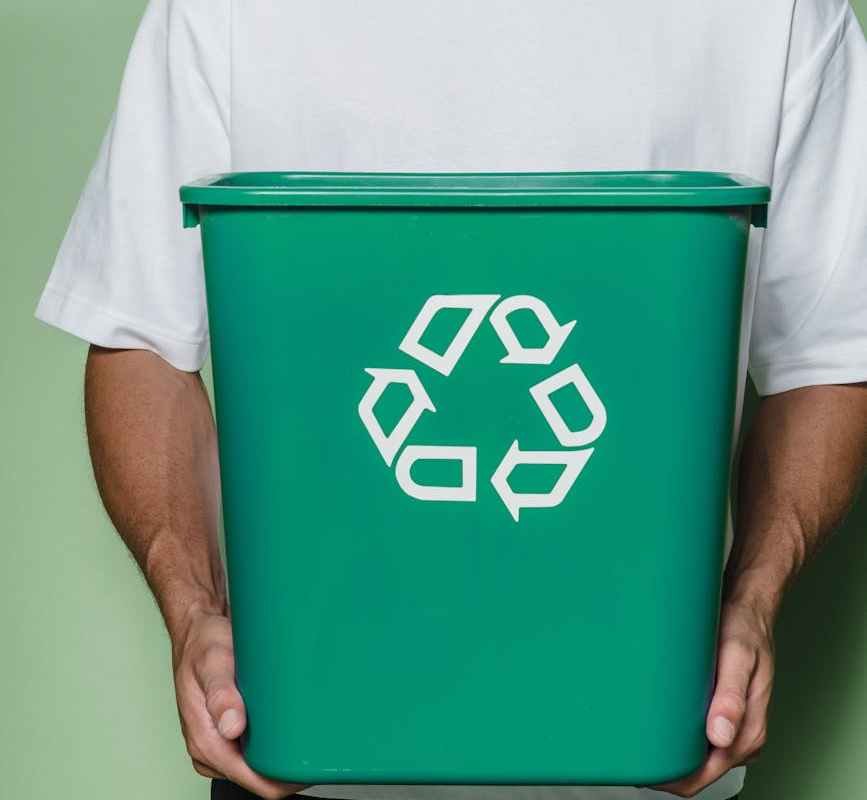
(featured photo from Pexels)

You can find me on LinkedIn: https://www.linkedin.com/in/wynneleon/ and Instagram @wynneleon

I host the How to Share podcast, a podcast about collaboration – in our families, friendships, at work and in the world.

I also co-host the Sharing the Heart of the Matter podcast, an author, creator and storytelling podcast with the amazing Vicki Atkinson.
Inculcating Sustainability

“We have not inherited the earth from our parents; we have borrowed it from our children.” – Wendell Berry

A while ago we were driving and saw litter by the side of the freeway. Mr. D said, “It’s not healthy for the moon to eat.” It started a rousing discussion of not only what planet we live on but also Earth sustainability.

A lot of the climate change messaging these days doesn’t seem to resonate with kids. First, it’s rife with fear and disgust – like humans strangling the planet because they are short-sighted and selfish. I’m not sure that resonates with grown-ups but I know for certain kids can’t grok the cynicism.

Second, they have a sense that grown-ups don’t know what to do about it so it feels too big for kids to take on.

Third, they are just developing their altruism muscles so giving up things when other people are not lands as unfair.

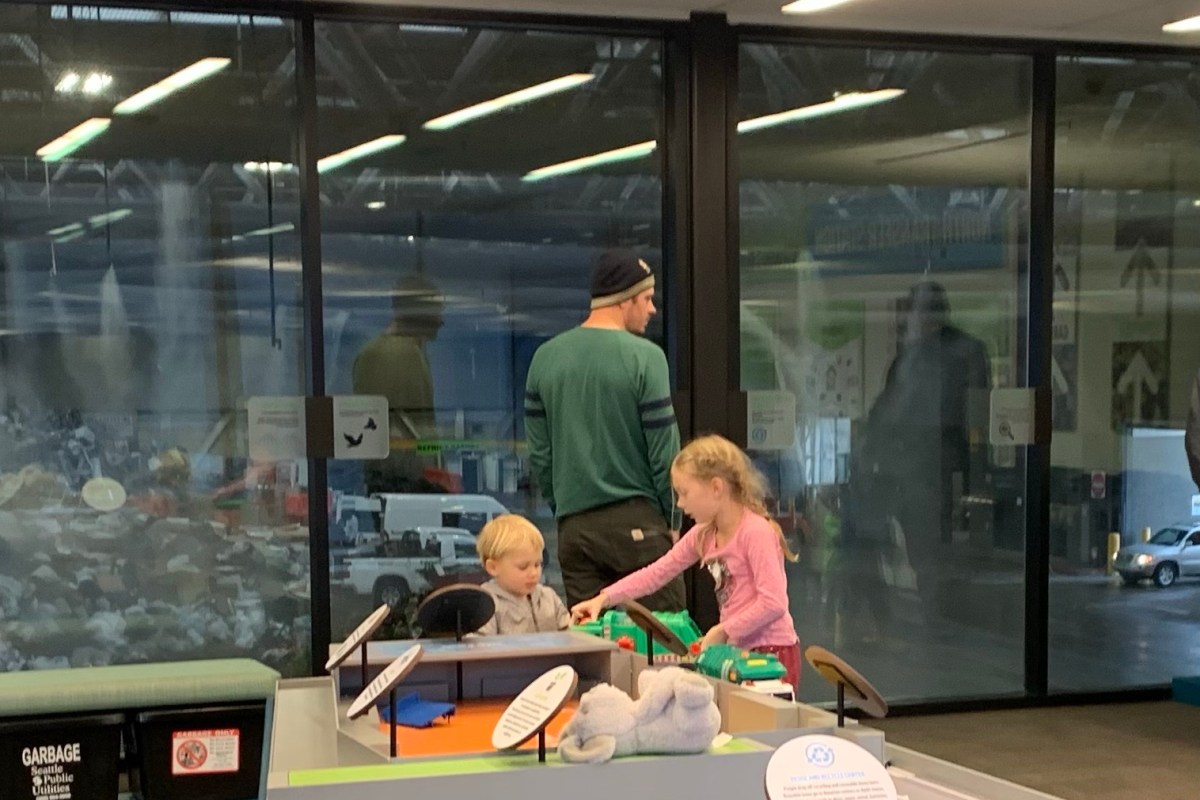
Fortunately, Seattle has a great recycling and composting program. In the winter, we’ve spent a lot of time at the dump (the transfer station) watching how it works and playing with the educational models (see pictures here). Inculcating some sustainability habits to go hand-in-hand, seemed to me like a good next step.

After trial and error, some climate change for kids books, and thinking, here are some of the things I’ve come up with to teach my kids:

One in, one out: We participate in hand-me down chains for toys, books, and clothes. We try to give away at least one thing for everything we get. I can’t claim we do this every time – but we try.

Involve them: I reuse a lot of containers – like hand soap. They love participating in refilling our containers.

Full life cycle: We grow strawberries, try to grow peas and pumpkins, visit pumpkin farms, and give away our plum crop to people who are food insecure. Even though we live in a city and are disconnected from where our food comes from, I try to connect them to the bounty of the Earth when possible.

Teach them skills: Things break and need maintenance and there are a lot of skills to repair and reuse things instead of just discarding them. I’m not much of a seamstress but I do know my way around drills, saws, caulk, and glue. Seeing that we can not only fix things but also make them better.

Selling our stuff and buying second hand: We have a great second hand kids shop in our neighborhood that makes it possible to sell what we don’t give away – and buy at the same store.

Don’t get me wrong, I’m not trying to oversell what we are doing. They are small efforts and I’m far from consistent and perfect on these things. But these things are doable and sustainable for us. They counterbalance the messages of judgment and fear that leave us feeling helpless. If nothing else, it convinces my kids that they can do something to help. And believing that might just make a difference.