The Way of Unifying Energy

But where was I to start? The world is so vast, I shall start with the country I know best, my own. But my country is so very large. I had better start with my town. But my town too, is large. I had best start with my street. No: my home. No: my family. Never mind, I shall start with myself.” – Elie Wiesel

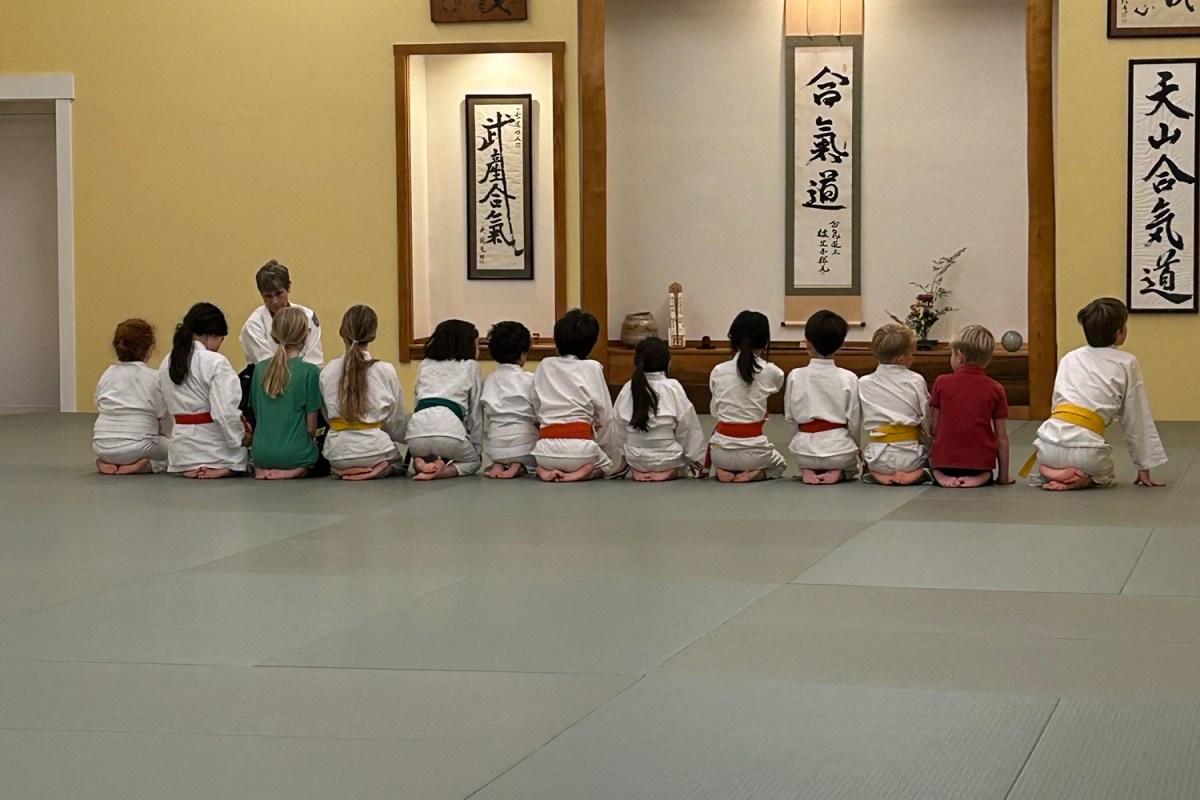
Our Aikido dojo recently had open house day. We recruited my brother, sister-in-law, and a dear young friend and all headed off to give it a try.

Let me tell you. It’s a lot easier to watch kids get up and down from the mat 30 times (or more) in an hour than to do it. Yeah, that’s not news to anyone reading this.

But I was captivated by the philosophy behind this martial art. It’s a way of redirecting energy. Or, as Wikipedia puts it, defending oneself while protecting the attacker from injury.

Aikido, the way of unifying energy, is a way of helping attackers calm down according to our Sensei. Watching my kids practice, I can see how the moves are intended to help the energy move past. It isn’t meeting a blow with a blow but instead stepping out of the way and using the attacker’s energy to pin them.

It seems like there are so many practical ways to employ this. It’s like not resisting our emotions, but instead leaning in to see what we can learn. It’s not telling others that they shouldn’t upset, but instead actively listening to understand the experience. It’s not fighting fire-with-fire but instead poking a hole in the roof so that the dangerous smoke can dissipate.

I imagine all the ways practicing Aikido, the way of unifying energy, the way of defending oneself while protecting the attacker from injury, could make a difference in this world. Our national politics come to mind. But I’m only a white belt so I’ll start by practicing on myself. That’s a head up to my inner critic.

(featured photo is one of mine of our dojo)

Love ‘Em Anyway

I’ve often kidded folks that when you start working with people, the first rule that you live with is, ‘People are weird.’ We are ALL weird, we are all funny combinations of funny stuff. So, what’s that mean for us? How do you love people that are different in a weird sort of way? Well, you just try to help them, wherever they are.” – Dr. Richard H. Leon

Not long ago I was helping someone from my dad’s former church install some technology so that she could do some volunteering. It was the first time that I met this person but she let me know that she knew both my parents. Then she ran down the list of all that she did for the church.

As I nodded while trying to keep focus on the technology at hand, she proceeded to make fun of the people that she would help as a volunteer, in a “I know more and am more way.”

This is something I saw a fair amount of as a pastor’s kid. The desire of a few people to use scripture and participation to prove they were better. Usually, my dad was the intended recipient of these claims, but in a pinch, the pastor’s family would do. To be clear, there were many incredibly lovely people in the churches my dad led that didn’t have anything to prove. More it was that the small minority who wanted to use righteousness as a measure of their worth were often very vocal.

I don’t believe this is limited to Presbyterians specifically, or religion in general, because I’ve seen this across belief systems and in other healing therapies. The subtle yet important shift between using a teaching as a shield and measuring stick versus actually learning from it.

To me, it’s the difference between me claiming that I don’t have any problems because I meditate versus saying I meditate to better handle my problems and faults.

In the end, this has made me reluctant to state that I’ve achieved any level of enlightenment. First, because I think life is going to remind me that I always have more to learn. Second, because I’m wary that hubris blocks growth.

And lastly, because as my dad said in the quote I used for this post, we are all weird. I’m including me and my beloved dad in that “all.” The trick is to try to love everyone, including ourselves, anyway.

(featured photo is my dear dad)

My book about the conversations and my journey to find what fueled my dad’s indelible spark and twinkle can be found on Amazon: Finding My Father’s Faith

Related posts:

The Longer I Live, The Less I Know

Holding Out for a Hero

Deep Knowing

Patiently Yours

Maybe happiness is this: not feeling like you should be elsewhere, doing something else, being someone else.” – Eric Weiner

We were snuggled into my bed for bedtime stories the other night, under the covers to fend off the late summer night chill, when I started a story about an attempt to fish when I was a kid by saying that I’m not a very patient person.

I’d only gotten that one line out when Miss O stopped me and said, “You are a super patient person with us, Mom!”

Oh boy, I had a parental drop-the-mic moment. I thanked her for saying that and walked away from bedtime stories with a little glow of my own.

I want to interject here to tell you of the many moments that I’m not patient, just as a reflex of polite conversation. It’s true that I’m still not very patient about waiting for life to unfold; it drives me crazy to wait for the pot to boil, the light to change, and the paint to dry. But brushing it off would be disingenuous because I’ve also done a great deal of work to become more patient with people.

So, Miss O’s words sparked some reflection about how I’ve come so far for it to be noticeable by my kids. Because let’s admit, kids are a tough audience where patience is concerned because they require a lot and have very little.

All of our major wisdom traditions speak to how to love others. For me, it’s a mix of those traditions and the way they’ve helped me to accept myself as a basis.

In the language of my father, I’ve embraced my role as a sinner and the grace of God. From a Buddhist perspective, mediation has helped me to find peace and loving-kindness. Listening to podcasts with psychologists has given me the perspective of self-compassion. And becoming a writer has helped me tell my story again and again until I’ve come to love it, and be infinitely curious and more compassionate about the stories of others.

In short, I’ve been able to slow my roll with others because I’ve learned to be patient and compassionate with myself.

I’m keeping this post about patience short. Just saying. Anyway, I’ve got to go watch a pot boil.

So if you want more and aren’t too impatient, I’ve written more about letting things unfold in others in my Heart of the Matter post: When Will They Learn?

(featured photo from Pexels)

A Meditation on Evenings or Evening Meditation

Wear your ego like a loose fitting garment.” – Buddha

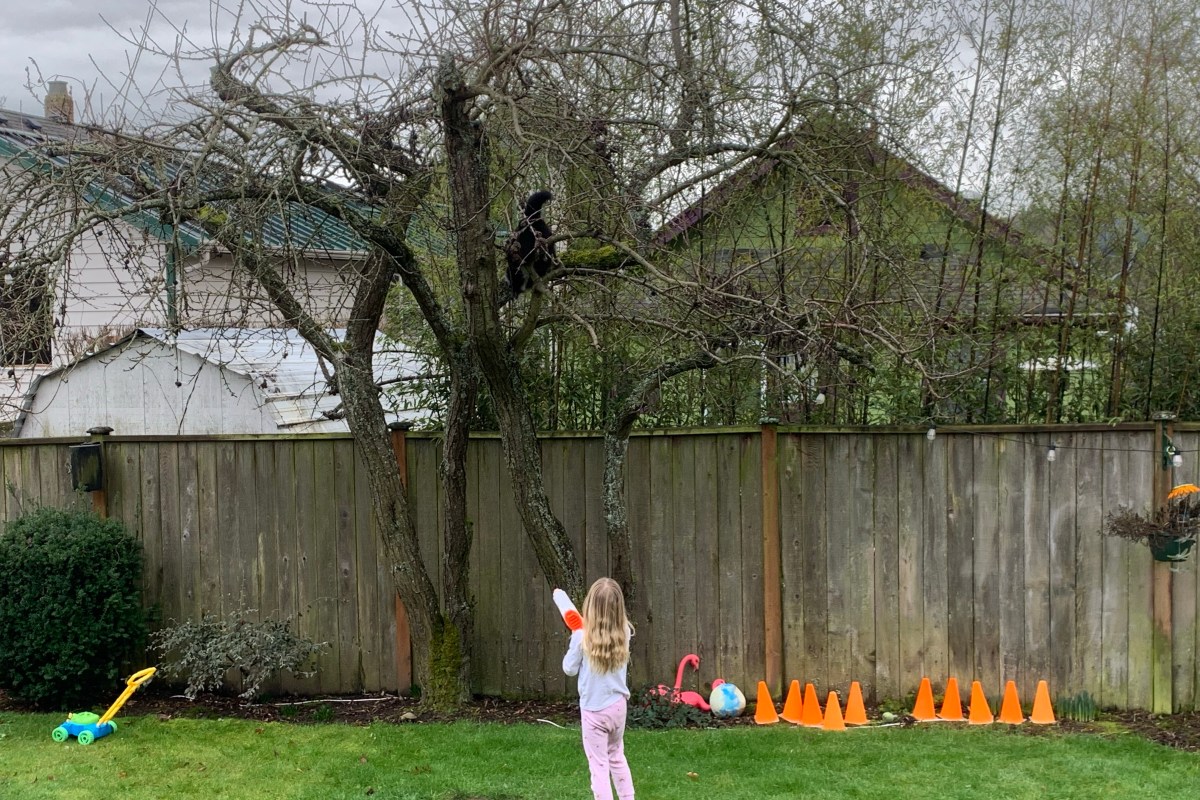
We all have Covid (mild, thankfully) and are on day 99 (feels like) of quarantine. The one household member that doesn’t have Covid, the cat, is on a diet because a recent trip to the vet for her check-up revealed that she’d gained a lot of weight under all that fluffy fur. On top of that, she has to put up with us all home and as you can see in featured photo, my daughter trying to shoot her with a water gun. So, I think it’s fair to say that we’re all a little grumpy.

In the midst of this, I’ve noticed something interesting. We do pretty well until right around 6pm. Then it turns into a scrum unless I can find a way to redirect the energy.

What I find fascinating is that corresponds with about the same time of day that the voice in my head turns self-critical. The other night I was getting ready for bed and thinking about a proposal that I needed to do the next day when my inner narrator popped up with “There’s no value you can add for them that they can’t already do themselves.”

What?? The voice was talking about what I have done for 20 years that I do day in and day out and I know based on my track record of doing it for happy clients that keep me employed that I do it very well.

This reminds me of the preface to Dan Harris’ book 10 Percent Happier in which he said the working title for his book was “The Voice in My Head is an Asshole.” My voice doesn’t usually stoop to that level until after about 6pm. And then it is always a JERK!

I am a congenital optimist. For example, when I gain weight, it usually makes me think, “Well, at least I don’t have one of those hard-to-detect cases on cancer where the primary symptom is unexpected weight loss.” There is nothing I have knowingly done to foster this optimism but life has largely worked out for me – or maybe it hasn’t and I just think it has because I’m an optimist?

That’s the problem with the voices in our heads, right? They are completely subjective, often influenced by food and sleep and given how much they change in a day, totally unreliable. But I like my optimistic voice, just not the self-critical voice that kicks in for the evenings.

This is where meditation has saved me by creating an awareness that these voices are not me. That if I sit with ideas, actions and my path for a little while, a way that rises above the fickle swings presents itself. As the quote from Buddha above suggests, wearing the ego like a loose fitting garment helps remove it more easily. Just a moment’s space between thought and speaking or action can allow peace to prevail.

This gives me an idea for the rest of our quarantine. Maybe tonight I’ll try to get the kids to sit and meditate with me after dinner and we’ll have a completely peaceful and cooperative transition to bed. As you can probably tell, I’m writing this in the morning when my optimist voice is strong…. 🙂

Secrets

Put your ear down close to your soul and listen hard.” – Anne Sexton

This week when we are returning from holiday breaks always reminds me of one of the wackiest stories from when I was in business with two partners and we had almost 20 employees. On the Monday after New Years Day in 2008, I was in the office when the office manager came in to say that we hadn’t heard from our program manager, JE, since the Christmas party two weeks prior.

JE didn’t work for me but in a small company, I certainly knew him. I liked him too. He was smart, quiet and diligent about getting his work done. He’d left Microsoft six months before to come work for us and except for one scheduled break in late October, he’d always shown up. It wasn’t unusual for our folks to work from home, especially over the holidays but not answering emails and phone calls was definitely odd.

Since my two business partners to whom JE did report were in Mexico on a hang gliding trip, I jumped in to help. Thinking that maybe we could find his girlfriend’s name and call her to check in, I googled his name. The top result was a memo from the United Stated Department of Justice dated in October of the previous year (the same days of his scheduled absence) that read something like this:

“<JE’s full name>, 27, of <city>, WA was sentenced to six month in prison for his role as the leader of a software pirating group. He will be reporting to <low security prison> on January 1, 2008.”

Well, that explained why we couldn’t get ahold of him! When we finally talked with his girlfriend, she said that JE would be disappointed to know we’d found out because he didn’t want to let us down.

Of course, had he quit before he went to prison, we would have never looked for him!! Granted he had bigger things to worry about in the 8 weeks between sentencing and reporting to the facility but as a logical young man, it seemed obvious that if you don’t want people to look for you, you need to break up with them first.

I think of this often when someone is carrying a secret. It is an immense burden that sometimes precludes thinking and acting rationally. And often the secret itself prevents the carrier from finding the tools to heal – because developing any depth is dangerous, lest it unearth the core of what they are carrying. The secret has a life of its own that requires it to stay buried and drains a lot of energy to support itself.

At the time of my life when this happened, I had a secret too. I was unhappy in my marriage and way of life and I was diligently trying to keep that a secret, mostly from myself. I drank too much wine and then smoked cigarettes when I drank as a way to numb myself from feeling what was really going on.

Thinking back now, I realize that I was forcing myself daily to keep walking down a path that didn’t feel right. I was in a relationship that wasn’t supportive of me, I was in a business partnership with a charismatic that was making me crazy and I had developed no spiritual depth with which I could heal these wounds. All these secrets were a prison in their own way.

As it turned out, I kept my misery under wraps for another year after JE went to prison. Then the charismatic business partner told me of my husband’s infidelities and it all blew apart – the business and my marriage. Finally, no one had any secrets left and I could begin to heal. With nothing left buried, it was finally safe to develop some spiritual depth that carried me out of my prison. I can only hope that JE was able to heal once his secret was out as well.

(featured image from Pexels)

The Gifts of Imperfection

Resolve to be tender with the young, compassionate with the aged, sympathetic with the striving, and tolerant with the weak and wrong. Sometime in your life, you will have been all of these.” – Buddha

The other day at work, I jumped in to help my colleagues with a project to create order from a bunch of data. In the course of an afternoon, we had so many emails, spreadsheets and versions flying around that my inbox was overflowing. Finally at one point I stated to a colleague that I didn’t have the version he was talking about. He forwarded an email sent to me 2 hours earlier that had the version.

I was mortified. I hate that particular kind of mistake that could have been prevented by a more detailed search of what I already had. It triggered the most unkind voice in my head.

I’d really like to do this all perfectly but fortunately I’ve had many years to come to terms with the fact that I’m far from perfect and never will be. Also on the plus side, I’ve learned a technique from my meditation teacher to create some space when I bump up against this.

It’s simply to talk to myself as if it were a friend that had made the mistake. It’s pretty easy to realize that I wouldn’t chastise a friend who had done the same. I’d say things like:

“Oh, I’ve done that before. It’s frustrating.”

“At least you didn’t send it to the customer with the wrong data. You stayed curious and kept asking questions.”

“Missing one spreadsheet in twenty? Not a bad ratio!”

Several times I’ve heard the Biblical instruction “Love your neighbor as yourself” turned around to be “Love yourself as your neighbor.” There is a lot of wisdom in not only cultivating kindness to others but also ourselves.

(featured photo from Pexels)

Pulling the Plug

Most problems, if you give them enough time and space, will eventually wear themselves out.” – Buddha

In anticipation for the first day of school, my 6-year-old daughter was laying out her clothes and organizing her toiletries in the bathroom. She decided to hang her bronze-colored necklace made of metal of some type (copper, steel, nickel?) on the nightlight in the bathroom. The metal came in contact with both electrical outlet prongs, sparked and broke apart the necklace, thereby breaking the circuit. She was really upset and so it took me a while to understand how it all happened and the seriousness of it.

It wasn’t until after I got the kids to bed that I looked at the outlet which was thoroughly scorched but still operational. I was standing there trying to decide if there was any ongoing danger when my mom called upset. She’d received an email that someone she’d had a short, masked conversation with tested positive for COVID four days later. My mom was feeling terrible for everyone she’d come into contact with since that conversation and was trying to decide her next steps.

This is my worst nightmare – having to deal with crisis at night when I’m tired. I like to joke that I use up all my decisions by 4pm so I better have decided what to have for dinner and whether I’m going to bathe the kids before then or all bets are off. Joking, not joking.

Decisions always make me think of the book Willpower by Roy Baumeister and John Tierney. In it they discuss how decisions sap mental energy or specifically glucose in the brain. It’s why going to the grocery store without a list takes so much more energy than shopping off a list.

I get to the end of the day with two young children, a cat and a job and I can barely string two sentences together. I don’t send emails out at night because I have no resilience or creativity in the evenings. I even avoid looking in the mirror because I have no self-compassion left.

[As an aside, listening to a great podcast between Tara Brach and self-compassion researcher Dr. Kristin Neff, (website at https://self-compassion.org) explained a good part of this when Dr. Neff said that it’s the result of our inner critic piling on all day long. It’s why we need to practice fierce self-compassion. Fierce because we strongly tell our inner critic that we appreciate her efforts in order to criticize ourselves before anyone else does but to please stop and self-compassion because we give ourselves the same grace we give others.]

My mom and I agreed to sleep on what to do about her COVID exposure because she was self-isolating. And I turned off the circuit breaker for the bathroom outlet. Sometimes I just need to pull the plug, get a rest and come back to it in the morning.

Opening the Door

We are rare, not perfect.” – Mark Nepo

As I walked down the stairs this morning to do my morning routine, I look at the security panel on the wall and felt a rush of regret for the incident yesterday when I set the house alarm off. Regardless that it worked out fine as I wrote in my post, I still feel this disgust at myself for doing it. Then I started doing yoga and felt the ache of the pinky toe on my right foot where I broke or dislocated it stubbing it at our friends lake cabin a couple of weekends ago. That pain triggered another round of self-recrimination for not wearing shoes at the lake. It’s not like I was thinking of either of these things or any of the other regrets I come across because I’ve compartmentalized them so I can go on with my “happy” day. But sooner or later, I’ll come across something that sparks the association and I’m chiding myself for these incidents again.

I keep my laundry room door closed most of the time. In these hot summer days when I’m able to cool off the rest of the house at night with open windows, I often forget about the laundry room with its west facing window until I open the door and get blasted with hot, stale air. That is exactly what it feels like to me when I experience these pockets of regret or grief in my life.

This makes me think of when I first started meditating. I had finalized my divorce, thought I was fine and moving on with my life and then I went to Deirdre’s meditation class and spent 90 minutes doing light yoga and breathing. I spent the rest of the day leaking tears. At one point I was out walking my dog and the tears were just streaming down my face and he kept looking at me as if inquiring if I really was okay to be out walking. All those compartmentalized pockets of grief had started to open and I just had to flush them out before life could continue.

So I learned that when I encounter that twinge of regret or self-recrimination that the only thing to do is to breathe into it. Like my laundry room, the heat will eventually start seeping out of it into the rest of the house if it gets hot enough. But I can open the door, let the air flow and mixed with the cool air in the rest of the house it doesn’t raise the temperature much, if at all. I breathe and think of the Chinese Proverb, “He who blames others has a long way to go on his journey. He who blames himself is halfway there. He who blames no one has arrived.”

Worth Waiting For

I’ve learned that I can totally remain humble, but I don’t have to cut off the wonderful things I deserve.” – Alicia Keys

I splurged and bought a new mascara the other day. The old one went on too slowly. Ironically, I’m willing to spend money on something to enhance my appearance but it has to be quick because I don’t want to be the person others have to wait for.  

But then I spend so much of my days waiting. I wait for kids to finish taking in a scene before they want to walk on or waiting for kids to finish eating each methodical bite. Or because my daughter is learning to roller skate and my son is learning to ride his balance bike, I wait for kids every step of the way as we go around the block because neither has learned the power of coasting and are slower than if they were walking. At work, I wait for files to be transferred and to get replies on emails. I wait for packages to arrive and in lines for lunch.

Yesterday I was sitting outside eating lunch on a bench and watching a guy with a Bernese Mountain Dog. They were coming towards me but the dog paused to sniff, consider and then pee on every tree and interesting thing on the sidewalk. The guy patiently stood through each interlude, his perfectly relaxed expression and the slack in the leash indicating he thought the dog was worth waiting for.

It made me think of my perennial urge to rush myself. Of all the times I’ve been on a mountain climb hustling to get my boots, coats and shoes on so no one has to wait for me. Or the focused scan of the menu I do at the coffee shop so I’m always ready when it’s my turn to order. Perhaps I need to take a page from that dog’s playbook, learn to take my time with my routine and start to believe that I am someone worth waiting for.

Five Pieces of Writing that Inspired Me: #2 Self-Compassion

Wisdom is oft-times nearer when we stoop than when we soar.” – William Wordsworth

I’m a master at slicing and dicing things so that I have to be perfect even as I cut everyone else slack. Most recently it’s that as a single parent, I better have things totally dialed otherwise people will think I expect help. Before that it was because I was the only female in a group of mountain climbers, I couldn’t forget anything or be the last to have my pack on to leave camp or the other climbers wouldn’t want to have a woman in their group again. And before that it was because I was the only blonde in an electrical engineering class, I better get a good grade or be a disgrace to all blondes.

Reading the work of Brené Brown has shown me that I’m better off at using my energy to practice self compassion than to keep believing that I’m the one person that can’t make mistakes.

We don’t claim shame. You can’t believe how many times I’ve heard that! I know shame is a daunting word. The problem is that when we don’t claim shame, it claims us. And one of the ways it sneaks into our lives is through perfectionism.

As a recovering perfectionist and an aspiring good-enoughist, I’ve found it extremely helpful to bust some of the myths about perfectionism so that we can develop a definition that accurately captures what it is and what it does to our lives.

  • Perfectionism is not the same thing as striving to be your best. Perfectionism is not about healthy achievement and growth. Perfectionism is the belief that if we live perfect look perfect, and act perfect, we can minimize or avoid the pain of blame, judgment and shame. It’s a shief. Perfectionism is a twenty-ton shield that we lug around thinking it will protect us when, in fact, it’s the thing that’s really preventing us from taking flight.
  • Perfectionism is not self-improvement. Perfectionism is, at its core about trying to earn approval and acceptance. Most perfectionists were raised being praised for achievement and performance (grades, manners, rule-following, people-pleasing, appearance, sports). Somewhere along the way we adopt this dangerous and debilitating belief system: I am what I accomplish and how well I accomplish it. Please. Perform. Perfect. Healthy striving is self-focused – How can I improve? Perfectionism is other-focused – What will they think?

Understanding the difference between healthy striving and perfectionism is critical to laying down the shield and picking up your life. Research shows that perfectionism hampers success. In fact, it’s often the path to depression, anxiety, addiction, and life-paralysis. Life-paralysis refers to all of the opportunities we miss because we’re too afraid to put anything out in the world that could be imperfect. It’s also all of the dreams that we don’t follow because of our deep fear of failing, making mistakes and disappointing others. It’s terrifying to risk when you’re a perfectionist; your self-worth is on the line.

The Gifts of Imperfection by Brene Brown